

Plot Summary
Gene's Wake Reopens Coombs
Jonathan Hollis attends the funeral of Gene Hendrickson, his childhood friend, and silently measures the distance between the cheerful man mourners remember and the guilt-ridden alcoholic he became. Jonathan shares that guilt with Gene and the Braddick brothers, Conner and Michael, but it has already corroded his marriage to Mary and his bond with seven-year-old Jacob.
At home, Mary urges him to reconnect with his friends, while Jacob's eager embrace briefly reminds Jonathan what he still has to lose. Before leaving the funeral, Conner tells Jonathan that he and Michael need to speak with him. Their meeting at the old tavern will turn the wake's grief into a demand to revisit the night that broke all four friends.
The wake establishes the story's central split between public reputation and private knowledge. Gene's mourners can praise his warmth because they do not know what burden hollowed it out; Jonathan, by contrast, sees his friend's death as both a loss and an indictment. His family offers the possibility of attachment, but he experiences love through the filter of shame, already fearing that his past makes him dangerous to them. The Braddick brothers' request converts grief into action. Rather than allowing mourning to close the past, the novel makes it the mechanism by which an old secret becomes active again.
The Shot in Coombs' Gulch
Ten years earlier, Conner, Michael, Gene and Jonathan travel to Coombs' Gulch for Jonathan's bachelor-party hunting trip. After several days of hunting and drinking, Gene takes a rifle into the dark to prove he can bring down a deer. Jonathan's spotlight catches a pair of high-set eyes, and Gene fires. They find a boy, Thomas Terrywile, with a fatal head wound.
No other people appear in the remote forest, and the friends panic over the wreckage an investigation could bring to their lives. Conner argues against contacting the authorities. The three sober enough to act place Thomas in an airtight storage case, bury it beside a large bush, and leave the woods carrying a secret that reshapes their adulthood.
The fatal shot is an accident, but the concealment is a sequence of deliberate choices. That distinction becomes the book's moral engine: the men cannot control the instant of violence, yet they repeatedly choose to protect their futures rather than identify the dead child. Their fear is understandable, which makes it more dangerous than simple malice. Conner turns panic into procedure, Michael into practical assistance, and Gene's collapse begins at the point where responsibility is sealed underground. The case also gives guilt a physical form. What the friends try to bury is not only a body, but the evidence that their ordinary lives depend on abandoning a stranger.
A Road Threatens the Secret
At the East Side Tavern, Conner explains that a new state route and commercial development will cut through Coombs' Gulch, the land where the case lies. He learned of the project through his insurance work and has spent months devising a way to move the remains before construction begins.
Jonathan refuses at first, unwilling to reopen the worst night of his life, but Conner warns that workers may uncover the case and investigators will trace the old hunting party. Michael insists that discovery would endanger all their families. Jonathan finally agrees, not because he trusts the plan, but because exposure frightens him more than the journey. He tells Mary the trip is a memorial for Gene and a chance to restore the friendships.
The road project makes the past materially vulnerable: construction can expose what memory and distance have kept hidden. Conner's plan reflects his professional habit of treating risk as something that can be transferred or contained, while Jonathan understands that the moral problem cannot be solved by relocating evidence. Yet Jonathan agrees because his strongest attachment is also his greatest vulnerability. He frames the journey as protection for Mary and Jacob, turning self-preservation into a family duty. The lie to Mary repeats the original concealment on a smaller scale, showing that the cover-up is not a single buried act but a practiced way of living.
Children in the Wrong Woods
As the trip approaches, Jonathan searches missing-child records and finds photographs of children appearing in remote hunting-camera images. One image leads him to Daniel Degan, a Texas hunter whose camera recorded a boy where no child should have been.
Degan confirms the image was real but cannot explain it. Jonathan also recalls Rich, an old hunting mentor who once described the Arctic as a place where the landscape can deceive the eye. At Halloween, Jonathan sees a towering, antlered figure standing apart from the parade crowd.
Meanwhile, Conner's daughter Aria tells her parents that a broken-faced stranger in their woods claimed to know her father and tried to lure her away. Her later night terror leaves Conner shaken, but the men still depart as planned.
The uncanny enters through evidence that resists easy classification: a photograph, a child's report, a figure glimpsed among revelers. Jonathan's research does not prove a supernatural explanation, but it makes ordinary certainty harder to maintain. The repeated image of a child misplaced in wilderness links his buried memory to present danger, while Rich's warning about deceptive terrain gives that fear an observational, almost practical frame. Aria's encounter brings the threat into a family like Conner's, where security had seemed assured by money and vigilance. The contrast matters: neither status nor rational expertise can guarantee that the world will behave according to familiar rules.
Pasternak's Welcome Turns Violent
Jonathan, Conner and Michael reach Pasternak after finding Thomas Terrywile's old missing-person report and recognizing his childhood photograph. The discovery leaves Jonathan sick with certainty, though the brothers cannot accept what it implies.
At The Forge, local hunters warn them away from the Gulch; a fight breaks out, and the men leave to find Conner's Suburban sitting on slashed tires. Daryl Teague offers transport to the cabin.
There they discover that Bill Flood, the cabin's elderly owner, is dead beside the firepit, seated as if still watching the forest. Jonathan looks where Bill was staring and sees a vast, fractured darkness bearing Thomas's face. Daryl drives for the police, leaving the three friends alone with the body and the night.
The journey is repeatedly obstructed before the friends even reach the buried case. The violence at The Forge and the damaged vehicle make the town's hostility concrete, while the local warnings suggest that Coombs' Gulch has a reputation beyond the men's secret. Bill's death then removes their last ordinary guide to the landscape. Jonathan's vision may be read as supernatural contact or the first full break in his already unstable perception; the narrative preserves both possibilities. What matters psychologically is that the place begins to answer the men before they can act. Their return is no longer a controlled retrieval operation.
The Box Comes Up
After police remove Bill's body, the three friends set out through Coombs' Gulch carrying rifles, tools and the gear for their planned trek. They struggle to recognize the overgrown terrain and eventually reach the bush where they buried Thomas.
Digging reveals the airtight case, still heavy with what his body has become. Conner insists they must move it; Jonathan and Michael help lift it. As they carry the case toward the western pass, Michael finds a clearing cut unnaturally clean from the surrounding forest.
Inside it lies a geometric arrangement of stones, a crude altar and traces of old blood. Jonathan recognizes the site from the newspaper account of Thomas's disappearance. The discovery suggests that Thomas had been taken into these woods before Gene ever fired.
The recovered case transforms the secret from an abstraction into an unbearable burden, while the clearing supplies a possible history for the boy's presence. The men have spent a decade treating the question of where Thomas came from as an inconvenience; the ritual site suggests that someone brought him there deliberately. This does not yet settle the mystery, but it undercuts their original story that the boy was an inexplicable accident. Michael's engineering mind can identify the physical arrangement without explaining its meaning, while Jonathan recognizes the pattern because he has sought it. Knowledge arrives not as relief, but as an increase in responsibility.
A Voice Crosses the Meadow
The case slows the men until they camp in an exposed meadow, unable to reach the lake before dark. Jonathan receives Mary's message that someone has clawed deep marks into their front door, though animal control finds no culprit. As the friends huddle in their tent, a force rushes through the grass and small hands press against the canvas.
Jonathan hears Jacob's voice and bolts outside, but finds only stillness and an unexplained animal moving away in the dark. At home that same day, Jacob has seen a stiff-legged man watching from the woods. After school, he finds a gutted rabbit beneath the trees; a large shadow falls across him as he looks up. The parallel scenes leave his fate uncertain, but bring the danger to his doorstep.
The meadow scene binds Jonathan's guilt to his parental fear: the voice that draws him from shelter uses the person he most wants to protect. At the same time, Jacob's perspective gives the threat an independent presence. He sees a man and a mutilated animal without the father's accumulated theories, so his fear is not merely a projection of Jonathan's panic. The alternating events also unsettle ordinary distance. The men are miles away, yet the family and the forest seem to touch across that separation. The book makes parental vigilance feel both necessary and helpless, because the child notices danger before the adults can interpret it.
Thomas's Lost Years Revealed
At the lake, the men reopen the case to add stones before sinking it. The accumulated gases and foul contents escape, and Jonathan experiences a vision that carries him into Thomas Terrywile's past. He sees hooded figures take the boy from a path near his Pennsylvania home and bring him to a stone circle in the Adirondacks.
A towering presence takes Thomas into a state beyond ordinary time, where the child appears in forests and is unseen by those who might help him. The vision ends at the instant Gene's bullet strikes, suggesting that the friends did not kill Thomas in the usual sense so much as interrupt an ordeal that had lasted across decades. Jonathan wakes convinced that the boy's disappearance began with abduction.
The revelation radically revises the meaning of the original accident without erasing the friends' culpability. Thomas was not wandering freely when Gene shot him; he had been captured and subjected to an inhuman captivity. The men may have ended that suffering, but their later concealment remains ethically consequential because they never learned who he was or what had happened. The vision also complicates time: Thomas's life cannot be measured by the calendar that defines the hunters' decade of guilt. In this story, the supernatural does not cancel moral responsibility. It enlarges the context in which responsibility must be understood.
Conner Sinks with Thomas
Conner refuses to abandon the plan after Jonathan's vision. The friends put stones into the case, pierce its sides and load it onto an inflatable raft. Jonathan and Michael wade into the freezing lake while Conner paddles toward its center. When Conner tries to tip the case overboard, the raft collapses under the weight.
The case sinks, but blackness spreads across the water, and Conner falls in among the debris. Michael dives after him and briefly finds his hand, then surfaces without him. Jonathan pulls Michael to shore as Conner disappears beneath the lake. Snow begins to fall, the raft is ruined, and the two survivors are stranded without a safe way back to the cabin.
Conner's death is the physical consequence of treating the supernatural and the moral past as logistics problems. He believes the right equipment and a carefully chosen lake can make the secret vanish; instead, the plan puts him directly into the element he hoped would erase it. Michael's failed rescue exposes the limit of his usual competence: he can calculate risk and act decisively, but he cannot command survival. Jonathan, meanwhile, is left with another body and another secret, the very condition that drove the men back to the mountains. The water does not resolve their guilt; it multiplies its human cost.
Michael Follows His Brother
The next morning, Michael finds tracks leading from the lake toward the forest and decides they belong to Conner. Jonathan argues that the cold water and storm make a search suicidal, but Michael cannot accept that his brother is gone. He tells Jonathan to continue toward the cabin, fires a warning shot, and follows the tracks alone. On the mountain, the footprints lead impossibly far uphill.
Michael sees Conner standing near the summit and reaches him after exhausting himself in the snow. The figure has dead eyes, a broken jaw and limbs that move as if controlled from above. Michael finally faces evidence that his brother is not simply injured and lost. The mountain takes him from Jonathan's sight, leaving no word of what happens next.
Michael's pursuit is not simply denial; it is the collapse of the system he has used to understand the world. He trusts visible tracks and direct observation, yet those signs lead him toward an impossible figure. His decision to follow is driven by love for Conner, a bond he has rarely examined because their brotherhood seemed self-evident. In trying to recover his brother, Michael abandons the practical safeguards that usually define him. The scene makes grief a force that can mimic reason: each step is justified by evidence, but the evidence itself has become part of the trap.
Jonathan Finds the Monster
Alone, Jonathan climbs toward the meadow and sees his own reflection raise a rifle and shoot itself. He reaches the ridge and regains enough phone service to learn that Jacob has vanished after school. Mary saw a strange man near the woods but could not reach the bus stop in time. Jonathan runs down into the Gulch, where memories and apparitions of Mary, Thomas and Jacob accompany him.
At the cabin, familiar men from Pasternak appear between the trees, asking where Jacob is, before the antlered, wooden-masked figure emerges. Jonathan fires repeatedly, but the bullets do not stop it. The figure removes its mask, and Jonathan understands that the reality behind the horror cannot be dismissed or shot away.
Jonathan's apparent suicide by mirror image blurs the boundary between perception and physical fact, but the news of Jacob's disappearance gives his fear an undeniable human object. The urgent return does not restore his agency; it forces him to move through the landscape that has shaped his guilt. His visions of family members and Thomas make the forest a place where private memory and external danger can no longer be separated. The failed gunshots complete a reversal of the hunting motif. Jonathan has long understood the rifle as a tool that makes problems final. Against this presence, it proves only that violence cannot guarantee control.
The Search Becomes a Scandal
Three weeks later, Mary speaks publicly while Jonathan is confined in a psychiatric hospital and charged after fighting officers. He has returned from the mountains alone, raving about a ritual, a demon and children trapped beyond ordinary time.
Police search for Jacob, Conner and Michael, finding Michael's gear but no trace of either brother. They also locate a stone circle near the river valley that matches Jonathan's description, strengthening suspicion rather than proving his story.
Investigators question Mary about her marriage and Jonathan's movements; reporters turn the disappearances into competing theories. Mary refuses to identify her husband as a killer, though she cannot explain what happened. Jacob remains missing, and the family has no answer that can withstand either grief or evidence.
The aftermath refuses the comfort of a solved case. Jonathan's account gains one concrete confirmation when police find the ritual site, yet that fact does not secure his credibility or recover Jacob. Institutional systems can record evidence, assign suspicion and manage a distressed person, but they cannot explain the uncanny pattern linking the site, the disappearances and the hunting trip. Mary is left to defend a husband whose story she cannot accept, while also facing the possibility that she never fully knew him. The public search becomes another form of exposure, converting private catastrophe into a spectacle without making the missing child less absent.
Epilogue
Years later, Jonathan has been released, lost Mary and watched the police abandon Jacob's case. He survives on low-paid work and returns to the woods, where he believes the dead friends still watch him. He seeks out Rich, the old hunter, who recalls being stalked by a polar bear while a decoy in the snow drew his attention away from the real attack.
Jonathan takes the story as a warning about misdirection. Convinced that he can trade another child for Jacob, he abducts six-year-old Ryan Temple from a soccer field and carries him to a stone circle he has made. Conner, Michael and Gene wait in the trees as Jonathan presents the child to the presence. He recognizes the act as evil, but proceeds.
The epilogue turns Jonathan's original crime into a repeating pattern rather than a completed lesson. He once helped conceal a child's death to preserve his own life; now he deliberately takes a living child in the hope of recovering his son. His suffering has not made him wiser in a simple redemptive sense. It has made him vulnerable to the same logic of sacrifice that once trapped Thomas: one innocent life can supposedly be exchanged for another. Rich's polar-bear account sharpens the book's metaphor of attention as a danger. Jonathan recognizes that the visible threat may distract from the real one, yet his certainty about what the demon wants is itself another possible deception. His final choice leaves him neither absolved nor merely victimized. He becomes an agent in the cycle he once feared.
Analysis
Boy in the Box builds horror from a choice that begins as self-protection. After the hunters accidentally kill Thomas, they decide that public accountability would destroy their lives, then spend a decade living inside the consequences of that calculation. Their cover-up damages them unevenly: Gene drinks himself toward collapse, Jonathan turns guilt into isolation, Conner keeps converting it into risk management, and Michael treats it as a problem that can be compartmentalized. None of these strategies can restore the child or undo the shot.
The book's supernatural structure makes this moral failure larger without making it simpler. Thomas's vision suggests that the boy was abducted into a timeless captivity before the hunters found him. Their bullet may have ended his suffering, but their silence prevents them from understanding the event or recognizing the danger around them. The resulting ambiguity is ethically productive: a person can be implicated in wrongdoing without being responsible for every force that shaped the tragedy. At the same time, Jonathan's guilt makes him susceptible to seeing himself as responsible for everything, including events he cannot control.
Parenthood intensifies this conflict. Jonathan's love for Jacob is real, but it often arrives as terror, surveillance and self-reproach rather than steady care. Mary's more grounded attention cannot compensate for what Jonathan hides from her. The final kidnapping of Ryan shows the most disturbing consequence of guilt without accountability: Jonathan's desire to repair the past becomes permission to harm another child. He repeats the logic of sacrifice, now knowingly, because he believes a terrible exchange might return what he lost. The novel's repeated images of veils, reflections and staged performances question whether perception can ever provide moral certainty. Yet the story does not make uncertainty an excuse. The men remain responsible for what they choose when certainty fails. Its bleak lesson is that guilt can prompt recognition, but without truth and responsibility it can also become a rationale for the next violation.
Review Summary
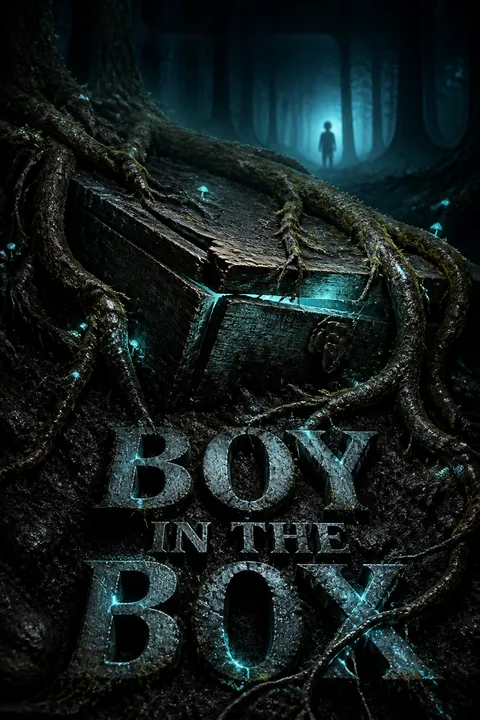
Boy in the Box is a dark psychological horror novel about four friends haunted by a hunting accident where they killed and buried a child in the Adirondack Mountains. Ten years later, three survivors must return to retrieve the body before developers uncover it. Reviews praise Fitch's atmospheric wilderness descriptions and tension-building, though some found the pacing slow with excessive character backstory. The supernatural elements gradually intensify as guilt and paranoia unravel the men's minds. Most reviewers appreciated the creepy, unsettling atmosphere despite occasional verbosity, rating it 3.5-4 stars for fans of slow-burn psychological horror.
People Also Read

Characters
Jonathan Hollis
Guilty father and hunterJonathan is a small-town journalist, husband to Mary and father to Jacob. His childhood friendship with Gene and the Braddick brothers has lasted long enough to become a second family, but a concealed event from their hunting past has shaped his adulthood. Jonathan is perceptive, imaginative and prone to turning images into explanations, qualities that help him notice patterns while also leaving him unsure whether he can trust his own mind. He drinks to mute shame and withdraws from the people he loves, yet his attachment to Jacob remains fierce. His defining conflict is not whether he feels guilt, but whether he can separate genuine responsibility from the belief that he is irredeemably bad.
Mary Hollis
Steadfast but exhausted wifeMary is Jonathan's wife, a nurse and Jacob's attentive mother. She has spent years trying to draw Jonathan back into family life, naming his distance without pretending that affection alone can repair it. Her practical care for Jacob contrasts with Jonathan's anxious protectiveness, and she often sees the damage his silence is doing more clearly than he does. Mary is compassionate but not passive: she asks difficult questions, maintains her own friendships and continues functioning under pressures that would overwhelm most people. She wants a dependable partner, not a mystery to solve, though the history Jonathan withholds makes intimacy increasingly difficult.
Jacob Hollis
Watchful, lonely childJacob is Jonathan and Mary's seven-year-old son, a quiet child whose imagination gives him refuge from school and from the tension he senses at home. He is affectionate toward his father but also alert to Jonathan's anger, drinking and hidden sadness. Night terrors leave Jacob frightened without a clear memory of what frightened him, deepening his sense that adults understand a world from which he is excluded. He notices details others dismiss, including the strange man near the woods. Jacob's vulnerability is not simply innocence; he is observant and capable of forming his own interpretations, even when the grown-ups around him cannot provide a stable account.
Conner Braddick
Charming keeper of plansConner is Michael's younger brother and one of Jonathan's oldest friends. Socially fluent and ambitious, he has built a career in insurance by making people comfortable and presenting himself as capable under pressure. He is married to Madison and is a father, with another child on the way. Conner tends to treat problems as risks to be managed, a habit that serves him professionally but can turn moral questions into calculations. He values his family and the life he has built, yet he is reluctant to expose the past that threatens them. His confidence often steadies the group, though it can also conceal how much he fears losing control.
Michael Braddick
Exacting engineer and hunterMichael is Conner's older brother, an engineer who stress-tests military aircraft and approaches people with the same search for weaknesses and failure points. He is intelligent, physically capable and uncomfortable with social ritual, preferring action or silence to conversation he considers useless. Hunting gives him solitude and a clear sense of purpose: a shot, a search, a task completed. His bond with Conner is unusually close, while his relationship with Annie is shaped by their different responses to the possibility of having children. Michael trusts evidence and function, but his loyalty can override his own caution when someone he loves appears to need him.
Gene Hendrickson
The friends' fallen companionGene is Jonathan, Conner and Michael's childhood friend, a former town public-works employee who once brought easy humor and sociability to their group. Unlike the Braddick brothers, he is not polished or calculating; his feelings show plainly, and he values simple pleasures, hunting and friendship. A hidden event from the group's past changes his relationship with alcohol and leaves him isolated from the life he once enjoyed. Gene's openness makes him emotionally vulnerable, but it also makes the cost of their shared silence visible to the others. He represents the friend they remember and the damaged man they failed to reach.
Thomas Terrywile
Missing boy from PennsylvaniaThomas is a child who disappeared from his Pennsylvania neighborhood in 1985 while walking home from school. His case attracts public attention because investigators find signs of strange activity in nearby woods, then gradually fades from the news without an answer. A photograph of Thomas becomes important to Jonathan as he searches old records. The contrast between his ordinary school portrait and the unsettling circumstances of his disappearance makes him a human presence within the mystery, not merely a clue. Thomas's story also links the hunters' private secret to a much older fear rooted in the Adirondacks.
Madison Braddick
Conner's composed partnerMadison is Conner's wife and the mother of their children. Raised with financial security, she values the stable, carefully arranged family life she hopes to give them. She is an attentive parent who treats even small signs of illness or danger seriously, and she manages the household while Conner pursues his career. Her competence can make her seem perfectly composed, but she is not insulated from fear or resentment. When the family faces danger, she expects Conner to be present and accountable, not merely successful.
Annie Braddick
Michael's searching wifeAnnie is Michael's wife and a friend of Mary and Madison. She works in human resources and has been trying to build a family with Michael. Her longing for a child exposes a difference between them: she attaches emotionally to a future that Michael finds difficult to imagine, while he looks for a practical solution to her sadness. Annie is not defined only by that desire; she has her own work and friendships, but the strain of trying to conceive tests the emotional limits of Michael's problem-solving style.
Bill Flood
Cabin owner at the GulchBill Flood owns the remote cabin used by hunters in Coombs' Gulch. He is an aging, solitary man who knows the property and its dangers better than visitors do. His warnings about isolation, injury and distance from help establish the practical risks of the wilderness before the friends return. Bill speaks little and seems preoccupied, but he remembers people and details with unsettling accuracy. His cabin is a fragile outpost between the town and a forest that resists human control.
Daryl Teague
Local guide with warningsDaryl is a huge local man who drives the friends to Bill Flood's cabin after their vehicle is disabled. Missing two fingers on one hand, he tells a story about losing them to frostbite but gives little reason to trust the explanation. Daryl knows the area's history and describes how the mirrored ridges of Coombs' Gulch can confuse hikers. His size and blunt manner make him intimidating, yet his help is practical. He serves as a bridge between the outsiders' plan and the town's wary knowledge of the mountains.
Rich
Old hunter and warning voiceRich is a former neighbor and experienced hunter who once advised Jonathan and his friends. His knowledge comes from years spent tracking wildlife and working in remote regions, but he distrusts the idea that expertise guarantees control. Rich is reserved, difficult to read and unwilling to share certain memories until much later. His stories emphasize how a hunter can be misled by a convincing image while a real danger approaches elsewhere. He offers Jonathan a hard-earned perspective on attention, fear and the limits of human perception.
Ryan Temple
A child at the field's edgeRyan is a six-year-old boy attending a soccer match with his family. His curiosity draws him toward the edge of the field, where the crowd's attention is divided. He is a child among ordinary family activity, which makes his vulnerability especially stark. Ryan appears only briefly, but his presence connects the story's final events to its recurring concern with children who vanish from places adults assume are safe.
Daniel Degan
Hunter with a strange photographDaniel Degan is a Texas mechanic and weekend hunter who posts a game-camera image of a child in remote woods. He is tired of attention from people seeking a ghost story and insists that he found no explanation when he searched the area. His reluctance to become an authority on the image makes him more useful to Jonathan than a committed paranormal investigator would be. Degan's account lends the photograph an ordinary, uneasy credibility.
Sonya Martinez
Reporter seeking answersSonya Martinez is a television reporter who interviews Mary after Jacob disappears. She balances a sympathetic presentation with questions designed to test the family's account and keep viewers watching. Her professional manner is not necessarily cruel, but it turns Mary's private pain into public material. Sonya represents the media's demand for a coherent story even when the people closest to the events have none.
Rick Gerrano
Detective on the caseRick Gerrano is a detective involved in the search for Jacob. He accompanies Mary after her interview and treats publicity as a possible way to draw witnesses forward. His role is procedural rather than intimate: he seeks a lead, a timeline or an account that can be tested. Gerrano's calm presence contrasts with the sensational theories circulating around the disappearances, though the investigation cannot resolve what lies beyond ordinary evidence.
Plot Devices
The Airtight Case
Buried guilt made physicalConner's military-grade storage case is used to hide Thomas after the shooting. Its sealed construction keeps the body out of sight, but it also allows the secret to become a literal object the friends must recover and carry. Years later, the case's weight, contents and release of gases force them to confront what their euphemisms have concealed. It is both evidence and burden: the men can relocate it, but cannot make its history disappear.
The Stone Clearing
A map to the hidden pastA geometric arrangement of stones and a crude altar appear first in Thomas's missing-person report and later in the forest itself. The site links the hunters' accidental shooting to a prior human presence in the Gulch. It also gives Jonathan a concrete pattern against which to test his disturbing visions. The clearing is not a complete explanation by itself; its significance grows when the opened case reveals what happened to Thomas before the hunters found him.
Mirrored Mountains
Landscape that disorientsThe opposing ridges of Coombs' Gulch resemble one another so closely that direction becomes unreliable. Daryl explains that hikers have mistaken north for south and east for west, and the terrain repeatedly frustrates the men's effort to navigate by memory. The landscape's physical symmetry echoes the novel's larger uncertainty about perception: a figure may be a reflection, a memory may seem present, and a familiar route may lead somewhere unexpected.
Hunting Gear
Control that repeatedly failsRifles, spotlights, scopes and the hunters' field skills give the men a language of precision and control. The original spotlight helps expose the boy, but the eyes it catches lead Gene to fire. Later, guns cannot stop the antlered presence, and the case they haul with military care becomes impossible to dispose of safely. Hunting equipment therefore changes function across the story: it begins as recreation and masculine competence, then becomes an instrument of irreversible harm and an inadequate defense.
Missing-Child Records
Clues across decadesJonathan searches online databases, old newspapers and hunting-camera images in an effort to identify the boy he remembers. The records reveal Thomas Terrywile's photograph and the circumstances of his disappearance, while Degan's image suggests that children may still appear in remote places. These fragments preserve what official attention has forgotten, but they do not offer straightforward proof. The archive advances the mystery while intensifying Jonathan's uncertainty about whether he has found evidence, coincidence or a pattern he desperately needs to see.
Download PDF
Download EPUB
.epub digital book format is ideal for reading ebooks on phones, tablets, and e-readers.








