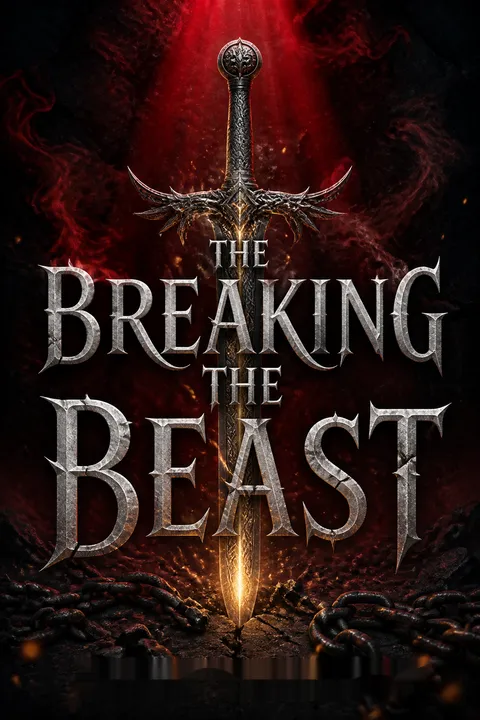


Plot Summary
Prologue
Grim Scarapelli, the god of the dead and owner of Sinopolis, descends beneath his Las Vegas hotel to the cage where he has kept Xander, an ancient god overwhelmed by uncontrolled power. Xander demands the Blade of Bane, which has bonded to Miranda, Grim’s human head of security.
Grim refuses to bring her near him until Xander insists he can teach her to use it. Knowing the request could endanger Miranda, Grim agrees anyway. As the elevator carries him away, Xander’s power jolts it to a stop, warning that he will escape if she does not come.
The prologue makes the cage both a physical safeguard and a record of Grim’s guilt. He fears Xander’s power, yet recognizes that imprisonment has not healed the god whose suffering he helped contain. His decision to involve Miranda is not simply an assignment: it transfers an impossible moral choice to someone with less power but greater freedom to act. The elevator’s sudden stop punctures Grim’s authority. Xander may be confined, but the terms of his confinement are never fully under Grim’s control.
The Blade Below Sinopolis
Miranda West is trying to relax at home while her eleven-year-old son, Jamal, is away at camp when Grim summons her to Sinopolis. He asks her to bring the Blade of Bane, the weapon bonded to her after a previous supernatural crisis, and takes her below the hotel to meet Xander. The ancient god waits behind bars, his power making the air painful to breathe.
He says he wants the blade to end his unlivable existence. Miranda insists on hearing his reasons before deciding, then raises the weapon and drives it into his heart. Xander falls, and the pressure of his power disappears. Miranda leaves the basement believing she has granted the death he asked for, but the act feels like a loss, not a victory.
Miranda’s first choice establishes that duty is not emotional numbness. She questions the god, understands that the blade’s death is permanent, and acts only after weighing his plea against the consequence. Her military discipline makes her capable of decisive violence, but it does not protect her from moral injury. Xander, meanwhile, frames death as the only remaining form of agency. Their first encounter therefore joins two opposing needs: her need to judge responsibly and his need to stop enduring a life he cannot govern.
Death Does Not Hold
The next morning, Miranda learns that Xander healed after briefly dying. The blade did affect him: a small portion of his immense power is gone, and Grim’s aide, Timothy, asks her to repeat the killing. Miranda returns after work, and the stabbings become a grim daily routine. Xander wants each strike, while Miranda tries to keep the visits impersonal.
Her work at the hotel and her conversations with Vivien, her vampire best friend, cannot keep her from thinking about the god in the basement. As the blade gradually weakens him, Xander’s episodes become less manageable in a different way. During one visit, his body swells into a blazing, monstrous form, and Miranda approaches through the pain to strike him again.
The failed killing changes the weapon from a solution into a process. Each death is temporary, but each one alters Xander, giving Miranda a measurable way to help while binding her more closely to his torment. Her insistence on treating the visits as work echoes her larger habit of containing feeling through routine. Yet the routine itself becomes a relationship: Xander waits for her, and she keeps returning. Their contact is ethically unstable because it is at once care, violence, and the only relief either of them can offer.
A God Without His Sea
After surviving another uncontrolled transformation, Xander tells Miranda he was once Nun, a god of the oceans. A sun god named Aten killed him, and Xander returned from the cradle of life too soon, before he could regain control of his power. His presence now makes the city’s electricity fail, so Grim moved him far from the sea and locked him away.
Miranda also learns from Bianca, an oracle, that Xander’s death may trigger a catastrophe, though Bianca cannot explain how. Miranda understands the warning but cannot accept that Xander should suffer indefinitely. When Xander shows her the scars he has inflicted on himself, she reaches through the bars to touch his hair before killing him again. Her sympathy is no longer abstract.
Xander’s past recasts his instability as more than a personal defect. His confinement follows a divine political failure: the gods failed to stop Aten, then left Xander to bear the consequences of a premature return. Miranda’s touch matters because it interrupts the logic of treating him only as a dangerous object or a task. Bianca’s unclear prediction introduces a competing moral authority, forcing Miranda to distinguish genuine evidence from fear. She is pulled between a suffering individual she can see and an apocalypse she cannot yet understand.
The Ordinary Date
Jamal notices that his mother rarely makes time for herself and encourages her to date while he is away. Miranda tries, meeting Jim, a pleasant single father, for lunch, but she feels no connection and ends the date when he reacts with hostility to her rejection. Soon afterward, someone in an orange hoodie tries to break into her car, where she has left the Blade of Bane.
Xander tells her the theft could put the weapon in dangerous hands and offers to teach her how to fight with it. Miranda agrees, entering his cage despite her fears. The offer gives her a practical reason to spend time with him, but it also shifts their arrangement: Xander is no longer only the person she kills. He becomes her teacher.
Jamal’s advice exposes the difference between being competent and being alive. Miranda has built a dependable life around parenting, work, and security, but his absence reveals how little she has claimed for herself. Jim’s date offers conventional companionship and confirms that respectability alone cannot create intimacy. The attempted theft then makes the supernatural stakes tangible: Miranda’s private burden is also a weapon someone else may seek. Accepting Xander’s training is simultaneously sound security practice and a step toward trusting the person she has been ordered to kill.
Monopoly in the Cage
Xander repeatedly disarms Miranda during their first lesson, showing her that carrying the blade is not the same as knowing how to keep it. Their practice slips into a competitive Monopoly game, where both cheat and accuse the other of doing the same. The argument turns into a kiss that Miranda initiates, followed by an encounter that leaves her shaken by how much she wants him.
She still uses the blade on him before leaving. At home, she hears a voice coming from the sword: Bob is a sentient weapon, a masculine fae who dislikes blood and objects to being treated like an ordinary tool. The revelation turns Miranda’s most important responsibility into a relationship of its own, and gives the blade a will that may not match hers.
The game gives Miranda and Xander a space where neither holds unquestioned authority. They compete, cheat, and expose their desire through the same combative energy that defines their training. Miranda’s killing afterward shows how strongly she still relies on procedure to regain control. Bob’s sudden voice complicates that control further: the weapon is not merely an instrument but a participant with its own judgments. The story’s humor does not cancel the ethical tension. It makes that tension harder to compartmentalize, because Miranda must now account for the feelings of both the god she kills and the blade she wields.
The Fae Made Bob
Vivien takes Miranda to Echo, a guarded seer and fae, to learn why Bob speaks and why he chose a human keeper. Echo explains that ancient fae elders created the Blade of Bane to defend their people from tyrannical gods. A former fae wielder grew corrupt with power, so the fae hid the weapon until it surfaced when needed.
Echo chose Miranda because her mortality and military experience give her a clearer sense of life’s cost than an immortal’s endless perspective. Meanwhile, Miranda’s dreams begin to feature a burning presence, and she wakes after walking in her sleep. Bob can confirm that Xander’s ocean dominion does not match the sunlike threat she sees. Her private fears now look like a warning with an unknown source.
The blade’s origin places Miranda inside a history where protection can become domination. The weapon was made to correct an imbalance, yet its former wielder repeated the abuse it was meant to prevent. Echo’s faith in Miranda rests not on purity but on finitude: a mortal must live with the consequences of each choice. The dreams unsettle that confidence. They suggest that Miranda’s mind may be responding to a threat outside her conscious understanding, while Bob’s knowledge rules out Xander as its likely source. The story thus shifts from an intimate moral dilemma toward a mystery about manipulation.
Candy Land, Then Blood
Xander sets up Candy Land to make Miranda practice having fun, and she deliberately loses the next game so he can claim a kiss. Their attraction becomes sex, but afterward she cannot bring herself to stab him. Xander reads her hesitation as a danger to her and tries to drive her away by attacking her feelings about her late husband, Rashon, and the possibility that Xander could hurt Jamal.
He then provokes her into cutting off his head, hoping terror will sever their attachment. It does not. Xander revives, and Miranda stays beside him as he holds her while she cries. He carries her to his private grotto, where she wakes among the springs and realizes how far their relationship has moved beyond the original arrangement.
The games turn recreation into emotional exposure. Miranda’s deliberate loss is a choice to stop hiding behind competence, and intimacy briefly makes that choice feel liberating. The beheading reverses the promise of closeness: Xander weaponizes Miranda’s fears because he believes separation is safer than dependence. Her refusal to leave him after the violence demonstrates that attachment has become an action, not simply an attraction. The scene also reveals the cost of his self-protective cruelty. Xander can endure his own deaths, but he cannot make Miranda’s pain disappear by causing it.
A Life He Fears
In the grotto, Xander and Miranda reconnect physically, and she tells him that she wants him, not only the relief his power can provide. Grim, Timothy, Bianca, and Vivien arrive to confront what should happen next. Bianca repeats her warning of catastrophe, while Timothy argues that Xander remains dangerous; Grim insists Miranda must honor the judgment she made for the blade.
Xander supports Grim’s position and prepares for the killing rather than ask Miranda to choose him. She drives Bob into his heart again, believing the blade will return him as it has before. This time, after two days without Miranda, Xander’s isolation overwhelms his control. He breaks free of the cage and follows the memory of her address to her home.
The gathering makes private intimacy answerable to public risk. Each immortal interprets the same uncertainty through a different duty: Bianca fears prophecy, Timothy fears Xander’s power, and Grim fears the consequences of sparing him. Miranda is left with the most personal form of judgment, but Xander’s agreement removes the comfort of blaming him for it. His later escape reveals the flaw in the group’s decision: their account of danger overlooks the emotional cost of renewed isolation. His need for Miranda is no longer just desire. It has become a condition of his ability to remain in control.
The Cage Breaks Open
Xander reaches Miranda’s house and finds her feverish with a cold. He stays despite her attempts to send him away, runs a bath, and cares for her until she can rest. Away from the cage, he admits that he wants to live, but fears he cannot manage his power and pain without her. Miranda, still ill, tells him she loves him. Their reunion offers a future neither had allowed themselves to imagine.
During the night, however, Miranda dreams again of a destructive, sunlike presence. She sleepwalks, and when Jamal unexpectedly returns from camp after someone impersonates Miranda to summon him home, she mistakes the scene in her living room for the dream’s threat. She thrusts Bob into Xander, who steps between her and her son.
Xander’s choice to live is not a sudden cure; it is a request for relationship as a form of support. Caring for Miranda lets him experience a role other than prisoner, threat, or supplicant, while her declaration gives their attachment a name. Yet the new tenderness unfolds beside an unresolved danger. Miranda’s dreams turn her own body into an unreliable battleground, and the false message to Jamal exploits the vulnerability she most fears. The fatal misunderstanding is therefore not random bad luck. It is the point where hidden coercion, her sleepwalking, and Xander’s protective instinct converge.
The Final Stab
Xander dies in Miranda’s arms after taking the strike meant for the figure she believed was threatening her. Jamal, newly returned from camp, watches his mother kill the stranger who saved him.
Miranda learns that someone had contacted the camp pretending to be her and arranged Jamal’s return, while the dreams and sleepwalking began after an attempted theft of Bob. Timothy helps clean the scene, and Javier supports Miranda and Jamal through their shock. When Miranda recovers enough to investigate, she connects the forged message, the attempted theft, and her manipulated dreams.
Timothy knows no obvious enemy of Xander beyond Aten, the sun god killed long ago, and can identify no culprit. Miranda is left grieving and certain that someone arranged the conditions of Xander’s death.
Xander’s final act of protection makes the tragedy intimate and irreversible: the same blade Miranda used to relieve his suffering now kills him while he shields her child. Jamal’s return is not a subplot diversion but the mechanism that turns Miranda’s vulnerability into a weapon against her. Miranda’s grief includes guilt, but her investigation begins to distinguish culpability from manipulation. By linking the car break-in, the forged camp message, and the sleepwalking, she refuses to accept the death as a simple consequence of her own choice. The search for an unseen antagonist becomes a way to recover agency.
The Blade Calls Back
Aoiki, Echo’s daughter, finds Miranda and says the Blade of Bane can call back what it has killed. She brings Sunny, her fae partner, to Miranda’s house, where Sunny uses Bob in a ritual to restore Xander.
The process grows violent: the blade protests, the air fills with a destructive light, and Miranda is thrown across the room. Xander returns, but his first response is anger toward Miranda, who cannot explain what the ritual has done. The epilogue reveals the wider cost.
Every entity previously slain by Bob has been released, including Aten, the sun god whose old ambition was to become the sole god. Bianca understands that Xander’s resurrection, not his death, fulfilled the danger she foresaw, and fears she has helped bring disaster upon Miranda and the others.
The attempted repair exposes the limits of treating death as a reversible technical problem. Aoiki and Sunny act from love, but their ritual restores more than the one person they intend to save. The blade’s resistance signals that it has a history and power its keepers do not fully understand. Xander’s accusation leaves the reunion emotionally unstable, while the epilogue reframes Bianca’s warning without making her vision precise enough to prevent disaster. The story ends by making hope costly: Miranda gets Xander back, but the world also inherits the consequences of every earlier use of the weapon.
Epilogue
Bianca meets Fallon, the former god Horus, after the resurrection. She realizes that the bright destruction in her vision referred to Xander’s return, which has released every entity killed by the Blade of Bane. Aten is among them, still bent on making himself the only god.
Fallon tries to reassure Bianca, but she believes her failure to interpret the vision clearly has put everyone in danger. Her greatest fear is not only that the world will burn, but that Miranda will bear the cost of a catastrophe Bianca could not stop.
The epilogue converts Bianca’s vague warning into a consequence without granting her retrospective certainty or control. She did see danger, but seeing is not the same as understanding what action will avert it. Fallon’s reassurance sits uneasily beside Bianca’s knowledge that Aten has returned, making their personal tension part of a larger crisis rather than a resolution. The ending also expands the meaning of resurrection: restoring one beloved person releases a history of violence the living had tried to bury. Miranda’s choice has consequences beyond her own grief, and Bianca’s guilt cannot undo them.
Analysis
Breaking the Beast builds its romance around a hard contradiction: Miranda’s care for Xander is expressed through the weapon that kills him, while Xander’s longing for relief gradually becomes a desire to keep living. Their repeated encounters make violence relational. Each stab reduces his power, but also creates another moment of attention between a god who has been isolated for ages and a human accustomed to making herself useful rather than vulnerable.
Miranda’s discipline is both her strength and her shelter. She manages hotel security, raises Jamal, and carries the Blade of Bane because she trusts herself to act when others hesitate. Yet the story shows how competence can become a defense against grief and desire. Xander’s teasing, games, and direct challenges make her confront the life she has postponed. His own volatility mirrors her hidden fear of losing control, though their histories are not equivalent: he is dangerously powerful, and she is a mortal who must live with the consequences of each choice.
The blade complicates the familiar idea that love can simply redeem a dangerous being. Miranda’s presence helps Xander regain control, but affection cannot erase the political history behind his imprisonment or guarantee that he is safe. Bianca’s vision is similarly limited: foresight without interpretation produces dread rather than wisdom. When Miranda’s sleepwalking and Jamal’s manipulated return converge, private trauma becomes a route into public violence.
The ending refuses to treat resurrection as a clean reward. Miranda and her allies recover Xander, but the act also releases the beings the blade had removed from the world. Love makes restoration imaginable, not harmless. The novel’s sharpest question is therefore not whether Miranda should follow her heart or her duty. It is whether any person, mortal or immortal, can choose responsibly when institutions, prophecies, and even magical tools reveal only part of what their choices will unleash.
Review Summary
Breaking the Beast follows Miranda, tasked with killing the god Xander using the Blade of Bane. Their interactions lead to unexpected feelings and complications. Readers praise the compelling characters, humor, and spicy romance, while noting the cliffhanger ending. Many recommend reading the previous Vegas Immortals series first. The book is described as emotional, with strong character development and an engaging plot. Some reviewers found it slightly long or repetitive, but most eagerly anticipate the sequel.
People Also Read

Characters
Miranda West
The mortal blade keeperMiranda is a former Special Forces soldier, a single mother, and the head of security at Grim’s Sinopolis hotel. She relies on preparation, routine, and competence to care for Jamal and manage the supernatural crises around her. That discipline makes her a capable judge of danger, but it also gives her a way to avoid grief, loneliness, and her own wants. Her connection to Xander challenges the belief that responsibility requires emotional self-denial. Miranda’s central struggle is not whether she can fight, but whether she can make room for pleasure and vulnerability without abandoning the people who depend on her.
Xander
The caged sea godXander was once a god of the seas, but his premature return from death left him burdened with power he cannot reliably control. Grim keeps him beneath Sinopolis because his presence can endanger both people and the surrounding world. Beneath his volatility, Xander is observant, sardonic, and painfully aware of his isolation. He begins by seeing death as his only escape, while Miranda’s attention awakens needs he has tried to extinguish. His pride and fear make him capable of pushing away the person he most wants near, even as he longs to be seen as more than a monster.
Jamal
Miranda’s perceptive sonJamal is Miranda’s eleven-year-old son, an intelligent, curious boy who enjoys camp, robotics, and learning new things. He is mature enough to notice that his mother has built her life around work and his needs, and he encourages her to make space for her own happiness. His warmth gives Miranda a reason to keep moving through loss, but he is not simply a symbol of her responsibilities. His independence and candor make their relationship affectionate and mutual, even as Miranda remains fiercely protective of him.
Vivien
The vampire best friendVivien is Miranda’s vampire best friend and Grim’s wife. She is playful, impulsive, and unusually frank, qualities that contrast with Miranda’s careful self-control. As the master vampire responsible for newly turned vampires, she carries genuine emotional labor beneath her jokes and schemes. Vivien’s affection for Miranda makes her willing to intervene when she thinks her friend is denying herself a chance at happiness. Her relationship with Grim, including their ridiculous pillow war, gives Miranda a living example of intimacy that can remain messy, humorous, and strong.
Grim Scarapelli
The hotel’s death godGrim is the god of the dead, known in ancient Egypt as Anubis, and the owner of Sinopolis. He oversees the passage of souls while trying to keep supernatural dangers contained beneath his hotel. His polished modern life masks the weight of an ancient duty and the guilt he carries over Xander’s imprisonment. Grim trusts Miranda’s judgment because she takes responsibility seriously, but that trust also places an extraordinary burden on her. His marriage to Vivien reveals a more playful, vulnerable side than his public authority suggests.
Timothy
Grim’s exacting aideTimothy is Grim’s sharply dressed aide, a god associated with literature, science, and wisdom. He is organized, guarded, and inclined to contain risk through rules and clear boundaries. His concern for Miranda is sincere, though he can mistake protection for the right to decide what she should do. Timothy’s tension with Aaron exposes how his own fear of uncertainty shapes his judgments. He serves as a counterweight to Vivien’s improvisational style and to the dangerous emotional momentum between Miranda and Xander.
Bianca
The uncertain oracleBianca is the goddess Hathor, an oracle whose visions arrive with emotional force but not always with usable explanations. She owns the Parisienne hotel and cares about the safety of both mortals and immortals. Her warnings are driven by genuine concern, not a desire to control Miranda, yet her uncertainty leaves others to make decisions without knowing what the visions mean. Bianca’s conflict is partly with her own limits: she believes foresight should help people, but cannot always translate what she sees into clear counsel.
Bob
The opinionated fae bladeBob is the sentient Blade of Bane, an ancient fae weapon with a French accent, a strong sense of self, and an aversion to bloodshed. Miranda treats him as a partner rather than a possession, even when his objections complicate her duties. His history embodies the danger of giving one person too much power, since a former wielder became corrupt. Bob’s humor softens the story’s violence, but his anxieties and independent will also remind Miranda that the weapon’s purpose cannot be reduced to whatever its keeper wants.
Echo
The guarded fae seerEcho is a powerful, irritable fae who studies patterns and helps keep watch over the supernatural world. She helped locate the Blade of Bane and judged Miranda capable of carrying it because she is mortal, a warrior, and attentive to the cost of life. Her bluntness often conceals affection, especially for her family. Echo’s history with the blade gives her authority, but she also knows that its previous keepers have failed. She asks Miranda to trust her own capacity for humane judgment.
Aoiki
The daring fae daughterAoiki is Echo and Ryuki’s centuries-old daughter, though she attends school and keeps a lively, rebellious manner. She is openly affectionate with Sunny and more willing than her mother to question the fae preference for secrecy. Aoiki’s emotional directness makes her quick to recognize what Miranda is struggling to admit. She believes love is worth risk because she has experienced a lasting bond herself. Her confidence can be impulsive, but it is rooted in loyalty and a readiness to act for people she cares about.
Sunny
Aoiki’s quiet fae partnerSunny is a reserved fae with a close bond to Aoiki and a strong connection to the Blade of Bane’s history. She is thoughtful and capable, though she tends to let others speak for her until a task demands focus. Her knowledge of the blade’s potential makes her important to the group’s understanding of fae magic. Sunny’s devotion to Aoiki gives her a personal stake in the choices she makes, and her quietness should not be mistaken for uncertainty or passivity.
Javier
Miranda’s steady secondJavier is Miranda’s deputy at Sinopolis and her former Special Forces comrade. His calm, practical support helped her through the death of her first husband and the demands of raising Jamal. He checks on her using the same direct trust they developed in the military, and he shows care through action rather than speeches. Javier’s loyalty extends beyond workplace duty: he treats Miranda and her son as family and steps in when they need practical help.
Aaron
The thrill-seeking baristaAaron is a human barista at Sinopolis who knows that gods and vampires move through the hotel’s polished public world. A surfer and adrenaline seeker, he brings warmth and humor to Miranda and Vivien’s morning gatherings. His attraction to Timothy is complicated by the god’s preference for order and caution. Aaron’s openness contrasts with Timothy’s restraint, and his willingness to challenge the god makes him more than a cheerful observer of the hotel’s supernatural life.
Rashon
Miranda’s fallen husbandRashon was Miranda’s husband and Jamal’s father, a serviceman who died while serving overseas. Miranda remembers him as a good man devoted to their son, while acknowledging that their military lives left them little time to build the future they expected. His memory remains part of Miranda’s grief, but it does not define the limits of her capacity to love again.
Aten
The ambitious sun godAten is the sun god whose ambition once threatened the balance among gods and other beings. Xander opposed him and was defeated, helping set in motion a wider struggle that changed how immortals could seek worship and power. Aten represents the political danger of a god who believes his own authority should be absolute.
Fallon
Bianca’s formidable counterpartFallon, formerly known as the god Horus, is a powerful immortal with a complicated, charged relationship with Bianca. He regards her visions as less reliable than his own understanding of the future, and his bluntness often lands as contempt. Yet he also offers her reassurance when her fear becomes difficult to bear. Their mutual distrust and attraction complicate the counsel Bianca receives.
Jim
The disappointing dateJim is a single father who meets Miranda through a dating app. He appears attentive and respectful during their lunch, but reacts badly when she declines another date. His brief role gives Miranda a sharp contrast between socially conventional compatibility and the difficult, unsettling connection she has begun to form with Xander.
Ryuki
Echo’s devoted husbandRyuki is Echo’s gentle, long-lived fae husband and Aoiki’s father. His affection for Echo softens the room around her sharper temperament, and he supports her when she hesitates to share the fae history of the Blade of Bane. He offers a quiet example of devotion that survives differences in personality and age.
Plot Devices
The Blade of Bane
A mortal’s lethal authorityThe Blade of Bane is a fae weapon capable of killing immortals in a way ordinary weapons cannot. It bonds to Miranda, making her its sole keeper and forcing her to decide how its power should be used. Each time she wounds Xander, the blade reduces the excess power that makes him dangerous, even though he revives. Its history warns that a powerful weapon can distort the judgment of the person wielding it. Bob’s sentience makes the blade a character as well as a source of authority, and its deeper potential becomes central to the ending.
The Cage and Repeated Death
A ritual of relief and restraintXander’s cage beneath Sinopolis is intended to protect the world from his volatile power, but it also prolongs his isolation. Because the Blade of Bane initially cannot keep him dead, Miranda returns repeatedly to strike him. The ritual gradually reduces his power and creates the structure through which the pair come to know each other. The cage therefore works in two directions: it restrains a threat, while making a human visitor the only person who can offer Xander relief and companionship.
Bianca’s Visions
An unclear warningBianca’s visions connect Xander’s fate to a looming catastrophe, but she cannot initially explain what action will cause it or what form it will take. Her warning gives Miranda a reason to doubt the task Grim assigns her, while its vagueness prevents the characters from making a fully informed choice. The visions also blur the border between supernatural threat and psychological experience when Miranda dreams of a destructive sunlike presence and sleepwalks. Their eventual meaning complicates the easy assumption that either killing or saving Xander is safe.
Bob’s Living Voice
A weapon with a conscienceBob’s voice turns the Blade of Bane from a silent tool into a companion with preferences, fear, and moral objections to killing. His humor gives Miranda someone to consult when she faces decisions that no ordinary human can understand. His knowledge of the blade’s history helps explain why Miranda was chosen, but his limits matter too: Bob cannot fully account for what the weapon is capable of. The gap between his stated purpose and his unknown potential drives the final crisis.
Games and Combat Lessons
A safe shape for riskXander’s sword lessons and the board games he brings into his cage give Miranda and Xander structured ways to challenge each other. Their competition allows attraction and vulnerability to surface without either of them having to name those feelings immediately. The games echo Miranda’s need for control and Xander’s hunger for engagement, while the lessons also prepare her to protect the blade from theft. When their playful contests give way to intimacy, the boundary between training, play, and emotional dependence becomes increasingly difficult to maintain.
Vegas Immortals: The Beast & the Badass Series
About the Author


Download PDF
Download EPUB
.epub digital book format is ideal for reading ebooks on phones, tablets, and e-readers.








