

Plot Summary
The Rooftop Sword Chase
Vivien,1 a vampire and former bounty hunter, tears through Las Vegas traffic after a motorcyclist carrying a sword. She risks a spectacular jump over cars, catches up at the Parisienne Hotel, and finds the rider cornered on its rooftop. When her attempt to compel him to step down fails, he leaps to his death, leaving Vivien1 with the weapon.
She recognizes it as a possible god-killer and fears for Grim,2 her immortal boyfriend.2 At Grim’s2 hotel, he and his scribe Timothy4 identify the sword as a crude fake, but learn the dead young man had worshipped a god. That forbidden devotion suggests an immortal is recruiting followers and preparing to disrupt the order between gods and humans.
The chase begins as Vivien’s familiar work, tracking a target, but the rooftop turns pursuit into an ethical trap: her power cannot rescue someone whose will has already been claimed. The fake sword makes the death feel both senseless and ominous. Vivien is left holding an object that has no practical value yet points toward a real conspiracy. Her fear for Grim also grounds the supernatural threat in a personal attachment she is not yet ready to name as love.
Death Keeps His Scales
Grim,2 the ancient god who judges the dead, weighs a soul against Ma’at’s feather while Vivien1 waits with Cupcake,15 her reaper puppy.15 Their intimacy is easy; their vulnerability is not. Vivien1 consents to letting Grim2 use their blood bond to direct her body, then recoils from the thought of surrendering her heart.
Her childhood under abusive relatives taught her that earning affection means reshaping herself to suit someone else, so love feels like a threat to her independence. Grim2 tells her he loves her, but she cannot answer. Meanwhile, her discovery of a fake Blade of Bane and a dead worshipper leaves her shaken. Grim2 wants to comfort her, yet his duties and the growing mystery keep pulling them back into danger.
The relationship’s central tension is not whether Vivien desires Grim, but whether she can trust desire without turning it into self-erasure. Her consent to a carefully negotiated power exchange contrasts with her fear of emotional dependence: bodily control can be bounded, while love seems limitless. Grim’s professional role offers a counterpoint. He judges people by what they have done, yet must learn that Vivien’s silence is not proof of indifference. Their intimacy therefore becomes a test of agency, not simply a romantic reward.
The Trail Beneath Vegas
Vivien1 and her friend Miranda,3 Sinopolis’s head of security, look for clues in the home of Kyle Smith, the young man who jumped. A vicious Maine Coon drives them off before they can find evidence, but Miranda3 notices the likely answer: a worshipper might leave an altar or devotional objects that police would overlook in a suicide case.
She persuades Vivien1 to enlist Echo,11 a hacker and information broker, who agrees to search for the real Blade of Bane. Echo11 insists Miranda,3 a mortal veteran, must be the one to carry it, because she understands the consequences of using a weapon.
Miranda3 accepts. At the same time, Vivien1 and Miranda3 notice Timothy’s4 attraction to Aaron,9 the barista, though Timothy4 refuses to risk involving a human in divine affairs.
The investigation turns Vivien’s guilt into action without pretending that action can undo the rooftop death. Miranda’s insight matters because it is ordinary investigative reasoning, not supernatural force: she knows where evidence might hide and who will fail to recognize it. Echo’s condition also establishes a moral limit around the god-killing blade. The budding Timothy and Aaron connection echoes Vivien and Grim’s dilemma from another angle: intimacy across radically unequal lives asks whether protection is care or a reason to withhold the truth.
The Car Bomb and the Choice
After a fight over Vivien’s1 hesitation to return Grim’s2 declaration of love, Grim2 leaves her to fetch her coat. His car explodes; he survives the blast, but Vivien1 believes for a moment that she has lost him and clings to him afterward. The shock recalls her parents’ deaths and exposes how fear has shaped her attachment to him.
Soon the gods gather at Wolf Town, where Galina6 brings Grim’s ex-wife,8 Qwynn,8 to explain her part in the vampire conspiracy. Qwynn8 admits a worshipper recruited her to revive the Original vampire7 and create an army. Grim,2 recognizing how trapped Vivien1 feels by her immortal life, offers her distance. She asks him not to push her away, though she still cannot say she loves him.
The car bomb converts an argument about commitment into a bodily rehearsal of loss. Vivien’s response reveals that her refusal to speak is less a lack of feeling than a defense against the terror of needing someone. Grim’s offer of space is an attempt to distinguish love from possession, especially after his history with Qwynn. Yet Qwynn’s account shows that personal grievances can become political machinery: she joined a conspiracy for power without understanding the force directing it.
Wontons for the Dead
At a delayed dinner, Vivien1 finds Grim2 convulsing beside a plate of wontons. Galina6 arrives and identifies the cause: he has eaten flesh from the dead, his secret weakness. As Grim2 turns to stone and disintegrates, Vivien1 finally tells him she loves him, too late for him to hear.
Galina6 then explains that Grim2 and Osiris16 imprisoned her sister,7 Sekhmet,7 the Original vampire,7 and that freeing her is meant to overturn the existing order. She claims the rooftop worshipper died because Vivien1 cornered him, then attacks Vivien1 and breaks her back. Before leaving, Galina6 learns Vivien1 has stolen the Blade of Bane from her chandelier bar, using a distraction involving Echo’s11 engineered rabbits and Miranda’s3 help.
Grim’s death weaponizes the story’s most intimate material: the secret weakness is delivered through an ordinary meal, and Vivien’s long-delayed confession arrives at the instant it can no longer repair anything. Galina’s justification, liberation from a system she considers tyrannical, complicates her violence without excusing it. She treats other people’s choices as expendable pieces in a historical correction. Vivien’s hidden theft of the blade is a small but consequential refusal to let grief leave her entirely powerless.
A New Death Takes Hold
Timothy4 tells Vivien1 that Fallon,5 a god of healing, has inherited Grim’s2 authority over souls. Vivien1 is still broken by grief when five blood-bound showgirls attack Sinopolis, bite guests, and try to seize Timothy.4 Miranda3 uses the Blade of Bane to kill one attacker, while Fallon5 drives others away; the surviving vampires reveal that Sekhmet7 can control those she turns.
Galina’s6 forces also capture Bianca,10 and the recovered showgirl dies from her wound despite Vivien’s1 efforts to comfort her. At the hotel entrance, Vivien1 sees Galina6 beside the newly awakened Sekhmet.7 She rejects the suggestion that she drink Fallon’s5 blood for strength, then decides the only chance to stop the uprising is to bring Grim2 back.
This assault makes the conspiracy immediate and human-scaled: its victims are hotel guests, workers, and newly turned vampires whose minds have been taken from them. The dead showgirl sharpens Vivien’s opposition to treating every vampire as a threat to be erased. Fallon’s sudden inheritance of Grim’s role exposes a different cost of death: duty can pass to someone who never sought it. Vivien’s decision to resurrect Grim is driven by love, but also by the belief that his judgment and experience are needed to stop the violence.
The Cradle Calls Back
To find the Cradle of Life, Vivien1 and the gods seek Xander,12 a powerful, unstable prisoner beneath Sinopolis. He says he knows where the Cradle moves, but that only a divine guide can reveal its entrance. Vivien1 kisses him and receives a vision of a hidden chamber inside the Great Pyramid of Giza. She flies there with Miranda3 and Aaron,9 follows Xander’s12 directions through the tunnels, and reaches a pool of living power.
With no instructions for resurrection, she kneels and prays to Anubis,2 Grim’s2 original god-name. The pool rises and Grim2 emerges, but his return is dangerously premature. He does not recognize Vivien1 and, overwhelmed by unstable power and fragments of old memories, attacks her as if she were an enemy.
Xander’s help makes resurrection possible but refuses to make it safe. The Cradle is not a storage room for a recoverable person; it is a source of undifferentiated power that can return a god without the memories and attachments that made him himself. Vivien’s prayer is therefore more than a spell. It is an act of recognition offered in the absence of any guarantee that Grim can return it. The danger exposes the difference between restoring a body and restoring a relationship.
Love Through the Amnesia
Grim’s2 instincts lead him toward Vivien,1 and her touch and the familiar objects she carries gradually restore his memories. He remembers loving her and they reunite, but their return to Vegas reveals that Galina6 has taken their allies.
When Grim2 explains that his former defeat of Sekhmet7 depended on secretly blood-bonding and putting her to sleep, Vivien1 recoils at the resemblance to the coercion that transformed her.
Their next conflict is larger: Grim2 believes all newly made vampires must die to protect humanity, while Vivien1 argues that the unwilling deserve a chance to choose their lives. Rather than demand that she abandon her principles, Grim2 asks her to marry him and help him see what his ancient idea of balance excludes. She accepts.
Memory returns through touch, scent, and shared history, suggesting that identity is relational as well as cognitive. But reunion does not erase disagreement. Grim’s past solution to Sekhmet’s violence involved coercion, and Vivien recognizes the same structure in his proposed mass killing of vampires. Her refusal is not a test of romantic loyalty; it is the condition that makes intimacy possible. Grim’s proposal becomes meaningful because he offers her a place beside his power as a critic, not merely as its beloved.
Venom Beneath the Casino
Grim2 and Vivien1 descend through a hidden passage beneath a rundown casino to question Apep,14 an ancient god who knows Galina’s6 weakness. Apep14 keeps vampires chained and enslaved, and Vivien1 can barely suppress her anger long enough to maintain their cover. She performs obedience to convince him that Grim2 has changed sides.
Apep14 finally reveals that his venom is Galina’s6 secretum mortis, the hidden weakness that can undo a god. Vivien1 attacks, slashes him, and pulls one of his fangs before he can kill her; Grim2 beheads him when Apep’s14 counterattack wounds her. They secure the fang, while the other imprisoned vampires remain alive in the adjoining dungeon. The fang gives them a way to confront Galina6 without relying on the blade alone.
Apep’s lair shows what power looks like when no one is willing to impose limits: the vampires are reduced to instruments for his pleasure. Vivien’s performance of submission is a tactical inversion of that violence, using what the enemy expects of her to create an opening. The scene also tests Grim’s restraint. He has the power to destroy Apep, but Vivien’s injuries make his protective rage dangerous. The recovered fang shifts the coming battle from brute force toward knowledge of the enemy’s specific vulnerability.
The Blade Finds Vivien
Vivien1 approaches Galina6 at the Martini Hotel with Apep’s14 fang, but Galina’s6 cats knock her down before she can strike. Grim2 arrives with the reapers as Sekhmet7 and Idris13 join the fight. Miranda3 carries the Blade of Bane, while Aaron9 helps keep Idris13 occupied.
Sekhmet7 seizes Vivien’s1 will and runs the blade through her heart. Grim2 blasts Sekhmet7 away, then forces Vivien1 to drink his blood, pouring the Cradle’s unstable power into her as her body begins to fail. She survives with a beating heart and a divine strength of her own, but the blood bond between them breaks.
Vivien1 then reaches Sekhmet’s7 mind, senses her exhaustion and longing for sleep, and persuades her to bite Grim2 so he can bind and quiet her. Galina,6 seeing her sister7 subdued, impales herself on Miranda’s3 blade.
The climax makes the story’s central ethical questions physical. Vivien’s heart is pierced by the very weapon meant to restrain divine power, while Grim saves her by giving away the power that could have made him untouchable. Their bond breaks, but Vivien’s survival marks a new form of agency rather than a return to dependence. Her victory over Sekhmet comes from listening to the exhausted person beneath the predator. Galina’s final choice closes the conflict through grief, not a simple defeat by force.
A Different Kind of Balance
Grim2 frees the captured gods from Galina’s6 prison, and Miranda3 learns the Blade of Bane has attuned itself to her. Timothy4 and Aaron9 finally act on their attachment, while Qwynn8 leaves without seeking Grim’s2 return.
Grim2 brings Vivien1 before Osiris,16 who acknowledges that she has changed the balance by surviving as a vampire with divine power. Instead of ordering the newly turned vampires destroyed, Osiris16 appoints her their shepherd, charged with helping them live in harmony with gods and humans.
Grim2 remains responsible for the dead. Osiris16 restores Sinopolis, then sends the couple back to the hotel with their duties transformed rather than erased. They have survived the conspiracy, but their future now depends on building a truce that gives the unwilling a choice.
The resolution does not restore the old order intact. Osiris recognizes that the crisis exposed a genuine failure: people transformed against their will cannot be treated as disposable simply because their existence complicates divine authority. Vivien’s appointment turns her survival into responsibility, while Grim’s continuing role preserves the need for judgment without making it absolute. Their partnership now has a civic dimension. Love remains intimate, but it must also answer for the world its power helps shape.
Epilogue
On their wedding day, Vivien1 prepares at Isis’s hotel with Miranda3 and Cupcake15 nearby, while Grim2 arrives with a private gift before the ceremony. He gives Vivien1 ownership of a cupcake shop in Sinopolis’s lobby and reunites her with Cheri, the baker who once gave her a sense of home.
The couple’s old blood bond is gone, but Osiris16 has created a new magical tether that lets them share pleasure and power. Their wedding waits beyond the bedroom door, along with a reception, a towering cupcake display, and the life they have chosen to build together.
The epilogue makes domestic choice the counterpart to immortal destiny. Vivien receives not merely a luxurious gift but a business connected to her own history and appetite, a place she can shape rather than simply inhabit at Grim’s side. The new tether preserves intimacy without restoring the old blood bond, so their connection can be mutual play instead of compulsory control. Their wedding promises public recognition, while the cupcake shop gives that promise an everyday form: love is not only an eternal claim, but room to pursue a life of one’s own.
Analysis
The novel organizes its supernatural conspiracy around a question that is also intimate: when does protection become control? Grim’s2 work requires him to judge souls and maintain a cosmic order, yet his past solution to Sekhmet’s7 violence depended on overriding her will. Vivien1 recognizes the same danger when he proposes killing vampires who were turned against their wishes. Her resistance prevents romance from becoming an excuse for moral surrender.
Vivien’s1 emotional arc is shaped by the difference between chosen dependence and imposed dependence. Her childhood taught her that affection could be conditional, so she treats emotional self-sufficiency as proof of freedom. She can consent to a bounded exchange of power with Grim2 while remaining terrified that love will make her disappear into someone else’s needs. Grim’s2 willingness to reconsider his authority, rather than simply demand her trust, gives their relationship room to mature. The loss and restoration of his memory make that intimacy concrete: love must be recognized again, not assumed to survive every rupture unchanged.
The vampire uprising broadens the same conflict into politics. Sekhmet’s7 power creates beings without consent; Galina6 pursues a revolution by treating those beings and the gods around her as expendable; Grim2 initially treats their destruction as the price of balance. Vivien1 proposes a harder alternative: give the newly turned a chance to choose what kind of life they will lead. Osiris’s16 decision to make her their shepherd does not erase the danger, but it replaces a simple hierarchy with responsibility shared across groups.
The novel’s resolution therefore does not restore an untouched status quo. It asks whether ancient systems can adapt when the people they govern insist on agency. Its answer remains uneasy: compassion requires limits, and freedom brings obligations. Vivien1 and Grim2 do not stop being powerful, but their future depends on using power in ways that leave others a choice.
Review Summary
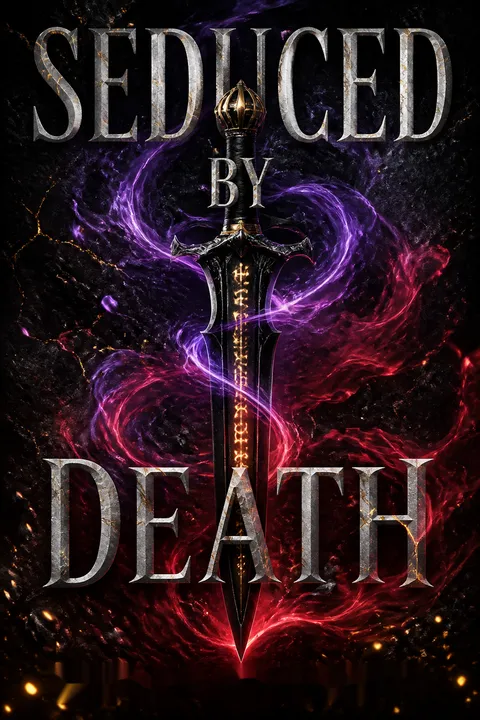
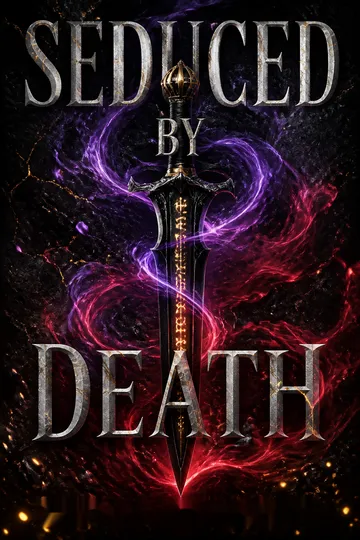
Seduced by Death concludes the Vegas Immortals trilogy with mixed reviews. Many readers praised the emotional rollercoaster, character development, and steamy romance between Vivien and Grim. The book offers intense action, plot twists, and a satisfying conclusion to their love story. Some critics found parts repetitive or rushed, and a few wanted more depth in god characters. Overall, fans enjoyed the Egyptian mythology, humor, and passionate relationships, with excitement for potential spin-offs featuring side characters like Miranda and Xander.
People Also Read

Characters
Vivien
Vampire bounty hunterA former human bounty hunter turned vampire, Vivien is impulsive, funny, fiercely curious, and more compassionate than her bravado suggests. Her childhood abuse left her wary of dependence; she fears that being loved will require her to edit herself into someone easier to keep. She trusts action before confession, which makes her an effective investigator and a difficult partner for an immortal who wants certainty. Her attachment to Grim2 is intense, but her moral independence is equally central. She refuses to let love excuse harm to unwilling vampires, insisting that her own chosen undead life does not grant anyone the right to choose for others.
Grim
Death's restless keeperKnown in ancient Egypt as Anubis, Grim is the god of death and judge of human souls. He is controlled, dutiful, and accustomed to centuries of routine, yet Vivien1 draws out his appetite for play, tenderness, and ordinary companionship. His love is generous but intense enough to blur the line between devotion and possession. His history with Qwynn8 has taught him that desire can become destructive when it demands that another person serve it. Vivien’s1 independence unsettles his certainty, forcing him to consider whether preserving order is always the same as doing justice.
Miranda
Combat-minded confidanteMiranda is Vivien’s1 best friend and the head of security at Grim’s2 hotel. A military veteran and devoted mother, she approaches danger with practical judgment and a strong sense of responsibility. Her questions often reveal solutions the supernatural characters overlook, and she is willing to accept a dangerous role when she believes it can protect others. Miranda’s restraint is not passivity: she weighs the human cost before acting. Her friendship gives Vivien1 room to be reckless while still holding her accountable, and her own private grief makes her cautious about risking another attachment.
Timothy
Orderly divine scribeTimothy is the god Thoth, Grim’s2 ancient aide, record keeper, and closest professional companion. Elegant, exacting, and devoted to order, he documents judgments and notices details others miss. His insistence on rules protects him from the uncertainty of divine and human relationships, especially his attraction to Aaron9. Beneath the composure is genuine loyalty and a deep capacity for grief. Timothy’s careful nature contrasts with Vivien’s1 improvisation, but he respects her enough to follow her into dangerous plans when the established rules stop serving the people they are meant to protect.
Fallon
Reluctant soul judgeFallon is the god Horus, a powerful healer whose abilities include restoring human memories. He is blunt, proud, and often impatient with Bianca10, but he is also protective of the people caught in divine conflicts. Fallon is accustomed to using his strength, not to carrying the full burden of judgment, and he regards that responsibility with unease. His experience shows that inheriting power does not immediately provide mastery. He must balance practical defense, healing, and a new duty that demands patience rather than force.
Galina
Cat goddess strategistGalina is Bast, a poised goddess with a sharp mind and a particular affinity for cats. She is patient enough to conceal her plans for ages, yet driven by an old wound and a fierce attachment to her sister7. Her political vision grows out of resentment toward the gods who control the world’s order, but she treats other lives as acceptable costs in pursuing change. Galina’s polish makes her difficult to read, while her feline envoys and calculated theatrics reveal her taste for control. She represents the danger of turning a real grievance into permission to dominate others.
Sekhmet
Original vampire goddessSekhmet is the ancient source of vampirism, a formidable goddess whose power is bound to hunger and transformation. She is less composed than the gods who have adapted to modern life, and her presence carries the force of an older, more instinctive world. The vampires connected to her reveal how creation can become coercion when a maker’s power overrides a new being’s will. Her relationship with Galina6 is rooted in deep family attachment, while her own experience hints at the difference between endless appetite and chosen purpose.
Qwynn
Grim's former wifeQwynn, also known as Qadesh, is the goddess of sexual ecstasy and Grim’s former wife2. Seductive, self-focused, and accustomed to using desire as leverage, she once expected to remain at the center of Grim’s2 world. Her history with him gives her knowledge of divine secrets, but her pride makes her reluctant to admit how much she wants connection. Qwynn is capable of recognizing power and pursuing it, though she often mistakes possession for intimacy. Her presence forces Grim2 and Vivien1 to confront how their relationship differs from the one he had before.
Aaron
Risk-taking baristaAaron is a Sinopolis barista with a stutter following a surfing accident, a history of addiction and gambling, and a taste for risk that he works to keep under control. His warmth and adventurousness draw Timothy4 toward him, despite the god’s fear of entangling a mortal in immortal affairs. Aaron is not naïve about danger once he sees it, and he chooses to help rather than retreat. His recovery depends on acknowledging his vulnerabilities, not pretending that his appetite for excitement has disappeared.
Bianca
Visionary love goddessBianca is Hathor, an oracle and goddess associated with love and fertility. She carries herself with glamour and warmth, but her visions do not give her simple command over the future. Bianca tries to mediate conflicts among the gods and often worries about the consequences of changing their established balance. Her long rivalry with Fallon5 complicates their exchanges, while her foresight makes her both valuable and vulnerable. She represents the limits of prediction: seeing possible futures does not necessarily make it possible to prevent them.
Echo
Hidden-world brokerEcho is an older Samoan hacker who once helped Vivien1 track fugitives and still operates an extensive network of city surveillance. Stern, demanding, and protective of her family, she does not offer assistance without setting conditions. Her expertise gives Vivien1 access to information beyond ordinary police channels, but Echo also understands that finding a weapon is not the same as knowing who should wield it. She insists that responsibility matters as much as capability.
Xander
Caged primordial godXander is an ancient god kept in a guarded enclosure beneath Sinopolis. His power is immense, but his behavior can shift between sharp mockery and disorienting instability. The scars on his body and his volatile transformations suggest a history of suffering that has altered how he experiences the world. Xander knows more about primordial forces than the gods who imprisoned him, and his willingness to help comes with unsettling uncertainty. He makes the cost of premature divine resurrection impossible to dismiss.
Idris
Protective demigodIdris is a demigod whose musical gifts have made him a celebrity among mortals. He resents the way full gods treat demigods as lesser beings, especially when that hierarchy harms his mother. His grievance is understandable, but his willingness to manipulate others in pursuit of power makes him dangerous. Idris’s charm can disguise how firmly he has chosen a side, and his conflict with Vivien1 reveals that shared frustrations do not guarantee shared ethics.
Apep
Predatory ancient godApep is an ancient god who hides beneath a run-down Las Vegas casino and exploits vampires he finds without protection. He is vain, cruel, and skilled at gathering secrets that may protect him from more powerful rivals. His lair turns divine authority into personal appetite, making him a grotesque example of the unchecked domination Vivien1 opposes. Apep’s knowledge of other gods’ weaknesses is valuable, but extracting it requires facing the harm he inflicts on those under his control.
Cupcake
Reaper puppyCupcake is a small, incorporeal reaper puppy who follows Vivien1 and offers comfort when she is frightened or grieving. Though too young to reap souls, she is brave, affectionate, and stubbornly present during danger. Her ordinary puppy behavior softens Grim’s2 austere world and gives Vivien1 a source of reassurance that does not demand explanation. Cupcake’s bond with both of them makes the reapers feel less like instruments of death and more like a strange, devoted household.
Osiris
Absent cosmic fatherOsiris is the ancient authority above the gods who presides over divine order and sets the terms of Grim’s2 work. He is distant, difficult to predict, and more powerful than the gods who serve within his realm. His decisions shape the boundaries around vampires, resurrection, and judgment, though he rarely provides the explanations others want. Osiris’s absence during the crisis leaves the gods to confront the consequences of the system he established.
Jamal
Miranda's spirited sonJamal is Miranda’s3 young son, an energetic baseball player whom she protects fiercely. His place in Miranda’s3 life gives her a concrete reason to think beyond the immediate supernatural fight. Though he has little direct involvement in the conspiracy, the possibility of danger to him shapes Miranda’s3 choices.
Marcella
Defiant goddess allyMarcella is a powerful goddess with a history of loving a vampire. She is proud, physically formidable, and unwilling to let personal grief excuse manipulation. Her loyalty is shaped by experience with the consequences of divine interference, and she acts decisively when others are under attack.
Plot Devices
Blade of Bane
God-killing safeguardA weapon forged by the fae to injure or kill gods permanently. The search for it drives Vivien’s1 investigation after a false copy draws her into the conspiracy. Its real location is hidden in plain sight at Galina’s6 chandelier bar, and Echo11 insists Miranda3 carry it because she understands the mortal cost of using a weapon with irreversible power. The blade becomes both a tactical defense and a test of whether divine enemies can be stopped without indiscriminate violence.
The blood bond
Power tied to intimacyWhen a vampire drinks from a god, their blood can create a bond that allows the god to influence the vampire’s will. The bond between Vivien1 and Grim2 is both a source of heightened power and an intimate practice they negotiate carefully. It also carries a history of coercion: Grim2 used a blood bond to subdue Sekhmet7, and Vivien’s1 own transformation was imposed on her. The device makes consent and control inseparable from the romance, forcing characters to distinguish chosen surrender from imposed obedience.
The Cradle of Life
Source of divine returnA primordial reservoir from which gods originate and to which their essence returns after death. Its location shifts, and reaching it requires divine assistance. A god restored too soon may return without stable memories or control, with enough raw power to endanger everyone nearby. Vivien’s1 journey into the Cradle makes resurrection possible, but also shows that bringing someone back is not the same as restoring the person they were.
Secretum mortis
Each god's hidden weaknessEvery god has a concealed vulnerability, often linked ironically to their domain. Discovering that weakness offers a way to restrain or defeat a god without relying on brute force. Apep14 knows that his venom can expose Galina’s6 vulnerability, so Vivien1 and Grim2 must first earn his confidence and then take a fang from him. The device turns divine conflict into a contest of knowledge and observation, while emphasizing that immense power never makes a being invulnerable.
The reapers
Death's watchful companionsGrim’s2 reapers are supernatural attendants who help him carry out his duties and appear as jackal-like dogs. Vivien’s1 affection for them, especially the puppy Cupcake15, alters the emotional texture of Grim’s2 realm: death is no longer only judgment and finality, but also care, companionship, and routine. The reapers can sense distress and arrive when their people need them, while their presence in the final conflict turns Grim’s2 isolated authority into a community of allies.
Vegas Immortals: Death and the Last Vampire Series
About the Author
Other books by Holly Roberds

Download PDF
Download EPUB
.epub digital book format is ideal for reading ebooks on phones, tablets, and e-readers.








