


Plot Summary
Morgue Drawer Rebirth
She wakes in a morgue drawer with fangs, red-tinted sight, no memories, and a hunger that makes her tear open the hospital blood fridge. After draining bags of stored blood, she escapes into the night, frightened by what she has become and strangely amused by the absurdity of it.
She finds no name or family in her mind, only a scar where something tore into her neck. For two weeks she survives on rats in the sewers and searches for the person who killed her. Her only promising lead is Chad, a man reportedly found near her body. She tracks him to a bar, convinced he can explain why she died and who left her a vampire.
The story begins by making identity a bodily emergency. Before the heroine can ask who she was, she must confront what her body now demands, and the blood bags make survival feel both practical and morally charged. Her laughter is not simple comic relief: it is an improvised defense against a reality too strange to master. The missing name leaves her free to invent herself, but the scar and the search for Chad tie that freedom to an unfinished act of violence.
Death Finds His Vampire
Chad admits he saw someone dump a body, but before he can describe the culprit, a terrifying man approaches and frightens him into flight. The stranger calls her a bloodsucker and threatens to end her; she retaliates by biting his hand, only to discover her fangs have retracted. He identifies himself as Death and demands to know who made her.
Before she can answer, three bloodied vampires arrive, claiming to serve Death. As the stranger fights them, she runs, then sees one of them attack a Black woman carrying groceries. She knocks the vampire away and refuses to let him feed. Death returns, subdues the attacker, and takes the exhausted newcomer with him, leaving her alive because she may lead him to the vampire who turned her.
The meeting forces Vivien to measure her new power against a being who appears to embody its ultimate limit. Her clumsy bite punctures the menace with comedy, but it also establishes her refusal to submit, even when resistance is plainly dangerous. The rescue of a stranger matters more than self-preservation: before she understands her own morality, she acts from it. Grim, meanwhile, reads her first as a threat to order, then as an instrument for restoring it.
The Pyramid Prison
In Grim's limo, the vampire refuses his judgmental labels and gives herself the name Vivien, the first choice she has made about who she is. At Sinopolis, Grim's lavish pyramid hotel, his aide Timothy supplies her with human blood and explains that Grim guides souls after death.
Vivien learns that her immortality makes her an unacceptable danger to the natural order, and Grim intends to use her as bait for the master vampire before killing her. Daylight approaches, weakening her, so she cannot safely leave. Grim seals the windows and leaves her in the penthouse with a threat and a chance to recover. She responds by throwing a statue at the elevator, making clear that shelter has not turned into obedience.
Naming herself is Vivien's first act of self-authorship, and it arrives in a space where nearly every other decision has been taken from her. The hotel offers safety, food, and luxury, yet Grim defines it as a cage and her as a temporary tool. Her rebellion is small and deliberately theatrical, but it preserves an essential distinction: dependence does not equal consent. Timothy's careful explanation also gives the supernatural conflict an ethical frame, even as Grim's conclusion remains uncompromising.
A Shaft To Freedom
Rather than wait for Grim, Vivien finds an emergency elevator key and slides down the car's cable to escape the penthouse. In the hotel's hidden lower chamber, she witnesses Grim judge a dead woman's soul and send it through a stone door toward a monstrous unseen fate. The black dog she recognizes from the morgue follows her, though she does not know it is a reaper.
Vivien reaches the public areas, where she uses her speed to pull a boy named Jamal away from a fight before it crushes him. His mother, Miranda West, recognizes Vivien as a vampire and draws a gun. Grim arrives as Vivien tries to flee, catches her, and returns her to Sinopolis.
Vivien's escape transforms Grim from a threatening abstraction into a worker whose decisions carry consequences beyond the living. What she sees in the chamber unsettles her confidence in his moral authority, while her rescue of Jamal shows that her instincts remain protective. The sequence also links her private crisis to ordinary people who can be harmed by supernatural conflict. Miranda's weapon makes that boundary visible: Vivien may mean no harm, but no stranger has reason to trust her.
The Cupcake Necklace
Grim brings Vivien to the alley where her body was found, and she discovers Chad among several drained corpses. The killer has arranged Chad's body to echo her own and written a taunting message in blood. A cupcake necklace on Chad's neck triggers flashes of baking, warmth, and a woman who once gave Vivien the charm.
When a vampire with a clouded eye attacks, Grim kills him, but not before the attacker cuts Vivien's abdomen. Back at Sinopolis, blood heals the wound, and Vivien's attempt to bake a huge cookie leaves Grim's kitchen smoking. Her scattered memories suggest she may have worked around food, while Grim realizes the killer is deliberately targeting her.
The necklace is a small object carrying more emotional weight than the blood-written threat. It reconnects Vivien to a life that was ordinary and relational, not merely to a crime scene. That memory does not restore her identity, but it gives her a human point of attachment beyond vengeance. Her disastrous baking attempt turns the clue into action: she tries to recover the past through the body and its habits, even as Grim sees the same events as evidence in a hunt.
The Oracle's Warning
At Grim's club, he confronts actor Bradley Hansen over a young woman's death, using his power to frighten Bradley into leaving rather than killing him. The Oracle Bianca arrives to examine Vivien and warns that the master vampire is seeking her specifically. Bianca's vision points to the Original, the first vampire, and suggests something has been taken from her.
Another powerful woman, Qwynn, appears at the club; Vivien learns that she is Grim's former wife and sees the old intimacy and resentment between them. Before the meeting can settle, a vampire attacks a guest. Grim and Vivien prepare to fight, while the Oracle's warning changes the problem from containing stray vampires to understanding why their leader wants Vivien back.
This gathering brings three kinds of power into one room: Grim's judgment, Bianca's foresight, and Qwynn's social and erotic influence. Vivien is not simply a convenient lure; the Oracle's vision makes her importance a fact before she understands its source. Grim's restraint with Bradley complicates the image of Death as an executioner, while his history with Qwynn exposes a vulnerability his authority cannot erase. The scene's danger is therefore both external and intimate.
Bruiser At Wolf Town
Bruiser storms the club with several vampire performers and attacks a guest. Vivien fights the women, while Grim battles Bruiser; their struggle spills outside when the attacker flees. A voice reaches Vivien's mind and intensifies her hunger, nearly driving her toward nearby humans. Grim pulls her away before she feeds and provides blood in the limo.
During the ride, he explains how Qwynn once drew him into indulgence and betrayed his duty by arranging a feast of human remains. He then takes Vivien to see the Original, kept unconscious in a care facility. At the bedside, they find a fresh puncture on her arm. Someone has stolen her blood, and Grim suspects it was used to create the new vampire master.
The attack makes the master dangerous in two distinct ways: he can command his followers and provoke Vivien's own hunger from a distance. Her near loss of control is not presented as proof that Grim is right about her becoming evil; instead, it shows how coercion can exploit bodily need. Grim's account of Qwynn reveals why pleasure has become dangerous to him, while the Original's stolen blood gives the scattered attacks a concrete origin and raises the stakes from a local outbreak to a divine breach.
Blood Taken From The Original
At the care facility, Vivien discovers an ability she did not know she possessed: by focusing on orderly Kabir, she makes him let the visitors through. The Original remains in a coma, too dangerous to wake, and Grim confirms that she is five thousand years old. The puncture mark suggests someone has taken her blood, but Grim refuses to explain more.
Back at the hotel, the master reaches Vivien again while she bakes, directing her to cut a message into her own palm. Grim interrupts and brings her back to herself. He warns that the vampire leader is probing her mind, then explains that her fighting and investigative instincts may reflect her former profession. Vivien insists she will resist the master's control.
The care facility turns Vivien's mind into part of the mystery: her power can influence another person's will, but she does not yet know its limits or origin. That uncertainty matters because the master uses the same territory against her. Her cut palm makes control visible on the body, while Grim's intervention offers protection without resolving his possessive authority. Their exchange reveals a shared fear beneath their conflict: each has built an identity around resisting forces that would dictate what they must become.
Miranda's Bloodied Return
Miranda returns to the hotel seeking answers, and Vivien agrees to help her find a man who recognized her. Soon Bruiser appears with Miranda held at his throat, while Bradley arrives drunk and armed. Vivien seizes control of Bruiser's mind and forces him away from Miranda, but the effort leaves her drained.
Grim mistakes the ability for proof that Vivien is the master vampire. In the chaos, he tears Bradley's soul from his body and sends Bruiser into the sunlight, where the vampire burns. Miranda confirms Vivien saved her, and Grim takes them to review security footage. The recording identifies the fleeing witness as Skip, giving Vivien a new lead into her missing past.
Vivien's first deliberate use of mind control is an act of rescue, but from Grim's perspective it resembles the power of the enemy he is hunting. The misunderstanding exposes the limits of surveillance and trust: he sees a capacity before he sees her motive. Miranda's survival provides the counterevidence he needs, though not an immediate apology. Bradley's punishment also sharpens the book's moral distinction between judgment after death and violence used to prevent an imminent attack.
Jane's Old Case
Miranda traces Skip to a hotel room, where Vivien finds repeated pizza receipts and realizes he has a predictable routine. Grim and Vivien intercept him at home; the nervous man identifies her as Jane, a bounty hunter, though she keeps the name Vivien. Her old apartment above a cupcake shop brings back fragments of her life: she had been isolated, had no close family, and had worked as a bounty hunter for three years.
Her laptop contains the file for Landon Crane, a missing man she had arranged to meet. The memory returns: Crane drugged her after she recognized him as a serial killer. Before she and Grim can investigate further, vampires burst into the apartment, overwhelm Grim, and carry Vivien away.
The recovery of Jane's name does not deliver the comforting history Vivien imagined. Her former life was lonely, economically precarious, and organized around pursuing other people's evasions. Yet the work also explains her observation, combat skill, and habit of reading rooms for evidence. Discovering Crane reclassifies her death as the consequence of professional courage, not random misfortune. The immediate abduction prevents that knowledge from becoming closure and forces her past to meet the present antagonist directly.
The Master Claims His Queen
Bound in the tunnels beneath the Strip, Vivien faces Landon Crane, who admits he drugged her and fed her blood taken from the Original. He claims he wanted her beside him because she recognized his violence and seemed impossible to deceive. Qwynn arrives and reveals that she supplied Crane with knowledge, hoping to use the vampires to remake the world and draw Grim away from his duties.
Crane argues that his growing army makes him too useful for her to discard. To prove his control over Vivien, he brings in Jamal, kidnapped from Miranda, and uses the child to force Vivien toward feeding. She resists, but Crane's power overwhelms her, leaving Jamal gravely injured.
Crane's idea of intimacy is possession disguised as recognition: he calls Vivien uniquely suited to him because she saw through his mask, then assumes that insight entitles him to own her. Qwynn's political ambition similarly treats people as instruments, though her motive is to redirect Grim's life rather than share Crane's delusion. Jamal's capture collapses these abstractions into a child's endangered body. Vivien's resistance remains real, but coercion can still make her harm someone she wants to protect.
Anubis Enters The Tunnels
After the apartment attack, Grim learns that Landon Crane has spent years stalking and murdering women. When Miranda reports Jamal missing, Grim seeks help from Galina, the goddess Bast, whose catlike envoys can track the vampires. In the tunnels, he confronts Qwynn, now revealed as Qadesh, and rejects her claim that she acted for their love.
She admits she wants the gods to rule openly and sees the vampire uprising as a way to seize power. Qadesh unleashes a vast horde against him. Grim transforms into his jackal-like divine form as Fallon, Timothy, Miranda, and Galina join the battle. With the fight holding the army back, Grim breaks away to search the tunnels for Vivien and Jamal.
Grim's revelation as Anubis places his personal conflict inside a political order, but Qadesh's confession strips the romance from her justification. She wants power and has recast that appetite as devotion. Grim's refusal marks a break with the fantasy that he could rescue their relationship by returning to an earlier version of himself. The allies' arrival also shifts the conflict from a private hunt to collective defense, while Grim's decision to leave the battle for Vivien tests the hierarchy he has spent millennia serving.
The Blood Bond's Price
Grim finds Vivien in a cell beside Jamal, whose soul is barely attached to his dying body after Crane forced her to feed. Vivien begs Grim to save him. Grim restores the connection between Jamal's soul and body, but demands Vivien drink his blood as the price. His blood overwhelms her senses and creates a bond that lets him command her.
Crane tries to reclaim control, but his psychic hold has broken. Vivien attacks him, using a wooden stake through his heart to turn him to ash. She runs to Miranda and leads her to Jamal, who can now receive medical care. The vampire army is defeated by the gods and their allies, but Vivien's rescue has tied her survival to Grim's blood and will.
The climax makes rescue morally costly rather than triumphant. Grim saves Jamal by restoring his soul's connection, but the price recreates the structure of domination Vivien has resisted throughout the novel. Her new bond cuts Crane's control and gives her the strength to kill him, yet it transfers dependence to Grim rather than abolishing it. The sequence refuses an easy distinction between benevolent and abusive power: intention matters, but so does the loss of agency imposed on the person being saved.
Osiris Grants A Reprieve
Grim brings Vivien before Osiris, sovereign judge of the gods, rather than killing her as vampire law would require. Osiris acknowledges that she helped expose the uprising and orders Grim to keep her alive as an ally while he investigates the larger conspiracy. Qadesh has been apprehended, but Osiris believes she was only a pawn and that another god remains behind the plot.
Grim binds Vivien to secrecy about the gods and explains that she now needs his blood alone to survive. She also learns that their blood bond gives him power over her will. Though her existence is conditionally spared, she leaves furious at the dependence and control that now define her relationship with Grim.
The ruling resolves the immediate question of whether Vivien will be destroyed, but converts survival into a continuing obligation. Osiris's judgment is pragmatic: her usefulness outweighs the danger she represents, at least for now. The larger conspiracy ensures the world remains politically unstable, while the blood bond makes the personal cost intimate and daily. Vivien's anger is therefore not a refusal of life; it is a defense of the autonomy that made her worth preserving in the first place.
Epilogue
Vivien moves into her own Sinopolis suite rather than remain in Grim's penthouse, then turns the rooms into a chaotic pile of clothes and shopping bags. Miranda visits, shares wine, and considers Grim's offer to become Sinopolis's chief of security.
She and Vivien have become friends, though Vivien cannot explain that Grim is Anubis or that the gods are real. A message from Grim reminds her that she must come for his blood. She chooses a revealing outfit for the visit, determined to meet dependence with defiance and make him regret holding power over her.
The epilogue offers a fragile domestic counterweight to the novel's supernatural battles. Vivien claims space of her own, builds a friendship with Miranda, and treats fashion as a means of choosing how she will be seen. Yet the blood bond makes ordinary independence impossible: Grim's message turns a private meal into a recurring obligation. Her plan to provoke him is both flirtation and resistance, showing that desire has not erased her anger. The ending leaves intimacy unresolved, with power unevenly distributed and both characters aware of the attraction binding them.
Analysis
Bitten by Death builds its romance and supernatural mystery around a sharp ethical contradiction: Vivien must depend on blood to live, while Grim's vocation requires him to defend a cycle that her existence violates. The book does not resolve that contradiction by declaring her appetite harmless or by treating Grim's authority as automatically just. Instead, Vivien repeatedly distinguishes need from permission. She is hungry, but refuses to prey on strangers; she has power over minds, but uses it to save Miranda; and when Crane forces her to feed on Jamal, her horror confirms that action under coercion does not define her moral character.
Memory works as a second form of bodily evidence. Vivien cannot retrieve a coherent past by willing it, but the cupcake necklace and her investigative habits point toward a life shaped by both loneliness and competence. Learning she was a bounty hunter does not supply a sentimental identity she can simply resume. It gives her a usable account of herself, one that makes her pursuit of Crane an extension of an old skill and an ethical choice.
Grim's arc turns on the difference between duty and emotional avoidance. He regards order as protection, yet his attachment leads him to create a bond that protects Vivien and constrains her at once. The novel leaves that act morally unsettled. His sacrifice for Jamal is genuine, and Vivien's survival matters to him, but good intentions do not erase the power he holds over her. Their attraction therefore intensifies rather than solves the conflict.
The conspiracy broadens this intimate story into a political one. Qadesh and Crane treat immortality as an instrument for rule, while Osiris's intervention shows that divine order is itself vulnerable to ambition. Vivien's continued life is granted conditionally, making her both a person who has survived and a resource the gods expect to use. The ending's emotional force comes from that unfinished bargain: she has a friend, a place, and a self she is choosing, but freedom remains the question she must keep fighting for.
Review Summary
Bitten by Death received mixed reviews, with an overall rating of 4.03 out of 5. Many readers enjoyed the humor, unique take on vampires and Egyptian mythology, and the chemistry between the main characters. However, some criticized the writing style, character development, and plot inconsistencies. Positive reviews praised the fast-paced story and witty dialogue, while negative reviews found the protagonist childish and the romance lacking depth. Despite polarized opinions, many readers found it entertaining enough to continue the series.
People Also Read



Characters
Vivien
Defiant new vampireVivien wakes without memories and builds an identity through choices rather than inherited facts. She gives herself a name, searches for her killer, and refuses to treat her hunger as permission to prey on people. Her humor makes fear speakable, while her impulsive acts often put her in danger. Beneath the mischief is a disciplined moral instinct: she protects strangers even when starving and fights attempts to control her mind. Her missing past leaves her vulnerable to anyone offering certainty, but she keeps testing what she is told against what she believes. Vivien's central drive is not simply to discover who she was. It is to retain the right to decide who she becomes.
Grim
Overworked judge of soulsGrim is the ancient keeper of the boundary between life and death, accustomed to making judgments that no one else can bear. His polished hotels and rigid routines offer order against an endless workload, but they also conceal profound loneliness. He distrusts vampires because he has seen immortality turn into domination, and he initially treats Vivien as a threat to contain. Her defiance unsettles his certainty, while her compassion challenges his assumption that nature determines conduct. Grim's history with Qwynn has made him wary of pleasure and attachment. He values duty sincerely, yet his growing protectiveness toward Vivien exposes the tension between preserving order and caring for an individual.
Miranda West
Watchful soldier and motherMiranda is a hotel security guard, former soldier, and devoted mother to Jamal. She meets supernatural danger with tactical focus rather than disbelief, but she does not surrender her judgment to the powerful beings around her. Her military background makes her alert to threats; motherhood gives that vigilance a personal center. Miranda is willing to seek answers and enter dangerous situations when she believes her city or child is at risk. Her relationship with Vivien begins in fear and suspicion, then gains the possibility of friendship through repeated acts of protection. She is practical, direct, and difficult to intimidate, a grounded human presence in a world ruled by immortals.
Timothy
Grim's exacting aideTimothy manages Grim's schedules, investigations, and the practical machinery surrounding his work. His immaculate manners and dry wit make him appear detached, but his loyalty is personal and long-standing. He understands the cost of Grim's endless duty and occasionally wishes his master would allow himself a life beyond it. Timothy treats Vivien with caution, yet he also supplies what she needs and offers glimpses of Grim's history. He is a mediator between power and daily consequence, translating divine decisions into workable arrangements while quietly watching how both Grim and Vivien change.
Jamal
Miranda's perceptive sonJamal is Miranda's ten-year-old son, observant, imaginative, and quick to respond to kindness. He sees Vivien as someone who protects him rather than as a frightening stranger, and he approaches danger with the trusting curiosity of a child. His presence gives Miranda's choices their deepest stakes and reminds the immortals that their conflicts reach ordinary families. Jamal is not a combatant or a symbol alone: he has humor, pride in helping, and a strong bond with his mother.
Landon Crane
Quiet man with a case fileLandon Crane first appears as an unremarkable man tied to one of Jane's old bounty cases. His mild presentation makes him easy to underestimate, and his connection to the investigation pulls Vivien's lost professional life into the present. Crane's role in the story draws on the unsettling gap between public normality and private violence. He is an antagonist whose attention to Vivien makes her missing history more than a personal puzzle.
Qwynn
Grim's magnetic former wifeQwynn, also known as Qadesh, is a powerful goddess whose beauty and practiced charm have shaped her long relationship with Grim. She thrives on pleasure, influence, and the freedom to bend rules, while Grim's identity is built around duty. Their history is affectionate in memory but deeply unequal in practice, and her presence unsettles him even when he tries to remain indifferent. Qwynn's intelligence is social and strategic, rooted in understanding what people desire and how to make that desire govern them.
Bianca
The far-seeing OracleBianca is an Oracle whose visions give Grim information no ordinary investigation can uncover. She is glamorous but not frivolous, and her concern for the supernatural order makes her warnings urgent rather than theatrical. Bianca approaches Vivien with curiosity and warmth, despite the danger vampires represent. Her role is to identify looming consequences, though her visions do not provide a complete explanation or an easy solution.
Fallon
Anubis's formidable brotherFallon is Grim's brother and a fellow divine power, forceful in battle and direct about what he believes must be done. He sees vampires as an existential danger and initially regards Vivien through that history. His loyalty to Grim is real, but it does not prevent him from challenging Grim's decisions. Fallon embodies the pressure of family and divine law when those obligations conflict with one another.
Galina
Cat goddess and trackerGalina, formerly known as Bast, is a goddess who works through catlike envoys. She is composed, observant, and willing to act when Grim asks for help, though she expects him to respect the boundaries and history of their community. Her envoys provide a form of tracking unavailable to Grim's reapers. Galina brings both practical aid and an independent perspective to a crisis that Grim has tried to manage alone.
Osiris
Sovereign divine judgeOsiris presides over the divine order with a presence that makes even Grim cautious. He speaks sparingly and weighs conduct in terms of cosmic balance rather than personal comfort. His authority sets the limits within which Grim can act, while his attention to the vampire crisis suggests that the disturbance may reach beyond one city. Osiris represents law at its most impersonal: necessary to the system, but unsettling to those whose lives become its exceptions.
Assilem
A reaper in canine formAssilem is one of Grim's reapers, appearing to Vivien as a sleek black dog with glowing eyes. He collects souls and serves Grim, but he responds readily to Vivien's affection. His presence makes the afterlife's machinery feel less distant and reveals that Grim's servants are not merely tools.
Devon
A fugitive called SkipDevon is the man Vivien knows as Skip, a fugitive whose hotel habits give her a practical trail to follow. Nervous and evasive, he is more useful as a link to her past than as a source of courage. His brief encounter helps restore the name and profession that Vivien lost.
Chad
Witness to the alleyChad is the rough-edged bar regular who saw someone dispose of Jane's body. His reluctance to tell the truth makes him Vivien's first human lead, though he knows less than she hopes. His presence ties the opening investigation to the violence that continues around her.
Bradley Hansen
Celebrity under Grim's scrutinyBradley is a famous actor accustomed to being welcomed wherever he goes. Grim's refusal to indulge his entitlement reveals a darker history beneath the public image. His scenes show how celebrity and wealth can shelter wrongdoing, while also exposing the limits of Grim's role as a judge.
Hraf-haf
Ferryman of the afterlifeHraf-haf ferries souls across the waters of the afterlife in a boat he built himself. Blunt, proud, and unexpectedly welcoming, he offers Vivien a brief human-scale exchange in a divine setting where she feels entirely outmatched.
Plot Devices
Vivien's lost memory
A trail back to JaneVivien's amnesia gives the story its investigative spine. A scar, a cupcake charm, a man who recognizes her, and a forgotten laptop gradually restore details of her former life. Each clue supplies more than biography: the necklace connects her to an ordinary kindness, while her habits in Skip's hotel room expose a practiced investigator. The eventual discovery that she was a bounty hunter reframes her skills and her pursuit of Landon Crane. Memory returns in fragments rather than as a complete cure, leaving identity as something she must actively claim.
The Original's blood
A source of vampire powerThe Original, the first vampire, lies unconscious in a care facility, guarded by Grim and a small circle of trusted allies. A puncture on her arm signals that someone has stolen her blood. That theft explains how a new vampire power has emerged and why the master can command other vampires. It also connects Vivien's unusual abilities to a larger supernatural conspiracy. The Original's blood turns a local outbreak into a threat to the divine order.
Blood hunger and compulsion
Need becomes a weaponVampire hunger weakens Vivien when she goes without blood and can be intensified by the master, who uses it to pressure her toward human victims. Mind control offers a second route into her body and decisions. Vivien first discovers a power to influence another person's will, then uses it to protect Miranda from Bruiser. The parallel abilities make consent central to the conflict: the same supernatural force can rescue someone or make them a tool, depending on who controls it and why.
The blood bond
Rescue binds two willsTo restore Jamal's failing connection to his body, Grim requires Vivien to drink his blood. The act saves the boy and breaks Landon Crane's psychic hold over her, but creates a new bond between Vivien and Grim. She can survive only on Grim's blood, and he gains the ability to command her will. The bond makes their attraction inseparable from a profound imbalance of power, turning the apparent romantic connection into an ethical conflict that remains unresolved at the ending.
The reapers and the scales
Death made proceduralGrim's reapers retrieve and sort the dead, while Grim personally judges souls whose cases demand his attention. The system gives the novel a concrete afterlife with rules, labor, and consequences rather than treating death as a vague supernatural threat. Vivien's glimpse of a judgment and her later plea for Jamal force her to confront how little power even Grim claims to have over the cycle. The divine setting also supplies the authority that can permit her survival while demanding a continuing role in the larger investigation.
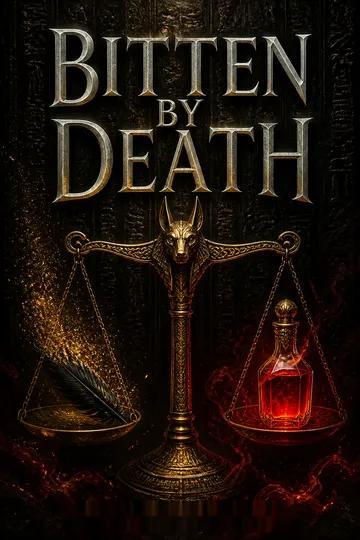
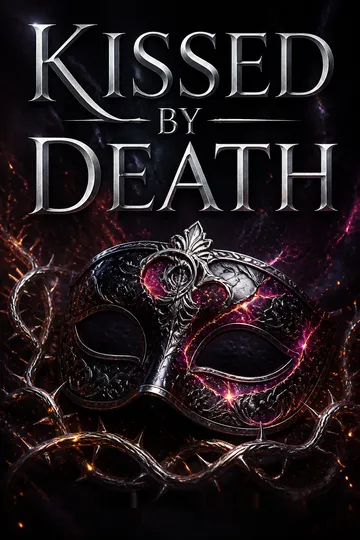
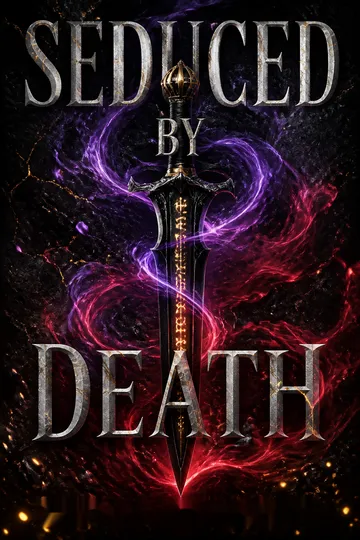
Vegas Immortals: Death and the Last Vampire Series

About the Author
Other books by Holly Roberds




Download PDF
Download EPUB
.epub digital book format is ideal for reading ebooks on phones, tablets, and e-readers.








