


Plot Summary
The Hunger Strike
A month after waking as a vampire with no memory of her former life, Vivien has survived battles and become the last of her kind. Now she refuses to drink from Grim, the god of the dead, whose blood alone can sustain her and whose bond can command her will. She hides in her hotel suite beneath blankets, eating junk food until her friend Miranda and Grim’s ancient aide, Timothy, find her weak and freezing.
Miranda gets her cleaned up and sends her to Grim’s penthouse. Vivien feeds, and the rush of strength and intimacy makes her realize she misses more than his blood. Before she can retreat from that thought, Timothy reports that Amit, the crocodile god who consumes condemned souls, has vanished.
Vivien’s refusal turns a supernatural feeding requirement into a conflict over consent. Her body needs Grim, but her memory of being controlled by a vampire makes dependence feel like the first step toward enslavement. The domestic comedy of takeout containers and mismatched clothes sharpens the stakes: she is not resisting an abstract bond, but trying to preserve a self she has only recently begun to recover. Miranda’s intervention matters because it is care without coercion. The disappearance of Amit then redirects the private struggle into public danger, while making Vivien’s choice to return to Grim both necessary and emotionally charged.
A God Goes Missing
Grim takes Vivien below the Sinopolis Hotel to Amit’s humid, jungle-like sanctuary. Amit is not there, and the water gives Grim no trace of his presence. Security footage shows four people removing what looks like a petrified crocodile, then slipping out through a hidden lift with the frozen god. Their access to secret passages means the hotel’s defenses have been breached.
The theft threatens more than Grim’s pride: Amit normally consumes condemned souls, and without him the souls will accumulate. Grim asks Vivien to attend a gathering of gods because whoever is disturbing the balance may be there. The invitation also exposes her to immortals who remember the ancient vampire war and consider her continued existence dangerous.
Amit’s absence converts a hidden supernatural order into a logistical emergency. Souls do not simply disappear when their judge and final destination are interrupted; they queue, burdening the system and, eventually, Grim himself. The theft is also carefully staged as both concealment and insult. A god has been reduced to something that can be mistaken for a statue and wheeled away through the hotel’s own infrastructure. Vivien’s usefulness is therefore double edged: her investigative instincts help expose the breach, while her identity as a surviving vampire makes her a political spectacle among gods who once treated her kind as disposable.
Cinderella Enters the Gods
Vivien arrives at the gods’ lavish gathering in a ruby gown, expecting to question the guests about Amit. Instead, she meets Seth, the smooth, powerful god of chaos, his hostile companion Marcella, and the younger demigod Idris. Seth needles her about being a vampire and publicly challenges Grim’s right to keep one. Isis, the gathering’s host, restores order, but Marcella warns Grim that Vivien could bring ruin.
Later, Seth stages a toast and presents a jeweled dog collar marked to humiliate Grim. Grim transforms into his jackal form and attacks; the gods erupt into a brawl. Idris pulls Vivien into a library and offers his blood so she can fight beside Grim. Grim bursts in before she drinks and removes her from the wreckage.
The ball makes social hierarchy physically dangerous. Its ritual politeness gives Seth a stage on which to frame Vivien as property and Grim as hypocrite, turning their private bond into a public test of power. Vivien’s attempt to navigate the room with wit and restraint shows how much of her old, carefully trained social self remains available beneath her rebellious presentation. Grim’s violent answer protects her honor but confirms the gods’ fear that she can destabilize their order. Idris’s offer appears helpful in the moment, yet it introduces the possibility that blood is not merely nourishment. It can also be leverage.
The Souls Inside Grim
Back at Sinopolis, Vivien accuses Grim of treating her as property, while he blames her for nearly accepting Idris’s blood. Neither understands how to discuss the bargain that binds them. Their argument pauses when Grim’s reapers arrive carrying souls that need judgment or must be fed to Amit.
With Amit missing, Grim takes the souls into himself, separating them from the living world. The effort leaves him weak and bleeding black fluid. Vivien understands that the theft is becoming a countdown, not just a case to solve.
At the hotel café, she and Miranda question staff and learn the thieves used a cover story about discarding an obsolete attraction. Miranda begins checking equipment rentals, while Vivien suspects Seth’s resentment of Grim connects him to the theft.
Grim’s burden makes his vocation visible as physical labor rather than remote authority. He does not simply pronounce judgment; he absorbs the dangerous residue of every delayed judgment, risking his own stability to keep it from spilling into the world. Vivien’s anger is complicated by watching him take on that cost without asking for help. Her suspicion of Seth is not yet proof, but it grows from a concrete pattern: public hostility, political grievance, and a theft designed to weaken Grim. The scene also gives Miranda a meaningful role beyond friendship. Her practical security work grounds the divine crisis in evidence that can be checked.
A Knife at Wolf Town
After feeding from Grim again, Vivien accompanies him to Wolf Town, his Las Vegas nightclub, where he wants the gods to see him functioning normally. As they dance, she tells him how her wealthy aunt and uncle controlled her childhood, punished small mistakes, withheld food, and concealed her uncle’s sexual abuse. Grim’s anger is immediate, but Vivien pulls him back into the crowded room before he can act on it.
They dance again, and their desire nearly becomes a kiss. A stranger stabs Grim in the abdomen. Armed men then open fire, hitting both of them and scattering the club’s guests. The night’s performance of normality collapses into a new assault, while the souls already inside Grim make every injury and provocation more dangerous.
Vivien’s confession explains why control feels threatening even when it arrives as protection. Her aunt and uncle made affection conditional on performance, so her practiced social polish and deliberate disorder are both strategies for managing other people’s expectations. Grim’s impulse to punish the uncle risks repeating the very pattern Vivien fears: someone powerful deciding what should happen to her life. Their dance briefly lets intimacy emerge without a command, but the attack interrupts that fragile negotiation. The club’s public setting matters too. Grim’s attempt to demonstrate stability gives his enemies an audience, and turns the performance of control into a vulnerability they can exploit.
The Kiss That Returns Him
The gunmen’s shots leave Vivien wounded and Grim’s already strained power surges out of control. He tears the attackers’ souls from their bodies, then stands in a dark, unrecognizable state and speaks in a language Vivien cannot understand.
When Miranda raises her weapon, Vivien steps between them. Remembering that Grim had promised she would have to ask before he kissed her again, she kisses him and draws him back to himself. Miranda lowers her gun, choosing to trust them.
At the penthouse, Grim removes Vivien’s remaining bullets and admits the attackers meant to expose his weakness. She then discovers he bought baking supplies because she once believed she wanted to be a pastry chef. His thoughtfulness breaks through her defenses, and they become lovers.
The kiss is not a cure for Grim’s power so much as a deliberate act of recognition. Vivien reaches him as a person when his office has swallowed his identity, and he responds to the relationship they have built rather than to a supernatural order. Miranda’s decision not to fire completes the moment: trust is extended by more than one person, under real risk. The baking supplies offer a quieter counterpoint to the violence. Grim remembers a wish Vivien herself may have invented during amnesia, yet treats it as worth nurturing. His attention is intimate because it supports her self-making instead of defining her for her.
Echo’s Hidden Network
To find Amit, Vivien takes Grim to Echo, a guarded hacker she knew as a bounty hunter, and pays her with access to her pet rabbits. Echo agrees to investigate the truck in exchange for a future favor from Grim.
Back at Sinopolis, Miranda traces recent rentals of heat lamps and humidifiers, equipment likely needed to keep Amit alive. One rental belongs to a couple celebrating their fiftieth anniversary; the other leads to an unknown customer.
The staff’s explanation that the crocodile was an outdated attraction gives Vivien a useful trail, but no location. Meanwhile, Grim’s reapers keep arriving with more souls, and he continues absorbing them. Vivien sees that waiting for the gods to solve the problem will leave Grim carrying the danger alone.
The investigation shifts from divine authority to distributed competence. Vivien’s old skills, Echo’s technical reach, and Miranda’s security work form a counterweight to Grim’s tendency to contain problems by himself. Echo’s unusual payment arrangement also establishes that help has obligations, not just costs; Grim’s promise creates a debt whose consequences remain open. The heat equipment is a material clue that narrows the search without prematurely solving it. Most importantly, Vivien acts from a changed understanding of partnership. She once treated Grim’s blood as a humiliating dependency. Now she recognizes that protecting him may require building a network he cannot command into existence.
Seth Wears Her Uncle
Vivien follows Seth to breakfast at his hotel, where he explains that the gods resent Grim’s control of souls and resent being restricted to serving humanity. Seth argues that Grim will eventually use Vivien as a tool, then changes his face into that of her abusive uncle.
Shaken by the likeness, Vivien leaves the table and runs directly into Idris, who drugs and abducts her. Strapped to a table, she learns the danger Grim withheld: enough divine blood could make a vampire powerful enough to kill gods.
Idris wants to use her as a weapon and drains her blood to create a vampire under his control. Before he can finish, Marcella cuts the machine and helps Vivien escape, revealing that her hostility toward vampires hides grief and guilt over their ancient persecution.
Seth’s impersonation weaponizes memory rather than force. By borrowing Vivien’s uncle’s face, he turns an old trauma into a trap and makes her vulnerability appear to confirm his claims about Grim’s control. Idris then supplies the concrete truth that Grim withheld: the blood bond can magnify power until it threatens the gods themselves. His explanation is self-serving, but it exposes how secrecy has left Vivien unable to judge the risks surrounding her own body. Marcella’s rescue complicates the apparent enemy line. Her intervention shows that resentment among the gods carries grief about the past, not simply prejudice against the last vampire.
Blood, Trust, and House Arrest
Marcella gets the nearly drained Vivien back to Sinopolis. Grim commands her through their bond to drink from him, overriding her refusal to let her die. His blood heals her wounds, and their relief becomes physical intimacy.
Once he understands that Idris wanted to control Vivien through a new blood bond, Grim sends her to the penthouse under Galina’s watch while he pursues the demigod. Vivien resents the confinement, but Galina explains that gods can be weakened by overusing power and that Grim’s condition is worsening.
She also explains Seth’s ancient jealousy: Grim is the son of Osiris and Seth’s wife. At the café, Vivien uses a game of charades to help Miranda infer Grim’s identity as the god of the dead, giving her friend the truth she could not say aloud.
Grim’s rescue is ethically mixed. His command saves Vivien, but it also repeats the central violation she fears: his power overrides her choice, even for her survival. Their intimacy does not erase that contradiction; it makes the bond more consequential. Galina’s explanation widens the conflict from a personal triangle to a political structure in which power has costs and family history shapes allegiance. Meanwhile, Miranda’s discovery through charades is a small but important reclamation of agency. Vivien cannot break the magical prohibition by direct confession, so she finds an indirect form that lets Miranda reason her way to the truth.
War Reaches Sinopolis
Vivien leaves Galina’s watch to find Miranda, who has learned that a customer renting heat equipment may be connected to the theft. Bianca calls with a vision of mass death in Syria, warning that Grim will be overwhelmed by the souls the war produces.
As Vivien returns, Timothy and Fallon bring Grim back, already sick from another flood of souls. Seth appears in the lobby, then Vivien’s aunt and uncle arrive with a teenage foster girl. Recognizing the man who abused her, Vivien freezes.
Grim reads her distress and nearly tears her uncle’s soul from his body, despite the danger of absorbing more darkness. Vivien stops him by reaching him through their bond. Miranda reports the warehouse lead, and the group heads out before Grim loses control again.
The threats converge around the same fault line: Grim’s duty demands that he take in every dangerous soul, while love makes him vulnerable to emotional provocation. Bianca’s vision converts that burden into a global emergency, and Seth’s appearance beside Vivien’s family suggests the antagonist is deliberately choosing triggers that will break Grim’s restraint. Vivien’s response is more than calming him. She names the harm that would result if he acted, making herself both the person he wants to protect and the person who can challenge his judgment. Miranda’s warehouse lead gives them a practical next step, preventing the emotional crisis from becoming the only story available.
The Warehouse Is Bait
Vivien, Grim, Miranda, and the winged god Fallon raid the warehouse rented by the suspicious customer. They find two teenagers cultivating marijuana beneath heat lamps and humidifiers, but no sign of Amit. Grim’s senses and Fallon’s enhanced sight confirm the empty result. The failed raid wastes precious time as Grim’s body begins to crack and leak black mist.
Miranda and Vivien return to Sinopolis with him, while Echo sends word that her network has traced Amit’s cargo to a new restaurant at Seth’s Menaggio Hotel. The restaurant is opening with a glass display containing a huge crocodile statue, warmed and surrounded by tropical plants. The warehouse was only a decoy; the real location has been placed in public view, daring them to act.
The false lead matters because it demonstrates how easily ordinary evidence can be made to imitate supernatural necessity. The equipment is real, the teenagers are real, and the warehouse is suspicious, yet none of it leads to Amit. The failure also consumes the time Grim cannot spare. Echo’s eventual trace reframes the theft as theater: Seth has not simply hidden the god but displayed him as an attraction at his own hotel. The image of Amit inside a restaurant display makes the political insult unmistakable. The rescue now requires Vivien’s improvisation and human allies as much as Grim’s divine strength.
Amit in the Fishbowl
Vivien, Miranda, and Javier burst into the restaurant and discover Amit petrified inside a glass enclosure. Seth watches from a booth as his followers attack; they transform into enormous snakes, and one traps Vivien in its coils. Facing its open jaws, she realizes her vampire voice can command lesser beings. She orders the snake to release her and then attack Seth.
The serpent swallows him, while Vivien, Miranda, and Javier load Amit into a moving truck and bring him back to Sinopolis. The snake and Seth disappear before they can be dealt with. Bianca helps wake Amit in his sanctuary, and his return allows Grim to begin transferring the souls he has been carrying. But the worst of that darkness has already pulled him into another realm.
Vivien’s command over the serpent is a turning point in her relationship to power. She has spent the story fearing control because it recalls what others did to her; here she uses the same capacity to interrupt an immediate threat and protect her allies. The distinction is not that coercion becomes harmless, but that she acts decisively to prevent violence rather than to secure obedience for herself. Seth’s public display of Amit backfires, yet his disappearance leaves the larger conspiracy unresolved. Recovering the crocodile restores the system’s missing mechanism, but it does not instantly undo the damage already accumulated in Grim.
The Promise in the Pit
In the realm of the condemned, Vivien finds Grim surrounded by souls that are tearing at him. He urges her to escape before the bond breaks, but she refuses to leave him alone. A memory returns: as a child, after her parents died in a car crash, she met Grim while he escorted their souls onward. She promised to walk with him so he would not remain lonely.
Now she understands why their connection felt older than their recent bond. Vivien draws the hostile souls away from Grim and takes their torment onto herself. In the antechamber, Grim sends his reapers into the pit to protect her, pulls the damned souls back, and feeds them to the awakened Amit. He carries Vivien out and revives her with his blood.
The childhood memory changes the meaning of the bond without making its coercive elements disappear. Vivien’s first promise was freely given by a child responding to another being’s loneliness; the later bargain was made under far more constrained conditions. Their connection therefore contains both chosen devotion and imposed dependence, and the novel asks whether present trust can transform, rather than erase, that history. Vivien’s sacrifice is dangerous precisely because she chooses it. Grim, in turn, must stop treating protection as a solitary duty and enlist the reapers, then rely on Amit to restore the proper order. Survival comes through cooperation, not his capacity to endure everything alone.
A Head Without Answers
After recovering, Grim returns to judging the souls that still require his attention. Vivien bakes in the penthouse, burning cookies and an oven but turning the kitchen into a sign of the life they are trying to build. A package arrives without a sender. Inside is Seth’s severed head, its wounds blackened as if made by a weapon that can kill a god.
A note suggests the sender intends to alter the ending, not explain the beginning. Grim identifies two possible ways to kill a god: a lost divine sword or a vampire made powerful by drinking enough godly blood. The message shows that Seth was not the hidden architect they sought, and that another enemy has already taken a god off the board.
The apparent victory ends on deliberately unstable ground. Amit is home and Grim resumes his work, but Seth’s severed head proves that recovering the machinery of order has not exposed the source of disorder. The unknown weapon also changes Vivien’s status: she is not merely the last vampire but a possible threat to divine life, whether or not she wants that power. The burnt cookies offer a domestic image of imperfect continuity rather than a neat resolution. Vivien and Grim can begin a shared life, but the package interrupts it with evidence that their private bond is now entangled in a larger struggle over who may wield power and who may survive it.
Epilogue
Vivien returns to her suite, where her uncle has bribed hotel staff to arrange a private encounter. He corners her with chloroform, still convinced he can control the story around her. Vivien reveals that her aunt is being arrested for abusing their foster daughter, Allison, and that the girl is being placed with a safer family.
She then shows her uncle that she is no longer the frightened child he could trap. With her fangs exposed, Vivien points him toward Amit. The confrontation gives her a chance to act against the people who shaped her childhood without asking Grim to take revenge on her behalf.
The epilogue closes Vivien’s personal history through action rather than reconciliation. She does not seek her aunt and uncle’s affection or attempt to persuade them to understand the harm they caused. Instead, she uses the hotel’s staff network to protect Allison and remove the adults’ access to her. Her confrontation with her uncle then reverses their former arrangement: he can no longer decide when she is alone, what she remembers, or what consequences he escapes. The ending is still morally severe, as Vivien directs him toward Amit, but it is her choice, made with new power and a clearer sense of responsibility for a vulnerable child.
Analysis
The novel builds its romance and supernatural crisis around a shared problem: power is necessary, but it is never neutral. Grim’s authority keeps souls moving through a system that would otherwise endanger the living, yet his ability to command Vivien reproduces the coercion she has survived. Her resistance is therefore not a refusal of intimacy so much as a demand that intimacy remain compatible with choice. Grim’s growth depends on recognizing that protection can become another form of control, while Vivien’s depends on accepting that dependence does not automatically erase agency.
The vampire history complicates the gods’ moral self-image. Grim once participated in the extermination of the sekhors, believing immortality had made them monstrous. Fallon’s confession reveals that divine abuse helped create the violence the gods later used to justify eradication. The story shifts the question from whether power corrupts by nature to how institutions distribute power, excuse harm, and then narrate their victims as the source of disorder. Vivien’s presence forces the gods to confront that history in embodied form.
The plot makes these arguments concrete through the soul system. Amit’s abduction does not create abstract chaos; it leaves Grim physically carrying souls until his body and judgment begin to fail. The crisis exposes the fragility of a structure dependent on one exhausted authority. Recovery requires Vivien, Miranda, Echo, Bianca, Fallon, Timothy, and Amit himself, a network that replaces solitary endurance with shared responsibility.
Finally, the childhood promise gives the bond a dimension beyond appetite or political necessity. Vivien once noticed Grim’s loneliness before she could understand his power, and her choice to return to him in the pit echoes that first act of recognition. Yet the story does not make fate a substitute for consent. Vivien’s remembered promise matters because she renews it freely. The ending offers love not as the cure for power, but as a reason to question how power is used, who bears its costs, and whether those costs can be shared.
Review Summary
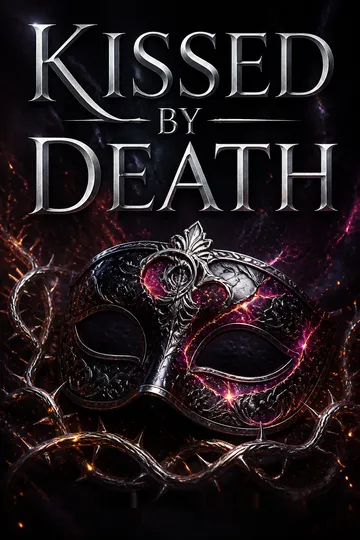
Kissed by Death receives mostly positive reviews, with readers praising the humor, character development, and steamy romance. Many enjoy the witty banter and chemistry between Vivien and Grim. Some criticize the pacing and character consistency compared to the first book. Readers appreciate the unique plot involving Egyptian mythology and vampires. The book is noted for its addictive quality, with many finishing it quickly. A few reviewers mention trigger warnings for child abuse. Overall, fans of the series eagerly anticipate the next installment.
Characters
Vivien
Defiant last vampireVivien is an amnesiac vampire and former bounty hunter whose jokes, impulsiveness, and eccentric clothes help her keep other people from defining her. She is quick at reading behavior and following clues, but her history of childhood abuse makes dependence and authority feel dangerous. Her loyalty to Miranda and her son is practical and fierce, while her attraction to Grim unsettles her insistence on needing no one. Vivien’s central tension is not between strength and vulnerability, but between choosing connection and fearing that connection will become ownership. She is resourceful, irreverent, and capable of tenderness, though she often hides care behind sarcasm.
Grim
Duty-bound god of deathGrim is the god of the dead, known in ancient Egypt as Anubis, and the owner of the Sinopolis Hotel. He manages the passage and judgment of souls with strict discipline, carrying millennia of responsibility as if control were the only safeguard against catastrophe. His formal manners conceal a more volatile, protective nature, especially around Vivien. He distrusts immortality because he believes power can corrupt those who wield it, yet his bond with Vivien forces him to question his inherited judgments about vampires. Grim’s struggle is to remain responsible without treating care as command, and to accept that duty does not require emotional isolation.
Miranda
Vampire hunter turned allyMiranda is an ex-Army security specialist, a widowed mother, and Vivien’s closest friend. Practical, observant, and difficult to intimidate, she brings discipline to situations that Vivien approaches by instinct. Her protectiveness of Jamal comes from love sharpened by hard experience, and it makes her cautious about every supernatural danger. Miranda refuses to be treated as a bystander, even when the full truth is kept from her. She challenges Vivien with humor and blunt care, while building trust through evidence and action. Her relationship with Vivien is reciprocal: each has saved the other, and neither mistakes affection for a reason to stop asking hard questions.
Seth
Ambitious god of chaosSeth is a charismatic, self-assured god whose charm can turn quickly into menace. He resents the limits imposed on the gods and contests Grim’s authority over souls, presenting himself as a champion of divine freedom. His taste for spectacle makes social humiliation one of his favored weapons, and his shifting appearance reflects a talent for unsettling the people around him. Seth’s confidence is not simple bravado: beneath it lies an old grievance about family, status, and who gets to direct the world. He sees established order as a structure to challenge, though his appetite for power makes his proposed alternatives difficult to trust.
Idris
Restless young demigodIdris is a young, irreverent demigod who treats decorum as something to test. His humor and apparent ease make him more approachable than many of the older gods, but he is also ambitious and drawn to the possibility of greater power. He recognizes Vivien’s potential before she understands it herself. Idris’s mixture of youthful charm and entitlement makes it difficult to tell when he is offering help and when he is pursuing his own advantage.
Timothy
Grim’s steadfast aideTimothy is an ancient god who serves as Grim’s aide, combining immaculate manners with formidable magical ability. He manages Sinopolis, responds to crises, and often handles the practical aftermath of divine conflict. His fastidiousness can make him seem fussy, but it also reflects how much responsibility he carries. Vivien’s teasing unsettles his composure, while his private interest in the café barista hints at a softer life beyond his duties.
Marcella
Grieving goddess of feathersMarcella is a powerful goddess whose feathered appearance and sharp temper make her hostility difficult to miss. She distrusts Grim’s decision to bond with Vivien, partly because she sees the history of the vampires as a wound the gods have never honestly addressed. Beneath her anger is grief and moral unease about the past. Marcella is not easily persuaded by charm, but she is capable of acting according to her convictions even when they conflict with her feelings about Grim.
Fallon
Winged god and confidantFallon is a winged god and one of Grim’s oldest friends. He can see beyond appearances and is willing to challenge Grim when duty becomes an excuse for denial. His judgment is informed by guilt about the gods’ treatment of vampires, including his own past complicity. Fallon is measured rather than showy, but his power and frankness make him a meaningful counterweight to Grim’s self-control.
Bianca
Compassionate oracleBianca is an oracle with an elegant, old Hollywood manner and a gentle way of making others feel seen. Her visions give the group warnings they could not obtain through ordinary investigation. She is warm without being naive, and her concern for Vivien helps the vampire feel less alone among the gods. Bianca’s quiet presence balances the more forceful personalities around her.
Galina
Feline goddess and allyGalina is Bast, the goddess of cats, and carries herself with the cool confidence of someone who rarely needs to raise her voice. She has helped Grim before and understands the politics among the gods better than Vivien does. Galina offers Vivien information without disguising the dangers, and her composure makes her a useful ally in moments when emotions threaten to overtake judgment.
Echo
Reclusive information brokerEcho is an older hacker who protects her privacy with a fortified underground workspace, automated weapons, and a blunt manner. Vivien knows how to bargain with her, and Echo’s technical network can find information beyond the reach of hotel security. She is deeply attached to her rabbits and family, though she rarely presents herself as sentimental. Echo expects payment on her own terms and does not let powerful clients mistake access for ownership.
Aioki
Flirtatious hacker's daughterAioki is Echo’s sharp, turquoise-haired daughter, who helps manage the family’s guarded operation. Her playful manner and open flirtation conceal a capable understanding of the work around her. She is curious about Grim and comfortable teasing the people who visit.
Jamal
Miranda’s resilient sonJamal is Miranda’s young son, whose near-fatal encounter with a vampire helped draw Vivien and Miranda together. He is quick-witted, independent, and eager to be treated as older than he is. His presence reminds Miranda of how much the supernatural world can endanger ordinary family life, while his easy rapport with Vivien gives their friendship a warmth beyond shared emergencies.
Amit
Keeper of condemned soulsAmit is a crocodile-shaped god who lives in a hot, humid sanctuary beneath Sinopolis. He consumes souls judged unworthy of the afterlife, providing a necessary end point in Grim’s system of judgment. His immense size and specialized habitat make him seem more creature than person, but his role is essential to the balance Grim maintains.
Isis
Regal goddess and hostIsis is a poised goddess whose authority can quiet a room without spectacle. She hosts the gathering of gods and treats Vivien with a mixture of curiosity and frank advice. Her measured manner suggests a long history of navigating power and personal disappointment.
Osiris
Ruler of divine orderOsiris is the most powerful god in the divine hierarchy and the authority who permits Vivien to remain a vampire. He expects the gods to serve as guardians of humanity and restricts their use of worship and souls as sources of power. His decisions shape the terms of Grim and Vivien’s task, although his motives are often difficult for others to read.
Qwynn
Grim’s manipulative ex-wifeQwynn is Grim’s former wife, a goddess whose beauty and seductive charisma once held him in thrall. She is associated with pleasure, manipulation, and a history Grim regrets. Her presence in his memories reveals how deeply his earlier failures still influence his caution around intimacy.
Aaron
Kindhearted café baristaAaron works at the Sinopolis café and is a warm, good-humored young man who stutters. His easy kindness makes him a familiar point of normalcy for Vivien and Miranda. He shares a tentative connection with Timothy, whose interest is more visible to others than to himself.
Javier
Miranda’s security partnerJavier is a former Army colleague of Miranda’s who joins Sinopolis security. He is steady under pressure and shares her practical judgment, though he is willing to step into danger when she asks. His loyalty is grounded in earned trust rather than blind obedience.
Uncle Phillip
Abusive guardianPhillip is Vivien’s uncle, a wealthy former Navy captain who uses status and carefully controlled behavior to dominate the people around him. He presents himself as respectable and benevolent, particularly in public, while treating Vivien as an object to discipline and exploit. His polished image depends on others accepting his version of events.
Aunt Delilah
Image-conscious guardianDelilah is Vivien’s aunt, a socially ambitious woman who values appearances and obedience. She raised Vivien after her parents died but made affection conditional on the child’s ability to support the family’s public image. Her controlled manner disguises a deep indifference to Vivien’s needs.
Allison
Foster child seeking safetyAllison is a teenager placed in the care of Vivien’s aunt and uncle. Her polished clothes and guarded expression suggest a child trained to keep her feelings out of sight. Vivien recognizes in her a version of the self she once had to hide.
Plot Devices
The blood bond
Need entwined with controlThe bond between Vivien and Grim sustains her through his blood and connects their power, emotions, and physical states. It also gives Grim the ability to command her, making the relationship feel both intimate and coercive. Vivien’s fear is grounded in her history of being controlled, while Grim’s belief that he is protecting her sometimes leads him to override her choices. The bond structures the romance as a repeated test of whether care can exist without ownership. It also creates practical stakes: Vivien’s survival and strength depend on Grim, and her proximity can help restore him when his power becomes unstable.
Amit and the soul system
Judgment requires a destinationGrim judges the souls brought by his reapers. The worthy proceed to the afterlife, while condemned souls must be consumed by Amit, the crocodile god. When Amit is stolen, the souls cannot simply be left loose without poisoning the living world or attracting gods who would exploit their power. Grim therefore absorbs and contains them, taking a physical and psychological toll. This device turns a missing-person investigation into a deadline with cosmic consequences. Amit’s recovery restores the essential process, but the story also shows the cost of making one being responsible for carrying an entire system alone.
Divine blood and power
Every meal raises the stakesGodly blood nourishes Vivien more intensely than human blood and increases her strength. Idris reveals that enough of it could make her powerful enough to kill gods, a possibility Grim had concealed. This makes feeding a plot mechanism with two opposing effects: it keeps Vivien alive and allows her to protect others, but it also turns her into a potential weapon that gods may fear or try to control. Her growing power is never merely a reward. It forces her to decide what kind of authority she will exercise, especially when she commands Seth’s serpent to stop attacking her.
The childhood promise
A forgotten bond gains meaningAs a child, Vivien meets Grim after her parents die in a car crash. While he guides their souls onward, she recognizes his loneliness and promises to accompany him so he will not always walk alone. The memory returns only when Vivien enters the realm of the condemned and sees Grim being consumed by the souls he has contained. It reframes their connection as older than the blood bond and gives emotional meaning to her decision not to leave him. The device adds a sense of fate, but its force comes from the child’s freely offered compassion rather than from prophecy alone.
Reapers and secret routes
Clues cross hidden boundariesGrim’s reapers carry souls to him, while hidden lifts and service routes let intruders reach Amit’s sanctuary beneath the hotel. Both systems make invisible worlds tangible through movement and logistics. The reapers reveal the growing volume of souls Grim must handle; the concealed elevator reveals that Sinopolis’s defenses have been compromised from within. Later, Vivien’s contacts and Miranda’s security work follow more ordinary routes, such as rental records and truck movements, to locate Amit. The story repeatedly pairs supernatural systems with practical investigation, keeping the divine crisis connected to concrete evidence.
Vegas Immortals: Death and the Last Vampire Series
About the Author
Other books by Holly Roberds

Download PDF
Download EPUB
.epub digital book format is ideal for reading ebooks on phones, tablets, and e-readers.








