


Plot Summary
Prologue
At the Fae Council, leaders debate whether Claire, a half-human daughter of the disgraced Spirit Fae Ophelia Snow, should be brought into their realm before her twenty-first birthday. Mortus wants her dead, fearing she will repeat her mother’s crimes; others argue she may fulfill a prophecy about a fae who commands all five elements.
The Council lets her attend the Academy, and Exos, a royal Spirit Fae warrior, is ordered to retrieve and protect her. He accepts reluctantly, unaware that Claire’s first uncontrolled magic will make the decision urgent.
The Council’s vote makes Claire’s life a political problem before she has any chance to understand it. The debate binds her identity to two inherited stories, her mother’s alleged ruin of the Spirit Fae and a prophecy that promises either rescue or catastrophe. Exos’s assignment carries the same contradiction: he is meant to protect Claire while representing a hierarchy that already considers her dangerous. The prologue therefore frames care as entangled with power. Claire is granted entry, but not a say in what entry will cost.
The Birthday Bar Burns
On her twenty-first birthday, Claire lets her friends dare her into kissing a striking stranger at a bar. The man is Exos, though she knows only that his presence feels unnaturally familiar. Their second kiss sends fire through the room. Exos shields her and saves many patrons, but Claire’s friend Rick dies in the blaze.
When she wakes in the Fae Realm, Exos tells her that her magic caused the destruction and that there is no safe way to return to the mortal world. The Council’s cover story will treat Claire as one of the bar’s casualties, cutting her off from the friends who would otherwise search for her.
The inciting disaster turns a playful dare into a rupture with consequences Claire cannot reverse. Her attraction to Exos is not simply romantic coincidence: it coincides with the release of powers suppressed since childhood. Yet the cost is concrete and immediate in Rick’s death, so Claire’s new identity arrives fused with guilt rather than wonder. The cover story compounds that loss by erasing her from the life she knew. The fantasy premise thus begins not with escape into a magical world, but with the collapse of Claire’s ordinary relationships and her belief that she can choose what happens to her.
Five Elements in Flight
Overwhelmed by Exos’s explanations, Claire’s powers erupt again, setting the room alight and blasting him into a wall. She escapes through a broken window and runs until exhaustion leaves her collapsed in the forest. Exos recruits Titus, a Fire Fae and former champion in powerless combat, and River, a shy Water Fae, to find her.
Titus approaches gently, extinguishes the flames Claire raises, and helps her understand that she is a Halfling, with a human father and a Fae mother. He senses Spirit, Fire, Air, Water, and Earth in her, a combination no one has encountered before. Claire accepts food and guidance, though she still hopes she can find a way home.
Claire’s flight is an attempt to reclaim agency through movement: if she keeps running, she can postpone the truth imposed on her. The forest defeats that strategy by offering no exit, while its living landscape quietly reflects a power she does not yet recognize as her own. Titus succeeds where Exos’s blunt explanations failed because he meets Claire’s grief without demanding immediate obedience. His kindness does not solve her captivity, but it gives her enough safety to listen. The five-element revelation changes her from an untrained student into a political and magical anomaly, making protection necessary and intimacy unusually consequential.
A Mother’s Ruined Kingdom
At dinner in Chancellor Elana’s estate, Claire learns why the Council fears her. Her mother, Ophelia, was a Spirit Fae who had begun a binding with Mortus, then left the Fae Realm for Claire’s human father. When Ophelia returned, she fought Mortus; nearly all Spirit Fae died that day, and the survivors blamed her for a curse that has prevented their kind from having children.
A prophecy says a five-element fae may break that curse or doom the realm. Exos later gives Claire three choices: train at the Academy, live in the lifeless Spirit Kingdom, or die rather than remain an uncontrolled danger. Claire breaks down, certain that everyone will judge her for her mother’s history.
The family history gives Claire an inheritance that is political, biological, and moral all at once. She has no memories of Ophelia, yet the Fae Realm treats her as if ancestry were evidence of guilt. The prophecy deepens the burden by turning her potential into a public wager: her growth may save others, but her failure may endanger them. Exos’s ultimatum makes the coercion explicit, while Titus’s account makes its emotional cost legible. Claire is not choosing among genuine freedoms; she is being asked to cooperate with the least lethal option. Her despair is therefore a rational response to a world that calls confinement protection.
A Storm in Bed
During the night, Claire’s sleeping magic whips fire, water, and wind through her room. Titus wakes her and guides her to gather the fire into a small sphere, then quench it with water. As the storm settles, she realizes she has also made flowers grow from earth and Spirit. Titus explains that their shared Fire draws them toward a temporary courtship, and Claire kisses him, accepting the bond’s first step.
Their growing desire nearly carries them further, but Exos interrupts, insisting Claire needs time to understand Fae customs before making a deeper commitment. The next morning, protesters gather outside Elana’s estate, and Claire chooses to face them rather than hide inside.
The bedroom storm makes Claire’s power both a threat and a language: each element responds when she learns to attend rather than panic. Titus’s teaching is effective because it converts fear into a sequence of manageable actions, but their attraction complicates the lesson. Fae bonds make desire a social commitment with magical consequences, and Claire lacks the knowledge needed to evaluate that commitment freely. Exos’s interruption is protective, yet it also demonstrates how easily men with authority can decide what Claire is ready for. Her choice to face the protesters marks an early shift from flight toward deliberate, if constrained, participation.
Ignis Lights the Quad
Titus escorts Claire through the Academy while students chant against her and blame her for her mother’s crimes. At the Fire Quad, Ignis, a hostile student who has pursued Titus, taunts Claire about Ophelia and Titus’s past. Claire’s anger ignites a spreading blaze that burns the courtyard and threatens the students around it.
Exos reaches her through the flames, helps her locate water and air, and guides her into using them to extinguish the fire. He then takes her to a fire-resistant dorm and stays to comfort her. Claire remains ashamed of the damage, but Exos points to the more important result: she has stopped an elemental disaster rather than simply escaping it.
The tour translates private prejudice into a public environment Claire must navigate. Ignis’s attack works because it fuses two vulnerabilities, Claire’s fear of being defined by Ophelia and her uncertain feelings for Titus. The resulting fire is not merely a display of strength; it shows how shame and jealousy can become physical danger when emotions and magic are inseparable. Exos’s response shifts from command to collaboration, helping Claire use her other elements instead of suppressing her. His praise recognizes a real achievement, though it cannot undo the harm or the institution’s hostility. Claire’s progress is measured not by never losing control, but by learning how to recover it.
The Flooded Fire Dorm
That night, a sudden surge of water bursts into the Fire Quad dorms and sweeps Exos from the room. Claire uses a blast of air to break a window and escape the rising water, while Exos and Titus help the students outside. Ignis and Sickle accuse Claire of causing the flood, but the strange power signature does not match what Exos recognizes in her.
Exos leaves to confront the Council, and Claire stays with Titus. He explains that Ignis used illegal seduction magic when she slept with him, then makes clear that his attraction to Claire is not a wager or a conquest. Claire kisses him, and their connection grows into a deeper courtship, giving her a source of warmth and trust amid the accusations.
The flood repeats the pattern of the bar and the courtyard, but its mismatched magical signature introduces a new possibility: Claire may be blamed for events she did not cause. Because she already believes herself dangerous, the accusation finds a ready place in her mind. Exos’s uncertainty and Titus’s defense provide the first counterweight to that internalized guilt. Titus’s disclosure about Ignis also reframes their earlier confrontation: his sexual history is entangled with coercion, not simply careless betrayal. Their bond offers comfort, but the scene keeps intimacy and vulnerability close together. Claire is learning that trust can be chosen, even when the surrounding society treats suspicion as fact.
The Air Quad Maelstrom
After two weeks of training with Exos and Titus, Claire begins classes at the Academy. In Air Quad, she meets Vox, an Air Fae whose skill in sensing and guiding elemental energy makes him a possible mentor. When Claire attempts a simple air spiral, a dark, unfamiliar force seizes it and becomes a destructive vortex.
Vox steadies her powers while Exos tries to reach her, but the storm injures students and leaves bodies across the classroom. Claire finds the vortex’s core and tears it apart from within. Aerie then attacks Claire with a targeted burst of air that makes her appear drunk and unable to think clearly. Vox recognizes the assault, while Exos carries Claire to safety.
The classroom disaster marks a crucial difference between losing control and being made to appear out of control. Claire’s success in dismantling the vortex demonstrates new competence, while the strange energy and Aerie’s attack indicate that her reputation can be manipulated through staged evidence. Vox matters because he recognizes what Claire cannot yet name: the force inside the storm is not hers. His mentorship begins with trust in her perception rather than automatic blame. The deaths and injuries raise the stakes beyond Claire’s personal adjustment, however. Her ability to act under pressure now coexists with a mystery about who can counterfeit her power and why the Academy is so willing to believe the worst.
The Bonds Deepen
Once Aerie’s attack fades, Claire wakes in the abandoned Spirit Quad, where Exos confirms that he also sensed the vortex did not come from her. He explains the stages of Fae courtship and asks whether she wants to deepen their Spirit connection. Claire agrees, and their bond advances through mutual emotional trust rather than sex.
Exos leaves with Vox to trace the false energy signature, urging Claire to stay with Titus. She and Titus then share their first full sexual union, deepening their Fire bond and giving Claire a clearer sense of where she feels at home. Before leaving, Vox agrees to help Exos lure the culprit into acting again, while Claire accepts a bracelet that will suppress her powers during the trap.
Claire’s relationships develop through different forms of recognition. Exos offers access to Spirit and an explicit explanation of the bond’s stages, allowing her to consent with greater understanding than she had at the bar. Titus’s connection is more bodily and fiery, but the scene presents it as a chosen home rather than a magical inevitability. The contrast helps clarify that Claire’s desires do not cancel one another, even as they complicate the men’s expectations. Meanwhile, Vox’s decision to help investigate makes care operational: he turns his unusual sensitivity into evidence. The power-suppressing bracelet prepares Claire to be a witness in the trap, but also exposes how vulnerable she will be without her abilities.
The Kickball Trap
At an Academy sports exercise, Claire wears Titus’s Powerless Champion bracelet so no one can plausibly claim she created another attack. Sickle provokes her, then ice and hail fill the gym while the students again turn against Claire. Exos blocks an ice weapon aimed at him and asserts his royal authority; Vox, River, and other students identify Sickle’s water signature.
Chancellor Elana uses Spirit magic to examine the accused students’ memories and confirms that Ignis, Sickle, and Aerie arranged the attacks to get Claire expelled. Exos strips them of their elemental powers, and Elana sentences them to a temporary stay in the Spirit Kingdom. The Council clears Claire, and Elana offers to tutor her personally.
The trap turns a social accusation into a test with evidence attached. The bracelet proves Claire cannot be the source of the attack, while witnesses and Elana’s memory search expose the group’s coordinated deception. Yet the resolution is not a neutral courtroom: Exos’s royal authority and Spirit magic determine the punishment, including temporarily reducing the conspirators to humanlike powerlessness. The scene therefore resolves Claire’s immediate vulnerability without pretending the Fae system is gentle or egalitarian. Her vindication also comes through collective testimony, not only through the power of her mates. For the first time, other students publicly confirm what she has been trying to say about herself.
The Spirit Quad Blooms
With the accusations disproved, Claire can choose where to live and train. Mortus permits her return to the Fire Quad, but Exos offers the empty Spirit Quad instead, and Claire chooses to stay there so the abandoned grounds can become alive again. Elana’s offer of personal tutoring gives her a chance to learn from the mentor who once knew Ophelia, and Claire decides she wants that knowledge despite her fear of resembling her mother.
Titus and Exos remain her established partners, while Vox’s connection to her Air element is still only a possibility. As Claire’s presence revives the Spirit grounds, she welcomes the Fae Realm as her home rather than continuing to plan an escape.
The resolution returns to the opening question of whether Claire belongs in the Fae Realm, but changes the terms of the answer. She does not choose the world because its institutions have become harmless; she chooses it because she has begun to claim a place within it. Reviving the Spirit Quad gives that choice a visible form, turning a dead campus into a living space through the very element tied to her mother’s history. Claire’s interest in Elana’s tutoring also signals a more complex response to inheritance: she will study Ophelia rather than either worship or simply condemn her. Belonging becomes an active practice, not a bloodline verdict.
Epilogue
As Exos climbs a communications tower to contact his brother Cyrus, he senses a dark presence that seems connected to the three students he punished. He begins to doubt whether they were the true source of the attacks, but before he can resolve the suspicion, an unidentified figure strikes him repeatedly and knocks him unconscious.
Exos manages to send a warning through his mental link, urging Claire to run. The book ends with the apparent conspiracy exposed but its deeper source still at large.
The epilogue reopens the certainty that the gym’s punishment seemed to provide. Exos’s doubts suggest that the three students may have been guilty of sabotage without being the only force behind it, or that someone used them as cover. His attack also strips away the protection associated with royal power: he is exhausted, surprised, and unable to defend himself. The warning to Claire reverses their usual arrangement, making the protector the one in peril and leaving her with the unfinished task of interpreting danger. The cliffhanger does not erase Claire’s growth, but tests whether her new alliances can survive without Exos directing them.
Analysis
Elemental Fae Academy makes inheritance feel less like a gift than a public accusation. Claire enters the Fae Realm already burdened by the story of Ophelia, and nearly every institution treats resemblance as evidence: because her mother was blamed for catastrophe, Claire is expected to prove she is safe before anyone will let her learn. The attacks that frame her sharpen this problem. Her uncontrolled powers are real, but the false incidents exploit the fact that others are prepared to believe the worst. The book’s central distinction is therefore not between dangerous and harmless power, but between power used with attention and power used to dominate or deceive.
Claire’s development comes through learning that control is not the same as obedience. Exos initially offers protection through command, while Titus makes instruction emotionally survivable by acknowledging grief and fear. Vox adds another kind of care: careful observation that separates Claire’s energy from the force imposed on her. These relationships are romantic, but they also function as competing models of how influence can be exercised. The courtship rules intensify the question of consent, since attraction has magical consequences before Claire has fully learned the customs that govern it. Her choices become more deliberate as information and trust grow.
The Academy itself is an imperfect answer to social division. Its shared classes and sports are meant to bring the elemental groups together, yet students use those same public spaces to exclude and frame Claire. The climactic investigation does not make the Fae hierarchy just: Exos and Elana still punish through extraordinary power. But it gives Claire something she lacked at the start, public evidence, allies who believe her, and the ability to participate in decisions about her future. By choosing the abandoned Spirit Quad and seeking Elana’s knowledge of Ophelia, Claire refuses both exile and inherited guilt. The epilogue then unsettles that victory, suggesting that a fair verdict can expose a conspiracy without revealing its deepest source.
Review Summary
People Also Read



Characters
Claire
Five-element HalflingClaire is a twenty-one-year-old woman raised in Ohio by grandparents after losing her parents early in life. Her human upbringing has left her without the customs or training that Fae children ordinarily receive, and the sudden arrival of her powers makes her both curious and frightened. She is stubborn, emotionally candid, and inclined to meet pressure with a sharp retort, but grief can overwhelm her before she has words for it. Her emerging strength lies not in refusing help, but in learning to distinguish guidance from control. Claire wants to understand who she is without letting her mother’s reputation decide what she deserves.
Exos
Royal Spirit guardianExos is a royal Spirit Fae warrior who renounced the throne in favor of a life of combat and protection. Controlled, formidable, and accustomed to being obeyed, he initially treats Claire’s safety as a duty that permits him to make decisions for her. His exceptional Spirit power gives him the ability to calm, influence, and protect others, but also makes his authority unsettling. Under the martial reserve is a strong sense of responsibility and a capacity for devotion he rarely displays. Claire challenges him to use his power with greater patience and to recognize that protecting someone is not the same as owning her choices.
Titus
Fire mentor and championTitus is a powerful Fire Fae who entered the Academy late after winning the Powerless Champion circuit, where fighters battle without elemental gifts. His history has taught him how guilt can isolate a person, so he meets Claire’s grief with empathy rather than demands for composure. He is passionate, playful, and protective, but his temper and strong physical confidence can obscure how carefully he tries to respect Claire’s needs. As her Fire mentor, he helps her turn emotion into controlled action. His bond with Claire is rooted in shared elemental intensity, while his friendship with the shy River reveals a gentler loyalty beneath his champion’s reputation.
Vox
Air mentor and observerVox is an Air Fae with an unusually precise ability to sense elemental signatures and help other students steady their powers. He is observant, quick, and more comfortable reading a room than exposing his own feelings. His mentorship of the difficult Earth Fae Sol has taught him patience, while his habit of tracking magical patterns makes him valuable when appearances cannot be trusted. Claire’s Air element draws his attention, but he resists treating attraction as an obligation. Vox’s defining tension is between keeping his distance and accepting responsibility when his abilities could protect someone vulnerable.
Elana
Chancellor and elder mentorElana is the ancient, powerful Chancellor who founded the Academy to bring the elemental groups into contact. She is a skilled Spirit Fae and a practiced mediator, using warmth and careful judgment to keep the Council’s rival interests from overwhelming the students. Her authority is formidable, but she often looks for ways to preserve both safety and opportunity. Because she once mentored Ophelia, she has personal knowledge of Claire’s family history that others lack. Elana believes Claire should be trained rather than condemned, while understanding that political trust must be earned through visible action.
River
Shy Water Fae friendRiver is a Water Fae student and Titus’s friend. Gentle and shy, he has a deep interest in humans and their customs, which makes him one of the few people at the Academy inclined to approach Claire with curiosity rather than fear. He can manipulate water and offers practical help when Claire’s powers overwhelm her. His confidence falters beside powerful elders and hostile students, but his loyalty remains steady. River’s willingness to participate, even when he doubts his own usefulness, shows how quiet courage can matter in a crisis.
Cyrus
Spirit king and brotherCyrus is Exos’s brother and the reigning Spirit Fae king. He supports Exos’s decision to give Claire a chance, despite the political pressure surrounding her arrival. Though he appears only briefly, his relationship with Exos conveys a rare bond of trust between members of the royal family. Cyrus represents the governing responsibility Exos has chosen to avoid, while remaining a source of connection when Exos needs to communicate beyond the Academy.
Mortus
Hostile Spirit elderMortus is an influential Spirit Fae elder who fought Ophelia and believes her actions brought ruin upon his people. He regards Claire through the lens of that history and treats the possibility of her power as a danger to be contained. His age and standing give his prejudice institutional weight, while his resentment toward Exos complicates the Council’s deliberations. Mortus’s certainty protects him from having to consider how much of the past remains unknown.
Ophelia Snow
Claire’s absent Fae motherOphelia was a powerful Spirit Fae who left the Fae Realm and became the center of a bitter conflict between the Spirit Fae and Mortus. Claire knows little about her personally and has inherited more accusation than memory. To some, Ophelia is responsible for the loss of most of the Spirit Fae; to others, the history is more complicated than the Council’s official story. Her absence shapes Claire’s fear of repeating a life she does not understand.
Ignis
Hostile Fire studentIgnis is a confident Fire Fae student whose ambition and possessiveness often present themselves as charm. She is interested in Titus and resents his refusal to belong to her, turning Claire into a target for humiliation. Ignis understands how to use social performance to recruit allies and make an accusation seem credible. Her aggression exposes the Academy’s vulnerability to rivalry disguised as discipline.
Sickle
Water Fae antagonistSickle is a sharp-tongued Water Fae who aligns herself with Ignis and uses her elemental skill to intimidate others. She is quick to turn suspicion into certainty, especially when Claire is already feared. Her confidence depends on belonging to a group and controlling the story others hear. Sickle’s role shows how a grievance becomes more dangerous when classmates reinforce it.
Aerie
Air Fae antagonistAerie is an Air Fae student and one of Ignis’s close allies. She is outspoken and willing to use her element aggressively, particularly when she believes the Academy will accept the target of her hostility as culpable. Her antagonism contrasts with Vox’s careful approach to Air magic. Aerie helps show that elemental ability alone does not determine whether power becomes instruction or intimidation.
Sol
Vox’s guarded Earth studentSol is a physically imposing Earth Fae who struggles to control his strength and distrusts much of the Academy. He is Vox’s student and an uneasy friend, prone to shutting himself away when he expects conflict. Beneath the bluster is someone who fears being judged for powers he has not mastered. His relationship with Vox reflects the difficult, imperfect work of mentorship.
Vape
Elder Council seerVape is an ancient Water Fae and Council member known for his foresight and measured counsel. He takes the prophecy seriously when others dismiss it and supports giving Claire a chance to develop her abilities. His calm presence lends weight to the Council’s debates.
Professor Helios
Air conjuring professorProfessor Helios is an old and powerful Air Fae who teaches conjuring on Air Quad. He favors strict discipline and uses fear to keep students focused. His classroom becomes a test of both Claire’s unstable powers and the Academy’s assumptions about her.
Rick
Claire’s birthday friendRick is one of Claire’s close friends from the human world, known for his teasing dares and easy confidence. His role in the birthday gathering establishes the affectionate, playful life Claire is abruptly forced to leave behind.
Amie
Claire’s loyal best friendAmie is Claire’s best friend and part of the birthday group that encourages her to take the dare. Her affection for Claire helps establish the ordinary friendships and shared rituals that Claire loses when she is taken to the Fae Realm.
Plot Devices
The five-element prophecy
Power framed as fateThe Council has heard a prophecy about a Halfling able to wield all five elements, but the prediction leaves open whether she will restore balance or bring disaster. It gives political factions a reason to protect, exploit, or fear Claire before she has demonstrated what she can do. The prophecy also pressures Claire to understand her gifts as more than personal abilities. Because its meaning is uncertain, characters can project their hopes and anxieties onto her, making it a source of conflict rather than a reliable map of the future.
The birthday hex
Delayed magical awakeningOphelia placed a charm on Claire that held back her elemental development while she lived among humans. The charm ends around her twenty-first birthday, releasing years of untrained power in a sudden surge. This mechanism explains why Claire has no Fae education and why her first magical events are dangerous. It also ties the story’s inciting disaster to her age: the bar fire is not a random attack, but the immediate consequence of a suppressed identity becoming active without preparation.
Elemental courtship bonds
Attraction with magical stakesFae attraction can establish a temporary courtship bond when both parties desire the connection. Further stages require mutual agreement and deepen access, trust, and elemental exchange, with the later stages carrying far more permanent consequences. Claire’s access to multiple elements allows her to connect with more than one potential mate, making her relationships unusually complex. The bonds give physical attraction a social and magical framework, while creating a central tension: Claire must learn customs and understand her own desires before decisions made under powerful new instincts become commitments she cannot easily undo.
Elemental signature and cuff
Evidence against false blameFae magic carries recognizable signatures that skilled mentors can sense and compare. When Claire is framed by attacks that do not match her energy, Exos and Vox begin looking for an outside source. Titus’s Powerless Champion cuff suppresses Claire’s magic during the gym exercise, making it impossible for her to produce the staged assault. The combination of signature tracking, witnesses, and the cuff turns a public test into a way to establish what Claire did not do. It also exposes how easily an institution can mistake visible damage for proof of guilt.
Spirit magic
Life, memory, and controlSpirit Fae work with the life force that underlies other elements. Their abilities include creating life, calming or influencing others, sensing bonds, and, in powerful hands, taking control or suppressing another Fae’s elemental gifts. Exos uses Spirit to protect and guide Claire, while Elana uses it to examine memories during the Academy investigation. The same power can offer care or become coercion, which makes its ethics inseparable from the character using it. Claire’s Spirit affinity therefore represents both her strongest inheritance and the responsibility she must learn to handle.
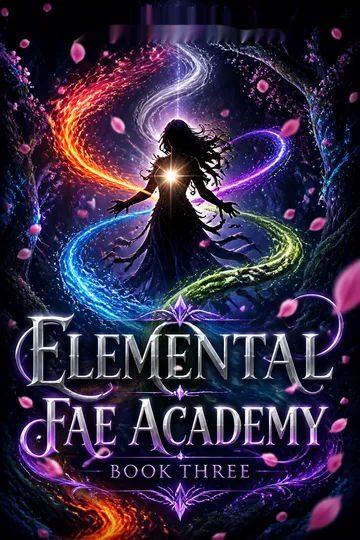
Elemental Fae Academy Series


About the Author





Download PDF
Download EPUB
.epub digital book format is ideal for reading ebooks on phones, tablets, and e-readers.








