

Key Takeaways
Read the Caribbean as a crossroads, not a chain of separate islands
A statue holds a contradiction. In Fort-de-France, a headless statue of Josephine, Napoleon’s wife and a Martinique-born planter’s daughter, faces the sea. Many islanders believe she persuaded Napoleon to restore slavery, although the book finds no evidence for the story. The statue captures how memory, myth, and colonial power remain entangled in the present.
A history of crossings. The Caribbean took shape through connections among Indigenous peoples, Africans, Europeans, Asians, and North Americans. Ships carried people, commodities, and ideas across the region and far beyond it. Empire means both direct political rule and less visible economic dominance. The region’s defining response to repeated upheaval was adaptation, not a simple march toward progress.
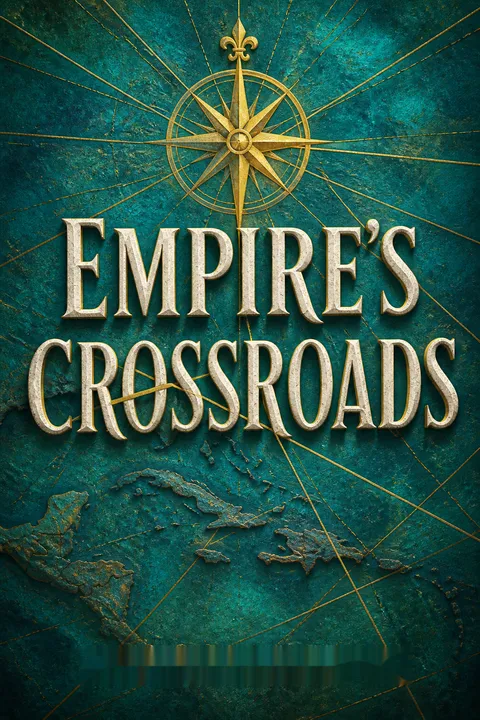
The crossroads image does more than connect islands to distant capitals. It shifts attention from national borders to the routes that moved labor, wealth, and authority. That is a useful way to read globalization without treating it as a recent invention or a neutral exchange. The image also needs its inequality kept in view: people did not meet on equal terms, and adaptation often meant surviving choices imposed by others.
Treat Indigenous Caribbean history as living, not erased
Arrival was not discovery. Columbus crossed the Atlantic looking for Asia, guided by inaccurate calculations and stories of eastern riches. The islands he encountered were inhabited, and the Spanish soon demanded labor, gold, and conversion. Disease, forced work, and violence devastated Indigenous communities, but their disappearance was never complete.
Labels concealed complexity. Europeans described some islanders as cooperative Taínos and others as hostile Caribs, even attaching a cannibalism story to the latter. The book explains that these labels reflected European judgments and limited understanding, not a reliable map of Indigenous identities. Communities had their own histories, rivalries, and alliances. Archaeology, biological evidence, and surviving cultural practices challenge the old claim that Indigenous Caribbean people simply vanished.
This account makes a crucial distinction between demographic catastrophe and total disappearance. Colonial records often classify people according to whether they helped or resisted Europeans, turning political judgments into supposed ethnic facts. Reading those records critically does not mean discarding them; it means asking who created each category and for what purpose. The book’s evidence of persistence also prevents survival from becoming an easy story of recovery. Communities endured, but the encounter radically altered their worlds.
Follow sugar from European appetite back to coerced Caribbean labor
A luxury became a system. Sugar had traveled from Asia through the Mediterranean before Europeans planted it in the Atlantic islands and the Caribbean. It was valuable not because people needed it, but because consumers wanted it. Producing it required cleared forests, expensive mills, rapid processing, and a large, controlled workforce.
Plantations scaled exploitation. On Barbados, sugar occupied about 80 percent of arable land and used roughly 90 percent of the labor force. As indentured European workers became harder to recruit and less profitable to planters, enslaved Africans were brought in on a vast scale. Across the Caribbean islands, recorded arrivals rose from about 28,000 Africans in the first half of the seventeenth century to roughly 465,000 in the second. European consumption and Caribbean coercion belonged to the same chain.
Sugar’s history is a sharp case study in externalized costs: consumers enjoyed sweetness while the violence, danger, and environmental damage were concentrated far from their tables. The plantation was not only a workplace. It joined finance, machinery, shipping, and consumer demand into a durable production system. That framing helps explain why moral awareness alone did not quickly dismantle it. The book’s emphasis on sugar as an unnecessary luxury is powerful, though the larger point is how markets can make a want feel indispensable.
See piracy and trade as competing tools of empire
The sea was a battlefield. Spanish fleets connected Caribbean ports to silver mines, Panama, Havana, Manila, and Spain. Rival European powers attacked those routes, sometimes as pirates and sometimes as privateers authorized by a government. The difference could depend less on a sailor’s behavior than on whether a ruler endorsed the raid.
Commerce followed conflict. Henry Morgan’s forces crossed the isthmus and sacked Panama City in 1671, while the English later made him lieutenant-governor of Jamaica. Such careers show how plunder could serve imperial policy before turning into official authority. Smuggling also flourished when Spanish trade restrictions made goods scarce or expensive. By the eighteenth century, settlement and plantation commerce increasingly replaced piracy, but the region remained a hub in the movement of goods, including tobacco, salt, coffee, and sugar.
The blurred line between pirate and privateer reveals that law at sea was political rather than self-evident. A state could condemn unauthorized violence while rewarding similar violence when it weakened a rival. This makes maritime history more than a colorful prelude to formal colonization: it shows how informal force helped establish routes, footholds, and commercial expectations. The useful caution is that piracy was not always state policy in disguise. Crews also pursued their own survival and profit, often outside any stable authority.
Credit Haiti's enslaved insurgents with forcing abolition into reality
Revolution began from below. In 1791, enslaved people in Saint-Domingue rose against a colony built on sugar and coffee. The revolt became a thirteen-year struggle involving French, British, and Spanish forces, free people of colour, and rival revolutionary leaders. Toussaint Louverture became its most prominent commander, but he was captured by the French and died in prison.
Freedom was won in battle. In 1793, the local French commissioner declared slavery abolished as he sought enslaved fighters for the republican cause. France’s national government ratified abolition in 1794. After Napoleon sent troops to restore control and slavery, the rebellion defeated them. Haiti declared independence in 1804. Its victory frightened slaveholding societies across the Caribbean, while refugees and plantation expertise helped Cuba expand sugar and coffee production.
The Haitian Revolution exposes the distance between announcing universal rights and applying them to people whose labor sustains an economy. In this case, emancipation was not simply granted by distant lawmakers. Enslaved people organized, fought, and made the old order untenable. The revolution also resists a tidy ending: independence brought conflicts over land, power, and political identity, while other islands intensified plantation production. Its achievement was historic, but it did not resolve every social division created by slavery.
Do not mistake emancipation for economic freedom
Legal freedom had limits. Britain abolished slavery in its colonies in 1834, but required formerly enslaved people to serve an apprenticeship period until 1838. Planters received compensation, while the freed workers received no equivalent payment for their stolen labor. In many places, workers left plantations, sought land, or grew food for themselves. Resistance continued through strikes and uprisings, including Jamaica’s 1831 Baptist War, which helped push Britain toward abolition.
New contracts constrained labor. After emancipation, plantation owners recruited workers from India, China, and Java. These indentured laborers signed time-limited contracts, but low pay, deductions, restricted choices, and harsh conditions could make the arrangement resemble bondage. In the British Caribbean, about 144,000 Indians went to Trinidad and nearly 239,000 to Guiana between 1838 and 1918. The workforce changed, but the demand for cheap, controlled labor endured.
The shift from slavery to apprenticeship and indenture shows why legal status and material power must be examined separately. A worker can be formally free while facing severe limits on land, mobility, wages, and bargaining power. The book does not claim the systems were identical; it shows how plantation economies repeatedly sought ways to secure labor after slavery. That distinction matters, since calling every exploitative contract slavery can obscure the specific legal and political gains emancipation achieved.
Track American power through corporations, customs, and military bases
Influence wore a business suit. After Spain lost Cuba and Puerto Rico in 1898, the United States gained a dominant position in the region. In Cuba, the Platt Amendment gave the United States a right to intervene and enabled a military base at Guantánamo Bay. In Central America, United Fruit Company built plantations and transport networks, while its influence often aligned with US diplomatic or military pressure.
Infrastructure had a human cost. The United States backed Panama’s separation from Colombia in 1903 after Colombia rejected a canal agreement. The canal opened in 1914, built with the labor of thousands of West Indians. Workers faced dangerous conditions and racialized pay, with Black laborers paid in silver while white workers received gold. American occupations of Haiti and the Dominican Republic further joined commercial interests, customs revenue, and military control.
This section clarifies that empire can operate without formally annexing every territory. Corporate ownership, control of revenue, and the threat of intervention can narrow a government’s choices while leaving its flag in place. The canal makes the trade-off visible: a project of global infrastructure was also a story of dangerous labor and unequal wages. The term informal empire is useful, but it should not imply a single coordinated plan. Local officials, workers, and political movements also shaped what outside power could accomplish.
Treat Caribbean independence as a spectrum, not a clean break
Political futures diverged. Jamaica and Trinidad and Tobago became independent in 1962, but a proposed West Indies Federation collapsed after Jamaica voted to leave and the larger territories resisted subsidizing smaller ones. Other islands later became independent, while Puerto Rico remained a US commonwealth and French Caribbean territories became departments of France. The region never followed one uniform path out of colonial rule.
Cold War choices carried costs. Cuba’s revolution challenged US influence and brought Soviet backing, then the failed 1961 Bay of Pigs invasion and the 1962 missile crisis. In Grenada, Maurice Bishop’s socialist government was overthrown internally in 1983 before US and regional forces invaded. In British Guiana, Britain and the United States intervened against Cheddi Jagan’s elected government amid fears of communism. Sovereignty did not guarantee either freedom from outside pressure or agreement about how to govern.
Independence is better understood as a changing distribution of authority than as a date on a calendar. The varied outcomes in the French territories, Puerto Rico, Cuba, and the former British colonies make a single decolonization narrative misleading. Cold War policy further complicated the promise of self-rule, as outside powers treated local political choices as strategic threats. At the same time, leaders and citizens were not merely pieces on a foreign chessboard. They pursued competing ideas of equality, security, and economic development.
Value cultural mixing without mistaking it for racial harmony
New cultures took root. The book uses the idea of a creole society to describe cultural exchange and invention among peoples brought together in the Caribbean, often under brutal conditions. In Cuba, African religious traditions shaped santería alongside Catholic practices. In Haiti, African beliefs and Catholic imagery informed vodou. Jamaican patois, Trinidadian calypso and Carnival, and the region’s music and food also carry histories of adaptation.
Mixture did not erase power. Free people of colour could own property and build institutions, yet they faced discrimination. African and Indian communities sometimes remained divided, and racial hierarchies persisted after slavery and independence. Carnival shows both sides: formerly excluded people brought their own processions and performance into public life, while colonial authorities repeatedly tried to restrict them. Cultural creativity is evidence of agency, not proof that society became equal.
The notion of a creole society helps explain how people made shared forms from traditions that were not voluntarily assembled. It refuses the idea that Caribbean culture is merely a weakened copy of Europe or Africa. But cultural mixture should not become a feel-good substitute for political analysis. Music, religion, and language can reveal ingenuity while inequalities remain intact. The book’s most persuasive position is that shared culture and unresolved conflict are not opposites; they often coexist in the same practice.
Ask who profits when the Caribbean is sold as paradise
The holiday image has a history. European visitors once regarded the Caribbean as dangerous and unhealthy. As public health improved, tourism promoters recast the islands as restorative escapes, often showing smiling local workers and ignoring ordinary urban life, poverty, and colonial history. The book’s example of Labadie, Haiti, is stark: a cruise company built a fenced-off destination where visitors could enjoy beaches and activities without confronting the neighboring village’s daily conditions.
Dependence takes new forms. Tourism can provide work, but foreign ownership and tax arrangements mean much of the revenue may leave the islands. The book reports that as much as 80 percent of Jamaica’s tourism income does not stay there. At the same time, Caribbean economies face debt, food imports, migration, drug trafficking, and pressure from global trade rules and outside investors. The paradise image turns these connected problems into background scenery.
Tourism’s central tension is not that visitors seek pleasure, but that the industry can sell a place while hiding the unequal arrangements that make the experience comfortable. The fenced resort makes that separation literal. Yet the answer is not to blame individual travelers for every structural problem. Governments, corporations, lending institutions, and consumers all participate differently in the system. The book invites a more demanding question: can tourism generate local livelihoods without requiring residents to perform a simplified version of their own home?
Analysis
Gibson’s central achievement is to make the Caribbean legible as a connected region without pretending it is a unified nation. The story begins before Columbus, with Portuguese expansion into the Atlantic, and proceeds through conquest, plantation economies, revolution, migration, US intervention, independence, and tourism. Across these episodes, the region is not a passive stage. Indigenous communities resisted and adapted; enslaved people made Haiti’s revolution; workers and migrants changed labor systems; and cultural forms grew from the collision of African, European, Indigenous, and Asian traditions.
The book’s strongest explanatory thread is the movement from commodity to power. Sugar, tobacco, coffee, bananas, and tourism are not merely economic chapters. Each reorganized land, labor, and political influence, while consumers and distant governments often obscured the costs. The plantation links early modern trade to later corporate power, making the transition from European empire to US influence less abrupt than it might first appear. Meanwhile, the Haitian Revolution demonstrates that the people most exploited by a system could become its most consequential challengers.
The broad regional approach is also a risk. Islands with different languages, legal systems, economies, and constitutional status can blur into one Caribbean story. Gibson recognizes this difficulty and uses representative episodes rather than claiming equal treatment of every place. That strategy makes the book readable, but it can leave some territories and social groups less visible. The surviving archive is another constraint: colonial administrators and planters left abundant records, while enslaved and Indigenous voices often survive indirectly.
The argument about adaptation is compelling, but it should not be confused with resilience as a happy ending. People repeatedly created new lives and cultures, yet their capacity to adapt did not make coercion benign or outside domination inevitable. The book’s lasting value lies in holding both truths together: Caribbean societies made something richly distinctive, and much of that creation took place under conditions they did not choose.
Review Summary
Empire's Crossroads offers a comprehensive history of the Caribbean from Columbus to modern times. Readers appreciate Gibson's engaging writing and broad scope, covering topics like colonization, slavery, and economic development. Some criticize the Eurocentric perspective and lack of depth on certain islands. The book is praised for its accessibility but critiqued for occasional bias. Overall, it's considered a solid introduction to Caribbean history, though dense at times. Readers value the insights into the region's complex past and its ongoing impact on global affairs.
People Also Read





Glossary
Middle Passage
Forced Atlantic crossingThe transatlantic voyage that carried enslaved Africans from Africa to the Americas and Caribbean. People were confined in overcrowded ships, chained, underfed, and exposed to disease and violence. Many died during the crossing, and some resisted by attempting escape, suicide, or rebellion. The term names a central stage of the Atlantic slave trade.
encomienda
Spanish labor grantA Spanish colonial system that assigned Indigenous communities and their labor or tribute to a Spanish recipient, called an encomendero. In theory, the recipient was responsible for Christian instruction and protection under the Spanish crown. In practice, the arrangement enabled coercive labor and abuse, despite royal efforts to regulate it.
asiento
Slave-trading licenseA contract or license granted by the Spanish crown to traders who supplied enslaved Africans to Spanish American colonies. Because Spain did not directly control the main African trading posts, it granted foreign merchants permission to deliver specified numbers of enslaved people, often collecting fees for the privilege. The arrangement made slavery a source of state revenue.
Code Noir
French colonial slave codeThe French royal code issued in 1685 to regulate slavery in French colonies. It required enslaved people to be Catholic and set rules concerning work, religious observance, punishment, and owners’ responsibilities. Although it placed some limits on masters, it upheld slavery, restricted enslaved people’s autonomy, and imposed severe penalties for resistance.
maroons
Runaway slave communitiesEnslaved people who escaped plantations and formed communities beyond colonial control, often in mountains, forests, or other difficult terrain. Maroon settlements sometimes included Indigenous people and could resist colonial forces for long periods. In Jamaica, leaders including Cudjoe and Nanny helped build communities whose relations with the British included both warfare and negotiated agreements.
second slavery
Expanded nineteenth-century plantation slaveryA term used by historian Dale Tomich for the renewed expansion and reorganization of slavery in the nineteenth-century Atlantic world. In the Caribbean, Cuba’s sugar economy grew after the Haitian Revolution weakened Saint-Domingue’s production. New investment and improved plantation methods drove increased output while slavery and the Atlantic slave trade continued.
informal empire
Influence without formal annexationA form of imperial power exercised through commercial influence, political pressure, control of key revenues, and possible military intervention rather than direct colonial government. In the Caribbean and Central America, US corporations such as United Fruit operated alongside American diplomatic and military power. Local governments remained formally sovereign, but their choices could be sharply constrained.
creole society
Culture formed through encounterA way of understanding Caribbean societies that emphasizes cultural interaction and invention among peoples brought together by migration, colonization, and slavery. It highlights how African, Indigenous, European, and Asian traditions shaped shared practices even under severe exploitation. The concept describes cultural creativity, not the disappearance of racial hierarchy or social conflict.
Download PDF
Download EPUB
.epub digital book format is ideal for reading ebooks on phones, tablets, and e-readers.








