

Key Takeaways
Use ancestry to describe DNA, and race to describe social life.
Labels change with power. In 1958, Mildred Jeter and Richard Loving married in Washington, DC, because Virginia prohibited their marriage. Jeter had African American and Native American ancestry, so the state classified her as colored under its one-drop rule. The Supreme Court struck down the law in 1967. The case shows how racial categories can determine rights while resting on definitions that change across place and time.
Genes tell a different story. DNA inheritance is real, and some traits correlate with geographic ancestry. But those patterns do not divide humanity into a few natural, bounded races. The book’s distinction is practical: race describes social classifications with real consequences; ancestry describes a person’s complex biological lineage.
What’s striking is that the distinction avoids two common errors: treating race as a biological essence, and pretending racial categories have no effects. A category can be scientifically imprecise yet socially powerful, much as a legal status can shape access to rights without describing anyone’s biology. The practical question is therefore not whether race is real in every sense, but which sense is being used. Precision matters especially when research or policy turns a social label into a claim about inherited traits.
Recognize Africa as humanity's shared origin, not a racial category.
Two records converge. Fossils of anatomically modern humans date to about 200,000 years ago in Africa. The oldest known modern-human remains outside Africa are younger, and the evidence supports migrations out of Africa roughly 60,000 to 70,000 years ago. People who left carried only part of the genetic variety present in the larger African population. This founder effect helps explain why genetic diversity is greatest among people with recent African ancestry.
Family-tree labels need care. Mitochondrial Eve is the most recent woman from whom everyone’s maternal line descends; Y chromosome Adam is the equivalent for paternal lines. Neither was the first human, nor the only ancestor of people alive today. They represent two narrow inheritance paths through a much larger web of shared ancestors.
The power of this account is its combination of evidence: fossils, migration patterns, and DNA point toward the same broad history. The founder effect also offers a clear model for why a population descended from a subset of another may carry less variation without being a separate kind of human. The labels Eve and Adam can mislead if taken literally, so the details matter: each names one unbroken lineage, not a founding couple or a complete family tree.
Read genetic clusters as ancestry clues, not proof of biological races.
Most variation is shared. In a landmark 1972 analysis, geneticist Richard Lewontin found that about 85 percent of the measured variation lay within the groups he examined. A much smaller share separated the groups. Later work showed that genetic variants are correlated, so looking at many together can often identify a person’s broad geographic ancestry. That result qualifies what can be inferred from Lewontin’s analysis, but does not establish sharp racial borders.
Sampling shapes the picture. If researchers compare only distant populations, such as people from northern Europe, sub-Saharan Africa, and East Asia, they can find clusters. Add populations from between those regions, such as South Asians, and the boundaries blur. Human genetic variation overlaps across geography, so a cluster can identify ancestry without defining a biological race.
This is a useful lesson in statistical interpretation: a pattern can be detectable without being a natural boundary. Classification depends partly on which populations are sampled and which features are measured. That does not make ancestry analysis meaningless; it makes its scope important. Broad ancestry estimates can be informative, while translating those estimates into fixed racial types adds a conclusion the data do not require.
Explain skin-color variation through sunlight, not human hierarchy.
Pigmentation has a history. The book describes high pigmentation as the ancestral human condition. Melanin helps protect against ultraviolet radiation, including damage to folate, which is important for fetal development. In regions with weaker winter sunlight, lower pigmentation can help the body produce vitamin D. These competing pressures help explain why pigmentation varies with ancestry and latitude, rather than marking different levels of human worth.
Similar looks can evolve separately. Some variants associated with lighter pigmentation spread among European populations, while different variants did so in East Asian populations. This is convergent evolution: similar traits arise independently under similar environmental pressures. The book also notes an exception to the latitude pattern. Arctic populations could obtain vitamin D from foods such as fish and seal liver, reducing the advantage of lighter skin.
Skin color is an especially vivid example of how a visible difference can invite a social story that biology does not support. Evolutionary explanation replaces a hierarchy with adaptation to local conditions, while independent genetic routes show that similar appearance does not necessarily imply identical ancestry. The account is strongest when treated as a broad explanation, not a complete prediction for every individual: pigmentation is influenced by many genes, and environmental exposure also matters.
Trace disease risk to variants and environments, not racial labels.
Sickle-cell trait follows malaria. One copy of the S variant in the HBB gene can increase resistance to severe malaria; two copies can cause sickle-cell anemia, a serious disease. The variant is more common in regions where malaria has been prevalent, including parts of Africa, the Arabian Peninsula, and South Asia. It arose independently in several populations, so it is not exclusive to one race, and ancestry raises probability rather than guaranteeing a person’s status.
Risk is not destiny. A Rice University football player with sickle-cell trait died after intense practice in heat and dehydration. The case prompted debate about screening athletes. The American Society of Hematology favored universal safeguards against overexertion, heat, and dehydration, rather than relying on ancestry or trait status alone. That approach addresses risks shared by all athletes while recognizing a specific vulnerability.
This example shows why genetic information must be interpreted at the right level. A variant can have a clear biological effect, yet the best intervention may still target the conditions that make harm more likely. Screening can identify individual risk, but it can also expose people to stigma or misuse. The section’s strongest policy insight is that universal protections and precise clinical information need not compete: both can matter, for different reasons.
Choose medical tests by biology, not racial shortcuts.
Race can miss patients. The book argues that screening by racial category can overlook people whose ancestry or genetic variants do not match the label. It cites recommendations for universal newborn screening for a panel of inherited conditions, rather than testing only infants assigned to groups where a condition is more common. Lactose intolerance offers another example: it is common worldwide, but programs that distributed milk on some Native American reservations ignored the local prevalence of intolerance.
A label is not a mechanism. BiDil was approved for African American patients after a trial suggested a benefit in that group, but the drug’s racial targeting did not identify a causal genetic marker. The book argues that personalized medicine should connect treatment to relevant variants and clinical evidence. Social categories can still help reveal unequal exposure or care, but they are weak substitutes for biological explanation.
The distinction between a useful signal and a causal explanation is central here. A racial category may correlate with a condition because of ancestry, environment, access to care, or several factors at once. Treating the label as the mechanism can hide those differences and misdirect treatment. The counterpoint is that collecting racial data can expose inequity. The better standard is to state what the category is measuring, and not let it stand in for evidence it cannot provide.
Do not confuse IQ heritability within groups with gaps between groups.
Heritability has a narrow meaning. It estimates how much variation within a particular population is associated with genetic differences, under the conditions in which it is measured. It does not explain why two populations have different averages. Richard Lewontin illustrated the distinction with genetically varied corn grown in two environments: height differences within each group could be genetic, while the difference between group averages came from unequal nutrients.
Scores can change quickly. The Flynn effect describes rising IQ test scores across generations, often about three points per decade in industrialized countries. The book treats this as evidence that environments influence measured performance. It also notes that studies have not identified a single gene with a major effect on IQ, and that direct DNA evidence did not support genetic explanations for racial group differences in the research it reviews.
The key reasoning point is easy to lose in ideological arguments: a trait can be partly heritable among individuals while group differences arise from environmental conditions. IQ tests also measure a useful but limited set of cognitive abilities, not every form of intelligence. The book’s evidence supports caution, not certainty about every cause. Its strongest conclusion is methodological: do not turn a within-population statistic into an explanation of between-group inequality.
Remember that law and conquest hardened flexible ancestry into racial boxes.
Categories served political ends. Earlier systems linked human groups to continents, religious stories, or supposed degrees of purity. In the United States, eugenics laws led to the involuntary sterilization of more than 60,000 people. Antimiscegenation laws restricted marriage to protect a supposed racial boundary. These policies borrowed the logic of breeding purebred animals, but humans were not selectively bred into isolated, uniform groups.
Colonial encounters sharpened labels. In South Africa, European settlers, Khoisan peoples, south Asian migrants, and Bantu populations were classified into legally unequal groups. Apartheid formalized those divisions. Similar patterns followed European colonization in Australia and the Americas, where migration, disease, land seizure, and racial laws transformed societies. The book’s point is not that human differences were imaginary, but that political systems turned selected differences into rigid hierarchies.
This history explains why racial categories can feel self-evident: laws, institutions, and everyday treatment repeatedly teach people to see them as fixed. The animal-breed comparison also reveals a flaw in racial-purity arguments. Human populations have migrated and mixed, without the controlled breeding that creates highly uniform domestic breeds. Historical explanation does not erase present-day categories; it shows how they acquired their power and why their consequences persist.
Read genomes as records of migration, not certificates of purity.
DNA preserves movement. A 2014 study examined nearly 475,000 genetic variants in 1,490 people from 95 populations and identified evidence of more than 100 dispersal events over the previous 4,000 years. The book highlights movements including the Bantu expansion, the Mongol Empire, the Arab slave trade, and European colonialism. Each migration carried variants into new populations, where they mixed with existing ancestry.
A reconstructed face makes kinship tangible. In Peru, Fairbanks helped reconstruct the face of an elite woman buried about 800 years ago, known as the Priestess of Chornancap. He describes their distant shared ancestry and the separate migrations that brought her ancestors to South America and his to Europe. The story makes the central point concrete: genomes record branching and recombining histories, not sealed racial lineages.
The Priestess story gives deep time a human scale: ancestry is not merely a set of percentages but a history of movement, separation, and eventual encounter. Large genetic studies make that history measurable, while archaeological remains give it place and texture. Migration evidence does not mean every person has the same family story or cultural identity. It does undermine the idea that populations have remained pure, isolated, and unchanged.
Analysis
The book’s central achievement is conceptual separation. It distinguishes visible traits from the broader genome, genetic ancestry from social identity, and measurable population structure from the claim that humanity divides into a small number of natural races. These distinctions matter because the same evidence can be used responsibly or distorted: genetic clusters can help estimate ancestry, but they do not dictate a person’s social category, worth, or complete identity.
Its strongest examples make the distinction practical. Sickle-cell trait illustrates how a specific variant can track the history of malaria without belonging exclusively to one race. The discussion of IQ shows why heritability estimates cannot, by themselves, explain group gaps. The history of laws and migration then explains why racial categories remain socially consequential even when they fail as biological boundaries.
A useful caution is that rejecting biological race should not be confused with denying population structure. Human groups can differ statistically in the frequency of particular variants, and those differences can matter for ancestry estimates or clinical questions. The key is to identify the causal variant or relevant social condition directly, rather than treating a broad racial label as an explanation. Likewise, ancestry estimates describe probabilities shaped by sampling and reference populations; they cannot replace cultural belonging or a full genealogy.
The book is a 2015 account, so some scientific discussions, especially around intelligence and genetic testing, should be read as a snapshot of the evidence it reviewed. Its durable contribution is less a final answer to every biological question than a disciplined rule for interpreting claims: specify what is being measured, distinguish correlation from cause, and never let a convenient category do the work of evidence. That rule makes the title’s claim meaningful without pretending that shared origins erase history or inequality.
Review Summary
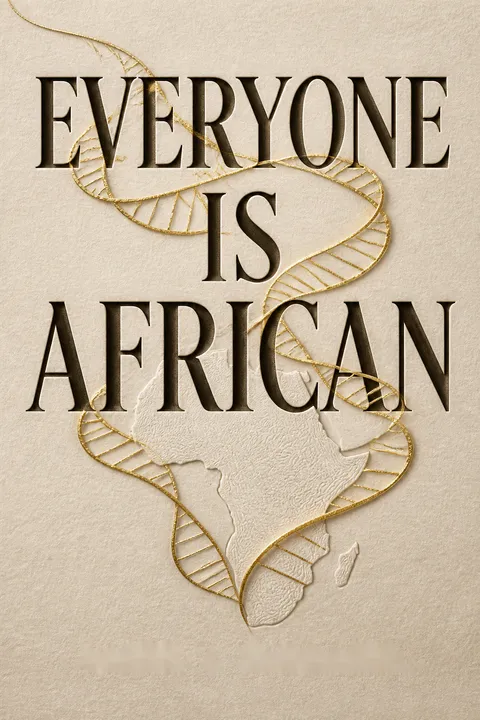
Everyone Is African challenges racial misconceptions using genetic evidence. Readers praise its accessibility, scientific accuracy, and thought-provoking content. Many found it enlightening, highlighting human genetic similarities and African origins. Some readers appreciated the historical context and debunking of racial myths. While a few disagreed with certain assertions, most found the book informative and well-written. Several reviewers noted its potential to combat racism and promote understanding of human diversity. Overall, the book received positive reviews for its clear explanations of complex genetic concepts and its message of common human ancestry.
People Also Read








Glossary
Ancestry informative markers
Variants that help estimate ancestryGenetic variants whose frequencies differ across geographic populations and therefore provide clues about ancestry. A single marker usually offers limited evidence. Analyzing many markers together can estimate whether a person’s ancestry traces to one region or several. These markers describe probabilities of geographic origin, not discrete racial boundaries or cultural identity.
Clinal pattern
Gradual geographic change in frequencyA distribution in which a genetic variant is most common in one region and becomes less prevalent as distance from that region increases. Clines can arise as mutations spread through migration, sometimes aided by natural selection or random changes in frequency. They show geographic patterning without requiring sharp borders between populations.
Population bottleneck
A reduction in genetic variationA population bottleneck occurs when a smaller group separates from a larger population and becomes the source of a new population. The smaller group carries only a sample of the original population’s genetic variants. Repeated migrations by subsets of earlier migrants can further reduce diversity, helping explain why non-African populations carry less variation than African populations.
Mitochondrial Eve
Shared maternal-line ancestorThe woman from whom the mitochondrial DNA of all living people descends through an unbroken maternal line. She lived in Africa, according to the book’s account, roughly 200,000 years ago. She was not the first woman, the only woman alive then, or the sole ancestor of modern humans. The term refers to one particular genetic lineage.
Y chromosome Adam
Shared paternal-line ancestorThe man from whom the nonrecombining portion of the Y chromosome in living men descends through an unbroken paternal line. The book places him in Africa and estimates that he lived later than mitochondrial Eve. He was not the first man or the only ancestor of humanity. His name refers only to one paternal genetic lineage.
Vitamin D hypothesis
Sunlight shaped pigmentationAn explanation for the geographic evolution of skin pigmentation based on a tradeoff involving sunlight. Darker pigmentation helps protect folate from ultraviolet damage in regions with intense sunlight. Lighter pigmentation can help the body produce vitamin D where winter sunlight is limited. Diet and local conditions can alter the selective pressure, so the pattern has exceptions.
Heritability
Genetic share of population variationA statistic estimating how much variation in a trait within a particular population, under particular conditions, is associated with genetic differences. It does not measure how genetic a trait is in an individual, nor does it explain differences between populations. Estimates can change across populations and environments, so they cannot be transferred automatically.
Flynn effect
Generational rise in test scoresThe observed increase in IQ test scores across successive generations in many countries. The book reports gains averaging roughly three points per decade in countries that were already industrialized, with gains also recorded in less developed countries. Because genetic change is too slow to explain such rapid increases, the pattern points to environmental influences on measured performance.
Convergent evolution
Similar traits evolve independentlyThe independent evolution of similar traits in separate populations exposed to similar environmental pressures. The book uses lighter skin pigmentation in European and East Asian populations as an example: similar outcomes arose through different genetic variants. Similar appearance therefore does not necessarily mean that populations share the same recent ancestry or genetic mechanism.
Admixture
Mixing of population ancestriesThe combination of genetic variants from populations with different ancestral histories, usually through migration and reproduction. Admixture can leave identifiable segments of DNA tracing to different geographic origins. Large-scale studies use these patterns to infer past movement and contact, but admixture is a description of genetic history, not a judgment about purity or identity.
The Apportionment of Human Diversity
Lewontin's genetic variation studyRichard Lewontin’s 1972 analysis of genetic variation across groups classified by geographic origin. It found that most measured variation occurred within groups, with a much smaller share between them. Later discussion emphasized that correlations among variants can still identify broad ancestry patterns. The study remains useful when its statistical result is distinguished from broader claims about classification.
FAQ
What's "Everyone Is African: How Science Explodes the Myth of Race" about?
- Exploration of Race: The book delves into the scientific evidence that challenges the traditional concept of race, arguing that race is more of a social construct than a biological one.
- Genetic Evidence: It presents genetic research showing that all humans share a common African ancestry, with no distinct genetic boundaries separating so-called races.
- Historical Context: The book also examines the history of racism and how misconceptions about race have been perpetuated over time.
- Scientific Approach: Author Daniel J. Fairbanks uses a scientific lens to dismantle myths about race, focusing on human genetic diversity and evolution.
Why should I read "Everyone Is African: How Science Explodes the Myth of Race"?
- Understanding Race: It provides a comprehensive understanding of the scientific basis for human diversity, challenging preconceived notions of race.
- Educational Value: The book is a valuable resource for anyone interested in genetics, anthropology, and the social implications of scientific findings.
- Debunking Myths: It offers a well-researched argument against the biological basis of race, which is crucial for informed discussions on race and racism.
- Broader Perspective: Reading this book can broaden your perspective on human history and the interconnectedness of all people.
What are the key takeaways of "Everyone Is African: How Science Explodes the Myth of Race"?
- Common Ancestry: All humans have a common origin in Africa, and genetic diversity is highest among people of African descent.
- Race as a Social Construct: The concept of race is not supported by genetic evidence and is largely a social and historical construct.
- Genetic Variation: Most genetic variation is shared among all humans, with only a small percentage accounting for differences traditionally associated with race.
- Impact of Misconceptions: Misunderstandings about race have historically led to discrimination and social inequality.
How does Daniel J. Fairbanks use science to challenge the myth of race?
- Genetic Research: Fairbanks presents evidence from DNA studies showing that genetic differences among humans do not align with traditional racial categories.
- Anthropological Evidence: The book uses anthropological findings to support the idea of a single origin for modern humans in Africa.
- Historical Analysis: It examines the history of racial classification and how it has been influenced by non-scientific factors.
- Educational Approach: Fairbanks aims to make complex scientific concepts accessible to a general audience, emphasizing the importance of understanding genetic diversity.
What are the best quotes from "Everyone Is African: How Science Explodes the Myth of Race" and what do they mean?
- "Race is a socially constructed concept, not a biological one." This quote encapsulates the book's central argument that race lacks a genetic basis and is instead a product of social and historical contexts.
- "The world's human diversity consists of innumerable genetic variations spread throughout the human population." It highlights the complexity and interconnectedness of human genetic diversity, challenging simplistic racial classifications.
- "A better understanding of what science tells us about human genetic diversity is of immense importance." This emphasizes the need for scientific literacy in discussions about race and diversity.
How does "Everyone Is African" address the history of racism?
- Historical Context: The book provides a historical overview of how racial classifications have been used to justify discrimination and inequality.
- Scientific Racism: It discusses the role of pseudoscience in promoting racial hierarchies and the impact of these ideas on society.
- Legacy of Racism: Fairbanks explores how historical misconceptions about race continue to affect social and economic structures today.
- Educational Resource: The book encourages readers to explore the history of racism further, complementing the scientific evidence presented.
What scientific evidence does "Everyone Is African" present to support its claims?
- DNA Analysis: The book uses DNA evidence to show that genetic variation is not confined to traditional racial boundaries.
- Mitochondrial DNA Studies: It discusses how mitochondrial DNA supports the theory of a common African origin for all humans.
- Y Chromosome Research: The book includes findings from Y chromosome studies that trace human migration patterns and genetic diversity.
- Anthropological Findings: Fairbanks incorporates anthropological evidence to support the genetic data, providing a comprehensive view of human evolution.
How does "Everyone Is African" explain the concept of genetic diversity?
- High Diversity in Africa: The book explains that the highest genetic diversity is found among people of African descent, supporting the idea of a common origin.
- Shared Variants: It highlights that most genetic variants are shared among all humans, with only a small percentage accounting for differences.
- Clinal Patterns: Fairbanks discusses how genetic variation often follows clinal patterns, with gradual changes rather than distinct boundaries.
- Impact of Migration: The book examines how historical migrations have contributed to the distribution of genetic diversity worldwide.
What role does natural selection play in the arguments presented in "Everyone Is African"?
- Pigmentation Variants: The book discusses how natural selection has influenced skin pigmentation, with different variants favored in different environments.
- Disease Resistance: It explores how natural selection has shaped genetic resistance to diseases like malaria, affecting genetic diversity.
- Evolutionary Pressures: Fairbanks explains how evolutionary pressures have led to the development of certain genetic traits, challenging the notion of racial superiority.
- Selective Sweeps: The book describes how selective sweeps have rapidly increased the prevalence of advantageous genetic variants.
How does "Everyone Is African" address the concept of race as a social construct?
- Historical Development: The book traces the historical development of racial categories and their lack of scientific basis.
- Social Implications: It examines the social and political implications of viewing race as a social construct rather than a biological reality.
- Cultural Perceptions: Fairbanks discusses how cultural perceptions of race have been shaped by historical events and social norms.
- Educational Impact: The book emphasizes the importance of understanding race as a social construct to combat racism and promote equality.
What are the implications of the findings in "Everyone Is African" for modern society?
- Rethinking Race: The book encourages a reevaluation of racial categories and their impact on social and economic structures.
- Policy and Education: It suggests that policies and educational programs should be informed by scientific evidence rather than outdated racial concepts.
- Combating Racism: Fairbanks argues that understanding genetic diversity can help combat racism and promote social justice.
- Global Perspective: The book provides a global perspective on human diversity, emphasizing the interconnectedness of all people.
How does "Everyone Is African" contribute to the ongoing discussion about race and genetics?
- Scientific Clarity: The book provides clear scientific evidence to challenge misconceptions about race and genetics.
- Interdisciplinary Approach: It combines genetics, anthropology, and history to offer a comprehensive view of human diversity.
- Public Discourse: Fairbanks aims to inform public discourse on race, encouraging informed discussions based on scientific evidence.
- Future Research: The book highlights areas for future research and the importance of continued exploration of human genetic diversity.
Download PDF
Download EPUB
.epub digital book format is ideal for reading ebooks on phones, tablets, and e-readers.








