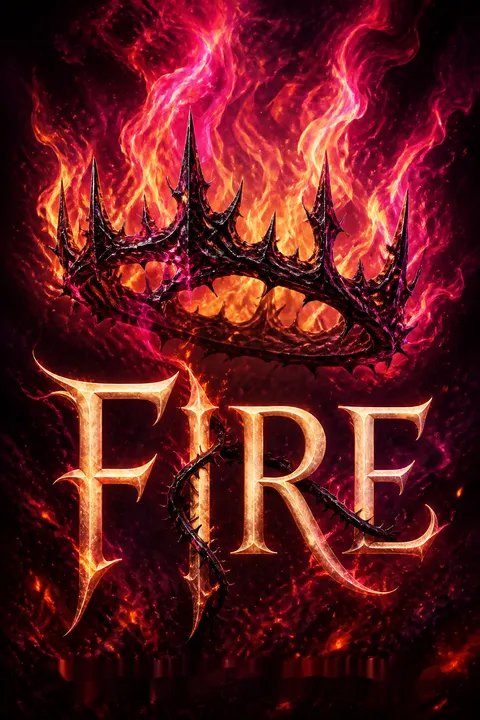


Plot Summary
Prologue
After his wife dies, Larch pours his grief into raising their unusually articulate son, Immiker. When the boy’s eyes turn different colours, Larch flees with him rather than surrender him to the king. The mountains drive them into the Dells, where Larch’s mind grows foggy and Immiker quietly gains control over him.
Years later, Larch catches the boy torturing a monster rabbit and recognizes that his son’s Grace lies in his words. Immiker laughs, then stabs his father and burns their home. He takes the name Leck and rides away, ready to begin again.
The prologue makes love both Larch’s refuge and his blind spot. His devotion is not foolishness in the ordinary sense: it is the bond through which Immiker’s power works, and the reason Larch cannot recognize its violence until recognition comes too late. That distinction matters later, when Fire must judge whether affection can coexist with danger. The father’s protective flight also plants the novel’s central unease: a parent may shelter a child from a cruel world while failing to see the cruelty growing inside the shelter.
The Hunter’s Mistake
Fire, a human monster whose beauty can overwhelm minds, is accidentally shot by a poacher who mistakes her brown clothes for a deer. Bleeding and unable to draw her bow, she manipulates his thoughts so he will carry her to Lord Archer, her childhood friend and the lord of the northern estate. Archer’s healer removes the arrow while guards lock the poacher in an outdoor cage.
By morning, an unknown archer has killed him with a shot through two sets of bars. Fire recognizes the dead man’s mind as strangely blank, like that of a person used by someone else. The precise killing, along with other violent strangers appearing in the woods, gives Archer reason to suspect a wider threat.
Fire’s first use of power is plainly defensive, but it still turns a stranger into an instrument. The scene refuses an easy division between coercion and rescue: she saves herself by overriding another person’s choice, then feels responsible for the violence that follows. The poacher’s blankness introduces a second kind of mental intrusion, one that Fire cannot yet identify. Her beauty makes her conspicuous, but the more dangerous threat is invisible, a will acting through other people.
The Princes at Roen’s
Fire rides with Archer to Queen Roen’s fortress to report the killings and seek help. On the road, they witness Prince Brigan commanding the King’s Army, a force built to restore order while rebel lords gather troops. At the fortress, a bonfire throws Brigan’s dark-haired figure into a likeness of Fire’s dead father, Cansrel, and his hostile expression sends her into a terror she cannot control.
Brigan’s mother later explains that he distrusts Fire because he fears she could dominate King Nash as Cansrel once dominated the old king. Nash himself tries to kiss Fire while drunk, and Brigan corners and threatens her. Their first meeting leaves Fire bruised, frightened, and certain that the royal family may be as dangerous as its enemies.
The misrecognition makes Fire’s past physically present: a face, a firelit courtyard, and an expression are enough to collapse time. Brigan’s hostility is not justified by that history, but it is intelligible as inherited fear. He sees Fire through Cansrel’s political legacy, while she sees Cansrel in Brigan’s anger. The two are already responding to people who are absent, which helps explain why their later trust must be built through actions rather than resemblance or reputation.
Fire Draws the Swarm
When a beacon warns that Grey Haven is under attack, Nash and Brigan ride out with only fifty soldiers while a swarm of raptor monsters circles Roen’s fortress. Fire realizes the birds will tear into the rear of the column before it reaches the tunnels.
Against Archer’s orders, she rides alone in the opposite direction, removes her head covering, and exposes her brilliant hair. The raptors abandon the soldiers and dive after her. Fire and her horse Small race back toward the gates as the birds rake her back and neck; Archer shoots from the entrance to clear her path.
Every soldier reaches the tunnel alive, but Fire and Small are badly wounded. Archer is furious that she risked herself without warning him, while Roen recognizes the lives Fire saved.
Fire chooses to make her body the decoy because her most dangerous trait can also protect others. The act is neither a rejection of her power nor a comfortable embrace of it: she deliberately exposes herself to the very hunger her appearance provokes. Archer’s anger measures the personal cost, while Roen’s approval recognizes the public consequence. The rescue begins Fire’s shift from treating her Grace as a contamination to asking what responsibility its use might entail.
The Fiddle Breaks
After Fire and Small recover enough to travel, Brigan summons her to King’s City to identify a captured intruder from Roen’s fortress. She joins his First Branch, protected by a hand-picked guard led by Musa, and learns how a moving army scouts, hunts, heals, and supplies itself. During the journey, a soldier attacks her and smashes the fiddle Cansrel gave her.
Brigan has the man restrained, refuses to strike him after Fire asks him not to, and gives her a handkerchief while arranging a replacement instrument. His practical kindness loosens Fire’s fear of him. Near the capital, crowds recognize her despite her covered hair and chant her name, turning her arrival into a public spectacle before she has even seen the city.
The broken fiddle is not simply a lost possession. It is a link to Fire’s father, to her private music, and to a kind of tenderness she has difficulty trusting. Brigan does not repair the harm or demand gratitude; he notices what matters to her and responds without making her beauty the subject. The army’s orderly care contrasts with the crowd’s collective fixation, suggesting that institutions can protect a person even when public admiration reduces her to an image.
The King’s Unsteady Hands
At the palace, Nash first tries to force himself on Fire, then apologizes after she uses her Grace to stop him. Later, when she refuses his order to compel a prisoner to name his master, he strikes her and cuts her cheek with his ring.
Fire withdraws from him until he begins learning to guard his mind. She meets his siblings, the suspicious spymaster Garan and the clever Princess Clara, and starts teaching herself the palace’s maze of rooms and corridors. She also befriends Brigan’s young daughter, Hanna, whose existence the court has kept quiet for her safety.
In a courtyard, Fire encounters a strange, mismatched-eyed boy whose presence distorts her perception; nearby children later display empty, fogged minds. The boy vanishes before she understands the danger.
The palace tests whether Fire’s refusal to abuse power can survive other people’s demands that she use it for them. Nash’s vulnerability does not excuse his assault, and Fire’s boundary is expressed through both physical withdrawal and political refusal. Hanna offers a relationship not organized around desire or fear, while the strange boy introduces a more troubling uncertainty: Fire can recognize ordinary minds, but cannot make sense of his. Her limits become part of the plot, not a failure of attention.
A Life of Her Choosing
After seeing herself clearly in the palace mirrors, Fire concludes that she is not destined to become Cansrel and agrees to help Nash’s family investigate spies. She sets conditions: prisoners must not be starved or beaten, and she will not force harmless witnesses to disclose what they would otherwise keep private.
As the questioning grows harder, she nevertheless learns to enter hostile minds and extract information, even when doing so leaves her ashamed. Meanwhile, she and Archer finally acknowledge that their former lovers’ intimacy has become painful, as his jealousy and control smother their friendship.
Fire also chooses a medicine that will permanently prevent pregnancy, frightened by the prospect of passing her dangerous power to a child. The decision leaves her grieving for children she has decided not to have.
Fire’s choice is not a simple conversion from restraint to service. She makes ethical rules, then discovers that rules do not spare her from the emotional cost of violating another person’s privacy. Her relationship with Archer changes for the same reason: affection cannot be allowed to erase another person’s boundaries. The choice against motherhood is similarly shaped by care and fear at once. Fire wants to protect a possible child, but also fears her own inheritance, making self-determination feel like a loss.
The Truth in the Greenhouse
As the royal family plans to kill rebel leaders at the winter gala, Archer accuses Fire of staging Cansrel’s suicide. The accusation exposes what she has hidden: she lured her father into opening his leopard monster’s cage, then concealed her role from the household.
Shaken, Fire takes refuge in the green house and tells Tess, its guarded housekeeper, what happened. Tess reveals that Fire’s dead mother, Jessa, was her daughter, making Tess Fire’s grandmother. Fire gains a family connection she never expected, even as Archer decides to ride west and investigate the mysterious archer.
Brigan’s letter tells Fire he already knew her secret and trusted her because she had borne pain for others. Before the gala, Fire and the royal siblings prepare to use her Grace to separate their enemies from their guards.
The accusation wounds because Archer uses knowledge gained through intimacy as a weapon during an argument. Fire’s confession to Tess reverses that exposure: she tells the truth without being forced, and receives connection rather than judgment. Brigan’s letter offers a different form of trust, one based not on innocence but on how Fire carries responsibility. The paired revelations complicate the idea that honesty automatically heals. It matters who tells the truth, why they tell it, and whether the listener makes room for the person beyond the act.
The Gala’s Hidden War
Archer discovers that Captain Hart, a supposed royal ally, has been hiding the rare Pikkian wine Lord Mydogg sends him. The court captures Hart through a staged roadside robbery and replaces him with an accomplice, then Fire’s patient questioning yields Lord Gentian’s plan to attack Fort Flood after the gala.
On the party night, Fire draws Gentian and his son Gunner toward a secluded part of the palace while Brigan waits nearby. She also draws Lady Murgda onto her balcony and sees Gentian’s relief at her appearance.
That reaction reveals Murgda is cooperating with him, and that Mydogg and Gentian have joined forces. Gentian eventually divulges their larger strategy: Mydogg’s soldiers are aboard Pikkian ships, waiting for a beacon signal to land north of King’s City.
The gala turns the palace’s social rituals into an intelligence system. Fire reads glances, absences, and a rebel’s moment of relief; she gains more from what people cannot hide than from their formal statements. Yet her success depends on manipulation, not neutral observation. The scene makes knowledge a tactical resource with immediate human stakes: a mistaken reading could leave an invasion force free to choose its landing and the capital exposed.
The Winter Gala’s Cost
Fire uses the palace’s empty upper rooms to separate Gentian and Gunner from their guards, directing them through corridors while royal soldiers seize the men following them. Gunner resists her control and beats Fire, but Brigan reaches the room and kills both rebels.
Fire helps conceal the bodies so the court will not immediately discover the killings. Brigan leaves at once for Fort Flood, while the royal family prepares to meet Mydogg’s hidden fleet and prevent his signal from reaching it.
Lady Murgda escapes the palace during the confusion and tries to reach the beacon site, but the King’s Army has already seized the roads. The war begins on two fronts, with Fire’s intelligence giving the crown a chance to choose where Mydogg’s troops will land.
The plan succeeds, but its success is not clean. Fire’s mental command can create openings; it cannot make Gunner harmless or spare her the violence required to keep the operation moving. Brigan’s killing is swift and strategically necessary, yet Fire witnesses the human body beneath the political calculation. Murgda’s escape leaves the victory provisional. The novel treats decisive action as something that may prevent greater harm without becoming morally uncomplicated.
The Boy Takes Fire
During the night Brigan rides south, the mismatched-eyed boy attacks Hanna near the green house and kidnaps Fire. His companions drug her repeatedly and carry her by boat west, while his words fill their minds with a fog that makes them obey him. Fire discovers she can clear that fog and secretly redirect the men, but the boy’s repeated warnings restore his control.
As she slowly regains strength, she learns that he cannot read minds and must keep reminding his followers whom to trust. At the smuggler Cutter’s estate, Fire confronts the boy and the hired archer Jod. She asks for Archer, then finds his body outside, killed by an arrow. In grief and fury, she orders the estate emptied and sets its buildings ablaze.
The boy’s power resembles Fire’s closely enough to make their conflict intimate, but its method is different: he works through speech and repetition, not the direct perception of minds. Fire survives by studying the limits of that power and using the captors’ own fog against them. Archer’s death breaks the practical problem open into grief. Her destruction of Cutter’s estate is not a calculated military move; it is the first action she takes when calculation can no longer contain loss.
The Mountain Keeps Leck
Fire leaves Cutter’s burning estate on a dappled grey horse, numb with grief and barely dressed for winter. Leck catches up and claims he wants her as a partner, revealing that he is a Graceling from beyond the mountains and wants control of King’s City. Fire rejects him and draws a bow, but her horse rears and kicks Leck in the face.
He stumbles over the edge of a deep crevice and disappears into the mountain. Fire cannot tell whether he is dead. Alone, she becomes dangerously cold and nearly loses consciousness, but remembers that underground people live near the warm fissures. They find her, carry her below ground, and revive her with heat, food, and care. Her guards arrive and begin the long journey to Fort Flood.
Fire’s escape is enabled by a relationship that does not depend on speech, beauty, or political usefulness. The horse responds to her without understanding her plans, and its refusal to let Leck reach her changes the balance of power. Leck’s fall is not a triumphant execution; it is an unresolved disappearance, leaving Fire with no neat proof that danger has ended. The underground people’s practical care returns her to a community after she has lost the person who once made home feel familiar.
Holding On Through War
At Fort Flood, Fire’s frostbitten hands are badly damaged, and she learns that two fingers may not recover. She refuses to retreat from the war entirely and uses her mind to ease the pain of wounded soldiers, finding purpose in care even while grieving Archer. Brocker and Roen arrive, and Fire learns their hidden history: Brocker fathered Brigan with Roen, while raising Archer as his own after King Nax arranged the assault that conceived him.
In the south, royal troops cut Gentian’s forces off from food and horses, then march north to reinforce Brigan. At the final meeting with Mydogg, a traitorous royal archer shoots Nash. Mydogg and his brother-in-law die in the ensuing battle, while Fire holds Nash’s mind to life as the armies collide.
Fire’s work in the infirmary converts mental influence into care rather than extraction: she cannot undo wounds, but she can give people enough relief to endure them. Her hands make that care bodily and costly, while the family revelation dismantles the clean moral categories she has relied on. The final battle brings those strands together. Fire cannot control an army or prevent death in general; she can only stay with Nash at the instant he wants to surrender.
Epilogue
After the war, Fire returns north for a ceremony honoring Archer. She lays two of his bows and the broken bridge of her fiddle on the pyre, then plays for him and for Cansrel, finally allowing herself to forgive the choice she made to stop her father. In the months that follow, Fire lives near the palace with Brigan, helps in hospitals, and learns to make music with the fingers she has left.
Mila, now raising her daughter Liv, asks whether she would be foolish to consider a future with King Nash. Fire tells her to take her time. Holding Archer’s sleeping baby, she finds a happiness that is not a substitute for grief, but can exist beside it.
The closing ceremony does not erase Fire’s responsibility or turn it into a simple victory. By placing the broken fiddle bridge beside Archer’s bows, she connects private loss to the music she can still make and to the violence she can no longer undo. Her act of forgiveness is self-directed, not a declaration that Cansrel’s harm was harmless. The final exchange with Mila extends the book’s concern with choice into the next generation: Fire offers counsel without deciding another woman’s future for her. Happiness arrives as a capacity for attachment, not as recovery to an untouched past.
Analysis
Fire is a story about the ethics of power when power is lodged in the body and cannot be put away. Fire’s beauty and mental Grace make her an object of attention before she has acted; that attention can become affection, appetite, fear, or political demand. Her central task is therefore not merely to use her abilities well, but to preserve a sense of self while others continually define her as weapon, temptation, monster, or savior. The novel makes this pressure concrete through her rules for interrogations, her resistance to Nash’s advances, and her willingness to risk herself for soldiers who might otherwise die.
Leck provides the sharpest contrast. Fire’s ability to perceive minds gives her some awareness of the people she influences, and she struggles with the consequences. Leck controls through speech without such perception, turning his followers into instruments while remaining blind to their inner states. Both characters can override choice, but the difference between them is not simply moral intention. It is whether power is treated as a relationship that creates responsibility or as permission to impose one person’s will.
The novel also rejects the idea that ancestry dictates character. Fire fears becoming Cansrel; Brigan fears the destructive history attached to his family. Both must choose how to carry inherited power. Their romance grows through recognition of that burden, not through a fantasy that either can rescue the other from it. Meanwhile, the revelations about Brocker, Roen, Archer, and Brigan dismantle any simple division between honorable parents and monstrous ones. Love can shelter, mislead, wound, and endure; none of those functions cancels the others.
Finally, Fire’s work among the wounded reframes strength. She cannot reverse death, mend every injury, or make war just. She can relieve pain, protect a community, and continue making music after loss has changed her body. The book’s hope is not that damage can be undone, but that a person can remain answerable to others without surrendering the right to choose who she becomes.
Review Summary
Fire receives mostly positive reviews, praised for its complex world-building, strong character development, and exploration of themes like beauty, power, and gender politics. Many readers found it superior to Graceling, appreciating the slow-burn romance and feminist elements. Some criticisms include pacing issues, similarities to Graceling's characters, and discomfort with sexual content. Overall, reviewers commend Cashore's writing style and ability to create a captivating fantasy world, though opinions vary on the protagonist and plot execution.
People Also Read





Characters
Fire
The mind-reading monsterA young human monster with vivid hair, an extraordinary beauty, and the power to enter and influence human minds. Fire is acutely aware that her presence can provoke desire, fear, or violence, and she tries to use her Grace only when she believes the need is real. Music, animals, and children offer forms of closeness less burdened by other people’s projections. Her central struggle is not whether she has power, but how to remain accountable for it without reducing herself to the danger others see.
Brigan
The burdened commanderThe younger prince and commander of the King’s Army, Brigan is disciplined, strategically gifted, and wary of Fire because of what her father did to the kingdom. His severe self-control conceals exhaustion and an unrelenting sense of duty. He tends to place himself where danger is greatest, even when that choice costs him rest or safety. His relationships with his family, his soldiers, and Fire reveal a man trying to exercise power without mistaking authority for ownership.
Archer
Fire’s oldest friendA skilled archer and northern lord, Archer has known Fire since childhood and remains one of her most trusted companions. His affection is intense, physical, and generous, but fear of losing her can make him jealous and controlling. He is at his best when he treats Fire as a person with her own judgment, and at his worst when love becomes a claim on her choices. His easy warmth makes him compelling to others, though not everyone experiences that warmth without cost.
Leck, formerly Immiker
The unnerving GracelingA pale, mismatched-eyed boy who came to the Dells from beyond its mountains, Leck has an unsettling composure and a fierce appetite for influence. He treats other people’s minds as territory to be occupied and assumes that his wants justify the methods he uses. His confidence is sharpened by a childlike ability to make cruelty sound reasonable. He provides a dark counterpoint to Fire: both possess extraordinary mental power, but they understand responsibility in profoundly different ways.
Nash
The impulsive kingKing of the Dells and Brigan’s older brother, Nash is charismatic, intelligent, and more vulnerable to impulse than his position allows. He wants to rule fairly, but his attraction to Fire exposes how easily desire can disrupt his judgment. Once he recognizes this weakness, he works to strengthen his mind rather than demand that Fire manage it for him. His affection for his siblings and his willingness to learn make him more than the flawed heir to a damaged kingdom.
Cansrel
Fire’s brilliant fatherA human monster and former royal adviser, Cansrel is dazzling, persuasive, and hungry for sensation. He loves Fire in a way that can be sincere without being safe, encouraging her to treat beauty and mental power as rights over others. His history with King Nax shapes the kingdom’s political ruin and the way many people judge Fire before they know her. He represents the frightening possibility that intimacy can coexist with manipulation and still feel like love.
Brocker
The steady old commanderA former military commander whose legs were shattered by King Nax, Brocker becomes a patient mentor to Fire and a practical guide to the Dells’ history. He helps Archer govern the northern estate and offers Fire a model of kindness unlike Cansrel’s. His quiet humor does not make him simple; he carries old compromises and painful secrets beneath his dependable manner.
Roen
The queen who plans aheadNash and Brigan’s mother, Roen is a shrewd political organizer who supports loyal northern lords with soldiers, supplies, and intelligence. She is warm with Fire without being naïve about the danger around her. Her history with the old king gives her a clear view of how private failures become public catastrophe. She balances maternal concern with the hard decisions required to protect a fractured kingdom.
Garan
The guarded spymasterNash’s twin and the royal family’s cautious intelligence strategist, Garan is skeptical of Fire and openly questions whether she will truly help. Ill health limits his strength but not his sharpness or work ethic. His guarded nature is both temperament and professional necessity. Through his bond with Sayre and his loyalty to his siblings, he reveals a more intimate self than his cold first impressions suggest.
Clara
The royal intelligence brokerNash’s twin sister, Clara uses a lively, sociable manner to move through court and gather information. She is practical, politically perceptive, and willing to confront Fire when the kingdom’s needs collide with Fire’s principles. Beneath her easy humor lies a formidable ability to manage secrets and people. She offers Fire both companionship and a reminder that good intentions do not remove the need to negotiate.
Hanna
Brigan’s stubborn daughterBrigan’s young daughter is spirited, curious, and eager to master riding, archery, and swordplay. She is unusually good at guarding her mind and has a strong sense of fairness, though her instinct to answer insults with her fists brings trouble. Her connection with Fire grows through honest explanations and shared affection for animals. Hanna’s questions remind the adults that children notice what secrecy is meant to hide.
Mila
Fire’s loyal young guardA young soldier from the southern mountains, Mila serves among Fire’s guards and brings discipline, courage, and a quiet reserve to the group. She supports her family with her army wages and takes her duties seriously. Her friendship with Fire deepens through private vulnerability and practical care. Mila’s path highlights how choices made by powerful men can leave young women to bear consequences largely on their own.
Lady Murgda
The cold northern rebelLord Mydogg’s sister, Murgda is a hard, intelligent political operator who rarely gives opponents a clear view of her intentions. Her connection to Pikkian power makes her a consequential figure in the struggle for the Dells. She is neither easily impressed nor easily frightened, and she recognizes Fire’s usefulness as well as her danger. Her ambition is closely tied to family and political survival.
Lord Gentian
The ambitious rebel lordA southern rebel lord, Gentian is formally polished but anxious beneath the surface. His political ambition is larger than his judgment, and he depends on stronger allies to make his plans possible. His relationship with his son and his uneasy dealings with Murgda expose a man whose confidence is not as solid as his public position suggests.
Gunner
Gentian’s dangerous sonGentian’s son is more disciplined and calculating than his father, but also volatile when control slips from his grasp. He is wary of Fire’s beauty and suspicious of political bargains, yet his distrust does not prevent him from acting recklessly. Gunner’s capacity for sudden violence makes him a serious threat in close quarters.
Tess
The guarded housekeeperThe old housekeeper of Roen’s green house, Tess cares for Hanna and maintains the household with blunt affection. She is suspicious of Fire at first and protective of the people she loves. Her candor gives Fire a rare welcome without demanding that she conceal her past. Tess values practical care, direct speech, and a home where children can be noisy.
Musa
Fire’s clear-eyed captainThe hazel-eyed leader of Fire’s guard, Musa is observant, capable, and willing to enforce difficult orders. She respects Fire’s judgment but remains alert to the dangers surrounding her. Her steadiness helps make the guard more than a barrier between Fire and the world; it becomes a trusted, if sometimes intrusive, community.
Jod
The uncanny archerA pale, sickly man with extraordinary skill at the bow, Jod moves through the story as a recurring mystery. His mind is difficult to read because it has been clouded by another person’s influence. His quiet precision makes him dangerous, while his obscured history connects the present violence to old abuses in the Dells.
Sayre
Hanna’s patient tutorA young woman who teaches Hanna history, Sayre is thoughtful and composed. Her affection for Garan is evident in the change in his manner around her. She offers a gentle counterweight to the palace’s constant political calculation.
Small
Fire’s trusting horseFire’s plain, affectionate horse is calm around her and responsive to her mind. Small offers her uncomplicated companionship, especially when human attention becomes overwhelming. His devotion is expressed in closeness, patience, and the occasional well-timed mouthful of drool.
Plot Devices
Fire’s mental Grace
Power with moral limitsFire can sense, enter, and alter human minds, using the ability to defend herself, read intentions, redirect enemies, and ease pain. Its usefulness is also its danger: mental influence can violate consent, and repeated use makes control easier. Fire tries to distinguish self-defense and public protection from exploitation, then discovers that political emergencies blur those boundaries. Her rules for questioning prisoners turn the Grace into a continuing ethical problem rather than a simple magical advantage.
Leck’s verbal fog
Control through repetitionLeck’s words impose a fog on listeners, weakening their independent judgment and making them accept him as protector. The effect spreads when influenced people repeat his claims, allowing him to control groups without reading their minds. Because he cannot sense whether the fog remains, he must keep reinforcing it. Fire discovers that she can clear the fog and secretly redirect those under its influence. The device makes the conflict between two mind-controlling characters a contest of attention, repetition, and self-command.
Monsters and beauty
A body that draws dangerIn the Dells, monsters are brightly colored versions of familiar animals, and the larger predators are drawn to human monster prey. Fire’s vivid hair also provokes intense reactions in people, making ordinary travel, private space, and bodily safety difficult. Coverings, screens, guards, and her own mental defenses become practical necessities. The same beauty that can disarm a person can also intensify fixation and violence, so appearance functions as both power and vulnerability.
The Dells’ tunnels
Hidden routes, shifting frontsCaves and underground passages connect settlements, forts, and military positions across the Dells. They allow armies to move and hide, give smugglers a black-market network, and make it difficult for spies to know where forces are gathering. The tunnels shape both the southern fighting and Mydogg’s attempt to conceal his army and reach the capital by sea. Their complexity turns geography into an active part of the war.
Fire’s music
A private measure of selfFire’s fiddle gives her a means of expression that does not depend on directing another person’s thoughts. The instrument connects her to memory, discipline, and pleasure outside the political role imposed by her appearance. When it is destroyed, Brigan’s replacement becomes an act of attention, while Fire’s later struggle to play with an injured hand makes music a measure of adaptation. Its sound also links mourning to continued life without pretending that grief has ended.
FAQ
Synopsis & Basic Details
What is Fire about?
- A monster's journey: Fire, a young woman with extraordinary beauty and the power to control minds, struggles with her identity and the legacy of her monstrous father in a kingdom on the brink of war.
- Political intrigue and war: The story explores the complex political landscape of the Dells, where a young king battles rebel lords, and Fire is drawn into the conflict due to her unique abilities.
- Personal struggles and redemption: Fire's journey is one of self-discovery, as she grapples with her power, her relationships, and her place in a world that both fears and needs her, ultimately choosing to use her abilities for good.
Why should I read Fire?
- Complex characters: The novel features richly developed characters with compelling motivations and internal conflicts, particularly Fire, who is both powerful and vulnerable.
- Intricate world-building: Cashore creates a detailed and immersive world with its own history, politics, and unique creatures, drawing readers into the Dells.
- Exploration of power and identity: The story delves into the ethical dilemmas of possessing great power and the struggle to define one's own identity in the face of expectations and fear.
What is the background of Fire?
- Political instability: The Dells is a kingdom on the verge of war, with a young king struggling to maintain control against powerful rebel lords, creating a tense and dangerous environment.
- Monster lore: The presence of "monsters," creatures with unusual colors and sometimes dangerous abilities, adds a unique element to the world, shaping the culture and the characters' perceptions.
- Graceling history: The concept of Gracelings, individuals with unique and often extraordinary abilities, is a key element, influencing the political landscape and the characters' destinies.
What are the most memorable quotes in Fire?
- "You've been delightful. I'll miss your devotion. If only it were as easy to control everyone as it is to control you. If only everyone were as stupid as you are, Father.": This quote from Leck (Immiker) reveals his manipulative nature and lack of empathy, highlighting his monstrous qualities.
- "Beauty has rights that plainness never will.": This quote from Cansrel encapsulates his twisted view of power and his belief in the superiority of monsters, influencing Fire's internal conflict.
- "I'm not the one who ruins it.": This quote from Archer, spoken during a fight with Fire, reveals his possessiveness and his inability to see his own flaws, highlighting the complex nature of their relationship.
What writing style, narrative choices, and literary techniques does Kristin Cashore use?
- Third-person limited perspective: The story is primarily told from Fire's point of view, allowing readers to experience her internal struggles and perceptions, while also creating a sense of mystery and intrigue.
- Rich sensory details: Cashore uses vivid descriptions of the Dells, its creatures, and the characters' emotions, creating an immersive and engaging reading experience.
- Foreshadowing and symbolism: The novel employs subtle foreshadowing and recurring symbols, such as fire and color, to enhance the themes and create a sense of unease and anticipation.
Hidden Details & Subtle Connections
What are some minor details that add significant meaning?
- The color of monsters: The unusual colors of the monsters in the Dells, such as fuchsia and turquoise, are not just aesthetic details but also serve as a marker of their monstrous nature, highlighting the arbitrary nature of fear and prejudice.
- The names of horses: The names of horses, such as Small and Big, reveal the characters' personalities and their relationships with animals, adding depth to their interactions and highlighting the importance of connection.
- The description of the green house: The description of the green house as a place of retreat and peace, with its lush gardens and hidden location, foreshadows its significance as a safe haven for Fire and a place of connection with her mother's past.
What are some subtle foreshadowing and callbacks?
- Larch's forgetfulness: Larch's increasing forgetfulness foreshadows the extent of Immiker's (Leck's) mind control and the tragic consequences of his manipulation.
- The Dellian lament: The recurring Dellian lament, a song about the waste of a life, foreshadows the tragic deaths of several characters and the overall theme of loss and sacrifice.
- The description of the tree: The description of the tree with its many roots and branches foreshadows the complex relationships and interconnectedness of the characters, as well as the idea of a shared history.
What are some unexpected character connections?
- Roen and Jessa: The connection between Queen Roen and Fire's mother, Jessa, reveals a hidden history and adds depth to Roen's compassion for Fire, highlighting the importance of female solidarity.
- Brocker and Cansrel: The complex relationship between Brocker and Cansrel, two men who were both fathers to Fire, reveals the contrasting influences in her life and the different paths she could have taken.
- Brigan and Jessa: The connection between Brigan and Jessa, Fire's mother, reveals a shared history and adds a layer of complexity to Brigan's feelings for Fire, highlighting the interconnectedness of the characters' lives.
Who are the most significant supporting characters?
- Musa: As Fire's guard captain, Musa is a strong and loyal figure who provides both physical protection and emotional support, representing the strength and resilience of women in the Dells.
- Tess: As the housekeeper of the green house and Fire's grandmother, Tess offers a connection to Fire's past and a source of comfort and understanding, highlighting the importance of family and heritage.
- Welkley: As the king's first steward, Welkley is a complex character who is both loyal and capable, representing the challenges of navigating court politics and the importance of integrity.
Psychological, Emotional, & Relational Analysis
What are some unspoken motivations of the characters?
- Brigan's self-sacrifice: Brigan's unspoken motivation is to protect the Dells and its people, even at the cost of his own happiness and safety, highlighting his sense of duty and responsibility.
- Fire's fear of intimacy: Fire's unspoken motivation is to protect herself from the pain of loss and betrayal, leading her to push away those who care for her, highlighting her vulnerability and fear of connection.
- Archer's possessiveness: Archer's unspoken motivation is to protect Fire from harm, but his possessiveness stems from his own insecurities and fears of losing her, highlighting the complexities of love and friendship.
What psychological complexities do the characters exhibit?
- Fire's internal conflict: Fire's struggle with her monstrous nature and her desire for goodness creates a complex internal conflict, highlighting the challenges of self-acceptance and the burden of power.
- Brigan's self-doubt: Despite his strength and leadership, Brigan grapples with self-doubt and the weight of his responsibilities, highlighting the human side of a powerful figure.
- Nash's vulnerability: Nash's infatuation with Fire and his struggle to control his emotions reveal his vulnerability and his dependence on others, highlighting the challenges of leadership and the burden of expectations.
What are the major emotional turning points?
- Fire's decision to help the kingdom: Fire's decision to use her power for good marks a turning point in her emotional journey, as she embraces her identity and takes control of her destiny.
- Archer's betrayal: Archer's betrayal of Fire's trust by revealing her secret to the king and the prince marks a turning point in their relationship, highlighting the fragility of love and friendship.
- Fire's acceptance of her past: Fire's acceptance of her father's legacy and her own monstrous nature marks a turning point in her emotional healing, as she learns to forgive herself and embrace her true self.
How do relationship dynamics evolve?
- Fire and Archer: The relationship between Fire and Archer evolves from childhood friendship to romantic love, and then to a complex mix of love, jealousy, and resentment, highlighting the challenges of maintaining intimacy and trust.
- Fire and Brigan: The relationship between Fire and Brigan evolves from mutual suspicion to a deep understanding and respect, highlighting the power of shared experiences and the importance of empathy.
- Fire and Nash: The relationship between Fire and Nash evolves from infatuation to a complex mix of respect, understanding, and a shared sense of responsibility, highlighting the challenges of leadership and the burden of expectations.
Interpretation & Debate
Which parts of the story remain ambiguous or open-ended?
- The nature of Gracelings: The origin and purpose of Gracelings remain ambiguous, leaving readers to wonder about the true nature of their powers and their place in the world.
- The extent of Leck's power: The full extent of Leck's (Immiker's) mind-controlling abilities and his ultimate goals remain ambiguous, leaving readers to speculate about his true nature and his potential for future manipulation.
- The future of the Dells: The long-term consequences of the war and the kingdom's future remain open-ended, leaving readers to ponder the challenges of rebuilding and renewal and maintaining peace.
What are some debatable, controversial scenes or moments in Fire?
- Fire's manipulation of the poacher: Fire's use of her mind-controlling abilities to manipulate the poacher raises ethical questions about the use of power and the justification of her actions.
- Archer's possessiveness and jealousy: Archer's possessiveness and jealousy towards Fire are controversial, raising questions about the nature of love and the boundaries of friendship.
- Fire's decision to kill Cansrel: Fire's decision to kill her father, Cansrel, is a controversial moment, raising questions about the morality of violence and the nature of justice.
Fire Ending Explained: How It Ends & What It Means
- Fire's acceptance of her power: The ending sees Fire embracing her power and using it to protect the Dells, highlighting her journey of self-discovery and her decision to use her abilities for good.
- A bittersweet victory: The kingdom achieves a hard-won peace, but the cost of war is evident in the loss of life and the lingering grief, highlighting the complexities of victory and the importance of remembrance.
- A hopeful but uncertain future: The ending leaves the future of the Dells open-ended, with the promise of rebuilding and renewal, but also the lingering threat of future conflicts, highlighting the ongoing challenges of maintaining peace and stability.
Graceling Realm Series



About the Author
Other books by Kristin Cashore
Download PDF
Download EPUB
.epub digital book format is ideal for reading ebooks on phones, tablets, and e-readers.








