

Key Takeaways
Purpose is less a destination than the quality of consciousness you embody.
Two ways of seeing. Rudd contrasts the Fire Eye, the restless drive to achieve, explore, and become, with the Water Eye, a quieter attention to what is already happening. The first can animate invention and ambition, but cannot by itself deliver peace. The second asks for yielding rather than another accomplishment. The book’s central turn is from asking what role you are meant to perform toward asking how fully and naturally you inhabit your life.
Being before doing. In this view, purpose is a quality of presence, not a job description. Work may express it, but no career title can settle the question for good. The practical invitation is to notice when striving obscures the ordinary experience of being alive.
The distinction gives ambition a useful counterweight: drive can build, discover, and serve, yet constant self-optimization can make life feel like a project that never reaches delivery. Attention to present experience offers a different measure of a worthwhile day. This resembles approaches that distinguish values from goals: a goal can be completed, while a value is enacted repeatedly. The contrast should not become a demand to abandon ambition. For some people, purposeful action is itself a route into presence, and material constraints can make striving necessary.
Read your birth profile as a prompt for inquiry, not scientific proof.
A symbolic map. The Hologenetic Profile is calculated from birth time, date, and place. It assigns Gene Keys, drawn from the 64 hexagrams of the I Ching, to areas of life. Rudd presents this as a correspondence between planetary positions, archetypal patterns, and DNA. That proposed connection belongs to the book’s spiritual system; the text does not establish it as a finding of genetics or physics.
Use it as a question. The profile is meant to guide sustained self-examination, not to classify a person once and for all. A reader might ask whether a described tendency actually appears in their choices and relationships, and what evidence would challenge that interpretation. The map can be meaningful as a reflective prompt without being treated as a scientific measurement.
This distinction protects the practice from a false choice between credulity and dismissal. A symbolic framework can help someone articulate patterns, much as a novel or personality metaphor can prompt useful reflection, without its cosmology being literally true. The risk is confirmation bias: once a profile supplies a label, ordinary events may seem to prove it. Treating each interpretation as a hypothesis keeps the reader active, preserves room for surprise, and avoids confusing a compelling narrative with evidence about DNA.
Contemplate steadily, between forcing insight and waiting passively.
A middle practice. Rudd distinguishes meditation, which observes and allows, from concentration, which applies deliberate effort. Contemplation combines attention with patience: stay with an idea, but do not demand an immediate answer. His example is an instrument string: pulled too tight, it cannot produce music; left too slack, it cannot either. The practice is to hold a question with enough focus to matter and enough ease for an unexpected association to emerge.
Bring the whole person. Contemplation is not just analysis. The book describes it as mental, emotional, and physical: consider an idea, notice the feelings it stirs, and observe what happens in the body. The Gene Keys provide recurring subjects for that inquiry, while daily experience supplies the material.
This account has a practical kinship with reflective learning: attention identifies a problem, while incubation gives the mind room to form connections that direct effort may miss. Its strength is refusing to make insight a contest of willpower. Yet contemplation should not become a substitute for decisions or outside help. A person can ponder a pattern for years without changing a harmful situation. The useful test is whether reflection increases clarity and choice, not whether it produces a dramatic inner revelation.
Treat recurring shadows as raw material for gifts, not fixed identity.
Three frequencies. The Gene Keys describe each archetype through a Shadow, a Gift, and a Siddhi. In the book’s vocabulary, these are three bands of expression: the Shadow is associated with suffering and reactive patterns, the Gift with creativity and open-heartedness, and the Siddhi with spiritual realization. They are not personality types or diagnoses. The framework asks readers to notice how a pattern changes as awareness and response change.
Start by looking. Rudd proposes a progression of allowing a difficult pattern to be present, accepting responsibility for it, and embracing it without pretending to like it. For instance, recognizing a familiar defensive reaction is different from declaring that reaction to be one’s permanent nature. The aim is to find the capacity hidden within the pattern, not to deny its effects.
The framework’s strongest psychological move is separating a person from a behavior without removing responsibility. That combination supports self-compassion and change: shame often narrows attention, while curiosity can make a pattern easier to examine. The language of a hidden Gift may also help people find meaning in difficulty. It needs a boundary, however. Not every painful experience contains a personal lesson that makes it worthwhile, and recognizing one’s response does not make someone responsible for harm caused by others or by unjust conditions.
Use the four Prime Gifts to map work, challenge, vitality, and purpose.
Four focal points. The Activation Sequence centers on four Prime Gifts: Life’s Work, Evolution, Radiance, and Purpose. Life’s Work concerns how a person meets the outer world; Evolution points to a recurring challenge; Radiance concerns vitality; Purpose concerns embodied grounding. Rudd treats the four not as isolated traits but as an interrelated pattern. The tension between Life’s Work and Evolution is especially important: what someone expresses outwardly is shaped by the difficulty that keeps asking for attention.
Genius as expression. Here, genius means more than exceptional intellect or public achievement. It is a person’s distinctive creative capacity, which the book imagines as emerging through contemplation and becoming useful to others. The four spheres offer a structure for asking where that capacity appears, what obstructs it, and what helps it take root.
The four focal points are useful because they connect vocation with vulnerability and physical well-being, instead of treating career choice as an isolated puzzle. That resembles systems thinking: a change in one part of a life can affect relationships, energy, and work. The framework is most helpful when it opens questions rather than assigning answers. Since the profile’s birth-based calculations are not established measures of ability, actual feedback, skills, interests, and circumstances remain essential when making consequential career or health decisions.
Let personal challenge create breakthrough through allowing, accepting, and embracing.
Challenge can reveal. The book calls the Life’s Work and Evolution pairing the Pathway of Challenge. Their opposing positions symbolize a tension between outward expression and the force that drives development. Rudd suggests watching for the relevant Shadow during moments of uncertainty or pain, when habitual behavior becomes easier to see. The goal is not to eliminate the challenge, but to learn how it operates and to find a more constructive response.
Breakthrough is gradual. The Pathway of Breakthrough links this outer tension with Radiance and Purpose. In the author’s model, sustained awareness can release capacities that were obscured by habitual patterns. Breakthrough may feel like a new understanding, an emotional shift, or a change in how someone inhabits the body. It can recur over time; the text does not offer it as a guaranteed or instant result.
The sequence of allowing, accepting, and embracing makes a demanding distinction: acceptance is not approval, and it need not mean tolerating harmful behavior. It can mean seeing a reaction accurately enough to choose what to do next. This is compatible with therapeutic approaches that pair awareness with behavioral change. The claim that a breakthrough releases hidden biological or genetic energy is a different matter and should be understood as spiritual language, not demonstrated biology. The reflective practice can still be useful without that literal claim.
Measure radiance by grounded vitality and connection, not mystical claims.
Vitality in the body. Radiance names the profile’s sphere of health, vitality, and presence. Rudd argues that a person’s way of living can become hurried and out of step with natural rhythms, and that greater awareness may encourage a slower, more grounded pace. The book also connects Radiance to intuition and an aura, which it describes as an energetic presence. Those claims are part of its metaphysical model, not independently demonstrated by the examples in this text.
Notice practical changes. A grounded reading of this sphere asks whether reflection changes daily habits, energy, or the quality of contact with other people. The book’s six lines add different interpretive emphases, including solitude, close relationships, variety, friendship, social impact, and long-term aspiration. They are lenses for contemplation, not instructions that everyone with a given line must follow.
The emphasis on pace and physical experience is a useful correction to approaches that treat self-understanding as purely intellectual. Sleep, stress, movement, and social contact can all shape how vitality feels, so noticing them gives reflection observable anchors. Claims about an aura guiding people or aligning the body with the Schumann Resonance go beyond what the text demonstrates. Keeping the practical observation while suspending the causal explanation allows readers to test what helps them without mistaking spiritual imagery for established physiology.
Build core stability by responding to change from embodied calm.
Stability is flexible. Core Stability is the pathway joining Radiance and Purpose. It does not mean becoming rigid or unaffected by events. Rudd describes it as the capacity to adjust to inner and outer change without being ruled by immediate reaction. His surfing image conveys the idea: balance comes from adjusting to a moving force, not from demanding that the wave stop.
Purpose has a body. The Purpose sphere is not primarily a hidden career assignment. It concerns being at home in physical life and expressing a quality of consciousness through the body. The book encourages attention to nature, ancestry, and inherited patterns as ways of grounding reflection. It also cautions, implicitly, against treating purpose as an achievement to chase: in this account, purpose becomes clearer through how one meets life.
This definition of stability is more adaptive than the popular ideal of constant composure. A person can be stable while changing direction, grieving, or asking for support. The body offers useful signals, but they are not infallible guides; fatigue, illness, and threat can shape sensation as much as intuition. The strongest application is therefore neither to obey every bodily impulse nor to ignore the body, but to notice its signals alongside context, reflection, and trusted information.
Aim for individuation: let inner life and ordinary responsibilities fit together.
A connected journey. The Golden Path is the larger program surrounding the Activation Sequence. It has three stages: the Activation Sequence explores purpose, the Venus Sequence explores emotional patterns and relationships, and the Pearl Sequence explores prosperity and contribution to community. This book focuses on the first stage, while presenting the three as connected parts of a life rather than separate self-improvement projects.
Integration, not escape. Rudd calls the desired maturity individuation: a closer fit between inner life and outer life, including work, health, relationships, and resources. It does not mean withdrawing from ordinary responsibilities or becoming free of difficult emotions. The book emphasizes self-forgiveness and a quieter, more honest participation in community. Its endpoint is not a grand job title or a permanent high, but greater coherence in how a person lives.
Individuation is compelling when understood as integration rather than perfection. It allows spiritual practice to be judged partly by its effects on conduct, boundaries, and relationships, not by the intensity of private experience. The three-stage architecture also recognizes that purpose, intimacy, and material contribution interact. Still, coherence is not always possible in the short term: economic pressure, caregiving, and illness can pull a life in different directions. Integration is better treated as a direction of attention than a standard for blaming oneself.
Analysis
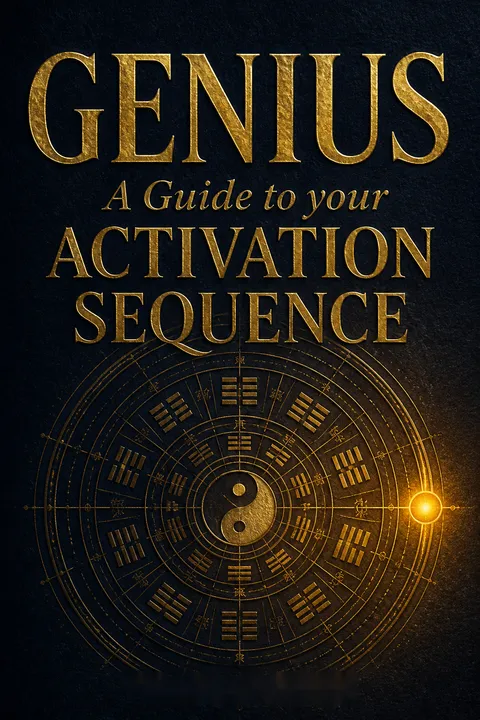
This book is best read as a spiritual contemplative guide organized around a personalized symbolic map. Its narrative begins with a tension between restless striving and receptive attention, then turns that tension into a practice: study recurring difficulties, contemplate them from several angles, and look for more integrated ways of living. The Activation Sequence gives that journey a memorable structure through four life spheres and pathways linking challenge, breakthrough, and stability. Its most useful proposition is that purpose need not be reduced to occupational identity. Purpose can also describe the quality with which someone inhabits work, relationships, and the body.
The framework’s practical value does not depend on accepting its cosmology. The book presents birth-derived Gene Keys as connected to DNA, planetary positions, and quantum entanglement, but the supplied text offers no scientific evidence establishing those links. Gene Key is not a standard molecular-genetics term, and readers should not confuse the profile with a validated biological assessment. Taken as a symbolic vocabulary, however, it may help readers name patterns they have struggled to observe. Its emphasis on patient reflection, responsibility, and self-forgiveness can support honest self-inquiry, provided that spiritual interpretation does not displace evidence, professional care, or attention to external causes of suffering.
The book also has a productive tension between its refusal to reduce people to types and its elaborate system of personalized categories. That tension is manageable if the categories remain provisional. A profile is more illuminating when it generates questions that can be checked against lived experience, and less so when every event is made to confirm it. The same caution applies to the promised transformation of Shadows into Gifts: meaning can emerge from difficulty, but not every hardship is a necessary lesson. Read as an invitation to observe, reflect, and integrate, rather than as a scientific account of destiny, the book offers a distinctive map for examining how ambition, vulnerability, embodiment, and contribution fit together.
Review Summary
Genius by Richard Rudd receives overwhelmingly positive reviews, with an average rating of 4.72 out of 5. Readers describe it as a profound reference work for self-exploration, complementing the Gene Keys system. Many appreciate its depth and recommend repeated readings for continual contemplation. The book is praised for its transformative potential, offering insights into personal growth and universal design. Reviewers often mention its connection to human design, astrology, and the I Ching. Overall, readers find it enlightening, life-changing, and a valuable tool for spiritual development and self-understanding.
People Also Read





Glossary
Golden Path
Three-stage contemplative journeyThe Gene Keys program’s larger route through three sequences: Activation, Venus, and Pearl. They focus respectively on purpose, emotional patterns and relationships, and prosperity and contribution. The book presents them as a gradual contemplative process intended to integrate different areas of life, not as a quick technique or a scientifically established genetic process.
Hologenetic Profile
Personal Gene Keys mapA personalized chart calculated from a person’s birth time, date, and place. It assigns Gene Keys and lines to spheres representing aspects of life. Rudd interprets the chart through the I Ching and proposes links among planetary positions, consciousness, and DNA. These proposed links are part of the book’s spiritual framework, not established genetic findings.
Gene Key
Archetype in a 64-part systemOne of 64 archetypes in the Gene Keys system, adapted from the hexagrams of the I Ching. Each is interpreted through a Shadow, a Gift, and a Siddhi, which describe different expressions of an underlying theme. Despite the name and the book’s references to DNA, a Gene Key is not a standard genetic unit.
Activation Sequence
Purpose-focused profile sequenceThe first sequence of the Golden Path. It organizes four profile spheres, Life’s Work, Evolution, Radiance, and Purpose, into a contemplative inquiry about purpose and personal development. The book describes its pathways as challenge, breakthrough, and core stability. Its purpose is self-reflection within the Gene Keys system, not biological diagnosis.
Prime Gifts
Four purpose-related Gene KeysThe four Gene Keys assigned to the spheres of Life’s Work, Evolution, Radiance, and Purpose in a person’s Activation Sequence. Rudd treats them as central themes in the person’s potential and recurring challenges. The term describes the Gene Keys system’s spiritual interpretation of a birth profile, rather than abilities measured through a validated test.
Contemplation
Focused, relaxed reflectionThe central practice of the Gene Keys. It combines deliberate attention with the willingness to let understanding arise without force. Rudd describes it as engaging mental, emotional, and physical awareness, using the Gene Keys as objects of sustained reflection. It differs from purely passive observation and from effortful concentration aimed at forcing a result.
Frequency Band
Three modes of expressionThe Gene Keys system groups each archetype’s expression into three bands: Shadow, Gift, and Siddhi. The Shadow is associated with suffering and reactive patterns, the Gift with creativity and open-heartedness, and the Siddhi with spiritual realization. These bands are interpretive and spiritual categories, not measured physical frequencies.
Programming Partners
Opposing Gene Key pairTwo Gene Keys positioned opposite one another in the Gene Keys hexagram wheel. In the Activation Sequence, Life’s Work and Evolution form one pair, while Radiance and Purpose form another. The book interprets each pair as a linked tension whose themes can illuminate one another during contemplation.
Core Stability
Flexible inner groundingA quality and process associated with the pathway connecting Radiance and Purpose in the Activation Sequence. It refers to groundedness that can adjust to change, and to responding to events rather than being governed by automatic reactions. Rudd also associates it with inhabiting the body and feeling connected to one’s life and surroundings.
Individuation
Integration of inner and outer lifeThe book’s term for a mature integration of a person’s inner experience with ordinary external life, including relationships, work, health, and resources. It does not mean withdrawing from the world, avoiding difficult emotions, or achieving a permanent spiritual high. Rudd emphasizes self-forgiveness, appropriate boundaries, and participation in community.
About the Author
Other books by Richard Rudd
Download PDF
Download EPUB
.epub digital book format is ideal for reading ebooks on phones, tablets, and e-readers.








