

Plot Summary
Wren Runs Beyond the Wall
After Wren Graven exposes her father Vance’s betrayals and frees two prisoners, she escapes Breachfort with Prince Leopold Valorian and Julian Knight, heir to the House of Iron. Vance sends riders after them, including bonesmiths able to cross into the dangerous Breachlands.
Wren has a ghostsmith ring that magnifies her power over bones and the dead, but using it against the guards would leave more people injured and strengthen her father’s desire to control her. The three fugitives hide through the night, then discover Vance’s patrol has also blocked the nearest entrance to the Haunted Territory. Their escape has become a race to reach the source of the danger before either parent or regent can use it.
The opening makes Wren’s rebellion concrete: she has not merely rejected her father’s authority, she has taken the prisoners and the magical instrument he wants. Her refusal to use that power on pursuers is already a moral choice, even as she recognizes her own capacity for violence. The chase also establishes the story’s central pressure: every attempt to reach safety exposes the fugitives to new authorities, while the family bond Vance claims becomes a means of control.
Bounty at Southbridge
Rather than attack the guards blocking their route, the fugitives follow Julian’s advice and take the Coastal Road to Southbridge, where he expects help. Leo gets them through the gate with a false story, but wanted posters soon reveal that the Iron Citadel’s regent has branded Julian a kidnapper and offered a reward for his capture.
Julian fears that years spent helping local families will count for nothing against the accusation. Elsa, who shelters orphaned children and knows Julian’s work, still lets the three hide in her cellar. A search forces them onto the rooftops. When soldiers threaten Elsa and her young ward Millie in public, Julian steps forward to protect them, but Wren and Leo are seized too.
Southbridge makes reputation a political battleground. Julian’s years of practical service have built real loyalty, but he cannot control the story told about him by a powerful regent. His choice to risk capture rather than let Elsa and Millie pay for his escape reveals the difference between authority and responsibility. Wren, meanwhile, has to confront how her earlier decision to leave Julian tied up still shapes their partnership: he has reason to doubt her, even as he continues to act with care.
A Familiar Enemy Turns
The captives are taken to a ruined bonesmith temple, where the Red Guard question Wren and Julian while Leo remains bound outside. Jakob, one of their former captors, loosens Leo’s gag; Leo uses the gold chain around Jakob’s neck to stop him from being struck by a Breachfort arrow. When revenants attack the camp, Julian breaks his restraints and frees Wren, and Leo escapes in the confusion.
Inara Fell arrives with news that Vance’s patrols have been chasing them. Then Inara’s missing companion Sonya appears as a revenant, and Wren halts her with a command no ordinary bonesmith could give. Wren reveals that she is a ghostsmith and that a magic well is empowering the undead. Her masked brother Hawke offers to guide them there.
The camp turns several apparent weaknesses into practical strengths. Leo’s social ease hides a dangerous command of gold, Jakob’s obedience gives way to a flicker of conscience, and Wren’s frightening magic proves it can prevent harm as well as cause it. Sonya’s return makes the cost of the undead crisis personal for Inara. Hawke’s sudden arrival offers the fugitives a route forward, but his knowledge also raises a new question: whether expertise gained inside the enemy’s world can be trusted.
The Bones Beneath the Road
Wren, Julian, and Leo accept Hawke’s guidance into an underground passage network that avoids the patrols. Its skull lamps are animated by ghosts, and Hawke sends a ghost-hawk ahead to scout. As he explains the ghosts’ role in his culture, Wren and Julian challenge his belief that forced service is an honor; their arguments expose how little either side understands the other.
Hawke reveals that the well draws raw magic from deep underground and that the iron revenants are tied to it. A revenant wolf attacks, and a tremor collapses the tunnel. Julian holds a falling slab long enough for Wren and Leo to escape, then survives beneath the rubble. The breach leaves the group on the surface above the drowned city of Laketown.
The tunnels turn the story’s ethical conflict into architecture: dead people literally illuminate the path, while Hawke regards that arrangement as ordinary. Wren’s objections begin to unsettle the assumptions she inherited, but the same questions threaten her own identity as a trained bonesmith. Julian’s rescue of Wren is also a decisive act of trust made before either can resolve their anger. Their survival depends on cooperation that their words and resentments have not yet caught up with.
Laketown’s Drowned Dead
Hawke leads the group across rooftops and rope bridges spanning Laketown, a city drowned when a dam failed after the Breach. When Julian’s weight snaps a bridge rope and his boot touches the water, revenants surge up from below. Wren jumps in to draw them away, but drowned bodies seize her and a ghost’s touch floods her mind with memories of the city’s destruction.
Hawke dives after her, while Leo and Julian help pull them from the lake. Mercy, a scarred bonesmith who has survived in the ruins for years, treats them and offers shelter. She explains that revenants are not simply monsters: they suffer, and release from their bodies brings relief. Wren begins to understand her magic as more than a weapon.
Laketown makes the history of the Breach impossible to treat as distant lore. Wren experiences the catastrophe through the dead, whose memories transform a ruined landscape into a community that was abruptly taken from its inhabitants. Mercy’s practice gives the group a different model of bonesmithing: protection of the living need not require contempt for the dead. Wren’s near-drowning also shifts her dependence on Hawke and Julian from tactical cooperation toward a more intimate recognition of what they risk for one another.
The Familiar’s First Memory
At Mercy’s home, Hawke helps Wren summon the ghost-bird bound to her ring and teaches her how to enter its memories without losing herself inside them. Wren discovers that this ability, called Vision, can reveal a ghost’s lived experience. When Mercy traps and reaps a revenant wolf, Wren touches its spirit and feels its memories and final pain; Hawke experiences its release too, forcing him to question what he has been taught about the dead.
Wren names her familiar Willow and agrees that she and Hawke will eventually free their ghost companions. The lessons give Wren a new way to understand the revenants, and the familiar becomes a scout who can carry messages beyond Wren’s reach.
Vision changes knowledge from something Wren can extract to something she must risk experiencing. The wolf’s memories make its suffering bodily and immediate, complicating any clean division between dangerous corpse and innocent spirit. Naming Willow is a small act with large ethical weight: Wren stops treating the ghost as an instrument, even while she still needs its help. Hawke’s response matters too, because his inherited certainty begins to fracture through contact rather than argument.
Inara Burns the Saddles
While Wren’s group crosses Laketown, Inara returns alone to Breachfort and reports that the fugitives remain in the regent’s custody, hoping to turn Vance toward a false trail. She tries to stop him from pursuing Wren by redirecting patrols and setting fire to the stable’s tack room. The plan buys little time.
Vance’s mother, Lady-Smith Svetlana, arrives and forbids his expedition, but Vance reveals he has evidence implicating her in the conspiracy and threatens to expose her unless she yields. With the returning patrols and saddles restored, Vance prepares to ride east. Inara follows, intending to warn Wren and prevent her father from bringing more soldiers into the Haunted Territory.
Inara’s subplot shows how a competent person can be trapped by institutions that confuse rank with judgment. Her deception and sabotage are not effortless heroics; each failure teaches her that Vance can absorb obstruction and keep advancing. Svetlana’s inability to stop her son reveals that family loyalty can function as mutual blackmail rather than protection. Inara’s decision to ride after Vance marks a shift from obeying a compromised chain of command to accepting personal responsibility for what happens next.
Starling’s Bloodied Warning
When Red Guard riders approach Mercy’s home, Hawke abandons the direct tunnel route and leads the group toward a difficult cliff passage. Mercy draws the riders’ attention while Wren, Julian, Leo, and Hawke climb. An arrow wounds Hawke, and Wren sends Willow against the archer to stop him from firing again.
In the tunnel beyond, they find Starling, the nomad ghostsmith who once raised Hawke, murdered with wounds too clean to have come from wolves. Wren uses Vision to glimpse the killing and recognizes a floral scent associated with Ravenna, though she cannot yet prove the queen’s role. Hawke leaves Starling’s wishbone necklace with her body, a memory-token meant to ease a ghost’s transition.
The retreat costs Hawke both blood and the security of his old life. Starling’s murder supplies more than a clue: it exposes how Ravenna governs through threats that reach into intimate attachments. The wishbone necklace offers a practice of care inside a culture that also binds the dead into service. Wren’s partial vision cannot deliver a neat answer, and that limitation matters. Her new power provides evidence only when she is willing to endure another person’s fear and pain.
The Iron Army Wakes
Hawke guides the fugitives to the Keeper’s Cathedral, where hundreds of iron-armored revenants stand dormant. Grates seal the exits, and the regent Francis emerges with Ravenna, the Corpse Queen. Their capture reveals that Hawke has led them into a planned handoff, though his distress suggests his allegiance is divided.
Ravenna forces Wren and Hawke to channel the well’s magic into the revenants, awakening an army powerful enough to march. Leo escapes through the tunnels. Francis then cuts Julian’s throat with Julian’s own family dagger. Wren is left captured and believes Julian dead, while Hawke has helped create the very force they had set out to stop.
The betrayal lands because Hawke’s earlier doubts were real, not merely a performance. His fear of Ravenna does not erase his responsibility, but it complicates the easy category of willing villain. Wren’s captivity also completes the transformation of her power into political infrastructure: her body is used to awaken an army. Francis’s use of Julian’s dagger makes the violence personal and symbolic, turning a family inheritance into the instrument of a nephew’s apparent death.
Leo Carries the Warning
Leo evades the soldiers searching the tunnels by following the gold marks he left earlier, but Jakob catches up and helps him escape instead of returning him to Francis. Jakob admits that the regent’s alliance with the revenants has destroyed his faith in their cause. Leo and Jakob meet Inara underground; she explains that Vance has emptied Breachfort’s defenses to pursue Wren.
Leo and Inara ride to the fort and warn Crown Prince Laurent and Commander Duncan that the iron army is approaching. Laurent initially refuses to abandon the fort’s established defenses. Leo quietly begins another plan with Inara and the commander, using the fort’s cistern and trenches to make water barriers that might halt the undead.
Leo’s escape turns the character others underestimate into the story’s most effective messenger and strategist. Jakob’s choice confirms that obedience is not the same as loyalty, while Leo’s influence comes from noticing what people and materials can do under pressure. Laurent’s initial refusal exposes the limits of inherited command: his authority is formal, but Leo has firsthand knowledge of the threat. The coming defense will depend on whether the fort can value practical intelligence over rank.
A Wedding for the Dead
Vance reaches the cathedral and releases Wren from her cell, hoping to use a marriage to Ravenna to gain access to the well and seize power for the House of Bone. Wren warns him that the Corpse Queen is a lich, but he believes he can outmaneuver her. During the ceremony, Ravenna and Hawke use a lifepin to bind the ghost of the legendary Locke Graven to Vance’s living body.
Ravenna calls the result a resurrection, while Locke’s disoriented mind struggles against Vance. Ravenna then reveals she intends to use Wren as a future vessel. Hawke appears to submit, but secretly returns his amplifier ring to Wren and unlocks her restraints.
Vance’s ambition repeats the pattern he claims to oppose: he treats people as tools and assumes cleverness can substitute for understanding. The lifepin makes that logic literal by binding a dead spirit to a living body. Wren’s warning is not ignored because it lacks evidence; Vance rejects it because accepting it would require relinquishing the power he has imagined as his due. Hawke’s concealed aid is a small but consequential refusal to let Ravenna define family loyalty as unquestioning obedience.
Julian Rises in the Current
Julian survives the regent’s attack when Hawke kicks him into a current carrying raw magic from the well. Willow finds him on the shore, and the magic has healed his throat and flooded his iron armor with power. Julian learns to draw iron from stone, move it through the air, and magnetize his own hand.
He follows the riders and confronts Francis, who reveals that Julian’s childhood hand injury was deliberately engineered so Francis could test an iron replacement on himself. Julian refuses to let his uncle define him as weak. He defeats Francis by magnetically pinning the regent’s armor to Julian’s sword and the iron beneath the road, then leaves him bound and rides for Breachfort.
Julian’s recovery gives him power, but the more important change is his understanding of how that power relates to his history. The hand Francis called a gift was also an experiment designed to serve Francis’s ambition. Julian’s new abilities let him reverse that relation, yet he wins by exposing his uncle’s dependence on armor rather than overpowering him through violence alone. His pursuit is no longer a bid for approval; it is a deliberate break from the person who taught him to confuse control with care.
Water Holds the Gate
At Breachfort, the iron revenants ignore the bone palisade and batter the gate while ordinary arrows and falling stones fail to stop them. Leo persuades Laurent to let him direct the defense, then diverts the cistern through a drain to flood the road and fill trenches around the army.
The water initially pens the revenants in, but it seeps into the ground; one breaks through and threatens Inara. Julian arrives in time to sever its head with his whip sword, then helps Inara attack the revenants’ exposed joints with bonedust. As the remaining water barriers fail, the army closes around the defenders. Leo and Julian can only hold the line while Wren fights Ravenna far away.
Leo’s plan exploits a limitation the enemy’s armor cannot solve: the revenants’ dependence on distance from water. It is neither a clean victory nor a display of superior force. The barrier buys time, then begins to fail, making ingenuity a temporary resource rather than a guarantee. Laurent’s eventual cooperation and Julian’s arrival show authority being redistributed under pressure. The defenders’ survival still depends on Wren’s separate confrontation, linking the fort’s material tactics to the unresolved conflict over who controls the dead.
The Queen Loses Her Tethers
With her ring restored, Wren confronts Ravenna and learns that the queen can split her ghost among the undead and possess them. Wren identifies the many linchpins embedded along Ravenna’s spine as the anchors holding her fractured spirit together.
Hawke distracts Ravenna by rousing the ancient Elders, but the queen possesses them too. Starling’s newly risen spirit then reaches Wren and guides her through a memory showing how Ravenna exposed her bones while Starling implanted those pins.
Wren uses controlled bonedust to peel Ravenna’s ghost away from her spine, then pulls out the linchpins. Ravenna collapses, her scattered spirits return, and the iron army’s command begins to fail. Hawke names the harm Ravenna caused, and Wren helps her finally let go.
Wren’s victory depends on combining forms of knowledge that the houses kept separate: bonesmith precision, ghostsmith Vision, and an understanding of the dead as people with memories and choices. Starling’s memory turns her from a victim in Hawke’s history into an active participant in ending Ravenna’s power. Wren does not simply destroy the queen’s body; she removes the structure that lets Ravenna evade ordinary limits. The final release is also an ethical reversal: instead of compelling a ghost to serve, Hawke helps his mother choose to leave.
The Well Falls Silent
With Ravenna gone, Wren and Hawke descend to the well and use their linked magic to pull out its many linchpins without destroying the bones beneath them. Hundreds of trapped ghosts are released, then Wren collapses the bone-lined chamber and buries the raw magic. At Breachfort, the iron revenants freeze as Ravenna’s control disappears.
Wren and Hawke free the Uprising dead, their familiars, and Julian’s murdered father; Julian returns to lead the House of Iron and protect his sister Becca. The king strips the Gravens of their nobility, gives the House of Bone to Inara’s family, and permits Wren and Hawke to join it. Wren remains at Breachfort, Julian stays close, and Leo chooses diplomacy over a military title.
The resolution refuses a simple return to the old order. The well’s destruction prevents another army from being activated, but it also leaves the living with the work of freeing the dead and repairing what the magic damaged. Wren and Hawke’s shared practice offers a new institutional possibility, one based on release rather than ownership. Political consequences also matter: Vance loses status, Julian accepts leadership without repeating his uncle’s methods, and Leo claims a role by choice rather than birth order. The romance rests within this wider rebuilding, not apart from it.
Analysis
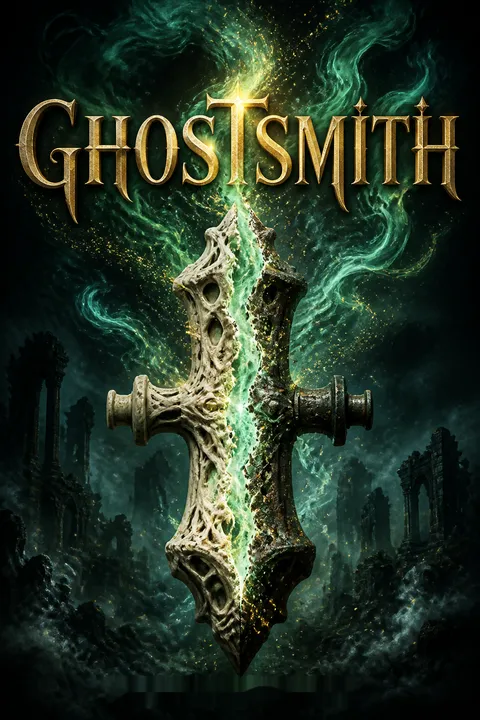
Ghostsmith asks what it means to care for the dead when the living have built institutions around controlling them. Its fantasy machinery makes that question physical: ghosts power lamps, animate armor, and become tools through rings, linchpins, and the well. Wren’s changing understanding does not come from a sudden rejection of everything she was taught. It comes through encounters with particular spirits, whose memories and relief make the cost of servitude harder to dismiss.
That shift also complicates power. The well appears to offer salvation to endangered houses, yet it concentrates magic in a few hands and destabilizes the landscape that sustains everyone else. Vance and Francis each claim to act for their people while treating people as instruments. Their self-justifications differ, but both depend on the same assumption: that a powerful man’s intention can excuse the damage he causes. Wren’s refusal challenges that logic, though she must confront her own appetite for strength and recognition along the way.
The relationships provide a countermodel to possession. Julian’s trust in Wren is strained by her choice to leave him behind, then rebuilt through shared risk rather than easy forgiveness. Leo discovers purpose by applying attention and ingenuity instead of trying to imitate a warrior prince. Hawke’s bond with Wren makes family something they negotiate through truth and difficult choices, not simply blood or debt. By the ending, care means helping the dead release their tethers and letting the living choose their own responsibilities. The restored political order matters, but the deeper victory is a new practice: power used not to keep others close, but to let them go.
Review Summary
Ghostsmith is the thrilling conclusion to the House of the Dead duology. Readers praise the unique world-building, magic system, and character development, particularly Wren's growth. The fast-paced plot and action scenes keep readers engaged, though some felt the villains lacked depth. While the romance takes a backseat, the found family dynamic shines. Overall, reviewers consider it a satisfying end to a memorable YA fantasy series, perfect for fans of spooky, bone-filled adventures. Most rate it 4-5 stars, recommending it for its originality and entertainment value.
People Also Read

Characters
Wren Graven
The boundary-breaking bonesmithA bold, combative bonesmith and aspiring valkyr, Wren begins with her identity tied to her family’s approval and the status she believes she has lost. She is quick to act, slow to admit fear, and inclined to use sarcasm where vulnerability would be harder. Her developing ghostsmith abilities force her to reconsider what she has been taught about the undead and what kind of power she is willing to wield. Wren’s defining strength is not simply magical talent, but her capacity to revise her judgments when direct experience contradicts them. Her loyalty can make her reckless, yet it also draws her toward a more chosen understanding of family, duty, and selfhood.
Julian Knight
The iron heir in exileThe heir to the House of Iron, Julian is a disciplined fighter whose iron-reinforced hand is both an amplifier and a source of private shame. He has spent years serving Breachlands communities and wants to protect the people and legacy his family failed to secure. His uncle’s approval has shaped his self-image more than Julian likes to admit, leaving him vulnerable to manipulation and wary of trust. Wren challenges his restraint and his assumptions, while his own habit of protecting others often outruns his anger. Julian’s central struggle is to distinguish strength from obedience and leadership from the need to prove himself.
Leopold Valorian
The underestimated princeLeo is a charming younger prince whose fashion, wit, and ease with strangers lead others to underestimate his intelligence. He has grown accustomed to being treated as a spare among spares, and jokes often let him control the terms of that dismissal. Beneath the performance, he is observant, strategically minded, and hungry to demonstrate value on his own terms. His skill with gold becomes useful in escapes and improvised problem-solving, while his political instincts help him win cooperation across rank and allegiance. Leo’s strongest ambition is not to imitate his older brother, but to find a role where his mind can do more good than a sword.
Hawke
The masked ghostsmithHawke is a withdrawn young ghostsmith who knows the tunnels, customs, and dangers of the Haunted Territory. Raised within a culture that treats the undead as servants, he initially struggles to recognize the cruelty in practices he has long considered normal. His attachment to animal familiars reveals a capacity for tenderness that sits uneasily beside the powers he is trained to use. Hawke longs for companionship and freedom from the burdens placed on him, but fear and obligation repeatedly pull him back toward the people who control his life. His quietness should not be mistaken for passivity: he is observant, capable, and painfully aware of how much he stands to lose.
Ravenna
The Corpse QueenA powerful ghostsmith ruler who seeks to restore the authority of her ancient house, Ravenna is patient where Wren is impulsive and adept at turning loyalty into leverage. Her command of the undead rests on a worldview in which power and survival justify nearly any cost. She is both a political strategist and a parent whose relationships are shaped by control, debt, and inheritance. Ravenna’s long struggle against exile has made her resistant to compromise and increasingly unable to distinguish protection from domination. Her ambition is not a vague desire for conquest: she wants a restored order in which the dead serve and her house rules.
Vance Graven
The ambitious bonesmith lordWren’s father and heir to the House of Bone, Vance is clever at plotting but careless when pressure forces him to improvise. He frames his ambitions as necessary for his family and house, yet repeatedly makes choices that protect his own status and appetite for recognition. His relationship with Wren is marked by selective attention and control, leaving her to mistake his approval for a measure of her worth. Vance is not incapable of affection, but he treats authority as proof that he knows best. His confidence can persuade others, including himself, that disastrous risks are simply bold plans.
Inara Fell
The exacting young valkyrA capable bonesmith and recently graduated valkyr, Inara values discipline, competence, and careful preparation. She has often judged Wren as reckless, but her own loyalty proves more complicated than simple rule-following. Inara is practical enough to lie, sabotage, or take risks when institutions fail to protect people. Her intelligence is matched by a strong sense of duty, though she must learn that duty sometimes requires disobeying those who outrank her. She and Wren share sharp edges and stubborn resolve, making their uneasy respect a significant counterweight to Wren’s more intimate bonds.
Mercy
Laketown’s solitary reapyrA scarred bonesmith who survived Laketown’s flood, Mercy has made the drowned city both her home and her responsibility. She protects herself with water barriers, traps, and bridges of her own making, while devoting her work to releasing the dead. Her practical manner hides a deeply considered ethic: the living deserve safety, but the undead also deserve relief from an existence they did not choose. Mercy’s example gives Wren and Hawke a model for combining combat skill with compassion. She neither romanticizes the dead nor reduces them to threats.
Jakob
The conflicted young soldierJakob is an earnest Citadel soldier who tries to follow orders and protect the livelihood his family depends on. He is not initially brave in the grand, public sense; his conscience develops through small choices and personal encounters. Leo’s kindness and Julian’s reputation give him reasons to question the regent’s story, while the undead army forces him to consider what obedience might make him complicit in. Jakob’s decency emerges as a willingness to act despite fear, not as certainty that he will be rewarded.
Francis
The Iron Citadel regentJulian’s uncle and regent of the Iron Citadel, Francis is a ruthless political operator who prizes strength, leverage, and control. He knows how to undermine Julian’s confidence and has turned mentorship into a means of shaping him for his own ends. Francis’s alliance with Ravenna is driven less by shared belief than by the promise of military advantage and power over the Dominions. His public claims of service conceal a willingness to sacrifice family, soldiers, and political truth whenever they obstruct his ambitions.
Svetlana Graven
The House of Bone matriarchVance’s mother and Wren’s grandmother, Svetlana is a formidable political figure who believes the House of Bone must preserve its standing through discipline and competence. Her severe manner has helped shape Vance’s hunger for recognition and Wren’s sense of being judged. She understands the value of institutional reputation, but her authority is not absolute within her own family. Svetlana’s calculations expose the compromises that can hide beneath a house’s public ideals.
Starling
Hawke’s nomad caretakerA nomadic ghostsmith who once cared for Hawke, Starling represents a community and a gentler source of belonging beyond Ravenna’s court. She is associated with the wishbone token Hawke keeps, a reminder that memory and affection can help an undead spirit retain a connection to life. Her history reveals that ghostsmith culture is not a single, uniform tradition. Starling’s care for Hawke stands in contrast to the obligations imposed on him by powerful people.
Locke Graven
The celebrated Uprising heroA legendary bonesmith remembered for his role in the Iron Uprising, Locke occupies a powerful place in the histories that shaped Wren and Vance. His public reputation is heroic, but the details of his life and choices have been filtered through the people who survived him. Locke’s story raises questions about how historical memory is created, especially when political factions need a model of sacrifice or a target for blame. He represents the danger of carrying extraordinary power without sufficient human support.
Elsa
Southbridge’s orphan keeperA practical, generous woman who runs an orphanage in Southbridge, Elsa provides shelter for children endangered by poverty, gangs, and military recruitment. She trusts Julian because she has seen his help reach the people most likely to be overlooked. Her decision to shelter fugitives puts her community at risk, revealing the courage hidden inside ordinary acts of care.
Millie
The outspoken orphanAn orphan in Elsa’s care, Millie is sharp-tongued, perceptive, and unafraid to challenge adults who abuse their authority. Her easy rapport with Leo and Wren briefly gives the fugitives a glimpse of ordinary warmth while they are hunted. Millie’s presence also makes the danger to Elsa’s home and children impossible for Julian to ignore.
Laurent Valorian
The cautious crown princeLeo’s older brother and heir to the Valorian throne, Laurent is accustomed to command and to decisions grounded in formal military experience. He is protective of his soldiers, but his confidence in established defenses initially makes him slow to accept the unfamiliar threat. His relationship with Leo mixes affection with condescension, reflecting the strain of being the designated leader beside a brother often dismissed as frivolous.
Commander Duncan
Breachfort’s steady commanderThe commander of Breachfort, Duncan is responsible for the fort’s garrison and remains wary of Vance’s interference. He values soldiers’ lives and understands the practical limits of authority. When the iron army approaches, he is willing to listen to Leo’s unconventional plan and adapt rather than cling to appearances.
Rebecca Valorian
Julian’s spirited sisterKnown as Becca, Rebecca is Julian’s younger sister and one of his clearest personal attachments. Her curiosity and independence emerge in her fascination with Wren’s bonecraft and her attempt to make a sword of her own. She represents the family Julian wants to protect without turning protection into control.
Alanna
Becca’s protective motherJulian’s stepmother and Becca’s mother, Alanna is caught in the political danger created by her brother Francis. She is anxious to keep her daughter safe and willing to accept scrutiny rather than pretend she knows more than she does. Her quiet composure contrasts with Francis’s appetite for command.
Jonathan Knight
Julian’s fallen fatherJulian’s father is remembered as a kind man and an ironsmith leader whose death left his son vulnerable to Francis’s influence. His absence has shaped Julian’s sense of responsibility and his determination to repair his family’s standing. The unresolved circumstances of his death remain a wound in Julian’s personal and political history.
Odile
The murdered bonesmith scholarA senior bonesmith whose notes and correspondence preserve crucial knowledge about the old ghostsmith history and the political conspiracy. Odile’s research gives the living evidence with which to question the stories told by powerful families. Her work continues to influence Wren even after Odile can no longer explain it herself.
Plot Devices
Ghostsmith amplifiers
Power bound to haunted boneBone rings and other amplifiers strengthen a ghostsmith’s ability to sense, summon, or direct ghosts. Wren’s ring is both a practical source of power and a constant reminder that the dead have been bound into service. Hawke’s rings connect him to animal familiars, who can scout and carry signals. The amplifiers also enable Ravenna to exploit Wren in awakening the iron revenants. Their meaning changes as Wren and Hawke learn to use them in ways that can guide spirits toward release rather than compel them to remain.
The buried magic well
A source that empowers the deadThe well draws raw magic from underground and feeds it into gathering pools. It magnifies the abilities of smiths, awakens latent powers, and gives Ravenna’s forces the means to move armored revenants across great distances. Its leaks contribute to tremors, undead activity, and instability in the land. The well is ultimately revealed to be built from haunted bones bound by linchpins. Destroying it requires freeing those spirits first, then collapsing the structure so it cannot continue drawing magic.
Linchpins and the lifepin
Tethers that bind spirit to boneLinchpins strengthen the bond between a ghost and its anchor bone, allowing ghostsmiths to keep the dead attached to bodies, armor, or other structures. The well depends on many such bindings, and Ravenna uses them to keep her fragmented spirit attached to her own remains. A related device, the lifepin, can bind a ghost to a living body. These tools embody the story’s central distinction between a spirit’s continued existence and its freedom, and they give Wren a precise means to disrupt systems built on forced service.
Vision
Memories carried by ghostsWren’s rare ghostsmith ability lets her experience memories held by a spirit, often including the moments before death. Vision reveals the history of drowned Laketown, teaches Wren about the pain of a revenant wolf, and provides the memory that helps expose Ravenna’s vulnerability. It can also overwhelm Wren, pulling her so deeply into another life that she risks losing awareness of her own body. The ability turns the dead into witnesses whose memories challenge official histories and inherited beliefs.
Water as a boundary
A natural barrier against revenantsWater interferes with the undead’s ability to cross, though its protection depends on distance, bridges, and the nature of the terrain. The rule shapes the journey through Laketown, where a broken bridge awakens drowned revenants, and it becomes the foundation of Leo’s defense at Breachfort. By diverting the cistern into trenches and flooding the approach to the gate, Leo turns a limitation into time for the defenders. The barrier is temporary because the ground absorbs the water, forcing the characters to treat it as a delaying tactic rather than a final solution.

Download PDF
Download EPUB
.epub digital book format is ideal for reading ebooks on phones, tablets, and e-readers.








