

Key Takeaways
Globalization can grow national wealth while leaving ordinary workers worse off.
The headline hides distribution. Global integration has helped generate rapid growth and lifted hundreds of millions of people out of poverty in China. But national gains do not guarantee gains for everyone. Stiglitz argues that in many advanced economies, incomes for much of the population stagnated while the richest captured a growing share. The key failure is not simply that globalization creates winners and losers, but that governments often leave the losers without effective support.
Gary makes the costs visible. In Stiglitz’s hometown, steel production remained near its old level while the workforce shrank to about one-sixth of its former size. The abandoned high school and declining community show how lost jobs can weaken places, not just household incomes. Those losses can coexist with gains elsewhere, making aggregate growth a poor measure of whether globalization is working for a society.
What's striking is the distinction between national output and lived prosperity. A country can become richer on paper while workers lose bargaining power, communities lose their economic base, and insecurity rises. This resembles a central problem in public health: an average can improve while a vulnerable group deteriorates. The account also resists a tempting oversimplification. Globalization is not the sole cause of stagnating wages or industrial decline, but policy determines who bears the costs and who receives the gains. Judging integration by distribution, security, and local opportunity gives citizens a more meaningful test than GDP alone.
Do not promise trade creates jobs; promise workers a fair route through change.
Trade changes where work happens. Standard trade theory says countries can gain by specializing in what they produce relatively well. But those gains do not ensure that every worker benefits. Advanced economies often import labor-intensive goods and export products such as aircraft that require fewer workers per dollar of trade. Workers in import-competing industries can lose jobs or wages, especially when the economy is already weak and new jobs are scarce.
Losses spread locally. Stiglitz describes how a surge in imports from China damaged some American communities beyond the factories themselves. Falling incomes weakened local shops, housing values, small-business lending, and demand for services. Trade policy cannot guarantee full employment; monetary and fiscal policy, along with retraining and social protection, must help people and places adjust. Without those measures, claims that trade automatically creates jobs overpromise and undermine trust.
The useful shift is from asking whether trade raises total income to asking how adjustment works in practice. Labor markets are not frictionless: people cannot instantly move, retrain, or replace a lost network of customers and employers. Research on local economic shocks supports attention to concentrated community effects, even when national totals look modest. At the same time, trade is only one force behind manufacturing job losses. Stiglitz notes that productivity growth explains much of the decline. That is not a reason to dismiss workers' losses; it is a reason to build protections that apply to technological change as well as imports.
Call a deal managed trade when its fine print protects firms, not citizens.
The rules reveal the priorities. Managed trade means agreements that govern trade through detailed rules, rather than simply removing barriers. Stiglitz argues that many agreements were negotiated chiefly around the interests of large corporations. They protected intellectual property in ways that could raise medicine prices, and investment provisions let foreign firms challenge regulations that reduced expected profits. In a case described in the book, Philip Morris sued Uruguay over cigarette health warnings; Uruguay eventually won, but defending the policy was costly.
The benefits were oversold. The Trans-Pacific Partnership ran to thousands of pages, yet the U.S. government estimated its eventual effect on GDP at only about 0.15 percent. Stiglitz argues that citizens, workers, and environmental advocates had little influence over the negotiations. A deal called free trade can therefore widen corporate access while limiting governments' room to protect public interests.
What's striking is that trade agreements can shape domestic policy without ordinary legislation receiving comparable scrutiny. That makes transparency and public participation substantive safeguards, not procedural niceties. The critique is strongest when agreements privilege firms' rights over the public's ability to regulate; it need not imply that every common rule is harmful. Shared standards can reduce genuine barriers when products or risks cross borders. The practical question is who sets the standard, which problem it solves, and whether its public benefits justify the constraints it imposes.
Treat fast-moving cross-border finance as a hazard, not automatic development.
Not all capital behaves alike. Stiglitz uses hot money to describe short-term funds that can rush into or out of a country quickly. Unlike investment in a factory, these flows can reverse before a business or government has time to adjust. Before the 1997 East Asian crisis, funds flowed into the region; when confidence shifted, they fled, currencies fell, and economies entered deep downturns. The IMF's high interest rates and spending cuts worsened the contraction, according to Stiglitz.
Countries sought protection. Malaysia temporarily restricted some capital movements during the crisis and recovered with a shallower downturn than several countries following IMF prescriptions. China also maintained capital controls and avoided the crisis. The episode led many governments to accumulate large dollar reserves as insurance, often lending cheaply to the United States. Stiglitz's argument is not that every cross-border investment is harmful, but that volatile short-term finance needs safeguards.
The distinction between long-term productive investment and liquid financial claims is essential. Liquidity helps investors respond to new information, but at a system-wide scale the same speed can amplify panic and force sound businesses to cut activity. This is a classic externality: each investor's exit may be individually sensible while the combined effect damages the economy. Capital restrictions can also be poorly designed or used to shelter favored insiders. Their value depends on context, transparency, and whether they reduce instability without blocking useful investment.
Build a market's legal and financial foundations before selling its assets.
Reform has an order. Shock therapy means rapidly replacing state controls with market prices, private ownership, and liberalized trade. The Washington Consensus refers to the market-oriented policy package promoted by Washington-based institutions, including privatization, liberalization, and fiscal restraint. Stiglitz argues that applying these changes before legal systems, financial institutions, and competition rules exist can produce theft and monopoly rather than productive markets.
Russia and China diverged. In Russia, rapid privatization amid weak institutions helped create oligarchs and asset stripping; GDP fell roughly 45 percent between 1990 and 1998. China changed gradually, beginning with agricultural reforms and using new enterprises to create jobs before restructuring older state firms. Poland also built institutions and privatized more slowly. These examples support sequencing, though they do not prove that gradual reform works equally well in every country.
This is an argument about institutional complements: ownership works differently depending on whether courts enforce contracts, banks evaluate borrowers, and competition rules prevent private monopolies. A transfer of assets alone cannot create those conditions. The Russia-China contrast is vivid, but comparisons across countries are never clean experiments; starting conditions, political structures, and global circumstances differ. The more robust lesson is not that one pace is always correct, but that reform should be judged by whether institutions can support it and whether ordinary people can withstand the transition.
Give affected countries a real voice in rules that govern their economies.
Power shapes policy. Global governance without global government describes international rules and institutions that coordinate countries without a world government accountable to all citizens. Stiglitz argues that the IMF and World Bank have often been shaped by the finance ministries and powerful countries that dominate their decisions, while affected workers and poorer nations have had little influence.
Ethiopia shows the imbalance. In the late 1990s, Ethiopia's government wanted to spend foreign assistance on schools and clinics. The IMF questioned whether that aid could safely count as budget revenue and suspended its program, putting other lending at risk. Stiglitz argued that the country's strong economic performance deserved support, and the World Bank eventually tripled its lending. The episode illustrates how external conditions can constrain a country's choices even when local officials understand their circumstances better.
The case connects legitimacy to practical knowledge. Local officials and citizens often understand administrative capacity, social priorities, and political constraints that a visiting institution can miss. Yet local knowledge does not guarantee good governance; domestic elites can also exclude citizens or misuse resources. The strongest system combines local decision-making with transparent evidence, public accountability, and safeguards against abuse. Representation matters because people are more likely to regard difficult policies as legitimate when they can help shape them and contest their consequences.
Tariffs cannot erase deficits rooted in national saving and investment.
The accounting matters. A country's current account deficit is linked to the gap between domestic investment and national saving. Stiglitz argues that tariffs aimed at one trading partner cannot by themselves eliminate the overall U.S. deficit. If imports from China become more expensive or fall, buyers may shift to another supplier rather than to American factories. A strong dollar can also make U.S. exports less competitive.
Consumers pay first. Higher tariffs raise prices on goods such as clothing and electronics, costs that weigh heavily on lower-income households because they spend more of their income on everyday purchases. Retaliation can then hurt exporters, including workers whose jobs depend on sales abroad. Trade balances between two countries are not the same as the total national balance. Reducing the overall deficit requires changes in saving, investment, or fiscal policy, not just tougher bargaining over bilateral trade.
The accounting identity is a powerful antidote to slogans that blame a deficit on one country alone. It redirects attention from bilateral scorekeeping toward domestic macroeconomic choices. But the identity is not a complete causal explanation: exchange rates, prices, and policy changes influence how the adjustment occurs and which sectors bear it. Nor does it settle whether a particular trade practice is unfair. It clarifies that tariffs cannot reliably deliver the promised aggregate result, while leaving room to address specific subsidies or labor and environmental harms.
Insure people through economic change instead of promising vanished jobs back.
Security makes openness possible. Stiglitz points to Scandinavian countries as examples of economies that remain open while using taxes, transfers, and social protections to reduce the risks of change. His proposed domestic agenda includes stronger worker bargaining power, progressive taxation, education, retraining, and support for communities facing economic upheaval. He argues that help should reach people affected by trade, technology, or shifts in the structure of the economy, not just one category of displaced worker.
The economy is changing shape. Manufacturing output can remain high even as factories employ far fewer people, as happened in Gary, Indiana. Stiglitz argues that the old scale of manufacturing employment is unlikely to return, especially as production becomes more automated and services expand. Policy should help people enter new work and keep communities from collapsing, rather than promising to recreate a postwar economy that depended on unusual historical conditions.
Social protection is often framed as a cost of openness, but it can also make change politically and personally bearable. Reliable support gives workers more room to move, retrain, and bargain rather than accept any available terms. The challenge is to avoid treating benefits as a substitute for decent work or investment in struggling places. Scandinavian examples offer principles, not plug-and-play institutions; taxation, administrative capacity, and political coalitions differ across countries. Durable protections require broad public trust and a financing system capable of surviving electoral change.
Write international rules for spillovers, while giving poorer countries power to shape them.
Rules should match the harm. Cross-border externalities are costs or risks created in one country and borne by people elsewhere. Climate pollution, volatile financial flows, and corporate tax avoidance are examples Stiglitz says deserve international coordination. By contrast, rules that mainly harmonize domestic regulations can become a route for corporations to weaken protections without solving a substantial cross-border problem.
The world is becoming multipolar. Emerging economies have gained economic weight, while older institutions still reflect arrangements formed after World War II. Stiglitz calls for more representative, transparent global decision-making and rules tailored to differing levels of development. A fairer system would protect shared interests, such as climate stability, while giving poorer countries a genuine role in defining obligations and keeping space for domestic choices.
This principle offers a useful test for international cooperation: does the problem cross borders, and does the proposed rule address that problem proportionately? It avoids both extremes, assuming that markets need no shared governance or that every domestic policy should be standardized globally. A multipolar system can broaden representation, but power shifts alone do not guarantee fairness; new leaders can pursue narrow interests too. Legitimacy depends on open procedures, accountable institutions, and protections for groups that remain weak even when their countries gain influence.
Analysis
The book's central move is to separate globalization from the political choices made in its name. It defends international exchange and a rules-based order while rejecting the claim that liberalization reliably benefits everyone. That distinction gives the argument its force: critics can be right about job loss, instability, and corporate privilege without protectionism being the answer.
Stiglitz connects several levels of analysis. Trade changes the distribution of income within countries. Capital flows can destabilize whole economies. International institutions distribute authority as well as money. Domestic policies then determine whether displaced workers receive support or become evidence that the system is rigged. The stories of Gary, Ethiopia, Russia, and East Asia make these mechanisms concrete, though the cases do not all prove the same causal claim. The author's insider experience lends detail to institutional decisions, but readers should distinguish observed episodes from broader interpretations of motive.
The most persuasive insight is that market outcomes depend on rules, institutions, and bargaining power. The most contestable step is the emphasis on corporate influence as a primary explanation for policy design. That explanation fits many examples, but technology, consumer demand, national politics, and administrative limits also shape outcomes. Similarly, Scandinavian social protection offers a compelling alternative to nostalgia and austerity, but its transferability depends on political coalitions and state capacity, not merely policy imitation.
The book's constructive standard is demanding: preserve useful global connections, distribute their benefits more broadly, and create international rules where harms cross borders. Multipolar governance may improve representation, but it cannot ensure justice by itself. A durable globalization needs credible domestic protections and legitimate international institutions, not just new leaders at the negotiating table.
Review Summary
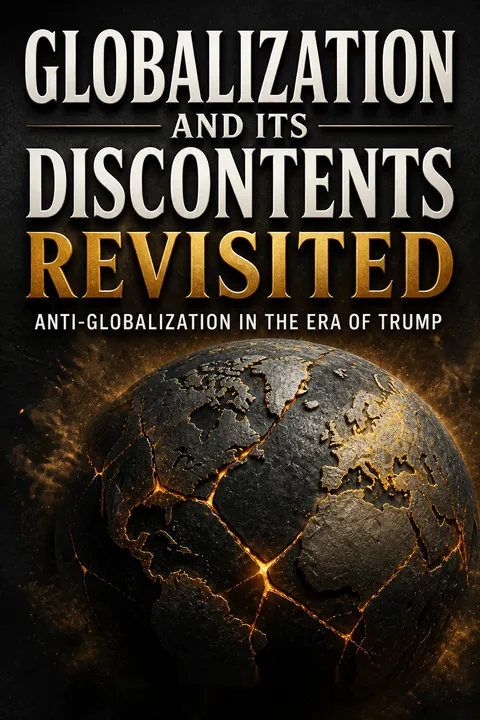
Globalization and Its Discontents by Joseph Stiglitz is a critical examination of the IMF and World Bank's policies in developing countries. Reviewers found it informative and eye-opening, praising Stiglitz's insider perspective and clear explanations of complex economic issues. Many appreciated his analysis of the Asian financial crisis and Russian transition to capitalism. Some critics felt the book was overly focused on IMF criticism and lacked updated content. Overall, readers found it a valuable resource for understanding global economic institutions and their impact.
People Also Read








Glossary
Managed trade
Trade shaped by detailed rulesTrade governed through negotiated rules that go beyond removing tariffs. In Stiglitz's account, these agreements often set terms for intellectual property, investment, labor, and regulation. He argues that many were shaped disproportionately by large corporations and financial interests, so the label free trade can obscure whose interests the detailed rules actually serve.
Hot money
Fast-moving short-term capitalShort-term financial funds that move rapidly across borders in response to changing expectations about returns, currencies, or risk. They may flow into a country during a boom and leave abruptly when sentiment changes. Because businesses cannot reliably use such funds for long-term investment, sudden reversals can destabilize currencies, credit, and employment.
Capital controls
Limits on cross-border capitalGovernment measures that restrict, tax, or otherwise manage the movement of money into or out of a country. Stiglitz presents them as possible tools for limiting the damage caused by volatile short-term flows. They are distinct from a blanket rejection of foreign investment and can be designed to target particular risks or periods of instability.
Washington Consensus
Market-oriented reform packageA set of policies associated with the IMF, World Bank, and U.S. Treasury, especially in the 1980s and 1990s. In the book, it includes privatization, market liberalization, and fiscal restraint, often applied rapidly and with limited attention to employment, inequality, institutional capacity, or country-specific conditions.
Shock therapy
Rapid system-wide market reformA strategy for moving quickly from state-controlled production toward a market economy through rapid price liberalization, privatization, and stabilization. Stiglitz criticizes its use in post-Communist countries when legal, financial, and regulatory institutions were not ready. In Russia, he argues, rapid reforms helped enable asset stripping and severe economic decline.
Global governance without global government
International rules without world governmentA system in which countries rely on international institutions and agreements to coordinate cross-border activity, despite having no single world government accountable to all people. Stiglitz uses the idea to highlight a gap between global interdependence and political representation: institutions make consequential rules, but poorer countries and affected citizens often have limited influence.
Dynamic comparative advantage
Capabilities shaped by productionThe idea that a country's relative strengths are not fixed. Producing goods builds skills, technology, supplier networks, and knowledge that can improve future productivity. Stiglitz argues that moving production abroad can therefore change the capabilities of both countries over time, making the long-run effects of trade different from a snapshot of current costs.
FAQ
What's Globalization and Its Discontents Revisited about?
- Critique of Globalization: The book critiques how globalization has been managed, highlighting that it has favored corporations and the wealthy, leaving many workers worse off.
- Spread of Discontent: Stiglitz discusses how dissatisfaction with globalization has moved from developing countries to the middle and lower classes in advanced economies, especially during the Trump era.
- Call for Reform: The author proposes reforms for equitable globalization, focusing on shared prosperity and improved global governance to distribute benefits more evenly.
Why should I read Globalization and Its Discontents Revisited?
- Insightful Analysis: Nobel laureate Joseph E. Stiglitz offers a well-researched critique of globalization, making complex economic concepts accessible.
- Current Relevance: The book addresses issues like populism and protectionism, making it pertinent to today's political climate.
- Proposed Solutions: Readers gain insights into potential reforms to make globalization work for everyone, crucial for understanding future economic policies.
What are the key takeaways of Globalization and Its Discontents Revisited?
- Failures of Globalization: Globalization has not delivered on its promises of shared prosperity, with many feeling left behind as inequality rises.
- Need for Better Governance: Stiglitz advocates for improved global governance structures that ensure fair and equitable international economic policies.
- Reform Agenda: The author outlines a comprehensive reform agenda to ensure globalization benefits all citizens, including policies for social protection and economic stability.
What are the best quotes from Globalization and Its Discontents Revisited and what do they mean?
- “The failures of globalization were not inevitable.”: Stiglitz argues that poor management and policy choices, not globalization itself, have led to negative outcomes.
- “Globalization has played a central role, even if there were other important forces at play.”: While globalization is significant, other factors like technology also contribute to economic changes.
- “We must see the failures of globalization in part as arising from deficiencies in the governance of globalization.”: This emphasizes the need for better governance and accountability in international economic institutions.
How does [Author] define the "New Protectionism"?
- Response to Discontent: The New Protectionism refers to populist leaders exploiting public discontent with globalization by advocating protectionist policies.
- Economic Consequences: These measures can lead to higher consumer prices and reduced economic growth, ultimately harming the workers they aim to protect.
- Political Implications: Stiglitz warns that this can exacerbate societal divisions, framing debates as "us" versus "them" instead of addressing root causes.
What is the Washington Consensus as discussed in Globalization and Its Discontents Revisited?
- Definition: The Washington Consensus is a set of economic policy prescriptions emphasizing fiscal austerity, privatization, and market liberalization.
- Criticism: Stiglitz critiques it for being overly simplistic and not accounting for individual countries' unique circumstances, often increasing poverty and inequality.
- Call for Alternatives: The book advocates for a nuanced approach that considers social and political factors, promoting inclusive growth.
How does Globalization and Its Discontents Revisited address the role of the IMF?
- Political Motivations: Stiglitz argues that IMF lending decisions are often politically motivated, leading to inconsistent and unfair treatment of countries.
- Failures of Conditionality: The conditions attached to IMF loans can be inappropriate, leading to social unrest and economic instability.
- Need for Reform: Stiglitz calls for a reevaluation of the IMF's role, advocating for policies prioritizing social welfare and sustainable development.
What solutions does Stiglitz propose for equitable globalization?
- Reforming Global Governance: Stiglitz advocates for a restructured system that includes voices from developing countries and prioritizes social justice.
- Social Protection Policies: He emphasizes robust social safety nets to support those adversely affected by globalization.
- Inclusive Economic Policies: The author calls for policies promoting shared prosperity, such as progressive taxation and investment in education and health.
How does Globalization and Its Discontents Revisited address the issue of inequality?
- Growing Disparities: Globalization has contributed to rising inequality, with benefits accruing primarily to the top 1%.
- Policy Failures: The lack of countervailing measures to share globalization's gains has exacerbated disparities, leading to discontent.
- Need for Reform: Addressing inequality requires reforming trade agreements, enhancing social protections, and ensuring fair taxation.
What role do global institutions like the IMF and World Bank play in globalization?
- Policy Imposition: Stiglitz critiques these institutions for imposing neoliberal policies prioritizing market liberalization over social welfare.
- Lack of Accountability: These institutions are often unaccountable to affected populations, resulting in policies not reflecting ordinary citizens' needs.
- Call for Change: The book advocates for reforming these institutions to serve all countries' interests, particularly marginalized ones.
What are the implications of globalization for developing countries as outlined in Globalization and Its Discontents Revisited?
- Vulnerability to Shocks: Developing countries are more vulnerable to external economic shocks due to reliance on exports and foreign investment.
- Need for Tailored Policies: Stiglitz emphasizes the importance of local knowledge and context in shaping effective development strategies.
- Potential for Growth: Despite challenges, globalization can offer growth opportunities if managed equitably.
What are the future prospects for globalization as discussed in Globalization and Its Discontents Revisited?
- Need for Reform: Significant reforms are necessary for sustainable globalization, addressing inequities and failures to prevent backlash.
- Emerging Multipolar World: The shift towards a multipolar world with emerging economies like China and India could lead to more balanced globalization.
- Hope for Fairer Globalization: Stiglitz remains hopeful for a fairer globalization, advocating for a collaborative approach prioritizing social justice.
About the Author
Other books by Joseph E. Stiglitz






Download PDF
Download EPUB
.epub digital book format is ideal for reading ebooks on phones, tablets, and e-readers.








