

Key Takeaways
Judge prosperity by ordinary lives, not GDP or stock prices
A hometown becomes evidence. Stiglitz begins in Gary, Indiana, a steel town where he grew up amid segregation, labor conflict, and economic insecurity. By his 2015 high school reunion, the city had lost half its population, and classmates who once hoped to work in the mills had taken very different paths. Their stories make the book’s economic question personal: what is growth worth if communities and workers are left behind?
Growth hides distribution. From 1947 to 1980, the US economy grew about 3.7 percent a year; from 1980 to 2017, about 2.7 percent. Over the later period, average income for the bottom 90 percent barely changed while income at the top surged. A prosperity measure that ignores who gains, who loses, and what happens to the environment can badly mislead.
What's striking is the shift from national averages to lived outcomes. GDP is useful for tracking production, but it cannot reveal whether gains are broadly shared, whether people can afford essentials, or whether growth is consuming resources future generations need. This is a measurement problem as much as a moral one: what gets counted often becomes what governments prioritize. Still, GDP should not simply be discarded. The more useful correction is to place it alongside distribution, health, security, mobility, and environmental measures, rather than treating one aggregate figure as a verdict on society.
Reward wealth creation, not clever ways to capture someone else's share
Creation is not extraction. Stiglitz distinguishes wealth creation, which raises productivity or produces something people value, from wealth extraction, which shifts income toward one party without adding comparable social value. In economics, rent-seeking means using power or rules to secure income beyond what is needed to reward productive contribution. Monopoly profits, predatory lending, tax favors, and selling public resources too cheaply can all transfer wealth upward.
The incentives matter. Extraction can damage more than fairness. A monopolist may restrict supply to keep prices high, while talented workers and investors turn toward financial games or legal maneuvering instead of research, useful services, and productive investment. The national balance sheet can look richer even as the economy becomes less capable of producing broadly shared gains.
This distinction is powerful because it separates private success from public benefit. A profitable activity is not automatically socially productive, and a transfer can be privately rational while leaving society poorer. The difficult cases are mixed: patents can encourage invention while also restricting access, and some financial activity helps allocate capital while other activity merely shifts risk or fees. The most useful test is therefore institutional, not moralistic: ask whether the activity expands useful capacity, who bears its costs, and whether its returns depend on creating value or controlling access to it.
Treat competition as a policy outcome, not capitalism's natural state
Power shapes the market. Stiglitz argues that competition does not arise automatically. Firms build barriers that protect high profits, from bundling products to buying potential rivals before they become threats. Microsoft’s distribution of Internet Explorer alongside its operating system helped push Netscape out of the browser market. In the book’s account, 75 percent of industries saw greater concentration between 1997 and 2012.
Workers face power too. Monopsony is employer power over workers, allowing wages or conditions to be pushed below competitive levels. Employers have used no-poaching agreements, noncompete clauses, and unstable scheduling to weaken workers’ options. Stiglitz argues for stronger antitrust enforcement, scrutiny of mergers, and rules that protect workers’ ability to bargain collectively.
The section widens the usual competition debate beyond consumer prices. A market can appear to offer choices while customers face opaque contracts and workers have few realistic employers. That makes entry, bargaining power, and the ability to leave important indicators of competitive health. Concentration alone, however, does not prove abuse: some industries need scale, and market definitions can be contested. The practical challenge is to distinguish efficient size from protected power. Enforcement needs evidence about conduct and outcomes, while remaining alert to how dominant firms can use control of data, distribution, or contracts to make entry harder.
Pair trade and automation with real support for displaced workers
Aggregate gains leave local losses. Trade can increase a country’s total output while reducing demand for workers in industries exposed to imports, especially lower-skilled workers. Technology can put similar pressure on jobs. Stiglitz rejects both the claim that globalization is harmless and the claim that protectionism can restore the old economy. In his account, the US failed to help many workers and communities adjust as jobs disappeared.
Transitions need institutions. Active labor market policies help people retrain and find new work. Industrial policies can encourage new firms and sectors, while place-based policies target communities facing deep job losses. Tariffs do not reliably bring back manufacturing employment, and the overall trade deficit depends largely on national saving and investment, not a single trade agreement. A trade war can raise costs without rebuilding a town’s economic base.
The key insight is that adjustment costs are concentrated, while gains from cheaper goods or larger markets are dispersed. That asymmetry makes compensation not only a fairness issue but a condition for durable public support for openness. Retraining alone is rarely enough when suitable jobs are scarce, housing is expensive, or a community has lost its employers and local institutions. Support needs to connect training to actual demand and include places, not just individual workers. The harder question is how governments identify promising industries without turning industrial policy into protection for politically connected incumbents.
Make finance serve productive investment, not fees, bets, and bailouts
Finance lost its purpose. A healthy financial system connects savings with businesses and long-term projects. Stiglitz argues that finance increasingly prioritized fees, complex bets, mergers, and tax avoidance instead. In the originate-to-distribute model, lenders make loans and sell them onward, earning fees while others bear much of the risk. That weakened the incentive to assess borrowers carefully and helped fuel the mortgage crisis.
The rescue showed the imbalance. In 2008, government support kept major banks operating, but homeowners and workers received far less help, and senior finance executives largely escaped accountability. During the first three years of recovery, Stiglitz reports, 91 percent of growth went to the top 1 percent. He calls for tighter rules on risk and abuse, alongside public finance for small businesses and long-term investment.
Finance is infrastructure for an economy: when it works, its success may be almost invisible, because good projects receive funding and payments clear. When incentives reward transaction volume over sound allocation, complexity becomes a source of profit rather than protection. Bailouts then create moral hazard, meaning institutions can take greater risks when they expect the public to absorb catastrophic losses. Regulation can reduce that danger, but it must also preserve lending and payment functions. The deeper test is whether finance directs resources toward productive capacity and shared resilience, not simply whether financial firms remain profitable.
Use government where markets fail, then guard government from capture
Markets need rules and partners. Stiglitz identifies recurring gaps that private markets do not reliably fill: public goods such as basic research and infrastructure, harms such as pollution, insurance against major social risks, and economy-wide unemployment. Government can fund research whose benefits spill beyond any one firm, regulate pollution, and stabilize demand during downturns. The choice is not simply government or markets, but how they should work together.
Public power can be captured. Government can also be used by wealthy interests to rewrite rules for private gain. Stiglitz therefore emphasizes transparent regulation, independent agencies, public scrutiny, and checks and balances. The aim is not to assume public institutions are always superior, but to compare how each arrangement serves the public, allocates risk, and prevents exploitation.
This argument avoids a false choice between an all-powerful state and an all-knowing market. Markets depend on public foundations, including contract enforcement, research, infrastructure, and rules against imposing costs on others. Yet government intervention is not self-justifying: agencies can be poorly informed, captured, or insulated from those affected by their decisions. Good design therefore requires transparency, expertise, accountability, and opportunities to revise policy when it fails. The relevant comparison is not an imperfect government against an imaginary perfect market, but the real-world performance of alternative institutions under clear public goals.
Make voting easy and money visible before wealth writes the rules
Economic power travels into politics. Stiglitz describes a feedback loop: wealth buys influence, influence shapes economic rules, and those rules can produce more concentrated wealth. Gerrymandering, barriers to voter registration, and restrictions on voting can further weaken majority influence. The Supreme Court’s Citizens United decision, in his account, expanded the ability of corporations and other groups to spend money on political activity.
Democracy requires counterweights. Stiglitz proposes easier voter registration and voting, limits on the political influence of secretive funding, public campaign financing, disclosure, and stronger checks and balances. He also argues that movements representing workers, civil rights, environmental justice, and other concerns gain strength when they cooperate rather than compete for attention.
The book’s economic analysis depends on a democratic mechanism capable of changing the rules, so political reform is not an optional appendix. Participation can broaden whose interests politicians must consider, while transparency can make influence easier to scrutinize. But formal access is not the same as equal influence: voters also differ in time, organization, information, and ability to sustain attention. Campaign finance rules alone cannot repair those imbalances. Durable reform depends on institutions that enable participation between elections, protect independent information, and make it possible for organized citizens to hold decision-makers accountable.
Guarantee the basics with public options, not market promises alone
Choice needs a credible alternative. A public option is a government-run basic service that competes with private providers. Stiglitz applies the idea to health insurance, retirement savings, and mortgages, where private markets have often charged high fees, left people exposed to risk, or relied on public guarantees anyway. A public alternative can provide broad access and pressure private firms to improve prices and service.
Security includes meaningful work. The book also favors stronger unemployment insurance, job training, family support, and, if other policies fail, a government job guarantee for people willing to work. Stiglitz is skeptical that a universal basic income alone can replace jobs, since work offers income, social connection, and dignity, and many useful jobs remain undone. He argues that the country can afford a decent life through policy choices, not simply through higher private earnings.
Public options use competition as a tool: a public provider can set a benchmark that private firms must meet, while leaving room for people to choose alternatives. This can be especially useful when everyone needs coverage but private insurers have incentives to avoid costly customers. The design still matters. A public program needs reliable funding, clear standards, and ways to respond to local needs. Cash support and jobs also solve different problems: income can protect consumption, while employment can provide structure and social participation. Treating either as a complete substitute for the other misses that distinction.
Tax pollution and idle rents to fund the investments growth depends on
Knowledge compounds into prosperity. Stiglitz locates the durable source of national wealth in people’s productivity, scientific knowledge, and institutions that allow cooperation. Government-funded basic research, education, and infrastructure support private innovation, but he argues that the US has underinvested in all three. Tax cuts for corporations and the wealthy, he contends, are no reliable substitute: earlier cuts did not deliver the promised surge in investment and growth.
Rules can redirect investment. Progressive taxes and closing loopholes can finance public priorities. Taxes on land rents and carbon emissions can also discourage extraction or pollution while directing resources toward productive and cleaner activity. The larger aim is a new social contract: technological progress and globalization should raise living standards broadly, preserve opportunity, and protect the conditions future generations depend on.
This proposal links revenue policy to the direction of economic activity. A carbon price makes some environmental costs visible to firms and households, while taxing land rents can reduce the reward for holding scarce assets without productive use. Neither instrument is automatically fair: pollution taxes can weigh heavily on households with little room to adjust, and rent taxation depends on accurate design and enforcement. How revenues are used matters. Investing them in research, infrastructure, and support for affected communities can make the transition more legitimate and strengthen the productive base that private enterprise also relies on.
Analysis
Stiglitz’s central move is to treat inequality, weak growth, and political dysfunction as parts of one system rather than separate failures. Rules determine who has bargaining power; the distribution of income then affects political influence; political influence, in turn, shapes the rules. This feedback loop explains why he rejects the idea that markets are neutral forces that government merely interrupts. Markets are constructed through law, regulation, public investment, and the balance of power among firms, workers, and consumers.
The book is strongest when it connects institutional detail to ordinary experience. Gary, Indiana, gives the economic story a human geography: deindustrialization is not only a shift in national output, but the loss of work, population, health, and confidence in a community. The distinction between creating wealth and extracting rents sharpens this diagnosis. It also changes the policy question from how to reward success to how to tell productive success from income secured through market power or political access.
The argument is less complete on implementation. Stiglitz offers a broad agenda, but the success of public options, industrial policy, and job programs depends on administrative competence, democratic accountability, and local knowledge. Those are not automatic features of government. Nor does rising concentration by itself establish that every large firm suppresses competition; scale can lower costs, while evidence of abuse requires careful sector-specific analysis. These qualifications do not undo the book’s case. They identify the hard institutional work that follows from it.
Its deepest claim is therefore not simply that government should do more. It is that economic performance must be judged by the quality of the rules and by the lives those rules make possible. A society that funds knowledge, limits extraction, supports transitions, and protects democratic voice can make growth more productive and more broadly shared. The challenge is to build public institutions strong enough to counter concentrated power without becoming its next instrument.
Review Summary
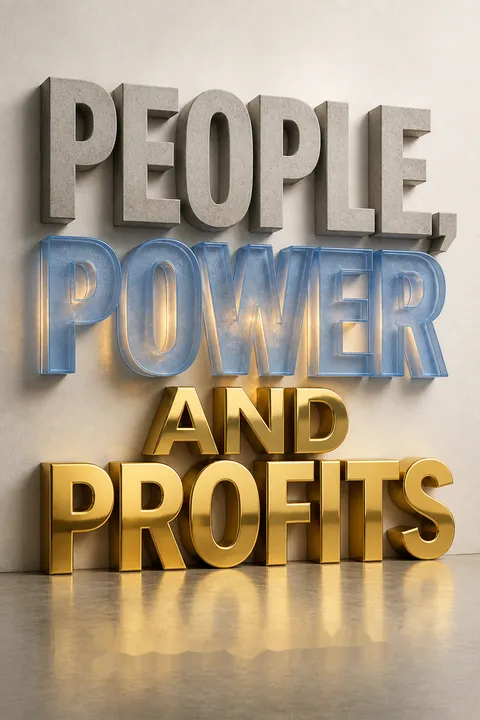
People, Power, and Profits by Joseph Stiglitz examines economic inequality and its impact on democracy. Stiglitz argues that unfettered markets and trickle-down economics have failed, leading to concentrated wealth and power. He proposes progressive policies to reform capitalism, including stronger market regulations, investment in public goods, and reducing money's influence in politics. While some readers appreciate Stiglitz's analysis and solutions, others find his arguments biased or unconvincing. The book is praised for its clarity but criticized for preaching to the choir.
People Also Read







Glossary
Rent-seeking
Income gained through powerRent-seeking is the pursuit of income by securing a larger share of existing wealth rather than creating additional productive value. Stiglitz uses it for practices such as exploiting monopoly power, obtaining favorable rules, or extracting excessive fees. These activities can transfer wealth from workers and consumers while diverting talent and investment away from more socially productive uses.
Pre-distribution
Fairer market incomesPre-distribution refers to policies that shape how income is generated in the market before taxes and transfers are applied. Examples include competition rules, labor protections, and measures against discrimination or excessive executive pay. Stiglitz argues that fairer market outcomes can reduce inequality at its source, rather than relying only on redistribution after income has already been earned.
Monopsony
Employer power over workersMonopsony describes a market with one buyer, or, more broadly, a situation in which buyers have power over those selling to them. In labor markets, an employer with few competitors for workers can hold wages below competitive levels or impose worse conditions. Stiglitz uses the term to show how employers can exercise market power even when they are not literal single-buyer monopolies.
Public option
Government-run competing serviceA public option is a government-provided service or program that operates alongside private alternatives. Stiglitz proposes public options in areas such as health insurance, retirement savings, and mortgages. The public program can provide broad access and serve as a competitive benchmark, encouraging private providers to lower costs and improve service without requiring the government to become the sole provider.
Active labor market policies
Help returning to workActive labor market policies are programs designed to help people move into available jobs, especially when the economy is changing. They can include retraining, job-search assistance, and support for connecting workers with employers. Stiglitz argues that such policies should be linked to real employment opportunities and paired with social protection, so displaced workers are not left to manage structural change alone.
Originate-to-distribute model
Lending followed by resaleThe originate-to-distribute model is a financial arrangement in which a lender makes a loan and then sells it to other investors or institutions, transferring much of the risk. Because the originator earns fees without holding the loan for its full term, the incentive to assess long-term repayment risk can weaken. Stiglitz contrasts this with relationship banking, where lenders retain a continuing stake in borrowers.
Public goods
Shared benefits markets undersupplyPublic goods are goods or services whose benefits are widely shared and difficult to limit to those who pay. Basic research, national defense, and some forms of public information are examples discussed in the book. Because private firms cannot capture all the benefits, markets tend to provide too little of them, creating a role for collective funding and provision.
FAQ
What's People, Power, and Profits about?
- Economic Discontent: The book explores the growing economic inequality and stagnation in advanced countries, arguing that capitalism currently benefits the top 1% while leaving the majority behind.
- Progressive Agenda: Stiglitz offers a progressive agenda aimed at restoring democracy and creating a more equitable economy, emphasizing the need for government intervention to address market failures.
- Interconnected Issues: It discusses how economic issues are intertwined with political power, globalization, and technological changes, suggesting that reforms in one area must consider the others for effective solutions.
Why should I read People, Power, and Profits?
- Insightful Analysis: Stiglitz provides a comprehensive analysis of economic and political landscapes, essential for understanding contemporary issues of inequality and governance.
- Practical Solutions: The book outlines actionable reforms for a more dynamic economy, helping readers understand how to advocate for these changes.
- Historical Context: Stiglitz places current issues within a historical framework, crucial for grasping the urgency of the proposed reforms.
What are the key takeaways of People, Power, and Profits?
- Inequality is a Choice: Stiglitz argues that inequality results from policy choices, not inevitable outcomes of capitalism, and can be addressed with the right policies.
- Role of Government: The book stresses the importance of government in regulating markets and ensuring fair competition to protect the interests of the majority.
- Need for Collective Action: Stiglitz highlights the necessity of collective action to address societal challenges, foundational to his proposed reforms.
What are the best quotes from People, Power, and Profits and what do they mean?
- "A house divided against itself cannot stand.": This quote emphasizes the need for unity in addressing economic and political divides that hinder progress.
- "Inequality is a choice.": It encapsulates Stiglitz's argument that the wealth gap is a result of deliberate policy decisions, calling for a reevaluation to promote equity.
- "Markets on their own will fail to achieve shared and sustainable prosperity.": Reflects Stiglitz's belief in the necessity of government intervention for economic growth that benefits all citizens.
How does Stiglitz define "Progressive Capitalism" in People, Power, and Profits?
- Economic Reforms: Progressive capitalism prioritizes shared prosperity and equitable growth, addressing market failures to ensure fair distribution of growth benefits.
- Role of Government: A larger government role is essential, including regulating markets, providing social safety nets, and investing in public goods.
- Focus on Innovation: It involves fostering innovation that benefits society as a whole, with policies encouraging research and development while ensuring wealth is shared.
What are the main causes of economic inequality discussed in People, Power, and Profits?
- Market Power: Concentration of market power allows a few firms to set prices and wages, benefiting themselves at the expense of consumers and workers.
- Globalization Mismanagement: Poor management of globalization has led to job losses and wage stagnation, disproportionately favoring corporations and the wealthy.
- Financialization: The financial sector's focus on short-term profits has increased inequality, diverting resources from productive investments to speculative activities.
How does Stiglitz propose to restore democracy in People, Power, and Profits?
- Voting Reforms: Advocates for fair voting practices, such as making voting more accessible and eliminating gerrymandering, to address the needs of the majority.
- Reducing Money in Politics: Emphasizes curbing the influence of money in politics, including campaign finance reforms and greater transparency in political contributions.
- Strengthening Checks and Balances: Calls for reinforcing government checks and balances to prevent power concentration and maintain a healthy democracy.
What role does technology play in the economic challenges outlined in People, Power, and Profits?
- Job Displacement: Advancements in technology, particularly AI and automation, threaten to displace jobs, especially for low-skilled workers, exacerbating inequalities.
- Market Power: Technology can enhance market power for dominant firms, stifling competition and innovation, further entrenching inequality.
- Need for Regulation: Emphasizes regulating technology firms to ensure fair competition and protect consumers from exploitation.
How does Stiglitz suggest managing globalization better in People, Power, and Profits?
- Fair Trade Agreements: Calls for trade agreements prioritizing workers and consumers over corporations, ensuring labor rights and environmental protections.
- Support for Displaced Workers: Emphasizes government programs for retraining and job placement to mitigate globalization's negative impacts on vulnerable populations.
- Global Cooperation: Advocates for a rules-based international trading system promoting cooperation among countries to benefit all parties involved.
What are the implications of financialization discussed in People, Power, and Profits?
- Resource Misallocation: Financialization has led to capital flowing into speculative activities rather than productive investments, weakening the real economy.
- Increased Inequality: The focus on short-term profits has exacerbated income inequality, benefiting the wealthy and widening the gap between rich and poor.
- Need for Reform: Stiglitz advocates for financial sector reforms promoting responsible lending and investment practices, with greater accountability for institutions.
How does People, Power, and Profits address the issue of discrimination?
- Interconnectedness of Discrimination and Inequality: Discrimination based on race, gender, and ethnicity significantly contributes to economic inequality.
- Policy Recommendations: Suggests government policies actively combat discrimination, including stronger enforcement of anti-discrimination laws and affirmative action programs.
- Long-term Benefits: Reducing discrimination can lead to a more productive workforce and greater economic growth, making it both a moral and economic imperative.
What are the challenges posed by new technologies according to People, Power, and Profits?
- Job Displacement: Warns that AI and automation could lead to significant job losses, especially for low-skilled workers, increasing inequality.
- Market Power Concentration: Technology can exacerbate market power concentration, leading to monopolistic practices and stifling competition.
- Privacy Concerns: Highlights risks associated with data privacy and surveillance capitalism, advocating for regulations to protect individuals from exploitation.
About the Author
Other books by Joseph E. Stiglitz

Download PDF
Download EPUB
.epub digital book format is ideal for reading ebooks on phones, tablets, and e-readers.








