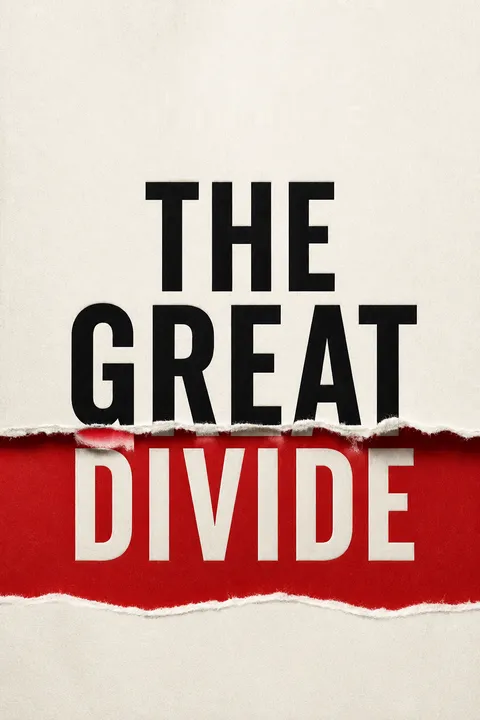


Key Takeaways
Treat inequality as a policy outcome, not an economic law
The central claim. Stiglitz argues that America’s widening divide is not an unavoidable result of markets. Tax rules, financial regulation, public investment, and labor policy shape who benefits from growth. At a dinner with wealthy guests concerned about inequality, one inherited-wealth billionaire complained about free-riding Americans, then discussed tax shelters. The contradiction captures the book’s point: powerful people can condemn inequality while supporting rules that preserve their own advantages.
Politics shapes markets. Economic power can buy political influence, which helps preserve policies that concentrate wealth; that political imbalance then produces still more economic inequality. Stiglitz calls this a self-reinforcing cycle, not a law of nature. Different choices, he argues, can produce both greater fairness and stronger economic performance.
What's striking is how this argument shifts attention from personal virtue to institutional design. A system can reward socially useful work, or reward access to loopholes and political influence, regardless of what individuals say they value. This resembles the distinction in political science between formal rights and effective power: equal voting rights do not guarantee equal influence over policy. The claim is strongest when it identifies specific rules and beneficiaries. It is less persuasive if reduced to the idea that every unequal outcome reflects capture, since skill, innovation, and risk can also create legitimate differences in earnings.
When incomes move upward, weak demand gets papered over by bubbles
The demand problem. Lower- and middle-income households typically spend more of each additional dollar than wealthy households. When income shifts upward, overall spending weakens unless something replaces it. Stiglitz describes how the bottom 80 percent of Americans were spending about 110 percent of their income before the 2008 crisis, supported by borrowing against rising home values. The housing boom made consumption look healthy while household debt and risk accumulated.
A fragile substitute. Earlier, the technology boom had helped mask weak demand; after it collapsed, low interest rates and a housing bubble played a similar role. When home prices fell, the borrowed spending vanished and foreclosures spread. Inequality did not alone cause the crash, but it helped create the demand shortfall that policymakers addressed with an unstable credit expansion.
This is a useful macroeconomic lens because it connects household distribution to the health of the whole economy. In standard demand analysis, a dollar in the hands of a cash-strapped household is more likely to become immediate spending than a dollar saved by a very rich one. That does not make saving useless: investment can turn savings into productive capacity. The danger arises when financial systems channel funds toward asset speculation rather than new businesses, wages, or public infrastructure. The book makes that distinction vividly, though the exact contribution of inequality relative to monetary policy and financial regulation remains difficult to isolate.
Regulate finance to make banks lend, not gamble with public guarantees
A chain of failures. Stiglitz describes the Great Recession as a system failure, produced by decisions that reinforced one another. Financial deregulation weakened safeguards; the repeal of Glass-Steagall blurred the boundary between commercial and investment banking; and regulators allowed investment banks to operate with leverage as high as 30 to 1. Mortgage brokers were rewarded for originating loans, not ensuring borrowers could repay them, while rating agencies were paid by the institutions whose products they assessed.
The rescue widened the divide. When the crisis hit, public money helped stabilize banks, but support for homeowners was far smaller and often ineffective. Stiglitz argues that rescuing the banking system did not require protecting shareholders and executives from losses. Public assistance could have required banks to resume lending and share the risks borne by taxpayers.
The account is valuable because it treats a financial crisis as a network problem, not a morality play with one villain. High leverage, conflicted ratings, weak supervision, and public guarantees interact: each can look manageable alone, while the combined system becomes brittle. This is close to the logic of systemic-risk regulation, which asks how institutions behave together under stress, not merely whether each institution appears sound in isolation. A genuine policy test is whether rules change incentives before a crash. However, crisis intervention must also be judged against the risk of collapse; the hard question is how to protect essential financial functions without making private risk-taking a public liability.
Tax rent-seeking and invest in people to grow the whole economy
Reward creation, not extraction. Rent seeking means gaining income by using political or market power to capture a larger share of existing wealth, rather than creating new value. Stiglitz points to monopoly profits, preferential tax treatment, predatory lending, and financial fees as examples. In the years before the crisis, finance took about 40 percent of corporate profits, yet much of its activity involved speculation and risk-taking rather than productive lending.
Change the incentives. The book proposes taxing capital gains more like wages, closing corporate tax loopholes, enforcing antitrust rules, and charging polluters for the costs they impose. Revenue could support education, research, health, and infrastructure. Such investments can improve productivity while making opportunity less dependent on family wealth. The goal is not simply to redistribute after the fact, but to shape the economy so that fewer rewards come from extracting value.
The distinction between creating value and capturing it is powerful, especially because financial profits can rise even when the wider economy becomes less stable. It also connects to the idea of externalities: pollution or financial risk can impose costs on people who never agreed to bear them. A tax can make those costs visible and shift behavior, rather than merely raise revenue. The difficult part is measurement. Some financial services and intellectual property genuinely help coordinate investment or support invention, so policymakers need to distinguish useful returns from protected rents. That requires enforcement capacity and transparent rules, not just higher tax rates.
Make opportunity real before childhood disadvantages harden into inherited inequality
The ladder starts early. Stiglitz argues that America’s celebrated promise of upward mobility has weakened. Research cited in the book finds that only 6 percent of people born in the bottom fifth of income reach the top fifth. Children enter school with unequal nutrition, health care, safety, and early learning; those gaps widen when wealthier families can buy better schooling and enrichment. In the book’s examples, only about 9 percent of students at elite universities come from the bottom half of the population.
Debt can become a toll. As public support for universities declined, tuition rose and student borrowing grew. The average graduate debt approached $30,000 in the period discussed, while student loans were unusually difficult to discharge in bankruptcy. Stiglitz points to publicly supported education and Australia’s income-contingent repayment system as alternatives that make payment depend more closely on post-graduation earnings.
The intergenerational perspective makes inequality concrete: a child cannot choose family income, prenatal care, or the school district into which they arrive. Research on early childhood development also supports the broader logic that nutrition, health, and learning reinforce one another, making early intervention more than a transfer of money. Still, equality of opportunity is a demanding ideal, and mobility statistics do not reveal every dimension of fairness. A society can improve average mobility while leaving racial, geographic, or disability-based barriers intact. Good policy therefore needs both broad public provision and careful attention to which groups continue to face distinct obstacles.
Judge recovery by jobs and median lives, not bank balance sheets
The real economy matters. In Stiglitz’s account, the 2008 rescue repaired major banks but did not restore ordinary households. The economy had a deeper problem: manufacturing employment had fallen sharply as productivity and globalization changed the work available, while new jobs in services such as health and education were not expanding fast enough. Monetary stimulus alone could not make this structural transition happen, especially when businesses lacked customers and smaller firms lacked credit.
Invest through the transition. Stiglitz calls for substantial public investment in education, research, clean energy, and infrastructure, alongside support for unemployed workers and state budgets. He draws a parallel with the Great Depression: government spending helped move workers from agriculture into manufacturing. His argument is that active policy can create jobs now and build capacity for the economy that is emerging.
This emphasis corrects a common accounting error: a functioning banking system is a means, not the final measure of recovery. Employment, wages, and access to useful services show whether the system is serving households. The structural-change argument also links macroeconomics to labor-market adjustment: workers cannot instantly retrain, relocate, or find new employers simply because old industries shrink. Yet public spending is not automatically productive. Its value depends on project selection, implementation, and whether it builds durable capacity rather than political patronage. Stiglitz’s strongest case is for investments with both near-term employment effects and long-term public returns.
Write trade and patent rules for public welfare, not corporate leverage
Trade rules distribute power. Stiglitz argues that modern trade agreements often focus less on tariffs and more on regulations, investment rights, and intellectual property. Negotiations conducted in secrecy can give corporations leverage over public protections for workers, consumers, health, and the environment. He also warns that trade can weaken workers’ bargaining power when companies can move production more easily than workers can move to better jobs.
Patents need balance. The book describes the U.S. Supreme Court’s rejection of patents on naturally occurring BRCA genes, which had allowed one company to control testing and charge about $4,000 for a test. It also defends India’s refusal to extend a drug patent for a minor variation of an existing medicine. Stronger intellectual property rights may reward research, but they can also raise prices and obstruct follow-on innovation.
The deeper issue is that rules labelled technical often decide who bears risk and who gets access to essential goods. Patent law, for example, is a designed incentive system, not a natural entitlement; its legitimacy depends on whether exclusive rights produce enough innovation to justify higher prices and restricted knowledge. Trade agreements can similarly constrain democratic choices, so transparency is central to public accountability. The challenge is avoiding a false choice between corporate returns and public access. Some exclusivity can fund costly research, but the book rightly asks whether each extension is evidence-based, time-limited, and proportionate to its social cost.
Learn from countries that pair public investment with shared prosperity
Different rules, different results. Stiglitz compares America with countries that made different choices about public services and economic development. Mauritius, a small island nation without major natural resources, grew at more than 5 percent annually for nearly 30 years while providing free health care and university education. Singapore combined universal education with a mandatory savings system that helped finance housing, health care, and retirement. Nordic countries show that more equal societies can also sustain strong economic performance.
Local action counts. Medellín, once known for cartel violence, improved access to poor neighborhoods with public transport, including cable cars linking hillside communities to the city. These examples do not offer one model to copy. They show that governments can expand opportunity through education, transit, health care, and planning, even when national politics are stalled.
Comparisons across countries are a practical antidote to claims that a particular level of inequality is economically inevitable. They reveal policy choices that domestic debates may treat as impossible. The comparisons are most useful when they identify mechanisms, such as broad education access or transport that connects workers to jobs, rather than presenting another country as a perfect template. Institutions, population size, political freedoms, and economic structure differ, and each affects what can be transferred. The strongest lesson is experimental: test which public investments widen participation and improve well-being, then adapt them to local conditions.
Restore trust by making political voice and law less purchasable
Trust is economic infrastructure. Contracts and everyday exchanges work because people expect rules to be followed. Stiglitz argues that predatory lending, opaque finance, and unequal enforcement corrode that expectation. During the foreclosure crisis, banks used defective records and mass-produced affidavits to remove homeowners, while people with limited resources struggled to challenge the process. The book treats this as a failure of equal justice, not merely a paperwork problem.
The political cycle matters. Wealth can buy access to lawmakers and shape tax, regulatory, and campaign-finance rules. Those policies can further concentrate wealth, weakening confidence in democracy. Stiglitz calls for stronger regulation, accountable enforcement, and political reforms that reduce the advantage of money. The practical standard is whether citizens can expect similar rules to apply to powerful institutions and ordinary households alike.
Trust is often discussed as a cultural virtue, but this account shows its institutional foundations. People are more willing to cooperate when they believe procedures are fair and violations carry consequences, a dynamic studied in law, political science, and repeated-game theory. Unequal enforcement can therefore damage both civic legitimacy and economic cooperation. Still, trust cannot be restored by regulation alone: procedures must be understandable, accessible, and consistently applied. Strong oversight also needs safeguards against arbitrary state power. The balance is not between trust and rules; credible rules are one way a society makes trust rational.
Analysis
The book’s central contribution is to connect subjects often kept in separate boxes: income distribution, financial instability, political power, and everyday opportunity. Its causal story runs in both directions. Inequality weakens broad-based consumption and narrows access to education and health; concentrated wealth can then shape policy, producing rules that intensify the original inequality. The Great Recession is the book’s most forceful demonstration. Deregulation, weak oversight, conflicted incentives, and housing speculation did not merely precede a downturn. They show how political choices can turn private risk-taking into public losses, while the recovery itself distributes gains unevenly.
The essays also make the case that economic performance should be judged by more than GDP or bank solvency. Employment, median incomes, health, educational access, and social mobility reveal whether growth improves ordinary lives. This broader accounting explains why public investment is not simply a moral supplement to markets. Infrastructure, research, education, and public health can expand the productive capacity on which private activity depends. The international examples serve a related purpose: they demonstrate that markets operate within rules, and that nations can choose different balances between public provision and private activity.
The book’s form, however, creates a challenge. It is a collection of essays written for different moments, so arguments recur, and policy claims are often sharper than the evidence presented in each short piece can fully establish. The direction of several mechanisms is persuasive, but the size of their effects, and how they interact, are harder to pin down. Inequality is not a single cause with one remedy; technology, trade, discrimination, household structure, and political institutions all matter. The most durable reading is therefore neither that every outcome is engineered by elites nor that markets naturally deliver fairness. It is that market outcomes depend on rules, and those rules deserve scrutiny for both efficiency and distribution. Stiglitz’s challenge is to make that scrutiny democratic, empirical, and attentive to who bears the costs when policy fails.
Review Summary
The Great Divide by Joseph Stiglitz is a collection of essays on economic inequality in the United States. Readers found the book insightful but repetitive, as many articles cover similar themes. Stiglitz criticizes trickle-down economics, deregulation, and policies favoring the wealthy. He argues that inequality hinders economic growth and undermines democracy. While some appreciated Stiglitz's accessible writing and policy suggestions, others felt the book lacked depth and was too focused on the U.S. Overall, it serves as an introduction to Stiglitz's views on inequality.
People Also Read







Glossary
rent seeking
Capturing value without creating itRent seeking is the pursuit of income by securing advantages such as monopoly power, subsidies, favorable regulations, or special tax treatment, rather than by producing additional goods or services. Stiglitz argues that these gains often transfer wealth from the public or consumers to powerful firms and individuals, while distorting investment and weakening the economy.
ersatz capitalism
Markets distorted for the powerfulStiglitz uses this term for an economy that retains the language of capitalism while departing from competitive market principles. It includes arrangements that protect dominant firms, socialize private losses, and allow profits to come from political privilege or market manipulation. The problem, in this account, is not markets in general, but rules that let some participants capture gains while shifting costs to others.
financialization
Finance gaining economic dominanceFinancialization describes the growing importance of financial markets, institutions, and activities in the economy. Stiglitz associates it with finance absorbing a larger share of corporate profits and talent, while sometimes directing resources toward speculation, complex products, and extraction rather than productive lending. In his argument, this shift contributes both to instability and to a concentration of income and political influence.
developmental state
Government guiding economic developmentA developmental state is a government that actively guides economic transformation instead of leaving development entirely to market forces. In the examples discussed, governments support education, infrastructure, technology, and strategic industries while using markets as part of the process. Stiglitz contrasts this approach with market fundamentalism and cites East Asian economies as evidence that public coordination can accompany rapid growth.
Palma ratio
Top income share versus bottomThe Palma ratio compares the share of national income received by the richest 10 percent with the share received by the poorest 40 percent. Stiglitz and co-author Michael Doyle favor it as a way to focus attention on the extremes of the income distribution, which can shift sharply even when the middle's share changes less. It is one proposed measure for tracking extreme inequality.
too big to fail
Too consequential to let collapseAn institution is considered too big to fail when its collapse could disrupt the wider economy so severely that government feels compelled to rescue it. Stiglitz argues that this expectation can encourage excessive risk: executives and investors may retain gains when bets succeed while taxpayers absorb losses when they fail. The term therefore describes both systemic importance and a distorted incentive created by public guarantees.
balanced-budget multiplier
Output effect of matched spending and taxesThe balanced-budget multiplier describes the effect on economic output when government increases spending and taxes by the same amount. Stiglitz argues that this can still raise output because public spending, particularly on investment, can increase demand more than an equal tax increase reduces it when taxes fall mainly on higher-income households. Its effect depends on how the taxes and expenditures are designed.
About the Author
Other books by Joseph E. Stiglitz
Download PDF
Download EPUB
.epub digital book format is ideal for reading ebooks on phones, tablets, and e-readers.








