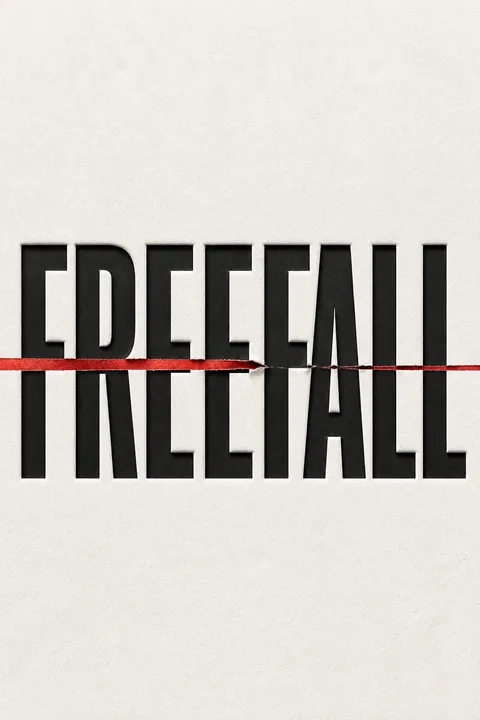


Key Takeaways
Read 2008 as a system failure, not a freak accident
The failure was built in. Stiglitz argues that the crisis grew from a quarter-century of faith in deregulation and self-correcting markets, not from one rogue banker or an unforeseeable shock. The system rewarded risky behavior while leaving much of its cost to homeowners, workers, taxpayers, and other countries. Financial markets remain essential, but they need effective rules and public oversight to work for the broader economy.
Rescue distorted the lesson. Governments had repeatedly saved financial institutions after crises, then treated the economy's survival as proof that markets worked unaided. Stiglitz saw a similar pattern in the 1997 East Asian crisis: austerity and high interest rates deepened distress, while countries that used expansionary policies recovered sooner. The point is not that every intervention succeeds, but that policy choices shape the damage.
What's striking is the distinction between a trigger and a cause. A single mortgage default can start a chain reaction, but it cannot explain why so many institutions made similar bets or why the public absorbed so much of the fallout. That distinction is useful beyond finance: safety failures often arise from incentives, oversight, and organizational norms working together. The systemic account also needs a guardrail. Calling a failure systemic should clarify which rules and incentives need changing, not dissolve the responsibility of decision-makers into an impersonal fog.
Debt hid stagnant pay until housing became the economy's engine
Borrowing filled the income gap. Stiglitz describes an economy in which real median household income fell by nearly 4 percent from 2000 to 2008, while consumption remained a main driver of growth. Low interest rates and lax oversight helped redirect money into housing after the technology-stock bubble burst. Rising home prices let households borrow against their homes and spend as though their incomes were growing.
The boom depended on prices rising. In one year, mortgage equity withdrawals reached $975 billion, more than 7 percent of GDP. Stiglitz estimates that housing, home construction, and borrowing against homes supported roughly two-thirds to three-quarters of the economy. When prices fell, households lost wealth, borrowing and spending contracted, and foreclosures intensified. Debt had postponed the adjustment, not solved the weak-income problem.
This is a useful reminder that consumption can look healthy while the income beneath it is not. Household borrowing can temporarily sustain demand, but it also makes spending sensitive to asset prices and credit conditions. That mechanism connects inequality to financial instability: when income gains concentrate among people who save more, borrowing can disguise a demand shortfall for a time. The book's emphasis on distribution is persuasive, though the crisis also had causes that cannot be reduced to inequality alone, including lending standards, regulation, and global financial flows.
Selling mortgages onward weakened every lender's reason to check them
Risk traveled without accountability. Securitization means bundling loans into securities and selling them to investors. It can spread risk across many holders, but Stiglitz argues that it also broke the link between making a mortgage and bearing the consequences if it failed. Originators earned fees for producing loans, investment banks earned fees packaging them, and rating agencies were paid by the firms whose products they assessed.
The chain hid shared exposure. Investors often relied on ratings rather than examining each mortgage. Models assumed that housing prices would not fall across many regions at once, so they understated correlated defaults. When prices fell broadly, supposedly safe securities lost value together. Securitization also made it harder to renegotiate troubled mortgages: ownership was dispersed, contracts were tangled, and servicers faced conflicting incentives.
Risk-sharing is not the same as risk reduction. Insurance works when the insurer can assess exposure, price it, and remain responsible for its judgment. A long chain of intermediaries can instead separate information from accountability, a problem familiar in outsourced supply chains and complex public contracting. Stiglitz's critique is strongest when aimed at those broken links, rather than at securitization in every form. Pooling loans can diversify genuinely independent risks; it fails when shared economic conditions make the loans vulnerable together.
Tie financial rewards to long-term results, including losses
The incentives favored the present. An agency problem arises when people make decisions for others but do not bear the full consequences of those decisions. Stiglitz describes bank managers rewarded through fees, bonuses, and stock-linked pay, often for short-term gains. The potential downside arrived years later, after the people who booked the profits had been paid. Shareholders and the public could bear losses that executives had little reason to avoid.
A glossy return can conceal a bad bet. Consider an investment that earns 6 percent in nine years out of ten but loses everything in the tenth. Its average return is negative, even though it looks successful most years. Stiglitz argues that financial firms often profited from this pattern: modest gains arrived quickly, while catastrophic risks were deferred. He calls for compensation tied to long-term performance and for executives to share in losses as well as gains.
The deeper issue is not simply that bonuses were large. It is that the measurement window and the risk-bearing window did not match. Similar problems arise when a company rewards quarterly sales but ignores product safety or customer retention. Deferring some compensation and requiring repayment when apparent profits reverse can make incentives more durable. Yet pay reform alone cannot fix weak boards, opaque accounting, or government guarantees. It works best as one layer of accountability, alongside rules that make risks visible and failures costly to those who choose them.
Stimulate demand where people spend, and invest for what comes next
Not every dollar travels equally far. A fiscal multiplier measures how much total economic activity changes after government spending or a tax change. Stiglitz cites an average short-run U.S. multiplier of about 1.5, while noting that some spending has a larger effect than other spending. Unemployment benefits tend to reach people who need to spend the money; tax cuts for wealthy households are more likely to be saved.
The package was too small and uneven. The roughly $800 billion stimulus stretched across more than two years, with about one-third devoted to tax cuts. State and local governments, facing falling revenues, cut jobs and services, offsetting some federal spending. Stiglitz favors faster help to states and the unemployed, plus investments in infrastructure, education, and energy efficiency. Such spending can support demand now while building assets that improve future productivity.
The investment emphasis brings public finance into the same frame as household budgeting: a liability is easier to justify when it creates an asset with lasting value. The crucial question is whether a project is timely, useful, and worth its cost, not whether it is labeled investment. Multiplier estimates are also context-dependent. They vary with unemployment, monetary policy, imports, and the condition of credit markets. The practical lesson is to target spending where idle workers and resources can be put to use, while judging long-term projects on their actual social returns.
Restructure underwater mortgages before foreclosure spreads the damage
Foreclosure harms more than one household. A mortgage is underwater when the borrower owes more than the home is worth. Stiglitz describes loans with teaser rates, variable payments, little documentation, or no down payment. When rates rose and prices fell, many households could neither afford payments nor refinance. Foreclosures then pushed down nearby property values, putting more families at risk and weakening whole neighborhoods.
A fresh start can cost less. Stiglitz proposes a homeowners' Chapter 11, modeled on corporate bankruptcy: a court could reduce unsustainable principal, giving a household a chance to keep its home, while lenders shared in future gains if the property recovered. He also considers lower-interest government loans and other ways to reduce payments. His principle is that lenders, who were paid to assess risk, should bear a substantial part of losses from bad loans rather than having the public simply absorb them.
The proposal recognizes that a home is both a financial asset and the center of a household's daily life. Keeping a viable borrower in a home can also limit neighborhood damage and avoid costly, drawn-out foreclosure. The fairness question is real: relief should not reward deliberate speculation at public expense. Stiglitz's court-based approach tries to distinguish hardship from windfall, though any such system needs clear eligibility rules and careful valuation. The broader design principle is to resolve debt in a way that preserves useful economic relationships rather than maximizing near-term collections.
Make giant banks resolvable, or their size becomes political power
A bank can fail without its services disappearing. In a normal corporate bankruptcy, shareholders can lose their investment and creditors can take ownership. Stiglitz argues that troubled banks could also be reorganized this way, while government protects insured depositors and keeps essential payment services operating. Instead, the rescues often protected shareholders and bondholders, transferring more risk to taxpayers and encouraging future risk-taking.
Size changed the bargaining position. After the repeal of Glass-Steagall, commercial and investment banking were allowed to combine, and the largest banks grew more concentrated. Stiglitz argues that institutions considered too big to fail gain an implicit public guarantee, cheaper funding, and leverage over policymakers. He calls for making banks easier to resolve, limiting risky activities inside deposit-taking institutions, and regulating derivatives. The point is not to abolish finance, but to prevent a firm's failure from holding the whole economy hostage.
A credible resolution system is a commitment device: it tells investors in advance that private risk-taking will not automatically become a public obligation. That can help markets price risk more accurately and reduce the political leverage of institutions whose collapse would be disruptive. But size is not the only source of systemic danger. Many smaller firms can create shared exposures, and critical payment infrastructure may need protection even when owners do not. Effective reform therefore pairs limits on concentration with clear plans for continuity, loss allocation, and oversight.
Coordinate globally, because one country's rescue leaks across borders
A national stimulus has international effects. In a global economy, some of each country's added spending goes to imports, supporting jobs elsewhere. That spillover can make governments reluctant to act, hoping to benefit from another country's stimulus without paying for it. Stiglitz argues that uncoordinated responses therefore risk being too small. Protectionist rules can worsen the problem by redirecting purchases and inviting retaliation.
Reserves reveal a deeper imbalance. After earlier crises, developing countries accumulated large dollar reserves as insurance against future shocks. That money was not spent on domestic needs, while U.S. borrowing and consumption helped support global demand. Stiglitz proposes an international reserve system that could reduce pressure on countries to save so much in dollars. The larger goal is shared crisis management, fairer international rules, and stronger demand without relying on one country to borrow and consume for everyone.
The argument identifies a coordination problem, not merely a disagreement about national virtue. When stimulus benefits spill across borders, each government has an incentive to wait for others to spend. Similar collective-action problems appear in climate policy and infectious-disease control. A shared reserve mechanism could reduce the need for precautionary saving, but it would require trusted governance and agreement about how new reserves are allocated. International reform cannot substitute for domestic changes: countries still need productive investment, sound financial oversight, and ways to distribute income broadly enough to sustain demand.
Treat economic models as conditional maps, not laws of nature
The textbook result has demanding conditions. The efficient-markets case depends on assumptions such as complete insurance, perfect information, competitive markets, and no external costs. Stiglitz argues that these conditions are often absent in finance. When lenders know more than borrowers, when risk cannot be insured, or when one firm's failure harms others, markets can misprice risk and leave people unemployed or unable to borrow.
A model can hide what matters. A representative-agent model, which treats everyone as one identical decision-maker, cannot easily explain conflicts between borrowers and lenders or how policy redistributes costs. Stiglitz's challenge is not to abandon economic analysis, but to test assumptions against institutions and lived outcomes. He argues that the crisis exposed the limits of models that treated bubbles, unemployment, and credit constraints as negligible or impossible.
Models are most valuable when their assumptions are visible and their predictions can be compared with evidence. The danger is not abstraction itself, but forgetting that a simplifying assumption can erase the very mechanism under study. The crisis makes a case for methodological pluralism: models of incentives, institutions, behavior, and aggregate demand answer different questions. Stiglitz's critique is forceful, though a failed prediction does not by itself invalidate an entire school of thought. The productive response is to specify where a model applies, where it breaks, and what evidence could change the conclusion.
Judge prosperity by household security, not GDP alone
A growing average can conceal falling living standards. Stiglitz notes that U.S. GDP per person rose about 10 percent from 2000 to 2008 while median household income fell about 4 percent. GDP also misses environmental depletion, household insecurity, and the value of health and education outcomes. Spending can raise measured output even when it reflects costly problems, such as more money spent responding to social harm.
What gets counted shapes policy. A society focused only on total production can overlook who benefits, whether growth can last, and whether people have the security to manage job loss, illness, or retirement. Stiglitz connects these failures to weakened trust between citizens and institutions. He argues for measures that include median income, sustainability, health, education, and social connection, alongside output. The aim is not to discard GDP, but to stop treating it as a complete account of social progress.
This is a measurement problem with political consequences. When an indicator omits distribution or future costs, it can make harmful trade-offs look successful and guide public attention toward the wrong targets. A dashboard of complementary measures is more informative than replacing GDP with a single rival number. Still, indicators cannot settle conflicts over fairness, freedom, or acceptable risk; those are public choices. Better measures make those choices harder to hide, while democratic accountability determines how society acts on what the measures reveal.
Analysis
Stiglitz's central argument is that the 2008 crisis was not an isolated financial accident. It exposed a system in which private rewards, public risks, and social needs had come apart. The book's narrative moves from household borrowing and mortgage design, through securitization and bank failure, to the rescues and the political choices that shaped recovery. It then widens the frame to global imbalances, economic theory, and the values embedded in how prosperity is measured.
The strongest analytical thread is the connection between information, incentives, and external costs. A mortgage chain can distribute claims while weakening accountability; executive pay can reward gains before losses become visible; and a large bank can impose costs on people who never agreed to its risks. This makes the crisis a test of institutional design, not just individual character. Stiglitz also usefully links the financial boom to weak household incomes and global demand, showing how debt temporarily concealed underlying imbalances.
The book is also an argument about policy learning. Repeated bailouts can prevent immediate collapse while teaching markets that future losses may be socialized. Conversely, allowing a major institution to fail without clear procedures can intensify panic. The challenge is to preserve essential functions, such as payments and credit, while exposing investors and managers to the consequences of their choices.
Some prescriptions, including a new global reserve system and sweeping changes to bank structure, are more ambitious than the diagnosis alone can prove. Their success would depend on governance, implementation, and political legitimacy. But the book's durable contribution is its standard for judging an economic system: not the sophistication of its products or the profits booked in a boom, but whether it allocates capital, manages risk, creates sustainable demand, and shares the gains without repeatedly asking the public to absorb private failures.
Review Summary
Freefall offers a comprehensive analysis of the 2008 financial crisis, its causes, and aftermath. Stiglitz criticizes deregulation, free-market fundamentalism, and the government's response to the crisis. He argues for stronger regulation, reform of the financial sector, and a new economic paradigm that prioritizes societal well-being over short-term profits. While praised for its clarity and insights, some reviewers found the book repetitive and overly critical of capitalism. Overall, it is considered an important contribution to understanding the crisis and its implications for future economic policy.
People Also Read







Glossary
Market fundamentalism
Markets supposedly self-correctThe belief that largely unrestricted markets can reliably produce prosperity and correct their own failures, with little need for public regulation. Stiglitz uses the term for the ideology that helped justify deregulation before the crisis. His alternative is not to replace markets, but to balance them with government oversight and other institutions.
Externality
Costs imposed on outsidersA cost or benefit created by an economic activity that affects people who are not part of the transaction. A bank's risky behavior can impose costs on workers, homeowners, taxpayers, and other countries. Because the decision-maker does not bear all those costs, private incentives can lead to choices that harm society overall.
Agency problem
Agents act for othersA conflict that arises when people make decisions on behalf of others but have incentives, information, or control that do not align with those they represent. In the book, managers, mortgage originators, investment managers, and other intermediaries often made short-term choices with other people's money, while those affected had limited ability to supervise them.
Securitization
Loans bundled into securitiesThe process of pooling loans, such as mortgages, and turning them into securities that can be sold to investors. It can spread risk across many holders. Stiglitz argues that the crisis-era process also weakened incentives to check loan quality, obscured who bore the risk, and made it harder to renegotiate troubled mortgages.
Moral hazard
Protection encourages risk-takingThe possibility that protection from losses changes behavior by encouraging greater risk. For example, if large financial institutions expect government support in a crisis, their managers and investors may take risks they would otherwise avoid. Stiglitz argues that repeated rescues can create this problem, especially when private gains remain private and losses are shifted to the public.
Too big to fail
Failure threatens the systemA description of an institution whose collapse is believed likely to damage the wider economy, leading authorities to rescue it rather than let it fail. Stiglitz argues that this expectation gives large banks an implicit government guarantee, distorts competition, encourages risk-taking, and increases their influence over public policy.
Homeowners' Chapter 11
Court-supervised mortgage restructuringStiglitz's proposal to let eligible households restructure mortgage debt through a process inspired by corporate Chapter 11 bankruptcy. A court could reduce principal to a sustainable amount, allowing a family to remain in its home. The lender could receive part of a future increase in the home's value, sharing the recovery as well as the loss.
Efficient markets hypothesis
Prices reflect available informationThe proposition that market prices incorporate available information, making it difficult to consistently outperform the market. Stiglitz challenges stronger versions that treat markets as fully rational and self-correcting. He argues that information gaps, distorted incentives, correlated risks, and bubbles can make prices unreliable and undermine the claim that markets need little oversight.
Aggregate demand
Total desired spendingThe total demand for goods and services from households, businesses, government, and buyers abroad. Stiglitz argues that weak incomes, inequality, and high precautionary saving can leave demand too low to use an economy's productive capacity. Borrowing and housing bubbles can temporarily mask that weakness, but do not provide a sustainable foundation for growth.
FAQ
What's Freefall: America, Free Markets, and the Sinking of the World Economy about?
- Economic Crisis Analysis: The book delves into the 2008 financial crisis, exploring its causes and consequences, and critiques the free-market ideologies that contributed to the collapse.
- Global Impact: It highlights how the crisis, originating in the U.S., quickly spread worldwide, affecting millions and exacerbating global poverty.
- Call for Reform: Stiglitz advocates for a balanced approach between market forces and government intervention to prevent future economic failures.
Why should I read Freefall by Joseph E. Stiglitz?
- Informed Perspective: Gain insights from a Nobel Prize-winning economist who provides a critical view of the financial system and its failures.
- Lessons Learned: Understand the lessons from the 2008 crisis, crucial for policymakers and the public to avoid repeating past mistakes.
- Comprehensive Analysis: The book combines economic theory with real-world examples, making complex concepts accessible and relevant.
What are the key takeaways of Freefall?
- Flawed Economic Ideologies: The belief in self-correcting markets and minimal regulation was fundamentally flawed, leading to the crisis.
- Importance of Regulation: Effective regulation is necessary to ensure financial stability and protect consumers, countering the notion that deregulation promotes growth.
- Need for Structural Change: Advocates for a new economic order that balances market efficiency with social equity, addressing income inequality and sustainability.
What are the best quotes from Freefall and what do they mean?
- "The Great Recession... has shattered these illusions.": Reflects the disillusionment with free markets preventing downturns, highlighting the need for policy reevaluation.
- "Markets lie at the heart of every successful economy but do not work well on their own.": Underscores the necessity of government intervention to correct market failures.
- "The legacy of 2008 will include new perspectives on the long-standing conflict over the kind of economic system most likely to deliver the greatest benefit.": Emphasizes the ongoing debate about economic systems and the need for reform.
What caused the 2008 financial crisis according to Freefall?
- Deregulation and Excessive Risk: Deregulation of financial markets and excessive risk-taking by banks led to a housing bubble.
- Flawed Financial Products: Complex financial products, like subprime mortgages, obscured true risks and contributed to the collapse.
- Global Economic Imbalances: Global trade imbalances and excessive U.S. borrowing created vulnerabilities exposed by the housing bubble burst.
How does Joseph E. Stiglitz propose to reform the financial system in Freefall?
- Balanced Approach: Advocates for combining effective regulation with market forces to ensure stability and consumer protection.
- Accountability for Financial Institutions: Emphasizes the need for accountability, suggesting consequences for those responsible for the crisis.
- Focus on Long-term Investments: Calls for investments in infrastructure, education, and technology to promote sustainable growth.
What role did government intervention play in the crisis according to Freefall?
- Bailouts and Moral Hazard: Critiques government bailouts of banks, arguing they created a moral hazard by allowing excessive risks without consequences.
- Ineffective Responses: Highlights that government responses were often reactive and poorly designed, failing to address root causes.
- Need for Proactive Policies: Stresses the importance of proactive policies to stabilize the economy and promote equitable growth.
How does Freefall address the concept of globalization?
- Global Interconnectedness: Discusses how the U.S. financial crisis quickly spread globally, highlighting vulnerabilities of globalization.
- Critique of Global Policies: Critiques global economic policies prioritizing deregulation, contributing to instability and inequality.
- Need for Global Cooperation: Advocates for international cooperation and regulation to manage global risks and ensure equitable growth.
What does Joseph E. Stiglitz say about the mortgage market in Freefall?
- Mortgage Innovations as a Scam: Describes risky loans marketed to unqualified borrowers as a scam leading to the crisis.
- Securitization Issues: Explains how securitization created a disconnect between lenders and borrowers, leading to defaults.
- Call for Restructuring: Emphasizes restructuring the mortgage market for transparency and fair lending practices.
How does Freefall relate to the concept of economic inequality?
- Inequality as a Central Theme: Argues the crisis exacerbated economic inequalities, benefiting the wealthiest while others suffered.
- Impact on Social Cohesion: Highlights how rising inequality undermines social cohesion and stability.
- Advocacy for Fairness: Calls for policies promoting fairness and equity, ensuring growth benefits all society segments.
What is the concept of "too big to fail" in Freefall?
- Definition and Risks: Refers to institutions so large their failure poses systemic risks, undermining market discipline.
- Government Bailouts: Critiques bailouts protecting shareholders at taxpayers' expense, creating moral hazard.
- Need for Structural Reform: Advocates breaking up large institutions to reduce systemic risk and prevent bailouts.
What solutions does Joseph E. Stiglitz propose in Freefall?
- Regulatory Reforms: Advocates for stronger regulations to prevent excessive risk-taking and protect consumers.
- Behavioral Economics Integration: Suggests incorporating behavioral insights into policy-making to address irrational market behaviors.
- Focus on Equity and Sustainability: Calls for policies prioritizing social equity and environmental sustainability over profit motives.
About the Author
Other books by Joseph E. Stiglitz
Download PDF
Download EPUB
.epub digital book format is ideal for reading ebooks on phones, tablets, and e-readers.








