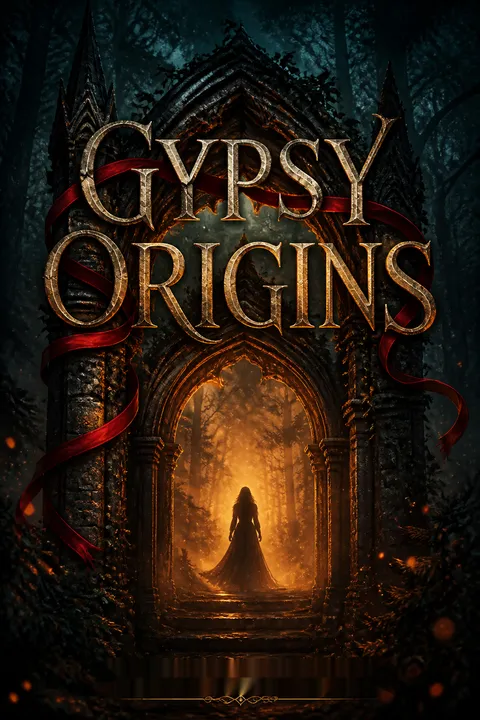


Plot Summary
Prologue
Six months after the first sacrifice, Damien, Vance, Emit, and Arion argue over completing the ritual that promises immortality. Vance refuses to sacrifice more gypsies, but the others fear stopping now will make their losses meaningless. A warning horn sends them racing to Idun’s home.
They find Idun and her entire family beheaded, with a Portocale gypsy among the dead and Portocale blood scattered through the room. The men conclude that the family they were debating sacrificing has already struck. Emit insists they finish the spell and avenge Idun; Arion promises the attackers will pay. Their argument ends, but their guilt and the curse it creates have only begun.
The prologue makes a crucial distinction between sacrifice and punishment before the characters can recognize it themselves. The men see Idun’s death as proof that they must finish the ritual, while the Portocale blood turns suspicion into certainty and grief into permission for violence. Vance’s hesitation offers a brief moral alternative, but the group’s investment in what they have already lost overwhelms it. Their decision is not simply an act of revenge. It is the moment they convert uncertainty into a permanent justification, binding future generations to a choice made in the heat of loss.
Emit’s Endless Wounds
Violet, a young shopkeeper who tends to monsters as readily as she fears them, spends days caring for Emit, the wolf alpha, while his curse makes him relive deaths as fresh wounds. His omegas bring water and healing potions, but none can ease the torment.
Leiza tells Violet that every Portocale death can trigger this punishment, sometimes repeatedly across centuries, and that the curse began after Idun manipulated the four alphas into a second sacrifice.
Violet is horrified that Emit has suffered for so long and decides the debt must be ended. She clears Damien’s unwanted flowers from the wolf house, then leaves to ask him how to appeal to the Portocale Council, believing mercy should not require her to understand every ancient detail first.
Violet’s first response is practical care, not allegiance: she sponges Emit’s blood, clears the room, and asks what could stop the pain. That sequence establishes her moral method. She treats suffering as an immediate claim on her attention, even when the sufferer belongs to a frightening and compromised world. Leiza’s explanation complicates this instinct by framing pain as inherited enforcement rather than a single punishment. Violet resists the implication that endurance automatically earns justice. Her impulse to intervene is compassionate, but it also reveals her vulnerability to being recruited into old conflicts before she understands who caused them or who still pays.
Damien’s Mistaken Past
Damien explains that only the Portocale Council can declare the old debt paid, and that Violet would have to persuade four powerful firstborns who may distrust her motives. She insists he call them anyway, then confronts the distance he created after they slept together. Damien admits he thought she was Idun, the woman whose choices still govern his fears, and that her age seemed to match Idun’s overdue return.
Violet hears the confession as evidence that he wanted her only because she resembled someone else, and she leaves before he can turn the conversation toward reconciliation. His regret does not repair the hurt. Instead, it sends Violet toward Arion, hoping the vampire will give her a clearer account of the past.
Damien’s confession exposes how trauma can distort recognition: he reads Violet through an old relationship before allowing her to be herself. Violet’s anger is not merely romantic disappointment. It is a defense of her right to be seen as a person rather than as a solution to someone else’s history. Damien tries to explain his fear, but the explanation arrives after he has already withdrawn. The scene also sets up a recurring asymmetry: the alphas possess centuries of context, while Violet is asked to make consequential choices with fragments. Her refusal to accept a half-apology marks a boundary, even as the need for answers keeps drawing her back toward them.
The Quilt’s Dark Pattern
At Arion’s home, his vampire beta Shera describes how differently the four men carry their gypsy heritage and warns Violet that Emit’s torment has lasted for centuries. Shera urges her to remember that the alphas are not innocent, but also believes the debt has been paid. Violet realizes that everyone is circling a story they will not tell plainly.
At home, she studies the unfinished quilt her mother left behind, where bright orange patches sit inside darker patterns, and finds old paintings near Emit’s bed. Emit wakes from his curse and says he once raised the gray wolf in one of them. He offers to explain the past, while Violet chooses to listen, hoping the truth will help her decide whether the men deserve her help.
The quilt gives Violet a model for memory that is neither clean confession nor simple absolution. Its bright and dark patches remain stitched together, suggesting that a life can contain harm and tenderness without either erasing the other. Violet uses this inheritance to challenge the alphas’ preference for vague allusions. Yet she also recognizes that knowing the story may change her relationship to them. The paintings beside Emit connect private memory to the history he has kept hidden from his pack. His awakening creates a rare opening for testimony, but the story will be told by someone implicated in it, not by a neutral witness.
Idun’s Stolen Immortality
Emit tells Violet that he, Damien, Vance, and Arion were once mortal travelers who wanted a safe home for their families. Idun appeared to each man as his ideal woman, hiding her true nature until they had fallen in love.
She persuaded them to make a first sacrifice for immortality, then pushed them toward a second, asking each to surrender what mattered most: Emit’s beloved wolf, Vance’s family heirloom, Damien’s public standing, and Arion’s faith. When Idun’s family was found beheaded, the men believed Portocale gypsies had killed her.
They completed the ritual and slaughtered the Portocale community, unaware that Idun had staged the scene. Violet sees how devotion, grief, and deception made the men participants in an atrocity they still cannot undo.
Emit’s story complicates the familiar claim that manipulation removes responsibility. Idun engineered the choices, but the men still made them, and the sacrifice demanded the very attachments that might have restrained them. Their grief then supplied a moral shortcut: because they believed the Portocales had killed Idun, they treated revenge as justice. Violet’s response matters because she refuses both easy condemnation and easy exoneration. She can understand how the men were deceived without confusing explanation with innocence. The tale also shifts the romantic frame: Idun’s perfection was a performance tailored to each man, so their longing was real even when its object was partly invented.
A Hunt Without Consent
Before Violet can decide what to do with Emit’s story, Vance arrives at dawn and announces that she is joining him and Emit on a hunt for unregistered wolves. Violet refuses, but Emit carries her to the vehicle while the omegas wave her off as if she is leaving on holiday. During the drive, the men explain that Idun’s staged massacre used orange juice and a single dead Portocale to imitate the scent of an attack.
They also reveal that the human cult hunting Violet is connected to Idun’s skinwalker followers. Violet recalls that vampires once attacked her at noon, the hour that can place all four alphas under the curse if a Portocale dies. Her memory turns an old assault into a warning that the hunters may still be active.
The forced trip mirrors Violet’s broader position in the monster world: others decide that her presence is necessary before asking what she wants. Her refusal is real, but it does not control the outcome, and the breezy behavior of the omegas makes coercion feel almost domestic. On the road, however, Violet gains something more valuable than comfort: information. The fake blood explains how the original slaughter became possible, while her noon memory links a personal attack to the alphas’ vulnerability. The past stops being merely their history when Violet recognizes that its mechanisms may still be operating against her.
Citrus in the Snow
At a gas station, the Portocale orange essence in Violet’s homemade toothpaste catches Vance’s and Emit’s attention, exposing the pull her bloodline has on them. Vance admits he held back because he wanted her to know the truth before becoming intimate; Emit’s restraint lasts only until the same scent draws him close.
Violet refuses to treat either encounter as a promise, but she begins to trust Emit with what she has survived, including the cult attacks and her ability to faint. When the men resume hunting, Violet slips outside to use the hot tub and masks her scent too late. The hunt is interrupted, and Emit joins her. Their intimacy brings comfort, while Vance watches from the cabin and Damien arrives unseen.
The toothpaste turns Violet’s private craft into an accidental signal of lineage. It is both a comic detail and a reminder that her body carries information she does not yet understand. Her conversations with the alphas are similarly double-edged: she shares painful secrets because being known feels liberating, but she worries that intimacy will again be followed by withdrawal. The encounter with Emit offers immediate pleasure and acceptance without resolving that fear. Vance’s observation and Damien’s arrival keep private closeness entangled with competition. In this world, tenderness rarely stays private, because every relationship is being measured against an older history of possession and loss.
The Cabin’s Hidden Horde
A warning from Violet’s ghostly triplets reveals that a horde of pureblood wolves is approaching from the south. Damien hides Violet inside an illusion as the wolves enter the cabin, searching for Emit and Vance. Their leaders plan to use silver weapons and numbers to ambush the alphas. Damien kills Drew, but the smell of his blood exposes the trick and triggers a chaotic battle.
Violet stays hidden until a flowerpot cracks her head and her blood gives her away. Damien fights to protect her, but an arrow through his heart breaks his illusion. Arion arrives first, followed by Vance and Emit, and the four alphas fight together until the surviving wolves flee. The attack ends with the cabin wrecked and every alpha injured.
The horde attack transforms the earlier discussion of systems into immediate consequence. The wolves have organized outside the usual alpha order, while the alphas’ habits leave them vulnerable to a threat they did not expect. Damien’s illusion protects Violet until blood makes concealment impossible, showing how fragile even a powerful defense can be when the body betrays it. Violet’s stillness is not simple helplessness; she is trying not to trigger a force she cannot yet control. The four men’s coordinated fighting briefly restores their old alliance, but the violence offers no clean victory. The horde escapes, and the survivors are left with evidence that their world’s rules are changing.
Violet Names the Debt
After the battle, Violet stitches the alphas’ wounds and learns that the attackers were pureblood wolves whose blood can drive others into a frenzy. She recognizes one victim as Drew, a name the others had not bothered to preserve. Vance drives her home and explains more of the original violence, including how he killed Dorian and Amos when he found them abusing Portocale women.
He also admits the Neopry Simpletons were put underground to weaken Idun, then left there after their sentence had ended. Violet connects their punishment to her own survival: she has been beheaded, survived repeated cult attacks, and feels cold lessen her pain. She realizes she is a Simpleton, and that her mother’s warnings were meant to keep her identity secret.
Violet’s recognition of Drew’s name is a small act with large ethical force: she refuses to let the dead become anonymous proof that the alphas were right. Vance’s account then forces her to distinguish necessary violence from forgotten victims. The Simpletons were not merely collateral; they were punished beyond the agreed term because the powerful found it inconvenient to reconsider the arrangement. Violet’s physical clues make the history intimate, but her emotional collapse comes from discovering that even her mother withheld the truth. Her identity becomes a burden not because she is monstrous, but because others have already assigned her a role in repairing their unfinished past.
A Return Without Answers
Back at her shop, Violet speaks to Anna’s urn and admits she does not know whether her mother sent her to Shadow Hills for safety or to keep her near the monsters. Arion soon appears and assumes Violet’s place is already decided: he wants her as the woman who can unite the four alphas and replace Idun. Violet rejects that arrangement and injures him when he tries to take intimacy for granted.
Her father, Thomas, arrives with the omegas, and Arion turns the encounter into an impromptu date, bringing them all to a private vampire bar. Violet sees how readily Arion uses charm and force, yet she also intervenes when he threatens a vampire who flirted with him. She leaves the night wary, attracted, and unwilling to be claimed as a substitute.
Violet’s return home is not a retreat from the story but an attempt to recover authorship of it. She speaks to Anna because grief has left her without the friend who once helped her interpret danger. Arion’s confidence that he can define their relationship reproduces the very pattern Violet resists: her value is measured by what she can do for the men. Her knee to his groin is a blunt boundary, while her intervention at the bar shows she can oppose his cruelty without pretending not to care for him. The mixed response is psychologically credible. Attraction does not erase her judgment, and compassion does not make her compliant.
The Curse Breaks Open
As Vance suffers through his curse, Violet helps cool him and asks Damien to slit her throat so her body can lower his fever. When Damien later falls into his own tortured cycle, Vance warns her that the monster controlling him could overpower her. Violet approaches anyway, convinced that the curse is tied to Damien’s bodily torment and that she can survive the risk.
Damien breaks his chains and attacks her, but Violet remains conscious enough to draw Vance into intimate contact as Damien’s power fills the room. Damien regains awareness after only two days, a striking change from the expected ordeal. He and Vance both struggle to understand what happened, while Violet sees the event as evidence that her presence can loosen the curse.
This turning point is not a simple rescue: Violet knowingly enters a situation in which care and danger are inseparable. Her choice grows from a belief that physical closeness can interrupt suffering, but she has no guarantee that she can control what happens. Vance’s fear is justified, and Violet’s resilience does not make the risk harmless. Damien’s early return to awareness suggests that the alphas’ inherited punishments may not be fixed beyond intervention. The scene also reframes intimacy as a form of access to a person hidden behind the monster, though it leaves unresolved whether Violet has discovered a repeatable method or survived an exceptional moment.
Shera Chooses Her House
Emily, Arion’s sister, returns after a long absence and says she intends to establish her own vampire House. She expects Shera, her brother’s trusted beta, to join her, while Shera insists she wants to remain with Arion.
Emily’s relationship with Isiah complicates the choice: he is devoted to her, but Shera fears he may abandon her whenever Emily returns. Arion refuses to give Shera up and tells Emily his House will remain under his authority, despite the approaching possibility that Idun will rise.
Violet watches the negotiation and recognizes how much Shera’s place depends on other people’s decisions. The dispute exposes a practical danger beneath the alphas’ romantic entanglements: a House can be weakened by loyalty, succession, and the quiet assumption that a woman will wait.
Shera’s conflict gives institutional shape to the novel’s recurring questions about substitution and belonging. She is not simply choosing between two men; she is deciding where her labor, authority, and future will be recognized. Emily’s return threatens the arrangement that has allowed Shera to feel secure, while Isiah’s divided loyalty makes affection an unstable foundation for power. Arion’s refusal to release Shera can be protective and possessive at once. Violet’s attention to the dispute matters because she has already objected to treating women as interchangeable solutions. The House politics show that intimate choices are never purely private in a world where rank determines safety.
Thomas Raises the Stake
Thomas secretly follows Arion and drives a stake through the vampire’s chest, believing he must stop him from using Violet to raise Idun. Arion cannot kill or seriously harm him without losing Violet’s trust, so he forces Thomas to explain what he knows.
Thomas says Violet is the daughter of the original Marta Portocale, a firstborn council figure who supposedly died before Violet came to Shadow Hills. He claims Marta’s spirit moved into another body early and that she sent Violet to raise the buried Neopry Simpletons.
Emit confirms Violet is immortal and carries both Portocale and Simpleton blood, though he remains unsure how her mother’s history fits. Arion realizes the Council must not learn Violet exists, since it could take her from them or use her power.
The revelation reclassifies Violet from a sympathetic outsider into a person whose existence threatens the rules governing the supernatural world. Yet the information arrives through Thomas, whose knowledge is partial and whose attempt to protect his daughter begins with an attack. Arion’s inability to retaliate forces him to recognize a limit on his power: Violet’s trust matters more than an immediate show of dominance. The competing claims about Marta remain uncertain, which prevents revelation from becoming resolution. Violet is still absent from the conversation, and the men decide what she must be before they ask what she wants. The secrecy that once protected her now risks becoming another form of control.
Abby’s Shop Ambush
At Violet’s shop, Abby, the pureblood wolf who led the horde’s attack, returns for Violet and Shera. Shera strikes first, but Abby’s strength overwhelms her, and the wolf binds her with restraints. Abby explains that her group wants all four alphas in one place, using Violet and Arion’s favorite beta to draw them in.
She blames the alphas for the slaughter of her people and sees the coming fight as an uprising against the hierarchy that has contained wolves for generations.
Abby also reveals that her group has stolen four specialized Van Helsing caskets, built to hold the different alphas. Before Violet can use her knife or unravel her clothes into threads, Abby strikes her from behind. Violet faints, leaving the book with both women captive and the alphas’ next move unknown.
The ending makes the novel’s central conflict operational: Abby does not merely resent the alphas, she has acquired the tools to imprison them and has chosen vulnerable people as leverage. Her grievance is rooted in real violence, but her strategy repeats the coercive logic she opposes, treating Shera and Violet as instruments. Violet’s fainting, previously a survival technique, cannot prevent capture once Abby anticipates the confrontation and lands the first blow. The specialized caskets transform old history into present tactical danger. Because the book stops before the rescue or confrontation, its cliffhanger leaves the moral question unresolved: whether the alphas can restore order without simply enforcing the same hierarchy that produced the rebellion.
Analysis
Gypsy Origins treats the past less as a settled record than as an active system of consequences. The four alphas remember the same founding catastrophe through different injuries: lost faith, lost family treasure, lost companionship, and lost control. Their memories explain their behavior, but Violet repeatedly resists the idea that explanation should end judgment. Her insistence on names, on the forgotten Simpletons, and on the people harmed by the alphas shifts attention from grand claims of immortality to the ordinary cost of power.
Violet’s empathy is not presented as automatic wisdom. She is drawn toward suffering and therefore can be maneuvered by people who need her care. The men sometimes confuse her compassion with consent, expecting her to become a remedy for their past or a substitute for Idun. Her growth lies in distinguishing care from obligation. She can tend their wounds, desire them, and still refuse to let them define her purpose. That refusal is especially important because her own identity is being assembled from secrets she did not choose to inherit.
The novel also questions the stability of social labels. Alpha, beta, and omega describe systems of rank, but Abby’s horde and the overlooked power of the omegas reveal how such classifications can misread actual capacity. The alphas maintain order because they believe uncontrolled monsters threaten everyone; Abby sees their control as the source of oppression. Neither position is morally self-sufficient. The horde’s grievance is real, but its plan reproduces the use of vulnerable people as bait. The alphas’ authority may prevent wider violence, but their neglect and secrecy help create the conditions for revolt.
The cliffhanger refuses easy moral closure. Violet has discovered a possible path toward releasing people punished beyond their sentence, yet she and Shera are captured before she can act. The final threat is not only physical. It forces the alphas to confront whether they can protect the people they care about without treating those people as possessions, symbols, or instruments in another old war.
Review Summary
Gypsy Origins receives mixed reviews, with an overall positive reception. Readers praise the complex plot, character development, and addictive nature of the series. Many appreciate the revelations about Violet's identity and the backstory of the alphas. However, some find the book confusing and criticize Violet's character. The cliffhanger ending generates frustration and excitement. Readers enjoy the romance and humor but note pacing issues and inconsistencies. Despite some criticisms, most reviewers express eagerness to continue the series.
People Also Read



Characters
Violet Carmine
The reluctant truth-finderViolet runs a small shop selling homemade remedies and toothpaste, and approaches the monsters around her with curiosity, humor, and a stubborn instinct to care for the injured. She has spent much of her life moving from place to place with her mother, while hiding strange capacities she does not understand. Her apparent softness is not passivity: she questions authority, notices people others overlook, and insists on hearing the human consequence behind every ancient grievance. Violet longs to belong but is wary of being valued only for what she can repair. Her combination of empathy and self-doubt makes her vulnerable to manipulation, yet she is unusually capable of surviving danger and reconsidering what she thinks she knows.
Emit Morrigan
The burdened wolf alphaEmit leads a werewolf pack and carries himself with a rough quietness that can conceal warmth, guilt, and a strong need for connection. His past choices remain vivid to him, especially the sacrifice of a beloved wolf, and the punishment attached to those choices leaves him fearful of sleep. Emit tends to protect his pack by taking responsibility for its violence, but self-reproach can become an excuse to withdraw from his duties. Violet unsettles that retreat because she sees both the suffering he endures and the authority he still holds. He values directness and loyalty, though his closeness to Violet makes him less guarded than he expects and brings old questions about responsibility back into focus.
Vance Van Helsing
The relentless monster hunterVance is the polished, restless alpha charged with tracking monsters and keeping their world from tipping into uncontrolled violence. His habits are precise, his standards high, and his belief in preparation reflects a life organized around threats that seldom stay solved. Beneath his composure lies exhaustion, a compulsion to keep moving, and guilt over the people he has failed to protect. He can be condescending when he feels responsible for someone’s safety, yet his care often appears through unannounced acts: food, weapons, or a quiet effort to find someone who has gone missing. Violet’s refusal to be intimidated challenges both his methods and his sense of what strength looks like.
Damien Morpheous
The vanishing charmerDamien is a vampire alpha whose gift for illusion and charm sits beside a deep fear of being forgotten. He is practiced at turning attention into leverage, but Violet makes that skill unreliable because she recognizes when he uses humor or seduction to avoid admitting hurt. His old relationship with Idun has left him suspicious of women and of his own capacity for attachment. Damien often acts as though he needs no one, even when loneliness is shaping his choices. He is drawn to Violet’s directness, but his first instinct is still to conceal vulnerability behind performance. His struggle is not whether he can command a room; it is whether he can remain present when charm fails.
Arion
The merciless vampire alphaArion is the vampire alpha whose confidence, appetite for action, and theatrical charm make him difficult to ignore. Once a religious man, he surrendered his faith in the ancient pursuit of immortality and has since become associated with frightening violence. He understands power intuitively and can make attention feel like a gift, though that intensity often blurs into possession. Arion wants loyalty and closeness but struggles to distinguish what he wants from what he believes others owe him. Violet’s refusal to follow his assumptions confounds him. His relationships with his sister, his beta Shera, and the other alphas reveal a man who can be protective and generous, but whose idea of protection still needs to be tested against other people’s freedom.
Idun Neopry
The absent architectIdun is the woman whose influence shapes the four alphas long after she disappears from their lives. She learned to present herself as each man’s ideal, using charm, ambition, and a sharp understanding of desire to draw them into her plans. The men remember both the intimacy they shared with her and the damage her deceptions caused, so their accounts are colored by longing, resentment, and guilt. Idun’s central motive was power and the security she believed immortality could offer, but she also knew how to make that ambition feel like a shared dream. Her absence is not a neutral one: it continues to organize the fears and loyalties of everyone who knew her.
Shera
Arion’s calculating betaShera is Arion’s vampire beta, a capable administrator who has built influence in a world where female vampires must work harder to establish authority. She is proud of the House she helps run and wary of losing her position to the changing loyalties around her. Her feelings for Isiah and her complicated place beside Arion make her alert to the cost of being someone’s second choice. Shera can be blunt, jealous, and unexpectedly vulnerable, but she rarely mistakes sentiment for security. She becomes one of Violet’s sharpest interpreters of vampire politics, even when her own needs complicate the advice she gives.
Thomas Carmine
Violet’s guarded fatherThomas is Violet’s father, a practical builder who has spent much of her life at a distance. He is uncomfortable around the supernatural world but knows more about Violet’s heritage than he has told her. His instinct is protective, although his silence has left Violet to make sense of frightening experiences without his help. Thomas approaches danger through direct action rather than careful strategy, which can make his concern reckless. His affection for Violet is genuine, but he is also burdened by secrets connected to her mother and by the fear that powerful monsters will treat his daughter as a means to an end.
Marta Portocale
Violet’s absent motherMarta is Violet’s mother, a resourceful gypsy who taught her daughter practical survival habits and encouraged her to turn mistakes into a truthful personal history. She was protective without being fully transparent, and her choices continue to shape how Violet understands trust. Marta’s absence leaves both a loving example and a set of unexplained warnings behind. Violet remembers her as strong, sometimes difficult, and unwilling to abandon her daughter even when Violet’s abilities frightened her. The people around Violet have their own theories about Marta, making the boundary between family memory and supernatural history increasingly uncertain.
Leiza
The candid wolf omegaLeiza is one of Emit’s omegas and a practical source of information about pack life. She is willing to approach difficult subjects, though she sometimes retreats into indirect hints when a secret feels dangerous to reveal. Her concern for Emit and the other wolves draws her to Violet, whom she sees as someone capable of listening without dismissing their pain. Leiza’s caution reflects her place in a hierarchy where even sympathetic people must weigh what they say.
Lemon
The watchful wolf omegaLemon is an omega in Emit’s household who tends to practical needs and keeps close watch on the people around her. She is courteous but not passive, and her loyalty to Emit shapes the limits she places on Violet. Lemon often knows more than she volunteers, partly because omegas are accustomed to being overlooked. Her mix of service, observation, and dry humor gives her quiet influence within the pack.
Tiara
The pureblood omegaTiara is a pureblood wolf in Emit’s household, stronger and faster than her omega status might suggest. She is loyal to the pack and more comfortable among familiar people than in a confrontation. Her presence helps Violet recognize that labels such as omega do not always describe a person’s full capacity or temperament.
Ingrid
The guarded wolfIngrid is a dangerous wolf who keeps away from strangers because her bloodline can infect people through a scratch. She is treated as a special case by Emit’s household and lives with the fear that one mistake could make her a target. Her isolation reflects the difficult boundary between public safety and individual dignity.
Anna
Violet’s lost confidanteAnna was Violet’s closest friend, a ghost who stayed near her despite the cost. She offered irreverent advice, challenged Violet’s romantic expectations, and helped her feel less alone in a life of constant danger. Violet’s conversations with Anna’s urn show how much she still relies on that voice, even when she is angry about the secrets Anna could not reveal.
The Triplets
The meddling ghost trioThe triplets are ghosts who appear abruptly and investigate the mysteries around Violet. They can be intrusive and cutting, but their curiosity is tied to a promise they made to Anna. Their own painful history makes them quick to challenge Violet’s version of events, even when their certainty risks oversimplifying her grief.
Emily
Arion’s absent sisterEmily is Arion’s sister, an alpha vampire who moves through life according to her own appetites and long absences. Her affection for Isiah is real, but she has not offered him the steadiness he wants. Emily’s return unsettles the House arrangement built around Arion and Shera, while her independence challenges the assumption that she should accept a role chosen by her brother.
Isiah
The divided loyalistIsiah is connected to both Shera and Emily, and his devotion to Emily complicates the security Shera hopes to find with him. He wants a shared future that includes both women, but his wishes do not align neatly with either woman’s ambitions. His position exposes how affection can become a source of instability inside a vampire House.
Caroline
The wronged Neopry cousinCaroline is a Neopry cousin who tried to preserve peace after Idun’s relationship with Edmond displaced her. She represents a quieter kind of courage: accommodating others without surrendering her sense of what is fair.
Edmond Portocale
The wounded Portocale heirEdmond is a Portocale gypsy who fell in love with Idun and became entangled in the conflict between her household and the four men. His pride and hurt help sharpen the tensions surrounding the second sacrifice.
Abby
The horde’s ruthless plannerAbby is a pureblood wolf who helps organize the horde against the alphas. She is strategic, proud of her planning, and convinced that the existing hierarchy holds wolves back. Her anger is grounded in the violence suffered by her people, though she is willing to endanger others to pursue revenge.
Drew
The horde’s first casualtyDrew is a member of Abby’s wolf horde whose death exposes Damien’s illusion and escalates the attack. Violet remembers his name when the others treat him as an anonymous enemy.
Dorian Gray
The Morpheous rivalDorian is a Morpheous firstborn whose history with Damien is shaped by rivalry, violence, and Idun’s manipulations. Vance’s account of Dorian’s crimes helps explain why Damien distrusts him and why the Morpheous family’s curse is tied to the body.
Amos
Dorian’s accompliceAmos is a Morpheous man who assisted Dorian during the attack Vance uncovered. His role in that incident becomes part of the history that defines Damien’s family and Vance’s burden as a hunter.
Bobo
The gentle giantBobo, whose birth name was Balder, was a large Neopry man remembered as gentle and soft-spoken. His story complicates the assumption that those labeled simple are harmless, and that terrible violence always begins in cruelty.
Plot Devices
The Portocale curse
Punishment across generationsThe curse makes the four alphas endure cycles of torment associated with Portocale deaths. Each man experiences it differently, and its long duration has shaped how they hide weakness, remember the past, and govern their followers. Violet’s wish to end it gives the story its initial motive, but the curse is more than a supernatural obstacle: it is the continuing consequence of a massacre whose perpetrators mistook grief for proof. The possibility that Violet can affect its force changes the alphas’ relationship to her and raises the question of whether inherited punishment can be ended without excusing the original crime.
The story quilt
A map of family memoryViolet’s mother’s unfinished quilt offers a visual language for a life made from bright and painful experiences. Violet uses its arrangement of orange patches, dark patterns, and blue edging to think about how truth and redemption can coexist. The quilt also contrasts with the alphas’ partial, evasive histories: Violet has inherited a model in which mistakes must be acknowledged rather than hidden. It does not provide a literal answer to the supernatural mystery, but it gives Violet a way to judge what kind of answer she is willing to accept.
Portocale scent
Blood that exposes historyPortocale blood has a distinctive scent that can identify a person’s ancestry and influence the alphas around it. In the original massacre, a staged mixture of orange juice and one dead Portocale fooled the men into believing an entire family had attacked Idun. In the present, orange essence in Violet’s toothpaste draws attention to her bloodline, while the scent of blood can expose hidden bodies and disrupt illusions. The device makes heritage physical and difficult to conceal, turning ordinary products, wounds, and memories into evidence.
Alpha curse cycles
Power made vulnerableThe four alphas are powerful, but the curse periodically traps them in personalized torment and leaves their Houses exposed. Violet learns that a Portocale death near noon can affect all four at once, a timing detail that gives earlier vampire attacks new significance. The cycles also reveal what each man hides from his followers and how dependent he has become on private caretakers. Their vulnerability complicates the image of the unstoppable alpha: authority remains, but the body can temporarily remove the person who exercises it.
Van Helsing caskets
Old weapons turned inwardVance’s specialized caskets are designed to restrain powerful monsters, with different construction for different kinds of alphas. Their mention during the story establishes that even the strongest figures can be contained under the right conditions. Abby’s group obtains four of them and uses the stolen equipment as part of a plan to capture the alphas. The device converts Vance’s professional knowledge and authority into a vulnerability: the tools meant to keep monsters in check can be stolen and turned against their makers.
All the Pretty Monsters Series


About the Author
Other books by Kristy Cunning



Download PDF
Download EPUB
.epub digital book format is ideal for reading ebooks on phones, tablets, and e-readers.








