


Plot Summary
A Deal Without Memory
Recently returned from death with her memories missing, Paca goes alone to confront Lucifer, her father, convinced he arranged her murder. She demands that her four Horsemen gain free access to Hell’s power and books, while she keeps the freedom to travel and reclaim her paintings.
Lucifer accepts almost everything, then reveals that he knows she cannot remember their history. He blocks her ghostly escape and forces their old method of settling disputes: a sword fight.
Paca begins badly, but the blade awakens buried fighting instincts, and she wins by stabbing Lucifer. He then admits the requested privileges were already hers, though the Horsemen’s access is new. His claim that he did not kill her leaves Paca with a dangerous question: who did?
The encounter turns Paca’s confidence into a performance she cannot quite sustain. Her terms sound like a bid for control, but Lucifer knows the habits beneath them and uses their shared history as leverage. The sword match is more than a contest: muscle memory briefly supplies an identity that conscious memory cannot. Yet even victory is unstable, since Lucifer reveals that the bargain was largely unnecessary. Paca leaves with practical gains, but the deeper consequence is uncertainty. Her father is manipulative, perhaps protective, and no longer a reliable explanation for her death.
Journals Against Silence
Back at home, Paca’s four partners, Jude, Kai, Gage, and Ezekiel, are furious that she faced Lucifer alone and sent them away. She jokes through their anger, then explains the bargain and admits her father now knows she has no memories. Her journals supply cryptic clues about repeated deaths, trials, and a final challenge, while the men disagree over whether Lucifer’s offer is a trap.
Paca listens secretly as they plan a trip to Hell without her, confirming that they still treat her as an outsider. Lamar, her old friend and a spirit balancer, explains that her relationship with the Horsemen has changed: in their former lives she directed their bond, but now they share more power. A formal summons to Lucifer’s gala interrupts their plans.
Paca’s humor keeps the scene buoyant, but it also makes a real injury easy for the others to miss. They fear losing her and respond by withholding information; she interprets the secrecy as proof that she does not belong. Lamar gives that discomfort a concrete shape by contrasting their former relationship, in which Paca set its terms, with the present one, in which the Horsemen have greater influence. The journals offer another form of partial belonging: evidence of a shared past without access to its emotional meaning. The gala forces this private imbalance into public view.
The Elder’s Mistake
Lucifer’s summons requires all five to attend the gala in masks, despite Paca’s attempt to avoid appearing publicly. An escort separates her from the Horsemen and reveals himself as an Elder who expects her submission.
When he attacks, Paca discovers that his power strengthens her rather than controlling her. She sends him crashing into a wall, then channels his own force back until he withers into ash. The kill awakens a familiar sense of authority, though she has no clear memory to explain it.
At the gala, Jude dances with her and recognizes that her anger comes from being excluded and lied to, not simply from jealousy. Their argument makes plain that she cannot demand to be treated as one of the group while making every dangerous decision alone.
Paca’s first deliberate kill in Hell establishes both the scale of her power and its moral ambiguity. She does not pause over the Elder’s death, yet the scene is not presented as simple triumph: she is fascinated by what she can do and unsure what it says about her. Jude’s confrontation then redirects the conflict from supernatural strength to mutual obligation. Paca has been asking for inclusion while withholding the very collaboration she wants returned. The book makes that contradiction relational rather than abstract: trust cannot be recovered through titles or old memories alone; it has to be practiced in present decisions.
Paintings of the Past
Paca slips away from the crowded gala to study the restored paintings of her past mortal lives. Lucifer finds her there and describes how his children’s wars and scandals have historically provoked fear, prayer, and renewed moral effort among humans. He also reveals that Paca’s power is tied to four missing pieces she once gave to the Horsemen.
After she died, the men lost control and nearly destroyed the world; Lucifer and his heirs restrained them, and Manella eventually recycled them as an act of mercy. Paca learns the Horsemen’s deaths came later than hers, though their reborn selves have lived for centuries. Lucifer tries to lead her into a family reunion, but she resists his manipulation and is returned home before it begins.
The paintings turn history into an intimate archive: Paca can see what she was, but cannot inhabit those versions of herself. Lucifer’s account complicates the family’s claim to righteousness. Their interventions may sustain a cosmic balance, yet they do so through wars and bloodshed, and their stated purpose does not erase the harm. The missing pieces give Paca’s absent past a material consequence, binding identity to power and to the Horsemen. Her refusal to follow Lucifer shows that recovering family history will not mean accepting his version of it. She wants answers, but not at the price of surrendering judgment.
Rebels at the Door
After returning home, Paca suffers her first nightmare: a hooded torturer whips her, and the terror sends power through the house until the walls crack and the lights explode. Her partners wake her, but the disturbance leaves Kai injured and exposes how closely their shared bond affects her strength.
Before they can settle the tension, a wounded castle guard reaches the house with news that rebels have breached Hell’s Black Heart and released monstrous forces. Paca goes to the battle with the Horsemen.
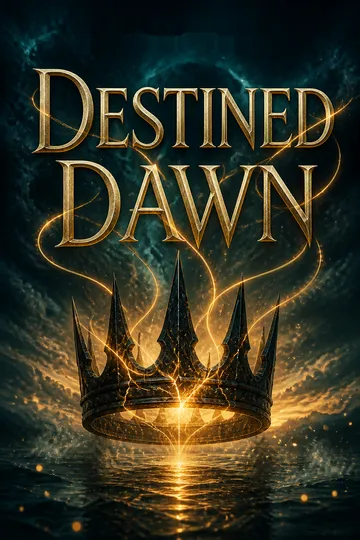
Their weapons and clothes transform as each channels a distinct power; together they destroy the attackers and drive the beasts back. Paca unleashes a wave that clears the battlefield, gains a crown, and is publicly recognized by Lucifer as the Apocalypse returned.
The nightmare makes the past physically present before Paca can understand it. Her body remembers pain, and the house absorbs the force of what her mind cannot name. The rebellion then turns that private disturbance into a public crisis, forcing the five to act as a unit. Their transformations suggest that the old powers are returning through action rather than recollection. Paca’s crown signals renewed authority, but the victory is also a reveal staged by Lucifer: he uses the crisis to announce her return. Power restores her place in Hell while leaving her unsure whether she has chosen that place herself.
Rafael’s Name
At the gathering after the battle, Paca’s siblings and Lucifer’s angelic brothers appear together. When she asks who killed her, Lucifer names Rafael, an archangel. Paca knows neither the man nor the history behind the accusation, and the family’s cryptic reactions deepen her distrust. Church-like bells sound, and the group is transported to Purgatory before she can get a clear explanation.
The Horsemen remain beside her, but none of them can siphon or turn ghostly there. Their arrival shifts the danger from palace politics to an unfamiliar landscape where even Paca’s instincts offer no map. Rafael’s name becomes the first firm answer about her death, but it raises a larger question about why an angel judged her worth killing.
The revelation arrives in a family gathering where no one behaves like a neutral witness. Lucifer’s answer is direct, but the siblings’ reactions and the sudden relocation prevent Paca from testing it. The scene makes certainty feel less like closure than a new burden: she now has a named killer, but no trustworthy account of motive. Purgatory strips away abilities she relied on for escape, making the Horsemen’s physical presence more important. The transition also exposes the limits of their collective knowledge. Their bond can keep them together, but it cannot explain the past or guarantee safety.
The Pit Below
In Purgatory’s wastelands, two enormous, many-headed beasts ambush the group. The Horsemen kill them only by combining their new weapons and powers, while Paca is badly hurt and has to be carried. She suspects the attack is a test, but no one knows its rules or destination. As they flee through caves and broken ground, Paca tells the others what Lamar revealed: Manella recycled them after they lost control following her death.
She wants no more secrets between them. Then the earth splits, releasing a flood of boiling blood that cleanses the surface during Purgatory’s Draining Day. Lilith appears, kisses Paca, and shoves her into a deep shaft. The Horsemen jump after her, choosing to follow rather than leave her alone in the fall.
The beasts expose the group’s vulnerability before the flood makes the environment itself an antagonist. Paca’s decision to reveal Manella’s role is an attempt to repair trust through disclosure, offered at the moment she believes they may not survive. Lilith’s brief kiss followed by the shove converts intimacy into a weapon, a sharp expression of the family’s games. The Horsemen’s leap after Paca matters because it is action rather than reassurance: whatever doubts they have about her, they will not let her face the fall alone. Their unity is real, though still tested by deception.
The Angel’s Trial
The fall ends in an arena where Lucifer, the angels, and Paca’s siblings watch from raised seats. Rafael’s group tests whether Paca has truly lost her memories by inflicting pain and separating her from the Horsemen behind a barrier.
When Rafael makes her believe he has killed Ezekiel, Paca’s grief breaks through her defenses. She unleashes a devastating burst of power that destroys the surrounding landscape. The deaths were an illusion, but her response convinces the angels that her memories are gone and her attachment to the men remains.
Lucifer moves her to Hell, where she can heal faster than in Purgatory or on Earth. Paca wakes furious that the others left her to endure the test, and Lamar says the next decision concerns what she and the Horsemen were created to do.
The trial treats emotion as evidence, but its method is ethically compromised: Paca is deceived into believing a partner is dead so the observers can measure her response. Her power erupts from attachment, not from a recovered memory or a calculated plan. The test therefore confirms something the angels do not control: Paca’s bond is present even when its history is inaccessible. The illusion also makes the men’s old trauma newly legible to her. Their shared nightmares are not prophecy, as they had feared, but memories of Hell’s Black Heart, turning their suffering into a past that has returned through her.
The Beast Called Jahl
At the council, Paca learns that Jahl is a failed creation meant to contain the evil spilling from Hell. Its former champion, Matthew, was defeated, and the angels now argue over whether Paca can take his place. Lucifer insists she was never designed to be a champion, but a weapon capable of destroying the world if Jahl escapes.
The angels accuse Paca of having once chosen to abandon the fight and let the world fall. A vision then shows her past self meeting Harold in a graveyard, where Rafael stabs her with a blessed sword. The scene confirms that Harold helped arrange the encounter, while leaving the old Paca’s motive disputed. Paca has proof of her death, but every faction offers a different meaning for it.
Jahl’s introduction reframes the conflict from family mystery to cosmic emergency, yet the council cannot agree on what Paca is for. The language of champion, weapon, and apocalypse attempts to reduce her to a function, while the competing accounts of her past make her agency difficult to locate. The vision offers concrete evidence of the killing but not a single interpretation: the angels see cowardice and selfishness, while Lucifer resists their judgment. Paca’s memory loss becomes politically useful to everyone around her. Each side can narrate her past without being contradicted by the person who lived it.
Lucifer’s Confession
Lucifer later gives Paca his account of the graveyard death. He says she knew Rafael might kill her and allowed it because an unbalanced death could restore the Horsemen and return the missing pieces she had given them. In Lucifer’s telling, Paca planned a sacrifice that might leave them strong enough to face Jahl, but kept the plan from him because he would have stopped her.
He admits her death fractured his mind for centuries and that he still mourns the daughter he remembers. Paca feels an unfamiliar, gut-deep regret at having hurt him, but Lamar warns that Lucifer may be mixing truth with self-serving performance. She cannot tell whether his tears are genuine, another manipulation, or both.
Lucifer’s account gives Paca’s death strategic purpose, but it does not settle whether the sacrifice was wise, necessary, or even described accurately. His grief is emotionally persuasive precisely because it may also be a tactic. Paca’s response complicates her understanding of herself: she lacks an ordinary conscience, yet experiences regret when confronted with the consequences of her choices for someone she cares about. Lamar’s warning preserves uncertainty rather than resolving it. The scene asks whether emotional sincerity and manipulation can coexist, especially in a family where influence is a habitual form of communication.
Harold’s Pawnshop Verdict
Paca visits Harold, also known as Heratio, at his pawnshop, taking a Super Nintendo from Hell to keep their conversation grounded. Harold resents being drawn into her old plans and argues that he helped bring about her death because he believed she might otherwise become dangerously imbalanced.
He describes Paca as a weapon whose power, purpose, and trigger are inseparable, and doubts that she can simply choose a heroic life. Yet he also suspects her former self devised a route to defeat Jahl without destroying herself.
Their argument gives Paca no clean absolution: Harold sees her as a manipulator, while she sees a former ally who betrayed her. Gage, newly altered by time in Hell’s Black Heart, arrives and pulls Paca back to Hell before the dispute is resolved.
Harold’s judgment is the harshest because he speaks from both guilt and resentment. He refuses to let Paca cast herself solely as a victim, while also defining her through the function imposed on her at creation. The video game gives their confrontation an ordinary rhythm, but cannot soften the moral impasse. Paca wants to know whether their past held friendship; Harold insists their relationship was never that simple. Gage’s abrupt return interrupts the argument at the point where it might have become an answer. The scene leaves Paca with a possible plan, but no confidence about its cost.
A Favorite Says It
Gage’s time in Hell’s Black Heart has altered his appearance and given him a direct connection to its power. After he brings Paca back from the pawnshop, she challenges his gentleness, expecting another reprimand for her solitary choices.
Instead, Gage asks her to take him with her the next time instinct sends her into danger. Their intimacy changes from teasing and roughness to deliberate tenderness. When Paca tells him she loves him, the room shakes and its lights fail, suggesting that the declaration has strengthened something beyond desire.
Gage does not manage to answer in words, but he keeps kissing her and holding her hand. The other Horsemen return from the Black Heart with information about Jahl, yet their research does not make the coming confrontation feel safer.
Gage’s response offers Paca a form of acceptance she has been seeking: not permission to act alone, but a request to be included in what comes next. His altered body reflects the Black Heart’s influence, while his tenderness creates a sharp contrast with the realm’s brutal demands. Paca’s declaration is also a risk. She has been unsure whether the Horsemen want her in this life for herself or because of the bond’s old structure. The physical reaction in the room makes love consequential, though not fully explained. Gage’s silence keeps the emotional promise incomplete, but his actions answer enough for the moment.
The Beast in Static
The Horsemen obtain a poor recording of the champion’s last battle and play it through a small compass-like device. The image flickers, but Jahl’s roar and shadow are clear enough to frighten Paca; the force looks less like a body than a moving darkness with red eyes.
Her jokes fall away, and she admits through her actions that she is afraid. Jude warns that they will not let her fight if victory requires her to detonate, while the others weigh what Rafael’s experience might teach them.
Paca asks for help from the archangel who killed her, reasoning that he trained the defeated champion and understands Jahl better than they do. She follows the Horsemen toward preparation, determined to recover the courage her missing memories cannot provide. The book ends before they reach Jahl.
The blurred recording makes fear more effective, not less: Jahl remains indistinct, so the characters cannot turn it into a manageable opponent. Paca’s humor has been one way to regulate danger, but here it cannot keep pace with the evidence. Her request for Rafael’s help marks a practical break from vengeance. She is willing to learn from the person she distrusts because the threat exceeds what pride or instinct can solve. The ending withholds a victory and a final moral answer. Paca has accepted the need to prepare, but neither she nor the reader knows whether her power can meet its intended purpose without consuming her.
Analysis
Two Kingdoms makes memory less a storehouse of identity than a contested territory. Paca cannot verify the person she used to be, so Lucifer, the angels, Harold, Lamar, and the Horsemen each offer competing accounts. The book refuses to make any one account fully trustworthy. Its central mystery is therefore not only who killed Paca, but whether her former choices can be understood as love, calculation, cowardice, or some unstable combination of all three.
The balance system gives that uncertainty a formal shape. Moral action is not measured by outward appearance alone; motive matters, and mixed motives can preserve equilibrium. This makes Paca unusually powerful, but it also unsettles familiar heroic categories. She may save others without being selfless in a conventional sense, and she may be dangerous without being merely evil. The angels’ effort to label her a weapon or a failed champion is another attempt to simplify what the story keeps complicated.
The relationship plot follows the same logic. Paca wants the Horsemen to choose her, yet she repeatedly makes decisions without them. They want to protect her, yet conceal plans and exclude her. Their conflict is not solved by the claim that they share a destined bond; it requires present-day honesty and participation. Gage’s tender response offers a moment of intimacy, not a final resolution.
Comedy is Paca’s tool for surviving scenes that would otherwise overwhelm her, from demonic politics to the prospect of world-ending violence. The jokes do not cancel the horror; they show how she keeps speaking when others would reduce her to a title. The ending preserves that tension. Paca is preparing to face Jahl, but has not fought it, recovered her memories, or settled the truth of her old plan. The book closes at the threshold of action, with identity and destiny still unresolved.
Review Summary
Two Kingdoms received mixed reviews, with an average rating of 4 out of 5 stars. Many readers found the book less engaging than its predecessors, citing slow pacing, excessive world-building explanations, and a lack of character development. Some appreciated the humor and plot revelations but felt the romance and action were lacking. Several reviewers expressed disappointment with the reduced steam level and repetitive dialogue. Despite criticisms, many fans remained invested in the series and looked forward to the final installment.
People Also Read

Characters
Paca
The memoryless ApocalypsePaca is Lucifer’s youngest daughter and the central force behind the Horsemen’s shared history. She has returned after death without the memories that once shaped her relationships, leaving instinct, journals, and other people’s accounts to explain who she was. Her wit is fast and often deliberately disruptive, a way to manage fear and resist being treated as fragile or ornamental. Beneath the jokes, she is intensely attentive to belonging and to whether others choose her freely. She believes in balancing opposing motives rather than acting from uncomplicated virtue, and her power makes even ordinary decisions feel consequential. Paca’s challenge is to build trust and agency in a present she did not choose, without simply imitating the formidable person everyone remembers.
Jude
Death with a guarded heartJude is the Horseman associated with Death, one of Paca’s four partners and the most openly confrontational about her risky decisions. His blunt anger often hides fear for the group, and he expects loyalty to mean shared deliberation rather than unilateral sacrifice. He can be cutting and difficult to reassure, but he is observant about Paca’s emotional needs and recognizes that her jokes can conceal real hurt. Jude’s attachment is expressed less through speeches than through proximity, protection, and the familiar rhythm of their arguments. He represents the group’s demand that Paca treat them as partners in the present, not merely as people she once saved.
Kai
Pestilence's teasing anchorKai is the Horseman associated with Pestilence and one of the men closest to Paca. He meets danger with quick confidence and uses teasing to puncture tension, though his humor does not make him careless about her safety. Kai is physically affectionate and openly competitive for Paca’s attention, often turning the group’s complicated bond into playful contests over who is her current favorite. His power can spread destructive illness through enemies, giving his easygoing manner a dangerous counterweight. Kai’s loyalty is both intimate and practical: he stays close, fights beside Paca, and tries to understand her moods even when her shifts in attention leave him exasperated.
Gage
Famine, the quiet caretakerGage is the Horseman associated with Famine, quieter than the others but keenly perceptive. He often notices when Paca is withdrawing or concealing distress, and his care tends to arrive through attention rather than argument. His reserve can make his feelings difficult to read, which matters to Paca as she tries to discover whether their connection is chosen in this life. Gage is also capable of formidable force in battle, and his growing contact with Hell’s Black Heart exposes him to changes that affect both his body and his power. He balances the group’s noisy conflict with a steadier, more tender form of connection.
Ezekiel
War's wary mediatorEzekiel is the Horseman associated with War and often acts as the group’s practical voice. He is direct, strategic, and quick to notice when a plan is reckless, though his anger can make him say things he does not mean. Paca sees him as one of the more reasonable men, which makes their clashes particularly charged when he withholds information or tries to manage her choices. Their relationship carries a mixture of protectiveness, friction, and physical closeness. Ezekiel’s instinct is to assess the danger and keep the group intact; his challenge is to make room for Paca’s judgment without assuming that caution gives him the right to decide for her.
Lucifer
The manipulative fatherLucifer is the ruler of Hell and Paca’s father. He treats conversation as a contest, using timing, selective truth, and theatrical displays to steer others toward outcomes he prefers. His relationship with Paca contains genuine affection, but his care is difficult to distinguish from control because he rarely stops manipulating even when he may be telling the truth. Lucifer is also an unstable figure whose state of mind is bound up with Hell’s broader balance. He knows more about Paca’s past than she does and resists explaining it plainly, leaving her to decide whether his protection is another way of keeping power over her.
Lamar
The balancing confidantLamar is Paca’s longtime friend and a spirit balancer, tasked with helping the unbalanced find a better place in Hell. He can explain the principles of balance and Paca’s former relationships, though he often speaks in riddles that leave her more frustrated than informed. His affection for her carries the sadness of someone who remembers a friend that she cannot remember being. Lamar is devoted to Manella and understands the risks of trusting powerful people in Hell. He offers Paca a rare source of historical context, while his own incomplete knowledge keeps him from serving as a simple guide.
Rafael
The judgmental archangelRafael is Lucifer’s archangel brother, associated with judgment and a strict idea of cosmic balance. He is severe, proud, and convinced that powerful beings must be held accountable for the consequences of their choices. His conflict with Lucifer exposes a long-standing divide between Hell’s understanding of balance and the angels’ belief in correction through judgment. Rafael sees Paca as a dangerous force whose intentions matter as much as her power. His certainty is complicated by the damage he causes in pursuing proof, making him an adversary whose arguments cannot be separated from his actions.
Harold, also called Heratio
The fallen balance keeperHarold, known in Hell as Heratio, is a former angel and balance keeper who now runs a pawnshop on Earth. He is guarded, judgmental, and deeply conscious of how Paca’s actions have shaped his life. His sense of righteousness has been tested by proximity to Hell and by the consequences of choices he once made. Harold refuses to comfort Paca simply because she is upset; he offers a hard interpretation of her nature as a weapon and challenges her to face the purpose others have assigned her. His bitterness coexists with a serious understanding of balance, making him an uncomfortable but useful source of perspective.
Lilith
Envy's theatrical eldestLilith is one of Lucifer’s eldest children and embodies Envy. She is theatrical, provocative, and skilled at turning rivalry into entertainment, particularly when Paca’s return unsettles the family hierarchy. Her behavior can seem frivolous until it becomes clear that she understands exactly how a small gesture can redirect a dangerous situation. Lilith enjoys testing Paca’s reactions and knows how to make personal history feel like a trap. She is not simply an antagonist, however; her shifting moods and occasional acts of assistance resist easy interpretation, much like the rest of Lucifer’s family.
Hera
Lust and sibling rivalryHera is Paca’s sister and embodies Lust. She carries herself with confidence and uses seduction as a form of influence, especially around Paca’s partners. The old rivalries between the sisters remain emotionally potent even when Paca cannot recall their causes; she feels jealousy and threat before she can explain either. Hera’s poise and provocations make her difficult for Paca to trust, but her interactions also suggest that the family’s past is not fixed in the same pattern. She brings the history of sibling competition into the present, where Paca must decide how much to trust instinct without the memories behind it.
Manella
Sloth, Lamar's belovedManella is one of Lucifer’s heirs and embodies Sloth. He is attached to Lamar and is often found avoiding the work or danger that occupies the rest of the family. His apparent laziness can mask consequential decisions, and his relationship with Lamar gives him an emotional stake beyond the royal family’s games. Manella is a reminder that in Hell, a quiet or inactive character may still have altered the course of events. He tends to respond to upheaval with weary detachment, frustrating those who want immediate explanations.
Cain
The sardonic older brotherCain is one of Lucifer’s children and Paca’s brother. His dry commentary often cuts through the family’s self-importance, and he is willing to point out when a dispute has become more dangerous than entertaining. Cain is associated with old sibling rivalries and shifts alliances, making his opinions useful but not automatically trustworthy.
The Gemini Twins
The rival-making twinsThe Gemini Twins are Lucifer’s heirs, known for engineering conflicts and enjoying the spectacle that follows. They often act as a pair, finishing or echoing each other’s thoughts, though their histories place them on opposing sides of mortal wars. Their amused detachment makes them difficult to read, but they understand the mechanics of balance and can explain how Paca’s motives work. They contribute both mischief and essential context.
Jahl
A sealed cosmic threatJahl is a force created to contain the evil that spills from Hell, though the attempt failed to produce a stable being. The angels describe it as a danger capable of consuming souls and threatening both Heaven and Hell if it escapes its prison. Paca and the Horsemen know it only through disputes, old histories, and fragmentary battle footage. Jahl represents the danger of treating an unstable creation as a manageable tool: its existence raises questions about who is responsible for controlling a force no faction fully understands.
Chloe
A wounded castle guardChloe is a castle guard who reaches the Horsemen’s home badly injured during the rebel attack. Her connection to Gage unsettles Paca, who has to manage jealousy while responding to an urgent threat. Chloe is frightened and vulnerable, and her arrival brings the rebellion into the household.
Michael
The champion's advocateMichael is an archangel involved in the debate over how to stop Jahl. He approaches the problem through the logic of roles and cosmic necessity, weighing Paca’s capacity against the danger of the threat. His arguments are measured but can reduce people to their assigned functions.
Azrael
The angel of deathAzrael is an archangel who challenges Lucifer’s account of the council’s argument. His presence adds another perspective to the angels’ divided response, showing that they do not agree simply because they share a side.
Plot Devices
Paca’s encoded journals
Clues without full memoryPaca’s journals preserve fragments of her former lives, relationships, languages, and plans, but they do not restore the experiences behind those records. Some passages translate themselves, while others offer riddles about trials and repeated failure. The journals let the reader learn alongside Paca without making her an empty slate: she has evidence of who she was, but must choose how much to trust it. Their incomplete translations also maintain uncertainty around her death and the choices she made before it.
The balance system
Motives shape powerHell’s balance depends on the motives behind actions, not merely on whether an act appears selfless or selfish. Paca is unusually skilled at combining opposing motives, and her choices can affect her power, her relationships, and the larger cosmic order. The system gives her a way to interpret her own behavior, but it also creates ambiguity: different characters use balance to justify manipulation, sacrifice, punishment, or inaction. It is the story’s moral machinery, and its rules are powerful without being simple.
The Horsemen bond
Power through attachmentPaca and the four Horsemen share a bond shaped by multiple lives, physical closeness, and pieces of Paca’s balance. The bond strengthens them and can soothe or destabilize them, even when their memories are missing. It gives the group a practical advantage in battle, but it also complicates consent and belonging: Paca worries that the men are bound to her by supernatural necessity rather than present-day choice. The relationship must therefore be remade through current decisions, not merely claimed as destiny.
Hell’s Black Heart
Power forged through tormentHell’s Black Heart is a prison for the dangerously unbalanced, and its power can strengthen those who enter it. The Horsemen use it to recover strength, but time there affects them in disorienting ways and may leave lasting changes. Their nightmares of torture are revealed as memories of the place rather than visions of a future. The Black Heart links their former suffering to their present abilities, making every power gain inseparable from the history they have tried not to remember.
Transforming weapons
Horseman powers made visibleDuring the battle against the rebels, the Horsemen’s weapons and clothing change as their powers surface. Gage’s sword, Jude’s scythe, Kai’s trident, and Ezekiel’s staff turn their supernatural identities into tools the group can use together. Paca’s own power expands into a destructive wave and a crown, marking a new level of strength. These transformations make internal changes visible, while also setting up the visual and practical language of the confrontation the group expects to face.
The Dark Side Series


About the Author
Other books by Kristy Cunning


Download PDF
Download EPUB
.epub digital book format is ideal for reading ebooks on phones, tablets, and e-readers.








