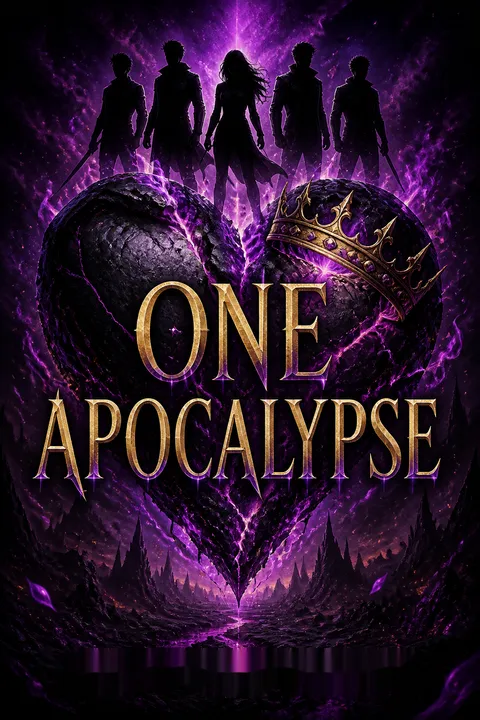


Plot Summary
Rafael Becomes the Punching Bag
After an archangel once killed her, Paca, the Apocalypse reborn without her former memories, asks Rafael to attack her while she refuses to fight back. She wants to learn how to withstand pain before facing Jahl, the imprisoned force that may destroy every realm.
Her four Horsemen boyfriends watch uneasily as the blows break bones and leave her bleeding, but she insists that taking punishment is part of her training. When Rafael's strikes push her close to losing control, she finally retaliates with a burst of fire strong enough to send him flying.
Paca believes the counterattack has helped restore his balance. More importantly, she has discovered that surviving an enemy's power may demand more than the effortless strength she once possessed.
Paca treats pain as information. By choosing to absorb Rafael's attacks, she tests the distance between her present abilities and the catastrophe she expects to face. The choice is not simply courage: it is also an attempt to regain agency after learning that an enemy can overpower her. Her refusal to strike back unsettles the Horsemen because it makes them spectators to a danger they cannot control. That tension introduces the story's recurring problem: Paca believes that protecting others may require suffering alone, while the people who love her experience that solitude as its own form of threat.
A Crown in the Tar
While the Horsemen return to the Black Heart, Hell's shifting nightmare landscape, Paca's sisters Hera and Lilith fight her over her crown. The struggle sends it through a window and into a deadly tar pit. Ezekiel dives into the sludge to retrieve it, while Jude returns from the Black Heart with rainbow-colored blood stuck to his face and hand after killing an unnatural unicorn.
The ridiculous aftermath briefly makes the Horsemen laugh inside the place that usually feeds their nightmares. Ezekiel brings the crown back to Paca, who has not realized how dangerous his rescue was. His choice unsettles him more than he admits, while her fondness for the crown masks her deeper fear that the men still make decisions without her.
The crown is both a royal token and a practical emblem of Paca's unstable identity. The sisters' brawl turns it into a physical object that can be lost, while Ezekiel's dive turns affection into an unannounced risk. His act matters because it is freely chosen, unlike the violence of Paca's training. Meanwhile, the Black Heart's absurd unicorn encounter lets the Horsemen laugh in a place associated with their trauma. That small change signals that their shared life is beginning to soften the isolation imposed by their past, even as Paca remains outside the unit's private understanding of its wounds.
A Tournament for Hell
Paca orders Lamar, her trusted attendant and confidant, to stage a public contest against her six royal siblings. She wants to restore the balance after they watched her endure Rafael's attacks without retaliation, and she assumes the fights will also sharpen her skills.
Her relationship with the Horsemen is changing: Gage has shown her his love, and Ezekiel's own confession deepens their bond, but jealousy and withheld information still divide them. The men summon Rafael and secure an emergency amulet that may release them from the battlefield if things go wrong.
Rafael warns that Paca is far weaker than her former self and that her siblings will not spare her. The warning arrives too late to stop the contest, which Lucifer permits while magically restraining the Horsemen as spectators.
The tournament begins as Paca's attempt to correct a perceived imbalance, but her plan also reveals how she handles vulnerability: she converts hurt into spectacle and danger into training. The public audience makes that strategy harder to revise once the consequences become clear. The amulet offers the Horsemen a narrow form of agency, yet they remain unable to intervene while Lucifer controls the arena. Their affection is becoming more explicit, but emotional closeness has not yet produced reliable coordination. Paca can feel their love and draw strength from it, while still mistaking their fear and secrecy for exclusion.
Roses, Poison, and Sloth
Hera opens the contest by summoning a subterranean tribe that paralyzes Paca and begins dragging her toward its lair. Lucifer has blocked Paca's phantom escape, leaving her to endure the attack in her physical body.
Instead of remaining helpless, she laughs, destroys the creatures, and turns their own poison against Hera. Manella, the embodiment of Sloth, follows by slowing time and using chains to extinguish Paca's fire. He ends the match by conceding rather than spending the effort to continue.
Paca leaves both encounters standing, but Hera's tactics expose how little preparation Paca has made for her siblings' powers. The spectators, including her worried Horsemen, begin to understand that her apparent recklessness can conceal tactical observation.
These first matches establish that Paca's power is not a simple measure of force. Hera's poison succeeds because it exploits a specific vulnerability, but Paca turns survival into a way to understand and reverse that vulnerability. Manella's concession, by contrast, refuses the contest's expected escalation. His laziness functions as a genuine tactical advantage, and it frustrates Paca precisely because she cannot compel him to meet her terms. Together, the fights challenge her assumption that determination alone can master every opponent. They also show that the tournament's rules are being shaped by the sins each sibling embodies.
Lilith's Envy Burns
Lilith surrounds Paca with a poisonous mist that makes her claw at her throat, while the Horsemen remain locked in their seats. Lucifer expects the attack to humble his daughter, but Paca has been withholding the extent of her strength during training. She endures the assault, then closes the distance and beats Lilith unconscious.
The crowd's cheers shift immediately toward the victor, and the Horsemen realize that Paca's apparent inability to fight back against Rafael has hidden a deliberate choice. Lucifer, who had treated her as too weak to challenge Jahl, is left recalculating her capabilities. Paca then faces Cain, the embodiment of Gluttony, whose power over shadows turns the next match into a far more dangerous test.
Lilith's attack makes envy bodily: the poison consumes Paca from within, while the audience's attention and the siblings' rivalries turn victory into public possession. Paca's response is physical and direct, an answer that avoids the temptation to remain a victim for the crowd's sympathy. Her success also exposes a strategic gap. She has concealed her strength from nearly everyone, including allies who need accurate information to help her. Secrecy preserves her freedom in the moment, but it leaves the Horsemen watching without a dependable plan and Lucifer surprised by a daughter he believes he understands.
Cain Feeds the Shadows
Cain hurls enchanted daggers into the ground, raising a giant shadow creature that swallows Paca and grows stronger as he feeds it power. Her screams make the crowd unsure whether she is truly hurt, but she is taking the full force of the attack to discover what it can do. The ground breaks open beneath the shadow, and Hell's lava rises at Paca's command.
She burns through Cain's creation, then sends fire into his body when he gasps. The power of Hell amplifies her abilities in a way Rafael's Purgatory training cannot. Cain collapses, alive but scorched, and Paca has learned that an enemy's assault can become fuel if she survives it. The Horsemen begin to see her apparent recklessness as a method, not just bravado.
Cain's shadow is a feedback system: every attempt to overpower it makes the danger larger. Paca's answer is not to match its growth directly, but to change the terrain and redirect the force back toward its maker. This is the first clear demonstration that she can learn from exposure rather than merely endure it. Yet the cost remains visible to those watching her. The Horsemen are not reassured by her success, because she has made them witness a method whose logic depends on her accepting harm first. Her tactical intelligence and self-endangerment are becoming difficult to separate.
The Twins Make Her Fall
Pride and Greed, the twin brothers Caesar and Pico, attack together after Paca has already spent herself on the earlier matches. Pico's lightning and Caesar's black ooze trap and batter her, while Lucifer forces the Horsemen to watch.
Paca cannot answer with the effortless bursts that defeated her other siblings. When the twins continue striking her, she catches Caesar's flail and finally releases the power she has been building. Her wounds seal, her fire grows hot enough to turn the ooze to ash, and she steals Pico's storm.
New chakrams appear in her hands and pursue the twins through the arena, burning them until both beg for the fight to end. Paca wins, but the crowd's terror and her Horsemen's anger reveal the cost of making her breakthrough in public.
The twins' victory seems certain because they exploit the very weakness Paca has created by fighting in sequence: fatigue. Her breakthrough arrives when she stops treating each attack as proof of defeat and lets accumulated pressure release through her power. The transformation is both tactical and psychological. She becomes more capable, but the new strength also intensifies her lack of control. Her victory does not settle the relationships around her; it sharpens them. The Horsemen resent being kept helpless, while Paca expects celebration. Their different readings of the same ordeal foreshadow the conflict over whether love means protection, trust, or permission to choose danger.
Jahl Reaches the Horsemen
After the tournament, the Horsemen enter the Black Heart without Paca and fall into an illusion that hides an army of armored soldiers. The soldiers' spears carry a dark poison that disables their powers and tries to force them into surrender.
Jude is stabbed and collapses as the invading voice presses into his mind. Caesar, Pico, and Manella arrive in time to destroy the soldiers, explaining that Jahl's cage is weakening and that its servants may soon reach Hell. The Horsemen carry Jude back to Paca, who burns away the poison with her fire.
She keeps the flame against his wound until he wakes, then admits how terrified she was of losing him. Their shared vulnerability draws them closer, but Paca now knows Jahl is already testing the defenses around them.
The ambush converts the distant apocalypse into an intimate threat. Jahl does not need to reach Paca first; it can attack the Horsemen through a deception that exploits their isolation and the limits of their powers. Jude's wound turns the danger into a test of Paca's attachment, while her fire becomes care rather than combat. The enemy's repeated demand for surrender also echoes the emotional risk running through the group: a bond can protect them, but fear can make each person retreat into private judgment. The siblings' rescue complicates the usual division between allies and rivals, since survival briefly matters more than resentment.
The Angels Strike Together
Once Jude recovers, Paca secretly goes to Purgatory and asks Rafael and four other angels to attack her at once. She believes that surviving their combined force will unlock the strength she needs for Jahl.
The assault nearly kills her; she cannot move or call for help while the angels' light burns through her body. When it ends, she rises with new power and purple fire. Jude finds her bruised and realizes she arranged the attack to keep the Horsemen from stopping her.
He responds not with his usual anger but with concern, then shares an intensely private moment with her. Their closeness is real, yet she remains unwilling to explain every decision. The angels' assault has advanced Paca's power while widening the emotional cost of her secrecy.
Paca's secret training repeats the structure of her earlier fights with Rafael, but raises the stakes by removing even the fiction of a controlled match. She treats her body as a threshold she can cross through force, an approach that generates power but leaves intimacy to arrive afterward as repair. Jude's reaction marks a shift: anger gives way to concern because he recognizes the danger beneath her confidence. Still, Paca's secrecy keeps the group from becoming a true unit. Her growing strength solves one problem while intensifying another, since those who love her cannot tell whether she is trusting them or simply managing them.
A Trigger Hidden in Love
Lamar translates Paca's old journals and uncovers a secret that Lucifer has concealed: the former Paca placed a secondary destructive trigger inside the four Horsemen. It is a last resort, but using it in Jahl's cage could kill them all. Paca makes the men promise to hear her plan before revealing what she knows.
Then a warning shortens their preparation time to seven days because Jahl's cage is weakening faster than expected. Paca considers replacing the Horsemen temporarily with four stronger candidates, believing this could keep her lovers safe. Jude resists her attempts to turn their love into a power strategy, and the disagreement widens the divide just as the countdown makes every choice feel irreversible.
The hidden trigger transforms love from a source of strength into a material part of the apocalypse. Paca's old self has prepared a contingency that could save the world or destroy the people she most wants to protect. Her decision to bargain for the Horsemen's cooperation is an effort to replace unilateral control with consent, but the promise itself is formed under pressure. Jude's resistance matters because he refuses to let affection become a simple instrument. The seven-day deadline compresses these unresolved questions: there is no longer time to build trust gradually, yet any plan that bypasses trust risks making the group less capable when it matters.
The Unity Strike Awakens
Hera offers Paca a lineup of temporary Horsemen, hoping to win Manella's crown and exploit the lovers' growing conflict. Paca watches the candidates face a maze of deadly creatures, then recognizes the four masked figures as her own men.
When self-replicating black knights overwhelm them, she refuses to rescue them outright. Instead, she drops into the fight and absorbs blows to provoke their instinct to protect one another. The four Horsemen break through their separate fear and unleash a single combined attack that wipes out the knights and much of the maze.
Their weapons change, and their power surges. Paca's gamble has produced the unity she needs, but it also confirms that her men will choose danger over allowing her to face it alone.
The trial makes relational unity visible as a combat capacity. The knights multiply whenever struck, so individual force only worsens the crisis; the Horsemen must act as a coordinated whole. Paca's intervention is morally complicated. She engineers danger to awaken their bond, repeating her habit of using her own body as leverage, but this time the result depends on their independent response rather than her power alone. Their combined strike suggests that attachment can create a form of agency neither individual possesses. Yet the scene does not erase conflict: it shows that cooperation is possible, not that Paca has learned to trust it without testing it.
Nineties Clues at the Cage
Paca and the Horsemen visit Jahl's boundary, where the imprisoned force forms tar soldiers and tries to frighten them into surrender. A riddle from Paca's journals sends her searching the nineties-themed room for answers; a film and graphic novel help her interpret the weapon and its cost. She concludes that her destructive power may be used more than once, but only if she accepts a loss tied to her memories.
Before the final journey, she asks Rafael to make a dangerous deal and, if necessary, reseal the cage with the Horsemen outside. He agrees to her terms without knowing exactly what she will do. Paca keeps that contingency private, then joins the men and their four supernatural horses for the approach to Jahl.
The room's pop-culture clues turn memory into a problem-solving instrument rather than a storehouse of identity. Paca's old self has left instructions tailored to the new self's habits, but the instructions demand interpretation rather than obedience. That distinction preserves her agency: she cannot simply recover a complete plan from the past. Her bargain with Rafael also reframes trust as a negotiated risk. She asks an enemy from her history to help protect the people she loves, while withholding the full cost from them. The strategy may be necessary, but its secrecy keeps repeating the very fracture she hopes the Horsemen's unity can overcome.
The Apocalypse Goes In
Rafael opens the Pure Branch long enough for Paca and the Horsemen to enter Jahl's prison. Paca's purple fire burns through the tar and its puppets, while the men and their horses protect her from falling stars, spears, and attacks from every direction.
Jahl initially absorbs her strongest blows without reacting. As Paca falters, the Horsemen repeatedly unleash their Unity Strike, cracking the enemy's body until it appears destroyed. The ashes begin gathering again.
Remembering her bargain with Rafael, Paca orders the barrier closed with the men outside, then faces Jahl alone. She turns herself into the weapon her former self prepared, accepting a blast that destroys Jahl and shatters the prison. The Horsemen survive, but Paca disappears in the explosion.
The climax first appears to reward the group's newly achieved cooperation: Paca weakens Jahl, and the Horsemen's synchronized force makes the impossible enemy fracture. The apparent victory is not enough, however, because Jahl's capacity to re-form exposes the limits of any single triumph. Paca's final choice preserves the distinction between partnership and substitution. She allows the Horsemen to contribute, but takes the irreversible cost onto herself when the threat returns. This decision fulfills her protective instinct while also repeating its danger: she assumes that loving someone means deciding alone what loss they can bear. The victory saves the worlds, but it cannot restore the version of Paca who made the plan.
Ashes, Not Goodbye
The Horsemen search the ruined prison and find only Paca's melted crown. Their grief turns to fury when the ashes of Jahl begin to stir again, but a final burst of power ends the threat and leaves them alive. Rafael then explains what Paca believed: her body and destructive core may return, though the memories that shaped this version of her may not.
He urges the Horsemen to survive rather than follow her into another death, and tells them that she expects to find her way back. The world remains intact, but no one else will know how close it came to ending. The men leave with grief, an uncertain promise, and the responsibility to wait without turning their own despair into another sacrifice.
The resolution refuses to equate survival with restoration. The Horsemen have saved the world, but the person they knew is absent, and Rafael can offer only Paca's belief that she will return. Memory becomes the emotional price of the weapon: the body may persist while the particular history that made love recognizable is lost. The men are asked to endure uncertainty without converting grief into a new act of self-destruction. That restraint is a final test of the unity they have gained. They cannot command Paca's return, but they can honor her wish by remaining alive and allowing the future to stay open.
Epilogue
Years earlier in Hell, a ghost girl has secretly watched the Horsemen and imagined becoming part of their lives. When an unseen attacker targets Gage, she throws herself between them and is wounded. The impact gives her a physical body for the first time, though she looks unlike the Paca the men remember.
They recognize something in her presence and kiss her while she struggles to understand their history. Five years later, this returned Paca lives beside the Horsemen with few memories of her former life. She is less powerful and still chaotic, but her humor, fierce attachment, and appetite for their attention remain. The group keeps building a life together, one imperfect memory at a time.
The epilogue folds the ending back into the story's beginning. The ghost girl who once watched the Horsemen from outside their world returns through an act of protection, not through recovered memory or a formal resurrection. Her body arrives before her history, leaving the men to recognize her through emotional and physical familiarity while she must meet them anew. Five years later, their bond rests less on a shared past than on repeated choices in the present. The lighter domestic comedy does not erase the cost of Paca's sacrifice; it shows a possible answer to it. Love survives, but not as perfect continuity. It must be rebuilt with a person who is recognizably herself and yet genuinely changed.
Analysis
One Apocalypse treats intimacy as both a source of power and a danger to agency. Paca's bond with the Horsemen strengthens her, but she repeatedly turns that fact into a reason to manage them, withhold information, and absorb risk alone. Her secrecy is not simply a flaw that love cures: it grows from the knowledge that her choices can destroy the people she values. The Horsemen, meanwhile, interpret secrecy as exclusion, and their helplessness during her fights becomes a second battlefield alongside the physical one.
The story's supernatural rules make psychology concrete. Sin affects combat, balance alters power, and surrender can mean either enslavement to Jahl or the voluntary trust needed for the Unity Strike. The distinction is crucial. Jahl demands that others surrender their will; Paca's friends become strongest when they choose to coordinate. Yet their unity does not solve every problem. Paca still chooses sacrifice without their consent, revealing how easily protective love can become paternalism when the protector assumes only she can bear the cost. The journals and pop-culture riddles complicate the idea of destiny. The former Paca leaves a design, but the present Paca must interpret it without being able to retrieve the person who made it. Her personality, humor, and attachments are not merely noise obscuring the plan; they are the means by which she can understand it. The epilogue extends that argument. When Paca returns without the memories that made her former self, the Horsemen must love a person who is familiar but not identical. The novel's answer to loss is therefore not perfect restoration. It is continuity made through renewed recognition, patience, and choice.
Review Summary
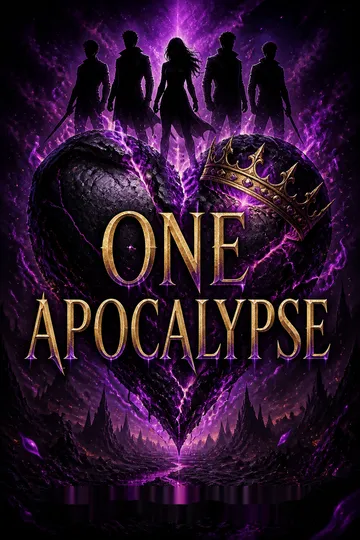
One Apocalypse concludes The Dark Side series with mixed reactions. Many readers praise the humor, action, and character development, particularly enjoying Paca's growth. The reverse harem romance and unique plot are highlights. However, some find the ending unsatisfying, feeling it undoes character progress. Criticisms include repetitive language and occasional immaturity from the protagonist. Despite divided opinions on the finale, most agree the series is entertaining and worth reading for fans of paranormal reverse harem romance.
People Also Read


Characters
Paca
The amnesiac ApocalypsePaca is the Apocalypse reborn without access to the memories that once made her a formidable strategist. She is impulsive, funny, sexually confident, and startlingly perceptive, though she often hides serious decisions beneath jokes and theatrical bravado. Her central drive is to protect the four Horsemen she loves, but she struggles to trust them with the danger she carries. Her power grows through combat, emotional bonds, and a willingness to endure pain, which makes her both resourceful and self-endangering. Paca's irreverence is not mere comic relief; it is a way to keep fear from governing every choice. She wants intimacy and independence at once, and the story tests whether she can accept help without surrendering control.
Gage
The guarded warhorseGage is one of the Four Horsemen, associated with War, and the most visibly controlled of Paca's partners. He watches carefully, thinks tactically, and often recognizes emotional danger before he can persuade the others to act on it. His affection tends to appear as protection, steadiness, and attention to what Paca is not saying. He is disturbed by her willingness to absorb harm, but he also understands that her strength cannot be managed by simply restraining her. Gage's struggle is to balance care with respect for Paca's agency. His calm exterior gives the group an anchor, although the threat to Paca exposes how fiercely fear can unsettle him.
Jude
Death with a pulseJude embodies Death and meets vulnerability with irritation, control, and dry skepticism. He is acutely uncomfortable when events place him in a helpless position, which makes Paca's reckless training and secret plans especially difficult for him to endure. Beneath his abrasive manner, he is observant and deeply protective, but he resists naming feelings that might make him dependent on another person. Paca unsettles him because she treats his hostility as something to engage rather than fear. Their connection develops through friction, concern, and moments when Jude's self-control gives way. He is not naturally demonstrative, and the story makes that reluctance a meaningful obstacle rather than a simple personality quirk.
Kai
Restless famine tacticianKai is one of the Horsemen, associated with Famine, and often uses humor, appetite, and provocation to relieve tension. He is quick to notice jealousy and shifts in the group's emotional balance, even when he disguises his own needs behind a teasing manner. Kai wants closeness with Paca and dislikes being left outside decisions that could endanger her. His playfulness does not make him careless; he can read the tactical logic of an enemy and explain why the Horsemen's individual powers fail against Jahl's servants. He resists helplessness by staying active, whether through battle, affection, or argument. Paca's openness lets him show more tenderness, though he remains competitive for her attention.
Ezekiel
Patient blade of WarEzekiel is a Horseman associated with Conquest, and he often presents himself as analytical and composed. His careful observation makes him sensitive to changes in the group's loyalties, including feelings he has difficulty admitting to himself. He wants to be chosen without having to compete for Paca's attention, yet her other relationships expose his jealousy and insecurity. His affection becomes clearest through actions: he risks retrieving her crown from the tar pit and stays close when she is vulnerable. Ezekiel is both a strategist and a man who can be surprised by his own emotional dependence. His development rests on letting attachment become part of his strength rather than treating it as a distraction.
Lamar
Paca's trusted interpreterLamar serves Paca as a capable attendant, researcher, and unusually candid friend. He translates her old journals, arranges the tournament, and helps her navigate Hell's complicated rules. His loyalty is practical rather than sentimental, although his concern for Paca often shows through his dry manner. Lamar knows more about her former self than she does, making him both a bridge to her past and a source of difficult truths. He is careful around Lucifer's restrictions and must decide what information can safely be shared. His relationship with Manella adds a private bond that complicates his formal role.
Rafael
The reluctant angelic trainerRafael is an archangel who once played a part in Paca's death and now trains her in Purgatory. He values duty, sacrifice, and the preservation of the world, sometimes treating those principles as more important than the person who must carry them out. Paca's methods frustrate him, but her persistence forces him to reckon with the limits of his own judgment. He is proud and often severe, yet capable of honoring a bargain when the stakes are clear. Rafael's relationship with Paca is built on distrust, obligation, and the difficult possibility that an old adversary can become a necessary ally.
Lucifer
The controlling DevilLucifer is Paca's father and the ruler who controls much of Hell's information and movement. He thinks in terms of outcomes, accepting cruelty as a tool if he believes it will preserve his preferred plan. His affection for Paca is tangled with possession and fear of losing her, so he tries to direct her rather than trust her choices. During the tournament, he prevents the Horsemen from intervening and expects Paca to fail. Lucifer is an effective manipulator because he understands what people want, but his certainty about the proper outcome blinds him to the possibility that Paca has designed a plan of her own.
Hera
The ambitious Lust sisterHera is one of Paca's royal siblings and approaches conflict as an opportunity for leverage. She can command a dangerous subterranean tribe and enjoys turning personal rivalries into public contests. Her apparent assistance to Paca is mixed with self-interest, especially when a crown or wager is involved. Hera is perceptive about the Horsemen's weakened unity and knows how to create situations that expose it. Her relationship with Paca shifts between sisterly competition and strategic cooperation, making her useful but never entirely trustworthy.
Lilith
The poisonous Envy sisterLilith embodies Envy and uses that sin as a direct, consuming weapon. She is attentive to status, attention, and the relationships others possess, and she can turn those sensitivities into pressure in battle. Her mist attacks Paca physically, while her confidence rests on knowing that Paca's strength has limits. Lilith is both a rival and a sibling, so their conflict carries a personal familiarity absent from a conventional enemy. She does not need to dominate every situation; she prefers to make another person's attachments feel like vulnerabilities.
Caesar
Pride with a flailCaesar is one of the Gemini Twins and embodies Pride. He fights with a heavy flail and values appearing effortless and superior, which makes Paca's defiance particularly provocative to him. He and Pico combine their powers against opponents, using coordination to magnify their individual strengths. Caesar's confidence can become cruelty when he believes someone has challenged his standing. His rivalry with Paca is sharpened by their shared family history and by his expectation that experience should guarantee victory.
Pico
Greed with a wandPico is Caesar's twin and embodies Greed. His wand channels lightning and other powerful attacks, while his interest in accumulation extends to influence and advantage. He is quick to exploit a weakened opponent and treats battle as a contest to be won decisively. Pico can also provide information when it serves his interests, which makes him an uneasy source of help. His alliance with Caesar is formidable because the twins understand how to combine their abilities, but each retains a distinct personality and pride.
Manella
The time-slowing SlothManella embodies Sloth and can slow time, a power that would make him one of Hell's most dangerous fighters if he chose to use it energetically. Instead, he avoids effort and often ends conflict by refusing to participate. His dry humor conceals a sharp awareness of the political and emotional games around him. Manella is close to Lamar and offers help selectively, guided less by duty than by personal judgment. His apparent indifference should not be mistaken for ignorance.
Cain
The indulgent GluttonyCain embodies Gluttony and approaches both pleasure and battle in excess. He uses shadow magic and feeds on the crowd's attention, allowing spectacle to intensify his strength. His appetite makes him unpredictable, but he understands how to turn a public contest into an advantage. Cain is not deeply interested in Paca's larger plan; his primary concern is the satisfaction of the moment. That makes him dangerous in combat and difficult to motivate through appeals to duty.
Harold
The fallen angel guideHarold is a fallen angel who guides the group toward Jahl's prison and explains the limits of travel through Purgatory. He is wary of Paca and the Horsemen, but years of proximity have made him care about their survival. That attachment conflicts with his wish for redemption and unsettles his sense of where he belongs. Harold is neither fully on Heaven's side nor comfortably aligned with Hell. His guarded advice reflects both genuine concern and uncertainty about whether the coming battle can be won.
Azrael
The questioning Angel of DeathAzrael is the Angel of Death and one of the heavenly figures who observes Paca's training. He questions her reasons and is skeptical of the cruelty she directs at Rafael. His insistence on a clear rationale exposes the gulf between angelic ideas of order and Paca's instinctive, improvisational methods.
Peter
The skeptical angelPeter is an angel who objects to Paca's training methods and resists her request for help. He believes the damned often use persuasive reasoning to recruit others into dangerous plans, so he approaches her with suspicion. His caution provides a counterweight to Rafael's willingness to participate.
Ghost Girl
The unseen watcherGhost Girl is an invisible, disembodied observer who has spent years watching the Horsemen from inside Hell. She is irreverent, lonely, and full of romantic plans, though she has no experience of ordinary human life. Her humor helps her endure being unseen, while her fascination with the Horsemen gives her a reason to imagine a future beyond isolation.
Plot Devices
The old journals
Messages from the former selfPaca's journals preserve memories and plans she can no longer access directly. Lamar translates the difficult passages, while Paca's notes and references to familiar entertainment provide clues to the strategy her earlier self prepared. The journals do not hand her a complete solution. Their riddles force her to interpret the past through her present personality, turning memory into an active investigation. They also reveal that Paca anticipated uncertainty, leaving contingencies for a version of herself who might not remember why they mattered.
Balance and power
Sin becomes battle strengthIn this world, characters' powers are tied to their sins and to a changing balance within them. Paca's force grows as she takes hits, learns how opponents attack, and deepens her bonds with the Horsemen. Her siblings can exploit her fatigue or emotional imbalance, while Jahl's servants resist the Horsemen's individual powers because they have surrendered their will. The system makes psychological state a tactical condition: a character's feelings alter what they can do, and combat can reshape those feelings in turn.
The Black Heart
Trauma disguised as terrainThe Black Heart is a shifting region of Hell built from nightmare landscapes, monsters, and illusions. It forces the Horsemen to confront memories of torture and gives their weapons and powers unpredictable tests. Paca initially remains outside it because the men fear that she will see how vulnerable they become there. The place's horrors also create strange moments of shared humor, as when Jude returns from an encounter with an evil unicorn. It externalizes the Horsemen's trauma while testing whether they can face it together.
The Unity Strike
Four powers become oneThe Unity Strike is a combined attack that the Four Horsemen can summon only when their bond and timing align. Against enemies that multiply when struck, separate attacks worsen the danger. Paca's intervention in Hera's trial pushes the Horsemen to stop fighting independently and act from a shared protective instinct. The resulting strike destroys the multiplying knights and changes their weapons. It later becomes essential against Jahl, though it can damage the enemy only after Paca has weakened it.
The Pure Branch and triggers
A prison with a final costThe Pure Branch is the cage holding Jahl, a force that can corrupt souls and adapt to attacks. The old Paca prepared a main destructive trigger and a secondary failsafe, the latter hidden inside the Horsemen. The secondary trigger cannot safely be used inside the cage, so Paca must weaken Jahl through her own power and the Unity Strike. Her journals, the weakening barrier, and her bargain with Rafael all prepare the final contingency. The device links the story's survival plan to a personal cost involving Paca's memories.
The Dark Side Series


About the Author
Other books by Kristy Cunning


Download PDF
Download EPUB
.epub digital book format is ideal for reading ebooks on phones, tablets, and e-readers.








