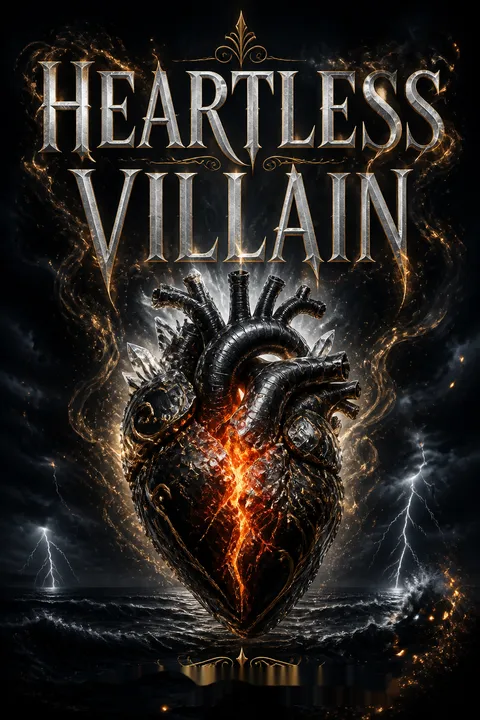


Plot Summary
The Altar Burns
Dahlia lies wounded on a cemetery altar, where the Ripper, a killer tied to her father's cult, has been collecting her blood for a ritual to summon Death. Her four mates reach her as Kai unleashes the dragon trapped inside his magical tattoo and burns the Ripper to ash. Tor carries Dahlia back to Blackwood, but her deep wounds keep reopening.
Caleb Gallagher, a vampire, saves her by sharing his blood, which heals her without turning her into a vampire. Kai returns from the fight exhausted, collapses beside her, and sleeps for three days. When he wakes, the dragon tattoo has vanished, a sign that the beast is no longer imprisoned apart from him.
The opening makes love tangible through urgent acts of care: Tor carries Dahlia, Caleb gives blood, and Kai spends himself to stop her killer. Yet rescue does not erase the danger inside Kai. His dragon has been treated as a threat to contain, and its release saves Dahlia while nearly consuming him. The scene therefore joins the novel's romantic promise to its central psychological problem: survival may require accepting parts of the self that were feared, suppressed, or made monstrous.
Christmas, With a Confession
Dahlia's four mates celebrate Christmas together while Kai recovers. Tor gives her a matching ring, and Hades offers his journal about their former lives. Caspian Hook, the pirate fae, gives her a recording from therapy. On it, he remembers being a prince who broke a clock to avoid a forced marriage, trusting a seer who promised him a fated mate, and later believing his villainous life had made him unworthy of love.
His confession shows how long he has expected rejection, even while longing to belong to someone. Kai proposes enchanted tattoos that will bind all four men to Dahlia, strengthen their ability to find her, and let them share power. The others agree, as does Dahlia.
The holiday scene turns gifts into competing forms of intimacy: Tor offers a shared custom, Hades offers memory, and Caspian risks showing Dahlia the shame beneath his swagger. His recording is not simply proof that he loves her; it reveals how thoroughly he has internalized the story that only heroes deserve happy endings. The proposed tattoos answer that insecurity with a collective promise. Instead of asking Dahlia to trust one rescuer, the men choose a bond that makes protection mutual and visible.
Ink That Binds
Kai tattoos Tor, Caspian, Hades, and finally Dahlia, using a drop of blood from each person to anchor the spell. The design begins as a dahlia and remains open until Dahlia herself completes its last line on Kai's shoulder. The finished magic links the five of them, lets them sense one another, and gives them access to echoes of each other's abilities.
Dahlia also discovers that her mates can hear her thoughts, a sudden intimacy she finds both unsettling and useful. The new bond makes her feel their power directly, while the men gain another way to locate and protect her. Its first consequence is not escape, however: Blackwood's wards still hold them all inside.
The tattoo ritual converts protection from a claim into a practice that requires consent and contribution. Everyone gives blood, and Dahlia completes the spell herself, so the bond is not something merely imposed on her by powerful men. The shared thoughts complicate that promise: closeness can protect, but it can also expose private fears without permission. The scene lets the romance carry a real ethical tension. Intimacy is not automatically safety; the characters will have to decide how to use access to one another responsibly.
A Twin's Borrowed Curse
Tor's twin, Alek, arrives at Blackwood and demands to know why Tor disappeared from Novasgard. Tor first tries to drive him away, even transforming into his beast and provoking a fight. When Alek refuses to leave, Tor reveals that he accepted a curse meant for his brother after Alek's actions brought the Shadow Court's punishment down on him.
Tor chose the curse so Alek could return to his mate and child, then cut off contact rather than risk pulling him into the consequences. Alek wants to find a cure, but Kai explains that none is known. Tor sends his twin home by pretending resentment, because he believes Alek's family needs him more than Tor does.
Tor's cruelty toward Alek is an act of protection that has become indistinguishable from abandonment. He has made a decision for his twin, then concealed the cost so Alek cannot choose to share it. That pattern resembles the way Tor was once defined by a curse: other people decide what his life means, while he tries to preserve their safety through silence. His love is genuine, but his self-sacrifice denies Alek the reciprocal loyalty that has shaped their lives together.
The Underworld's Old Wager
In Briarglen, the angel Gabriel warns Hades that Dahlia is connected to the end of the world and urges him to give her up. Hades refuses, choosing her over the lives Gabriel says are at stake. Later, Dahlia's encounter with a powerful ghost brings Hades to the cemetery, where he explains that she can direct spirits and that her soul was once his Persephone, hidden from him and made to forget through the River Lethe.
He also recalls an old wager with the horsemen of the apocalypse: he put his heart and loyalty at stake. The pieces suggest that Death has a claim on Dahlia's power. Hades tells her enough to reveal the danger, but when she tries to leave, he binds her with shadows and insists they face it together.
Hades's choice is emotionally absolute, but the revelation unsettles the romance by giving his devotion a history Dahlia cannot remember. He sees her as the return of a lost soulmate; she is still a person trying to understand her own identity and freedom. His shadows make that contradiction physical when he stops her from leaving. The novel does not disguise possessiveness as pure tenderness. Instead, it shows how grief can turn love into control, even when both characters believe their bond is real.
A Compass and an Ultimatum
Caspian's mind grows louder with the ticking he associates with a crocodile, and he tries to drown it in drink at a Briarglen pub. Gabriel finds him there and offers a bargain: Caspian can return to Ravenndel, his former home, if he leaves Dahlia behind. The offer touches the homesickness Caspian has buried, but he refuses to trade his mate for a way back.
Gabriel warns that staying may help end the world, and Caspian chooses to remain anyway. Once Gabriel leaves, the ticking returns. Caspian's refusal exposes how much his identity depends on Dahlia's presence, but it also leaves him facing the worsening madness without his old compass, the object he believes can restore his bearings.
Caspian is offered the most seductive alternative to commitment: not a vague promise of safety, but the actual return to a world he misses. His decision matters because it costs him something concrete. Yet the scene also shows the danger in treating Dahlia as his sole cure. His compass and his own fractured memory remain unresolved, so love cannot simply replace the work of recovering himself. His choice is devoted, but it does not magically make him whole.
Nellie's Unfinished Grave
Dahlia tries to help the ghosts in Blackwood's cemetery, only to discover that several want help committing new crimes. She sends them away and meets Nellie, a former servant from Briarglen who was murdered by the duchess after falling in love with the duke. Nellie's body was hidden in a well, leaving her trapped between places.
With Hades and his dog, Cerberus, Dahlia uncovers Nellie's bones and buries them in the servants' graveyard. Hades opens a passage to the underworld and escorts Nellie through it, but Blackwood's wards prevent Dahlia from following. Nellie is finally free of the place where she died, and Dahlia begins to understand that her gift requires discernment, not merely the power to summon the dead.
Nellie's story gives Dahlia a small, concrete model of what responsible power can do. She cannot undo the murder or repair the life Nellie lost, but she can listen, find the remains, and restore dignity to a body treated as disposable. The task also distinguishes grief from guilt. Dahlia is not required to help every spirit simply because she can hear it; she must judge what each one asks of her. That judgment becomes essential when her power later reaches far beyond one ghost.
The Village Takes Up Arms
Rumors about a horned monster in the woods turn Briarglen's fear into an armed plan to attack Blackwood. Tor discovers villagers gathering with guns, silver ammunition, and torches, then meets Gabriel, who offers to lift Tor's curse if he leaves Dahlia and returns to his former life. Tor rejects the offer and races back to warn the others.
On the way, he finds Kiki, Dahlia's human best friend, who has come to rescue her after tracing the supernatural council and its role in Blackwood's confinement. Tor gets Kiki over the perimeter wall. At the same moment, his bond with Dahlia pulls hard, and her urgent call tells him that the danger has reached Blackwood.
Gabriel's offer frames Tor's curse as a mistake to be undone, but Tor's refusal shows that his changed body is no longer separable from the life he has built with Dahlia. The villagers, meanwhile, mistake visible difference for proof of guilt and prepare collective violence. Kiki's arrival introduces another kind of courage: she has no supernatural strength, yet she acts because Dahlia is her person. The scene places chosen loyalty against both institutional secrecy and mob certainty.
Hook Calls the Holdouts
As residents flee Blackwood, Caspian searches the grounds and finds only a small group willing to stay. The pixies agree to help him find the others, drawing them toward the courtyard with their dust. Caspian uses his fae glamour to persuade the gathered residents that Blackwood is their home and worth defending.
The effort reaches beyond his usual limits, and the ticking in his mind grows louder as he compels the group to hold together. The residents take up weapons and prepare for the approaching villagers. Caspian manages to organize a defense, but the strain leaves him bleeding from his nose and ears; he collapses before he can join the fighting.
Caspian's glamour has often been part performance, part manipulation, a way to command attention without risking genuine vulnerability. Here he uses it to give frightened residents a shared reason to stay. The action is morally complicated: he protects them by influencing their choices, and the book makes the physical cost of that influence visible. His collapse also strips away the captain's theatrical certainty. The defense he builds can survive without him only if the people he rallied choose to carry it forward.
The Scream That Stops Them
The villagers breach Blackwood's defenses, and Tor and Kai fight while iron weapons and tranquilizers bring them down. Hades keeps Dahlia behind his shadows, but she sees her mates injured and refuses to remain helpless. She reaches into the graves and raises Blackwood's dead to attack the invaders.
When Tor is struck and falls, terror overwhelms her control; Dahlia unleashes a scream that kills every conscious person in range, including residents as well as attackers. The sudden silence leaves bodies across the grounds and the newly risen dead waiting for her orders. Caspian and Kiki, both unconscious during the scream, survive it. Dahlia has stopped the battle, but the scale of what she has done will be impossible to ignore.
Dahlia's scream is both a defense and a catastrophe. It saves her mates from an army that has overwhelmed them, yet its force makes no moral distinction between aggressor and ally. The power she has spent the novel trying to understand is not inherently benevolent; intention alone cannot contain its consequences. Her moment of agency therefore carries a terrible price. The scene shifts the question from whether Dahlia can act to whether she can remain herself when protection becomes indistinguishable from destruction.
The Mother Was Death
Kiki reaches Dahlia and helps her emerge from the fury controlling the zombies, but an apparently human Dr. Masterson appears and stabs her from behind. Dahlia cannot bring Kiki back, though her power restores some of the people she killed with her scream. The uncontrolled dead turn on everyone still standing.
As Dahlia retreats indoors, a woman who has appeared to guide and comfort her offers a way to stop the fighting, then transports her to a bunker and restrains her. There she reveals herself as Death, Dahlia's mother, and explains that she has manipulated events to awaken Dahlia's full power. She plans to drain Dahlia and the four captive horsemen to open a portal and begin the apocalypse.
The two betrayals strike at Dahlia's most fragile forms of trust. Kiki's death attacks the friendship that connected her to ordinary life, while Death reveals that apparent maternal care was another instrument of control. The revelation reframes the guidance Dahlia received as a strategy designed to make her useful, not safe. Yet Death's plan depends on Dahlia's choices being mistaken for obedience. The distinction matters: being manipulated explains Dahlia's path, but it does not erase her capacity to resist what her mother intends.
Hades Closes the Gate
With the Blackwood wards broken, Gabriel brings Hades, Tor, Kai, and Caspian to Death's bunker. Tor frees Dahlia while Caspian uses Dr. Masterson's stolen skeleton key to open the horsemen's cells. Hades tries to seize Death with his shadows, but they pass through her, so he uses his fire instead.
The blast severs the energy feeding the portal and consumes Death's body, ending the ritual before it can open the way she intended. Gabriel then stops the remaining zombies from attacking. The men survive their wounds, and Dahlia is conscious, though shaken and weakened. Death has been defeated in this encounter, but Hades knows that destroying her body cannot permanently destroy Death itself.
The rescue succeeds because the group does not rely on one version of strength. Tor frees Dahlia, Caspian opens the cells, Gabriel handles the dead, and Hades adapts when his usual power fails. Their cooperation answers the danger introduced by the tattoos: shared power is useful only when the men act in concert rather than compete for control. Death's temporary defeat also resists a neat final victory. The ritual is stopped, but the force behind it remains larger than one body, so survival is a reprieve, not proof that danger has vanished.
The Wards Finally Fall
Back on Blackwood's grounds, residents and villagers discover that the wards have collapsed and that the dead raised for the battle have turned to dust. Gabriel confirms that the living can leave. Dahlia asks Hades to take her to Kiki, and he promises that the underworld will remain accessible to her.
The group begins imagining separate journeys: Kai wants to return to Faerie, Tor must face his family in Novasgard, and Caspian hopes to sail again to Ravenndel now that his compass is recovered. Their immediate future is no longer dictated by Blackwood's walls. Still, Dahlia has to face the loss of Kiki and the knowledge that Death remains a threat beyond the victory they have just won.
The fall of the wards resolves the practical confinement that shaped the residents' lives, but freedom arrives alongside grief rather than after it. Dahlia's first wish is not to celebrate escape; it is to find Kiki. The men's plans also reveal that belonging does not require everyone to abandon their histories. Each can return to a home or obligation while choosing to travel with Dahlia. The ending therefore expands their future without pretending that love, access, or victory can make loss disappear.
Epilogue
In the underworld, Dahlia is reunited with Kiki, who has found a soulmate and is eager to catch her friend up on everything that happened after death. Cerberus has kept her company, and Hades makes good on his promise that Dahlia can visit.
In a separate scene, the horsemen regroup after Death's ritual leaves them weakened. They discover that Lucifer has been freed and receive a summons from Lilith, prompting Grim to decide that revenge is now their priority. Dahlia's family has a future together, but the threat Death set in motion has not ended.
The first epilogue gives grief a form the main plot could not: Kiki is not restored to mortal life, but friendship continues in a place where Dahlia can reach her. The reunion honors the boundary Hades insisted Dahlia respect while refusing to equate death with total disappearance. The second epilogue deliberately breaks that comfort. The horsemen's weakened state and the news that Lucifer is free widen the danger beyond Blackwood and make the victory provisional. Together, the scenes offer emotional closure without promising that the larger world has been repaired.
Analysis
Heartless Villain makes captivity both a physical condition and a psychological inheritance. Blackwood's wards confine supernatural residents, but each central character also carries an internal prison: Kai separates himself from his dragon, Tor hides his curse and grief, Caspian treats his villainous past as proof he cannot be loved, and Hades mistakes the fear of loss for a right to control. Dahlia's arrival connects these private divisions. Her necromancy gives the group a practical means of survival, yet her final scream demonstrates that power cannot be made harmless by good intentions.
The novel's romance is deliberately collective. The four men do not merely compete for Dahlia's affection; their tattoos bind them to one another, forcing intimacy among people with sharply different histories and defenses. That bond offers strength, but it also creates questions about privacy and possession. Dahlia's ability to think to her mates, Hades's use of shadows to restrain her, and the men's repeated insistence on protecting her show how care can become coercive when fear replaces trust. Their growth depends on learning to accompany Dahlia's choices rather than make those choices for her.
The plot's most consequential betrayals concern institutions and family. Blackwood's therapeutic language conceals a prison; the doctor Dahlia trusts is not who she believes; and the figure who presents herself as her mother is Death, intent on using her. Against those deceptions, Kiki's friendship offers a comparatively plain kind of loyalty: she listens, argues, arrives, and takes risks without needing supernatural power. Her loss makes the victory costly, and the underworld reunion grants comfort without undoing death.
The ending keeps its promises modest. The wards fall, the couples can choose where to go, and Dahlia can visit Kiki, but Death is not permanently destroyed and the horsemen's final scene signals further upheaval. The book's emotional resolution is therefore not a world made safe. It is a group of people who have seen what their powers and fears can do, choosing to face the next danger together.
Review Summary
Heartless Villain receives mostly positive reviews, with readers praising the spicy content, engaging characters, and satisfying conclusion to the series. Many enjoy the full-cast audiobook narration, finding it enhances the experience. Some criticize the rushed ending and underdeveloped plot. Readers appreciate the humor, crossover references, and character development. While opinions on individual characters vary, most find the overall series entertaining. Some express disappointment in having to wait until 2025 for the next installment.
People Also Read
Characters
Dahlia Moore
The death-touched writerDahlia is a romance writer whose humor helps her manage a childhood shaped by cult abuse and isolation. She arrives at Blackwood believing herself human, then discovers that her connection to spirits and the dead is far more powerful than she understood. Her four mates offer protection, but she is not simply the object of their devotion: she makes decisions, challenges their control, and tries to define what kind of person her power will make her. Kiki is her closest friend and link to life outside Blackwood. Dahlia's central struggle is to claim agency without confusing strength with the ability to control every consequence.
Malakai Nash
The imprisoned dragonKai is a fae dragon shifter whose magical tattoo once kept his dragon separate from him. He is a skilled tattoo artist, a devoted mate to Dahlia, and a protective man whose instinct to act can outrun his judgment. His years of treating the dragon as a dangerous other leave him divided, even though his power is immense. Kai's care often appears through practical gestures, from tending to Dahlia to making a personal space for her in his tower. His challenge is to accept strength without letting the need to protect become another form of confinement.
Tor Nordson
The cursed warriorTor is a Novasgardian demigod and Berserker whose immense physical power is matched by a fierce need to keep others safe. The curse that changed him has made his rage difficult to manage, so he relies on discipline, hunting, and Dahlia's grounding presence. He is protective without being emotionally fluent; when he believes sacrifice will spare someone he loves, he tends to decide for them and hide the cost. His relationships with Dahlia, his twin Alek, and the other men reveal a softer loyalty beneath the violence. Tor's challenge is learning that love can require trust and honesty, not only endurance.
Caspian Hook
The restless fae captainCaspian is a high-born fae who lives as a pirate, using wit, spectacle, and glamour to command a room. Beneath the showmanship, he carries a deep fear that his history as a villain has made him unworthy of the love fate promised him. His mind is troubled by ticking and intrusive whispers, and he clings to the idea of a compass as a path back to himself. Dahlia's warmth draws out the prince he once expected to be, while his loyalty gives him a reason to risk vulnerability. Caspian is most compelling when his theatrical bravado cannot conceal how much he wants to belong.
Hades
The possessive underworld godHades rules the underworld and loves Dahlia with the force of someone who believes he has lost her before. His power over shadows, fire, and spirits makes him difficult to challenge, while his dry humor and care for his dog expose a tenderness he rarely offers freely. He sees Dahlia through the history of a soul they shared, but her present identity matters as much as that past. His instinct is to keep her close, sometimes crossing from devotion into control. Hades must face the difference between guarding a bond and owning the person at its center.
Kiki
Dahlia's fearless best friendKiki is Dahlia's human best friend, editor, and most persistent connection to the outside world. She is funny, outspoken, and unusually resourceful, using her knowledge of publicity and her network of contacts to challenge the supernatural system that has trapped Dahlia. Her loyalty is active rather than sentimental: she asks hard questions, calls Dahlia out when she withdraws, and is willing to cross continents to help. Kiki's confidence can disguise how much she fears being excluded or considered less capable because she is human. She gives Dahlia a model of friendship built on mutual choice, frankness, and showing up.
Death
The quiet horsewomanDeath is one of the horsemen of the apocalypse, associated with patience, concealment, and influence exercised from behind the scenes. Unlike a loud conqueror, she works through disguises, carefully placed opportunities, and other people's assumptions. Her power is immense, but she depends on manipulation to make events unfold in ways that serve her. She treats relationships as instruments and believes that power gives her the right to direct other lives. Death's presence unsettles the distinction between maternal care and possession, making trust itself part of the danger.
Dr. Elizabeth Masterson
Blackwood's observant doctorDr. Masterson oversees therapy and treatment at Blackwood, documenting the residents' abilities and the risks attached to them. Her session transcripts provide a clinical lens on characters who are more accustomed to being feared or restrained than understood. She approaches each resident as a person with a history, while also recognizing how their powers could affect Blackwood and the wider world. Her careful observations make her a pivotal figure in the institution, where care and control are never entirely separate.
Gabriel
The reluctant divine messengerGabriel is an angelic messenger who warns Dahlia's mates that their bond may have consequences beyond Blackwood. He is direct, impatient with their refusal to put the world before their relationships, and burdened by earlier choices that cost him dearly. Though he approaches them with warnings and offers, he cannot simply override their free will. His role complicates the familiar division between hero and villain: Gabriel may be trying to prevent catastrophe, but his arguments ask others to surrender what they value most.
Alek
Tor's stubborn twinAlek is Tor's identical twin, a Novasgardian warrior, and a devoted partner and father. He is stubborn, quick to anger, and unwilling to accept silence from someone he loves. His attachment to Tor is rooted in a lifetime of facing danger side by side, so exclusion hurts him more than physical conflict. Alek's presence exposes the cost of Tor's habit of making protective choices on his behalf. He represents the family life Tor longs to preserve even while trying to keep it at a distance.
Nellie Brown
The stranded servant ghostNellie is a former servant from Briarglen whose long confinement as a ghost comes from an unresolved death. Warm and patient despite centuries of isolation, she tells Dahlia the story of the life and love she lost. Her need is specific: to have her remains found and laid to rest. Nellie's presence helps Dahlia see that the dead are individuals with distinct histories, not simply a mass of power.
Cerberus, called Asshole
Hades's blunt familiarCerberus is Hades's loyal familiar, most often appearing as a tiny white dog with a sharp tongue and an appetite for attention. He moves between the underworld and the living world, offering comic commentary while remaining deeply protective of Hades and Dahlia. His small form contrasts with his formidable nature, and his loyalty is shown through action as much as banter. Cerberus also provides a bridge between realms, helping the living and the dead find their way to one another.
Sorcha Blackthorne
The guarded vampireSorcha is a vampire resident of Blackwood, composed and sharp-tongued even when danger threatens. She distrusts easy assurances and reads social situations with a survivor's caution. Her family ties outside Blackwood are strained, leaving her wary of expecting rescue. In a crisis, her strength and command of her vampire gifts make her a formidable defender. Sorcha's guarded manner protects her from disappointment, though it can also keep others from seeing how much she wants a place to belong.
Caleb Gallagher
The vampire healerCaleb is a vampire and former priest who uses his blood to heal Dahlia when she is close to dying. His calm competence contrasts with the panic surrounding her injuries, and he accepts the cost of helping despite the strain it places on him. His partnership with Sunday and willingness to aid Dahlia's mates establish him as an ally beyond Blackwood's walls.
Plot Devices
The session recordings
Clinical notes become cluesDr. Masterson's recordings document residents' powers, histories, and treatment plans, supplying information that the characters themselves do not yet possess. They reveal how Kai's dragon has been contained, what Tor's rage requires, and how Caspian understands his past. Later recordings also let people outside Blackwood piece together that the doctor is manipulating events. The transcripts create dramatic irony: a professional record meant to analyze the residents becomes evidence that they are being used. Spoiler content: the recordings help expose a hidden conspiracy.
Enchanted tattoos
Power becomes a shared bondKai's magical tattoo first acts as a prison for his dragon. When Kai accepts the beast, the tattoo disappears. He later uses blood magic to mark himself, Dahlia, Tor, Caspian, and Hades with a shared bond that helps them sense one another and exchange echoes of their abilities. The marks also connect the romance to the danger of Blackwood: the men can feel when Dahlia needs them, but the new intimacy exposes her thoughts as well. A separate protective spell on Dahlia's tattoo can be broken, removing a barrier to pregnancy.
Blackwood's wards
A sanctuary becomes a prisonBlackwood's magical wards keep residents from leaving and conceal the institution from much of the outside world. The supernatural council presents the place as a means of containment, while the characters discover that it also hides their existence from anyone who might intervene. Dahlia's friend Kiki works to alert powerful people beyond the grounds, and the wards eventually fail during the crisis. Their fall changes the story's scale: residents can leave, but the outside world can also reach them.
Caspian's compass
A lost self seeks directionCaspian's missing compass represents more than a navigational tool. He associates it with the life and identity he had before becoming Captain Hook, and he searches for it while the ticking and whispers worsen. Recovering it from Dr. Masterson's body helps restore his sense of himself at a moment when Dahlia and Blackwood are in danger. The compass gives the pirate a concrete object around which to organize a fractured memory, though it cannot by itself resolve every source of his distress. Spoiler content: its recovery occurs during the battle's aftermath.
Dahlia's necromancy
The dead answer her callDahlia can sense, summon, and command spirits, but the story distinguishes careful contact from mass use of power. Helping Nellie requires uncovering her remains and respecting her wish to move on. In battle, Dahlia raises the dead as fighters, then loses control when fear for her mates drives her to unleash a scream that kills the conscious people around her. She can restore some of those she killed herself, but not people who died by another's hand. Her gift can protect and destroy, and its consequences depend on judgment, control, and the limits of what she can undo.
The Mate Games: Death Series

About the Author

Download PDF
Download EPUB
.epub digital book format is ideal for reading ebooks on phones, tablets, and e-readers.








