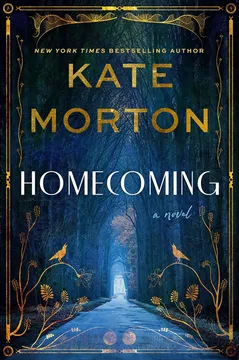


Plot Summary
Prologue
On New Year’s Day 1959, Isabel Turner, an English mother isolated on an Australian estate, struggles with a parcel she has ordered, an unsettled marriage, and a desire to reclaim space for herself. The stranger who approaches is Percy Summers, a local shopkeeper and devoted reader; their shared love of books will draw them close.
The story then moves back to Christmas Eve, when Percy finds Isabel and her three older children dead beneath a willow. The baby is missing. His discovery begins a mystery that will burden two families for decades.
The prologue places domestic unease beside a public catastrophe, making the tragedy feel both intimate and immediately unknowable. Isabel’s parcel promises a private kind of freedom, while Percy’s arrival links her isolation to the town around her. The abrupt shift to the bodies gives the reader an answer to the question of what happened, but not why or how. That imbalance becomes the book’s engine: every later account tries to make a still scene legible, and every account is shaped by grief, loyalty, or incomplete knowledge.
A Call From Sydney
In London, Jessica Turner-Bridges is waiting to hear whether a magazine will buy her latest idea. Her freelance work has thinned, her relationship with Matt has ended, and she is hiding both troubles from her formidable grandmother, Nora.
Instead of the editor’s promised call, a hospital worker reports that Nora has fallen, struck her head, and broken her wrist. Jess learns that Nora is confused and that her age makes delay risky. She books a one-way flight to Sydney, leaving an awards event and her carefully managed London life behind.
The trip also offers a commission: an essay about returning home. Jess expects to write about a familiar place. She does not yet know that Nora’s injury will expose a family history she has never been told.
Jess’s return begins as an act of care, but the emergency also strips away the self-sufficiency she has used to conceal professional and emotional instability. She is reluctant to admit need to Nora, even as Nora’s frailty now demands her attention. The proposed essay about home gives her a practical reason to travel, but its neat framing is already at odds with her life: Jess is not certain where she belongs, or which relationships can still be trusted. The novel makes this uncertainty concrete through a flight booked before she knows whether she can afford the return.
Nora Calls Her Issy
At Darling House, Jess finds the rooms prepared for Nora’s return, but no grandmother waiting on the steps. She remembers being left there as a child when her mother, Polly, moved north, and the comfort Nora gave her.
At the hospital, doctors move Nora into intensive care after a heart rhythm episode and warn Jess that her condition is serious. When Nora wakes briefly, she mistakes Jess for someone named Issy, speaks of a baby, and fears a man will take the child. Later she mutters the name Halcyon.
Jess recognizes neither reference, but Patrick, Nora’s carer, confirms that she had recently revisited memories of her brother and become disturbed by a solicitor’s letter from South Australia. Jess decides the confusion has a cause she can uncover.
Nora’s disorientation turns caregiving into an interpretive problem. Jess has spent years trusting Nora’s certainty, yet now must decide whether to dismiss her words as injury or treat them as evidence. The name Issy and the fear of losing a baby reach beyond ordinary family recollection, hinting at a past in which protection and possession may have become difficult to distinguish. Jess’s journalist’s habit of pursuing unanswered questions shifts into a more personal form: she is no longer investigating strangers, but searching for the history that shaped the woman who raised her.
The Family in the Headlines
Unable to sleep, Jess searches for Halcyon and Thomas Turner, Nora’s brother. An archived article identifies Halcyon as a house in South Australia and recounts the Christmas Eve deaths of Thomas’s wife, Isabel, and their three older children.
Their infant daughter, Thea, vanished from the picnic site; a coroner later called the deaths a murder-suicide and accepted that dingoes had carried off the baby. Jess recognizes Nora’s family in an old photograph and realizes her grandmother has concealed a national scandal.
She orders Daniel Miller’s out-of-print book about the case, then discovers Nora had been reading the same copy. The book’s presence in Nora’s bedroom makes the old tragedy more than a curiosity: it may explain her recent fear and the letter from a South Australian lawyer.
The archive gives Jess a public version of events before she has access to private memory. Its confidence is seductive: a coroner, a journalist, and repeated newspaper accounts appear to have settled the case. Yet the missing infant and the unexplained poison leave gaps even inside the official story. Jess’s discovery also complicates her inherited identity. The family name she has used as a source of pride is attached to an event Nora judged too painful to share. Research becomes a way to recover history, but it also risks repeating the original harm by turning bereavement into a compelling narrative.
Nora’s Halcyon Summer
Jess finds Daniel Miller’s book hidden in Nora’s pillow and learns from housekeeper Mrs. Robinson that Nora had been close to Isabel. Nora was at Halcyon when the family died, heavily pregnant and already anxious about her own marriage.
Miller’s newly discovered notes show how he earned Nora’s confidence after losing his younger brother to suicide. He recorded her grief, her insistence that Isabel could not have killed her children, and her account of seeing Isabel lower a cushion toward baby Thea.
Nora eventually gave him Isabel’s journal, though some pages were missing. Jess also learns that Nora had recently received a solicitor’s letter about Thea. Before Jess can ask her grandmother what the renewed contact means, Nora dies in hospital.
Miller’s private notes expose a crucial problem of testimony: closeness can provide insight, but it can also bind a witness to the person she wants to defend. Nora’s account of Isabel’s alleged behavior becomes the investigative hinge, yet it is filtered through the shock of loss and the intimacy of their friendship. Miller himself is not a neutral instrument; his own bereavement makes him receptive to Nora’s pain. The section asks readers to distinguish emotional truth from factual certainty, while Nora’s death denies Jess the one source who might have explained why the past had suddenly returned.
Isabel’s Last Christmas
Miller’s account reconstructs the Turner household before the deaths. Isabel, orphaned young and shaped by wartime service, runs Halcyon’s household while Thomas travels abroad and the children squabble over Christmas plans.
Her sister-in-law Nora has come to stay, longing for the family life she has struggled to build. Isabel’s closest confidences, however, are not with her husband. She has fallen in love with Percy Summers, whose reading and private understanding offer a refuge from her isolation.
Isabel has consulted an Adelaide solicitor about passports and intends to take her children back to England. She does not tell Thomas or the children. Her journal describes a future, not a planned suicide, but the family’s last morning is already full of strain and concealed decisions.
Isabel’s plan recasts the familiar stereotype of the unhappy wife as a woman pursuing an exit rather than an ending. Her desire to return to England is not simple nostalgia: she wants to escape a marriage and a landscape in which she feels emotionally stranded, while remaining responsible for her children. The novel also exposes how a woman’s private distress is easily misread when outsiders see only a beautiful house, a capable mother, and material comfort. Isabel’s journal supplies evidence of intention, but its pages are incomplete, reminding us that personal records can be edited by their keepers as well as their authors.
The Willow Picnic
On Christmas Eve, Isabel insists that her children spend the day together at the creek, despite Matilda’s illness and John’s plans elsewhere. Matilda is anxious about a possible pregnancy and has arranged to meet Kurt Summers, while John borrows a camera to make something that might persuade his father to stay.
Ten-year-old Evie secretly visits the hermit Merlin Stamp’s shed and takes a specimen for Matilda. Nora remains at the house, exhausted by pregnancy.
Isabel prepares sandwiches, cake, and sweetened iced tea; local shopkeeper Meg Summers adds fish paste and other gifts to the family’s provisions. The family eats and swims beneath the willow. By late afternoon, Percy finds the older Turners dead, while Thea is gone from her hanging crib.
The picnic gathers separate private pressures into one ordinary family ritual. Each child carries a different wish: Matilda wants control over her future, John wants to preserve his family, and Evie pursues knowledge beyond adult supervision. Isabel’s insistence on togetherness can look like care or coercion, depending on what the reader knows. Food becomes the scene’s most consequential object, because it passes through several hands before anyone understands its significance. The missing baby fractures the apparent completeness of the tragedy and gives the investigation a second question: not only who caused the deaths, but what happened to the child left behind.
A Verdict Built on Grief
Sergeant Peter Duke finds no wound or obvious weapon, and the medical examiner cannot identify the poison. Police discover rat-bait bottles at Halcyon, sleeping tablets supplied by farm manager Henrik Drumming, and a plant sample from Merlin Stamp’s shed.
A rumor-filled town supplies other leads: Matilda may be pregnant, Becky Baker has a missing netsuke, and Thomas has a London acquaintance. Tests rule out Matilda’s pregnancy, while Becky says Isabel gave her the carving. Nora initially defends Isabel, then tells police she saw her threaten baby Thea with a cushion.
A priest recalls Isabel asking whether a mother could leave her children permanently. With evidence of insomnia and postpartum distress, the inquest treats Isabel as responsible, although the poison remains unidentified and the finding is never fully resolved.
The investigation shows how institutions convert uncertainty into a story that can be acted upon. Each clue is ambiguous, but the claim about the cushion gives police a psychologically legible motive and makes the other evidence seem to fit. The town’s gossip then hardens suspicion into communal knowledge. Isabel’s isolation and mental distress are treated as explanatory facts, while her plans to leave and the possibility of an unknown toxin remain less visible. The unresolved inquest matters: the official account gains authority without achieving scientific certainty, creating the space in which private guilt and later discoveries can challenge the verdict.
A Secret Between Mothers
After Nora’s death, Polly flies from Brisbane to attend the funeral and finds Jess has already organized it. She brings another copy of Miller’s book, admitting that Nora told her about Halcyon when Polly was pregnant.
As a teenager and young woman, Polly had loved Jonathan James, an American literature scholar; Nora’s warning that the Turner scandal could destroy his prominent family helped persuade Polly to end the engagement. When Polly later became pregnant, Nora concealed the father’s identity and insisted Polly tell the child she did not know it.
Polly once sought out Nora’s former husband, Richard Bridges, but a DNA test proved he was not her father. Jess, grieving and shocked that both women knew the family secret, lashes out at Polly for abandoning them. Their strained relationship now carries a second silence, one Polly is trying to break.
Polly’s history reveals that Nora’s protection often arrived as control over information. She frames concealment as care, but her decisions shape Polly’s romantic life, motherhood, and sense of identity. Polly’s silence is not merely passivity; it is also the learned response of someone who has been repeatedly told that her fears are evidence of weakness. Jess, meanwhile, experiences withheld history as a renewed abandonment. The conflict is not solved by discovering who behaved badly. It requires both women to recognize how love can become restrictive when one person claims authority over what another is allowed to know.
Marcus Reopens the Case
A letter from Adelaide solicitor Marcus Summers, found among Nora’s papers, asks her to discuss Thea Turner. Jess contacts Marcus and travels to meet him. He explains that his father, Percy, found the baby still alive in her crib after the family died.
Marcus himself arrived soon afterward, carried Thea home in his delivery sling, and told his mother, Meg, what he had seen. Meg tried to alert police, but the station was overwhelmed.
Percy, fearing that Meg would be suspected because she had taken the baby from the scene, eventually carried Thea back to Halcyon and left her in the rose garden, expecting Nora to find her. The infant vanished before he could see who took her. In 1979, remains found in that garden were assumed to be Thea’s, and Percy blamed himself for decades.
Marcus’s correction transforms the missing baby from a presumed victim of wild dogs into the center of a chain of mistaken, compassionate interventions. Percy acts to return a child, Meg acts to protect her, and Marcus acts before he understands the danger of his own involvement. Every choice is morally motivated, yet each creates new concealment. The story resists a clean division between rescue and wrongdoing: returning Thea to a place where she can be found is both an attempt to repair harm and a risk that leaves her fate unresolved. The mistaken identification of the remains shows how an assumption can become accepted history.
Polly’s First Mother
Nancy Davis, Miller’s niece, sends Polly a cassette he preserved for her. In the recording, made in 1979, Nora explains that her own premature baby, whom she named Polly, died shortly after birth. Days later, Nora found Thea alive among the roses, fed her, and decided to raise her as her own.
She buried her newborn in the rose garden and never reported the substitution. Nora believed she was protecting Thea from the shame attached to Isabel’s supposed crime, and herself from another devastating loss.
She also admits that she kept Thea from Thomas. The discovery explains why Nora became so fiercely protective of Polly, but it devastates both daughter and granddaughter: the family bond they trusted was built on an identity Nora chose for them.
The revelation does not erase Nora’s love; it changes the conditions under which that love was formed. She gives a surviving child a home, but does so by burying the death of her own infant and suppressing the child’s origin. Her account casts the act as rescue, yet the language of possession runs beneath it: Nora decides who the baby is and what history she may inherit. Jess must grieve not only Nora, but the grandmother she thought she knew. Polly’s discovery is more intimate still, because her earliest identity was assigned by the person who raised her.
The Case Behind the Bookcase
At the reading of Nora’s will, solicitor Leo Friedman reveals a private instruction: Jess must destroy a traveling case hidden behind a bookcase in the attic, without opening it. Jess searches the secret storeroom and finds the case marked with the name of Isabel’s French mother.
She ignores the instruction because the case belongs to Polly’s birth family and Nora has kept too much from them already. Inside are keepsakes from the Turner children, including Evie’s nature notebook, Matilda’s saxophone, John’s cricket ball, a knitted baby jacket, Isabel’s netsukes, and her shattered teacup.
The objects make the dead family tangible rather than infamous. At the bottom, Jess finds Isabel’s journal, along with the missing pages that Nora had concealed from Miller.
The hidden room literalizes the novel’s central dispute over who has the right to preserve, edit, or destroy the past. Nora’s instruction is an extension of her long practice of protecting loved ones by limiting what they can know. Jess breaks that boundary, not from simple curiosity, but because the case holds another person’s inheritance. The keepsakes complicate the crime narrative by restoring individual lives to people reduced to a headline. The journal’s recovery turns private sentiment into evidence, while the destroyed-looking teacup and carefully saved objects show that memory can survive in forms both fragile and deliberately curated.
Isabel’s Pages Reappear
The journal’s loose pages reveal that Isabel was having an affair with a married man and planned to take her children back to England. She had consulted a solicitor about passports and had decided to leave, rather than die.
Another entry explains why she gave Becky Baker the precious netsuke rabbit: Becky adored baby Thea and would grieve the family. Jess realizes Nora removed the pages before lending the journal to Miller, hiding Isabel’s affair and escape plan. She also suspects Nora’s later claim about the cushion may have helped redirect suspicion from whoever truly caused the deaths.
The evidence does not identify the poison or prove an alternative account, but it makes the official verdict look far less secure. Isabel’s own handwriting returns her agency to a story told largely by others.
The pages expose a second kind of crime: not necessarily the act that killed the family, but the shaping of the story that followed. Nora edits Isabel’s record to preserve a loving image, while the police use selective evidence to produce a coherent suspect. Isabel’s plan to leave complicates, but does not automatically disprove, the possibility of mental illness or violence. The text asks readers to hold competing possibilities without treating uncertainty as permission to invent certainty. Jess’s work becomes ethical as well as investigative: she wants to restore Isabel’s complexity, not simply replace one definitive accusation with another.
The Wren Finds Polly
In 1989, Polly wanders onto Halcyon’s grounds and meets Kurt Summers, Matilda’s former sweetheart, who still tends the neglected property. He invites her to dinner with his family and his elderly father, Percy. Percy recognizes her as the baby he once carried back to the rose garden.
Polly wears a small wooden wren she found near the creek; Percy identifies it as the gift he bought for Isabel before the tragedy, and its return confirms what he has long suspected. Years later, Percy learns from Marcus that Meg took a poisoned fish from their son, who had considered using it against Isabel. Meg had prepared it as a gift for Isabel. The clues strongly suggest a poison hidden in food, but no forensic proof ever settles the case.
Recognition arrives through an object rather than a confession. The wren links Polly to the landscape of her first days and to Percy’s private grief, giving him emotional evidence where official records failed. Yet the final poisoning theory remains an inference, not a courtroom solution. Meg’s possible act emerges from a tangle of jealousy, maternal loyalty, and a son’s dangerous impulse, while Percy’s own affair complicates his moral position. The novel refuses the comfort of a fully closed case: what matters is not only naming a culprit, but seeing how love, shame, and silence helped a false account endure.
A Shared Walk Home
In 2018, Polly tells Jess about her earlier visit to Tambilla, where she met Percy and found the wren, and finally explains that Jonathan James, not Richard Bridges, was Jess’s father. She also admits that after Jess was born, Nora once stopped her from harming the baby during a period of postpartum psychosis, a crisis Polly had later forgotten.
Jess understands that Nora’s protection saved her, but also shaped the story each woman was permitted to tell about herself. At Halcyon on Christmas Eve, Polly and Jess walk through the abandoned house and toward the creek. Jess recalls the crabs on the beach and recognizes that Polly, not Nora, rescued her. She accepts her mother’s presence and agrees to walk on with her.
The ending does not restore a simple family identity. Jess is not biologically a Turner, Polly has lived under a false account of her own birth, and Nora’s care carries both genuine devotion and serious harm. What changes is the women’s willingness to share memory rather than let one person control it. Jess’s recovered recollection of Polly’s rescue is small in scale but decisive: it gives her mother a place in the past that Nora’s version had occupied. Their walk at Halcyon does not resolve every question about the deaths, but it begins a relationship based on mutual presence rather than inherited certainty.
Epilogue
In the novel’s embedded 1960 epilogue, Sergeant Peter Duke returns to the now-empty Halcyon. He sees Henrik Drumming tending the grounds and watches visitors treat the house as a macabre attraction.
Duke does not correct them when they ask whether he knew the family. He leaves wondering whether the poison will ever be identified and whether baby Thea’s remains will ever be found, unaware that the child’s story has already taken a different path.
The epilogue preserves the case’s incompleteness before the later discoveries complicate it further. Duke’s silence toward the visitors contrasts with the appetite for a simple, consumable tragedy: he knows the family as people, but cannot give them back their lives or supply the public with a finished answer. His questions about poison and the missing baby also become structural promises to the reader. The scene shows how official investigation can end without knowledge, while the landscape continues to hold traces that families and reporters will interpret differently.
Analysis
Homecoming treats the past not as a fixed record waiting to be uncovered, but as a contested family possession. Jess begins by assuming that better research will produce a stable truth. Instead, every source carries an agenda or a wound: the coroner needs a workable conclusion, Daniel Miller turns interviews into a compelling narrative, Nora protects a version of Isabel and hides her own decisions, and Percy spends decades mistaking his failed rescue for a death he caused. The novel’s central mystery is therefore not only who poisoned the Turners, but how private motives become public history.
The characters repeatedly confuse protection with control. Nora gives Thea a home and a future, but takes the child’s name and origins from her. She shields Polly from a frightening family story, then shapes Polly’s choices through that silence. Polly leaves Nora to become a mother on her own terms, but her fear of repeating past harm deepens the distance from Jess. Jess, raised on Nora’s confidence, must learn that love does not guarantee accuracy and that a family’s most reliable storyteller may still be wrong. Their eventual movement toward one another depends less on finding a perfect account than on allowing each person to speak from her own memory.
The novel also questions the authority of literary truth. Miller’s vivid reconstructions invite readers to feel they know the dead, but his intimacy can blur the line between documented fact and imagined interiority. Jess’s journalism faces the same ethical challenge: to make Isabel human without replacing one unsupported certainty with another. The probable role of poisoned food remains an inference, not a solved forensic fact. That open edge is deliberate. The book suggests that responsible remembrance requires preserving uncertainty where evidence fails, while correcting the stories that have turned vulnerable people into symbols. Home is finally less a fixed place than a relationship in which difficult truths can be shared without being used to possess one another.
Review Summary
Reviews for Homecoming are largely positive, with an overall rating of 4.05/5. Fans praise Kate Morton's lush, atmospheric prose, masterful dual-timeline storytelling, and richly developed characters. The Australian setting is frequently highlighted as vivid and immersive. Critics note the book's considerable length (540+ pages) can make pacing uneven, with many finding the first half slow before a more gripping conclusion. The "book-within-a-book" device divides readers — some find it clever, others consider it lazy. Most agree it suits dedicated fans of multigenerational family sagas with mystery elements.
People Also Read







Characters
Jess Turner-Bridges
The returning investigatorJess is a London-based journalist raised in Sydney by her formidable grandmother, Nora. Curious to the point of fixation, she trusts research because it gives uncertainty a shape, and she has built a life around asking questions of other people while concealing her own setbacks. Her return to Darling House brings together professional curiosity, grief, and a long, unresolved distance from her mother, Polly. Jess is drawn to houses, archives, and the stories objects retain, but she must learn that a record can be partial and that family knowledge is not owned by its most confident teller. Her investigative instincts become most useful when she allows evidence to unsettle her loyalties rather than merely confirm them.
Nora Turner-Bridges
The commanding grandmotherNora is a successful businesswoman, house restorer, and fiercely devoted mother whose certainty has long steadied the people around her. Having lost much of her family early, she places enormous value on creating a secure home and protecting the people she loves. Her generosity is active and practical: she offers work, mentorship, shelter, and attention. Yet her confidence can become a form of authority over other people’s choices, especially when fear or shame enters the family. Nora’s attachment to Darling House and its gardens reflects her belief that places carry memory and that care can repair what has been damaged. She is loving, proud, and difficult to contradict.
Polly Turner-Bridges
The overlooked daughterPolly is Nora’s daughter and Jess’s mother, a quiet, observant woman who has spent much of her life feeling less certain and capable than the people around her. She notices small beauties in nature and art, but anxiety can make decisions feel dangerous and ordinary responsibilities feel like tests she may fail. Nora’s constant help both sustains and diminishes her, leaving Polly to seek distance before she can develop a life with her own shape. She is not indifferent to Jess; she is a mother who has struggled to trust her own steadiness. Her hesitations often conceal deep feeling, and her wish to tell the truth grows alongside her wish to be forgiven.
Isabel Turner
The English outsiderIsabel is an intelligent, disciplined Englishwoman who has lived through orphanhood, boarding school, wartime service, and migration to Australia. She values routine because it gives order to a life repeatedly disrupted by loss, yet she also has a restless, adventurous streak and an appetite for intellectual companionship. As a mother, she works to give her children a lively home, but she feels isolated in a landscape and culture that remain partly foreign to her. Her journals show a private self more conflicted than the polished figure neighbors observe. Isabel’s story asks how much of a woman’s inner life can be inferred from her public competence.
Percy Summers
The book-loving witnessPercy is a country shopkeeper, husband, father, horseman, and lifelong reader whose early illness introduced him to books as a way of traveling beyond his physical limits. He is patient and observant, with a strong sense of duty shaped by family expectations and a life spent in a close-knit town. His affection for the Hills is matched by a private longing for places he has only encountered in literature. Percy tends to act carefully and then carry the consequences inward, often choosing silence to protect his family. His relationship with Isabel grows from shared reading and mutual recognition, revealing a side of him that routine and responsibility have kept quiet.
Meg Summers
Tambilla’s generous shopkeeperMeg is Percy’s wife and co-owner of the town grocery, a capable, warm-hearted woman known for feeding, advising, and helping others. Her own childhood hardship has made her protective of home and suspicious of risks that might fracture family life. She is an instinctive caretaker, especially with children, and her kindness is not merely sentimental: she notices who is hungry, lonely, or in need of practical support. Meg’s hospitality can make her seem uncomplicated, but the novel shows how a person devoted to others may also carry intense private longing and resentment. Her identity is bound to both her family and the wider community she mothers.
Thomas Turner
The restless patriarchThomas is Isabel’s husband and Nora’s adored older brother, a charismatic Australian who thrives on new plans, travel, and the admiration of others. His wartime courage and entrepreneurial energy make him easy to like, but he is often absorbed by the next ambition and inattentive to the emotional costs borne by his family. He loves grand gestures and large dreams, including the purchase of Halcyon, yet his charm can obscure the distance between intention and responsibility. Thomas is a figure remembered differently by his sister, his wife, and the townspeople, making him a useful measure of how affection edits memory.
Daniel Miller
The immersive reporterDaniel Miller is an American journalist whose reporting on the Turner deaths becomes a bestselling nonfiction book. He prefers listening closely and reconstructing the emotional texture of a life rather than presenting only official statements. His personal grief gives him unusual empathy with Nora, but it also complicates his distance from his subjects. Miller believes a reporter can use literary techniques to bring people nearer to the truth, while his notebooks reveal the risks of that ambition. He is both a careful investigator and a storyteller whose choices shape what later generations believe about Halcyon.
Marcus Summers
The lawyer seeking balanceMarcus is Meg and Percy’s younger son, a sensitive, impulsive boy who grows into a lawyer committed to justice and practical advocacy. As a child, he feels displaced when his older brother’s attention shifts toward Matilda Turner, and his strong sense of fairness can harden into anger. He is drawn to causes where people lack power, in part because he knows how long guilt can follow a person who has acted without understanding the consequences. His adult work reflects both idealism and the effort to make meaning from an event that his family could never openly discuss.
Kurt Summers
Matilda’s devoted sweetheartKurt is Percy and Meg’s older son, a thoughtful student with a calm temperament and a promising academic future. His affection for Matilda is sincere, and he is willing to reconsider his plans when he believes someone he loves needs him. He is less impulsive than Marcus and tends to keep painful feelings private, which can make his silences difficult for his parents to interpret. Kurt represents the life the Turner and Summers families imagine for their children: education, marriage, work, and a secure place in the community.
Matilda Turner
The ambitious eldest childMatilda is Isabel and Thomas’s eldest daughter, perceptive, proud, and eager to be treated as an adult. She loves music and imagines a future larger than the rural world she knows. Her sharpness can make her seem difficult, but it also reflects a young woman noticing how little control she has over decisions made by her parents. Her relationship with Kurt is tender and serious, while her rivalry with her younger brother exposes the ordinary friction inside a family later remembered only through catastrophe.
John Turner
The imaginative middle sonJohn is Isabel and Thomas’s only son, a bright, sociable boy who admires his father and wants his family to remain together. He is enthusiastic about music, cameras, and practical schemes, but he can miss how his actions affect others. His friendship with Marcus is strained by adolescent loyalties and changing family dynamics. John’s attempt to tell a story with a borrowed camera reflects his belief that feeling can be communicated through images, even when he cannot yet articulate the worries he has overheard.
Evie Turner
The independent naturalistEvie is Isabel and Thomas’s youngest older child, a fiercely independent girl fascinated by plants, animals, and fungi. She prefers observation to social convention and asks questions adults often cannot answer. Her confidence in the bush contrasts with her family’s more formal expectations, and her habit of acting alone is both a strength and a source of risk. Evie’s scientific curiosity grows from a genuine wonder about the natural world, not from a desire to provoke her parents.
Thea Turner
The infant of HalcyonThea is the youngest child in the Turner household, an infant whose presence draws out powerful protective feelings in the adults around her. Her smallness makes her dependent on the attentiveness of those who care for her, while the family’s conflicting pressures gather around her without her understanding them. Through Thea, the novel examines how adults make decisions in the name of a child and how those decisions can shape an identity before the child can speak for herself.
Henrik Drumming
The grieving farm managerHenrik is the reserved manager of the Turner property, a skilled repairer and careful steward of the land. He carries private grief connected to his wife, Eliza, and rarely speaks about it. Isabel respects his competence and discretion, while he is attentive to the rhythms of Halcyon and the people who live there. His quiet nature makes him easy for the community to read as mysterious, though much of his reserve comes from the burden of caring for someone whose illness he cannot mend.
Becky Baker
The devoted young nursemaidBecky is a young local worker who helps at Halcyon and cares deeply for the Turner children, especially the baby. She is shy, slower to process questions than some people, and often underestimated by those around her. Her loyalty to Isabel and the household is genuine, and she takes pride in being trusted with responsibility. Becky’s perspective illustrates how class and education affect whose observations are believed, even in a small community where everyone claims to know everyone.
Peter Duke
The methodical investigatorSergeant Peter Duke is the experienced Adelaide detective sent to oversee the Turner investigation. He is disciplined, attentive to inconsistencies, and conscious that a hunch has no value without evidence. His own family life makes the deaths of children especially difficult to witness, though he maintains professional composure. Duke represents the authority of formal investigation, while his inability to identify the poison exposes the limits of forensic knowledge in the period.
Jonathan James
Polly’s first great loveJonathan is an American literature scholar who meets Polly while lecturing at the University of Sydney. His ideas about literature and wilderness awaken Polly’s intellectual confidence, and their shared reading creates an intense bond. He is ambitious and connected to a prominent American family, circumstances that become important to Nora’s fears about Polly’s future. Jonathan offers Polly a glimpse of a life in which she might be admired for her mind as well as cared for.
Mrs. Robinson
The loyal housekeeperMrs. Robinson has worked at Darling House since she was young and is more friend than employee to Nora. Nora once gave her work and trust when she needed both, and Mrs. Robinson repays that faith with discretion and steady care. She knows much of the family’s history, though she does not treat private knowledge as automatically hers to share. Her loyalty helps Jess understand Nora’s past, but it also shows the cost of preserving a secret for someone one loves.
Nancy Davis
Miller’s family archivistNancy is Daniel Miller’s niece and executor, a careful keeper of his notebooks and recorded interviews. She respects her uncle’s work and understands that his papers contain material beyond what reached print. Her willingness to share those records helps Jess pursue the family history, while her adherence to Miller’s final instructions preserves the boundary he placed around a private confession.
Plot Devices
As If They Were Asleep
A book within the mysteryDaniel Miller’s true-crime book gives Jess access to the 1959 investigation while also teaching her to question how stories are made. The printed account reconstructs scenes through interviews, observation, and literary imagination, so its intimacy can feel like proof even when the writer cannot know every detail. Nora’s copy, Polly’s library copy, Miller’s notebooks, and the later cassette each provide different versions of the same past. The device turns reading into action: Jess follows its names and omissions into archives, family memories, and physical places. The book is not a neutral answer key; it is itself one of the objects whose omissions must be investigated.
Isabel’s Journal
A record with missing evidenceIsabel’s journal preserves her daily thoughts, private plans, and observations of family life. Its absent pages make the diary suspicious in two directions: they may conceal Isabel’s intentions, but they may also have been removed by someone who wanted to shape how she would be remembered. When Jess finds the missing entries tucked into the journal, they reveal Isabel’s plan to leave Australia with her children and her attachment to another man. The journal contrasts an official verdict with a woman’s own account, while reminding the reader that personal records are vulnerable to editing, concealment, and interpretation.
The Wicker Crib
A missing child’s pathThe hanging crib first marks the infant as present at the picnic, then becomes the center of competing memories about what happened after the family died. Percy remembers failing to inspect it; Marcus later explains that he found Thea alive there; Percy carries her back to Halcyon, where Nora finds her. Each movement changes the child’s fate and the family history. The crib therefore links the public mystery of a missing baby to the private question of identity, care, and who has the right to decide where a child belongs.
The Wooden Wren
A keepsake returns homePercy buys a small carved wren for Isabel shortly before the tragedy, but loses it during the crisis at the creek. Decades later, Polly finds the bird near the water hole and wears it on her necklace. When Percy sees it, he recognizes both the object and the young woman carrying it, connecting the adult Polly to the missing infant he once tried to return. The wren carries affection, remorse, and a material trace of the past without offering a complete legal answer.
The Rose Garden
A hiding place and memorialThe rose garden at Halcyon holds several layers of the family’s history: Isabel’s plans for a life elsewhere, the place where Nora finds the infant, and the concealed remains of Nora’s own newborn. Its beauty and its buried contents oppose the polished image of the house as a safe domestic refuge. Nora’s later rejection of roses acquires meaning only after the hidden history emerges. The garden makes the landscape an archive, storing what the official investigation and the family’s spoken accounts could not keep straight.
About the Author

Download PDF
Download EPUB
.epub digital book format is ideal for reading ebooks on phones, tablets, and e-readers.








