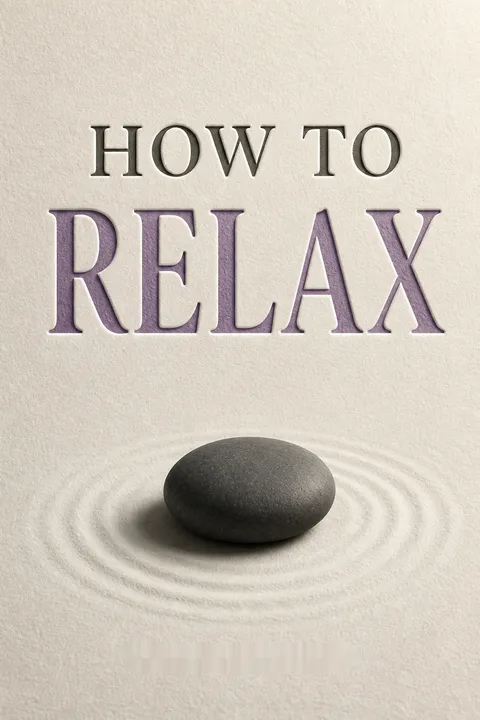


Key Takeaways
Relaxation begins when you stop running, not when your schedule clears.
Rest is a skill. Hanh begins with animals that withdraw to a quiet place when injured. They stop moving and let their bodies recover. People, by contrast, often fill empty time with activity, even when exhausted. The book's central claim is that rest is not a reward reserved for a finished to-do list. It is a capacity people can relearn.
Begin without preparation. No special pillow, equipment, or hour is required. Notice the breath already happening, and let attention settle there. A few conscious breaths can make a small pause in a day that otherwise feels like continuous motion.
The opening shifts relaxation from a luxury to a basic human capacity. That matters in cultures where rest is easily treated as idleness that must be justified. The animal comparison is memorable, though it is an analogy rather than evidence that human recovery works exactly the same way. Its useful point is simpler: constant activity can obscure the body's need for stillness. A brief pause is not a cure for every source of exhaustion, especially when work or illness is involved, but it can be a practical first step toward noticing what is needed.
Use your breath to bring a scattered mind back into your body.
A steady anchor. Thoughts and emotions can pull attention into old events, future worries, or restless planning. The breath is available through all of them. Hanh describes it as a connection between body and mind: following it helps attention return to the body and the present.
Observe, do not force. The practice can be simple: notice whether a breath is coming in or going out, notice its length, then follow its path from beginning to end. If the breath is uneven or shallow, allow it to be that way. With continued attention it may become gentler naturally. The exercise is not to manufacture calm, but to stay with one ordinary bodily process.
This is an unusually accessible way to work with attention because the breath is both a physical event and something people can notice without equipment. In contemporary terms, it resembles a form of attentional regulation grounded in bodily sensation. The instruction not to force the breath is important: turning calm into a performance can create another source of tension. Breath awareness is not equally comfortable for everyone, however. A person who finds it distressing can use another present sensation, such as footsteps or surrounding sounds, which the book also treats as valid anchors.
Meditate by stopping first, then looking clearly at what remains.
Two movements of meditation. Hanh uses the Buddhist terms shamatha and vipashyana for meditation's two aspects. Shamatha means stopping and calming: interrupting the habit of mentally running through past and future. Vipashyana means looking deeply: observing an experience or situation closely enough to understand it. The first steadies attention; the second helps reveal what is happening and why.
Bring practice into the day. Meditation is not presented as escape from ordinary life. Walking, eating, working, or brushing one's teeth can become practice when attention stays with the action. A tree may be dying in a beautiful garden, for example. Returning attention to the whole garden makes room to acknowledge sadness without losing sight of everything else that is alive.
The sequence is valuable because insight without steadiness can become rumination, while calm without inquiry can become avoidance. The garden image models a kind of attention that does not deny a painful fact but refuses to let that fact consume the entire field of perception. This resembles a distinction in reflective practice between noticing an experience and interpreting it. The framework is not a substitute for analysis of concrete problems: clear seeing should help a person respond to a situation, not merely become more comfortable observing it.
Let bodily tension speak before it has to shout.
Attend before dismissing. Hanh argues that tension and pain deserve attention rather than suppression. When they go unnoticed, they can interfere with sleep, eating, and the ability to enjoy daily life. Relaxation begins by bringing awareness to the body without judgment, then allowing muscles to release as much as they can.
Try a body scan. Lying down or sitting comfortably, move attention gradually through the body, from the eyes and shoulders to the heart, legs, and feet. Notice each area without demanding that it feel different. The book presents this as care for the body's natural healing capacity, alongside ordinary needs such as sleep, food, and water. It is an invitation to listen, not a promise that attention alone will resolve illness.
The body scan turns a vague instruction to relax into a sequence of manageable acts of attention. It also makes self-care less abstract: the body is not a machine to be pushed until it breaks, but a source of information that can be overlooked. Somatic attention may clarify where stress is carried, although awareness is not the same as diagnosis or treatment. That distinction matters because strong or persistent symptoms call for appropriate care, not a spiritual explanation. The practice is most persuasive when it supports responsiveness rather than replacing it.
Question the happiness bargain before chasing its promised reward.
Inspect the imagined prize. Hanh calls attachment to an idea of happiness a source of suffering. A person may believe that a particular possession, achievement, or relationship is required for a satisfying life, then discover that the belief keeps producing anxiety and craving. He suggests examining such ideas and noticing experiences of genuine ease, joy, or love that do not depend on getting the imagined prize.
Name your cows. In a story, a distressed farmer searches for the cows he has lost, along with his livelihood. The Buddha's monks have no cows to lose. The cows stand for the things people cling to as necessary for happiness. Writing down one's own cows makes those attachments visible. Letting go becomes more possible when a person understands what the attachment promises and what it costs.
The cow story gives attachment a concrete shape: a person can become so focused on what is missing that the rest of life disappears from view. The idea also invites a useful question from behavioral economics: are people pursuing a reward because it brings lasting well-being, or because they have learned to expect it to? The book rightly avoids treating desire as a simple switch; letting go takes insight and practice. Still, not every ambition or possession is a trap. The test is whether a supposed condition for happiness has become a source of recurring distress.
Meet anger as a feeling to understand, not an enemy to destroy.
Acknowledge what is here. Hanh warns that trying to annihilate anger turns the self into a battlefield. The first step is to recognize anger as a present experience, stay with the breath, and respond with care rather than adding self-attack. This does not mean approving of harmful behavior. It means beginning with awareness instead of reacting blindly.
Look for conditions. Hanh compares a struggling child to a tree that is not growing well. Blaming the child does not explain what is wrong; a caregiver has to look for the conditions the child needs. Applied to conflict, this means seeking understanding before reaching for accusations or arguments. A calmer response can make communication possible, while blame tends to harden the conflict.
This approach connects emotional regulation with compassion: a feeling can be acknowledged without being obeyed or condemned. Naming anger creates a little distance between an emotion and an action, which can protect both the person experiencing it and those nearby. The tree comparison also redirects attention from character judgments to causes and conditions. A necessary qualification is that understanding should not erase boundaries or accountability. Compassion can help explain why harm occurs, but it does not require accepting repeated harm or abandoning efforts to stop it.
Stop treating relaxation like another performance target.
Effort can defeat ease. Hanh observes that people may try so hard to meditate or relax that the practice becomes another job. His alternative is to let the body sit comfortably and allow attention to settle without demanding a special result. He compares this to sitting while watching television: a person can remain seated because the posture is not a struggle.
Let the mind settle. Fresh juice becomes clearer when its pulp is left undisturbed. In the same way, relaxed sitting gives agitation time to settle. The book also recommends a lazy day without scheduled activities, so people can practice not filling every open hour with entertainment or tasks. Doing nothing on purpose can restore balance rather than waste time.
The book's insistence on effortlessness is a useful corrective to the idea that every meaningful practice must be optimized. A practice can become counterproductive when people judge each session by how calm, focused, or productive it makes them. The juice image captures why pausing may help without turning stillness into a guaranteed technique. A lazy day will not be equally available to everyone, especially people carrying heavy work or care responsibilities. The underlying principle can still scale down: protect a small interval from demands when possible.
Place gentle reminders to rest inside ordinary routines.
Let the environment prompt you. A bell can interrupt forgetful activity and remind a person to stop, breathe, and return attention to the present. Hanh encourages practitioners to welcome the sound as a friendly signal rather than treat it as an alarm. If no bell is available, a phone, clock, airplane, or other everyday sound can serve the same purpose.
Make room at home and work. A computer reminder every fifteen minutes can create brief breathing pauses during screen work. A small area of the home reserved for quiet can make rest easier to begin. The idea is not to add an elaborate routine. It is to weave simple cues into the places where attention most often gets absorbed.
This advice turns mindfulness from an intention into a feature of one's surroundings. In behavior design, a visible cue can reduce the need to remember a desired action at precisely the moment attention is occupied. The book's examples are notably low-cost: a sound, a corner, or a short pause. Yet a reminder can also become noise if it is too frequent or imposed without choice. The word gentle matters. Cues work best when they invite a return to awareness rather than make rest feel like another task being monitored.
Borrow a community's calm when your own attention keeps wandering.
Practice is easier together. Hanh argues that a group can support individual practice. When one person's attention wanders, the presence of others who are sitting or walking mindfully can help bring it back. He calls people reminders for one another, not judges of one another. Beginners need not perform meditation correctly; breathing and sitting are enough to start.
Peace can be public. The book describes group walking around Hanoi's Hoan Kiem Lake, and shared meditation in places such as Trafalgar Square in London and Zuccotti Park in New York. These gatherings offered participants and observers a visible experience of quiet in busy public settings. A group can make rest feel less like a private escape and more like something people can support together.
Collective practice highlights that attention is not formed in isolation. Other people's pace and presence can make a quiet activity feel more sustainable, much as shared rituals give structure to practices that are difficult to maintain alone. The public examples also challenge the assumption that peace requires retreating from the world. Group settings are not automatically welcoming, however; fear of judgment can make them harder for some people. The book's most helpful safeguard is its modest standard: participation does not depend on expertise, and individual practice remains valid.
Use attention to change your relationship with pain, not deny it.
Keep the whole picture. Hanh says life contains both suffering and beauty. Meditation means staying in contact with both, rather than pretending that painful events are unreal or allowing them to erase every source of joy. Mindfulness can help people notice an unpleasant feeling, hold it with care, and recognize other conditions present in the same moment.
A helicopter changes meaning. At a retreat during a nearby wildfire, helicopters passed overhead. For Vietnamese participants who had lived through war, the sound carried associations with violence. Practicing mindful listening helped them recognize that these helicopters were fighting the fire. The sound itself remained, but its meaning in that moment could change. Attention made room for a response grounded in the present circumstances.
The helicopter story demonstrates a subtle distinction: a stimulus can trigger a painful association without fully defining what is happening now. Reappraisal can widen the context and sometimes make a response less frightening, while gratitude can arise from recognizing the sound's current purpose. This is not a claim that traumatic memories vanish when people reinterpret a cue. Nor should positive attention be used to silence grief or injustice. Its value is more careful: it can add present-day information to an experience that feels dominated by the past.
Care for this moment, and worry loses some power over you.
Return to what can be met. Worry often projects attention into an uncertain future, while regret pulls it toward the past. Hanh recommends returning to the body, feelings, and surroundings in the present, then caring for what is actually happening. If the body is tense, breathe and release what you can. If a painful feeling is present, acknowledge it rather than fleeing from it.
Practice creates confidence. The book says that three minutes of mindful breathing can offer a moment of freedom from being overwhelmed by anger or anxiety. Repeating the practice builds trust in one's ability to meet a situation. This is not a ban on planning. The point is to plan from a steadier place, instead of letting imagined futures consume the attention needed for the next real step.
The present moment is framed here as a unit of care, not a denial that the future matters. That distinction gives the teaching practical force: attention can return to the next action instead of rehearsing every possible outcome. It also prevents mindfulness from being confused with passivity. Some sources of worry require planning, advocacy, or material change; breathing alone cannot supply those. Its contribution is to create enough steadiness to distinguish an actionable concern from a loop that is repeating without helping.
Analysis
How to Relax is less a conventional argument than a set of short teachings and exercises arranged around one recurring discovery: people often seek relief by escaping themselves, while the book asks them to return to the body and the immediate world. Its form mirrors that instruction. Brief metaphors, small poems, and ordinary scenes make the practice portable, from a computer desk to a walk outdoors. Repetition is part of the method, not merely a stylistic habit. The same breath, pause, and return are revisited until they feel usable in different emotional settings.
The book's strongest contribution is its refusal to separate relaxation from attention, ethical conduct, and relationship. Calm is not presented only as private comfort. Shared walking, listening without blame, and responding to anger with awareness make inner steadiness consequential to other people. This widens the familiar wellness idea of self-care into a social practice. The image of a public meditation in a busy city is especially effective because it makes peace visible without claiming that the city itself has become peaceful.
There are limits to the approach. Claims about the body's capacity to heal and the transformation of painful feelings need careful interpretation. Mindfulness may help a person notice distress and respond with greater choice, but it cannot guarantee recovery, replace medical treatment, or remove external causes of suffering. The book is most persuasive when its language of healing is read as a call to attend and care, rather than as a promise of cure. Its practical test is modest and humane: can a person notice what is happening, soften needless tension, and take the next step with more clarity?
Review Summary
How to Relax is a concise yet impactful book by Thich Nhat Hanh, offering simple techniques for mindfulness and relaxation. Readers appreciate its accessible wisdom, practical meditation tips, and charming illustrations. The book emphasizes the importance of breathing, living in the present moment, and finding inner peace. While some found it repetitive, many readers found value in its reminders to slow down and cultivate calmness. The book's small size makes it convenient for frequent reference and practice in daily life.
People Also Read




Glossary
shamatha
stopping and calmingA Sanskrit term for the first aspect of meditation in this book. Shamatha means stopping the mental habit of running into the past or future and settling attention in the present. Mindful breathing, walking, and sitting support this calm, while concentration helps a person experience the present moment more fully.
vipashyana
looking deeplyA Sanskrit term for the second aspect of meditation. Vipashyana means looking closely at an experience or situation to understand its nature and conditions. In the book, this kind of attention can reveal where an idea, emotion, or desire comes from, creating insight that may help loosen suffering and misunderstanding.
mindfulness bell
a cue to returnA bell or other sound used as a reminder to pause, breathe, and return attention to the present. Hanh describes the bell as a friend to be welcomed, not merely an object to strike. A phone, clock, or sound in the environment can serve the same function when it prompts a mindful pause.
habit energy
inherited response patternsA repeated tendency to respond in familiar ways, sometimes shaped by family and social history. The book illustrates this through a friend who remained tense despite having completed his preparations for a visit. Hanh connects the friend's worry to a history of struggle passed across generations, while presenting mindful practice as a way to notice and gradually transform such patterns.
no-self
shared, interdependent existenceA Buddhist insight that a person is not wholly separate from other people and conditions. In the book, this means that suffering and happiness are connected across families, communities, and society. The term does not mean that individual experiences are unreal; it emphasizes that lives and feelings are shaped through relationships and mutual dependence.
island within ourselves
inner place of refugeA metaphor for the steadiness and care a person can access by returning to mindful breathing and the present moment. The island represents peace, confidence, solidity, love, and freedom. It is not a place to withdraw permanently from other people, but a source of stability from which to meet feelings and circumstances more clearly.
FAQ
What's "How to Relax" by Thich Nhat Hanh about?
- Focus on Relaxation: The book provides insights into how to incorporate relaxation into daily life without needing special equipment or time set aside.
- Mindful Breathing: It emphasizes the importance of mindful breathing as a tool to bring body and mind together, offering a refuge from stress and anxiety.
- Meditation Practices: Thich Nhat Hanh introduces meditation as a means to stop running from life and to look deeply into oneself and one's surroundings.
- Collective Energy: The book discusses the power of practicing mindfulness and relaxation in a community to amplify healing and joy.
Why should I read "How to Relax" by Thich Nhat Hanh?
- Practical Techniques: The book offers simple, practical techniques for relaxation that can be integrated into everyday activities.
- Holistic Approach: It provides a holistic approach to well-being, addressing both mental and physical health through mindfulness.
- Accessible Wisdom: Thich Nhat Hanh's teachings are accessible and can be applied by anyone, regardless of their experience with meditation.
- Community and Connection: It highlights the importance of community in enhancing personal practice and collective healing.
What are the key takeaways of "How to Relax" by Thich Nhat Hanh?
- Mindful Breathing: Breathing is a powerful tool for relaxation and can be practiced anywhere, anytime.
- Present Moment Awareness: Being present in the moment is crucial for experiencing true happiness and peace.
- Letting Go: Releasing attachments and ideas of happiness can lead to greater joy and freedom.
- Collective Practice: Practicing mindfulness with others can enhance personal relaxation and contribute to global peace.
How does Thich Nhat Hanh suggest we practice mindful breathing?
- Awareness of Breath: Focus on the in-breath and out-breath to anchor the mind and bring calmness.
- Breathing Poem: Use simple phrases like "In, Out" to guide and deepen the practice.
- Natural Breathing: Allow the breath to be natural, without forcing it, to achieve a peaceful state.
- Daily Integration: Incorporate mindful breathing into daily activities like walking, working, or sitting.
What is the significance of "Stopping" in meditation according to Thich Nhat Hanh?
- Cease Running: Stopping refers to halting the constant pursuit of future happiness and being present.
- Calmness and Concentration: It involves calming the body and emotions through mindful practices.
- Present Moment: Stopping allows one to live deeply in the present, touching the essence of life.
- Foundation for Insight: It is the first step in meditation, leading to deeper understanding and insight.
How does Thich Nhat Hanh describe "Looking Deeply" in meditation?
- True Nature: Looking deeply involves understanding the true nature of things and oneself.
- Mindfulness Practice: It is a practice of mindfulness that includes concentration and understanding.
- Daily Life Application: Mindfulness in daily life is a form of meditation that enhances awareness.
- Insight and Freedom: This practice leads to insights that can free one from suffering and misunderstanding.
What role does community play in "How to Relax" by Thich Nhat Hanh?
- Amplified Energy: Practicing mindfulness with others creates a powerful collective energy for healing.
- Support System: A community provides support and reminders to stay on the path of mindfulness.
- Shared Joy: Relaxing and practicing together makes it easier to cultivate joy and peace.
- Collective Healing: The collective practice contributes to personal and global healing and peace.
What are some meditation techniques mentioned in "How to Relax"?
- Breathing Exercises: Techniques like following the breath and using breathing poems are emphasized.
- Body Scan: Bringing awareness to different body parts to release tension and stress.
- Bell Meditation: Using the sound of a bell to return to mindfulness and calmness.
- Deep Relaxation: Lying down and focusing on each body part to achieve deep relaxation.
How does Thich Nhat Hanh address the concept of "Letting Go"?
- Releasing Attachments: Letting go involves releasing ideas and desires that cause suffering.
- Insight and Mindfulness: Mindfulness and concentration help identify and release mental attachments.
- Joy and Freedom: Letting go leads to greater joy, freedom, and the ability to live simply.
- Practical Steps: The book suggests writing down things to let go of to achieve happiness.
What are the best quotes from "How to Relax" and what do they mean?
- "Breathing in, I calm my body. Breathing out, I smile." This quote emphasizes the simplicity and power of mindful breathing to bring peace and joy.
- "Don’t just do something, sit there." It suggests reversing the usual approach to action by prioritizing being over doing.
- "Our idea of happiness is the main obstacle to happiness." This highlights how preconceived notions of happiness can prevent us from experiencing true joy.
- "The breath is a bridge connecting body and mind." It underscores the role of breathing in uniting physical and mental states for mindfulness.
How does Thich Nhat Hanh suggest we handle stress and tension?
- Mindful Breathing: Use mindful breathing to bring awareness to the present moment and release tension.
- Body Awareness: Pay attention to the body to identify and release areas of stress.
- Relaxation Practices: Incorporate practices like deep relaxation and body scans to alleviate stress.
- Daily Integration: Make relaxation a part of daily life through simple, mindful activities.
What is the importance of "Present Moment, Wonderful Moment" in the book?
- Living in the Now: The phrase encourages living fully in the present rather than being caught in past or future.
- Mindfulness Practice: It is a reminder to practice mindfulness and appreciate the current moment.
- Source of Happiness: Recognizing the present moment as wonderful is key to experiencing true happiness.
- Avoiding Distraction: It helps avoid distractions and focus on the beauty and peace available now.
Mindfulness Essentials Series
About the Author
Other books by Thich Nhat Hanh


Download PDF
Download EPUB
.epub digital book format is ideal for reading ebooks on phones, tablets, and e-readers.








