

Key Takeaways
Sit to experience being alive, not to earn a better future.
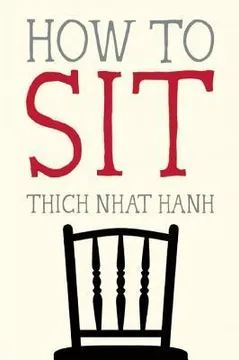
Begin without a bargain. Thich Nhat Hanh presents sitting as something worth doing for its own sake, not as a technique for becoming more impressive, productive, or enlightened. A novice monk once saw a Zen teacher sitting naturally on a simple wooden platform, peaceful and at ease. The sight made sitting feel both human and possible, not distant or mystical. The point is not to imitate a pose, but to discover the contentment of being fully present.
Let sitting nourish you. Breathing mindfully can make the ordinary fact of being alive vivid again. A few minutes can offer enough reason to pause: feel the breath, notice the body, and allow the moment to be good without demanding that it lead somewhere else.
The book's most useful correction is to separate practice from self-improvement as a performance. When every quiet activity must produce a measurable benefit, rest becomes another assignment. Enjoyment is not laziness here; it is a way of relating to experience without treating the present as merely a bridge to a more valuable future. That said, some readers may find stillness uncomfortable rather than pleasurable. The invitation is not to manufacture happiness, but to begin with what is actually present, including discomfort, and stay without grading the session.
Use the breath to bring your scattered self into one place.
Reconnect the parts. In daily life, the body may be at a desk while attention races through plans and worries. Thich Nhat Hanh treats the breath as a simple point of contact that gathers body, breath, and mind into one present experience. Start by noticing an inhale as it begins and an exhale as it ends. The aim is not to force the breath into a special rhythm, but to recognize it as it is.
Let calm emerge. As attention settles, breathing may become slower and more comfortable, easing tension in the body and mind. A gentle smile can help soften the face. If attention wanders, return to one breath, then the next. This small act is a way to care for yourself, not a test of concentration.
Breathing offers an unusually accessible anchor because it is both automatic and available to awareness. That makes it a bridge between bodily sensation and deliberate attention: no elaborate equipment or ideal setting is required. The book's emphasis on noticing rather than controlling also matters. For some people, focusing on breathing can intensify anxiety or bodily vigilance. In that case, attention can rest on another neutral sensation, such as the feeling of sitting. The principle is contact with the present, not loyalty to one object of attention.
Prepare the quality of your being before you act.
Presence shapes response. The book argues that action carries the quality of the person acting. When someone is consumed by anger, fear, or confusion, even a well-intended intervention can cause more harm. The image of a boat caught in a storm makes the point: one calm passenger can steady others, while panic spreads through the group. Sitting is a way to cultivate that steadiness before responding.
Stillness can serve others. A Vietnamese nun imprisoned for helping people practice sat quietly in her cell, sometimes waiting until night to avoid provoking guards. The practice gave her inner space, and she taught other prisoners to breathe and sit. Her situation was not changed by sitting, but she could meet it with more freedom and help others suffer less. Non-action here means preparing presence, not refusing necessary action.
This is a strong account of how self-regulation has social consequences. In conflict, a composed person can widen the space between provocation and response, making better judgment more likely. The prison story also prevents the idea from becoming merely a comfort ritual: inner freedom can matter under conditions a person cannot quickly change. Still, calm should not be confused with justice, and a peaceful response is not always the only needed response. The practical claim is narrower and stronger: action taken from clarity is less likely to reproduce the very turmoil it aims to address.
Treat emotion as weather: anchor, observe, and let it move through.
Do not become the storm. Feelings arrive in succession, like a river carrying pleasant, painful, and neutral experiences. Naming one can create enough distance to see it as a feeling rather than the whole self. When anger or fear becomes intense, the book compares it to a storm: first protect yourself by stopping, sitting, and returning attention to the body.
Use the belly as an anchor. Follow the movement of breathing low in the abdomen, as if attending to the steady trunk of a tree while its upper branches move in wind. Remind yourself that this state will pass. Once the body is calmer, look at the emotion with more care. Ask whether it belongs to what is happening now or is linked to an old hurt. Understanding can make letting go possible.
The sequence matters: stabilize attention before investigating causes. This resembles a broader principle in emotional regulation, where a person often needs enough safety and steadiness to reflect rather than react. Naming a feeling can also loosen the fusion between experience and identity. Yet the practice is not a promise that every emotional storm will fade in a few minutes. Some distress has persistent causes, including unsafe circumstances. Mindfulness can support clearer choices, but it should not be used to dismiss pain or replace practical help.
Practice where life happens, not only on a meditation cushion.
Make ordinary moments count. Sitting can happen on a train, at an airport, or in a quiet corner at work. A cushion and a dedicated spot may help establish a habit, but they are not prerequisites. The book also extends attention beyond formal sitting: mop the floor while actually mopping, or walk while aware of walking, rather than mentally racing ahead to the next task.
Keep the method simple. Sit with the spine upright but not rigid, and relax the face and shoulders. Beginners can count each in-breath and out-breath, returning to the first count when attention wanders. A bell or clock can provide a reminder to pause and breathe. These supports make practice easier to begin, but the central exercise remains awareness of what is happening now.
This approach reduces the distance between meditation and daily life. A practice that works only in a quiet room may leave ordinary routines untouched, while brief pauses in familiar settings can make attention more portable. The emphasis on posture is also practical: comfort supports sustained attention better than a theatrical display of discipline. There is a useful limit, though. Not every task permits full attention, and some work requires planning or divided focus. The aim is not to abolish thought, but to notice when attention has been captured unnecessarily.
Recognize inherited habits without mistaking them for present needs.
Notice the urge to run. Thich Nhat Hanh calls an old, repetitive impulse “habit energy.” It is the push to act from a familiar pattern even when that pattern does not fit what is needed now. One example comes from a bus journey in India. A Dalit organizer, despite having a comfortable life, sat tensely, driven by worry and a history of struggle. A gentle reminder helped him relax, but the tension soon returned.
Interrupt, do not condemn. The story suggests that habits can be learned across generations and reinforced by experience. Recognition is the first opening: notice the impulse, smile at it, and return to breathing. A friend, a bell, or a regular sitting practice can serve as a reminder when automatic behavior takes over.
The idea of habit energy makes repetitive behavior feel observable rather than morally defective. That distinction can reduce shame and make change more feasible: a pattern may have once helped someone endure difficulty, even if it now limits them. The bus story also gives social history a place in individual behavior instead of treating tension as a private character flaw. Still, a reminder cannot undo structural discrimination or material insecurity. The practice can help someone see a pattern clearly, but it should not imply that every burden can be solved through personal calm.
Let community lend steadiness when private pain feels too heavy.
Practice together. The book describes the Buddhist community, or Sangha, as a source of collective support. People sitting together do not need to talk or solve one another's problems. Each person contributes a steady presence, and the group can make it easier for someone to stay with fear or sorrow without being overwhelmed. Thich Nhat Hanh compares this shared support to birds moving together in a flock.
Help by being present. A person holding despair may benefit simply from sitting beside someone calm and attentive. The help is not a claim to understand or fix everything. It is a shared space in which suffering can be acknowledged and held. Sitting alone can be nourishing, but sitting with others may make the practice more accessible when individual resolve is thin.
This account treats attention as relational rather than purely private. Support often begins not with advice, but with another person who can remain present without rushing to correct the feeling. Group practice can also distribute effort: an individual does not have to generate all the steadiness alone. The limit is important. A supportive group is not automatically safe, and collective calm cannot substitute for skilled care or concrete assistance when those are needed. The valuable claim is modest: reliable companionship can make difficult inner work more bearable.
Calm the body first, then investigate what hurts.
Use both parts of meditation. Sitting has a calming aspect and an investigative one. First, settle the body and attention; then look deeply into feelings, thoughts, and their roots. Remaining calm without looking can become avoidance, while examining painful material before becoming steady can intensify distress. The book recommends approaching difficulty from a more settled place.
Make reflection concrete. A guided exercise invites an adult to imagine their younger self on a second cushion, listen to what that child might say, and respond with care and protection. Guided verses can also pair a phrase with the inhale or exhale, focusing attention on a quality such as calm or release. The goal is not to escape daily life, but to return to it with more understanding and less reactivity.
The balance between regulation and inquiry is one of the book's most psychologically astute features. Soothing alone can become avoidance; analysis alone can become rumination. The imagined conversation with a younger self offers a structured way to give attention to feelings that were once difficult to express. Such exercises can also surface strong material, so gentleness and pacing matter. A contemplative prompt is an invitation, not a substitute for professional support when distress is severe or persistent. Its value lies in making self-compassion an active practice of listening.
See yourself as a continuation, not a sealed-off individual.
Notice what you carry. The book asks readers to consider parents, grandparents, teachers, culture, and spiritual predecessors as part of the person sitting now. Its image is not of an isolated self, but of a current made from many influences. A practitioner might invite an ancestor to share in breathing, recognizing that the body and its habits are shaped by earlier lives and relationships.
Let impermanence deepen attention. A meditation on death asks practitioners to face the body's limits and loosen unnecessary ambition, worry, and busyness. The book also uses the changing forms of a cloud to suggest that transformation is not the same as simple disappearance. These contemplations are meant to increase care for present life and for other beings, not to deny grief or the reality of death.
The image of the self as a continuation challenges the assumption that identity is wholly private and self-created. It can foster humility: language, habits, and ways of caring are received as well as chosen. It can also widen responsibility, since present actions shape conditions for others. The reflection on death complements this by making finite time more vivid. These ideas are spiritual interpretations, not empirical claims that should be imposed on everyone. Their practical force does not depend on literal agreement: even a secular reader can ask what has been inherited and what is worth passing on.
Analysis
How to Sit is a compact contemplative guide, not a linear argument or a technical manual. Its short chapters circle the same practice from different angles: stop, notice breathing, settle the body, and return to experience. Repetition is part of the method. The reader is not meant only to understand an idea, but to be interrupted by it often enough to try it.
The book's central reframing is that sitting is not a productivity tool disguised as spirituality. Its value lies first in the quality of presence it cultivates. That presence then informs how a person responds to emotion, work, and other people. Stories make this chain tangible: the novice who sees a calm teacher, the imprisoned nun who uses sitting to preserve inner space, and the tense bus passenger who finds an old pattern returning despite a moment of ease. Together they show that practice is both simple and difficult. The breath is available, but deeply established habits do not vanish on command.
The most useful practical distinction is between calming and looking deeply. Calm without inquiry can become retreat from life's problems; inquiry without steadiness can turn into rumination. The book's sequence offers a middle path: build enough presence to meet a feeling, then examine it with care. Its strongest social claim is that this work is not merely private. A calmer person may affect a family, a group, or a moment of conflict.
A necessary qualification is that inner freedom does not remove external constraints. Sitting can help a person respond with more clarity, but it cannot by itself end imprisonment, discrimination, illness, or material hardship. Read well, the practice supports engaged action rather than replacing it. The book's plain language and everyday settings make that invitation unusually accessible: one need not wait for a monastery, perfect posture, or an empty mind to begin.
Review Summary
Readers largely praise How to Sit as a deceptively simple yet profoundly impactful guide to mindfulness meditation. Many appreciate its bite-sized, accessible format, finding it ideal for daily reading one page at a time. Common highlights include its gentle wisdom, practical exercises, and focus on present-moment awareness. Critics note it can feel repetitive or overly simplistic, particularly for intellectually inclined readers or experienced meditators. Overall, most readers find it a valuable, calming companion that effectively introduces the transformative potential of sitting meditation.
People Also Read




Glossary
mindfulness
attending to present experienceIn this book, mindfulness means bringing awareness to a chosen object or experience, especially the breath, body, feelings, or sounds. It is not simply concentration or relaxation. Attention makes it possible to recognize what is happening now, settle the mind, and look more clearly at experience.
habit energy
force of an old patternHabit energy is the momentum of a familiar behavior, reaction, or belief that pushes a person to act automatically. It may reflect repeated personal experience or patterns passed through family and society. Recognizing it while it is active creates an opportunity to pause, breathe, and respond to the present situation instead.
gatha
verse paired with breathingA gatha is a short practice verse used to support mindfulness. A practitioner silently recites or recalls its phrases in rhythm with breathing, such as attending to the inhale with one phrase and the exhale with another. The verse gives attention a simple structure and can be adapted to a particular intention.
Sangha
community of practiceSangha refers to a community whose members practice mindfulness together. In the book, sitting with others generates shared steadiness: each person's presence supports the whole group, and the group can help individuals stay with difficult feelings. The community offers companionship in practice without requiring conversation or immediate problem-solving.
mental formation
a manifested mental stateA mental formation is a thought, feeling, perception, or other mental state that becomes active in awareness. The book describes tendencies such as anger or worry as seeds that may be present outside immediate awareness and manifest when conditions touch them. Mindful attention can recognize a formation without treating it as the entirety of the self.
prajña
insight or wisdomPrajña is the Buddhist term used in the book for insight or wisdom gained through looking deeply. This understanding can clarify the nature and roots of suffering, loosen inner constraints, and support more compassionate action. It is presented not as abstract knowledge alone, but as insight that changes how a person relates to self and others.
non-practice practice
practice without performanceThe non-practice practice means sitting without turning meditation into a display, achievement, or project with a promised result. The practitioner does not try to look meditative or demand a special experience. Instead, attention rests with breathing and sitting as they are, allowing the practice to be lived rather than performed.
Mindfulness Essentials Series
About the Author
Other books by Thich Nhat Hanh




Download PDF
Download EPUB
.epub digital book format is ideal for reading ebooks on phones, tablets, and e-readers.








