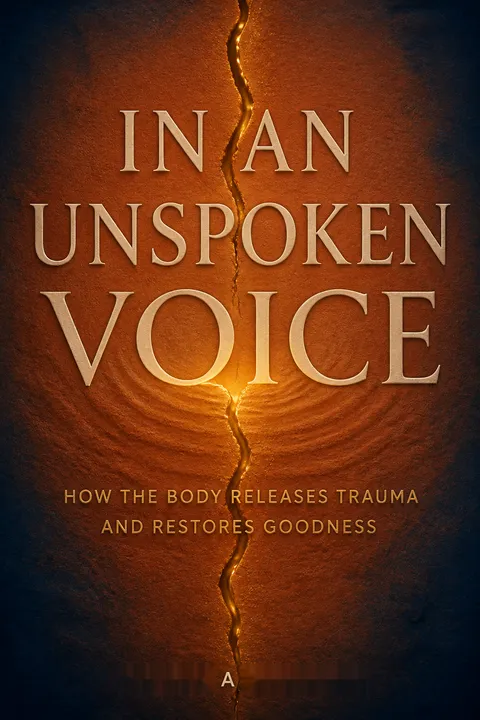


Key Takeaways
Treat trauma as a trapped survival response, not simply a terrible memory
The body stays involved. Levine opens with his own accident: struck by a car, he lies confused and immobilized. A calm pediatrician sits beside him, and he gradually notices his body trembling and making small protective movements. His account introduces the book’s central claim: trauma is not just the terrible event or the memory of it, but a survival response that remains unresolved when a person cannot escape, fight, or otherwise complete a defensive action.
Recovery is possible. Levine calls trauma an injury rather than a permanent disorder. He argues that attention to bodily sensations, alongside support from another person, can help the nervous system regain balance. His account is a clinical model, not a promise that every person can resolve trauma in the same way or without professional care.
The shift from asking only what happened to asking how a person’s body responds can make symptoms less mysterious and reduce blame. It also fits a broader view of memory: distress can be expressed in bodily reactions as well as in a coherent story. The distinction between injury and identity is humane, though it should not imply that diagnosis or medication is useless. Labels can help people access care; they become harmful when treated as the whole person.
Stop blaming yourself for freezing; immobilization is an emergency defense
Freezing has a function. Tonic immobility is the involuntary state of becoming still or unresponsive when active escape or resistance seems impossible. Levine draws on animal studies and clinical observations to argue that it is a last-resort survival response, not a chosen failure. The book cites reports that 88 percent of childhood sexual-assault survivors and 75 percent of adult survivors experienced moderate to high paralysis during an assault. Those figures describe particular studies, not every survivor.
Shame can prolong the wound. A soldier who froze during an ambush was accused of cowardice, although he had not been trained for combat. Levine argues that interpreting involuntary paralysis as weakness adds self-blame to the original fear. Understanding freezing as biology can create room for compassion and treatment, without claiming that every later symptom has the same cause.
This reframing matters because trauma survivors often judge themselves by what they think they should have done, rather than by what their nervous system could do under threat. Research on stress responses also complicates the popular fight-or-flight story: behavior under danger can include freezing, submission, or dissociation. The evolutionary explanation is useful as a way to reduce shame, but it cannot determine what happened in an individual case. Careful listening remains more reliable than assigning a response from a category.
Build enough safety to feel the body without reliving the event
Safety comes first. Somatic Experiencing is Levine’s body-awareness approach to trauma treatment. It helps a person notice physical sensations and feelings while a therapist supports a sense of relative safety. The point is not to force a detailed retelling. In Levine’s account, the pediatrician’s steady presence after his accident helped him remain connected to the present as difficult reactions arose.
A first client revealed the method. Nancy, who had panic and other persistent symptoms, began trembling and making running movements during a session. She connected these reactions to being restrained for childhood surgery. Levine describes her improvement as evidence that bodily responses can be explored without making a person relive the entire event. The case is illustrative, not proof that one session or one method works for everyone.
The emphasis on pacing and relationship is consistent with a basic principle of effective care: people learn and explore better when they do not feel coerced. It also counters the assumption that recounting a painful story in detail is always the first step toward recovery. Still, safety is subjective and cannot be inferred from a therapist’s good intentions. Some clients benefit from verbal, cognitive, or medical approaches, and a body-focused method should be chosen collaboratively rather than treated as a universal replacement.
Approach distress in small doses, alternating it with bodily safety
Small steps reduce overwhelm. Titration is Levine’s term for approaching difficult sensations in brief, manageable increments rather than plunging into the full intensity of a traumatic memory. He compares it to combining reactive chemicals drop by drop: gradual contact allows change without a sudden, overwhelming reaction.
Distress can shift. Pendulation is the body’s movement between contraction and expansion, or between discomfort and a more settled sensation. A therapist may help someone notice an area of tension, then shift attention to a place that feels steadier. Levine argues that experiencing this change teaches the person that distress is not endless. Together, titration and pendulation make room to encounter difficult material while preserving a sense of choice and present-time safety.
These ideas offer a practical alternative to the all-or-nothing choice between avoidance and emotional flooding. In learning theory, manageable contact with a feared stimulus can support new learning, while excessive intensity can reinforce alarm. The useful question is not simply whether someone faces distress, but whether they retain enough attention and agency to learn from the encounter. Levine’s metaphors clarify pacing, although sensations do not always settle on schedule. Treatment should respond to the person, not to a predetermined timetable.
Let protective impulses finish in awareness, not through forced catharsis
Action can restore agency. Levine argues that trauma may leave defensive movements unfinished, such as an attempt to shield the head or escape. In therapy, a person may notice the related muscular tension and explore a small movement while staying aware of the present. He distinguishes this from acting out a scene or being pushed into intense emotional release.
Bonnie’s body supplied a clue. After an attempted rape, Bonnie could not remember how she escaped and later became unusually submissive or explosive under stress. In a session, she noticed an impulse to press her elbow backward, followed by a recollection of using her body to get free. Levine says that completing the movement helped her experience herself as capable rather than trapped. The example illustrates his approach, not a rule that every bodily impulse reveals a literal memory.
Agency is a powerful clinical target: a person who experiences choice in the present may relate differently to a memory of helplessness. That differs from catharsis, where intensity itself can be mistaken for progress. The distinction also demands caution. A movement or sensation can carry emotional meaning without proving a specific historical event, and suggestive guidance can shape recollection. The strongest use of body cues is as information to explore with curiosity, not as evidence that bypasses consent, context, or corroboration.
Track sensation, image, behavior, emotion, and meaning as one experience
SIBAM maps experience. Levine’s model names five channels: sensation, image, behavior, affect, and meaning. Sensation includes internal bodily signals; image includes sensory impressions such as sights, sounds, or smells; behavior is what the therapist can observe; affect means emotion or felt tone; and meaning is the interpretation a person attaches to the experience. The channels can reinforce one another or become disconnected in trauma.
Miriam found a boundary. While discussing marriage and work, she made a small pushing movement. When she slowed it down and noticed how it felt, she recognized a wish for more space and a right to set limits. The bodily movement gave her an entry point that abstract discussion had not. SIBAM is a way to organize observation, not a diagnostic checklist or a substitute for the client’s own account.
The model’s strength is its refusal to reduce experience to either thoughts or physiology. It resembles a systems map: a sensory cue can alter emotion, action, and interpretation, while a new action can change what the cue means. This is useful in therapy and in everyday reflection because it encourages multiple questions instead of a single explanation. Its neat categories are still simplifications. Real experience is simultaneous and culturally shaped, so the map should help inquiry rather than dictate what a person ought to feel.
Use attuned company to reopen social connection, not create dependence
Nervous systems interact. Levine uses polyvagal theory, developed by Stephen Porges, as a map of three broad response systems: social engagement, mobilization for action, and immobilization or shutdown. In this account, perceived safety supports connection, while threat can shift the body toward fighting, fleeing, or shutting down. Facial expression, voice, and posture are treated as signals that can help people sense safety or danger.
Presence can help, but is not enough. The pediatrician who sat with Levine offered calm attention when he was injured. Levine argues that a therapist’s steady presence can help a client tolerate difficult sensations, while treatment should also build the client’s own capacity for self-regulation. He warns that care alone can foster dependence if the client has no growing agency of their own.
The relational emphasis connects with attachment research and the practical observation that distress is often easier to bear with a trusted person nearby. A calm voice or receptive expression can matter before a person can make use of complex explanations. Polyvagal theory is best treated here as a clinical framework, not a settled, complete account of autonomic physiology. Human responses are more variable than any three-part map suggests, and social contact can feel unsafe for people whose relationships have involved harm.
Let children rehearse escape and agency through safe, child-led play
Play can reveal distress. Two-and-a-half-year-old Sammy became controlling and aggressive after a fall led to emergency treatment. At the hospital, staff restrained him to stitch his chin. Months later, when a toy bear fell from a chair during a visit, Sammy fled. The play had touched a reaction his behavior had not explained.
Let the child set the pace. With adults nearby, Sammy gradually played through rescuing the bear from under a blanket, then tried the scenario himself and escaped. The family repeated the game as Sammy showed more excitement and less fear. His earlier controlling behavior later eased. Levine stresses that adults should follow a child’s cues, pause when fear overwhelms, and stop if play becomes compulsive or unhelpful. The point is not to force a reenactment, but to support manageable choices and a different experience of agency.
The case shows how play gives young children a medium for communicating experiences they may not have words for. It also makes the child an active participant rather than a passive subject of questioning. The safeguards matter: repeating a frightening scene without support can intensify distress, and adults can easily misread play through their own assumptions. Caregivers should not use this as a do-it-yourself trauma treatment. Persistent symptoms or severe distress call for an appropriately trained clinician.
Contain strong emotion long enough to choose its action
Emotion is not instruction. Levine draws on psychologist Nina Bull’s work to distinguish bodily attitudes and feelings from intense emotional reactions. He proposes that emotions such as fear or anger become especially disruptive when an intended action is blocked. He also argues that awareness and restraint can help a person feel an impulse without immediately acting on it.
A sword pauses in midair. In a story Levine retells, a young samurai raises his sword after an insult. A Zen teacher names the moment as hell; the samurai lowers the weapon, and the teacher calls the resulting calm heaven. The lesson is not to suppress anger. It is to notice the energy behind it and create enough space to choose a response. Levine contrasts this with venting that provides intensity but may not resolve the underlying conflict.
This account supports a useful distinction between having an emotion and obeying it. Skills that create a pause can make room for deliberation, boundary-setting, or repair without denying the feeling. The book’s stronger claim that anger is primarily blocked aggression is a theory, not a universal definition of emotion; anger can also communicate injustice, loss, or threat. Containment should therefore mean tolerating and understanding an emotion, not policing it into silence.
Reconnect instinct and awareness to recover vitality, not just symptom relief
The body is part of the self. Levine calls embodiment the felt awareness of the living body, including sensations from muscles, joints, and organs. He argues that such awareness can restore a sense of presence and help people distinguish current experience from reactions shaped by the past. In this view, thought matters, but it is not the only route to change.
Healing may feel larger than symptom change. Levine describes clients who, after working with frightening sensations gradually, reported renewed aliveness, connection, or spiritual feeling. He links these experiences to contemplative traditions and to the body’s capacity for self-regulation. He does not present trauma itself as a gift; rather, he suggests that recovery can include meaning and vitality. The spiritual interpretation is personal and should not be imposed on someone who does not share it.
The book’s broadest contribution is to treat bodily awareness not merely as a technique for reducing symptoms, but as part of how identity, agency, and connection are experienced. This resonates with contemplative practices that train attention to immediate sensation. Yet spiritual language can comfort one person and alienate another, particularly if it suggests that suffering is necessary for growth. Recovery need not produce transcendence to count as real. A quieter return to ordinary life is a complete and worthwhile outcome.
Analysis
In an Unspoken Voice is part clinical argument, part scientific tour, and part memoir. Its organizing story is Levine’s accident, which lets him present his method as something lived rather than merely prescribed. The book’s most durable contribution is its change of emphasis: instead of treating a traumatic event as the whole problem, it asks how fear, immobility, bodily sensation, and social context continue to shape a person’s present. This can reduce shame and suggest practical goals, including agency, pacing, and renewed connection.
Its framework is strongest when used as a guide for attention. A practitioner who notices posture, breath, movement, and the client’s own interpretations may catch distress that a polished verbal narrative conceals. Its limits appear when explanatory models become asserted mechanisms. The notion of stored survival energy released through trembling is evocative, but it should not be confused with an established physical account of trauma. Similarly, polyvagal theory can organize clinical observation, yet its evolutionary story and some physiological claims remain debated. Neither framework should be used to infer a person’s history from bodily reactions alone.
The book also sets up too sharp a contrast between bodily work and talking therapies. Narrative, cognitive, and behavioral treatments can help people revise beliefs, approach avoided memories, and regain function; bodily awareness may complement rather than replace them. Current clinical practice benefits from matching methods to the person, the problem, and the evidence, rather than assuming one route is universally primary. The same caution applies to the case histories: they illustrate possibilities, but are not controlled demonstrations of efficacy.
The result is a valuable invitation to listen differently, not a license to diagnose by intuition. Its humane core is the idea that a defensive response is not a character flaw, and that careful support can help restore choice. Its best use is as a map for curiosity, with scientific humility about where the map ends.
Review Summary
In an Unspoken Voice is praised for its comprehensive approach to trauma healing through somatic experiencing. Readers appreciate Levine's insights into the physiological aspects of trauma and the body's role in recovery. Many find the book life-changing, though some note its density and repetitiveness. The case studies and exercises are considered valuable, but a few critics question the scientific basis of certain claims. Overall, the book is highly recommended for therapists and those interested in understanding and healing trauma.
People Also Read




Glossary
Somatic Experiencing
Body-awareness trauma approachLevine’s therapeutic approach helps people notice physical sensations, impulses, and feelings associated with trauma while maintaining awareness of present safety. It emphasizes gradual exploration rather than forcing a full retelling or reliving of the event. The method aims to support self-regulation and a renewed sense of agency.
tonic immobility
Involuntary defensive stillnessA defensive state in which an animal or person becomes still or temporarily unable to act when escape or active resistance seems unavailable. Levine describes it as a biological emergency response, not a voluntary choice. He argues that, in humans, its persistence alongside fear can contribute to traumatic symptoms.
fear-potentiated immobility
Fear prolonging defensive shutdownLevine’s term for the reinforcing relationship between intense fear and immobilization. He draws on animal experiments in which frightened, restrained animals remained immobile longer than animals restrained without the same fear. He proposes that a similar cycle can help maintain trauma when bodily sensations themselves become frightening.
titration
Gradual contact with distressA stepwise way of approaching difficult sensations or traumatic material in small, manageable amounts. In Somatic Experiencing, titration is intended to reduce the risk of overwhelming the person while allowing new experience to develop. The term borrows from chemistry, where a substance is added gradually to control a reaction.
pendulation
Shifting between distress and easeLevine’s term for movement between contracted, uncomfortable states and more open or settled ones. In therapy, attention may shift between a difficult sensation and a bodily area or experience that feels safer. The process is meant to help a person discover that distress can change without being denied or confronted all at once.
SIBAM
Five channels of experienceLevine’s framework organizes experience into sensation, image, behavior, affect, and meaning. Sensation refers to internal bodily signals; image covers sensory impressions; behavior is observable action or posture; affect includes emotion and felt tone; and meaning is the interpretation attached to experience. The model helps therapists track how these elements connect or become separated.
Polyvagal theory
Map of autonomic response systemsStephen Porges’s theory, used by Levine as a clinical map, describes autonomic responses in terms of social engagement, mobilization, and immobilization or shutdown. It links these states to patterns of connection and defense. The framework is influential in trauma practice, though its physiological and evolutionary claims remain debated.
premature cognition
Interpretation before experience unfoldsLevine’s term for settling on an explanation before bodily sensations, emotions, and actions have been fully noticed. He argues that quick interpretation can interrupt a person’s direct awareness of present experience and reinforce old conclusions. In his approach, new meaning is more useful when it emerges from explored experience rather than being imposed in advance.
FAQ
What's In an Unspoken Voice about?
- Focus on Trauma Healing: In an Unspoken Voice by Peter A. Levine delves into how trauma impacts both the body and mind, presenting it as an injury rather than a disease.
- Somatic Experiencing Method: The book introduces Levine's Somatic Experiencing® method, which aids in processing trauma by reconnecting with bodily sensations and emotions.
- Integration of Science and Experience: Levine combines insights from biology, neuroscience, and therapeutic experiences to provide a comprehensive understanding of trauma and its effects on the nervous system.
Why should I read In an Unspoken Voice?
- Understanding Trauma: The book offers profound insights into trauma, making it essential for survivors, therapists, and those interested in mental health.
- Practical Techniques: Readers gain access to practical techniques and exercises for processing trauma, valuable for personal and professional growth.
- Accessible Language: Levine writes in an engaging manner, making complex scientific concepts understandable for a general audience.
What are the key takeaways of In an Unspoken Voice?
- Trauma as an Injury: Levine emphasizes that trauma results from fright, helplessness, and loss, and can be healed by attending to the body's wisdom.
- Importance of the Body: The book highlights the significance of bodily sensations in understanding and processing trauma, advocating for a somatic approach to healing.
- Role of the Therapist: A therapist's role is crucial in creating a safe environment for clients to explore their sensations and emotions without fear of being overwhelmed.
What is Somatic Experiencing® as described in In an Unspoken Voice?
- Body-Centered Approach: Somatic Experiencing® focuses on the body's sensations and responses to trauma rather than solely on cognitive or emotional aspects.
- Releasing Trauma Energy: The method involves helping clients discharge energy associated with traumatic experiences through bodily awareness, movement, and expression.
- Restoring Balance: By reconnecting with bodily sensations, clients can restore their nervous system's balance and resilience, leading to healing from trauma.
How does Peter A. Levine define trauma in In an Unspoken Voice?
- Trauma as an Injury: Levine defines trauma as an injury occurring when an individual is overwhelmed by fear and helplessness, not as a mental disorder.
- Impact on the Body: Trauma manifests in the body, affecting the nervous system and leading to various physical and emotional symptoms.
- Healing Through Awareness: The healing process involves developing awareness of bodily sensations and allowing the natural discharge of energy associated with trauma.
What are the physiological responses to trauma discussed in In an Unspoken Voice?
- Fight or Flight Response: Levine describes instinctual responses to danger, including the fight or flight response, which prepares the body to confront or escape a threat.
- Immobilization Response: He discusses the immobilization response, where the body may freeze or collapse when escape is not possible, leading to helplessness.
- Polyvagal Theory: The book incorporates Stephen Porges' Polyvagal Theory, explaining how different branches of the autonomic nervous system respond to threats.
What is the significance of the "unspoken voice" of the body in Levine's work?
- Bodily Communication: The "unspoken voice" refers to the body's ability to communicate feelings and experiences not accessible to conscious thought.
- Healing Through Listening: Levine emphasizes listening to this voice to understand and process trauma, as it holds the key to healing.
- Integration of Experience: By acknowledging and integrating messages from the body, individuals can move toward recovery and restore their sense of self.
What is the significance of the "pendulation" concept in trauma healing?
- Rhythmic Process: Pendulation involves moving back and forth between discomfort and comfort, allowing individuals to gradually process traumatic experiences.
- Building Resilience: This technique helps build resilience by teaching individuals to tolerate and integrate their sensations without becoming overwhelmed.
- Facilitating Healing: Practicing pendulation allows individuals to access deeper layers of their trauma and facilitate emotional and physical healing.
How does In an Unspoken Voice address the relationship between trauma and spirituality?
- Spiritual Dimension of Healing: Levine discusses how healing from trauma can lead to a deeper understanding of oneself and a reconnection with one's spiritual essence.
- Integration of Mind and Body: The book emphasizes integrating bodily experiences with emotional and spiritual aspects for holistic healing.
- Resilience and Growth: Overcoming trauma can foster resilience and personal growth, allowing individuals to reconnect with their sense of purpose and belonging.
What are some practical exercises from In an Unspoken Voice?
- Pendulation and Titration: Techniques like pendulation (shifting between discomfort and comfort) and titration (gradually approaching traumatic sensations) help clients process experiences safely.
- Sounding Techniques: Using sounds, such as the "voo" sound, to vibrate and awaken the body facilitates the release of pent-up energy and emotions.
- Body Awareness Exercises: Exercises encourage clients to connect with bodily sensations, helping them regain a sense of agency and empowerment.
What are the best quotes from In an Unspoken Voice and what do they mean?
- “To be traumatized is to be condemned to endless repetitions of unbearable experiences.”: Highlights the cyclical nature of trauma, where unresolved experiences continue to affect an individual's life.
- “Trauma is a fact of life. It does not, however, have to be a life sentence.”: Emphasizes that while trauma is common, healing and moving forward is possible.
- “The body has its reasons that reason cannot reason.”: Underscores the importance of bodily sensations in understanding experiences, suggesting the body holds wisdom beyond rational thought.
How does Levine differentiate between emotions and feelings in the book?
- Emotions as Reactions: Emotions are described as reactive responses to stimuli, often linked to survival instincts like fear or anger.
- Feelings as Awareness: Feelings are seen as the conscious awareness of bodily sensations and emotional states, allowing for deeper understanding and integration.
- Importance of Differentiation: Understanding this distinction is crucial for trauma recovery, helping individuals process experiences more effectively and avoid being overwhelmed by emotions.
About the Author
Other books by Peter A. Levine


Download PDF
Download EPUB
.epub digital book format is ideal for reading ebooks on phones, tablets, and e-readers.








