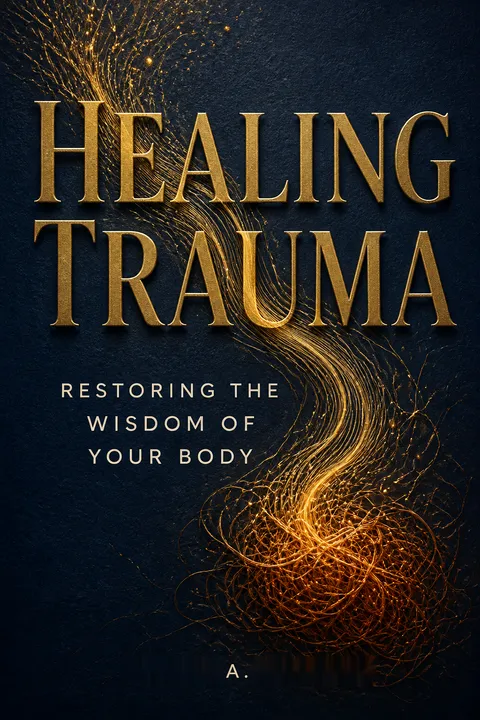


Key Takeaways
Define trauma by overwhelm, not by how dramatic the event looks.
The event is not enough. Levine distinguishes trauma from ordinary stress by whether a person felt threatened and overwhelmed, and could not respond effectively. The same event can affect people differently, depending on age, temperament, past experiences, and available support. A frightening medical procedure or a minor collision may be traumatic for one person, while another recovers without lasting effects.
Nancy's story makes this concrete. Levine describes a client whose panic and physical symptoms arose during a relaxation session. She recalled being held down for anesthesia as a young child. As she trembled, breathed deeply, and settled, her symptoms improved. This is a clinical anecdote, not proof that one response works for everyone. The book's central claim is that trauma can be addressed rather than treated as a life sentence.
The emphasis on individual response counters a common mistake: ranking suffering by the apparent size of an event. It also fits a broader principle in psychology, that a person's interpretation and resources shape how an experience is encoded. Yet this flexible definition needs guardrails. If nearly any upsetting event can be labeled traumatic after the fact, ordinary distress may be medicalized, and a trauma explanation may crowd out other causes. The useful question is not whether an event qualifies in the abstract, but whether a careful assessment explains current difficulties better than competing explanations.
Help the body finish protection instead of forcing a complete story.
Survival has three routes. Levine describes fight, flight, and freezing as protective responses to danger. His model proposes that when a person cannot fight or escape, the body may become immobilized, and the response may remain unresolved after the danger passes. He argues that gentle shaking, trembling, or changes in breathing can accompany a return to calm, rather than being signs that something is going wrong.
Animals provide his central analogy. Levine recounts watching a captured polar bear tremble as it recovered from sedation, and describes prey animals shaking after escaping danger. He saw these responses as a natural way to complete interrupted movement. In his approach, recovery is therefore bodily as well as psychological, and a person need not first reconstruct every detail of the original event.
The animal comparison makes a difficult idea memorable: survival responses are not just thoughts, and a person's body may react before a coherent story is available. Attention to breath, movement, and sensation can also help some people notice activation without immediately being swept into it. The analogy, however, should not be mistaken for settled proof that trauma is stored as literal unused energy. Human nervous systems are more complex than a single completion mechanism. The model is most useful as a therapeutic lens, not as a universal biological explanation or a reason to provoke intense reactions.
Treat recurring patterns as clues, never as proof of hidden trauma.
Repetition can carry a history. Levine describes a Vietnam veteran who repeatedly staged a robbery at 6:30 on July 5, the anniversary and time of his friend's death in combat. He used his finger to imitate a gun and waited for police to arrive. In a conversation with psychiatrist Bessel van der Kolk, he connected the robberies to the night his friend died. Levine interprets the behavior as a reenactment: an attempt to revisit unresolved grief, guilt, and terror.
Look for patterns carefully. The book also describes repeated accidents, avoidance, and children's repetitive play as possible expressions of unresolved experience. It suggests that symptoms can persist, appear years later, or surface in changing forms. These examples invite curiosity about a person's history, but they are not a diagnostic checklist. A repeated behavior can have many causes, and a connection should not be assumed simply because a story seems to fit.
The veteran's story shows how behavior that looks irrational from the outside may become intelligible when its emotional context is understood. That perspective can replace blame with inquiry, particularly when a person feels caught in a pattern. At the same time, humans are skilled at finding meaning in coincidence. Repetition alone cannot establish that an old trauma is driving present behavior. A useful interpretation should fit the person's experience, reduce confusion, and remain open to alternatives, rather than turning every accident or habit into evidence of a buried memory.
Build safety, boundaries, and support before approaching painful sensations.
Start with basic resources. The Twelve-Phase Healing Trauma Program begins by rebuilding a sense of bodily boundaries, grounding, and internal or external support. Early exercises include noticing how a chair supports the body, gently tapping the skin, sensing the feet on the floor, and listing resources such as friends, nature, skills, or spiritual practices. These practices aim to make attention to the body feel more manageable.
Move at a measured pace. Levine recommends doing the phases in order, leaving time between exercises to notice effects, and returning to earlier practices as needed. He advises doing them in a safe place, stopping if distress becomes too intense, and seeking a trained professional when reactions feel unmanageable. The sequence matters: preparation is not busywork, but an attempt to establish enough stability to approach activation without being overwhelmed by it.
This ordering resembles a basic principle in trauma-informed care: regulation and trust are prerequisites for exploring distress, not rewards for completing the hard work. The focus on boundaries is especially practical because feeling physically present can support a clearer sense of interpersonal limits. However, a self-guided audio program cannot assess dissociation, immediate risk, or a person's clinical history. The book itself encourages professional help in some situations. Exercises should therefore be treated as options, not obligations, and stopping is a legitimate response rather than a failure.
Track sensations in small doses, shifting between discomfort and ease.
The body offers specific information. Levine uses the term felt sense for a bodily awareness that combines subtle sensations and a person's overall sense of a situation. Rather than stopping at “I feel anxious,” a person might notice a tight chest, a fluttering stomach, or warm hands. The aim is to observe direct physical qualities without immediately turning them into a diagnosis or explanation.
Use manageable contrasts. In pendulation, attention moves between an uncomfortable sensation and a source of relative ease, such as a comforting object, a supportive chair, or a memory of feeling more like oneself. The sensations may shift in intensity, and the practice is to notice that change without forcing it. Levine argues that this back-and-forth can make distress feel less boundless and give a person room to explore at a tolerable pace.
Naming sensations can create a small but consequential distance between an experience and the story attached to it. This overlaps with interoception, the capacity to notice internal bodily signals, and with attention practices that encourage observation rather than automatic reaction. The value lies less in discovering a hidden message than in improving discrimination: tightness is a sensation, panic is an interpretation, and neither automatically predicts danger. For some people, inward attention can intensify distress rather than soothe it. The emphasis on alternating focus and adjusting pace is therefore central, not optional.
Restore choice through controlled movement, not rage or collapse.
Protection is not the same as violence. Levine treats healthy aggression as the energy to defend a boundary, act, or move toward a goal. In his exercises, two people gently push palm to palm or back to back, matching resistance while staying balanced. The purpose is to experience force with control, rather than to encourage an uncontrolled outburst.
Practice an available response. The flight exercise invites a person to imagine running toward safety while making small running movements with the legs. Another exercise asks the person to notice a collapsed posture, allow it to deepen slightly, then slowly straighten the spine. Together, the exercises address responses that may have felt impossible during danger. Levine emphasizes gradual movement and grounding. These are demonstrations of his method, not substitutes for individualized care when body-focused work feels unsafe.
The distinction between aggression and violence is valuable because people often treat any forceful impulse as dangerous. A bounded push against a partner can make agency concrete: pressure can be met, adjusted, and stopped. Similarly, slow postural change may help someone experience movement as a choice rather than a command. These exercises require trust, consent, and careful pacing. If a partner's presence or physical contact increases threat, the exercise may work against its purpose. The test is not whether a person performs the movement, but whether it increases a sense of choice and safety.
End inward work by orienting to the room and reconnecting.
Recovery includes the outside world. The final phases of Levine's program shift attention from internal sensations to the surrounding environment. A person lets the eyes move around the room, notices nearby people or objects, and allows curiosity or contact to return. The goal is to register that the present setting is different from the remembered danger, rather than staying absorbed in an internal exercise.
Settle, then integrate. The program also includes grounding and settling postures, with time to notice breathing and heartbeat. Trembling may occur, but Levine does not present dramatic shaking as a required outcome. The exercises are intended to support a return to equilibrium and ordinary engagement. In the larger sequence, the path runs from resources and tracking, through carefully approached activation, toward orientation and settling.
This outward turn matters because an exercise can become self-enclosed: attention may remain fixed on the body even after the original activation has eased. Looking around and making contact with another person can supply present-day information that internal sensations alone cannot provide. The broader lesson is that recovery is not simply a private state of calm; it also includes renewed participation in the environment. Stillness should not be treated as the only marker of success. Some people regulate through conversation, movement, or practical activity rather than a quiet inward focus.
Let healing create meaning without pretending trauma was necessary.
Recovery can restore connection. Levine draws on spiritual traditions that treat suffering as something that can be understood and transformed. He does not equate suffering with trauma, but uses this perspective to argue that facing pain, understanding its effects, and finding a path forward can reopen a sense of belonging and vitality. In his account, healing may bring greater access to creativity, relationships, and ordinary engagement with life.
Meaning is not a requirement. The book's spiritual language presents recovery as a possible awakening, not a duty to feel grateful for what happened. Its practical emphasis remains on restoring bodily awareness and returning to the present. A person can heal without adopting religious beliefs or construing trauma as a gift. The more grounded claim is that what happened need not dictate every future choice, even when the event itself cannot be undone.
A meaning-making frame can help people integrate painful experiences without reducing them to symptoms. It can also offer language for connection and hope when clinical terms feel narrow. The crucial distinction is between finding value after harm and claiming that harm had a purpose. The latter can burden survivors with pressure to become wiser, stronger, or spiritually transformed. Meaning belongs to the person who lived the experience. A humane version of the book's spiritual argument leaves room for grief, anger, uncertainty, and a life that is valuable without being redeemed by suffering.
Separate sexual sensations from actions while keeping boundaries clear.
Violation can disrupt trust. Levine describes sexual trauma as a rupture of bodily and relational boundaries. The harm can be especially confusing when the person who should provide safety is also the person causing it. This conflict can undermine trust in others and in one's own instincts. He also discusses invasive medical experiences as possible sources of bodily distress, while emphasizing that people respond differently.
Notice without acting out. In one case, a father feared changing his infant son's diaper. While attending to his sensations without judgment, he connected them to childhood abuse by his grandfather, then experienced anger and grief. The book presents this as a route toward separating an unwanted sensation from the care he wanted to give his child. The wider lesson is to acknowledge sensations without shame, while maintaining clear adult-child boundaries and seeking appropriate support when needed.
The distinction between sensation and action can reduce shame without weakening ethical boundaries. A bodily response does not, by itself, reveal intent or make a person unsafe; behavior, consent, and power remain decisive. The attachment conflict described here also helps explain why abuse by a caregiver can be especially destabilizing: the same relationship becomes both a source of protection and threat. Developmental and family situations vary widely, so broad claims about children's sexuality or family roles should be handled cautiously. The reliable practical commitments are safety, clear boundaries, and nonjudgmental support.
After shock, prioritize safety, calm company, and gradual processing.
Attend to immediate needs first. Levine's first-aid guidance puts urgent medical care ahead of emotional exercises. When the person is safe, he recommends staying nearby, keeping them warm and quiet, and not urging them to jump straight back into activity. If shaking, tears, or other reactions occur, he advises accepting them rather than shaming or suppressing them. He suggests time to rest after an accident, even when the injury seems minor.
Approach the story in small steps. If talking about the event makes a person more activated, the book recommends pausing the account and noticing bodily sensations instead. Titration means approaching distress a little at a time, rather than flooding the person with the whole experience. With children, Levine advises caregivers to settle themselves, listen, and use play or drawing when appropriate. A caregiver should not force a child to revisit an event.
The sequence of safety, companionship, and paced attention has a useful parallel in psychological first aid, where restoring basic security and social support takes priority over extracting a detailed account. That is a stronger practical message than treating visible emotional release as proof of recovery. Immediate care still belongs with qualified medical professionals when injury is possible, and unusual symptoms deserve assessment rather than automatic attribution to trauma. Especially with children, a supportive adult can observe and comfort, but should avoid leading questions or pressing for memories that the child has not offered.
Analysis
This short, audio-oriented guide is both an explanation of trauma and a sequence of body-focused practices. Its narrative begins with Nancy, whose panic during a relaxation session led Levine to question whether the body could complete responses that had been interrupted by overwhelming events. That clinical encounter supplies the book's organizing idea: trauma is not simply a bad memory, but a disruption in a person's ability to respond, feel safe, and remain connected.
The twelve-phase program turns that idea into a progression. It starts with boundaries, grounding, and resources; teaches attention to bodily sensations; introduces carefully paced contact with activation; then returns attention to the environment and ordinary engagement. The sequence is a major strength. It resists the assumption that recounting a painful story is always the first or best route to change, and it explicitly permits stopping and seeking professional help.
The book's animal analogies make the proposed physiology vivid, but vividness is not equivalent to evidence. Its account of stored survival energy and discharge should be understood as Levine's therapeutic model, not a settled explanation for every trauma response. Likewise, symptoms such as chronic pain, anxiety, or repeated accidents are nonspecific. Treating them as clues may foster useful inquiry, but treating them as proof can promote misdiagnosis or unwarranted certainty about memories.
The strongest durable contribution is therefore practical rather than universal: attend to bodily experience, build safety before exploring distress, proceed in tolerable increments, and restore contact with the present. These ideas can complement psychotherapy and medical care, but the exercises are not a replacement for either. The approach works best when curiosity is paired with consent, clinical judgment, and humility about what sensations can and cannot establish.
Review Summary
Healing Trauma receives mostly positive reviews for its accessible introduction to somatic experiencing and trauma healing. Readers appreciate the practical exercises and biological framing of trauma, finding it helpful for reconnecting with their bodies. Some criticize the lack of scientific evidence and Freudian influences. The book is praised for its compassionate approach and potential to aid in trauma recovery, though some suggest it works best as a supplement to professional therapy rather than a standalone solution.
People Also Read







Glossary
Somatic Experiencing®
Body-focused trauma approachThe approach developed by Peter Levine for working with trauma through attention to bodily sensations, movement, and responses to threat. It aims to help a person notice activation gradually, strengthen a sense of safety, and move toward a return to ordinary engagement. The book presents guided exercises as part of this approach and states that they do not replace psychotherapy.
Twelve-Phase Healing Trauma Program
Sequenced body-awareness exercisesLevine's ordered set of guided exercises for restoring body boundaries and resources, tracking sensations, engaging protective responses, and returning to equilibrium. The phases progress from preparation to tracking, working with activation, and settling. Levine recommends moving at an individual pace, allowing time between exercises, practicing in a safe setting, and seeking professional help if distress becomes unmanageable.
felt sense
Whole-body awarenessA bodily awareness of a situation or experience that includes more than a named emotion or a conscious thought. It may involve subtle sensations such as tightness, warmth, numbness, or movement, as well as a person's broader physical sense of what is happening. Levine draws on Eugene Gendlin's use of the term and treats it as a way to notice experience directly.
pendulation
Shifting between sensationsA practice of moving attention back and forth between a difficult bodily sensation and a source of relative comfort or ease. In Levine's approach, this alternation can make activation more manageable and help a person notice change without forcing it. The practice is meant to be gradual, with attention shifted away from distress if it becomes too intense.
titration
Approaching distress graduallyLevine's term for working with a small amount of distress or activation at a time instead of bringing the whole experience forward at once. The person or helper watches for signs of increasing activation, pauses when needed, and continues only at a tolerable pace. In the book, titration is presented as a way to reduce the risk of becoming overwhelmed while processing trauma.
immobility response
Protective freezing responseA defensive response that Levine describes as occurring when fighting or escaping is not possible. It may involve stillness, collapse, numbness, or a sense of helplessness. Levine argues that some people have difficulty returning to ordinary activity after this response and uses body-focused exercises to explore movement out of it. The term describes the book's model, not a diagnosis.
FAQ
What's Waking the Tiger: Healing Trauma by Peter A. Levine about?
- Focus on Trauma Healing: The book delves into the nature of trauma, emphasizing its physiological and psychological impacts. It presents trauma as a condition that can be healed by addressing the body's responses.
- Somatic Experiencing Method: Levine introduces Somatic Experiencing, a therapeutic approach that leverages the body's natural healing abilities. This method encourages individuals to reconnect with their bodily sensations to process trauma.
- Mind-Body Integration: The book stresses the importance of integrating mind and body in the healing process, highlighting that traditional therapies often overlook the physiological aspects of trauma.
Why should I read Waking the Tiger: Healing Trauma?
- Comprehensive Understanding of Trauma: The book offers a deep dive into how trauma affects individuals, making it essential for those interested in psychology, therapy, or personal healing.
- Empowerment Through Knowledge: It empowers readers by showing that trauma is not a life sentence and provides tools to facilitate healing.
- Applicable to Various Audiences: Whether you're a mental health professional or seeking personal healing, the insights and methods are valuable and accessible.
What are the key takeaways of Waking the Tiger: Healing Trauma?
- Trauma is Physiological: Levine emphasizes that trauma is primarily a physiological response, which can change how we approach healing.
- Role of the Body: Reconnecting with bodily sensations is crucial for recovery, and the concept of the "felt sense" is introduced as a means to access and process trauma.
- Healing is Possible: The book reassures readers that trauma can be transformed into a source of strength, providing methods and exercises for healing.
What is Somatic Experiencing, as described in Waking the Tiger: Healing Trauma?
- Natural Healing Process: Somatic Experiencing is a therapeutic approach focusing on the body's natural ability to heal from trauma by recognizing and processing bodily sensations.
- Gradual Renegotiation: It encourages a gradual renegotiation of trauma, allowing individuals to complete instinctual responses interrupted during traumatic events.
- Empowerment Through Awareness: By becoming aware of bodily sensations, individuals can navigate their trauma responses more effectively, transforming trauma into resilience.
What are the symptoms of trauma mentioned in Waking the Tiger: Healing Trauma?
- Common Symptoms: Symptoms include hyperarousal, constriction, dissociation, and helplessness, affecting emotional and physical well-being.
- Physical Manifestations: These may include increased heart rate, difficulty breathing, and muscle tension, often overlooked but crucial for understanding trauma's impact.
- Long-term Effects: If not addressed, these symptoms can become chronic, leading to conditions like PTSD, making recognition the first step toward healing.
How does Waking the Tiger: Healing Trauma suggest we heal from trauma?
- Reconnect with the Body: Emphasizes the importance of reconnecting with bodily sensations to facilitate healing, encouraging listening to the "felt sense."
- Gentle Approach: Healing should be gradual, allowing individuals to navigate experiences without overwhelming themselves, respecting the body's natural rhythms.
- Community Support: Highlights the role of community and social support in healing, providing encouragement and safety to explore and heal from trauma.
What is the "felt sense" in Waking the Tiger: Healing Trauma?
- Definition of Felt Sense: Coined by Eugene Gendlin, it refers to a physical awareness of a situation or emotion, providing insight into one's internal state.
- Accessing the Felt Sense: Levine encourages developing the ability to access the felt sense to understand and process trauma, involving attention to bodily sensations.
- Importance in Healing: Serves as a bridge between mind and body, helping individuals reconnect with instinctual responses and thaw frozen trauma energy.
What are some exercises suggested in Waking the Tiger: Healing Trauma?
- Pulsing Shower Exercise: Involves taking a gentle, pulsing shower while focusing on body sensations, helping reconnect with physical experience.
- Using Photographs: Suggests looking at photographs to evoke emotions and sensations, exploring responses and connecting with the felt sense safely.
- Gradual Exposure: Emphasizes gradual exposure to trauma-related sensations and emotions, allowing processing without overwhelming.
What's Healing Trauma: Restoring the Wisdom of Your Body by Peter A. Levine about?
- Focus on Trauma Recovery: Explores the physiological and psychological effects of trauma, viewing it as a natural response to overwhelming experiences.
- Somatic Experiencing Method: Introduces Somatic Experiencing to help process and release trauma stored in the body, focusing on bodily sensations and the felt sense.
- Four Core Components: Identifies hyperarousal, constriction, dissociation, and helplessness as key components of traumatic reactions.
What are the key takeaways of Healing Trauma: Restoring the Wisdom of Your Body?
- Trauma is a Natural Response: Emphasizes trauma as a normal physiological response, not a sign of weakness, promoting compassion towards experiences.
- Importance of the Body: Highlights bodily sensations' significance in processing trauma, arguing that healing involves reconnecting with the body.
- Renegotiation vs. Re-enactment: Distinguishes between re-enacting and renegotiating trauma, with renegotiation leading to resolution and empowerment.
What exercises are included in Healing Trauma: Restoring the Wisdom of Your Body?
- Dissociation Exercises: Help recognize and understand dissociation, encouraging awareness of bodily sensations and reconnection with the self.
- Grounding Techniques: Include exercises to anchor in the present moment, essential for managing overwhelming emotions and sensations.
- Visualization Practices: Allow exploration of trauma in a safe manner, facilitating processing of traumatic memories and promoting healing.
What are the best quotes from Healing Trauma: Restoring the Wisdom of Your Body and what do they mean?
- "Trauma is a normal response to overwhelming experiences.": Highlights trauma as a natural reaction, encouraging understanding over shame.
- "The body keeps the score.": Emphasizes trauma's storage in the body, underscoring the need to address bodily sensations in healing.
- "Healing is a journey, not a destination.": Reflects the ongoing nature of recovery, reminding readers that healing involves continuous self-discovery.
About the Author


Download PDF
Download EPUB
.epub digital book format is ideal for reading ebooks on phones, tablets, and e-readers.








