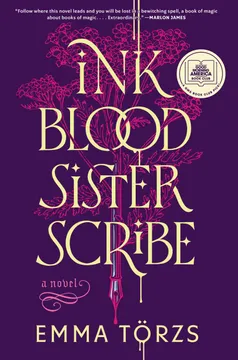


Plot Summary
Prologue
Abe Kalotay dies outside his Vermont home, his body drained beside a book his younger daughter, Joanna, has never seen. She recognizes the volume as a book in progress: its writing shifts before her eyes, and its pages thrum unlike anything in her father’s collection.
A note in Abe’s left-handed scrawl warns her to keep the book away from her blood and not to let her mother inside. Joanna does not yet know what spell the book contains, or why Abe carried it beyond the protective wards. She knows only that the collection he devoted his life to has killed him, and that his last instructions have left her alone with a dangerous mystery.
The opening makes the book both an heirloom and a weapon. Abe’s death is not an abstract magical cost: Joanna finds a father whose body has been emptied by the very knowledge he spent decades protecting. His note offers no explanation, only a prohibition, so love arrives as another form of inherited secrecy. The restriction on Cecily also plants a conflict that will complicate any simple division between safe family and dangerous outsiders. By giving Joanna an object she cannot read, the prologue establishes the novel’s central tension: preservation without understanding may protect a tradition, but it can also leave the next generation exposed to its consequences.
Blood on the Mirrors
At the South Pole station, electrician Esther Kalotay has chosen to remain for another season, partly because she has fallen for Pearl, a carpenter who makes the isolated base feel like a place she might belong. Her father, Abe, had ordered her to leave every November 2 and keep moving, warning that the people who killed her mother would find her otherwise.
Esther has obeyed for ten years, but this November she stays. At a crowded welcome party, the scent of yarrow drags her thoughts back to childhood. In the bathroom, she finds dried blood marks fixed to the mirror, then discovers the same pattern in other shared rooms. She recognizes the signs: someone at the station is using magic.
Esther’s decision to stay is both a romantic choice and a test of whether her father’s fear still governs her adulthood. The mirror marks turn that private experiment into a public danger, while the yarrow scent shows how quickly the body can reopen memories that Esther has deliberately kept at a distance. Her instinct is to treat the marks as evidence, not wonder. That response reflects a childhood in which magic was real but never hers to use. The scene gives her a reason to investigate without making her suddenly eager to rejoin the family she has spent a decade avoiding.
The Warded House
Two years after Abe’s death, Joanna lives alone in the Vermont house, setting its wards every night and cataloguing the hundreds of enchanted books in the basement.
Her father taught her to protect the collection, not question it, but she has begun testing recipes for magical ink after conservation reports reveal that the books were written with blood and herbs. Her attempts fail, leaving fresh scars on her hands. Esther’s monthly postcards are her only steady link to the sister who refused to return after Abe died.
Joanna resents that refusal, yet still pins each card to the refrigerator. When a stray cat begins appearing on the porch, she feeds it and lays out a blanket, making a small, tentative opening in a life built around keeping everything outside.
Joanna’s routines are not merely habits of a secluded life. They are a system for managing grief: daily dusting, nightly wards, and the repeated care of books give her tasks with reliable outcomes when family relationships have none. Her failed experiments show curiosity beginning to outgrow the obedience Abe cultivated, while the postcards preserve intimacy without requiring reconciliation. The cat matters because it asks for care without demanding an explanation of the past. Joanna’s first movement toward change is modest and physical: she makes room on the porch for a living creature, though she is not yet ready to let anyone cross the threshold.
The Blood-Wine Gala
In London, Nicholas, the Library’s young Scribe, watches wealthy guests praise a vintage he has recreated with a spell. They celebrate his uncle Richard and the Library, while Nicholas hides the blood loss and painstaking labor behind the illusion. He wants a life beyond the estate and its constant supervision, but Richard treats every outing as a risk.
On the drive home, an armed stranger forces his way into their car and points a gun at Nicholas. Collins, the bodyguard, shoots the attacker before he can fire again. Nicholas survives, but the gunshot leaves a hole inches from his head, and the dead man’s identity remains unknown. The attack convinces Richard to tighten the household’s security and keep Nicholas inside.
Nicholas’s unease begins before the gun appears: his work has created an experience for others, but the credit and social power belong to the institution that employs him. He is not simply bored by wealth; he is alienated from the consequences of his own labor. The attack then gives Richard a powerful argument for confinement, making fear seem like proof of care. Because Nicholas has already survived a childhood abduction, this new threat lands on an old injury. The scene establishes how protection can be both genuinely necessary and politically useful, a distinction Nicholas will struggle to make when the people guarding him become suspects.
A Message Through Glass
Unable to identify who marked the mirrors, Esther studies the signs and concludes that two people may be using paired glass to communicate. She tests a public mirror with a written question. After a long silence, a handwritten warning and a packet appear in the sink: a passport under a false name, plane tickets from Antarctica to Vermont, and a small vial of blood.
The note urges her to go home and says someone else is watching. It also echoes the Spanish sentence tattooed across Esther’s collarbones, a line from the novel her mother left behind. Esther distrusts the sender, but remembers the armed intruder who once came for her in Spokane after she missed her annual departure. She secures a seat on the next supply flight.
The mirror offers Esther help in the same form her father’s warnings always took: instructions without the full account that would make them feel trustworthy. The false passport makes the choice concrete, but it does not make it free of uncertainty. Her memory of the Spokane attack clarifies why Abe’s rule shaped her movements, while also exposing the cost of his method: Esther learned obedience before she understood the threat. The message’s use of her mother’s novel is more intimate than a name or address. It suggests that someone knows her through the few pieces of family history she has carried with her.
Cecily’s Blood Barrier
After Esther’s latest postcard says she will remain in Antarctica, Cecily reacts with unusual alarm. At lunch the next day, she asks Joanna to let her back into the old family home. Joanna refuses until Cecily explains the book that killed Abe. Instead, Cecily draws a circle of blood around the living room and traps her daughter inside, preventing her from reaching home in time to reset the wards.
Joanna bargains for a limited visit, threatening to end their relationship if Cecily tries to harm the collection. In Esther’s old bedroom, Cecily finds the long-unused mirror and writes a message. She adds Esther’s postcard, pricks her finger, and sends both through the glass, renewing a spell that has been waiting for years.
Cecily’s act is a betrayal, but it is not a simple bid for control. She uses a spell Joanna recognizes, then accepts a narrow bargain rather than forcing entry into the basement. Her behavior shows that the family’s silences have left each woman interpreting protection as coercion. Joanna’s threat is also a form of agency: she cannot defeat the spell, so she uses the relationship Cecily fears losing as leverage. The mirror introduces another kind of threshold, one that bypasses the house’s wards. Cecily’s message turns a private mother-daughter conflict into part of a larger network of concealed communication.
Pearl’s Broken Mirror
When Esther discovers that her mother’s novel has vanished from her room, she suspects Pearl, the only person who knew its value. Their confrontation leaves Pearl hurt and Esther convinced that their relationship was a cover. Esther checks Pearl’s mirror and finds the same blood pattern, then tears the room apart without finding the book.
Later, Trev brings Esther to the clinic, where he locks the door and draws a gun. Pearl, already there with a broken wrist from a skiing fall, wakes and strikes Trev with a vase; she takes his gun and shoots him as he strangles Esther. They push his still-living body through the mirror, whose magic mangles him. Esther cleans the room, then helps Pearl erase the day from her memory.
The apparent betrayal turns out to be a deliberate misreading born of fear: Esther treats Pearl’s proximity to the novel and the mirror as proof of complicity, when both women are being watched by Trev. Yet the danger does not dissolve once the misunderstanding does. Pearl must act with a broken wrist, and her shot becomes the only way to stop Trev from killing Esther. Their decision to send his body through the mirror is practical and morally costly. Esther then offers Pearl a spell that can erase the trauma, but Pearl chooses memory loss only after learning the truth and asking Esther to return.
The Eye in the Jar
While Richard and Maram keep him confined after the car attack, Nicholas follows a trail of coded book references Maram has left for him. A spell lets Collins make a Library bookcase transparent, revealing a hidden staircase and an unlisted room of mirrors. Beyond it, Nicholas enters Richard’s private study, where he finds a glass jar holding an eye that matches his own prosthetic.
He also discovers a draft spell that links a person’s life to an object, and recognizes language describing a Scribe’s eye as a source of power. The implications overturn the story he has trusted since childhood: the Library may have arranged his kidnapping at thirteen and taken his eye. Nicholas tries to tear the spell apart, but it resists him.
The eye converts Nicholas’s childhood trauma from a private memory into material evidence. Its preservation is especially disturbing because it places intimate bodily harm inside the Library’s carefully curated collection, treated like another useful artifact. The hidden room also literalizes Nicholas’s exclusion: the institution that claims to protect him has built a space he cannot enter without help. His inability to destroy the life spell underscores how deeply the system has constrained him, even when he finally recognizes its violence. The revelation does not instantly free him from attachment to Richard; it gives his suspicion a physical object he cannot explain away.
Trev Crosses the Mirror
Nicholas and Collins return to the mirror chamber and see the clinic at the Antarctic station through one of its panes. They watch Trev attack Esther, Pearl rise from her bed, and Pearl shoot him. Esther and Pearl then force Trev’s body through the glass into the Library’s hidden room. The spell distorts him beyond recognition, and the linked mirrors go blank when he dies.
Nicholas is shaken by the sight of Esther reading a memory spell without being affected by it. He has written that book himself, so her immunity confirms an unexplained connection between them. The scene also identifies Trev as a threat operating within the Library’s reach, not an isolated attacker, and makes the mirrors a route between their separate stories.
The mirrors turn spectatorship into a moral problem. Nicholas can see Esther’s danger but cannot intervene, so he experiences the same helplessness that has structured his own life from behind the Library’s safeguards. Esther’s immunity is more than a clue to her identity: it exposes the limits of Nicholas’s expertise, since the book he wrote cannot classify or control her. Trev’s passage through the glass makes the cost of magical communication bodily and irreversible. The moment binds the characters through witnessed violence, not trust, and gives Nicholas a reason to act before he understands who Esther is.
Two Escapes Converge
Collins helps Nicholas leave the Library with false documents, cash, and a route prepared by Maram. Meanwhile, Esther is detained at Auckland airport by the blond man who attacked her in Spokane. A young Ministry worker sedates the guard and another accomplice, then helps Esther board a replacement flight.
On the plane, she finds Nicholas and Collins beside her, with her missing novel in Nicholas’s hands. Their questions reveal that Nicholas believes she is a Scribe, someone whose blood can create magic books, although she has never known it.
Esther refuses to trust his certainty, but she learns that he and Collins are escaping the same institution that has pursued her. They choose Boston over the final ticketed stop, hoping to avoid following Maram’s route exactly.
The meeting replaces two separate forms of isolation with a fragile alliance. Esther has spent years treating movement as protection; Nicholas has spent his life treating confinement as protection. Neither is ready to trust the other’s explanation, but their shared escape makes cooperation more sensible than suspicion. The airport rescue also complicates Esther’s belief that every magical intervention is a trap: an unknown agent risks exposure to get her away from the blond attacker. Still, the false documents and rerouted flight preserve the story’s central uncertainty. They are moving toward family and answers, but they do not know whose plan they are following.
Strangers Reach Vermont
In Boston, Collins calls old contacts Lisa and Tansy, members of a local magical book collective, who lend the fugitives a car despite their anger at his former employer. At Joanna’s house, Esther’s return brings joy and fury into the same room.
She arrives with Nicholas, Collins, and a small dog, and Joanna admits them only after Nicholas agrees to inspect Abe’s unknown book. He identifies it as a Library volume protected by a lethal spell. Its embossed mark is a tracking enchantment, and its binding may be made from human remains.
Joanna learns that Nicholas does not merely study books: as a Scribe, he writes them with his own blood. The discovery gives her a source for the answers she has tried to find, but it also links Abe’s death to the Library.
The homecoming does not restore the sisters to their childhood roles. Joanna opens the door while holding a rifle; Esther arrives needing refuge, not permission to resume the past. Their first negotiation is therefore practical, with the killer book as the price of entry. Nicholas’s explanation gives Joanna a framework for her father’s death, but that knowledge also expands the danger beyond her familiar wards. Lisa and Tansy introduce an alternative model of magical life: a community that shares books rather than concentrating them in one wealthy institution. The household’s new occupants turn Joanna’s protected sanctuary into a contested space of knowledge.
Esther Writes Her First Spell
At Lisa’s home, Esther uses a borrowed computer to answer Pearl, who is furious and frightened after waking with a broken wrist and no memory of the previous day. Back in Vermont, Nicholas explains that Esther can create a book even though ordinary magic has never affected her.
They build the ink from her blood and herbs, using Abe’s truck as a setting for the ritual. Esther begins with a song that means little to her, then reads the Mourner’s Kaddish from her father’s prayer book.
The familiar grief unlocks the magic in her blood, and she feels the hum Joanna and Abe have always heard. Nicholas supplies the spell’s wording; Esther copies it by hand. Joanna reads the finished book to Collins, breaking the silence spell that has kept his history and loyalties from them.
Esther’s first successful act of magic does not come from mastering a technique or claiming a hidden destiny. It comes through a ritual of mourning she had once approached as an outsider, and through the presence of Joanna beside her in the truck they shared as girls. The scene redefines her supposed lack as a different relation to power: magic has not been absent from her, but inaccessible to the people who assumed she could not participate. Collaboration matters as much as blood. Nicholas supplies craft, Esther supplies the writing and ink, and Joanna’s reading completes the work, making family knowledge collective rather than inherited by one specialist.
The Stolen Wards
Before the new spell can be read, Joanna discovers the warding codex missing from the basement. Collins admits he took it and will not return it until Joanna frees him from his Library silence spell. He says Maram instructed him to bring Nicholas to the house and remove its protection, but cannot explain why.
Joanna recognizes the same constricted cough in Collins that Cecily makes when she tries to speak about forbidden matters, suggesting her mother is also under a Library oath.
Nicholas identifies Abe’s book as a life-linked tracking device, the object Richard will use to locate them. The group waits until the nightly wards fall, then sees a message arrive through Esther’s old mirror. It warns that the Library will soon be empty and urges them to take the next step.
Collins’s theft turns the fugitives’ refuge into another arena of coercion. He has helped them escape, yet repeats Maram’s order without being able to explain it, forcing Joanna to decide whether trust can survive an action that threatens her home. The parallel between his cough and Cecily’s reveals that silence is not simply a personality trait in this family; it has been engineered through magic. The tracking book makes the wards’ removal strategically dangerous, but the message through the mirror offers a possible purpose. Their next decision depends on interpreting a plan whose author has repeatedly been unable to speak plainly.
The Mirror Becomes a Road
Esther recognizes that the mirror message’s repeated reference to a path echoes the Spanish novel and her mother’s handwriting. With blood from the vial sent to Antarctica, she passes her hand through the glass without injury, then leads Nicholas through.
They emerge in Maram’s bedroom at the Library, where her instructions have opened the way to Richard’s study. Back in Vermont, Cecily reaches the now-unwarded house and tells Joanna that her own silence spell has broken; she asks to explain.
Joanna agrees to hear her, though Esther and Nicholas are already gone. At the Library, the pair find the hidden passage open and a note confirming Maram has prepared it. They descend toward the mirror room and Richard’s private study, uncertain whether the apparent escape route is also a trap.
The mirror changes from a surveillance device into a chosen passage. Esther acts on an interpretation rather than waiting for another instruction, and her immunity makes the crossing possible. That distinction matters: she is no longer merely being moved by other people’s plans. Meanwhile, Cecily’s arrival shows that dropping the wards has consequences beyond the immediate chase. Joanna must decide whether to meet her mother without the protection that has defined their relationship. The two sisters’ actions move in opposite directions, one toward the institution that has pursued them and one toward the family history kept outside the house. Both are attempts to replace inherited silence with direct knowledge.
Richard’s Last Book
In Richard’s study, Nicholas and Esther find Richard waiting with Maram and a gun trained on Esther. Richard demands the life-linked book and admits that the Library staged Nicholas’s childhood kidnapping, took his eye, and fabricated later threats to keep him obedient.
He intends to use Esther’s blood to make Maram live indefinitely. When Maram’s throat convulses under the silence spell, Esther realizes the spell has been broken and that Maram is signaling her.
Esther attacks Richard as the gun fires, but its bullets turn into bees under Maram’s enchantment. Nicholas shoots the femur in the portrait frame, the object anchoring Richard’s life. He and Esther tear the now-vulnerable book apart. Richard rapidly ages and dies as the spell ends.
The climax resolves the distinction between protection and captivity through physical evidence: Richard’s own admission confirms that he manufactured danger to make Nicholas dependent on him. Yet the emotional stakes are not settled by exposing the lie. Nicholas must choose to destroy the man who raised him, while Esther risks her body to create the opening for that choice. Maram’s silencing spell makes her failed breath both a constraint and a signal. The bees, first used to stage a rescue, now prevent the gun from deciding the outcome. The life book and bone frame show how power persists through linked objects, but also how those links can be broken.
A Mother’s Long Silence
After Richard’s death, Maram leaves the Library and disappears with several useful spells. In Vermont, Cecily explains that she is Esther’s birth mother, Isabel Gil, who adopted the name Maram Ebla when she joined the Library.
She had wanted access to its books and discovered that Richard used Scribes as a resource to preserve his own life. Isabel arranged for Abe and Cecily to hide Richard’s life book as leverage, then bound all three adults to silence. Abe distrusted Isabel’s motives and ordered Esther to keep moving each year rather than rely on the book.
Cecily admits she tried to lower the wards so Joanna could leave her isolated life, but she cannot say whether Isabel’s current plan is trustworthy. As Cecily tells the truth, the stray cat finally walks into Joanna’s house.
The revelation does not supply a clean family history; it replaces one lie with motives that remain morally mixed. Isabel loved books and wanted access to the Library, but her efforts to protect Esther also involved manipulating Richard and frightening her family. Abe’s secrecy was partly protective, yet it denied both daughters a choice. Cecily’s confession similarly explains her past without erasing the damage of trapping Joanna. The cat’s entrance offers no proof that the family is healed. It marks only a change in what Joanna permits inside, a small act of trust after years of confusing protection with keeping every door shut.
The Library’s Next Spell
Months later, Nicholas takes charge of the Library’s house and accounts while Maram remains missing. Esther returns to Pearl through a spell that makes greenhouse tomatoes ring with golden fruit; Pearl accepts the proof and reconnects by video call, though she still expects Esther to explain her disappearance.
Joanna, who has never flown before, travels to England with Esther and enters the Library, where its immense collection overwhelms and delights her. Nicholas and Esther are writing a spell, with Joanna’s help, to undo Richard’s old enchantment that confined magical ability to bloodlines.
The spell’s success will not be known immediately. In Richard’s ruined study, Joanna opens the new book and begins reading from the blood Esther supplies, while Nicholas and Collins wait beside her.
The ending shifts from defeating one person to confronting the system that made his power durable. The proposed spell does not promise a tidy reversal; it may alter who can access magic, or remove the characters’ own abilities, and the book closes before its result is known. Joanna’s journey to England signals a voluntary expansion of her world, not an abandonment of her home. Esther’s contact with Pearl also turns her earlier promise into action, though trust must be rebuilt rather than assumed. The final reading gathers the novel’s central forms of labor: blood, language, listening, and consent. No single Scribe can complete the future alone.
Analysis
Ink Blood Sister Scribe treats magic less as escape from material life than as a heightened version of its existing economies. Blood is ink, labor is bodily depletion, and the Library’s language of preservation conceals a system that profits from the people whose abilities sustain it. The central question is therefore not whether knowledge should be protected, but who gets to decide what protection costs and who is expected to pay. Abe’s wards keep his daughters alive while making one leave and binding the other to a house. Richard’s guardianship similarly makes Nicholas safe by controlling his body, history, and movement. In both families, secrecy begins as a defense against violence and becomes a structure that reproduces it.
The novel’s three central women respond differently to inherited confinement. Esther escapes through motion, Joanna through meticulous stewardship, and Maram through institutional expertise. None of those strategies is wholly liberating. Esther’s mobility strands her from people she loves; Joanna’s care becomes isolation; Maram’s scholarship serves an institution whose power she helped build. Their gradual cooperation offers a less absolute model: knowledge can be shared across different forms of ability, and protection need not mean possession. The jointly made spell, the sisters’ reunion, and the collective’s alternative use of magic all test that proposition through concrete acts of making, listening, and trust. The ending refuses to equate one tyrant’s defeat with justice completed. Richard dies when his life-book and anchor are destroyed, but the bloodline spell that concentrated magical ability remains to be challenged. The final book may redistribute magic or strip it from those who now possess it; the characters begin the work without assurance of reward. This uncertainty is ethically important. They do not replace the Library’s monopoly with a promise of perfect control. They choose instead to open the system to consequences they cannot fully predict. The novel’s strongest claim is that a future becomes more humane not when danger disappears, but when those affected by power are allowed to participate in making its rules.
Review Summary
Reviews for Ink Blood Sister Scribe are generally positive, averaging 3.99/5. Many praise its atmospheric prose, rich magic system centered on blood-inked books, and well-developed characters, particularly Nicholas and Collins. Readers frequently highlight the compelling sisterhood dynamic and immersive world-building. Common criticisms include a slow first half, passive characters, and underdeveloped romances. Most agree the pacing improves significantly in the second half. The book is often described as a blend of fantasy, mystery, and dark academia, with some noting it reads more like literary fiction than traditional fantasy.
People Also Read


Characters
Esther Kalotay
The runaway ScribeEsther is an electrician whose life has been organized around leaving before danger can catch her. Her father’s warning makes movement feel like responsibility, while her attraction to Pearl gives her a rare reason to stay still. Athletic, socially quick, and practiced at concealing fear, she is more comfortable acting than explaining what she feels. Her estrangement from Joanna is not a lack of love but the consequence of choosing distance as a form of protection. Esther’s central tension is between self-reliance and the wish to be known. She carries family history in a tattooed sentence and a translated novel, even as she tells herself that the past cannot guide her.
Joanna Kalotay
Keeper of the booksJoanna is Abe’s younger daughter, raised to hear magic and protect the family collection. She is careful, observant, and most at ease when her responsibilities have clear boundaries: dusting books, setting wards, tending the house. Her solitude is partly imposed by danger and partly reinforced by the habits that make danger feel manageable. Joanna’s attachment to Esther survives through postcards she resents receiving and cannot discard. Beneath her reserve is an intense capacity for wonder, whether she is reading a spell or trying to befriend a stray cat. She wants knowledge but fears that asking for it could dismantle the only life she understands.
Nicholas
The Library’s ScribeNicholas is a young aristocrat and the Library’s only known living Scribe. He writes spells with his blood, a skill that has made him valuable to an institution that controls nearly every part of his life. Witty and exacting, he uses humor, expensive clothes, and scholarly confidence to disguise loneliness and physical weakness. His childhood taught him that obedience was the price of safety, so he initially struggles to distinguish affection from control. Nicholas is also a genuine maker, drawn to the craft of books beyond their commercial use. His curiosity and need for recognition eventually push him toward people who treat him as more than a source of magical labor.
Collins
The guarded bodyguardCollins is Nicholas’s blunt, physically imposing bodyguard, hired partly because he can hear magic. His sarcasm makes him appear difficult, but his loyalty is grounded in real attachments to his sister and the Boston collective he left behind. A silencing spell prevents him from speaking freely about his life and employer, turning ordinary conversation into a source of strain. Collins dislikes being treated as a tool, even as he has accepted work that places him in that role. His instinct is to protect through action rather than explanation. Beneath the scowl is a man who misses community and wants the freedom to make choices without threatening the people he cares about.
Cecily
The divided stepmotherCecily is the Belgian woman who helped raise Esther and Joanna and later left Abe’s warded home. Warm, demonstrative, and socially capable, she has built an independent life in town, but her separation from Joanna remains painful. She believes the books and wards have consumed the family, while Abe sees them as its protection. Cecily’s love is genuine, yet she can become manipulative when fear convinces her that no ordinary request will work. Her silences conceal obligations she cannot easily explain, not simply a lack of feeling. She is caught between wanting her daughters safe and wanting them free from the secret life that safety has imposed.
Maram Ebla
The Library’s scholarMaram is the Library’s chief scholar and Nicholas’s tutor, archivist, and closest adult companion. A precise researcher with a disciplined public manner, she has spent years studying Scribes and preserving the knowledge on which the Library depends. Her devotion to scholarship makes her difficult to read: she can appear emotionally remote even when she is deeply invested in the people around her. Maram values the institution, but her understanding of its history is broader than Nicholas’s and shaped by loyalties she keeps private. She is a skilled planner, accustomed to working around restrictions rather than confronting them openly. Her careful silences leave others unsure whether she is protecting them or steering them.
Richard
The benevolent patriarchRichard is Nicholas’s uncle, guardian, and head of the Library, an institution built around collecting, preserving, and lending magical books. He is genial, cultivated, and practiced at making authority feel like care. His concern for Nicholas is real enough to be persuasive, but it exists alongside a deep belief that the Library’s needs take precedence over individual freedom. Richard sees secrecy and control as necessary to preserving an inheritance he has carried for generations. His confidence comes from being surrounded by staff, wealth, and accumulated knowledge. He is most dangerous when he can present coercion as a reasonable response to risk.
Abe Kalotay
The absent book guardianAbe is Esther and Joanna’s father, a collector of magical books who taught Joanna to hear and protect them. Loving, funny, and devoted to his daughters, he is also secretive to the point of making decisions for them without their consent. His fear is rooted in generations of book-related violence, including the murder of Esther’s birth mother. Abe believes the wards are the surest way to keep his family alive, yet that protection confines Joanna and drives Esther from home. His lessons in care and caution remain central to both daughters, even as they begin to question the silences and sacrifices built into his rules.
Pearl
Esther’s Antarctic partnerPearl is an Australian carpenter at the South Pole station and Esther’s lover. Playful, physically affectionate, and frank about her past, she notices the distance Esther tries to hide. Her warmth makes commitment feel both desirable and dangerous to Esther. Pearl has already learned how guilt can shape a life through the care she gave her mother, and she does not pretend that difficult choices leave no mark. She values honesty and connection, even when she is frightened by what the truth might require of her.
Trev
The false carpenterTrev presents himself as a friendly Colorado carpenter at the Antarctic station. He flirts with Esther and appears to be an ordinary newcomer among the summer crew. His easy manner gives Esther little reason, at first, to distinguish him from the station’s other workers. He represents the danger of a threat that can enter an isolated community under the cover of familiarity.
Isabel Gil
Esther’s absent birth motherIsabel is Esther’s biological mother, remembered through a single photograph, her Spanish-language novel, and the few stories Abe allowed his daughter to hear. She came from a family of magical book collectors and pursued knowledge with fierce ambition. Even in absence, Isabel shapes Esther’s sense of origin and provides the words that recur at crucial thresholds. For Esther, the mystery of Isabel is inseparable from the larger question of whether family history can be recovered without being controlled by those who kept it.
Lisa
The collective’s hostLisa belongs to the Boston community of people who share and protect magical books outside the Library. She is warm but wary of Collins, whose former employment placed the collective at risk. Her house demonstrates how magic can be used for ordinary communal needs, such as heating a room, rather than concentrated into an institution’s costly services.
Tansy
The collective’s hard realistTansy is a senior member of the Boston book collective and one of Collins’s old allies. Blunt and skeptical, she is unwilling to confuse affection with trust after Collins’s departure from the group. She still helps the fugitives by lending them a car, showing that her anger does not erase her concern.
Sir Kiwi
Nicholas’s devoted companionSir Kiwi is Nicholas’s tiny Pomeranian and his most constant companion. Fierce, affectionate, and undeterred by her size, she offers Nicholas a relationship not mediated by the Library’s hierarchy. Her presence carries a small pocket of uncomplicated loyalty into tense rooms and unfamiliar homes.
John
Nicholas’s Scribe fatherJohn was Nicholas’s father and a Scribe whose history reaches Esther’s family through the Library’s pursuit of magical bloodlines. He died before Nicholas was old enough to know him, leaving his son to learn about him through Richard’s account and the records Maram preserved.
Plot Devices
Blood-written books
Magic made materially costlyThe books work when a reader supplies blood, often with herbs that intensify the spell. Their effects range from practical transformations to communication, protection, and life-altering magic. A Scribe can create new volumes by writing with their own blood, while most other people can only activate books already made. This system makes magical power physical and finite: a spell consumes the body that produces it, and a book can preserve or exploit that sacrifice long after its author is gone. The distinction between reading, writing, and hearing magic also shapes the characters’ different relationships to knowledge.
The warding codex
A refuge that becomes a cageAbe’s Latin codex makes the Vermont house and property impossible for outsiders to locate or remember. Joanna renews the spell every night with her blood, maintaining the family’s protection after Abe’s death. The wards also block communication magic from reaching the house, keeping its occupants isolated. Because Esther is unaffected by magic, she cannot be hidden by them and is sent away to protect the others. The codex therefore preserves the family while dividing it. When the wards fall, hidden routes and old messages become accessible, but so does the world beyond the property.
Linked mirrors
Messages across sealed worldsBlood marks activate a connection between paired mirrors, allowing people on opposite sides to see rooms, send notes, and pass small objects through the glass. Living bodies cannot safely make the crossing under ordinary conditions. The spell creates the novel’s main communication channel, but it also makes watching possible: Esther discovers that someone can observe her at the station without appearing in her room. The Vermont wards prevent incoming communication until they are dropped. When Esther discovers she can pass through the glass unharmed, the mirror changes from a means of surveillance into a route she can choose to take.
The Scribe-seeking spell
A bloodline turned into a targetThe Library’s annual seeking spell uses a Scribe’s eye to locate other people capable of writing magical books. Its activation is limited to a brief yearly window, which explains why Esther’s father made her keep moving on a particular date. The spell makes rare talent legible to the institution and converts discovery into danger. It also gives a bodily explanation for Nicholas’s missing eye and links Esther’s years of flight to the Library’s search. The hunt is not simply about finding gifted people. It allows the Library to keep Scribes under its control and prevent them from acting beyond its reach.
Richard’s life book
Immortality anchored to remainsThis in-progress book binds a person’s life to a physical object and carries a Library tracking mark. Its pages and binding are made from a Scribe’s bodily remains, making the book itself an archive of exploited labor. Richard’s life is anchored both to the volume and to a bone fixed in his ancestor’s portrait frame. The book cannot be destroyed by ordinary force while the anchor remains intact, but two Scribes can tear it once the bone is broken. Its existence connects the Library’s preservation of books to the preservation of its own ruler, revealing how scholarship can be bent into a technology of domination.
Download PDF
Download EPUB
.epub digital book format is ideal for reading ebooks on phones, tablets, and e-readers.








