

Key Takeaways
Treat finance as a servant of production, not a substitute for it
Two economies overlap. Hudson distinguishes production and consumption, where people make goods and provide services, from the ownership and credit arrangements that determine who claims income and assets. Finance can support the first economy when it funds useful investment. The danger, he argues, comes when lending mainly buys existing property, securities, or monopolies, transferring ownership without creating more productive capacity.
Follow the money. The book’s parasite metaphor asks whether finance replenishes the economy it depends on. Interest, fees, rents, and foreclosures can redirect money from household spending and business investment toward creditors. Hudson’s objection is not simply that some financiers behave badly. It is that rules and public narratives can make extraction look like productive contribution, even when the underlying economy is being weakened.
The metaphor is useful because it makes a hidden question concrete: does a financial claim help produce future income, or merely secure a larger claim on existing income? That distinction echoes ecological thinking about systems that draw resources faster than they regenerate. Still, finance is not a single organism with one appetite. Payments, insurance, and risk-sharing can enable ordinary production. The more practical test is therefore not whether a sector is financial, but whether its activities expand productive capacity, distribute risk responsibly, and leave enough income circulating to sustain the people and firms on which it relies.
Track compound claims before they outrun the income meant to pay them
Claims multiply quickly. Compound interest grows on both the original amount and previously accumulated interest. Hudson emphasizes that lenders can also recycle interest receipts into new loans, increasing financial claims on households, businesses, and governments. The Rule of 72 estimates doubling time: at 8 percent, money doubles in about nine years. In ancient Mesopotamia, a commonly used commercial rate was roughly 20 percent annually, with a five-year doubling period under the simple-interest contracts described in the book.
Growth meets limits. Hudson argues that productive income cannot automatically expand at the same rate as financial claims. Ancient rulers periodically canceled debts to prevent land loss, bondage, and social breakdown. The book distinguishes this process from debts literally compounding forever: its concern is the recycling of creditor income into successive claims on an economy with finite resources and earnings.
Exponential growth is hard to intuit because the early stages look manageable and the late stages arrive abruptly. That makes the book’s focus on doubling time more useful than vague warnings about “too much debt.” Yet compound interest alone does not prove that a crisis is inevitable. Borrowed funds can finance projects that generate income, and debts can be refinanced or repaid. The sharper diagnostic is whether the income-producing capacity financed by credit is growing alongside the claims, and who bears the loss when those expectations prove too optimistic.
Tax land rent before mortgage credit turns it into bank interest
Location creates value. Hudson argues that a site’s value often rises because of community growth and public investment in roads, schools, and other services, not because the owner produced the increase. Classical economists called this unearned increase land rent. They proposed taxing it for public use rather than leaving it available to be capitalized into higher property prices.
Credit redirects the claim. When taxes on property fall, more of its rental value can support a larger mortgage. Hudson reports that real estate accounted for about 80 percent of new bank lending in the period he examines. By 2012, he says, creditors held claims on more than 60 percent of U.S. home value. In this account, homeownership spreads, but much of the rent once paid to landlords is instead paid to banks as interest.
This argument highlights a subtle connection between tax policy and housing affordability: a tax cut on valuable land can raise the amount buyers are able to borrow, pushing prices upward rather than making homes sustainably cheaper. The broader idea resembles capitalization in public finance, where expected future income is reflected in an asset’s current price. The difficult question is how to distinguish land value from improvements created by owners, and how quickly a tax change should take effect. Those design choices matter because blunt reassessment can burden households even when the underlying principle is sound.
Separate extraction from output, or GDP will mistake cost for growth
Accounts shape perception. National Income and Product Accounts, or NIPA, are the government statistics used to estimate national production and income. Hudson argues that they record much of finance, insurance, and real estate revenue as productive output, without clearly separating services from transfers that shift income between parties. The book calls these sectors FIRE. It also revives the classical idea of economic rent: income from ownership or privilege that exceeds the necessary cost of producing a good or service.
The label matters. If rising fees or rents appear as greater output, headline growth can conceal a larger burden on households and firms. Hudson argues that standard accounts also understate asset-price gains, which have been a major source of wealth for owners. He proposes measuring extraction and productive activity separately, rather than treating every dollar of revenue as proof of an equivalent social contribution.
Measurement is never a neutral window: the categories chosen determine which questions become visible. This is a strong case for supplementary accounts that track distribution, debt service, and asset-price changes alongside GDP. But GDP was designed primarily to estimate production, not to certify fairness or social welfare. Some financial services do create value, and separating useful services from rent extraction is methodologically difficult. The best response is not to discard national accounts, but to pair them with measures that reveal who pays, who benefits, and whether financial activity supports future production.
Buybacks can lift share prices while starving the companies that earn them
Price can rise without growth. A company that buys back its own shares reduces the number of shares outstanding. Earnings per share can rise even if total earnings do not, which may boost the share price and executive compensation tied to it. Hudson presents this as financial engineering when it replaces investment in research, equipment, or hiring.
The scale is striking. For 2003 to 2012, the book cites an analysis of 449 companies in the S&P 500. They used 54 percent of earnings, a total of $2.4 trillion, for buybacks, 37 percent for dividends, and only 9 percent for capital investment. Hudson argues that this steers corporate income toward shareholders and managers while leaving firms less prepared to develop products or withstand downturns. The immediate gain may be real for investors, but it is not the same as building productive capacity.
Buybacks expose the gap between a convenient performance metric and the underlying health of an organization. When executive pay rewards share price, managers have an incentive to improve the measure, whether or not the business becomes more capable. This is a classic principal-agent problem, where decision-makers pursue goals that diverge from an institution’s longer-term interests. Still, a buyback is not automatically destructive: returning genuinely surplus cash can be sensible when investment opportunities are poor. The relevant evidence is what firms sacrifice, and whether payouts systematically displace productive investment.
A bailout that preserves creditor claims can deepen the debtor's slump
Saving balance sheets is not recovery. Hudson’s account of 2008 centers on the decision to rescue major financial institutions while leaving many household debts in place. The U.S. government supported banks and markets through emergency programs and, according to the book, roughly $4 trillion in Federal Reserve asset purchases and credit by 2014. Homeowners facing foreclosure did not receive comparable relief from their mortgage principal.
Losses must land somewhere. If borrowers cannot pay, creditors can absorb losses through write-downs, or governments can support creditor claims and leave debtors to keep paying. Hudson argues that the second approach preserved financial assets but constrained consumer spending and investment. He distinguishes a liquidity problem, a temporary shortage of cash, from insolvency, when debts exceed realistic repayment capacity. Treating insolvency as mere illiquidity, he says, delayed restructuring and transferred much of the cost to the wider economy.
The key contribution is to make a bailout’s distributional choices visible. “Stabilizing the system” can mean protecting payment services and ordinary depositors, or it can mean protecting investors from losses. These are not identical goals, even when emergency conditions blur them. A crisis can also create genuine risks of cascading failures, so refusing every intervention is not a neutral alternative. The more precise policy question is which functions need protection, which investors should bear losses, and what conditions prevent emergency support from rewarding the behavior that created the danger.
Austerity cannot restore solvency by shrinking the income base
Greece shows the bind. The eurozone’s Maastricht rules limited government deficits to 3 percent of GDP, while the European Central Bank was barred from directly financing national governments. After Greece’s reported deficit was revised sharply upward in 2009, the European Commission, ECB, and IMF imposed loans tied to spending cuts, tax increases, and labor-market changes. The loans helped pay creditors, but did not erase the underlying debt burden.
The denominator matters. The book reports that Greece’s real output fell 17 percent from 2009 to 2012, while unemployment reached 25 percent in 2012. Hudson argues that shrinking incomes and employment made debt harder to repay, rather than restoring solvency. He also notes Greece’s tax evasion and political mismanagement. His broader criticism is that creditors made labor and public services bear the adjustment while protecting bondholders from losses.
This case illustrates why fiscal tightening during a contraction can be self-defeating: cuts may reduce the very income and tax receipts needed to service debt, worsening the debt-to-output ratio. That mechanism is familiar in macroeconomics, but Greece also faced deep governance problems, including weak tax collection, so austerity cannot be treated as the only cause of its distress. The useful distinction is between addressing structural weaknesses and demanding an adjustment so abrupt that the economy loses the capacity to recover. A credible plan must confront both debt arithmetic and institutional failures.
Ask who directs credit, because every economy is planned
Credit allocates power. Banks decide which borrowers receive financing and which activities become easier to pursue. Hudson argues that this makes banking a form of economic planning, even when it is described as a neutral market process. He traces regulatory capture to the movement of financial executives into public agencies and the influence of bank lobbying over policy.
Rules are choices. The book contrasts credit for new productive capacity with credit used to buy existing property or companies. It also proposes a public banking option for basic services and a larger public role in money creation. Hudson’s point is not that every public decision is wise. It is that elected governments, commercial banks, and central banks all shape the economy, but they face different incentives and levels of democratic accountability.
The question “who plans?” punctures the idea that markets operate without institutional direction. Credit allocation shapes which regions, industries, and households can act, so monetary rules have distributional effects even when officials present them as technical. Central-bank independence can protect policy from short-term political pressure, but independence without transparency can also insulate consequential choices from public scrutiny. A strong institutional design therefore needs both expertise and accountability. The debate is not planning versus no planning; it is which goals guide planning and how the public can challenge decisions.
Make debt relief a solvency rule, not a reward for political clout
Debt cancellation has precedent. Hudson traces regular debt cancellations to ancient Mesopotamia, where rulers restored land and freed debt-bound workers to preserve economic and social stability. Later societies used their own Clean Slate practices, including the biblical Jubilee tradition. These measures were not treated as a rejection of commerce, but as a way to prevent creditor claims from overwhelming the productive economy.
Make restructuring systematic. Hudson’s proposed remedies include:
1. Write down debts that exceed realistic repayment capacity.
2. Tax land, resource, and monopoly rents instead of wages and production.
3. Remove tax advantages that encourage debt over equity.
4. Offer public banking and keep essential infrastructure from becoming a tollbooth.
The underlying choice, he argues, is whether losses fall on creditors through restructuring or on debtors through foreclosure, austerity, and asset sales.
A rule-based restructuring process could reduce the political theater around each default and give lenders reason to assess repayment capacity more carefully. The historical examples also challenge the notion that debt cancellation is inherently alien to stable societies. But ancient royal proclamations cannot simply be transplanted into modern financial systems, where pension savings, payment networks, and cross-border contracts are interconnected. The central design challenge is to protect essential financial functions while imposing losses on those best positioned to evaluate risk. Predictable rules can make relief less arbitrary, though they cannot remove the conflict over who pays.
Analysis
Hudson’s strongest move is to shift attention from production alone to the balance sheets and institutions that determine who owns the resulting income. That shift helps explain why rising asset values can coexist with weak investment, stagnant wages, and households that feel richer on paper but have little room in their monthly budgets. His historical account adds a valuable corrective: debt cancellation, public credit, and rent taxation are not inventions outside economic history, but recurring responses to creditor claims that threaten social stability.
The book is also a polemic, and its central distinction between productive industry and parasitic finance can become too clean. Modern finance performs functions that are difficult to classify as either pure production or pure extraction: payments, insurance, liquidity provision, and the funding of uncertain projects. Likewise, public ownership does not guarantee competent management, and creditors are not always the ultimate beneficiaries of a bailout. The more durable version of Hudson’s argument is institutional rather than moral. Credit should be assessed by what it finances, how risk is allocated, and whether its costs leave the borrower and the wider economy able to function.
The book’s statistics and historical comparisons also require care. GDP accounts were built to measure output, not unearned income or economic justice, so their limits do not by themselves prove intentional deception. Nor can a single policy explain the varied crises of the United States, Ireland, Latvia, and Greece. These qualifications do not erase the book’s central insight. They sharpen it: when debt claims grow faster than the income that supports them, accounting conventions, bailout rules, and political authority decide whether adjustment falls on creditors or on the people who produce and consume. That is the book’s lasting question, and its answer is ultimately a dispute about democracy as much as economics.
Review Summary
Killing the Host receives high praise for its insightful analysis of how finance capitalism parasitically extracts wealth from the productive economy. Readers appreciate Hudson's historical context, detailed explanations of financial mechanisms, and critique of neoliberal economics. Many find the book eye-opening and thought-provoking, despite some repetition and editing issues. While some question Hudson's proposed solutions, most agree the book offers valuable perspective on economic inequality and the need for reform.
People Also Read





Glossary
Economic rent
Income beyond production costsEconomic rent is income obtained through ownership, market power, or a legal privilege beyond the necessary costs of producing a good or service. Hudson uses the term for land rent, natural-resource income, monopoly pricing, and some financial charges. Classical economists treated such income as a potential drain on production and a possible target for taxation or public regulation.
FIRE sector
Finance, insurance, real estateFIRE is Hudson’s abbreviation for Finance, Insurance, and Real Estate. He uses it to group sectors that are closely connected through lending, property ownership, insurance, and financial claims. In his argument, some FIRE income reflects useful services, while some reflects rent extraction or payments that transfer income without adding equivalent productive output.
Asset-Price Inflation
Credit-driven asset price risesAsset-Price Inflation is the rise in the prices of assets such as homes, stocks, and bonds, especially when easier credit enables buyers to borrow more. Hudson argues that banks often lend against existing assets rather than financing new production, so rising credit can inflate ownership prices without a matching increase in productive capacity.
Debt Deflation
Debt payments shrink spendingDebt Deflation describes a process in which interest and principal payments absorb income that would otherwise support consumption, investment, and employment. As spending and output weaken, borrowers become less able to repay, while the real burden of fixed debts can grow. The term was coined by economist Irving Fisher in 1933 and is central to Hudson’s account of post-crash austerity.
Clean Slate
Periodic cancellation of debtsA Clean Slate is a formal cancellation or restructuring of debts that have become disruptive or impossible to repay. Hudson connects the practice to ancient Mesopotamian royal proclamations that restored land and released debt-bound workers. He presents such measures as a way to prevent debt claims from concentrating property and destabilizing society, rather than as a rejection of all borrowing.
Ponzi Austerity
Cuts that deepen debt distressPonzi Austerity is the term Yanis Varoufakis used for policies that cut incomes and public spending in order to make debt payments, even though the resulting economic contraction makes repayment harder. Hudson applies the idea to bailout programs that lend governments more money to pay existing creditors while requiring measures that weaken the debtor economy.
Modern Monetary Theory
Public money and fiscal capacityModern Monetary Theory, or MMT, is an approach to understanding money creation and government spending in countries that issue their own currency. In Hudson’s account, it emphasizes that governments and central banks can create money to support public spending, rather than relying entirely on borrowing from private creditors. The approach does not mean resources are unlimited; real productive capacity remains a constraint.
Regulatory capture
Regulators serving regulated industriesRegulatory capture occurs when an agency meant to oversee an industry instead advances the interests of the firms it regulates. Hudson points to revolving-door appointments, lobbying, and weak enforcement as ways financial institutions can influence public oversight. In his account, capture helps disable rules that might limit risky lending, fraud, or the transfer of private losses to the public.
FAQ
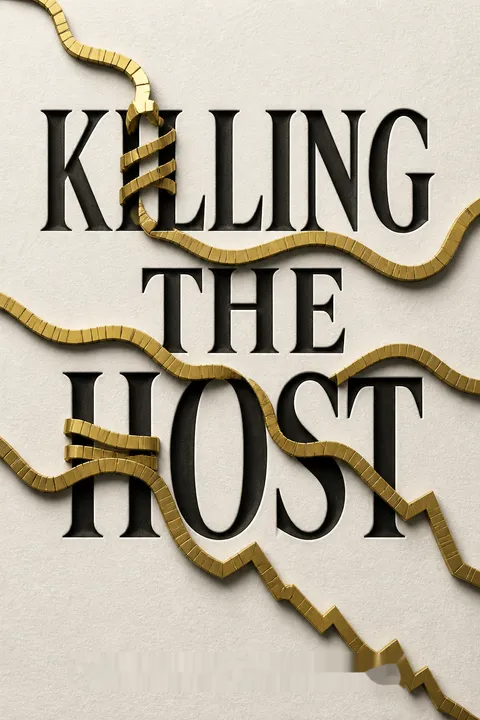
What is Killing the Host: How Financial Parasites and Debt Bondage Destroy the Global Economy by Michael Hudson about?
- Central theme: The book examines how financial parasites—primarily the finance, insurance, and real estate (FIRE) sectors—extract wealth from the productive economy, leading to economic polarization, stagnation, and crisis.
- Historical and global analysis: Hudson traces the evolution of debt, rent, and financial power from ancient times to the present, showing how these forces repeatedly destabilize economies.
- Critique of neoliberalism: The narrative critiques neoliberal policies, deregulation, and the capture of governments by financial elites, arguing these trends undermine democracy and social welfare.
Why should I read Killing the Host by Michael Hudson?
- Insight into financial crises: The book provides a clear explanation of the causes and consequences of major financial crises, including the 2008 crash and the European debt crisis.
- Challenges mainstream economics: Hudson critiques widely accepted economic theories, encouraging readers to question conventional wisdom and consider alternative approaches to economic policy.
- Accessible and global perspective: The book makes complex financial concepts understandable and uses global case studies to illustrate the real-world impact of financialization and debt bondage.
What are the key takeaways of Killing the Host by Michael Hudson?
- Debt writedowns are essential: Unsustainable debts must be written down to restore economic balance and prevent prolonged depression and social disintegration.
- Financialization harms the real economy: The FIRE sectors extract unearned income, crowding out productive investment and shrinking markets.
- Neoliberal austerity deepens crises: Policies favoring creditors over citizens worsen inequality and economic stagnation, while undermining democracy.
- Systemic reform is needed: Hudson advocates for taxing economic rent, public banking, and a fundamental reevaluation of economic theory and policy.
What does Michael Hudson mean by "financial parasites" in Killing the Host?
- Definition of financial parasites: Borrowing from biology, Hudson describes banks, bondholders, landlords, and monopolists as entities that extract income from the economy without contributing to production.
- Mechanisms of extraction: These actors siphon off wealth through rent, interest, and monopoly profits, draining resources from labor and industry.
- Control over policy: Financial parasites influence government and policy-making to protect their interests and suppress reforms that would limit their power.
How does Michael Hudson define and critique "financialization" in Killing the Host?
- Definition of financialization: Financialization is the growing dominance of financial actors, markets, and motives, prioritizing debt, rent extraction, and asset-price inflation over productive investment.
- Economic consequences: This process raises costs for labor and industry, crowds out investment in tangible capital, and leads to economic polarization and stagnation.
- Social and political impact: Financialization undermines democratic control, promotes austerity, and shifts wealth upward to the financial elite.
What are the two economies described in Killing the Host by Michael Hudson?
- Tangible (real) economy: This is the sector of production and consumption, involving labor, capital goods, and technological progress that create real goods and services.
- Finance and rent economy: Centered on the FIRE sector, this economy deals with credit, debt, property ownership, and rent extraction, transferring income from the real economy.
- Conflict between economies: Interest and rents are transfer payments from the productive sector to the financial sector, but mainstream economics often obscures this parasitic relationship.
How does Killing the Host by Michael Hudson explain the 2008 financial crisis and its aftermath?
- Foreseen but ignored: The crisis was anticipated by insiders, but warnings were dismissed due to regulatory capture and political influence.
- Role of junk mortgages and derivatives: Fraudulent lending and complex financial products created a bubble that inevitably collapsed.
- Bailouts for banks, not debtors: Government interventions prioritized saving financial elites while imposing austerity on the broader population, deepening inequality and economic stagnation.
What is the "Bubble Economy" and how does it function according to Killing the Host by Michael Hudson?
- Asset-price inflation: The Bubble Economy is driven by rising prices for real estate, stocks, and bonds, fueled by easy credit and low interest rates.
- Debt-for-equity arbitrage: Speculators borrow cheaply to buy assets, inflating prices and creating financial bubbles.
- Transition to debt deflation: When debts become unsustainable, repayment drains income from the real economy, leading to contraction and austerity.
How does Killing the Host by Michael Hudson describe the role of corporate stock buybacks and debt leveraging?
- Shift in corporate goals: Corporations now prioritize maximizing shareholder value through stock price increases, often at the expense of productive investment.
- Debt-financed buybacks: Companies borrow to buy their own shares, increasing debt and reducing funds for research, development, and hiring.
- Short-termism and instability: Executive compensation tied to stock prices incentivizes short-term gains, undermining long-term corporate health and economic stability.
What role do the IMF, ECB, and EU Commission (the Troika) play in financial crises according to Killing the Host by Michael Hudson?
- Pro-creditor enforcement: The Troika enforces repayment to bondholders and banks, often imposing austerity and privatization as bailout conditions.
- Blocking debt restructuring: These institutions resist meaningful debt writedowns, prolonging economic crises and deepening recessions.
- Undermining democracy: The Troika’s policies override national parliaments and popular will, reducing democratic control and fueling political instability.
What solutions or remedies does Michael Hudson propose in Killing the Host?
- Debt write-downs: Hudson advocates for restructuring and writing down unsustainable debts to restore economic balance and prevent depression.
- Public control of banking: He calls for making banking a public utility to align credit creation with productive investment and public interest.
- Taxing economic rent: Reviving classical economic ideas, Hudson supports taxing land, natural resource, and monopoly rents to reduce inequality and limit financial parasitism.
What are the best quotes from Killing the Host by Michael Hudson and what do they mean?
- "Debts that can’t be paid, won’t be paid." This highlights the inevitability of debt writedowns when obligations exceed the ability to pay, emphasizing the need for systemic reform.
- "The financial sector is not part of the real economy; it is a parasite on it." Hudson underscores the distinction between productive and extractive economic activities, challenging mainstream economic narratives.
- "Austerity is not a solution, but a symptom of financial dominance." This quote critiques policies that prioritize creditors over citizens, arguing that austerity deepens economic and social crises.
- "Restoring economic balance requires taxing economic rent and making finance serve the real economy." Hudson calls for a return to classical economic principles to curb financial parasitism and promote equitable growth.
About the Author
Other books by Michael Hudson
Download PDF
Download EPUB
.epub digital book format is ideal for reading ebooks on phones, tablets, and e-readers.








