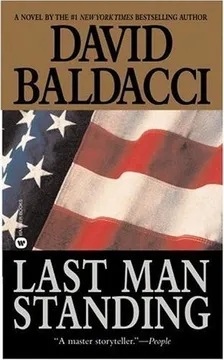


Plot Summary
The Courtyard Goes Silent
On a Washington raid, Hostage Rescue Team operator Web London sees a scarred ten-year-old in the alley and hears an odd, old-fashioned curse. As his team reaches the target, Web suddenly cannot move. Eight remote machine guns tear through the courtyard, killing team leader Teddy Riner and five others while Web lies trapped behind them.
When his body finally responds, he crawls through gunfire to pull the boy, Kevin, out of danger. He sends Kevin toward the incoming FBI teams with a warning, then destroys the gun nests with his rifle and grenades. The six dead men are his closest friends. Web survives, but cannot explain why he froze, or why the child’s voice seemed to stop him.
One Man Left Standing
At the hospital, Web apologizes in his mind to the widows, while FBI investigators press him to explain his paralysis. He can only repeat that he does not know what happened. Hotel Team assaulter Paul Romano confronts him and suspects cowardice, deepening Web’s shame.
The six funerals bring national attention, but at the memorial service Lou Patterson’s widow, Julie, publicly accuses Web of abandoning her husband. Reporters turn the grief into spectacle.
When they later crowd Web’s home, he fires into the air to escape the mob, and edited footage makes him look dangerous. Percy Bates backs Web publicly, but the Bureau’s investigation continues, leaving him isolated between grieving families, colleagues, and an institution that may blame him.
The Missing Kevin
Web discovers that the child who reached Hotel Team with his cap and note was not the boy he rescued. Romano and Mickey Cortez remember a light-skinned child with no facial scars, unlike the dark-skinned Kevin Web recalls. At Kevin’s run-down home, his grandmother gives Web a photograph that confirms the difference.
Kevin is still missing, and his older brother, Francis Westbrook, is searching for him too. Francis is known as Big F, a formidable drug dealer, but his fury at losing the boy suggests more than a criminal’s concern for an asset. Web begins to suspect that someone arranged the substitution at the scene, then used the false child to spread a story that Web had panicked.
Claire Opens the Past
After a disorienting appointment with his usual psychiatrist, Ed O’Bannon, Web meets Claire Daniels, an independent psychiatrist who offers him a calmer place to speak. He tells her about HRT, his ruined face, and the guilt of surviving his team. Claire questions whether combat stress explains his paralysis, but Web resists any account that makes him sound unfit.
He admits his mother drank heavily, his stepfather was cruel, and he never knew his imprisoned biological father. He also reveals how deeply he depended on his teammates, whose families felt like his own. When Claire asks whether he wants to return to HRT, Web answers yes, giving her a goal and allowing their difficult work to continue.
Phones Become Weapons
As Web searches for Kevin, violence spreads to people connected with an old Richmond hostage crisis. U.S. attorney Fred Watkins dies when a modified phone sparks gas inside his home, killing his family as well. Judge Louis Leadbetter is shot while reading a newspaper in a government car, and defense lawyer Scott Wingo dies after poison is applied to his telephone.
All three had roles in the trial of Ernest B. Free, a white supremacist whose group seized a school years earlier. Web had been part of the HRT team that entered that school, where ten-year-old David Canfield died. The clustered murders suggest a revenge campaign, but the phone traps require planning, technical skill, and knowledge of each victim’s habits.
A Boy Draws the Trigger
After an apparent abduction by men questioning her about Kevin, Claire tells Web what she learned: his missing boy may have been switched with another child. The attackers had impersonated Francis, using the confusion to frighten her into revealing what Web knew. Web and Claire visit Jerome, the protective young relative who shares Kevin’s home.
Jerome explains that Francis is actually Kevin’s father, though the boy believes he is his brother. Kevin had been trying to earn money for the household. In Kevin’s room, Claire finds a drawing of the raid: a child holds a remote whose beam reaches toward the courtyard. The image suggests Kevin was unknowingly used to activate the firing system that killed Web’s team.
Cove’s Tunnel Warning
Web meets Francis Westbrook in secret. Francis denies ordering the attack and, after a brutal demonstration of his strength, tells Web that the target building connects to underground passages. He also admits Kevin is his son and begs Web to help find him.
A second meeting brings Randall Cove, the missing FBI undercover agent, into the case. Cove explains that he believed a large prescription-drug operation was using the building, but someone cleared it before the raid. His source, local dealer Toona, is killed by Francis when exposed as an informant.
Cove confirms that the drug network is larger than Westbrook’s crew, and that he suspects leaks inside the Bureau. The tunnels give investigators a route for the machine guns, but not the identity of whoever planned the ambush.
East Winds Takes Them In
Web and Romano take protective duty at East Winds, the Virginia horse farm of Billy and Gwen Canfield. Their son David was the child killed during the earlier Richmond school siege, and the escaped Free remains a possible threat.
The farm’s manager, Nemo Strait, gives Web a tour of its buildings and warns that ordinary tools, animals, and machinery could conceal danger. The warning proves timely: a phone left in Billy’s vehicle rings, and Web throws it clear before it explodes.
The blast confirms that someone has reached inside the farm’s loose security. Web and Romano stay, learn the grounds, and watch the neighboring Southern Belle, where unexplained aircraft, trucks, and warehouses suggest that the horse-country setting may be a cover for something else.
The Attic’s Hidden Violence
Claire hypnotizes Web to explore the paralysis, and his memories first return to his sixth birthday, when police arrested his father during the party. In a later session, Web remembers hiding beneath clothes in the attic while his abusive stepfather searched for drugs. He emerges with a rolled carpet and strikes the man, who falls down the stairs.
Web then sees his mother finish the killing. Claire conceals the full revelation when Web wakes, judging him unready to bear it. She also finds that his pills include placebos supplied by O’Bannon, though she cannot yet understand their purpose. The childhood memory reframes Web’s obedience, buried shame, and dependence on trusted authority, while his unexplained freeze remains unresolved.
The Neighboring Horse Farm
Web watches unusual shipments at Southern Belle and questions the Ransome brothers, who own the neighboring property. Meanwhile, Gwen’s account of East Winds and her daily prayers reveal how completely David’s death governs her life with Billy.
A videotape of the Richmond siege brings Web back to the moment David fell, and Billy admits he shot out a camera light that was shining on his son. Web hears an unexplained whistle on the recording and asks Bates to investigate it.
The Canfields’ horse sale gives the farm another layer of activity, while Strait explains how trailers must be configured to carry horses safely. Those details later matter: some trailers appear ordinary, but their interiors do not match the needs of the animals they supposedly transport.
The Frees Take the Blame
A surveillance recording links a truck rented by Free Society member Silas Free to the machine guns’ delivery point. Although Web is on leave and Romano is assigned elsewhere, both return to HRT for the raid on the Free compound. The assault begins with sentries restrained and a coordinated breach.
When gunfire erupts from inside, the operators return fire, killing eight Free members. No one on HRT is killed, but Web feels no triumph. The group seems too disorganized to have planned the courtyard ambush, the Richmond murders, and the sophisticated weapons system attributed to them.
Evidence found at the compound includes prescription drugs and files on the murdered men, apparently confirming the official theory. Web suspects the evidence has been arranged to make the Frees an easy answer.
The Listening Rooms
After the raid, Claire investigates a power failure at her office and discovers listening devices hidden in the psychiatrists’ rooms. She finds O’Bannon’s secret files, including records of hypnotic sessions with FBI agents and their spouses.
His notes show that he had used posthypnotic suggestions on Web before, and had made him believe a placebo was a powerful sleeping pill. Before Claire can warn Web, O’Bannon takes her. Web finds her missing, enters her office, and confirms the bugs with Bates.
The surveillance operation could have harvested mission details from agents and their families, explaining how the ambush was timed. O’Bannon’s betrayal also gives Web a plausible cause for his paralysis, but Claire is now in the hands of the people who used the stolen information.
The Pool Room Prison
Claire wakes in a hidden room at East Winds, chained near Kevin, who has been imprisoned there for days. The boy picks his own restraints with a piece of drawing equipment, then frees Claire and helps her remove the hinges from the locked doors.
They escape through the pool equipment rooms and reach the grounds, but their freedom lasts only briefly. Claire recognizes the mansion and tries to guide Kevin toward Web and Romano. A truck arrives, forcing them into the woods, where they lose their bearings.
Claire runs toward help while Kevin hides, but Nemo Strait finds them first. He recaptures Kevin and Claire, moving them toward a horse trailer as police sirens approach. Their escape has exposed the hidden prisoner, but Strait still controls the farm’s exits.
A Farm Built on Lies
Web and Romano investigate Southern Belle and discover its warehouses are a legal film studio, not a drug depot. A trailer there, however, is built like the suspicious rigs at East Winds, prompting Web to recognize how the horse transports could conceal contraband. He then identifies a photograph of the false FBI agent who took the substitute Kevin: Clyde Macy, a former juvenile detainee supervised by Strait.
At Strait’s home, Web finds an old photograph of the two men together, and another image links Strait to O’Bannon in Vietnam. The pieces reveal an alliance among the farm manager, the psychiatrist, and Macy, who posed as a federal agent and helped frame the Free Society. Web realizes Claire and Kevin may still be on the property.
The Last Ride
Web and Romano reach the pool as Gwen confronts Strait, refusing to let him kill Claire and Kevin. Strait’s men open fire. Romano survives a shot thanks to his spare pistol, while Web kills Macy after using the sniper’s night optics against him. Francis Westbrook arrives and carries Kevin away, shielding his son rather than using him as cover. Web lets them go.
Strait drags Claire toward the horse grounds, but Billy blocks his escape. Gwen charges on horseback, and Web shoots Strait as he threatens Claire. One of Strait’s shots wounds Gwen. Before she dies, Web forgives her, and Romano helps her make a final confession. She had helped set the original revenge scheme in motion, then chose to save the people she had endangered.
A Father’s Unfinished Letter
Investigators confirm that Strait and Macy orchestrated the drug operation, planted evidence against the Frees, and killed those tied to the Richmond case. The substituted child is found buried on the farm.
Billy reveals that he captured Ernest Free and hid him as the slave mannequin in the Underground Railroad passage; after confessing, Billy kills himself. Randall Cove survives his wounds, Kevin returns to Jerome and his grandmother, and Francis leaves Web a note of thanks. The Bureau reinstates Web, but he remains unsure whether to return.
He has also learned that his imprisoned father once praised him in a background interview and said he loved him. After Claire tells him the truth about his stepfather’s death, Web drives away to visit his father, carrying a new family history he can no longer bury.
Analysis
The novel makes survival feel morally unstable. Web’s training teaches him to control his pulse, trust procedure, and act without hesitation, yet the moment that saves him is an involuntary freeze he experiences as failure. The eventual explanation does not make his survival simple or absolve the Bureau. Instead, it shows how an institution that prizes toughness can leave its people vulnerable to private manipulation, especially when they are ashamed to seek help.
Children bear the story’s clearest costs. Kevin is used as a tool by adults who offer money, conceal the danger, and assume a child can be replaced. David is caught in an earlier rescue whose rules and timing fail him. Web’s instinct to protect both boys is sincere, but the novel refuses to make good intentions equivalent to success. His guilt survives even after the machinery of the conspiracy is exposed.
The plot repeatedly turns respectable systems into camouflage. Therapy becomes surveillance, horse transport conceals drugs, legal evidence becomes a frame, and a rescue raid becomes someone else’s instrument of revenge. This does not suggest that institutions are inherently corrupt. It shows how procedures lose their ethical force when people treat trust, expertise, and public authority as resources to exploit.
Web’s final choice to seek his father matters because it shifts his attention from proving his usefulness to recovering a neglected part of himself. He has spent years choosing teams and missions over private attachment. Whether he returns to the Bureau remains open, but the visit he sets out to make is a different kind of risk: not entering a kill zone, but approaching a relationship he once abandoned to silence.
Review Summary
Last Man Standing receives mixed reviews, with many praising its intricate plot and suspenseful elements. Readers appreciate Baldacci's attention to detail and character development. However, some criticize the book's length, feeling it could have been shorter without losing impact. The protagonist, Web London, divides opinion, with some finding him unlikeable. Despite these criticisms, many readers found the novel engaging and enjoyed its twists and turns. Overall, it's considered a solid thriller, though not Baldacci's best work.
People Also Read



Characters
Web London
The scarred HRT survivorAn FBI Hostage Rescue Team assaulter and former sniper, Web measures danger in pulse rates, angles, and seconds. His discipline has helped him survive combat, but it also lets him mistake emotional control for invulnerability. A childhood shaped by an absent father, an abusive stepfather, and a distant mother left him wary of intimacy and hungry for a team that feels like family. He is fiercely protective of children and colleagues, yet carries guilt from every life he cannot save. His reconstructed face is a visible reminder of an earlier rescue that nearly killed him. Web’s instinct is to act, even when the Bureau’s rules or his own injuries tell him to stand down.
Claire Daniels
The perceptive psychiatristClaire is an independent psychiatrist whose work with law-enforcement personnel has taught her to listen for the fact a patient cannot yet say plainly. Divorced and devoted to her daughter, she has built a stable life around professional competence, but that steadiness is tested when Web’s case draws her into danger. She combines warmth with a willingness to challenge him, refusing to treat his toughness as proof that he is unhurt. Claire’s curiosity can make her bold, sometimes beyond her own safety, but it also allows her to recognize patterns others dismiss. With Web, she seeks not merely to reduce symptoms but to understand the childhood experiences and institutional pressures that shaped his responses.
Paul Romano
The relentless HRT partnerA Hotel Team assaulter and former Delta operator, Paul Romano is physically fearless, competitive, and blunt enough to make affection sound like an insult. He initially challenges Web over the deaths of Charlie Team, because in his world a teammate’s hesitation can endanger everyone. His loyalty, however, runs deeper than his suspicion. Romano is a devoted husband and father who has sacrificed family milestones for a life of missions, and he begins to question whether service has cost his family too much. He admires Web’s skill while resisting sentimentality, and his courage is matched by a surprising willingness to reconsider what manhood and duty require.
Percy Bates
Web’s complicated allyA senior FBI agent at the Washington Field Office, Percy Bates is experienced, politically astute, and capable of both fierce loyalty and institutional severity. He knows how the Bureau’s divisions fit together and has long mentored Web, though their relationship carries old friction over mistakes, blame, and authority. Bates wants the Charlie Team massacre investigated without letting the Bureau’s leadership bury inconvenient facts. He protects Web when public opinion turns hostile, yet also orders him away from the inquiry when Web’s independence threatens the case. His bluntness masks grief and fatigue, and his allegiance to the Bureau is strongest when it can still be reconciled with loyalty to the people inside it.
Randall Cove
The deep-cover investigatorRandall Cove is a veteran FBI undercover agent who has spent years earning the trust of dangerous drug crews. A former All-American football player, he built a second career after a knee injury ended his professional prospects. Cove’s undercover work demands an ability to blend in and read street dynamics, but the loss of his wife and children has left him distrustful of institutions and reluctant to surrender control. He prizes results and keeps information close, even from colleagues who need it. His connection with Web comes from a shared predicament: both men are suspected of betraying their own teams, and both must decide whether loyalty can survive a devastating mistake.
Kevin Westbrook
The gifted missing boyKevin is a ten-year-old artist growing up in a poor Washington neighborhood, where violence has left him with a scar on his face and an adult sense of responsibility. He wants to help his grandmother and Jerome, making him vulnerable to people who offer fast money. Kevin is observant, resourceful, and more compassionate than the adults who exploit his circumstances expect. Drawing gives him a way to record what he sees and endure confinement. He is caught between the protective relatives who give him a home, his powerful father, and a dangerous street world he does not fully understand. His intelligence does not erase his vulnerability, but it repeatedly gives him ways to act.
Francis Westbrook
The protective drug bossKnown on the streets as Big F, Francis Westbrook is a giant, self-made drug dealer whose survival instincts have kept him alive for decades. He avoids unnecessary violence when it threatens his business, but his life has taught him to meet danger with overwhelming force. Beneath his brutal reputation is a fierce attachment to Kevin, whom he has tried to keep away from the criminal life that made him powerful. Francis understands loyalty as a practical necessity and distrusts both police and competitors. His pride in surviving coexists with a growing desire to leave the business, though the network around him makes escape difficult.
Gwen Canfield
The grieving horsewomanGwen is a skilled rider and co-owner of East Winds, a horse-breeding farm that offers her a demanding refuge from grief. She is elegant and disciplined, but the loss of her son David has altered her marriage, her faith, and her relationship with the past. Her daily work with horses gives her purpose and structure, while her private chapel gives her a place to ask questions she cannot answer. Gwen is intelligent, reserved, and more complicated than her calm manners suggest. She wants to be seen as a person beyond her bereavement, yet cannot simply set aside the event that defines her family’s history.
Billy Canfield
The bereaved farm ownerBilly is a former trucking businessman who has built a new life with Gwen at East Winds. Blunt, generous, and suspicious of polished authority, he respects people who work with their hands and keep their promises. His humor often disguises resentment, while his hunting trophies and taxidermy reveal a fascination with death that he treats as craft and recreation. Billy’s love for Gwen and his son has been genuine, but grief has made him withdraw when she most needs him. He is proud of the farm, its history, and the work required to keep it alive, even as financial pressure and old memories strain his sense of control.
Nemo Strait
The experienced farm managerStrait is a capable horseman and farm manager with a military past, practical knowledge, and a strong command of the demanding routines at East Winds. He is physically imposing and speaks plainly, often making observations that reveal more intelligence than his rough manner suggests. His experience includes combat and captivity, giving him a guarded view of danger and loyalty. Strait values competence and self-reliance, and he knows how easily a rural property can conceal hazards. To the Canfields, he is both an indispensable employee and a familiar presence within the farm’s daily life.
Clyde Macy
The silent security manMacy is a lean, shaved-headed security specialist whose reserve makes him difficult to read. He moves with professional precision, studies people without wasting words, and appears most comfortable when he is assessing weapons or planning for danger. His unusual place in Francis Westbrook’s crew draws attention, but Macy does not explain himself readily. He values competence and loyalty, though his idea of both is shaped by a harsh life and a willingness to use force. His calm presence contrasts with the impulsive, expressive personalities around him.
Antoine Peebles
The polished crew strategistPeebles manages the administrative side of Westbrook’s drug operation. Educated and sharply dressed, he prefers records, money flows, and organizational efficiency to street violence. He imagines criminal networks as businesses that can be consolidated and improved, and sees himself as more suited to leadership than the old street figures. His confidence in systems is stronger than his instinct for danger, leaving him vulnerable in a world where a polished plan still depends on people who may not share his priorities.
Ed O’Bannon
The trusted Bureau psychiatristO’Bannon is a psychiatrist familiar with the pressures of FBI and HRT work. His long experience has made him an established presence among agents who find it difficult to ask for help. He is patient, reassuring, and practiced at drawing out painful memories, especially from people who pride themselves on self-control. Web has relied on him in the past, which makes their professional relationship especially consequential. O’Bannon’s comfortable manner and institutional credentials encourage patients to lower their guard.
Ann Lyle
HRT’s steadfast matriarchAnn is the longtime HRT administrator who looks after operators as both colleagues and people. She remembers the Bureau’s informal history, knows how to find information that official channels bury in paperwork, and offers practical care without demanding emotional disclosure. Her baked goods, advice, and protection make her a trusted maternal presence in a unit where vulnerability is often concealed. Ann’s loyalty to HRT is expressed through action, especially when she believes a colleague needs help.
Julie Patterson
A grieving HRT widowJulie is Lou Patterson’s wife and the mother of their children. She is overwhelmed by grief after losing her husband and unborn child, and her pain erupts publicly at the memorial service. Her anger toward Web reflects both the unbearable absence in her life and the human need to find someone responsible when tragedy offers no satisfying explanation. Julie’s behavior is shaped by shock, medication, and alcohol, not by a settled understanding of what happened.
Jerome
Kevin’s determined guardianJerome lives with his grandmother and helps care for Kevin. He has known poverty, the death of his parents, and the indignities of public assistance, but is determined to build a better life through work and education. His computer skills and persistence challenge Web’s first assumptions about him. Jerome is protective without pretending to be fearless, and his loyalty to Kevin is rooted in the care he received from their grandmother. He refuses money that would compromise his household, even when that choice keeps them struggling.
Buck Winters
The image-conscious directorWinters heads the FBI’s Washington Field Office and treats public perception as a matter of institutional survival. Immaculate and ambitious, he is comfortable with hierarchy and expects subordinates to stay within official lines. His history with federal operations has made him a divisive figure among agents who distrust his judgment. Winters regards HRT’s independence as a liability, while Bates sees the unit as an essential part of the Bureau. He represents the career machinery surrounding the field agents who bear the physical risks.
Teddy Riner
Charlie Team’s trusted leaderRiner leads Charlie Team with steady authority and is both Web’s colleague and mentor. He is experienced, dependable, and respected by the operators who follow him. His wife and children form a family Web has come to know closely, reinforcing how intertwined the team’s professional and personal lives have become. Riner’s leadership is built on preparation and mutual trust, qualities that make him central to the team’s identity.
David Canfield
The boy from RichmondDavid is Billy and Gwen Canfield’s ten-year-old son, a student caught in the Free Society’s school siege. He is remembered by Web as frightened but composed when the HRT team reaches the gymnasium. His parents’ grief shapes the Canfield household and the choices of everyone drawn into the later investigation.
Fred Watkins
The federal prosecutorWatkins is a U.S. attorney known for handling major racketeering cases. He is practical, conscientious, and devoted to his work and family, with plans for retirement and teaching law. His role in the Richmond case connects the present investigation to the earlier school siege.
Louis Leadbetter
The threatened federal judgeLeadbetter is a young federal trial judge with a strong belief in equal treatment under the law. He presided over the case involving Ernest Free and has previously faced threats from extremists. His legal decisions carry consequences beyond the courtroom, especially for the Canfield family and the surviving HRT operators.
Scott Wingo
The defense attorneyWingo is a successful criminal defense lawyer whose courtroom skill has made him both wealthy and unpopular. He believes that every defendant deserves a capable advocate, regardless of the crime. His work in the Free case leaves him connected to the painful legal aftermath of the Richmond school siege.
Plot Devices
The laser-triggered gun nests
Automates the ambushA concealed laser beam, activated remotely, triggers eight machine guns when Charlie Team enters the courtyard. The guns fire in synchronized arcs from hidden positions, killing six operators without exposing a gunman. Their thermal signatures allow Web to identify and destroy them after his body recovers. The mechanism turns a conventional raid into a trap and raises the central question of who knew the team’s route and timing.
The switched children
Hides Kevin and misdirectsA second child takes Kevin’s place after Web sends him toward the incoming FBI team. The substitute delivers the note and repeats a planted story meant to discredit Web, then disappears with a false FBI agent. Kevin’s scarred appearance and the family photograph expose the switch. His drawing of the remote later shows that he was used to trigger the courtyard guns without being told what they would do.
Hypnosis and placebos
Turns trust into controlWeb’s susceptibility to hypnosis allows a trusted psychiatrist to implant a posthypnotic response linked to a phrase and a radio transmission. A placebo, presented as powerful sleep medication, tests and reinforces the suggestion. Claire’s later sessions uncover Web’s childhood memories and reveal the psychological vulnerability that made the manipulation possible. The device links the courtyard paralysis to Web’s past while showing how therapeutic trust can be weaponized.
The therapy-room surveillance
Leaks confidential intelligenceListening devices and pinhole cameras hidden in the psychiatrists’ offices collect private conversations from FBI agents, spouses, and other law-enforcement personnel. O’Bannon’s files preserve the information, while hypnosis and posthypnotic suggestions help keep patients from recognizing what has happened. The surveillance provides a plausible route for mission leaks, personal blackmail, and the targeting of Web’s team. Claire discovers the system while investigating a power failure.
The horse-trailer compartments
Conceals a pill pipelineStrait uses horse trailers moving between states as cover for trafficking prescription drugs such as Oxycontin. Modified interiors can hide large quantities of pills among legitimate equipment and horse cargo. The farm’s real breeding business, transport paperwork, and manure smells make the shipments appear ordinary. Web’s knowledge of the trailers’ proper layout helps him recognize that the Southern Belle and East Winds activities do not fit their stated purpose.
About the Author
Other books by David Baldacci






Download PDF
Download EPUB
.epub digital book format is ideal for reading ebooks on phones, tablets, and e-readers.








