

Key Takeaways
Tune the gut-heart-brain axis, not just the thoughts in your head.
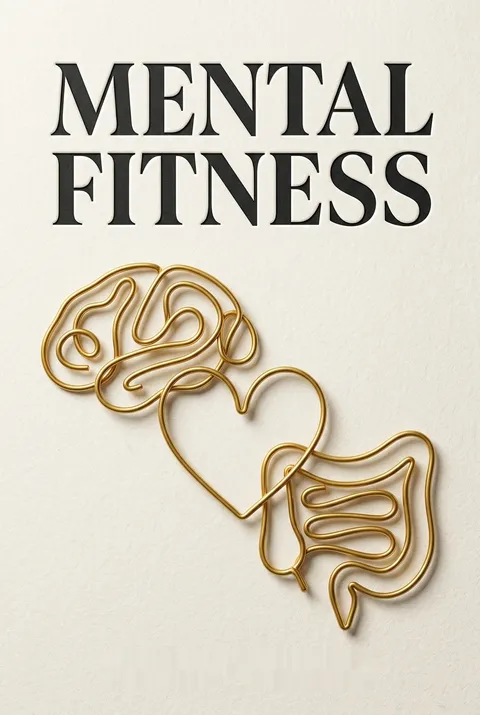
Three linked centers. The book treats the head as the thinking brain, the gut as a sensing system, and the heart as a source of emotional and physiological signals. These are not three separate brains in the ordinary anatomical sense. They communicate through nerves, hormones, immune signals, and compounds made by gut microbes. The combined network is called the gut-heart-brain axis, and its condition is presented as a major influence on mood, energy, focus, and resilience.
Signals travel both ways. Stress can alter digestion, heart rhythms, and immune activity; bodily changes can, in turn, affect how the brain interprets a situation. The vagus nerve is one important communication route. The book cites estimates that much of the body’s serotonin is made in the gut, but gut-produced serotonin is not simply delivered to the brain. The broader point is that gut activity can influence the brain through several pathways.
The strongest feature of this model is its refusal to treat mood as a purely mental event. Systems thinking asks how multiple parts influence one another, rather than searching for a single cause, and that is a useful corrective to mind-body separation. The three-brain metaphor is memorable, but it can sound more literal than intended. It works best as a map of interacting systems, not as proof that the gut or heart independently generates complex thoughts. That distinction preserves the model’s practical value while avoiding an overly simple biological story.
Make plants and fiber the default, not a temporary diet.
Feed the ecosystem. The Mental Fitness Diet is a lasting pattern of eating, not a short-term restriction. It resembles a Mediterranean-style diet: vegetables and fruit, beans, whole grains, nuts, seeds, fish, and olive oil, with less processed food and red meat in moderation. Fiber feeds gut microbes, while plant compounds can also influence their activity. The book notes that measurable microbiome changes have appeared within a day of dietary shifts, and that a higher-fiber pattern can alter microbial diversity and inflammation within about two days.
Trials suggest promise. In the Australian SMILES trial, a twelve-week dietary intervention was followed by remission of depressive symptoms in about one-third of participants. The PREDIMED trial reported fewer cardiovascular events among people following a Mediterranean-style pattern. These findings support food as part of mental and physical care, not as a guaranteed cure. The practical starting point is to fill at least half the plate with plant foods and reduce, rather than merely offset, highly processed foods.
This advice is compelling partly because it changes the unit of attention from a nutrient to a pattern. Meals are not isolated biochemical inputs, and a repeatable eating environment is more realistic than chasing a single superfood. The distinction between adding nourishing foods and reducing heavily processed foods also matters: improvement is not always achieved by adding one healthy item to an otherwise unchanged routine. Yet access, cost, culture, appetite, and illness shape what people can eat. Food guidance is most useful when it offers flexible substitutions rather than treating adherence as a test of character.
Move for brain chemistry, mood, and gut function, not calorie burn.
Movement is a signal. The book argues that physical activity affects more than fitness or energy expenditure. Movement changes blood flow, stress responses, inflammation, gut motility, and the release of signaling molecules from muscles. It also supports brain plasticity, the brain’s capacity to alter its connections through experience. Walking, cycling, dancing, strength work, and yoga all count. The author’s practical benchmark is roughly thirty minutes of activity that raises heart rate, while emphasizing that doing something is better than doing nothing.
The Hadza comparison. The book describes Hadza hunter-gatherers as far more active than typical Americans, with much higher fiber intake and a more diverse microbiome. Their example illustrates how movement and diet can reinforce one another, though it cannot isolate the effect of exercise alone. The chapter also challenges the idea that exercise is mainly a way to burn calories: studies cited suggest total daily energy use can remain similar across very different activity levels. Movement matters for how the body functions and feels, even when the scale does not move.
The reframing from exercise as punishment to movement as information may help people who find gym-centered advice alienating. It also fits the broader idea that bodies adapt to repeated demands: movement trains coordination and physiological flexibility, not just muscle size. The Hadza example is vivid, but it bundles activity with diet, environment, and social organization, so it should not be treated as a controlled experiment. The sound practical message is less exotic: build frequent, enjoyable movement into ordinary life, and do not judge its value solely by calories burned.
Protect sleep and create recovery breaks before stress becomes your baseline.
Sleep is active repair. The book describes sleep as a period when the brain processes memories and clears waste, while the body regulates hormones and repairs tissue. It cites laboratory research suggesting a natural sleep duration around eight hours and fifteen minutes, while acknowledging that many people get less. Regular short sleep is associated in the book with poorer blood sugar control, greater cravings, fatigue, and mood disruption. Its practical emphasis is on improving the conditions for sleep, not chasing perfection.
Set the day-night contrast. Bright outdoor light during the day and a darker evening help support the body’s sleep-wake rhythm. A consistent wind-down routine can include a quiet activity, a cool and dark room, and less screen exposure before bed. The book also treats daytime recovery as essential: step away from work, take breaks from sitting, and preserve time that is not claimed by devices. When sleep is difficult, forcing it can add pressure; a calm activity outside bed may be more helpful.
Sleep advice often fails when it is framed as another performance target. This section is more useful when read as environmental design: make daytime cues distinct from nighttime cues, and reduce the friction of winding down. The book’s ideal sleep-duration figure is a population-level guide, not a personal diagnosis, and sleep needs vary. Persistent insomnia, severe daytime impairment, or breathing problems deserve clinical assessment rather than an endless series of self-help adjustments. Recovery is a biological requirement, but the conditions that permit it are also shaped by work schedules, caregiving, and housing.
Make stress more manageable with an outlet, predictability, and control.
Stress depends on context. The book uses the image of holding a glass of water: a light burden becomes difficult when held for too long without rest. It identifies three factors that shape responses to stress: whether there is an outlet, whether the stressor is predictable, and whether a person has some control. In experiments described in the book, animals exposed to stress did better when they could engage in an alternative activity. Army paratroopers’ stress responses also declined as repeated jumps became familiar and predictable.
Recover without controlling everything. For daily life, an outlet might be walking, talking with someone, or taking a genuine break. Predictability can come from planning for known demands, while control means identifying the part of a situation that can be influenced. The point is not to command every circumstance. Trying to control the uncontrollable can create another source of strain. A more useful question is: what can be changed, what can be prepared for, and where is a pause possible?
This framework gives stress management more precision than the familiar instruction to relax. It connects physiology with perceived agency: the same demand can feel different when it is understandable, interruptible, or shared. That insight has relevance beyond individual coping, because workplaces and institutions can reduce strain by giving people clearer expectations and more say over how tasks are done. Still, personal techniques cannot erase structural pressures such as poverty, unsafe work, or caregiving overload. The framework is strongest when it helps distinguish useful personal action from the fiction that every burden can be solved privately.
Take action before waiting to feel motivated.
Action can precede attitude. The book calls the doing side of mindset an actset. Its claim is that motivation does not always arrive before action; beginning a manageable task can generate confidence and momentum. The author’s own story gives the idea texture: he describes a difficult childhood, credits his mother’s encouragement and supportive teachers, and traces how education and sports helped open new paths. The lesson is not that hardship automatically produces success, but that a person’s next move can matter even when the starting conditions are unfair.
Respond, then adjust. The book also borrows the improv principle of accepting the situation at hand and building on it, rather than spending all available energy rejecting what cannot be changed. Its emotion tool, frame it, name it, tame it, asks a person to reinterpret an event, identify the feeling precisely, and choose a response. These steps do not deny anger or fear. They create a pause between an initial reaction and a more deliberate next action.
The action-first idea has an important psychological implication: behavior can serve as evidence to oneself that change is possible. That makes a small, low-risk first step more valuable than waiting for a perfect emotional state. The author’s biography also properly foregrounds relationships and opportunity, not positive thinking alone. The caution is that action is not a universal remedy for clinical depression, trauma, or exhaustion, where capacity may be sharply constrained. A practical interpretation is to choose an action scaled to available energy, while recognizing when support or treatment is needed.
Treat connection as health infrastructure, not a social extra.
Belonging supports resilience. The book draws on the long-running Harvard Study of Adult Development to emphasize the importance of supportive relationships for long-term well-being. Connection is presented as more than pleasant company: it can reduce isolation, provide practical help, and give people reasons to persist through difficulty. The author links durable happiness with autonomy, mastery, and purpose: making meaningful choices, developing competence, and using it in ways that matter.
Practice connection deliberately. The book’s three Cs ask what a person can control, whom they can connect with, and how they can contribute. It also describes loving-kindness meditation, a brief practice of directing wishes for safety, health, or happiness toward another person. The broader advice is to maintain social contact even when circumstances require physical distance, and to favor relationships that are supportive rather than chronically hostile. Connection can include helping someone else, not only seeking comfort for oneself.
The section treats relationships as part of the conditions that make healthy behavior possible. Support can provide emotional regulation, information, and assistance with concrete problems, which makes connection more than a mood enhancer. The emphasis on contribution is particularly useful because it shifts belonging from passive approval toward participation. At the same time, the quality of relationships matters: contact that is coercive or unsafe is not protective merely because it is social. Loneliness also has structural causes, including mobility, work, and community design. Individual practices help, but they cannot substitute for accessible places and institutions where connection can grow.
Use supplements as scaffolding, not the foundation of mental fitness.
Targeted support, specific claims. The author presents supplements as tools that may help people manage stress, sleep, energy, or gut health, sometimes making lifestyle changes easier. Probiotics are living microorganisms with demonstrated health benefits, while prebiotics are substrates that beneficial microbes use. Their effects are not interchangeable: probiotic benefits can depend on the specific strain. The book names strains studied for mood and stress, and discusses fibers such as galacto-oligosaccharides and partially hydrolyzed guar gum.
Check before adding. A product listing only a bacterial genus and species may not identify the strain needed to evaluate its claimed effect. Evidence for supplements also varies by ingredient and outcome, and results from a particular study do not establish that every commercial product works. The author advises people with chronic conditions or medications to consult a health-care professional before adding supplements, and cautions against herbal products during pregnancy or lactation without qualified advice. Supplements belong alongside food, movement, sleep, and appropriate care, not in place of them.
The useful contribution here is a demand for specificity: a supplement label should identify what is actually being tested, rather than relying on a broad category name. That is a sound consumer principle across health products. The chapter’s enthusiasm, however, can make preliminary findings, author-affiliated research, and established clinical evidence seem equally certain. Readers should distinguish plausible mechanisms from demonstrated patient outcomes and examine study size, duration, and independent replication. The strongest version of the advice is modest: use a clearly identified product for a defined purpose, track whether it helps, and avoid changing prescribed treatment without clinical guidance.
Start with feeling better; healthier habits can carry physical benefits.
A Trojan horse for health. The book’s closing metaphor is that the desire to feel better now can draw people toward habits that improve health over time. Better sleep may make movement easier; steadier mood may reduce stress-driven eating; more energy may support relationships and self-care. The author describes these links as part of a two-way system: physical pain can worsen emotional distress, while stress and low mood can complicate physical health. Conditions such as depression, chronic pain, and digestive problems may therefore overlap rather than sit in separate compartments.
Use several levers. The book argues that complex problems rarely yield to one intervention alone. Its approach combines food, movement, sleep, stress skills, social support, and, where appropriate, supplements or professional treatment. The goal is not to promise that lifestyle changes cure every illness. It is to make the first benefits tangible, then use improved capacity to sustain behaviors that support physical health. A more manageable mood can be a starting point for change, not a substitute for medical care.
The metaphor captures an important behavior-design problem: distant health gains often motivate less than immediate relief. Starting with a noticeable improvement in energy or mood can make repeated healthy actions more rewarding and therefore more sustainable. The model also resists the false separation between psychological and physical outcomes. Its limit is the implication that mental wellness reliably unlocks physical health; disease, disability, and social conditions can obstruct that pathway. The most defensible reading is reciprocal rather than one-directional: mental and physical health influence each other, and well-chosen supports can improve both without guaranteeing a cure.
Analysis
Mental Fitness is a health-oriented self-help book organized around a systems thesis: mood and performance emerge from communication among the brain, gut, heart, immune system, and daily environment. Its central strength is practical integration. Food, movement, sleep, stress regulation, mindset, relationships, and supplements are not presented as unrelated tips, but as interacting inputs that can reinforce or undermine one another. The book’s memorable metaphors, from three linked brains to the Trojan horse, make that broad model easy to retain.
The most useful distinction is between a systems model and a proven causal explanation. The body’s systems do communicate, and lifestyle patterns matter, but a plausible pathway does not establish that a specific supplement or dietary change treats a psychiatric or neurological condition. The book sometimes moves quickly from association, animal research, or small trials to confident human-facing claims. Readers should therefore give more weight to replicated clinical outcomes than to mechanisms or promotional descriptions, particularly in the extensive supplement chapter. Its assertions comparing lifestyle interventions with antidepressants also need careful interpretation: a result in one study or population does not establish general superiority, and medication can be essential care.
The book is most convincing when it recommends durable, low-risk foundations: eat more whole plant foods, move regularly, protect sleep, create recovery time, and invest in supportive relationships. These actions can improve daily functioning even when they do not eliminate illness. Its action-first mindset also offers a plausible bridge from intention to behavior, provided expectations are humane and the first step fits a person’s actual capacity.
The resulting reading is neither a promise of self-cure nor a rejection of medicine. It is a useful map for noticing how bodily states shape emotional life, paired with a need to evaluate each proposed intervention according to the strength of its evidence, its risks, and the person’s circumstances.
Review Summary
Mental Fitness by Shawn Talbott receives mixed reviews, with an overall rating of 4.05 out of 5. Some readers praise the book for its thorough research, easy-to-understand explanations of complex topics, and step-by-step approach to achieving mental wellness. Others find it overly scientific and lacking in actionable steps for the general reader. While some appreciate the author's ability to break down complex information, others find the content boring and difficult to read. The book's timing and relevance to mental health are highlighted as strengths by some reviewers.
People Also Read








Glossary
gut-heart-brain axis
body-wide signaling networkThe book’s name for the interacting communication among the brain, gut, heart, immune system, and related bodily systems. Signals travel through nerves, hormones, immune messengers, and microbial products. The term frames mood and performance as outcomes shaped by exchanges across the body, rather than by the brain alone.
Mental Fitness
optimized mental wellnessThe book’s term for a high-functioning state of mental wellness, characterized by physical energy, mental sharpness, emotional well-being, and resilience. It places ordinary stress and more serious difficulties on a continuum, and emphasizes that lifestyle and bodily systems can influence where a person falls on that continuum.
vigor
energy, clarity, and well-beingA research term the book uses for a sustained state combining physical energy, mental acuity, and emotional well-being. It is presented as the opposite of burnout and as one way to describe the desired experience of mental fitness. In this account, vigor depends on interacting biological and behavioral influences.
psychobiotics
microbiome-targeted mental supportThe book uses this term for interventions that target gut microorganisms with the aim of improving mental health. It discusses particular probiotic strains and prebiotic fibers as examples. The term describes an emerging area of research, not a guarantee that any probiotic product will improve mood; effects depend on the intervention and the evidence for it.
Mental Fitness Diet
whole-food eating patternThe book’s name for a habitual, Mediterranean-style pattern centered on vegetables, fruit, beans, whole grains, nuts, seeds, and fish, with healthy fats and limited processed foods. It is framed as a continuing way of eating rather than a temporary restrictive diet, with attention to fiber and plant compounds that support gut and overall health.
heart rate variability (HRV)
variation between heartbeatsA measure of the changing time intervals between successive heartbeats. The book presents HRV as one indicator of autonomic nervous system balance and stress resilience, with higher variability generally associated with a more adaptable system. HRV can be influenced by factors such as sleep, illness, exercise, hydration, and psychological stress.
cognitive reserve
buffer against cognitive declineThe book’s term for the brain’s capacity to maintain function despite age-related changes or damage. It is associated not only with the number of neurons, but also with the strength and flexibility of connections across brain networks. Education, physical activity, sleep, diet, and social connection are described as factors that may support this reserve.
frame it, name it, tame it
three-step emotion reappraisalA technique for responding to an emotionally charged event. First, reframe the situation by considering another interpretation. Next, identify the feeling as precisely as possible. Finally, choose a response suited to that emotion. The method aims to create room between an immediate reaction and a deliberate action, rather than suppressing the feeling.
actset
the doing side of mindsetThe author’s term for the action component of mindset. It emphasizes that people do not always need to wait for motivation or confidence before beginning. Taking a manageable first step can help build momentum and alter attitude, although the action needs to fit the person’s circumstances and capacity.
Autonomy, Mastery, Purpose (AMP)
three supports for well-beingA set of factors the book associates with happiness and resilience. Autonomy means having meaningful choice; mastery means developing competence; purpose means feeling that one’s effort matters beyond the self. The framework links well-being not only to positive feelings, but also to agency, skill, and contribution.
SMILES trial
diet intervention for depressionA twelve-week Australian study discussed in the book. Participants with depression received a Mediterranean-style dietary intervention, and about one-third experienced remission of depressive symptoms. The result supports diet as a possible part of depression care, but it should be interpreted as a trial outcome in a particular group, not as proof that diet replaces other treatment.
FAQ
What's Mental Fitness about?
- Focus on Mental Wellness: Mental Fitness by Shawn Talbott delves into the interconnectedness of mental wellness, physical health, and the gut-brain-heart axis, emphasizing the importance of mental fitness for overall well-being.
- Scientific Approach: The book integrates insights from psychology, neurology, biochemistry, and microbiology to offer a holistic view of mental fitness, aiming to improve mood, motivation, and mental wellness.
- Practical Solutions: Talbott provides actionable strategies, such as dietary changes, movement, stress management, and sleep improvement, empowering readers to take control of their mental health.
Why should I read Mental Fitness?
- Addressing Modern Epidemics: The book tackles the rising issues of stress, anxiety, and depression, offering insights into their prevalence and potential solutions.
- Research-Backed Strategies: Readers benefit from evidence-based approaches to mental wellness, drawing on over twenty years of research and personal experience.
- Holistic Perspective: Emphasizing the interconnectedness of mental and physical health, the book offers a comprehensive approach to improving overall well-being.
What are the key takeaways of Mental Fitness?
- Gut-Heart-Brain Axis: The book introduces this concept, highlighting the communication and influence between these systems, crucial for understanding mental fitness.
- Dietary Impact: Talbott stresses the importance of a balanced diet, particularly the Mediterranean diet, for enhancing mental wellness and cognitive function.
- Movement and Exercise: Regular physical activity is essential for mental fitness, improving mood, reducing stress, and enhancing cognitive function.
What is the gut-heart-brain axis in Mental Fitness?
- Interconnected Systems: This axis refers to the interactions between the gut microbiome, cardiovascular health, and brain function, influencing overall health.
- Impact on Mental Health: Imbalances in the gut microbiome can lead to mental health issues, with improvements in gut health enhancing mood and cognitive function.
- Holistic Health Approach: Talbott advocates for considering these systems as interconnected, encouraging lifestyle changes that benefit all three areas.
How does the gut influence mental fitness according to Mental Fitness?
- Gut Microbiome Role: The gut microbiome produces neurotransmitters like serotonin and dopamine, crucial for mood regulation and mental wellness.
- Connection to the Brain: Signals from the gut are communicated to the brain, influencing emotional and cognitive processes, highlighting the importance of gut health.
- Dietary Impact: Consuming prebiotic and probiotic foods can improve gut health, supporting the gut-brain connection and mental fitness.
What dietary changes does Mental Fitness suggest for better mental health?
- Focus on Whole Foods: Talbott advocates for a diet rich in whole foods, including fruits, vegetables, whole grains, and healthy fats, to support brain health.
- Incorporate Probiotics and Prebiotics: The book highlights the importance of gut health, recommending foods like yogurt and fiber-rich fruits for a healthy microbiome.
- Limit Processed Foods: Talbott warns against processed foods, suggesting they contribute to inflammation and mood disorders, and encourages nutrient-dense options.
How can I improve my sleep quality according to Mental Fitness?
- Establish a Wind-Down Routine: Talbott recommends a consistent nightly routine with relaxing activities to signal the brain it's time to sleep.
- Limit Stimulants: Cutting out caffeine after noon and avoiding blue light exposure before bedtime can help regulate the sleep-wake cycle.
- Create a Sleep-Friendly Environment: A comfortable environment, including a cool room and minimal noise, can significantly enhance sleep quality.
What are some effective stress management techniques from Mental Fitness?
- Mindfulness Practices: Incorporating mindfulness techniques, such as meditation and deep breathing, can help manage stress and improve emotional regulation.
- Physical Activity: Regular exercise is a powerful tool for reducing stress and improving mood, buffering the effects of stress on the body and mind.
- Social Connections: Building and maintaining social connections is crucial for stress resilience, providing support and enhancing well-being.
What is the role of mindset in Mental Fitness?
- Growth vs. Fixed Mindset: Talbott discusses the difference between a growth mindset, which embraces challenges, and a fixed mindset, which can lead to stagnation.
- Impact on Behavior: Mindset influences responses to stress and challenges, affecting overall mental health and coping strategies.
- Mindset as a Tool: Cultivating a positive mindset can enhance mental fitness, with strategies for reframing negative thoughts and fostering optimism.
What are the benefits of movement for mental fitness according to Mental Fitness?
- Cognitive Enhancements: Regular physical activity improves memory, attention, and cognitive function, stimulating brain health and neurogenesis.
- Mood Regulation: Exercise releases endorphins and endocannabinoids, elevating mood and reducing anxiety and depression.
- Social Interaction: Physical activities can foster social connections, vital for emotional support and resilience.
What are the best quotes from Mental Fitness and what do they mean?
- "There is no physical health without mental health.": This underscores the interconnectedness of mental and physical well-being, essential for overall health.
- "If you eat crap, you feel like crap.": Talbott highlights the direct relationship between diet and mental wellness, suggesting poor dietary choices lead to negative emotional states.
- "Use it or lose it.": Emphasizes the importance of regular physical activity for maintaining both physical and mental fitness, warning against inactivity.
How can I start improving my mental fitness today according to Mental Fitness?
- Small Dietary Changes: Incorporate more whole foods like fruits and vegetables into your diet for mood and energy improvements.
- Incorporate Movement: Include physical activity in your daily routine, starting with manageable goals and gradually increasing activity levels.
- Practice Mindfulness: Engage in mindfulness or deep breathing exercises daily to reduce stress and enhance mental fitness.
About the Author
Other books by Shawn Talbott

Download PDF
Download EPUB
.epub digital book format is ideal for reading ebooks on phones, tablets, and e-readers.








