

Key Takeaways
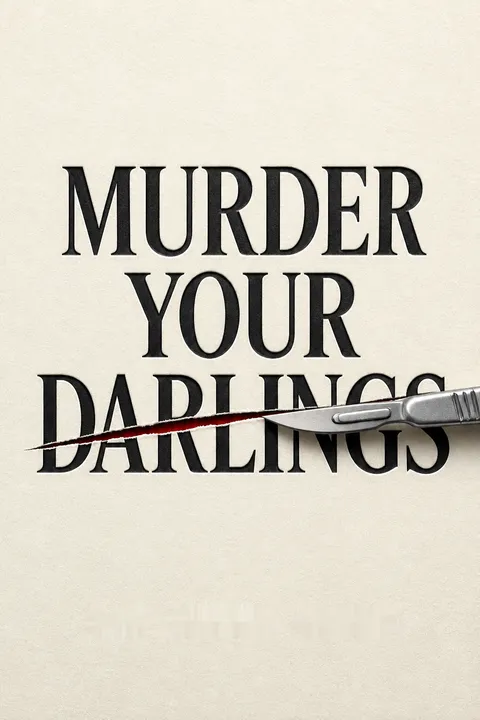
Cut the beautiful passage when it serves your ego instead of the reader.
Purpose beats attachment. Clark drafted an 8,000-word commencement speech for a 15-minute slot. It contained eight stories about his mother, including funny and moving memories he cherished. Revision removed them all. The speech’s real subject was how disappointment can become opportunity, not his mother. Those anecdotes helped him discover what the speech needed to say, then became unnecessary.
Draft first, judge later. The point is not to censor vivid writing as it arrives. Put it on the page, then ask whether it supports the work’s focus, its governing idea. A passage can be beautifully made and still belong somewhere else. Save it for another piece if cutting it feels painful.
What's striking is how revision turns a question of taste into a question of service. Writers often mistake effort and affection for evidence that a passage belongs. This resembles the sunk-cost trap in decision-making: past investment can distort judgment about what should happen next. A saved file offers a useful compromise, preserving the material without burdening the current work. Still, relevance is not the only measure of value. A surprising detour can deepen a reader’s experience, provided it earns its place rather than merely displaying the writer’s skill.
Let the rough draft teach you what the polished one should say.
Start before certainty. Clark distinguishes exploratory writing from a conventional first draft. A zero draft can be fragments, lists, or rough notes made to discover what the writer knows and what still needs investigation. Peter Elbow’s freewriting is a related technique: write continuously for a set time, without stopping to correct or assess the result. The immediate goal is movement, not quality.
Separate invention from judgment. Anne Lamott likewise argues that early drafts are raw material, not a verdict on the writer’s talent. Clark describes a fifth grader who proudly kept eleven versions of a story, each helping him improve the next. Revisions raise the standard gradually. Criticism matters, but if it arrives before the idea has room to emerge, it can shut down discovery.
This approach has a strong connection to cognitive offloading: putting fragments on paper frees attention from the task of holding every thought in working memory. It also separates two mental modes, generating possibilities and evaluating them, which helps prevent premature self-censorship. The method is not universal. Some writers think best by shaping sentences carefully from the outset, and Clark recognizes that. The practical test is whether a method helps a writer finish useful work, not whether it matches a fashionable ideal of creativity.
Give big projects a lead, a focus, and movable parts.
Organize after collecting. For a long project, Clark adapts John McPhee’s process: gather more material than seems necessary, identify possible sections, and write a lead that points toward the emerging focus. McPhee’s lead might be a substantial passage, drafted without consulting notes. Clark used that approach to turn years of classroom observations into his first book.
Make structure visible. He labeled ideas on index cards, shuffled them into promising sequences, arranged the material into matching folders, and began drafting. This process treats structure as something discovered through selection and rearrangement, not a rigid outline imposed at the start. McPhee’s privileges matter: he could work at his own pace. But the core method, selecting and organizing material around a central idea, can be scaled to smaller projects and tighter deadlines.
The method resembles project design in fields where complex work is decomposed into parts, tested, and recombined. Cards externalize structure, making it easier to compare possible sequences without rewriting whole chapters. A lead can function like a working hypothesis: it gives the writer a direction that new evidence can challenge. That flexibility is crucial. If the lead becomes a promise the material cannot keep, it should change. Planning should reduce confusion, not protect an early guess from revision.
Make word choice, sentence shape, and rhythm serve the reader.
Words carry more than definitions. Donald Hall urges writers to notice the associations and emotional coloring that accompany a word, not just its dictionary meaning. A near-synonym can signal admiration, mockery, or distance. Overloading a sentence with vivid language can also create false emphasis, where every phrase competes for attention.
Sentences guide attention. George Campbell’s distinction is practical: put the main clause early for a direct, conversational effect, or delay it when a buildup creates force or suspense. Gary Provost and Ursula Le Guin emphasize rhythm. A run of sentences with similar lengths can sound mechanical; varied lengths give prose a more natural pulse. Reading aloud helps reveal both clumsy phrasing and monotonous movement.
This view treats prose as an auditory and social experience, not merely a container for information. Readers infer attitude from diction and pacing, often before they can explain why a passage feels cold, jaunty, or grave. The emphasis on variation is useful, but variation alone is not a virtue. Repetition can create insistence, and a plain sequence may be exactly right when readers need speed or certainty. The writer’s task is not to decorate every sentence, but to make form fit the reader’s attention.
Build a sustainable writing identity, not a punishing productivity quota.
Practice creates identity. Clark contrasts Dorothea Brande’s strict writing discipline with Brenda Ueland’s encouragement to claim the role of writer. His practical conclusion is that writing itself, not a credential, supports that identity. Supportive readers, teachers, and writing groups can help counter doubt without taking over the work.
Make the habit adjustable. Stephen King describes writing in a regular place, limiting distractions, and aiming for as many as 2,000 words a day. Clark presents that as an example, not a universal standard. A smaller daily target can still accumulate into substantial work. A comfortable location, a repeatable routine, and room for missed days make writing more sustainable than a punishing schedule that turns every interruption into failure.
A stable routine reduces the number of decisions required to begin, while an identity can make practice feel like part of a life rather than an occasional performance. The caution against rigid quotas is important: productivity systems can become another source of shame, especially when work, caregiving, or health makes daily output unpredictable. A useful measure is continuity over time, not comparison with a prolific novelist. Community also matters because solitary practice benefits from readers who can offer encouragement, honest criticism, or both.
Make nonfiction feel lived through reported scenes, senses, and viewpoints.
Story requires observation. In discussing the New Journalism, Clark describes four tools for narrative nonfiction: revealing details about people, scenes that unfold in sequence, dialogue, and points of view grounded in where characters stand. Gay Talese spent weeks following Frank Sinatra and later used careful outlines and storyboards to shape his reporting into a sequence of scenes.
The details must be earned. Talese’s access and time were unusual, but the lesson is not to imitate his resources. It is to report more deeply, through observation, interviews, documents, and multiple witnesses. Clark’s example of Edward R. Murrow shows how visual, sound, and physical details can make a radio report vivid. A scene should not be invented to improve the story. Its power depends on credible reporting.
Immersive reporting connects narrative technique to evidence: the writer’s sensory detail is strongest when it can be traced to observation or a reliable source. This is more demanding than inserting dramatic scenes into a standard report, and it can produce a richer sense of human experience. Yet access is unequal. A journalist may lack time, safety, money, or permission to witness an event directly. Multiple accounts and transparent sourcing can partially compensate, but reconstruction should not pretend to be eyewitness certainty.
Give stories both a compelling next question and a lasting pattern.
Sequence creates momentum. A story moves through events in an order that makes readers ask what happens next. Clark uses the Thai boys trapped by flooding in a cave to show how danger, delayed rescue, and uncertain outcomes create narrative suspense. The episode’s appeal also came from shared fears and the possibility of cooperation across borders.
Meaning grows from the whole. Northrop Frye argues that readers experience a new story scene by scene, then remember its larger design and significance. Lajos Egri’s premise is a short statement of the central pattern that can generate a play’s action. E. M. Forster’s flat and round characters offer another tool: simple, memorable types can support a story, while more complex characters can surprise readers in believable ways.
The distinction between immediate suspense and remembered meaning helps explain why some stories are gripping once and resonant afterward. Narrative psychology also suggests that people organize experience through causal sequences, making stories useful for imagining outcomes and other people’s motives. Still, a neat pattern can oversimplify events. A premise should guide selection, not force every detail into a predetermined moral. Human lives often resist tidy arcs, and that resistance can itself become part of a truthful story.
Choose report or story according to what readers need now.
Match form to purpose. Louise Rosenblatt distinguishes efferent reading, where readers carry away information, from aesthetic reading, where they attend to the experience and artistry of the text. Clark adapts the distinction to public writing: a report delivers facts readers can use, while a story places them inside an unfolding experience. A warning or instruction should not bury urgent information under literary flourishes.
Make difficult information readable. Rudolf Flesch and Robert Gunning studied how sentence length, word complexity, jargon, and page layout affect ease of reading. Clark’s examples show how a dense sentence about government costs can be translated into several shorter sentences. White space and clear organization help readers follow the argument. Readability is a tool for serving an audience, not a command to make every text simplistic.
The form-reader match resembles interface design: a tool should fit the decision a person needs to make. In an emergency, ambiguity and ornament can impose real costs; in a literary encounter, ambiguity may be the point. Readability scores can flag friction, but they cannot measure importance, accuracy, or intellectual depth. Short words and sentences do not automatically produce clear thought. Writers need to simplify the route through an idea without flattening the idea itself.
Earn nonfiction trust with verification and disclosure, not memory alone.
Treat reports as testable. S. I. Hayakawa defines a reliable report as one that can be checked and that limits unsupported inference and judgment. Clark recommends scrutinizing loaded language, looking for missing evidence, and examining whether a description presents more than one relevant side. Objectivity is a process of checking bias, not a claim that the writer has none.
Tell readers how memoir works. Memory can fail without deliberate deception. But a memoirist who invents dialogue, combines people, or alters events should disclose those methods before the reader relies on the account as literal fact. Clark discusses the controversy around a bestselling memoir whose major fabrications were exposed after publication. The episode shows why the reader’s trust depends not only on what is told, but on the terms under which it is presented.
Verification and disclosure address different parts of the same problem: whether a reader can judge the strength and limits of a claim. This aligns with scientific norms of stating methods and uncertainty, rather than presenting conclusions as self-evident. Transparency cannot repair every distortion, and fact-checking cannot restore a reader’s lost trust by itself. But clear methods let audiences distinguish ordinary limits of recollection from choices that change the nature of a nonfiction account.
Make important truths compelling without trading away their accuracy.
Rhetoric carries responsibility. Horace’s ideal is writing that both delights and instructs. Clark connects that aim to journalism: important subjects may not attract attention on their own, so writers must make them engaging rather than pretend that every entertaining story matters equally.
Persuade without exploiting. Aldous Huxley distinguishes appeals to reason and informed self-interest from propaganda that relies on fear, scapegoats, and distorted evidence. Edward R. Murrow’s reporting from wartime London and Buchenwald shows how vivid eyewitness work can serve the public. His warning about television applies to any medium: its power depends on the purposes to which people put it. Emotion can focus attention, but it should not replace proof.
The distinction between advocacy and manipulation turns rhetorical craft into an ethical choice. Research on persuasion consistently points to the importance of credibility and evidence, while emotion can make abstract consequences legible. The risk is not simply that a writer feels strongly, but that intensity licenses selective facts or dehumanizing language. An ethical story can move an audience and still respect its capacity to judge. Persuasion is most defensible when readers can see both the evidence and the writer’s purpose.
Use your whole life as material, not just your writing desk.
Attention feeds invention. Natalie Goldberg describes writing as a way to look beyond the narrow loop of self-criticism and notice the wider world. Her practice draws on Zen and visual attention to landscape. Charles Johnson connects writing with philosophy and visual art, treating fiction as a way to return ideas to concrete human experience.
The work is made, not bestowed. Johnson recalls discarding thousands of pages over six years to produce a 250-page novel. Clark uses that example to resist the fantasy that published writing arrives fully formed. Music, teaching, work, relationships, and ordinary observation can all supply rhythms, questions, images, and knowledge. The writer’s other roles are not distractions by default. They can enlarge what the writer is able to see and say.
The argument resembles interdisciplinary learning: skills and metaphors from one practice can illuminate another, while varied experience supplies material that a narrow professional identity may miss. It also makes writing a form of attention, not merely word production. But lived experience does not automatically become insight, and suffering should not be treated as a required credential for serious work. The craft lies in shaping experience, testing interpretation, and making private perception meaningful to readers beyond the writer.
Analysis
Murder Your Darlings is a craft anthology disguised as a personal writing memoir. Clark surveys advice from Aristotle to contemporary writing teachers, but his organizing intelligence is experience: a commencement speech cut from 8,000 words, a first book built with McPhee’s planning methods, and years of teaching writers through doubt and revision. The anecdotes prevent the book from becoming a catalogue of commandments. Each practical principle arrives attached to a person, a text, or a decision under pressure.
The deepest synthesis is that writing is simultaneously technical, social, and ethical. Word order directs attention; reporting establishes what can responsibly be claimed; narrative helps people imagine danger and cooperation; rhetoric can either illuminate or manipulate. This breadth matters because writing advice often separates style from consequence. Clark instead links sentence-level craft to democratic life, especially through Hayakawa’s standards for reports and Murrow’s commitment to public-interest broadcasting.
The book also resists a single ideal writer. Strunk’s conventions and White’s individuality can coexist, just as fast drafting and sentence-by-sentence composition can both work. That pluralism is a strength, though it leaves readers to choose among methods without a firm decision rule. The useful test is practical: does a strategy help the writer discover, shape, verify, or communicate the work? A technique is not virtuous simply because a famous author used it.
Clark’s most memorable lesson is less about deletion than discernment. Writers need to generate freely, then select carefully; they need structure, but must remain open to surprise; they need a recognizable voice, but must adapt it to audience and purpose. The result is not a universal formula. It is a lifelong practice of learning from language, from other writers, and from ordinary experience, while accepting that good work is made through repeated choices rather than bestowed by inspiration.
Review Summary
Murder Your Darlings is a well-received book on writing that distills advice from numerous writing guides. Readers appreciate Clark's engaging style and the breadth of sources covered. Many find it useful for both beginner and experienced writers, praising its practical tips and historical context. The book's structure, covering various aspects of writing through curated lessons, is generally praised. Some criticize the author's journalistic bias and occasional tangents, but overall, it's considered a valuable resource for those looking to improve their writing skills.
People Also Read

Glossary
zero draft
Exploratory writing before draftingA zero draft is preliminary writing created before a writer is ready to call a piece a first draft. It can consist of fragments, lists, or loose notes rather than complete sentences. Its purpose is to capture thoughts, discover promising material, and identify what still needs to be understood, without demanding polished prose.
freewriting
Timed writing without stoppingFreewriting is a practice associated with Peter Elbow in which a writer writes continuously for a set period, often around ten minutes, without stopping to revise or judge the words. The result may be useful, confused, or repetitive. Success is measured by keeping the writing process moving, not by producing finished work.
focus
The work’s governing ideaClark uses focus to mean the central idea or feeling that organizes a piece of writing. It helps the writer decide what material belongs, what to omit, and how to shape the structure. A focus can appear as a thesis, theme, premise, lead, title, or another concise expression of what the work is about.
free indirect style
Narration colored by character thoughtFree indirect style blends third-person narration with a character’s language or perspective without explicitly introducing each thought with phrases such as he thought. The narrator’s voice and the character’s voice partly overlap. This technique can make narration feel intimate and psychologically complex while preserving some distance between what a character believes and what the reader understands.
efferent reading
Reading to carry away informationIn Louise Rosenblatt’s account, efferent reading directs attention toward information or practical knowledge a reader can take away from a text. Instructions, reports, and warning labels often invite this mode. The reader focuses primarily on what the text communicates, rather than on lingering over its style or the experience of reading it.
aesthetic reading
Reading for the lived experienceIn Rosenblatt’s account, aesthetic reading emphasizes the experience created during reading, including the text’s language, imagery, feeling, and patterns of meaning. Readers do not simply extract information. They attend to how the work affects them and may return to it for renewed pleasure or insight.
premise
A short statement generating actionLajos Egri uses premise for a brief statement that captures a story’s central movement and can generate its characters and action. It often expresses a relationship between a trait, choice, or force and its consequence. A premise can help a writer test whether the events of a play or story support a coherent underlying idea.
New Journalism
Narrative nonfiction using literary techniquesNew Journalism names a movement associated with writers such as Tom Wolfe and Gay Talese, who brought techniques associated with fiction into nonfiction reporting. These include scenes, dialogue, character details, and shifts in point of view. Clark stresses that the approach requires more rigorous reporting, not permission to invent events.
X-ray reading
Reading to reveal craft choicesClark’s term for closely studying accomplished writing to identify the techniques beneath its effects. Rather than reading only for plot or information, the reader examines choices such as structure, word order, imagery, and point of view. The aim is to understand how a text works and apply that learning to one’s own writing.
FAQ
What's Murder Your Darlings about?
- Writing Guide Compilation: Murder Your Darlings by Roy Peter Clark is a comprehensive writing guide that compiles advice from influential authors and writing teachers, exploring the craft of writing through over fifty writing guides.
- Focus on Craft and Identity: The book is divided into six parts, covering language, voice, confidence, storytelling, rhetoric, and purpose, offering a holistic view of writing.
- Encouragement for Writers: Clark emphasizes that writing is a process filled with surprises, encouraging writers to improve through practice and learning from others.
Why should I read Murder Your Darlings?
- Diverse Perspectives: The book offers insights from various authors, helping readers find their unique voice and approach to writing.
- Practical Tools: Clark provides actionable strategies, such as "murdering your darlings," to enhance writing clarity and focus.
- Inspiration and Motivation: Beyond techniques, the book serves as a motivational guide, encouraging writers to embrace their identity and persist through challenges.
What are the key takeaways of Murder Your Darlings?
- Murder Your Darlings: This advice emphasizes cutting favorite phrases that don't support the main idea, prioritizing clarity and purpose.
- Embrace the Writing Process: Good writing involves drafting, revising, and refining, with patience for early imperfections.
- Develop a Writing Habit: Establishing a consistent routine is crucial for growth, with a focus on discipline and creativity.
What specific methods or advice does Murder Your Darlings offer?
- Zero Drafts: Encourages exploratory writing without pressure, leading to more refined drafts.
- Visual Markings: Suggests using diagrams and lists to organize thoughts and spark creativity.
- Vary Sentence Length: Emphasizes creating rhythm and maintaining reader interest through varied sentence structures.
What are the best quotes from Murder Your Darlings and what do they mean?
- “Murder your darlings.”: Encourages cutting favorite phrases for clarity and purpose, prioritizing the overall message.
- “Good writing is not magic, but it’s full of surprises.”: Highlights writing as a rewarding process filled with discoveries, encouraging patience and exploration.
- “You are a writer, and because you are, you will never give up becoming better and better at your craft.”: Reinforces self-identification as a writer, emphasizing ongoing improvement.
How does Murder Your Darlings address the concept of voice and style?
- Two Meanings of Style: Discusses style as both writing conventions and the author's unique voice, helping writers balance rules and individuality.
- Experimentation with Voice: Encourages exploring different styles and tones to find what resonates with writers and their audience.
- Reading Aloud: Suggests reading work aloud to ensure authenticity and identify areas needing improvement.
What role does confidence play in Murder Your Darlings?
- Identity as a Writer: Emphasizes assuming the identity of a writer to cultivate confidence and commitment.
- Overcoming Self-Doubt: Addresses common fears like impostor syndrome, encouraging persistence despite challenges.
- Developing a Writing Habit: Consistent routines bolster confidence, with distraction-free workspaces and achievable goals.
How does Murder Your Darlings define storytelling and its importance?
- Value of Storytelling: Asserts storytelling's role in human connection and understanding, helping navigate experiences.
- Narrative Archetypes: Discusses common structures like the hero's journey, enhancing compelling storytelling.
- Emotional Engagement: Emphasizes creating narratives that evoke emotions and foster empathy.
What are the challenges of writing addressed in Murder Your Darlings?
- Writer's Block: Provides strategies like freewriting and zero drafts to overcome blocks and self-doubt.
- Revision Process: Highlights revision as crucial, often requiring multiple drafts for clarity and improvement.
- Balancing Structure and Creativity: Encourages finding a balance between structural conventions and creative expression.
How does Murder Your Darlings suggest writers handle feedback?
- Seek Constructive Criticism: Advises sharing work with trusted peers for honest feedback to identify improvement areas.
- Trust Your Instincts: Encourages discerning which feedback aligns with the writer's goals and vision.
- Iterative Process: Emphasizes integrating feedback into drafts, viewing it as a growth tool rather than judgment.
What is the significance of the title Murder Your Darlings?
- Metaphor for Revision: Refers to eliminating favorite sections that don't serve the piece's purpose, prioritizing integrity.
- Encouragement to Let Go: Promotes clearer, focused narratives by letting go of personal attachments.
- Reflects Clark's Philosophy: Encapsulates the necessity of critical self-evaluation and difficult choices in writing.
How does Murder Your Darlings explore the relationship between fact and fiction?
- Blurring the Lines: Discusses incorporating truth in fiction, creating resonant "fictional truth."
- Ethical Considerations: Raises questions about blending fact and fiction, urging transparency for credibility.
- Role of Imagination: Highlights imagination's importance, drawing from real experiences for compelling narratives.
About the Author
Other books by Roy Peter Clark

Download PDF
Download EPUB
.epub digital book format is ideal for reading ebooks on phones, tablets, and e-readers.








