

Key Takeaways
Treat neurological labels as partial descriptions, not complete definitions of a person.
Begin with the person. Armstrong opens with a practice from school meetings: before discussing a student’s difficulties, he gathered positive observations from years of school records. A child known as disruptive might also love painting, excel at assembling objects, or learn best through hands-on work. Those strengths changed the conversation, helping adults consider a fuller range of possibilities than a diagnosis usually invites.
Difference is not destiny. Neurodiversity describes variation in how human brains handle attention, social connection, learning, mood, and other functions. The concept challenges the assumption that one standard brain defines health and everyone else is a defective version. It does not mean every condition is harmless: the book repeatedly acknowledges severe distress and disability. Its point is that a deficit-only account is also incomplete.
The opening exercise is a practical correction to a common institutional bias: problems are recorded in detail, while competence is treated as incidental. A strengths inventory can change which supports adults consider, without requiring them to deny genuine impairments. The important distinction is between affirming a person and declaring every feature of a condition beneficial. Neurodiversity is most useful as a framework for dignity and inquiry, not as a replacement for diagnosis, treatment, or a person’s own account of their needs.
Change the habitat, not only the person, when a brain keeps struggling.
Design a better fit. Armstrong calls this process niche construction: changing one’s surroundings, routines, tools, relationships, or work to better match individual needs and strengths. A beaver alters its environment with a dam; people can make their own environments more workable through choices such as a suitable career, text-to-speech software, a coach, or a quiet workspace. A person with ADHD may do poorly in a sedentary desk job but thrive in a role with movement and variety.
Environment shapes ability. A rat study cited in the book found more brain connections in animals raised in stimulating cages than in less enriched settings. The larger lesson is that surroundings can influence development and performance. Armstrong argues for both adaptation to existing demands and efforts to modify those demands, rather than treating the person as the only thing that must change.
This approach shifts the question from “How can this person be made to function normally?” to “Which conditions allow this person to function well?” That is a productive move because performance often reflects the interaction between a person and a task, not an isolated trait. The idea also avoids making accommodation synonymous with lowering expectations: a better fit can increase access to meaningful challenge. Still, changing the environment cannot always remove pain or impairment. Good support makes room for both environmental design and individualized clinical care.
Give restless minds movement, novelty, and meaningful work before calling them broken.
Attention has styles. Armstrong describes ADHD not as an absence of attention, but as difficulty directing it toward routine, externally imposed tasks. Some people move rapidly between details; others can concentrate intensely on a subject that absorbs them. In the book’s account, Eddie’s high energy made him a valuable helper in an active arts program but a disruptive student in a classroom built around sitting still. The surroundings changed; his temperament did not.
Build stimulation into the day. The book points to movement, outdoor time, hands-on learning, and varied tasks as possible supports. It also notes that medication helps some people, while arguing that it should not substitute for a suitable environment. The author presents evolutionary explanations for ADHD traits, such as vigilance and novelty seeking, as ways to consider possible advantages, not as proof that ADHD is an adaptation.
Eddie’s story makes the context effect easy to see: the same behavior can be welcomed in one setting and penalized in another. That observation is valuable for parents and educators deciding whether a task’s structure is creating avoidable friction. It does not establish that every person with ADHD needs the same amount of stimulation, or that classroom expectations are always unreasonable. A sound response combines environmental experimentation with attention to the individual’s goals, impairment, and preferences.
Treat autistic interests and communication styles as entry points, not obstacles.
Make connection reciprocal. The book introduces Amanda Baggs, an autistic woman who communicated with objects and sensory experiences in ways other people did not readily recognize, then used a computer and speech synthesizer to explain her perspective. Her story questions the assumption that communication only counts when it looks typical. Armstrong also highlights autistic strengths in detail perception, visual thinking, memory, and sustained interest in systems. Temple Grandin, for example, used careful observation of animals to design livestock-handling equipment.
Build from what engages. A child’s interest in maps, vehicles, or patterns can provide a starting point for shared activity and learning. The book describes Floortime, an approach in which an adult follows a child’s interests and invites interaction through play. Its account of autism as strong systemizing paired with difficulty reading other people is one proposed model, not a template for every autistic person. Interests and support needs vary widely.
The strongest insight here is that communication is not a one-way test in which an autistic person must prove competence by adopting everyone else’s style. Taking a person’s preferred interests seriously can create shared attention and reveal abilities that a conventional interaction misses. The caution is equally important: strengths in pattern recognition or focused interests should not be assumed of every autistic person, and they do not cancel support needs. Respect means asking what helps this particular person communicate, participate, and feel safe.
Support reading without erasing the visual strengths dyslexia may accompany.
Words can be hard for specific reasons. Armstrong explains dyslexia primarily through difficulties linking speech sounds with letters and recognizing written words efficiently. It does not usually mean simply reversing letters, and it can persist into adulthood. The book also describes people with dyslexia who excel at visual or spatial tasks, including artist Robert Rauschenberg and inventor Bill Dreyer, who used visual thinking in scientific work. These examples illustrate possible strengths, not a guarantee that every dyslexic person has them.
Offer more than one route. The author describes reading interventions based on sound and letter patterns, and tools such as text-to-speech and speech-to-text software. One study discussed in the book reported improved reading and changed brain activation after an intensive eight-week program. Such findings support instruction and access, not the claim that dyslexia is simply a hidden advantage. Literacy remains important, but it need not be the only measure of a learner’s ability.
A useful distinction runs through this chapter: identifying a learning difficulty should expand the teaching options, not narrow a person’s identity to that difficulty. Assistive technology can provide access to information while instruction develops reading skills, so accommodation and learning are not competing aims. The book’s accounts of visual-spatial talent are memorable, but group-level patterns do not predict an individual’s profile. The practical task is assessment without presumption: discover where a learner struggles, what they do well, and which tools make both visible.
Respect depression's possible insights without calling severe illness a gift.
Sadness can carry information. Armstrong distinguishes potentially productive periods of depression, which may accompany reflection or a change in direction, from depression that arrests development and damages health. He illustrates the first possibility through Carl Jung, who turned to childhood play and images during a period of severe inner turmoil, and Ludwig van Beethoven, whose despair amid hearing loss preceded a major creative period. These stories do not show that depression caused their work or that suffering is necessary for creativity.
Keep treatment in view. Armstrong writes from personal experience with depression and explicitly rejects romanticizing it. He describes medication, therapy, supportive relationships, reduced stress, exercise, meaningful activity, and creative work as possible parts of a supportive environment. The book also questions a culture that treats constant happiness and productivity as the only acceptable states. But severe depression can be dangerous, and its possible meaning should never be used to discourage care.
The distinction between meaning and benefit matters. A person may find insight in a painful episode without the episode being desirable, safe, or necessary. This framing resists two familiar errors: treating every sadness as illness, and treating serious illness as a source of artistic authenticity. It also invites clinicians and loved ones to ask what a mood change signals in someone’s life while taking symptoms seriously. Interpretation can enrich care, but it cannot substitute for it.
Use anxiety as information, while preventing its alarm from ruling life.
An alarm can protect. Anxiety activates the body’s threat response, which can help someone prepare, notice danger, or focus on an important task. The book recounts football commentator John Madden’s panic on an airplane and his decision to travel by bus instead, turning an overwhelming situation into a workable arrangement. It also describes anxiety as a possible source of alertness in creative work and high-stakes tasks.
An alarm can misfire. Anxiety disorders can make threat responses persistent or disproportionate, interfering with daily life. Armstrong reviews approaches including medication, gradual exposure to feared situations, biofeedback, and mindfulness meditation, which trains attention to notice worry and return to the present. He also offers evolutionary explanations for phobias and other anxiety patterns, but these are hypotheses about possible origins, not reasons to leave debilitating symptoms untreated.
The alarm metaphor helps explain why anxiety is not simply an enemy: a threat system has protective value, yet its usefulness depends on calibration and context. Madden’s bus illustrates adaptation without requiring him to prove that flying is easy. The same strategy may not suit someone whose avoidance progressively restricts life, which is why the book’s treatment options matter. A helpful response distinguishes a considered accommodation from a pattern that deepens distress, then seeks support suited to the person.
Measure what people can learn and contribute, not only what IQ captures.
One score misses a profile. The book’s example is Gloria Lenhoff, a woman with Williams syndrome who had major difficulties with everyday tasks and a low IQ score, yet became an accomplished opera singer with an extensive repertoire. Armstrong uses her story to challenge the idea that intelligence is a single, fixed capacity. He discusses Howard Gardner’s multiple intelligences, which distinguish abilities such as linguistic, musical, spatial, bodily, interpersonal, and naturalist skill.
Assess growth as well as current performance. The book also describes psychologist Reuven Feuerstein’s work, which focused on how a learner responds to guided instruction rather than treating a test score as a final verdict on potential. Intellectual disability can involve significant and enduring support needs; recognizing a person’s strengths does not make those needs disappear. The practical point is to assess adaptive abilities, interests, learning, and contributions alongside standardized measures.
A profile is more informative than a ranking. IQ tests can describe performance on particular tasks, but decisions become unjust when a narrow score is treated as a complete account of a person’s future or social worth. The chapter’s examples encourage educators and caregivers to look for capabilities that conventional measures overlook. Multiple-intelligence categories are best used as prompts for varied observation and instruction, not as rigid boxes or substitutes for careful assessment.
Build classrooms where different learners belong by design, not exception.
Make access part of the lesson. Armstrong contrasts segregated special education, often organized around deficits, with inclusive classrooms where students with and without disability labels learn together. At Patrick O’Hearn Elementary School, staff looked for ways to let each child participate: a student might read with audio, communicate with picture symbols, or show understanding through art or performance. The aim was not identical work, but shared access to meaningful subjects and high expectations tailored to each learner.
Design for more than one learner. Universal design for learning means reducing barriers in ways that benefit many students, not only those with formal accommodations. The book also describes the stigma, bullying, restrictive testing, and abuse that can occur in segregated settings. Inclusion is not achieved simply by placing a student in a conventional classroom; it requires trained staff, assistive tools, flexible teaching, and a culture that treats every student as a member of the class.
The chapter’s strongest argument is that inclusion is a design problem and a question of belonging, not just placement. Flexible ways to encounter material and express learning can help students with different needs while enriching the classroom for everyone. Yet the label “inclusive” is not enough: a student can be physically present and still excluded from instruction, relationships, or decision-making. The test is meaningful participation, supported by resources, rather than the appearance of integration.
Employ people for their strengths, and stop treating statistical normality as human worth.
Match work to ability. The book’s example is Specialisterne, a Danish software-testing company whose workforce included many autistic employees. Its founder reported a lower error rate than other testers in one comparison, and the company structured work to reduce unnecessary social demands and provide clear tasks. The case shows how an employer can find business value in skills that standard hiring norms may miss. It does not mean every autistic person suits software testing or that all workplaces can use the same design.
Question who gets called normal. Armstrong argues that statistical averages are not real people and that social values shape which traits become disabilities. He warns that ableism, narrow employment practices, and prenatal screening can devalue or exclude people whose lives do not fit prevailing expectations. His call is not to deny suffering, but to preserve dignity, support, and opportunity while recognizing that human variation carries both challenges and potential contributions.
Specialisterne makes the argument concrete: inclusion can be a source of organizational competence, not merely a charitable gesture. Its success depends on a precise match between a person’s skills, the task, and the workplace conditions, so it should inspire experimentation rather than a new stereotype about autistic workers. The chapter’s deeper challenge concerns whose preferences shape institutions. Social fluency and conventional productivity are often treated as neutral standards, though they favor some people over others. Fair systems examine whether those standards are truly necessary.
Analysis
Armstrong’s central contribution is a change in the unit of analysis. Instead of locating every problem inside an individual brain, he asks how a person’s traits interact with a classroom, workplace, family, or culture. That move makes the book more than an inventory of supposed strengths: it yields a practical method. Notice what the person can do, identify conditions that amplify difficulty, then change supports and surroundings while preserving access to treatment.
The book’s best evidence is often experiential and contextual. Eddie’s energy looks valuable in an arts program and disruptive in a sedentary classroom. The same contrast appears in its examples of autistic interests, dyslexic visual thinking, and the musical capacities of some people with intellectual disabilities. Such stories expose how institutions reward a narrow range of abilities. They also have limits: memorable individuals cannot establish that a strength is typical of a diagnosis. The book sometimes moves too quickly from an individual example or small study to a broad claim about a group.
Its evolutionary explanations are most useful as questions, not conclusions. The ideas that ADHD traits once aided hunting, or that schizophrenia-related genes contributed to human creativity, may counter the assumption that variation is pointless. They do not establish why a person has a condition, prove that it is beneficial, or justify leaving suffering untreated. Likewise, the book’s gendered model of autistic systemizing and empathizing should be treated as a historical theory, not a universal description of men, women, or autistic people.
The lasting value of neurodiversity is therefore ethical and practical rather than romantic. It asks institutions to make room for different ways of communicating, learning, working, and participating, while letting people define their own priorities. A diagnosis can open access to support, but it should not dictate a person’s identity or forecast their ceiling. Respect requires both recognition of capability and an honest response to disability.
Review Summary
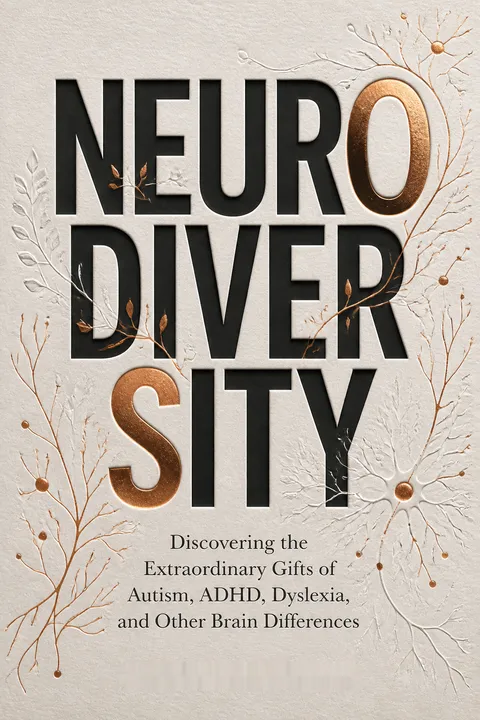
Neurodiversity: Discovering the Extraordinary Gifts of Autism, ADHD, Dyslexia, and Other Brain Differences offers a refreshing perspective on neurological differences. While praised for its positive approach and informative content, some readers found it oversimplified complex issues. The book's focus on strengths and career suggestions was appreciated, though criticized for perpetuating stereotypes and lacking critique of societal structures. Overall, it's seen as a thought-provoking introduction to neurodiversity, albeit with some limitations.
People Also Read







Glossary
Neurodiversity
variation in human brainsA way of understanding differences in attention, learning, social interaction, mood, and other brain-related functions as part of human variation. Armstrong uses the term to challenge deficit-only descriptions of conditions such as autism, ADHD, and dyslexia. The concept affirms dignity and possible strengths without claiming that every difference is harmless or that support and treatment are unnecessary.
Niche construction
shaping surroundings to fitThe process of changing an environment to improve an organism’s chances of functioning and surviving. Armstrong applies the biological idea to people: an individual or caregiver can shape work, routines, tools, social support, and physical surroundings to fit a person’s particular needs and abilities. Examples include using assistive technology, choosing a compatible career, or creating a quieter workspace.
Neoteny
retaining youthful traitsA developmental concept describing the retention of childlike characteristics into later stages of life. Armstrong applies the idea to qualities such as curiosity, playfulness, spontaneity, flexibility, and creativity, which he associates with some people diagnosed with ADHD. He presents this as a possible way to value traits commonly dismissed as immaturity, not as a clinical definition of ADHD.
Multiple intelligences
distinct forms of abilityHoward Gardner’s framework, discussed by Armstrong, proposes that human capability includes several relatively distinct areas rather than one general intelligence alone. The categories named in the book include linguistic, logical-mathematical, spatial, bodily kinesthetic, musical, interpersonal, intrapersonal, and naturalist intelligence. The framework helps explain uneven skill profiles, but it is not a diagnostic tool or a guarantee that any individual has a particular strength.
Floortime
play guided by the childAn approach to supporting autistic children associated in the book with Stanley Greenspan and Serena Wieder. An adult observes what interests or engages the child, joins that activity, and uses enjoyable interaction to encourage communication, emotional connection, and problem solving. Rather than beginning with adult-directed rewards, the approach builds interaction from the child’s existing interests and sensory preferences.
Enhanced perceptual functioning
heightened detail perceptionA term discussed by Armstrong for a proposed autistic cognitive strength in processing perceptual details. It reframes abilities such as finding patterns or noticing small visual features as possible strengths rather than simply as an inability to see the whole. The term describes a research account, not a trait shared by every autistic person.
Universal design for learning
multiple routes into learningAn educational approach that reduces barriers by offering varied ways for students to access information, participate, and demonstrate understanding. Armstrong compares it to curb cuts, which were designed for wheelchair access but also help many other people. In classrooms, options such as audio, visuals, movement, and alternative response formats can support students with and without formal disability labels.
Ableism
bias favoring nondisabled normsDiscrimination or institutional bias that favors people considered able and treats disability as inferior. Armstrong applies the term to expectations that everyone should communicate, read, move, socialize, or work in the same way. Such assumptions can restrict access to education or employment even when a different method would allow a person to participate effectively.
Brain lock
a stuck OCD warning cyclePsychiatrist Jeffrey Schwartz’s term, presented by Armstrong, for a repetitive obsessive-compulsive cycle in which a perceived problem continues to trigger anxiety and compulsive behavior even after the concern has been addressed. Schwartz’s described behavioral approach teaches people to identify the experience as OCD, reinterpret its urgency, shift attention, and regard the intrusive thought as unhelpful rather than obeying it.
FAQ
What's Neurodiversity: Discovering the Extraordinary Gifts of Autism, ADHD, Dyslexia, and Other Brain Differences about?
- Focus on Neurodiversity: The book explores the concept of neurodiversity, emphasizing the strengths and unique abilities of individuals with conditions like autism, ADHD, and dyslexia.
- Positive Perspectives: It argues against the traditional medical model that views these conditions solely as disorders, presenting evidence of extraordinary gifts and talents.
- Cultural Context: Armstrong discusses how perceptions of these conditions vary across cultures and historical contexts, suggesting that what is seen as a disability in one era may be viewed as a gift in another.
Why should I read Neurodiversity?
- Empowering Message: The book provides a refreshing perspective that encourages readers to appreciate the diverse ways in which human brains function.
- Practical Strategies: Armstrong offers practical advice on creating supportive environments for neurodiverse individuals, making it a valuable resource for educators, parents, and advocates.
- Challenging Stereotypes: By reading this book, you can challenge common stereotypes and misconceptions about neurodiverse conditions, fostering a more inclusive mindset in society.
What are the key takeaways of Neurodiversity?
- Neurodiversity as a Strength: The book emphasizes that neurodiverse individuals have unique strengths that can be beneficial in various contexts, such as creativity and problem-solving.
- Niche Construction: Armstrong introduces the concept of niche construction, which involves creating environments that cater to the strengths and needs of neurodiverse individuals.
- Cultural Relativity: The book highlights that perceptions of neurodiversity are influenced by cultural and historical contexts, suggesting that societal values shape how we view these conditions.
What are the best quotes from Neurodiversity and what do they mean?
- Negative Labels: “Too often, the seven labels that I take up in the course of this book attract negative thoughts and attributions.” This quote underscores the stigma associated with conditions like ADHD and autism.
- Affirmation of Diversity: “Neurodiversity conveys a sense of affirmation.” Armstrong highlights the importance of recognizing and celebrating the diversity of human brains.
- Environmental Fit: “Success in life also depends on modifying your surrounding environment to fit the needs of your unique brain.” This quote encapsulates the idea of niche construction.
How does Neurodiversity define neurodiversity?
- Definition of Neurodiversity: Neurodiversity refers to the idea that neurological differences, such as autism and ADHD, are natural variations of the human brain rather than disorders to be cured.
- Historical Context: The term was coined by autism advocate Judy Singer and has evolved to encompass a broader range of neurological conditions.
- Cultural Significance: The book discusses how different cultures view neurodiversity, suggesting that societal values influence whether these conditions are seen as gifts or disabilities.
How does Neurodiversity address ADHD specifically?
- Evolutionary Advantage: Armstrong posits that ADHD traits, such as hyperactivity and distractibility, may have provided evolutionary benefits in prehistoric contexts.
- Creativity and Innovation: The book highlights the connection between ADHD and creativity, suggesting that individuals with ADHD often excel in creative fields.
- Niche Construction for ADHD: Armstrong provides strategies for creating stimulating environments that cater to the needs of individuals with ADHD.
What strategies does Neurodiversity suggest for supporting individuals with dyslexia?
- Visual-Spatial Learning: The book emphasizes the strengths of dyslexic individuals in visual-spatial tasks, suggesting that educational approaches should leverage these abilities.
- Assistive Technologies: Armstrong discusses various assistive technologies, such as text-to-speech software, that can help dyslexic individuals access written material more easily.
- Niche Construction: The author advocates for creating learning environments that accommodate dyslexic learners, focusing on their interests and strengths.
What role does mood play in neurodiversity according to Neurodiversity?
- Complex Nature of Mood Disorders: Armstrong explores the dual nature of mood disorders, acknowledging both the challenges they present and the potential for creativity and insight.
- Productive vs. Nonproductive Depression: The book distinguishes between productive depression, which can lead to personal growth, and nonproductive depression, which hinders functioning.
- Niche Construction for Mood Disorders: Armstrong suggests that individuals with mood disorders can benefit from tailored environments and strategies that support their emotional well-being.
How does Neurodiversity propose to change educational practices?
- Inclusive Classrooms: Armstrong advocates for inclusive educational settings that embrace neurodiversity, allowing students with and without labels to learn together.
- Focus on Strengths: The book encourages educators to identify and nurture the strengths of neurodiverse students rather than solely addressing their challenges.
- Niche Construction in Education: Armstrong emphasizes the importance of creating learning environments that cater to the unique needs of neurodiverse students.
What specific methods or advice does Neurodiversity offer for supporting neurodiverse individuals?
- Mindfulness Techniques: The book suggests mindfulness meditation as an effective way to help individuals with anxiety disorders.
- Inclusive Education Practices: Armstrong emphasizes the importance of inclusive education, where neurodiverse students learn alongside their peers.
- Niche Construction: The concept of niche construction is highlighted as a way to create supportive environments tailored to the strengths of neurodiverse individuals.
How does Neurodiversity relate to the concept of multiple intelligences?
- Multiple Intelligences Framework: The book discusses Howard Gardner's theory of multiple intelligences, which posits that intelligence is not a single entity but rather a collection of different types.
- Valuing Diverse Talents: Armstrong emphasizes that recognizing multiple intelligences allows for a broader appreciation of the unique abilities of neurodiverse individuals.
- Tailored Educational Approaches: The concept of multiple intelligences informs educational practices by promoting tailored approaches that cater to individual strengths.
What are the societal implications of embracing neurodiversity as discussed in Neurodiversity?
- Changing Perceptions: Embracing neurodiversity can lead to a shift in societal perceptions of intelligence and capability.
- Workplace Inclusivity: The book highlights the importance of creating inclusive workplaces that recognize and value neurodiverse talents.
- Cultural Enrichment: Armstrong argues that neurodiversity contributes to the richness of human culture by bringing diverse perspectives and talents to various fields.
Download PDF
Download EPUB
.epub digital book format is ideal for reading ebooks on phones, tablets, and e-readers.








