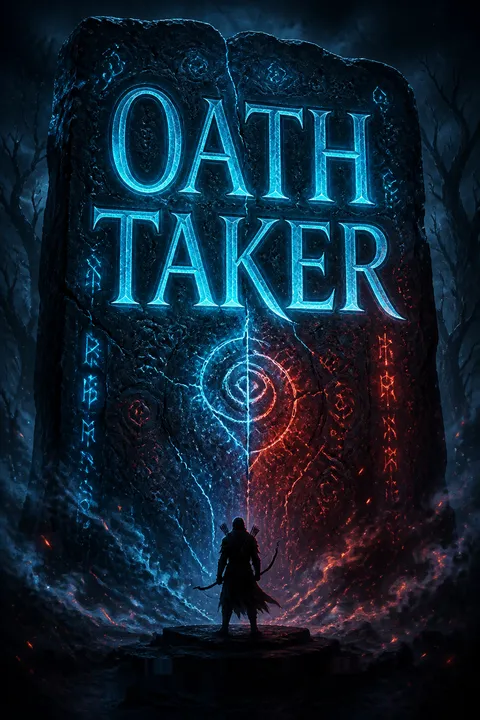


Plot Summary
Blood on the Runewall
In the freezing Muirwood, Haven Ashwood, a fierce guard who secretly hunts Shadowlings, climbs an ancient tree to retrieve forbidden runestones. One stone is meant for Prince Bellamy, the friend she has sworn to protect. During the Curse’s soul-draining fog, two enormous beasts corner her, then a horned stranger appears and turns her arrows into a raven and her bow into a snake.
He identifies himself as Stolas, Lord of the Netherworld, and admits he has come after the mortal who killed his creatures. When Stolas magically orders Haven to scream, she fights the command and cuts his chest with her dagger before escaping over the runewall. His dark blood touches her tongue, and she senses the night has altered her future.
Haven begins with the confidence of someone who has survived by treating danger as a manageable craft. Her weapons, tree routes, and protection stone make the forest seem legible until Stolas bends those rules without effort. The scene’s crucial shift is not simply that she meets a supernatural enemy, but that her resistance works: she can refuse his command and wound him. That small victory unsettles the hierarchy between immortal and mortal, while the blood she unknowingly swallows turns the encounter into an intimate, consequential bond. Haven’s defiance is both courage and habit, a way to reclaim agency before she understands the cost.
Bell’s Dangerous Birthday
Haven returns to Fenwick Castle on the morning of Bell’s seventeenth Runeday, hiding her strange rose-gold hair and the night’s encounter. She gives him a small, forbidden powerrune, presenting it as a protection stone because she wants him safe even when she cannot stand beside him.
Their friendship is the closest thing either has to family: Bell reads histories while Haven sketches, and she promises she will not abandon him. But the celebration exposes the danger around him.
King Horace treats Bell as a political asset, while the king’s mistress, Cressida, humiliates him and pressures him toward marriage with Princess Eleeza. Haven sees a lonely heir being prepared for a role he fears he cannot fulfill, and keeps her own homesickness buried beneath loyalty.
The birthday ritual turns private affection into public pressure. Haven’s gift is loving, but its illegality makes care itself a risk, while Bell’s wish to be valued by his father leaves him vulnerable to the very power the rune might awaken. Cressida’s treatment of him shows how family hierarchy can inflict injury without physical violence; Haven can guard Bell’s body more easily than his self-worth. Their bond also complicates Haven’s oath. It is a source of belonging, but it has become the reason she postpones the search for her stolen origins. The gift carries both her devotion and the danger of acting without full knowledge.
The Road Turns Violent
Haven warns the king that the swollen crowds on Bell’s birthday route could overwhelm the dwindling guards, but Horace insists on following tradition and assigns Archeron Halfbane, a powerful Solis bound to serve him, to protect the royal party. At the city gate, curse-sick villagers surge into the procession.
They claw at Bell’s clothes and horse, and he falls into their grasp as Haven cuts through the mob to reach him. Archeron finally uses his power to clear a path, allowing Haven to carry Bell into the woods. There, a Shadowling attacks. Bell’s protection rune draws on Haven’s hidden magick and incinerates the beast. Bell believes he has cast a spell, and his father’s abandonment convinces him they must flee.
The public attack converts the kingdom’s abstract decline into a physical crisis: the starving, infected population reaches for the prince as if his body might still offer protection. Horace’s insistence on ceremony and the guards’ flight expose a state that preserves appearances after losing the capacity to protect its people. Haven responds through practiced force, while Archeron acts only when he chooses, revealing that her competence and his power do not yet amount to shared responsibility. The rune’s unintended effect sharpens the danger of Haven’s gift. Her attempt to protect Bell has placed a force in his hands whose source neither of them understands.
Stolas Claims the Heir
Bell insists on completing the Runeday rite before they escape, fearing the king will hunt them if he disappears. Inside the temple, he receives his family’s house runestone, but the protective flowers covering the building wither as Stolas’s creatures break through. Haven’s arrows cannot stop the monsters. Stolas freezes the room, removes her weapons, and knocks aside the soldiers guarding Bell.
Archeron does not prevent the capture: Morgryth, the Shade Queen, has the right to claim a mortal lightcaster. Unable to move, Haven forces out a new oath to break the Curse and rescue Bell. A winged creature carries the prince away. Haven rides back to the castle alone, where anger replaces the grief she cannot afford to feel.
The ritual is supposed to confirm Bell’s place in a mortal dynasty, but it instead exposes him to the power of an older, supernatural claim. The flowers that once guarded the temple fail in plain sight, making institutional protection look ceremonial rather than real. Haven’s helplessness is especially sharp because her identity rests on keeping Bell safe; her new oath is an attempt to turn that failure into a task she can act upon. Archeron’s refusal to intervene also complicates the idea of power as moral responsibility. Strength alone does not protect anyone unless its possessor chooses to use it.
The Sun Lord’s Theft
Haven packs weapons, maps, food, and the sword Bell made for her, then searches the king’s council for a plan. Instead, she hears Horace order Archeron to enter the Ruinlands and break the Curse, promising riches. Archeron accepts for reasons he conceals. Haven discovers he has stolen her hidden runebag, follows the tracking mark she placed on it, and catches him among three Solis companions.
Their argument is interrupted by a swarm of gremwyrs. Haven proves useful with her bow, earning a promise that the group will take her across the Bane. On the journey, she secretly carves an energy rune to stay awake. Its power overwhelms her, and her sword later shatters when uncontrolled magick erupts during a spar with Archeron.
Haven’s departure is driven by more than rescue: the runestones connect her to a past she cannot name, while Bell’s abduction gives her a reason to risk pursuing it. Archeron’s theft repeats the violation she has spent years guarding against, so she answers with surveillance and tactical persistence rather than trust. The Solis group challenges her belief that she can survive by remaining entirely self-reliant; their cooperation is real, but their condescension keeps it brittle. Her uncontrolled magic marks a major change in her understanding of herself. Skill and will are no longer enough, because power can emerge from her body before she knows how to govern it.
Bell Behind the Veil
Carried to the frozen fortress of Spirefall, Bell is left in a cell and later approached by the huge, hooded creature who had once kept other Noctis from tearing him apart. The creature takes him to a warmer, ruined wing of the castle, where fire and food briefly ease his fear. Bell explores a magical doorway into a secret garden and finds the same creature tending flowers.
Their fragile understanding ends when Magewick, a Shade Lord, arrives to reclaim him. Bell submits rather than provoke another beating, but Magewick says the Shade Queen wants information about a rose-haired mortal. The episode leaves Bell caught between two dangers, with Haven’s search already drawing attention inside the enemy’s stronghold.
Bell’s captivity strips away the public role that has long defined his worth. He cannot command soldiers or control his magic, so survival begins with small acts: accepting food, exploring an unlocked door, and speaking with the creature who treats him as more than a prize. The garden offers a pocket of life inside a frozen fortress, but it cannot become a refuge because the Shade Queen’s authority reaches through the castle. Bell’s decision to go with Magewick is not simple courage; it is an attempt to reduce immediate harm in a situation where every choice is constrained. The mention of Haven shows that her loyalty has made her visible to the enemy.
Lorwynfell’s Cursed Court
The Solis party reaches ruined Lorwynfell to find the scroll describing the six objects required to break the Curse. In Queen Avaline’s treasure chamber, Haven steals her runebag back from Archeron while he reads the Curseprice: fairy tears, a vorgrath fig, a golden selkie scale, an ancient wood-witch bone, a sliver of the Shade Queen’s horn, and the sacrifice of two lovers.
Her theft wakes the chamber’s djinn. Haven flees, then returns when skeletons attack the others. She unleashes dark magick, destroying the demon, but cannot close the power until Bjorn helps her. Avaline’s undead court recognizes Archeron and withdraws. The group survives, yet Haven’s theft and magic leave Rook poisoned and make Haven a liability the Solis may trade.
Lorwynfell turns the quest from rumor into a material list, giving the characters a possible route toward ending a catastrophe that has seemed invincible. But Haven’s theft makes the information costly: she chooses personal recovery before understanding the danger, then returns because the Solis are no longer interchangeable strangers. Her dark magic saves the group while revealing a second, more frightening source of power. The scene refuses a clean equation between power and mastery. Haven can act decisively, but she cannot yet control what answers her. Avaline’s recognition of Archeron adds a private history to the ruined kingdom, suggesting that the present quest is entangled with losses older than Haven’s own.
Damius at the Rift
As the group nears the Devourers’ crossing, Rook weakens from the djinn’s poison, and Archeron binds Haven so the Devourers can trade her for an antidote. Haven tells Surai that the camp’s vorgrath venom can cure Rook, then sends Archeron a memory of her childhood enslavement under Damius, including the death of another enslaved girl.
At the rift, Damius arrives on his wyvern, Shadow. Archeron frees Haven and returns her weapons, but she cannot kill Damius before another Devourer shields him. During the fighting, Haven cuts open the slaves’ tent and frees the women. Surai distracts her attacker, and Haven sends him into the chasm, then crosses the bridge as Damius burns it behind her.
The Bane forces Haven’s private history into the center of the group’s survival. Her captivity is not merely a memory of pain; it gives her knowledge of the Devourers’ bargains and lets her warn Surai about the cost of rescuing Rook. Archeron’s decision to free her does not erase his earlier choice to bind her, but it creates room for a more difficult form of trust. Haven’s attack on Damius fails, yet she refuses to make the battle solely about revenge: she frees the women who remain trapped in his camp. That choice distinguishes escape from liberation. She will not save herself by accepting another person’s captivity as an acceptable price.
A Bridge Rebuilt in Blood
On the bridge, Damius attacks Haven through soulwalking and orders her back into his control. His wyvern smashes the crossing apart, leaving her hanging above the chasm. With the Solis still on the far side and the Curseprice route severed, Haven uses a runemark Bjorn showed her to restore the burned planks and ropes.
The effort drains her strength, and she falls into the abyss before she can reach safety. Surai and Bjorn later cross the repaired bridge, while Archeron searches the rift and finds no trace of her. Believing Haven dead, he blames himself for letting her go and for the danger that left Rook near death. The others continue without knowing she survived.
The bridge is both a literal route into the Ruinlands and the fragile connection Haven has built between her chosen family and their shared purpose. Repairing it costs her the chance to save herself, making sacrifice an action rather than a sentiment. Yet the fall denies the group any certainty that her choice mattered. Archeron’s grief reveals how thoroughly Haven has disrupted his practiced detachment, while his self-blame also shows the danger of treating responsibility as something one person must carry alone. The scene closes one phase of the quest through apparent loss, not resolution: the crossing stands, but the person who made it possible vanishes from everyone who depends on her.
The Queen Sees Haven
While Haven crosses the Bane, Magewick brings Bell before Morgryth, the Shade Queen. She probes his mind for information about the rose-haired girl, but Haven’s protection rune flares and blocks her. Bell denies knowing her, protecting the one person who has always chosen him.
Morgryth then shows him a magical image of Haven fleeing across the bridge as Damius’s wyvern destroys it. Bell watches her fall into the mist and believes she is dead. Morgryth sends him back to captivity, giving him the approaching full moon as a deadline to dwell on the loss. The vision confirms that Haven’s promise to rescue him has already drawn her into the Queen’s attention.
Bell’s defense of Haven is one of the few forms of agency available to him in the Queen’s presence. The rune protects his thoughts, but the decisive refusal is his: he chooses silence even under magical pressure. Morgryth then turns knowledge into punishment by making him witness an image that appears to confirm the worst. Bell’s belief that Haven has died intensifies his helplessness, while the reader’s knowledge of her survival creates dramatic irony without offering comfort. The scene also joins the two separated storylines: Haven’s journey is no longer a private rescue mission, because Morgryth has identified her as a threat worth investigating.
Stolas Catches the Fall
As Haven drops through the rift, Stolas catches her before the wyvern can reach her and carries her into the Netherworld. She wakes in his hidden stronghold, injured but alive, and learns that he healed her burns with his blood. Stolas says he wants her to break the Curse and offers to train her in dark magic, which she must master before it consumes her.
Haven accepts because Bell’s life depends on reaching the Shade Queen, though she remains suspicious of Stolas’s motives. He takes a lock of her hair so he can enter her dreams for lessons. Meanwhile, the Solis mourn Haven and believe she died, while Rook’s condition remains grave without vorgrath venom.
Stolas’s rescue shifts the story’s power imbalance without making him safe. Haven owes him her survival, yet she resists the familiar logic that rescue creates obedience. Her acceptance of training is a practical bargain shaped by Bell’s deadline, not a surrender of judgment. The Netherworld’s resemblance to the living world complicates the moral map: it is beautiful and structured, but also a place of punishment and predation. Stolas’s blood healing Haven echoes the first encounter, turning the accidental taste of his blood into an ongoing connection. The parallel grief of the Solis underscores how close Haven came to disappearing from both the mortal world and the relationships she had begun to build.
Lessons Beyond the Veil
Stolas explains that the Netherworld mirrors the living realm and that the Curse has fed it with mortal souls. He teaches Haven to invoke objects by memory and feeling; after several failures, she recreates her familiar clothes, each piece tied to a different part of her life with Bell. She tries to bind Stolas’s will but loses the connection when she asks about the woman whose brush she found.
He refuses to explain and sends Haven through a portal to Penumbra Forest, where she must find a vorgrath and obtain venom for Rook. In the mortal camp, Bjorn’s vision confirms Haven is alive but in mortal danger. He warns Surai that Haven must survive the hunt, though he cannot see a clear path through the branching possibilities.
The lesson in invocation gives Haven a new way to act, but it also shows that magic depends on memory and emotional attachment rather than force alone. Her clothes return because she can recover the feelings embedded in them, especially her bond with Bell. This is a form of power that does not erase vulnerability; it makes personal history usable. Her failed attempt to bind Stolas establishes an important limit and exposes a secret he guards fiercely. Meanwhile, Bjorn’s uncertain vision resists the fantasy that foresight guarantees control. The people who care about Haven can see the danger, but they cannot choose her path for her.
The Vorgrath Bet
Alone in the forest, Haven gathers weapons through invocation, though the power drains before she can conjure food or certainty. She recommits to her promises: protect Bell, break the Curse, find venom for Rook, and learn to control her magic. The Solis fill her thoughts, and a brief vision of them keeps loneliness from becoming panic.
Through the mirrored veil, Stolas follows her unseen. A companion challenges his faith in Haven and wagers that she will not survive until dawn. Stolas agrees not to interfere, even as he sees light and dark magic tangled around her in patterns he cannot identify. Haven presses farther into the monster-haunted woods, unaware that her survival has become a wager in the Netherworld.
The ending gives Haven neither victory nor a safe return, only a sharpened sense of what she has promised and who those promises bind her to. Her imagined company is not a magical solution; it is a psychological resource that lets her continue alone. Stolas’s hidden observation creates an unsettling counterpoint: Haven believes she is acting beyond everyone’s reach, while an immortal watches her as both tool and person. His wager exposes the uncertainty at the heart of the book. Prophecy, power, and affection all fail to guarantee survival. Haven’s choices matter precisely because no one can make them harmless for her.
Analysis
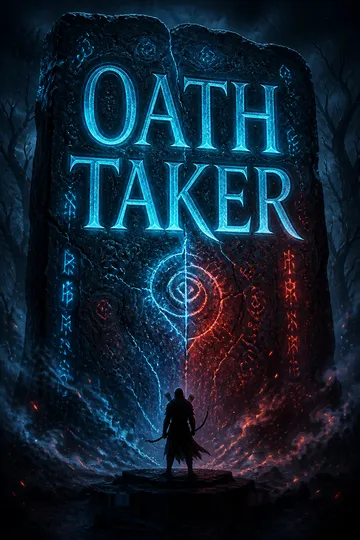
Oath Taker makes loyalty both a source of strength and a mechanism of self-erasure. Haven’s oath to Bell begins as a freely chosen answer to the kindness that rescued her, but over time it becomes the reason she postpones questions about her origins and needs. The plot repeatedly tests whether devotion means obeying a promise literally or responding to the person it was meant to protect. Haven’s choices become more ethically complex when they affect Rook, Surai, and the other captives at Damius’s camp.
The book also treats magic as an embodied problem of access and cost. Haven’s power does not arrive as a clean gift: it is tangled with forbidden runes, memory, fear, and a force capable of taking control. Her learning curve parallels the deeper question of agency. To wield power, she must distinguish her own intention from what the power demands. Bell’s rune similarly complicates inheritance, since the magic he appears to possess is partly channeled from Haven.
The political world is built on unequal protection. Penryth’s wall preserves the court while people outside it suffer the Devouring; the king’s ceremonies continue even as the state cannot protect its heir. The Noctis, in turn, are not simply monsters without history. Their lost homeland and the destruction of Shadoria give the conflict a buried political past, without excusing the violence Morgryth directs at mortals.
The ending remains deliberately unresolved. Haven has crossed into the Netherworld, survived the fall, and accepted instruction, but she has not gathered the Curseprice or rescued Bell. Her next task begins alone, with Rook’s life also at stake. The closing wager sharpens the novel’s central tension: Haven is treated as a tool by powerful beings, yet her choices keep exceeding their predictions.
People Also Read
Characters
Haven Ashwood
Oath-bound forest fighterA bold, restless young guard who protects Prince Bellamy and hunts the monsters pressing against Penryth’s wall. Haven is practical with weapons, quick to act, and more comfortable with danger than with vulnerability. Her rose-gold hair and unknown origins set her apart in a court that expects obedience and convention from women. Years of captivity taught her to distrust dependence, so she often mistakes self-reliance for safety. Her loyalty to Bell is sincere, but it also postpones her search for the family and home she lost. Drawing and studying plants reveal a more patient, observant side beneath her impulsiveness.
Bellamy Boteler
Bookish crown princeBell is Haven’s closest friend and the heir to Penryth, a gentle, scholarly young man uneasy with the martial demands of kingship. He loves histories, stories, and the emotional worlds books make possible, and he treats Haven as family rather than as a servant or curiosity. His sensitivity is not weakness, though the adults around him often use it to diminish him. He longs for his father’s approval and worries that his temperament makes him unfit to rule. Bell’s bond with Haven gives him a rare source of honest affection, but it also leaves him fearful of being the reason she sacrifices her own future.
Archeron Halfbane
Bound Solis warriorA powerful Sun Lord and the bastard son of Effendier’s ruler, Archeron is magically bound to serve King Horace. He masks homesickness and resentment with boredom, arrogance, and a refusal to take mortal concerns seriously. His solitude in the palace gardens suggests a man who has outlived the people and places that once gave him purpose. Haven’s defiance irritates him, but it also reminds him of the fierce warriors of his homeland. Archeron values honor and loyalty, though his idea of protecting others is often distorted by old grief and mistrust. His complicated history with the Solis companions shapes the choices he makes on the journey.
Stolas
Lord of the NetherworldA horned Noctis ruler whose raven cloak, silver eyes, and command of shadow make him both beautiful and terrifying. Stolas is playful when he has the advantage and merciless when crossed, but his motives do not fit neatly with the Shade Queen’s interests. He studies Haven because she resists his magic and can channel forces he recognizes as dangerous. His guardedness is more than political caution; questions about the people close to him provoke a sharp, personal response. Stolas treats mortals as fragile and temporary, yet Haven’s persistence unsettles that distance. He offers knowledge, but insists on retaining control over how much she learns about him.
Surai Nakamura
Loyal Ashari warriorAn Ashari fighter who travels with Archeron, Rook, and Bjorn, Surai is warm, perceptive, and capable of great violence when her companions are threatened. She can take raven form and moves between tenderness and battlefield discipline without apology. Her devotion to Rook shapes her decisions, while her affection for Archeron gives her a keen sense of the grief hidden beneath his pride. Surai makes an effort to include Haven even when their group’s distrust makes that difficult. She values loyalty, but not as blind obedience: she is willing to challenge her friends when their decisions risk turning them into the kind of people they oppose.
Rook
Exiled warrior princessA Morgani princess and formidable warrior who can transform into a great cat, Rook left her homeland rather than accept the life arranged for her. She is blunt, proud, and physically fearless, but her independence does not make her careless with those she loves. Her relationship with Surai gives her a refuge built on chosen commitment rather than political duty. Rook’s skepticism toward Haven grows from the Solis’ painful history with mortals, not simple cruelty. She respects courage and straightforwardness, qualities Haven possesses even when her impulsive choices make Rook’s trust difficult.
Bjorn
Blind Solis seerA sightless seer with a gift for perceiving branching futures, Bjorn is the group’s guide to dangers that cannot be read through ordinary senses. His visions are complex and shifting, so he offers possibilities rather than reliable answers. He uses dry humor to puncture Haven’s impatience, yet he recognizes the unusual forces gathering around her. His blindness does not define his insight; it marks one cost of a past he keeps largely private. Among the Solis, Bjorn is both a source of hard knowledge and a reminder that seeing a danger does not mean one can prevent it.
Damius
Haven’s former masterA leader among the Devourers, Damius bought Haven when she was a child and tried to force her latent power into service. He is a patient, calculating abuser who uses magical intrusion, threats, and control of other captives to make resistance feel futile. His influence survives long after Haven escapes, appearing in her nightmares and shaping her fear of dependence. Damius sees people as property or instruments, a worldview that makes Haven’s refusal to submit especially threatening to him. His command of the wyvern Shadow gives him a terrifying reach beyond the Devourers’ camp.
Morgryth Malythean
Curse-casting Shade QueenThe ruler of the Noctis and source of the Curse, Morgryth wields political authority and invasive magic with equal ease. She claims mortal lightcasters for her purposes and treats people as resources whose bodies, gifts, and histories belong to her. Her power is rooted in a grievance that has reshaped entire kingdoms, but the scale of that injury has not made her merciful. Morgryth’s interest in Haven marks the guard as more than an obstacle to Bell’s capture. To Bell, she is an overwhelming presence who can turn knowledge of his friends into a weapon.
King Horace Boteler
Calculating Penrythian kingBell’s father and ruler of Penryth, Horace prizes stability, succession, and the appearance of royal authority. He treats his son as an heir to manage rather than a person to understand, and his reliance on Archeron reflects how little power remains in the mortal kingdoms. Horace can be politically shrewd while failing at basic compassion. His neglect leaves Bell hungry for approval and forces Haven to compensate for dangers a king should address.
Cressida Craven
Cruel court powerbrokerKing Horace’s mistress and Renk’s mother, Cressida uses social influence to control Bell and protect her son’s position. She insults Bell’s grief and pressures him toward a political marriage, presenting cruelty as instruction in royal duty. Haven recognizes her as a bully but restrains herself because retaliation would make Bell’s life harder. Cressida’s power depends on the king’s favor and the court’s willingness to let emotional abuse pass as discipline.
Renk Craven
Bell’s spiteful half-brotherCressida’s son and Bell’s half-brother, Renk uses mockery and public humiliation to reinforce Bell’s insecurity. He covets recognition and takes pleasure in reminding Bell of his perceived inadequacies. His cruelty is not politically sophisticated, but it gains force from his mother’s influence and the king’s indifference. Renk represents the intimate hostility that Bell must endure even inside his own family.
Eleeza Thendryft
Reluctant royal matchThe daughter of Lord Thendryft, Eleeza is presented as a possible political bride for Bell. She behaves with more consideration than the adults arranging her future and shows discomfort when Renk humiliates him. Her brief alliance of understanding with Haven suggests that she sees the people beneath court roles. Eleeza’s position reflects how marriage can become a tool of diplomacy before either young person has meaningful choice.
Avaline
Cursed queen of LorwynfellOnce the ruler of Lorwynfell, Avaline is now a skeletal queen whose court remains trapped in a magical imitation of life. She fought beside the Solis during the old war and is connected to Archeron through a binding promise. Her ruined kingdom preserves both political history and personal grief. Even in her monstrous state, Avaline responds to Archeron’s presence, revealing that the curse has not erased every bond.
Ravenna
Shade Queen’s lost daughterMorgryth’s daughter and Stolas’s wife, Ravenna is central to the history behind the Curse. Stories describe her as a victim of a mortal prince, while her present connection to the Noctis remains wrapped in fear and rumor. Her absence shapes Morgryth’s anger and Stolas’s bitterness. Ravenna’s name carries political weight long before Haven can learn what truly happened to her.
The Hooded Creature
Bell’s hidden protectorA large, cloaked being in Spirefall who keeps other Noctis from harming Bell and gives him warmth, food, and access to a secret garden. The creature is guarded and rough, but its actions suggest a life of confinement and a private attachment to the castle’s remaining beauty. Bell does not know who it is, and the creature offers little explanation. Its presence complicates the idea that every inhabitant of the Noctis realm serves the Shade Queen.
Demelza Thurgood
Worried castle maidHaven’s lady’s maid, Demelza fusses over her clothing, sleeplessness, and apparent nightmares. Her superstition can irritate Haven, but her concern is genuine, and their familiar arguments carry the ease of a household bond.
Lady Pearl
Haven’s loyal mareHaven’s patient, dependable horse and companion through training and night hunts. Lady Pearl responds to Haven’s care with steady trust, embodying the loyalty Haven values in people as well as animals.
Plot Devices
The Curseprice
Six-part route to releaseThe Shade Queen’s curse can be broken only by assembling six rare offerings: fairy tears, a vorgrath fig, a golden selkie scale, a century-old wood-witch bone, a sliver of the Shade Queen’s horn, and the sacrifice of two lovers. The list turns an abstract catastrophe into a dangerous quest with distinct tests and moral implications. It first appears as an old rhyme and becomes actionable when the party finds Queen Avaline’s protected scroll in Lorwynfell. The final requirement suggests that ending the Curse may demand more than retrieving objects, making the promise of restoration ethically uncertain.
Runestones and runemarks
Magic with a priceRunestones channel magical forces through carved symbols, while runemarks can be inscribed on objects or flesh. Haven collects forbidden stones and gives Bell one disguised as a protection gift. The stone channels Haven’s hidden power when Bell is attacked, then shields him from Morgryth’s intrusion. Haven’s own runemark opens access to energy she cannot control, and her later magic draws strength from both light and dark sources. Every use carries danger, since magic takes a price and can overwhelm the mortal body.
The runewall and the rift
A border between worldsThe runewall protects Penryth and the remaining southern kingdoms from the Curse, but it does not prevent every supernatural threat from reaching them. North of the wall, the Bane separates safer lands from the Ruinlands, and the rift opens into the Netherworld. The Devourers control the bridge across it and demand payment from those who want passage. When the bridge is destroyed, Haven uses a runemark to rebuild it, though the effort sends her falling into the chasm. These barriers shape the geography of the quest and make crossing a physical test of commitment.
The Devouring
The Curse made visibleThe Devouring is a magical fog that descends unpredictably and leaves people dead or curse-sick. Its arrival signals that the Curse is still feeding on mortal life, while its cinnamon-and-blood scent allows Haven to recognize its presence. The mist also conceals monsters and distorts the landscape, turning travel into a problem of limited perception. The suffering it causes gives urgency to the quest and exposes the gap between protected Penryth and the kingdoms abandoned beyond its wall.
Oaths and the Heart Oath
Promises become obligationsHaven’s vows to protect Bell and break the Curse define the decisions she makes, while the Solis Heart Oath binds a pair through their sacred flowers. The devices give emotional commitments magical and practical consequences. Haven’s oath can sustain her through fear, but it also encourages her to put herself in danger without considering what she wants beyond service. The Heart Oath offers a contrasting model of chosen attachment, though its rules and costs make it difficult to separate love from duty.
Kingdom of Runes Series


Download PDF
Download EPUB
.epub digital book format is ideal for reading ebooks on phones, tablets, and e-readers.








