


Plot Summary
Prologue
Maia endures repeated torture at the Archduchess’s hands, her body broken and rebuilt so the questioning can begin again. The interrogator wants the location of the Rebels and the identity of Riser Thornbrook.
Maia nearly yields when thirst and pain hollow out her resolve, but memories of Riser’s faith in her revive her defiance. She cannot prevent the hammer from shattering her leg. She can, however, refuse to surrender what she knows. The Archduchess gets Maia’s screams, but not her secrets.
The prologue establishes survival as both physical endurance and a struggle to retain authorship of the self. Maia’s captor can repair her body, making pain repeatable, but cannot guarantee obedience. Riser’s remembered encouragement functions as an inner counterweight to the Archduchess’s control, though Maia’s resistance is not effortless or triumphant. Her near surrender matters: courage here is not fearlessness but the choice to continue after fear has made surrender feel merciful. The interrogator’s interest in Riser also seeds the emotional and political stakes that will shape Maia’s decisions.
The Gallows Choice
After days in the Tower, Maia attacks two guards and races for the exit, but another guard knocks her down before she reaches daylight. The Archduchess then parades her through the palace grounds, where spectators pelt her with food, and threatens to kill prisoners whenever Maia disobeys.
Faced with twenty-four captives and the promise of mass executions, Maia selects an elderly, visibly ill man, hoping he would soon die anyway. She must watch him hang. The Archduchess has turned escape into a public test of guilt, and Maia accepts the blame rather than let the captives be killed without her intervention. Even after this punishment, Maia resolves to escape and find her father’s hidden device.
The Archduchess makes Maia participate in the violence she opposes, converting resistance into a choice between two forms of complicity. Maia’s selection is not a clean moral victory: she chooses the man she believes least likely to survive, then has to witness the consequence. The spectacle also reframes her as a public villain for an audience she cannot reach or correct. Her continued resolve is therefore not based on believing she can remain innocent. She moves forward knowing that every available choice may leave someone harmed.
Caspian at the Door
The guards bring Maia to Prince Caspian, whose palace she helped bomb. He sees her as responsible for the deaths of 322 people, including his sister, Princess Ophelia, and refuses to accept that his father murdered Ophelia after the attack. Maia explains that her father built a device called the Mercurian, which could stop the approaching asteroid Pandora, but Caspian will not help her find it.
She steals a knife, takes him hostage, and forces him into an old tunnel beneath the palace. The passage opens beyond the mountains, but Rebels intercept them outside. Caspian escapes on a Swifter; Maia stays behind to protect him from a gunshot, then is struck unconscious by the Rebels who believe she is a traitor.
Caspian and Maia are trapped in opposing accounts of the same catastrophe. Maia knows that the emperor’s violence extends beyond the bombing, while Caspian’s grief makes her seem like its clearest cause. Their former intimacy cannot bypass the evidence of death around them. Maia’s decision to protect him during the escape complicates her self-preservation: she risks herself for the very prince she has just coerced. The tunnel offers physical freedom, but her capture shows that escape from the palace does not mean entry into a community willing to trust her.
The Blood King’s Stranger
Maia wakes in Bloodwyn Hall, the hidden Rebel stronghold, and learns that Riser is alive. She finds him presiding over the Rebels, but he does not recognize her. Flame, the commander, says Riser asked the Rebels to remove every memory of Maia after believing she betrayed them and helped the emperor. The Rebels have also seen edited footage of Maia choosing prisoners for execution.
They distrust her, keep her in Royalist clothes, and call her a traitor. Maia finds her younger brother, Max, among the fighters, but he rejects her as the sister who disappeared while he survived on the streets. Teagan, a Rebel who doubts the accusations, gets Maia food and a chance to move around the stronghold.
The stronghold offers Maia belonging in name but not in practice. Her relationships have been converted into evidence against her: Riser’s absence of recognition and Max’s anger both reflect histories she cannot simply explain away. The edited footage shows how political power works through selective images, while the Rebels’ suspicion reveals how easily a resistance can reproduce the judgments of its enemy. Teagan’s practical kindness matters precisely because it does not erase Maia’s responsibility or demand instant trust. It gives her enough security to act without pretending she has already been forgiven.
The Empire’s Painted Lie
Nicolai, the Rebels’ masked strategist, uses an ancient light device to reveal murals hidden beneath Bloodwyn’s walls. They depict a history unlike the one Maia was taught: House Laevus armed itself against factory workers, then destroyed them and blamed them for the violence.
The emperor’s regime later erased records and outlawed technology to preserve its authority. Maia urges Nicolai to retrieve the Mercurian and stop Pandora, but he intends to use it as leverage in his war against the emperor.
Meanwhile, the emperor broadcasts more executions, and Maia sees Cage, Flame’s captured friend, forced to operate the gallows. When Maia joins the first Blood Court to gain influence, simulated weapons and a head strike overwhelm her, and Riser wins while voices begin sounding inside her mind.
The mural revelation changes Maia’s understanding of history from inherited fact to an instrument of government. Nicolai exposes the machinery of that deception, yet his refusal to prioritize the asteroid shows that possessing the truth does not make him morally reliable. The public execution broadcast makes that conflict personal: Cage is forced to perform the state’s violence, while Maia recognizes the same coercion she endured. Her first defeat in the Blood Court further narrows her options. The voices that surface during her injury suggest that the buried past is not only political; it has entered her mind in a more literal way.
Out Through the Window
Searching for help, Maia finds Brogue, her former protector, dangerously weakened by the drug Tar. She and Lash move him to a room and nurse him through a fever. Maia then works as a cleaner, tries to steal Lash’s key to reach the war room, and is caught by Teagan. When the Rebels lock Maia in her room, memories of the pit trigger a panic; she uses a hidden dagger to cut through the window lattice and climbs down the castle cliff.
She follows a Rebel mission to a temple in Dominus, where the fighters search for outlawed weapons. A drone identifies her, bringing the Archduchess and Caspian’s party to the temple. Maia destroys two Royalist craft with explosive enders, then outruns Caspian and escapes through an aqueduct.
Maia’s escape is a bodily answer to confinement: she does not wait for permission or mistake a locked door for a final judgment. Yet her independent action has costs. She enters the raid without knowing the terrain, and her survival depends on improvisation, a weapon she has learned to use, and Caspian’s momentary decision not to close the gap. Brogue’s illness also challenges Maia’s belief that people she trusts will remain capable of rescuing her. She begins to build agency through action, but the mission teaches her that courage without reliable allies can become another form of isolation.
A Simulated Goodbye
With Teagan and Lash’s help, Maia devises a way into Caspian’s private Sim, hoping he will escort a small Rebel team into Laevus Castle to find the Mercurian. A Sim operator named Rivet connects Maia to his programmed world, where Caspian relives happier days with Maia and Ophelia.
He admits he has been trying to let Maia go, kisses her, then pushes her from a mountain ledge to end the fantasy. Maia wakes furious and shaken. Max, afraid Caspian would betray them, leaves the safe house and helps Rebels ambush the prince outside the Sim boutique. Riser knocks Caspian unconscious. Maia protests, but Caspian is carried away, and Max insists he acted to protect her.
The Sim lets Maia encounter the emotional truth Caspian cannot sustain in waking life: he misses the people he lost, but memory has become something he wants to master by ending it. His rejection is not simply cruelty; it is a desperate attempt to control grief, though it still hurts Maia. Max’s intervention repeats the family pattern of protection through unilateral decisions. Both siblings act from fear of losing the other, but their secrecy turns care into betrayal. The capture also defeats Maia’s plan to gain entry by persuasion and leaves her responsible for deciding what resistance should do with a captive prince.
The Prince in the Cage
At the Rebel Blood Oath ceremony, Caspian is displayed in a cage while the crowd prepares to punish him. Hugo releases the metal scorpions that nearly killed Maia in the first Blood Court. She and her friends shove the cage away from the swarm, saving Caspian before the scorpions can kill him.
Maia then challenges Nicolai’s authority: if she wins the coming Blood Court, Caspian must live and Rebels who choose to follow her must be released. Nicolai accepts but adds that anyone who supports Maia will share her fate if she loses. Caspian promises to help locate the Mercurian if she survives. Maia’s friends agree to fight beside her, knowing the wager could cost them their lives.
Maia’s intervention refuses to let the Rebels’ history of oppression justify turning a captive into a public object of vengeance. Her defense of Caspian does not absolve him or erase his past choices; it insists that the movement be judged by what it does when it holds power. Nicolai’s added condition exposes how his authority depends on making dissent costly. Maia answers by accepting shared risk rather than claiming safety for herself. The wager transforms loyalty from a sentiment into a material commitment, forcing her friends to choose with full knowledge of the danger.
The Scorpion Court
In the final Blood Court, Maia’s team protects her while the Redgrave twins use dangerous weapons to target her and Max. Lucy wounds Lash with a real sword, and Max is struck while defending Maia. As Maia takes Lucy’s blade, the voices in her head beg to be released. She somehow disrupts the Sim: the simulated weapons vanish and the fighters collapse, leaving only her and Riser.
He is unaffected. Riser outmatches her in their duel until Maia recalls their shared past and reaches the part of him that still knows her. When he freezes, she wounds his shoulder, disarms him, and wins the Scorpion Throne. Nicolai acknowledges her victory, and Maia orders Caspian released and treated.
The climax joins Maia’s private suffering to the system’s hidden population: the voices are not merely a symptom but people trapped within the Sim structure. Her ability to disrupt the weapons does not grant effortless mastery; she still has to face Riser on his terms. The duel turns memory into both an emotional bond and a tactical opening, but Maia must exploit that recognition by injuring someone she loves. Her victory therefore resists the fantasy that intimacy can make conflict painless. Power arrives through a choice she will remember, not through a clean separation between feeling and action.
The Crown Changes Hands
From the Scorpion Throne, Maia asks the Rebels to join her search for the Mercurian rather than fight a war they cannot win. At first no one steps forward, until Flame commits, followed by Maia’s friends and other Rebels. As the gathering grows, Lucy attacks Maia on the Archduchess’s behalf. Brogue intercepts the blade and dies protecting her.
Before he dies, he reveals that he was once Gabriel, Maia’s bodyguard, and that he killed her father under orders connected to protecting the device. Maia addresses the panicking crowd with a pistol, takes Brogue’s weapon, and gives Riser the crown. She leaves Bloodwyn with the Rebels who choose her, unable to settle what Brogue’s last revelation means.
Maia’s first act of rule is to ask people to abandon revenge for a purpose they cannot yet verify. The silence that greets her appeal shows how little authority a crown can manufacture on its own; Flame’s choice gives others permission to follow. Brogue’s death then collapses the distinction between trusted companion and historical betrayer. His confession does not cancel the care he showed Maia, nor does his care excuse the killing. By surrendering the throne to Riser, Maia refuses to confuse leadership with ownership. She leaves carrying a more complicated inheritance than the one her father entrusted to her.
Sleepers at the Gate
After Brogue’s body is sent out to sea, Maia prepares to lead her small band away from Bloodwyn. Flame warns her that thousands of people have gathered outside, awakened from the Sleepers uploaded into the Chosen. Their leader is Maia’s mother, Lillian. She explains that she secretly routed the Sleepers into Maia so they could be awakened later, following a failsafe created by Maia’s father.
The voices that troubled Maia were these trapped minds pressing through. Lillian offers the crowd as an army to find the Mercurian and overthrow the emperor. Maia confronts Nicolai, who threatens to treat her as an enemy, then packs her weapons, Bramble, and a journal belonging to Riser’s mother.
The crowd at the gate overturns Maia’s assumption that she has to build a movement from a handful of people. Her mother’s explanation makes the voices both a burden and evidence of a mass act of rescue, though it also reveals that Maia was used without informed consent. Lillian’s arrival does not repair their damaged relationship; it gives Maia a practical reason to work beside a parent she still distrusts. Nicolai’s threat clarifies that leaving the stronghold is a political break, not a change of scenery. Maia now has followers, but no guarantee that their aims align.
Pit Boy Remembers
As Maia finishes packing, Riser enters her room and remembers their shared history, triggered by her promise not to hide again. He says he did not choose to have her erased and asks her to forgive him. Maia questions his place in her future, but Riser insists he will go wherever she goes. She accepts his return while asking him to keep Caspian alive and cooperate with him.
Riser agrees reluctantly. He also reveals that he has hidden caches of outlawed weapons in the caves, giving the departing group supplies. Maia leaves Bloodwyn with Riser, Caspian, Max, and the newly awakened people, still facing the emperor, Pandora, and Nicolai’s opposition. The search for the Mercurian has begun, not concluded.
Riser’s recovered memory restores a relationship, but it does not restore the past as if nothing happened. Maia has endured his apparent rejection, made choices without him, and become a leader with obligations beyond romance. Her condition that he cooperate with Caspian is a practical test of whether love can coexist with political restraint. The hidden weapons offer material support, while the unresolved conflict with Nicolai and the threat of Pandora keep the ending open. Maia does not receive certainty; she receives companions and a direction, which is a more credible basis for hope.
Analysis
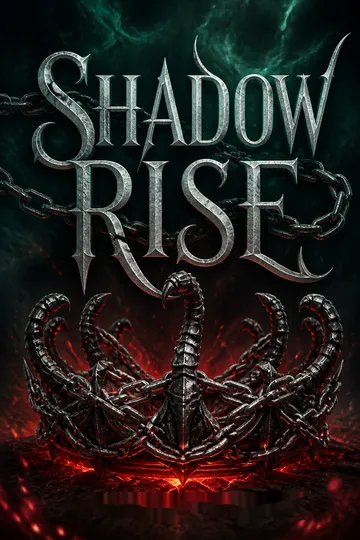
Shadow Rise makes memory a political battleground. The emperor preserves authority by rewriting history, burning records, and broadcasting edited images that turn Maia into a traitor. The Rebels oppose that system, yet their own institutions risk repeating its logic: Nicolai values the Mercurian as leverage, the Blood Court rewards domination, and captives become targets for collective revenge. Maia’s central struggle is therefore not simply deciding which side to join. It is learning how to pursue survival without adopting the dehumanizing methods that made resistance necessary.
Her personal relationships sharpen this problem. Maia wants to protect Max, but her protective instincts deny that he has grown into someone capable of making choices. Her bond with Riser is shaped by affection, engineered memory, and the pain of believing she has been erased. With Caspian, shared tenderness cannot erase the deaths that divide them. The novel treats love not as a solution to political violence but as a source of obligations that can conflict with strategy.
The voices in Maia’s mind initially resemble trauma, then become evidence of thousands of people hidden inside the systems that govern the Trials. This revelation makes her ability to disrupt the Sim more than a combat advantage: it connects private suffering to a population kept unconscious for political convenience. Yet waking them does not end the conflict. The book closes with an army, an uneasy family reunion, and Riser’s recovered memory, while the Mercurian remains unfound and Pandora continues toward the world. Maia has changed from a prisoner trying to escape into a leader trying to choose what her new power is for. The ending offers momentum rather than safety, asking whether a coalition formed through grief can act before revenge and distrust tear it apart.
People Also Read


Characters
Maia Graystone
The scarred survivorMaia is a young woman shaped by prison, political violence, and repeated demands that she choose who suffers. She has been trained to fight, but her strength is not simply physical: she keeps returning to people and problems that others would abandon, even when guilt makes her doubt her right to lead. Her loyalties to Max, Riser, and the people endangered by Pandora pull her in different directions. Maia’s instinct to protect can become controlling, especially with her brother, while her suspicion of authority is grounded in real betrayals. She wants to save the world without letting either the emperor or the Rebels decide that some lives are expendable.
Riser Thornbrook
The rebel princeRiser is the former Pit Boy who rises to lead the Fienian Rebels. He is observant, physically formidable, and accustomed to reading danger before it reaches him. His history of imprisonment and the violence inflicted on his mother fuel a fierce desire to punish the Royalists. Beneath his controlled manner, grief and attachment compete with the role of weapon his allies expect him to play. Maia’s presence unsettles his certainty, while his loyalty to his cause can place him at odds with her effort to save the world from Pandora. Riser’s authority rests as much on personal resolve as on the frightening example he sets in combat.
Prince Caspian
The grieving heirCaspian is the emperor’s heir, raised within the rituals and privileges of the Royalist court. His grief for his sister Ophelia shapes his judgment of Maia and makes the Rebel attack inseparable from personal loss. He is capable of tenderness and reflection, but also seeks control when pain leaves him exposed. His connection with Maia began in a world of courtship and expectation, then became tangled with political violence neither of them could contain. Caspian’s divided loyalties make him more than a symbol of the empire: he must decide whether his inherited position matters more than the truth about his family and the fate of their world.
Max
Maia’s stubborn brotherMax is Maia’s younger brother, now a Rebel fighter who has grown up without her protection. Humorous, bold, and eager to belong, he conceals the hurt left by their separation behind jokes and bravado. His survival on the streets has made him resourceful and more capable than Maia’s memories allow her to see. He wants a relationship with his sister, but not one that reduces him to the frightened child she once cared for. Their bond is genuine, yet years apart have changed its terms. Max’s need to make his own choices often collides with Maia’s impulse to keep him safe.
Nicolai
The masked strategistNicolai is the secretive strategist behind the Fienian rebellion, a physically damaged man who speaks through an electronic device and commands loyalty through knowledge as much as force. He has preserved forbidden history and built an army in hiding, giving him a vision broader than immediate survival. Yet he treats the Mercurian as a potential instrument of power rather than a means to prevent catastrophe. His intellectual clarity does not make him trustworthy: he can expose the emperor’s lies while imposing his own priorities on others. Nicolai’s ambition is bound to justice for the oppressed, but his willingness to manipulate people raises the question of whether liberation can be built through another form of control.
Flame
The rebel commanderFlame is the fierce, compact commander of the Fienian Rebels. She guards the movement’s security and expects newcomers to prove their loyalty through action. Her suspicion of Maia comes from the risk Maia poses to the stronghold, but she is not indifferent to personal loss: Cage, her closest friend, remains a source of pain she cannot easily face. Flame’s hard manner protects a leader who has learned that hope can be dangerous when enemies can exploit it.
Teagan Aster
The elegant insurgentTeagan is a poised Rebel who moves easily between political strategy and intimate care. She helps Maia when others condemn her, but does not pretend that trust is automatic. Her past includes coercive treatment for being a Subversive, giving her a clear understanding of what it means to have one’s identity policed. Teagan’s loyalty to Ophelia and her attraction to Flame reveal a capacity for tenderness that coexists with her sharp authority.
Lash
The limping caretakerLash is assigned to watch Maia and initially treats the duty as an unwanted burden. His jokes and flirtation soften his guardedness, while his limp marks the violence that stripped him of his former place in society. He has been denied the chance to fight as he wishes, yet remains useful as a caretaker, assistant, and steady presence. Lash resists being defined by his injury, though the wound still shapes how others underestimate him.
Brogue
The weathered mentorBrogue is a veteran Rebel and one of Maia’s most trusted guides. His rough humor and fighting experience conceal a man burdened by failures he rarely discusses. He can recognize Maia’s courage without romanticizing it, and his advice often forces her to confront the cost of protecting others. Brogue’s weakness for Tar complicates his authority, but his loyalty to Maia remains a defining part of their relationship.
Rivet
The Sim mechanicRivet is a young Rebel skilled at manipulating Sim systems and confident enough to challenge Maia’s assumptions. She and Max share a close, teasing friendship built through years of surviving together. Rivet resists being treated as a tool or as a child, and expects Maia to respect Max’s independence. Her technical talent gives the group access to systems that would otherwise remain under Royalist control.
Rhydian
The wary rebel fighterRhydian is a skilled Rebel fighter and the brother of Maia’s dead friend Merida. He encounters Maia at a moment when he has reason to distrust her, and his guardedness reflects both political danger and personal grief. Though he can act decisively in a fight, he does not quickly restore the closeness they once shared. His choices show how loyalty to the rebellion can coexist with unresolved ties to Maia.
Lucy Redgrave
The Royalist turned rebelLucy is a former Chosen and a skilled fighter whose Royalist loyalties make her presence among the Rebels deeply unsettling. She and her twin brother Hugo know the mountain routes that helped the Rebels escape, giving them influence despite others’ distrust. Lucy is calculating and openly hostile toward Maia, especially where Riser’s loyalty is concerned. Her polished confidence makes it difficult to tell whether she is cooperating from conviction or advantage.
Hugo Redgrave
Lucy’s dangerous twinHugo is Lucy’s twin and an aggressive fighter who shares her strategic instincts and Royalist past. The siblings often reinforce each other’s claims, creating pressure on anyone they target. Hugo favors spectacular, frightening weapons and uses intimidation to test others’ limits. His value to the Rebels rests on his knowledge and battlefield usefulness, not on broad trust.
Lillian
Maia’s distant motherLillian is Maia and Max’s mother, a Royalist scientist whose work helped shape the Trials and their technologies. She is exacting and emotionally distant, measuring strength through performance and preparation. Maia’s memories of her carry both fear and resentment, while Lillian’s choices have influenced the family’s survival in ways Maia does not fully understand. Her commitment to the empire and her capacity for secrecy make her difficult for Maia to trust.
Princess Ophelia
Caspian’s lost sisterOphelia is Caspian’s sister and a princess whose warmth contrasts with the rigid expectations of court life. She has ties to the Rebel cause that are not obvious to those around her, and her kindness makes a lasting impression on Maia. Ophelia’s relationships connect the Royalist court to the resistance, revealing that political allegiance does not always follow family rank.
Bramble
Maia’s mechanical companionBramble is a small sensor machine who accompanies Maia through imprisonment and escape. Curious and loyal, he offers her a familiar presence when human allies are absent or unsafe. His delicate movements and quiet persistence make him a reminder that companionship can come from unexpected forms.
Plot Devices
The Mercurian
A possible planetary safeguardMaia’s father created the Mercurian as a device that may stop Pandora, the asteroid threatening the world. Maia carries a key connected to it, while Max holds its map. Its location within or near Laevus Castle gives Maia a concrete mission that conflicts with Nicolai’s desire to use the device in the rebellion. The Mercurian is therefore both a possible means of survival and a test of whether political factions can put collective life ahead of revenge.
The Sim and Casket
A manufactured worldA Casket immerses a person in a Sim, a convincing programmed environment that can reproduce people, places, and memories. Caspian uses a private Sim to revisit a life with Maia and Ophelia, while the Rebels use a Casket to access his program and attempt to enlist him. Simulated violence can have real consequences, and the Blood Court uses it as a battlefield. The system also conceals the minds of Sleepers, whose voices begin to reach Maia.
The Blood Court
A daily test of ruleThe Rebels’ Blood Court turns a contest into a temporary political election: fighters battle in a Sim, and the winner holds the Scorpion Throne for a day. The custom makes authority conditional on the ability to survive challenge, while giving the Rebels an accepted route to contest leadership. For Maia, the Court is a way to gain enough power to pursue the Mercurian. Its simulated weapons initially appear controlled, but the Redgraves introduce real danger, forcing Maia and the Rebels to confront how fragile their rules are.
Microplants and Reconstruction
Control over mind and bodyMicroplants connect people to Sims and allow the Rebels to communicate and monitor missions. Reconstruction uses nanites to repair injuries, though it can be painful and does not make every body equally repairable. Both technologies extend authority into intimate territory: memories can be altered, bodies repeatedly restored, and communications monitored. Maia’s headaches and voices reveal that the consequences of these systems reach beyond their intended uses, while the removal of Riser’s memories becomes a source of conflict between them.
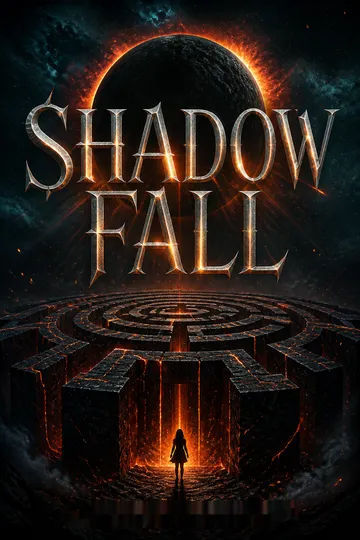
Pandora and Shadow Fall
A countdown in the skyPandora is an approaching asteroid that darkens the sun during Shadow Fall and brings storms, impacts, and the threat of mass extinction. Its visible progress measures how little time remains for Maia to find the Mercurian. The catastrophe also exposes the priorities of the factions: the emperor plans an exodus for the court, while the Rebels focus on overthrowing him. Pandora is not just an external disaster; it tests whether either side can imagine survival beyond its struggle for power.
Shadow Fall Series




Download PDF
Download EPUB
.epub digital book format is ideal for reading ebooks on phones, tablets, and e-readers.








