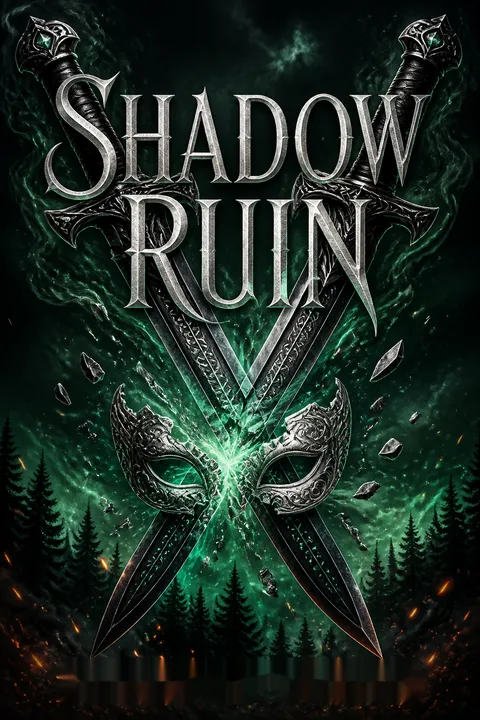


Plot Summary
Maia Leads the Sleepers
Maia Graystone, newly responsible for an army of people awakened from cryosleep, wants the Sleepers to help decide how they fight. Her mother, Lillian, a seasoned Gold commander who abandoned Maia and her brother Max years earlier, argues that sharing power will weaken them.
They also clash over Riser, the fierce Rebel prince Maia loves, and Lillian’s belief that Maia should marry Prince Caspian for political advantage. Outside their camp, storms and rising seas devastate the land as the asteroid Pandora grows more threatening.
Maia wants one more day to feed and train her exhausted troops before they march on Laevus Castle. Her mother warns that Nicolai, the Rebel leader, may attack first. Maia must decide whether protecting her people now risks losing the chance to stop Pandora.
Maia’s first leadership problem is not simply a tactical choice. It exposes what kind of authority she wants to exercise. Lillian treats power as a resource that must remain concentrated because survival depends on command; Maia sees consent and care as ways to make frightened people willing to act. Neither position is cost-free. Maia’s desire to protect the weakest can endanger the mission, while Lillian’s discipline risks repeating the hierarchy that made their world cruel. Their strained reunion makes that conflict intimate: Maia is trying to lead an army while still wanting her mother’s approval, a dependence Lillian can wound without raising her voice.
The Arrow at Council
At a council meeting, Maia puts the decision to a vote: march that night or give the weakest Sleepers another day to recover. The Silver districts favor leaving, the Bronze districts plead for time, and Lillian and Riser vote against Maia’s preference to stay.
The result sends the army out sooner. Before the council can disperse, a flaming arrow arrives bearing cloth from Maia’s old prison clothes. Nicolai appears with armed Rebels and demands a private meeting, then offers to combine forces against the Royalists in exchange for a share of their territory.
Riser publicly rejects the proposal and clashes with Caspian, nearly drawing his dagger. Maia halts the fight and buys time to consider Nicolai’s offer, though she suspects the bargain is a trap.
The council makes Maia’s ideals materially consequential: a vote is not an emblem of fairness but a decision about who will be forced to march while ill and hungry. Riser’s contrary vote unsettles her because loyalty, for her, has begun to mean emotional agreement. His choice suggests a harder model of partnership, in which a trusted person may oppose her judgment. Nicolai exploits the resulting fractures. His theatrical arrival and offer make the army’s division visible, then make Maia responsible for choosing whether pragmatism requires cooperation with an enemy who has already harmed her.
Meat Full of Nanites
Maia accepts Nicolai’s offer on the condition that his forces feed her starving army, while privately preparing for betrayal. Riser later reveals that he acted like an angry defector so Nicolai would trust him with the attack plan.
The promised meat contains dormant nanites designed to disable the Sleepers as they wade through the lake, leaving them to drown. Maia’s earlier order to discard the provisions prevents the trap from working.
She divides her forces so one group can meet Nicolai’s troops while a second surrounds them, then orders the Rebels to choose whether to join the fight against the Royalists. With the plan set, Maia and her small team take an underground tunnel toward the Island, while her injured trust in Riser remains unresolved.
Food turns the alliance into a test of bodily vulnerability. The nanites make dependence on supplies dangerous, while the camp’s earlier hunger explains why the bait could have worked. Riser’s deception is strategically effective but emotionally costly: he protects Maia by keeping her outside the plan, repeating the very experience of being treated as a pawn that she resents. Her decision to use Nicolai’s forces rather than simply destroy them also distinguishes her leadership from revenge. She is not offering trust; she is building a narrow, conditional path through which former enemies can act against a greater threat.
Back Through the Tunnel
Maia travels to the Island with Caspian, Riser, and a small team, riding behind Caspian while Riser asks to speak privately. In the tunnel, Maia tells Riser she needs time to understand herself without relying on him; he agrees, though the distance between them deepens.
The team breaks through the Royalist walls with stolen Hot Weapons and enters the castle as the battle begins outside. Once inside, Max’s implanted map activates, shining blue when he approaches the hidden Mercurian and changing color when he takes a wrong turn.
Maia follows the signal until Teagan reports that Centurions have pinned her and the wounded Lash in a courtyard. Rather than stay with Max, Maia turns back with Caspian to help them, leaving the mission split in two.
The glowing map transforms a private family secret into a public instrument of survival. Max is not merely someone Maia must protect; his body contains knowledge their entire expedition depends on. At the same time, Maia’s detour reveals the moral cost of treating people as expendable components. She could preserve the mission by continuing toward the Mercurian, but Teagan and Lash’s immediate danger makes that choice intolerable. The tunnel conversation with Riser sharpens this tension: Maia wants autonomy, yet the crisis makes clear that independence does not mean refusing attachment or responsibility.
The Island's Cost
Maia and Caspian approach the Centurions through a garden pond, but Caspian recognizes a soldier from his former life and freezes when the man turns his gun on them. Maia fights back, uses a Hot Weapon to erase the Centurions, and pulls Caspian to safety.
She sends him with Teagan and Lash to open the castle gates, then searches for Max and Riser. Instead, she finds Rivet unconscious and discovers that the Archduchess has taken Max aboard a starcraft. Riser is badly wounded, and Rivet may not survive.
While the battle’s wounded fill the infirmary, Maia tells Lillian that Max is gone; her mother blames her and orders her to focus on the Mercurian. Maia refuses, then captures Delphine, a wounded Royalist, rather than let a Rebel execute her.
The courtyard reverses the usual distribution of courage. Caspian’s rank and training do not protect him from the recognition that his enemies were once his companions; Maia, meanwhile, acts despite terror and then must live with the consequences of leaving Max. Lillian’s response turns grief into accusation, echoing the punitive logic Maia has spent her life resisting. Her choice to spare Delphine is therefore more than mercy toward one captive. It is a refusal to let pain dictate the rules of the new order, even when those rules offer no immediate comfort.
Cage Walks Into Daylight
As Riser recovers from Reconstruction and Rivet lies critically wounded, Maia searches the castle for a way forward. She finds Cage, a Rebel believed dead, alive in a filthy cell and helps him reach the infirmary, where he reunites with Flame.
His survival restores some hope to people who have been counting losses. Maia also learns that the wounded Delphine is the girl who once tormented Lash; despite their history, Lash treats her injuries.
Then a broadcast shows the Archduchess holding Max and the Emperor sentencing him to hang in two days unless Lillian sends Maia and Caspian to Hyperion in exchange. Lillian calls the demand a distraction from the Mercurian. Maia sees another possibility: impersonate Delphine, travel to Hyperion with Caspian, and bring Max home.
Cage’s return does not cancel Maia’s losses, but it changes what she can reasonably believe about them. A person thought irretrievable has survived, so hope becomes less like optimism and more like a decision to keep searching despite incomplete evidence. That decision gains urgency with Max’s public sentence. The exchange demand forces Maia to weigh one child’s life against the survival of everyone below. Lillian answers through calculation; Maia answers through commitment to a person. The conflict is not that one loves Max and the other does not. It is whether responsibility can be reduced to the outcome with the largest numerical benefit.
Delphine's Borrowed Face
Maia’s team prepares to enter Hyperion, a simulated city in space, by using Flame’s code to make each Rebel appear to be a Royalist. Maia will wear Delphine’s face, while the injured captive will impersonate Maia; Lash develops a drug to silence her.
Before departure, Maia overhears Lillian speaking to the Emperor. Lillian appears to accept his terms and describes Maia as a disappointment, deepening Maia’s belief that her mother values strategy above her children. The team launches anyway, carrying a map of Hyperion, concealed explosives, and a sedative in case capture becomes unavoidable.
At the docking bay, the false identities pass inspection. The group enters the Crystal City, where cameras record their every move and the Emperor announces that Maia’s supposed wedding to Caspian will take place the next day.
Disguise makes identity both a survival tool and a source of psychological strain. Maia must perform the cruelty expected of Delphine while suppressing her own reactions, and the simulated city extends that pressure into every watched gesture. The overheard conversation with Lillian is especially damaging because it appears to confirm Maia’s oldest fear: that maternal approval is conditional on usefulness. Yet the plan depends on Maia acting without that approval. She proceeds not because she has resolved her family history, but because she has learned that a wound can remain open while a person still makes a deliberate choice.
The Wedding's Hidden Route
At the celebratory dinner, Maia performs Delphine’s contempt for the servants and pretends to accept Caspian’s attention. Lash gets the drunken Roman, Delphine’s violent twin, to mistake her for his sister long enough for her to leave.
After Riser and Lash learn that the prisoners are held below the Crystal Palace, Maia visits the guarded chamber and sees Max beside the real Delphine. She lets him infer her identity without saying it aloud, then leaves before the guards grow suspicious.
Back in her room, Caspian kisses her, and Maia admits that she loves Riser instead. Roman then attacks her; Riser intervenes, and Maia and Riser finally explain the hurt between them and reconcile. Their reunion is tender but brief, since the wedding and rescue are scheduled for the following day.
The false wedding arrangement makes intimacy another form of surveillance. Maia and Caspian must look affectionate for the cameras, even as their relationship becomes clearer to both of them. Her brief visit to Max shows how much communication can survive under coercion: a small gesture gives him evidence that his sister has returned without exposing her to the guards. Roman’s attack strips away the polished performance and forces Maia to accept care from Riser. Their reconciliation is not a cure for earlier hurt. It is a decision to stop treating self-sufficiency as proof that love is unnecessary.
A Ceremony Turns Hostage
As Maia and Caspian exchange Royalist vows, Flame and Teagan free Max. Before the marriage can be finalized, the Archduchess interrupts with Max, Flame, and Teagan under guard. The Emperor exposes the face-changing code, and the real Delphine and Roman appear, proving Maia’s disguise has been uncovered.
Maia takes Caspian’s ceremonial sword and holds him at knifepoint, but the Emperor shows little concern for his son. Then General Bloodwood reveals himself as Nicolai, the Rebel leader, and announces that explosives beneath the seats can destroy Hyperion.
Nicolai is actually Ezra Croft, a supposedly dead revolutionary seeking the return of his sister, Riser’s mother. When Roman lunges at Lash, Delphine takes the knife wound meant for him. Caspian stabs Nicolai, and Maia seizes the detonator before it can trigger.
The wedding concentrates the book’s conflicts in a single public ritual: a forced political union, an exposed disguise, and a threat to everyone watching. Maia tries to use Caspian as leverage, but the Emperor’s indifference reveals how little family bonds constrain his rule. Nicolai’s identity as Ezra Croft enlarges the conflict beyond factional warfare; his grievance is personal, but his proposed remedy is mass destruction. Delphine’s sudden intervention complicates the easy division between victim and villain. Her act does not erase her past, yet it interrupts Roman’s violence and gives the group a chance to respond rather than simply retaliate.
Caspian Stays Behind
With Nicolai dying and the detonator set to explode if its signal is lost, Maia cannot simply release it or carry it to safety. Riser takes her place at the controls while Caspian and Flame pull her toward the starcraft. Caspian tells the Emperor that he will not preserve his father’s legacy, then leaves the ship’s command in Riser’s hands.
During the escape, Maia realizes the man beside her is Riser, disguised as Caspian; Caspian has stayed behind in his brother’s identity so the Emperor will believe his heir is still aboard. Caspian speaks to Maia through the comms, accepts that she loves Riser, and explains that he chose to answer for his own failures. Hyperion explodes behind them, killing Caspian and its occupants.
Caspian’s final choice converts his earlier uncertainty into responsibility. He cannot undo the suffering he tolerated as a prince, but he can refuse to let his father’s power survive through him. His farewell is painful partly because it is not a romantic victory for Maia: he does not die because she chose Riser, but because he has decided what kind of person he must become. The identity swap makes that decision legible through action. Riser lives by becoming his brother, while Caspian relinquishes the name and inheritance that once defined him.
The Freckles Hold the Key
Back on the Island, Max’s implanted map guides Maia, Lillian, and Riser through the palace to its observatory. A riddle left by Maia’s father leads them to the telescope, which is the Mercurian; its key is the constellation pattern in Maia’s freckles.
Before they can finish, the Archduchess crashes a starcraft into the palace. Lillian is pinned beneath debris, and Maia fights Victoria, learning that the crash has broken her arm. Maia uses the Scorpio-Fire weapon to kill her.
Lillian then explains that the missed activation deadline means the Mercurian’s power will kill its operator. She activates it herself, saving the world at the cost of her life. In the underground shelter, survivors hold hands as the screens fail and the Earth shakes; afterward, they learn Pandora has been stopped.
The solution has been visible all along, but only becomes usable when Maia reinterprets a feature she once disliked as a form of knowledge. Her freckles are neither defect nor ornament; they are the bodily key to a device her father designed to outlast the regime. The final conflict also joins two inherited forms of instruction. Lillian’s tactical training helps Maia defeat Victoria, while her willingness to sacrifice herself breaks the pattern of treating Maia as a political asset. The mother’s last act cannot repair their lost years, but it gives their relationship a different ending from the one Maia feared.
Epilogue
Six months later, Maia and Max attend a memorial for those killed in the war. Before Maia delivers her speech, they open the device hidden in Lillian’s cloak pin and watch messages from their parents and Brogue. They learn Lillian had been a Fienian spy, and that her severity toward Maia came from fear of the goodness she saw in her daughter, not disappointment.
Maia tells the survivors’ names and rejects restoring the old imperial order. Later, she and Riser discuss a future built through shared responsibility rather than inherited rule. Maia tells him she loves him, then leaves the Island carrying both grief and hope into the work of rebuilding.
The memorial does not offer emotional closure so much as a public practice for living with what cannot be repaired. Maia gives individual names to the dead, resisting the way political histories flatten people into symbols. The recordings revise her understanding of Lillian without erasing the harm Lillian caused: motive becomes more legible, but injury remains real. That distinction lets Maia inherit her mother’s courage without inheriting her emotional armor. Her refusal of a new emperor extends the private story into political design. The ending’s hope is not confidence that people will behave well; it is a commitment to structures that make power answerable and remembrance harder to evade.
Analysis
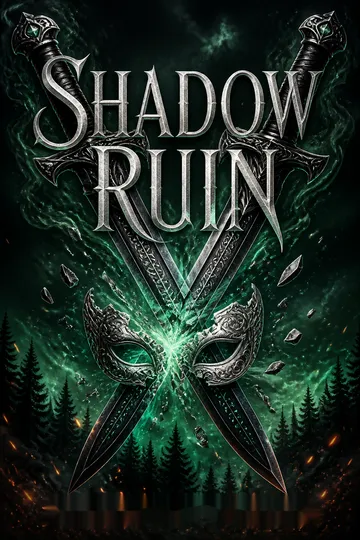
Shadow Ruin makes political power intimate by showing how institutions enter the body and the family. Sleepers wake weak and dependent on food; Royalist technology can conceal a map inside a child or track prisoners through implants; reconstruction alters Maia while leaving her memories intact. The state is not an abstraction. It determines who eats, whose face is believed, and whose body can be treated as a tool.
Maia’s central moral problem is not whether violence can be avoided. In this world, it cannot. She must decide what violence is for and what limits remain when survival is at stake. Her willingness to spare Delphine, protect the sick, and return for friends complicates military efficiency, but these choices also build trust across old divisions. The book treats mercy as a political practice rather than a private virtue: it can prevent vengeance from becoming the next system of rule.
Family provides no simple refuge. Lillian loves through preparation and control, Maia through protection, and Max through a longing not to be left behind. Caspian inherits a throne whose values he eventually rejects, while Riser fears that the brutal skills that kept him alive define him permanently. Their different responses show how identity is shaped by both coercion and choice. Love matters, but it does not substitute for accountability; Caspian must confront what he allowed, and Maia cannot undo what Lillian’s choices cost her.
The ending refuses to equate victory with restoration. The planet survives, but people remain dead, damaged, and responsible for rebuilding a society that once concentrated power in one ruler. Maia rejects a replacement emperor and commemorates individuals rather than converting them into an uncomplicated legend. The story’s hope is therefore conditional and active. It depends on remembering how injustice was organized, sharing authority, and accepting that a better world is not inherited from heroes. It has to be made, and remade, by the survivors.
People Also Read


Characters
Maia Graystone
Reluctant wartime leaderMaia is a reconstructed young woman who has survived imprisonment, violence, and the loss of much of her former life. She leads the awakened Sleepers while trying to give ordinary people a voice in decisions that will cost lives. Her instinct is to protect individuals, even when doing so complicates military plans. That compassion coexists with anger, self-doubt, and a fierce capacity to act. Maia longs for her estranged mother’s approval but resists being treated as a political instrument. Her relationships with Riser, Max, and Caspian test different ideas of loyalty, family, and choice. What drives her is the hope that survival can lead to a world less cruel than the one that shaped her.
Riser Thornbrook
The dangerous protectorRiser is a Rebel prince who grew up in a brutal prison and learned to survive through vigilance, force, and mistrust. His mismatched eyes and quiet, predatory manner make others fear what he might do, while Maia sees the loyalty and tenderness he reserves for those he loves. Riser is protective without being submissive; he will oppose Maia when he believes the situation demands it. His life has left him unsure whether violence is merely a skill or the whole of his identity. His relationship with Maia gives him a reason to imagine a future beyond revenge, though he does not expect love to erase the damage he carries.
Lillian Graystone
The iron strategistLillian is Maia and Max’s mother, a high-ranking Gold with military training and a practiced command of people and resources. She approaches danger through calculation, believing that hesitation and emotional attachment can destroy a larger cause. Her distance from her children has left both of them with a deep sense of abandonment, though she continues to involve herself in their lives and their choices. Lillian is skilled at hiding vulnerability behind discipline, and her efforts to protect her children often arrive as criticism or control. She represents a survival strategy built on self-command, one Maia both needs to learn from and must decide whether to resist.
Max Graystone
The living mapMax is Maia’s younger brother, a clever and impulsive teenager who was separated from her during their childhood. Their bond is affectionate but marked by years of hurt, especially his belief that Maia left him behind. Max carries a hidden map connected to their father’s work, making him essential to the effort to find the Mercurian. He meets danger with bravado, humor, and a stubborn refusal to let other people define him as helpless. Beneath that confidence, he is still a boy who wants his sister and mother to choose him and keep him safe. His closeness with Rivet gives him a source of companionship outside his family.
Caspian Laevus
The conflicted heirCaspian is the Emperor’s son and heir, raised to believe that the Royalist order is both natural and necessary. He is courteous, intelligent, and more attentive to the suffering around him than his position would suggest, but privilege has shielded him from truths he was slow to confront. His connection to Maia is shaped by a supposed genetic match and by genuine affection, leaving him unsure where destiny ends and personal choice begins. His bitter rivalry with Riser reflects both their opposing upbringings and their shared longing for recognition. Caspian’s central struggle is to decide what responsibility means when the system that made him powerful is also profoundly unjust.
Nicolai
The Rebel puppet masterNicolai leads the Rebels with a theatrical presence and a talent for turning other people’s expectations into weapons. His damaged body and electronic voice make him difficult to read, while his strategic patience makes every offer feel suspect. He understands how hunger, fear, and resentment can be used to move an army. His conflict with Maia is sharpened by the personal history he has with the Royalist regime, but his methods put him at odds with those he claims to liberate. Nicolai tests whether opposition to tyranny can remain morally distinct from the tyranny it seeks to overthrow.
Emperor Marcus Laevus
The polished tyrantMarcus rules the Royalists through hierarchy, technology, and the promise that his order protects civilization. He expects loyalty from his children and subjects while treating them as pieces in the preservation of his power. His court is lavish, but the luxury depends on a rigid division between Golds and the people who serve them. Marcus is skilled at making cruelty sound like policy and family obligation sound like love. His relationship with Caspian reveals how a parent can demand devotion while refusing to recognize a child as a person beyond his usefulness.
Victoria, the Archduchess
The Emperor's enforcerVictoria is a Royalist officer whose intelligence and physical power make her a formidable opponent. She is fixated on Maia and uses fear, surveillance, and spectacle to control prisoners. Her cruelty is not impulsive; she studies what will hurt people most and turns it into a method of rule. Her position near the Emperor gives her influence, though her hunger for recognition also makes her vulnerable to his approval. Victoria embodies the danger of a person trained to equate being useful with being loved.
Flame
The Rebel demolitions expertFlame is a sharp-tongued Rebel fighter and gifted technician who handles explosives, weapons, and the code needed to impersonate Royalists. Her humor and aggression conceal a deep loyalty to her friends and a grief she rarely allows herself to show. She initially trusts force more readily than mercy, but Maia’s choices challenge her belief that compassion is a weakness. Flame is also fiercely committed to Cage, whose fate has shaped her sense of what can be lost.
Lash
The exhausted healerLash is a healer whose limp and old injuries do not keep him from tending a camp full of sick and wounded people. He uses flirtation, teasing, and theatrical complaints to keep others from seeing how exhausted he is. His history with Delphine complicates his work when she becomes his patient, forcing him to care for someone who once helped destroy his life. Lash’s humor is not a lack of seriousness; it is a way of staying human in a world that constantly demands endurance.
Teagan
The steady field commanderTeagan is a capable Rebel commander who combines practical judgment with warmth toward Maia and the others. She helps organize the army, joins the mission to the Island, and remains reliable when plans break down. Her attention to people is direct and unsentimental: she notices fatigue, injury, and fear, then acts. Teagan’s steadiness gives the group a counterweight to Flame’s volatility and Maia’s tendency to take every failure personally.
Rivet
The fearless young mechanicRivet is a young mechanic and fighter who modifies Bramble with useful new abilities and joins the dangerous mission to the Island. She is quick with machines, loyal to her friends, and often playful with Max. Her confidence can make her seem older than she is, but the story keeps visible how young she remains in a war that has made children carry adult dangers. Rivet’s bond with Max gives their group some needed lightness.
Cage
The presumed-lost RebelCage is a Rebel and Flame’s closest companion, known for his gentleness as well as his capacity to survive. Before his disappearance, he offered Maia kindness in a world that often treated her as an object or target. His connection to Flame is familial in its depth, built through shared danger and care rather than blood. Cage’s quiet presence reminds the other Rebels that tenderness can endure even where brutality is ordinary.
Delphine Bloodwood
The Royalist prisonerDelphine is a privileged Royalist whose sharp tongue and cruel treatment of others reflect the world that raised her. She has a complicated history with Maia and a painful connection to Lash, whose injuries are tied to her family. Delphine is accustomed to being protected by rank and family, but she is also capable of acting beyond the self-interest others expect of her. Her presence forces Maia’s group to confront whether justice means punishment, protection, or the possibility of change.
Bramble
Maia's loyal sensorBramble is a small sensor creature who travels on Maia’s shoulder, communicates through chirps and lights, and can detect danger or collect objects. Rivet’s modifications add storage and defensive functions, though Maia is reluctant to treat him as a weapon. Bramble responds to the moods of the people around him and forms strong attachments, especially to Maia and Riser. His loyalty gives Maia companionship that is practical, noisy, and unmistakably affectionate.
Brogue
The vanished protectorBrogue is the Graystone children’s former protector, a Gold Cloak tasked with keeping them safe. He failed to reunite with Maia and Max when the family’s plans collapsed, then spent years searching for them. Maia remembers him as a friend as well as a guardian, and his absence remains a source of grief and unresolved affection.
Roman Bloodwood
Delphine's violent twinRoman is Delphine’s twin brother, a powerful and volatile Royalist who uses his family standing to intimidate others. His cruelty toward people he considers beneath him reflects the entitlement built into court life. Lash’s past and Maia’s danger expose the harm Roman can cause when no one checks his power.
Philip Graystone
The absent inventorPhilip is Maia and Max’s father, a professor whose work is tied to the search for a way to stop Pandora. Maia remembers him as gentle and loving, a contrast to the political violence surrounding his children. His inventions and messages continue to guide them after his death, giving the family a shared purpose that outlasts his absence.
Amandine Croft
Riser's absent motherAmandine is Riser’s mother, a woman whose love for a prince placed her within the reach of a court that would never fully accept her. Though she is absent from the present action, her diary gives Riser a connection to his origins and to a gentler account of the past.
Plot Devices
The Mercurian
The world-saving mechanismThe Mercurian is a powerful device created by Maia’s father to stop Pandora, the approaching asteroid whose effects are already destabilizing the planet. Its location is hidden, and the royal family’s secrets make ordinary searches unreliable. Max’s implanted map guides Maia toward it, while the eventual discovery that its key is encoded in Maia’s freckles ties the technology to the family’s history. The device has a strict activation window; after that deadline, using its greater power will kill its operator and devastate the surrounding land. This constraint turns the search into a race and gives the final activation its personal cost.
Max's implanted map
A human compassMaia and Max’s father implanted a map in Max when he was a child. It becomes active inside Laevus Castle, using colored light to indicate whether he is moving toward its hidden destination. The map gives the team a way to navigate a palace designed to conceal the Mercurian, but it also makes Max a target. Because the information is embedded in his body rather than stored in an object that can be handed over, the mission depends on keeping him alive and free to move. Its visual cues turn the siblings’ childhood game into a tool for survival.
Hyperion's Sim
A city made of appearancesHyperion is a floating Royalist city built around advanced simulation technology. It can make rooms appear to contain oceans, castles, meadows, or open sky, while cameras observe the people moving through them. Flame’s code alters the team’s apparent faces so they can pass as Royalists and enter restricted areas. The same technology that provides their disguise also heightens the danger: every gesture may be recorded, and an intimate performance can become evidence. Hyperion’s polished unreality reflects the Royalist order, which hides its machinery and violence behind beauty, ceremony, and carefully managed appearances.
Bramble
A sensor with loyaltiesBramble is Maia’s small sensor companion, able to signal through lights and chirps, detect danger, and carry collected objects in a modified storage compartment. Rivet adds defensive capabilities, but Maia hesitates to use them because she thinks of Bramble as a companion rather than equipment. His reactions often register tension before Maia can name it, and his loyalty becomes emotionally important to her and Riser. Bramble also makes the story’s technology personal: unlike the weapons and tracking systems controlled by governments, his abilities serve relationships and immediate acts of care.
Nicolai's detonator
A hostage in Maia's handNicolai plants explosives beneath the seats in Hyperion’s ceremonial hall and uses a detonator to keep the Royalists from attacking him. The device is linked to a signal that triggers the bombs if it is lost, so simply carrying it away is not safe. This mechanism transforms a political confrontation into a physical dilemma: someone must hold it down while the others escape, and any mistake can kill everyone aboard. The detonator also makes Maia’s leadership visible under pressure, since she must decide whether one person should remain behind to protect the many.
Shadow Fall Series




Download PDF
Download EPUB
.epub digital book format is ideal for reading ebooks on phones, tablets, and e-readers.








