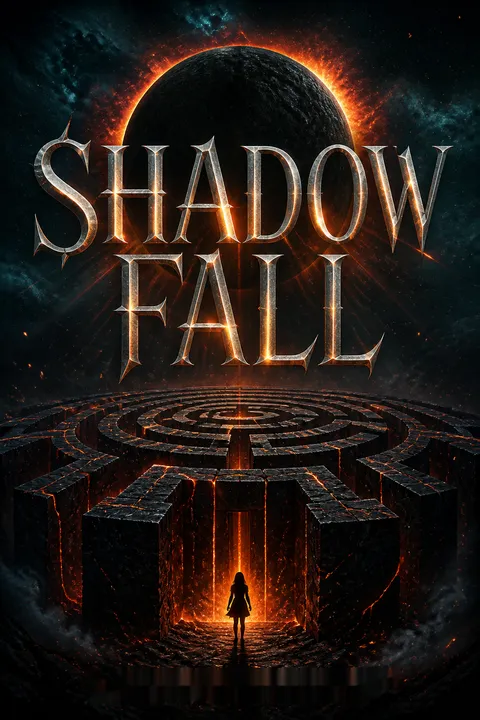


Plot Summary
Prologue
Maia Graystone knows the date Pandora will destroy Earth, though no one agrees why the asteroid is coming. Royalists call it divine punishment; rebels blame the Emperor’s secret technology. Maia was born Chosen, a genetically engineered child of a Gold mother and Bronze father, but she has never felt special.
Her mother taught her myths about ruin giving birth to change. Now, with the planet’s end approaching, Maia sees the gap between the grand destiny assigned to her and the ordinary, painful life she wants: safety for herself and her little brother, Max.
The prologue establishes a world where political factions turn catastrophe into a story that serves their authority. Maia inherits that habit of mythmaking from her mother, but she does not yet possess the power to shape what her own birth means. The contrast between being designated Chosen and feeling neglected makes her status less a privilege than a burden imposed by others. Her private wish to protect Max gives the coming conflict its human scale. Against the cosmic deadline, survival begins not as a heroic ideal but as a sibling’s promise.
The Pit Finds Her
Seven years after she entered Rhine Prison’s pit, Maia survives in its tunnels by stealing scraps and hiding with two repaired spider-shaped sensors, Bramble and Duchess. Her only reason to keep living is the hope that Max survived the night their father was killed. Rafe and Ripper, two pit predators, find her and try to drag her out for a reward.
Rafe dies when their rope snare traps him in the tunnels, but Ripper kills Duchess and leaves Maia with no weapon and no way to flee. At the drop, Ripper bargains for an upstairs escape in exchange for Maia. When the lifting bucket falls back into the pit, the starving prisoners swarm Maia, and the one-eyed boy she remembers from her capture helps her reach safety.
Maia’s survival is built from attention, concealment, and attachment rather than strength. Her bond with Max keeps her moving, while Duchess represents a small, self-made refuge inside a system designed to strip away agency. Ripper’s destruction of the sensor attacks more than Maia’s equipment: it demonstrates how hope becomes dangerous when power is scarce. The one-eyed boy’s rescue complicates Maia’s simple categories of predator and prey. He once helped capture her, yet now he intervenes, leaving her with a debt she cannot reconcile with her memory of him.
Victoria Names the Hunt
After the guards haul Maia upstairs, she reaches a window and sees sunlight and the ruined coast of Cypher for the first time in years. Archduchess Victoria Crowder, a Gold serving the Emperor’s War Cabinet, arrives with Centurions and orders Maia’s blood tested. She identifies Maia as the Chosen daughter of the executed Philip Graystone and reveals that the Emperor has searched for her and Max for seven years.
Victoria wants a hidden key in Maia and a map held by Max, though Maia does not understand what either unlocks. Pandora is already darkening the sun, and the Emperor’s court plans to abandon Earth in two weeks. When Maia refuses to expose Max, Victoria has her taken away, wounded and bleeding.
The surface offers Maia light but not freedom. Victoria’s clinical interest turns Maia’s body into a container to be searched, while the Emperor’s power reaches her through both spectacle and threat. The demand for a key and map reframes Maia’s childhood as part of a larger political design she never consented to. Her refusal to betray Max is one of the few choices still available to her. The approaching asteroid sharpens the cruelty: the ruling class calls its escape salvation while treating the people left behind as expendable.
A Bargain Before Dawn
As her wound worsens in a prison cell, Maia is taken to Nicolai, a disfigured Royalist enemy of the Emperor. He offers to help her escape if she enters the Shadow Trials under the name Everly March and joins forces with the one-eyed boy, Riser. Winning would earn them seats on Hyperion, the Emperor’s space station, and Nicolai wants one of them to kill Emperor Laevus.
Maia rejects revenge as her motive, but Nicolai proves Max is alive and promises an additional place for him. Maia accepts to reach her brother. During their escape, a prison screw leads them through the woods to a cliff. Riser pushes the screw over when he tries to betray them, then jumps into the sea with Maia. She survives the crossing, but collapses on reaching Cypher.
Nicolai’s offer exploits Maia’s most durable attachment, then dresses coercion as a chance to choose. The mission is not simply revenge: it binds her wish to save Max to a plan that may serve several factions at once. Riser’s quick violence gets them out, but it also reminds Maia that safety around him has a price. The escape makes the outside world physically accessible again, yet the ruined city awaiting them refuses any uncomplicated idea of freedom. Maia leaves one prison only to enter a contest whose rules are controlled by another unseen power.
Everly Wakes Wearing Red
Maia wakes in her childhood home, where Fienian Biotechs Flame and Cage use forbidden nanotechnology to reconstruct her. They give her the face, body, and memories of Everly March, a fallen Gold courtier, while leaving Maia’s freckles and red hair. Riser’s reconstruction goes wrong; he thrashes in the machine until Maia climbs in beside him and holds him through the crisis.
He survives, but his new emotions and memories may not last. Flame tests Everly’s identity and confirms Maia can recall the courtier’s life, though a painful phantom memory reveals that the real Everly died in a fire. Maia now has a polished disguise and skills she did not earn, yet she cannot tell where her old self ends and the borrowed one begins.
Reconstruction offers Maia a way into the court by making identity physically editable, but the procedure does not create a clean replacement. The survivor retains fragments of her past inside a body designed for another person, making every success feel like a kind of dispossession. Riser’s near-failure exposes the risk of treating memory as programmable material. Maia’s decision to hold him is also an early breach in her defensive distance. Their emerging attachment is difficult to trust because the technology may have installed it, yet the care they show each other has real consequences.
The Market Takes Blood
Training with Brogue, a mercenary hired by Nicolai, awakens Everly’s inherited combat reflexes, but the drills also force Maia to relive her mother’s punishing lessons. At the market, she barters household goods for food and is lured into an ambush by three men. She escapes into the woods, where hidden predators attack them, then returns to collect apples and strawberries.
The leader catches her and pins her down. Maia stabs him with her small training knife, killing him before he can kill her. Riser finds her afterward, bloodied and carrying the food. Instead of recoiling, Maia offers him the bag. She has crossed a moral boundary she once believed she would never cross, and survival now feels dangerously like competence.
The market scene tests the difference between rehearsal and consequence. Brogue’s violence prepares Maia’s body, but the decision to kill belongs to her, not to the implanted memories. Her response is neither triumph nor remorse alone; she experiences pride alongside the recognition that something in her has changed. Food makes the episode concrete: she risks herself for supplies, partly because hunger threatens to return her to dependence. Sharing with Riser complicates the hard self-sufficiency she is trying to build. Violence keeps her alive, but it cannot tell her what kind of person she is becoming.
The Train Runs on Memory
In a high-level simulation, Maia rides a train through a series of traps and is ordered to kill a man marked with a gold rose. She acquires a weapon by poisoning its owner, pushes a child from the train when he threatens to expose her, then faces a simulated version of her mother in a fencing car. Maia escapes the duel through cunning rather than victory.
In the engine car, her father appears as a glitch and tries to tell her about a key and a hidden journal, but Maia kills the image to switch the train’s tracks and survive. She pulls herself out of the simulation before the operators can extract her. Riser later admits he abandoned his own objective to save her, making their mission feel less like a temporary alliance.
The simulation turns the mind into both a training ground and a courtroom. Maia’s actions reveal that survival has already altered her moral reflexes, yet her escape from her mother’s duel shows that she can answer inherited violence with strategy rather than repetition. The father’s brief appearance matters because it interrupts the artificial test with information the system cannot explain away. Riser’s choice to abandon his task for Maia introduces care as a counterforce to the logic of the trials. The question is no longer only whether their feelings are authentic, but whether they can act on them without being controlled.
The Escape Elevator
Victoria tracks the group to Maia’s childhood home with Centurions and drones. Maia remembers a concealed elevator in her father’s basement and leads the others to it while the attackers seize the house. Riser stays behind to help defend the escape, then follows Maia up by climbing the shaft’s ladder. An explosion destroys the room below, killing two mercenaries, while Flame and Cage survive with injuries.
Riser and Maia cross rooftops to evade the drones and reach a safe rendezvous. There, Cage explains that Riser is the son of the Emperor and a woman imprisoned under another name, and that he is also related to rebel leader Ezra Croft. The revelation gives Riser a history that neither the pit nor his disguise can contain.
The escape depends on Maia’s childhood knowledge, turning a place associated with her father’s death into a route toward the future. Yet the cost of flight is immediate: people helping them are killed, and survival does not cancel responsibility. Riser’s hidden parentage enlarges the political stakes without simplifying his character. He is connected to both the dynasty he is meant to attack and the rebellion that resists it. The revelation also reframes his survival instincts as a response to a history of concealment and dispossession, not merely a personal appetite for violence.
The Letter in the Fire
On the journey north, Maia hesitates before burning a hidden page from her old journal. Her childhood self had written a warning to remember that she and Max agreed to carry a key and map inside themselves. Their father’s letter explains the secret: he built the Mercurian, a device meant to shift Pandora’s course and spare Earth, but powerful enough to destroy humanity if misused.
The Emperor ordered the project destroyed, so Philip hid it on Emerald Island and left clues for Maia. She must reach the court, find the device, and activate it before impact. Maia’s goal changes. She still needs to save Max, but now millions of lives depend on a plan she barely understands. She commits to entering the Shadow Trials.
The letter converts Maia’s private family history into a public responsibility. Her father’s choice to hide the device inside his children may have been intended as protection, but it also made them unwilling participants in a dangerous political struggle. The Mercurian embodies the moral instability of technology: the same mechanism can redirect disaster or magnify it. Maia’s inherited task is therefore not merely to locate a weapon, but to decide who can be trusted with power. Her promise to act shifts her from escape toward agency, though her knowledge remains incomplete.
The Culling Claims Riser
At Royalist Headquarters, Maia and Riser enter the Shadow Trials as disgraced courtiers. The Emperor’s Chosen humiliate the finalists with blindfolds, forced drinking, and invasive memory projections. Maia challenges Delphine, the courtier who tormented her as a child, and later survives a deadly game of chance with her.
At the Culling feast, Maia’s apparent courtship with Riser fails to draw public interest, but she discovers she has the highest Avatar ranking. Riser falls just below the cutoff and is taken away to be cast beyond the wall. Maia kisses him before he is removed, unable to hide her attachment. His fate appears sealed, but Flame arranges for another finalist to be blamed, leaving Riser a way back into the competition.
The Culling turns social attention into a survival resource: contestants must perform desirability while the audience inhabits their minds. Maia’s top ranking comes not from the staged romance Nicolai wanted, but from an uninterrupted stream of uploads she never felt. The result exposes how little control she has over the public meaning of her behavior. Riser’s removal makes that system brutally literal, converting a ranking into a death sentence. Maia’s kiss is both an emotional choice and a refusal to let the court dictate what their bond means, even when she cannot save him openly.
Caspian Chooses a Team
Riser returns to the trials after Flame frames another finalist, and Prince Caspian selects Maia and Merida Pope as his team. Before the first trial, he takes them into a hidden simulator that reproduces the stars. Maia becomes part of the Pleiades and hears her father begin a clue about a hall of a three-headed sphinx, but the system ejects her before he can finish.
At the next gathering, Maia’s mother treats her as a stranger, while Delphine executes a finalist suspected of tampering with the system. The trial then opens as a labyrinth whose walls contract whenever contestants die. Maia and Merida begin mapping its paths, and the maze’s carved animals suggest that the answer lies in the constellations.
Caspian’s selection offers Maia an unexpected route toward the hidden device, but it also places her among people whose loyalties she cannot read. The simulator makes astronomy a usable language, joining Maia’s private childhood interest to her father’s security system. Her mother’s failure to recognize her deepens the wound of abandonment, while the public execution demonstrates the cost of being noticed. In the labyrinth, knowledge becomes collective and embodied: Maia maps paths on Merida’s skin, and the pair must interpret clues while the maze punishes every delay.
The Labyrinth Demands Merida
Maia recognizes the labyrinth’s images as constellations and traces a route through Monoceros, Canis Major, and Orion. Riser and Rhydian join her and Merida, but the group reaches a narrowing passage just short of the exit. Merida is crushed between moving walls, and they cannot free her. She asks Maia to help her die rather than let the maze crush the others.
Maia gives her the poison pill Merida carried for that possibility, then tells her a myth while she dies. The walls open, allowing the survivors to carry Merida out. Riser has made it back into the trials, but their escape cannot undo the choice Maia made. The crowd cheers while Maia understands that survival has required her to kill a friend.
The labyrinth makes the competition’s hidden rule visible: one person’s death literally creates room for others. Maia’s choice is not a clean act of heroism, because it preserves the group through a form of mercy that still requires her hand. Telling Merida a story recalls Maia’s childhood role with Max, but now storytelling helps a friend face death rather than sleep. The crowd’s applause turns their private grief into entertainment. Maia leaves with proof that she can act under pressure, and with a wound that no victory can convert into innocence.
The Coup Takes Shape
After the maze, Nicolai sends Maia a recording from Max. Unable to face him as the altered person she has become, Maia smashes the projector and drives Bramble away. Flame then shows her the memory of her adoptive parents’ execution, explaining why her hatred of the Royalists has become a plan to destroy the court.
The group prepares an attack during the celebration, using bombs and weapons taken from the armory. Riser and Maia admit their feelings and clarify how he once helped her escape the pit, though he fears losing her as he lost his mother.
When Prince Caspian follows them, the rebels bind him. Maia frees him, reveals that she is Maia Graystone, and tells him the Mercurian could divert Pandora. He agrees to help her reach the hidden simulator.
Maia’s rejection of Max’s recording shows that the new identity has become a defense against intimacy as well as danger. Flame’s memory makes the rebellion’s rage comprehensible without making its methods harmless. As the group prepares violence, Maia is caught between her father’s hope of saving everyone and the rebels’ desire to punish the ruling class. Her disclosure to Caspian is a risky act of trust, but it also recovers her name from the disguise she has worn. The conversation with Riser offers a different possibility: intimacy need not erase the harm that preceded it.
The Hidden Sim Betrays Hope
Caspian rides Maia toward the concealed simulator beneath the lake, and she believes his help may let her retrieve the Mercurian’s location without further bloodshed. At the entrance, a Gold Cloak shoots an arrow into the ground and surrounds them.
Caspian fights the guards, but Archduchess Victoria captures both Maia and the Prince. The Emperor brings Maia to the palace balcony during the celebration, where he has positioned her to witness the rebel attack. Nicolai’s broadcast announces the uprising, and a bomb explodes on the balcony.
Maia sees Riser running toward her as the blast tears through the palace. The attack kills Princess Ophelia and leaves Maia badly injured. The rebellion has become a massacre, while the Emperor presents himself as the only person able to restore order.
The apparent rescue collapses because Maia’s need to believe in a peaceful alternative outruns her evidence about the court. Caspian does fight for her, so his arrival is not a simple betrayal, but he cannot protect her from the Emperor’s trap. The balcony makes her witness to the costs of a revolt she helped set in motion. Nicolai’s message promises justice while the explosion kills people who were not its intended targets. The political struggle has entered a stage where both sides use civilians as proof of their righteousness, and Maia must confront the damage her choices helped unleash.
Riser Falls in the Ruins
The blast scatters the court and allows armed people from beyond the fence to surge into the grounds. Maia, badly injured, reaches Riser among the rubble, where he mourns Ophelia’s body. Caspian attacks him, blaming him for her death, and the two fight with swords. Riser gains the advantage, but Maia begs him to spare Caspian because killing the Prince would make escape impossible.
Riser lowers his weapon; Caspian stabs him through the chest. Flame and Teagan’s companion retrieve Riser as Flame unleashes a nano-shredder against the Royal Guard. Maia cannot escape with them. Victoria captures her and carries her to the Tower, where the Emperor intends to use her to locate Max and the Mercurian.
The fight between Caspian and Riser compresses the book’s divided inheritances into a personal contest: both men have reasons to hate the Emperor, yet grief makes them enemies. Maia’s plea asks Riser to resist the violence that has kept him alive, and he does, but the moment of restraint leaves him exposed. The rebels’ escape saves Riser while abandoning Maia, exposing the limits of solidarity when strategy and survival collide. Her capture is not a resolution of the uprising but the Emperor’s attempt to turn its failure into leverage over the people she loves.
The Emperor’s Last Design
Wounded and imprisoned in the Tower, Maia asks after her mother and learns that Lillian believes her daughter dead. Emperor Laevus visits and explains that he knew Maia’s identity from the moment she reached the Island. He allowed the rebellion to unfold because fear and death would strengthen his rule. Ophelia’s death, he says, will make Caspian hate the rebels and abandon his resistance to the Emperor’s policies.
Laevus plans to torture Maia until she reveals Max’s location, then destroy the Mercurian. Maia has no way to know whether Riser survived or whether her allies remain free. As explosions and fighting sound below, she vows to escape and stop Pandora herself. The book ends with her still captive, but no longer resigned.
Laevus reveals that the rebellion’s apparent failure was useful to him, because he treats grief as a tool for governing the next generation. His story about history and family is not an excuse but an operating method: he believes fear can make his son obedient where affection cannot. Maia’s final vow does not undo her mistakes or secure an escape. It marks a change in her relation to despair. The opening presents the end of the world as a fixed date; the ending leaves its outcome open, with Maia choosing action despite lacking certainty, allies, or freedom.
Analysis
Shadow Fall makes survival a political language. The Royalists tell the population that obedience will preserve humanity; the Fienians answer with resistance, but their revolt also uses weapons capable of killing the people it claims to free. Maia’s journey tests the distance between a stated purpose and its human cost. She begins by measuring every decision against one person, Max. Her father’s letter expands that obligation to millions, but the expansion does not make her choices easier or automatically more righteous. The labyrinth makes the cost literal: a friend’s death creates space for others to live, and the survivors are then praised by spectators who did not face the choice.
The novel is equally interested in identity as something imposed and revised. Color brands, Chosen genetics, court titles, and reconstructed memories all assign people a place before they can define themselves. Maia’s Everly persona gives her access to power, but it also threatens to erase the girl who survived the pit. Riser’s altered emotions raise a related question: if a feeling is engineered, does that make its consequences unreal? The story resists an easy answer. Their attachment may have been designed, yet it changes how they act, what they risk, and whom they protect.
The most unsettling power belongs to those who turn suffering into a spectacle or an argument. Delphine makes cruelty a courtly game; Laevus converts deaths into reasons for more control; Nicolai wraps vengeance in the language of liberation. Maia’s final decision to keep fighting does not resolve these contradictions. She ends the book captive, injured, and unsure who has survived, but she has rejected the helplessness that defined her opening. The promised salvation remains uncertain. What has changed is her willingness to judge every cause by the lives it spends.
People Also Read
Characters
Maia Graystone
The tunnel-bred survivorMaia is a Bronze-born Chosen girl whose survival in Rhine Prison’s pit has trained her to notice danger before she trusts anyone. She loves her younger brother, Max, and carries painful memories of her parents, especially her mother’s cold standards. In court she uses the identity Everly March, a fallen Gold whose memories and appearance were reconstructed into her. Maia is resourceful, proud, and capable of tenderness, but fear and hunger can narrow her attention to the next escape. Her central struggle is not simply learning to fight. She must decide which parts of herself remain hers when other people have altered her body, memories, and emotional responses.
Dorian Riser Laevus
The pit-born partnerRiser is a one-eyed survivor raised in Rhine Prison’s pit, where hesitation and attachment could be fatal. Quietly observant and physically dangerous, he understands violence as a practical language before he understands ordinary trust. His reconstruction gives him a courtier’s appearance and a new set of memories, though parts of the process remain unstable. Maia’s distrust challenges the identity he has built around survival, while his care for her pushes against lessons learned in the pit. He is both an ally and a source of danger: his history makes his loyalty difficult to read, and his capacity for tenderness does not erase the harm he has done.
Max Graystone
Maia’s missing brotherMax is Maia’s younger brother, a dreamer who loves forbidden toys and looks to his older sister for protection. He was separated from her when Centurions captured Maia after their father’s death. Maia has spent years assuming he died, but the possibility that he is alive becomes her strongest reason to accept dangerous bargains. Their bond is rooted in childhood routines and shared loss, not an abstract duty. Max also represents the life Maia wants beyond court politics: a future in which siblings can grow up without being used as pieces in a struggle over power.
Nicolai
The scarred strategistNicolai is a disfigured strategist who opposes Emperor Laevus and recruits Maia and Riser for the Shadow Trials. He offers them escape, new identities, and the chance to reach Hyperion, but his plans rely on secrecy and coercion. His polished manner conceals a willingness to treat people as instruments, including those he claims to protect. Maia can never be sure how much he knows about her family or what he intends to do with the information she carries. Nicolai’s wounded body makes the Emperor’s violence visible, but his methods raise the same question as the regime’s: whether a just cause can excuse controlling other lives.
Emperor Laevus
The ruler of fearLaevus rules the Royalist empire through strict hierarchy, propaganda, and the promise that the Chosen will preserve humanity after Pandora passes. The death of his first wife and infant daughter hardened his hatred of the Fienian Rebels, and he presents harsh control as protection from another catastrophe. He expects obedience from his court and sees public suffering as a political instrument. His relationship with his son is shaped by fear that the next generation will reject his rule. Laevus is most dangerous when he makes cruelty sound like civic responsibility, turning the language of survival into permission to sacrifice others.
Lillian Graystone
The distant Gold motherLillian belongs to the powerful Gold House Lockhart and works within the Royalist court, where she is known for shaping public messages. She is intelligent, disciplined, and formidable, but her affection for Maia is tangled with ambition and exacting expectations. Lillian taught her daughter mythology, astronomy, and self-control, while making praise difficult to win. Her role in Maia’s childhood leaves the protagonist hungry for recognition even after years of separation. She represents a kind of authority that is more intimate than the Emperor’s: a parent can define a child’s sense of worth without ever raising a weapon.
Philip Graystone
The hidden inventorPhilip is Maia and Max’s Bronze father, a gifted engineer who received a rare Gold education. He loved his children and built toys for Max, but kept crucial work secret even from his family. His scientific ability gives the children a connection to a technology forbidden by the state. Maia’s memories of his gentleness complicate the Royalist accusation that he was a traitor. He is a loving father who made choices with consequences his children would have to bear.
Victoria Crowder
The Emperor’s relentless hunterArchduchess Victoria is a powerful Gold attached to the Emperor’s War Cabinet. She tracks Maia and Max with an unsettling mixture of patience, curiosity, and cruelty. Her interest in Maia is both political and physical, since she believes the girl carries an important hidden object. Victoria is observant and difficult to surprise, but her fixation on the Emperor reveals an intense need for his approval. She embodies a regime in which loyalty is demonstrated not by restraint, but by a willingness to make another person suffer.
Prince Caspian Laevus
The measured Crown PrinceCaspian is the Crown Prince, raised to represent the future of a rigid empire. He is courteous and politically skilled, but his restraint does not make him passive: he watches court factions closely and understands how public gestures can shift power. Maia was matched to him when they were children, and their shared history gives their encounters a personal charge. He cares about the people the court treats as disposable, yet he remains shaped by privilege and royal obligation. Caspian’s challenge is to decide whether reform can come from within a system that benefits him.
Flame
The furious BiotechFlame is a young Fienian Biotech who helps reconstruct Maia and Riser and equips them for the Shadow Trials. She is inventive, sharp-tongued, and openly hostile to Royalist power. Her anger comes from personal loss as well as political conviction, and it makes her both an effective ally and a volatile one. Flame distrusts Maia’s Gold associations and sees hesitation as complicity. Under her abrasive manner is a fierce attachment to the people she considers family. Her technical skill can give the fugitives an edge, but her desire for vengeance continually threatens to outrun their plans.
Cage
The watchful BiotechCage works alongside Flame as a Fienian Biotech, helping with reconstruction, disguise, and technical preparations. He is composed where Flame is explosive, and he often notices the emotional undercurrents others would rather ignore. His history with Flame links him to the same losses that drive her rebellion. Cage can move between practical care and hard decisions without pretending they are the same thing. He helps the group function, but his knowledge of court and technology also reminds Maia that every ally has information she does not.
Brogue
The mercenary instructorBrogue is a broad, rough-edged mercenary hired by Nicolai to train and protect Maia and Riser. He uses surprise and physical pressure to teach that danger rarely arrives with warning. Beneath his tar-stained manner and swagger, he has experience with the Royalist court that he does not readily disclose. He is not an easy source of comfort, but moments of practical kindness complicate Maia’s suspicion of him. Brogue’s past suggests that people can leave a role without escaping the history that role made.
Merida Pope
The gentle finalistMerida is a former Gold from House Pope, sent to the Shadow Trials after her family lost its standing. Warm, playful, and skilled at making clothes, she approaches strangers with a generosity Maia has learned to distrust. Merida is close to her cousin Rhydian and tries to keep his despair from isolating him. Her courage is quieter than the court’s preferred displays of bravery: she offers companionship and keeps going when frightened. Maia’s friendship with Merida tests whether the protagonist can still form an attachment without turning it into a weakness.
Rhydian Pope
Merida’s guarded cousinRhydian is Merida’s cousin and another disgraced courtier competing in the trials. Controlled in public, he carries grief and shame that make it difficult for him to accept comfort. His closeness to Merida is evident in small gestures, even when he cannot speak openly about what he feels. Rhydian’s restraint is not indifference; it is a defense against a court that turns private pain into entertainment. He becomes a useful ally when the contestants must rely on each other rather than the mentors.
Delphine Bloodwood
The polished tormentorDelphine is a high-ranking Chosen and daughter of General Bloodwood. As a child she used her privilege to humiliate Maia, and as an adult she carries the same confidence into the Shadow Trials. She knows how to make cruelty look like ceremony, using games and public rules to disguise personal malice. Delphine is not merely a bully; she understands the court’s appetite for spectacle and feeds it to strengthen her position. Her engagement to Caspian places her near the center of royal power, where charm and threat often share the same face.
Princess Ophelia
The quiet royal twinOphelia is Caspian’s twin sister, a soft-spoken young royal who seems more attentive to other people than to her own status. She is gentle without being unaware of danger, and her concern for the finalists sets her apart from the court’s harsher members. Ophelia’s warmth offers Maia a glimpse of a different kind of authority, one grounded in attention rather than intimidation. Her place in the royal family makes that gentleness politically significant.
Roman Bloodwood
Delphine’s brutal brotherRoman is Delphine’s twin brother, a physically imposing Chosen who uses intimidation to enforce his family’s standing. He treats weaker contestants as objects for amusement and expects others to make room for him. His size is only part of his threat; he is backed by a powerful House and a court accustomed to overlooking his behavior. Roman shows how inherited status can turn personal aggression into an accepted feature of public life.
Gabriel
The childhood bodyguardGabriel was assigned to protect Maia and Max when they were children. He shared their games, helped them feel safe, and became part of the family’s daily life. Maia remembers him as a trusted adult whose presence made the world seem less dangerous. Those memories shape how she understands loyalty and betrayal, even after the family’s life collapses.
Plot Devices
Pandora and Shadow Fall
The planetary deadlinePandora is an asteroid-like world whose approach threatens to devastate Earth and make it uninhabitable. Its shadow periodically blocks the sun, creating the dark hours called Shadow Fall, when disorder and violence become more dangerous. The Royalists use the approaching impact to justify mass uploads and their own evacuation to Hyperion. The rebels interpret the disaster as evidence of the Emperor’s concealed technology. Pandora therefore functions both as an external countdown and as a political story each faction uses to make its rule seem necessary.
Colors and the Chosen
A manufactured hierarchyThe empire divides people into Colors that determine work, status, and access to safety. Bronzes labor in factories or serve the Golds, while Silvers hold more comfortable state positions. The Chosen are genetically engineered children presented as humanity’s future after the asteroid passes. Maia’s mixed family background makes her an exception within this system: she is Chosen, but born to a Bronze father and denied the status and protection normally attached to her genetic design. The hierarchy shapes nearly every relationship, from courtship to punishment, and allows political leaders to call exploitation social order.
Caskets and Microplants
Escape by uploading mindsCaskets preserve bodies in a frozen, hibernating state while Microplants connect minds to Chosen Avatars. The Royalists present uploading as a chance for ordinary people to experience the life of the elite and survive the disaster. Yet the process also removes people from public life and places their attention inside a system the ruling class controls. During the Shadow Trials, Avatar rankings depend on how many Sleepers choose a finalist, making private behavior a public performance. Maia and Riser’s bootleg implants also create channels for communication and surveillance, so the same technology can conceal a mission or expose it.
Reconstruction
Identity made programmableForbidden nanotechnology can alter a person’s body and implant another identity’s memories and reflexes. Maia is rebuilt to pass as Everly March, while Riser receives a courtier’s appearance and history. The procedure gives them access to Royalist society, but it also leaves phantom memories, unstable emotions, and uncertainty about what belongs to the original person. Reconstruction is not a simple disguise: it changes the characters’ experience of themselves and gives their handlers leverage over their behavior. Its risks become especially clear when Riser’s treatment nearly fails and Maia must intervene.
The Mercurian
The hidden planetary safeguardPhilip Graystone secretly developed a device intended to shift Pandora’s course and reduce the damage to Earth. Because the technology could also be used as a weapon, he hid it on Emerald Island and divided the means of finding and activating it between his children: Maia carries a key and Max a map. The Emperor wants it destroyed, while other factions want control of it for their own purposes. The device changes Maia’s mission from survival and assassination to a race to find a power that could either preserve humanity or destroy it.
Shadow Fall Series

Download PDF
Download EPUB
.epub digital book format is ideal for reading ebooks on phones, tablets, and e-readers.








