

Key Takeaways
Stop treating ordinary distress as proof that people need professional repair
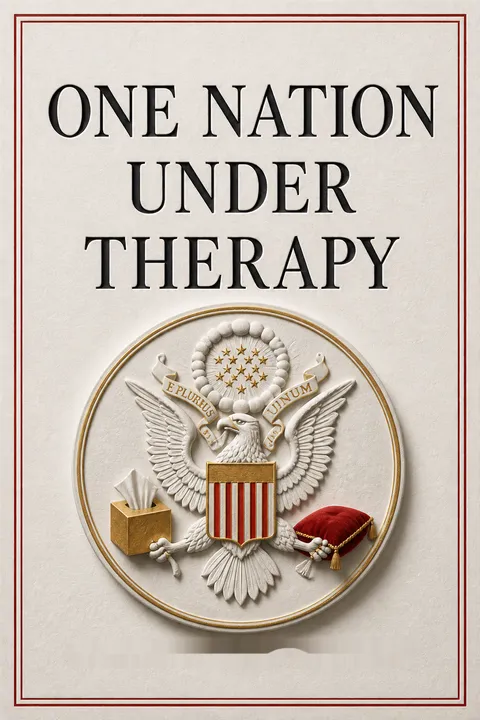
The book’s central warning. Sommers and Satel call the spread of therapeutic assumptions into schools, workplaces, public policy, and everyday life “therapism.” It treats emotional openness as inherently healthy, vulnerability as the norm, and professional help as necessary for ordinary hardship. The authors argue that this outlook can turn normal sadness, anxiety, or misbehavior into symptoms requiring experts, while weakening self-reliance and moral judgment.
Help when help is needed. The book does not reject psychology or therapy for people with serious mental illness. Its target is the leap from genuine clinical care to a general philosophy of life. A satirical essay diagnosing Winnie the Pooh and his friends with disorders illustrates how easily ordinary traits can be recast as pathology.
The distinction between treatment and a culture of treatment is useful. A diagnosis can open access to care, but labels can also shape how people interpret ordinary difficulty. This is especially important in institutions, where a well-intended program can become a default rather than a response to individual need. The book’s sharp contrast between resilience and fragility is persuasive as a corrective, though it risks making professional help seem suspect by association. A sound standard is not “experts or self-reliance,” but whether an intervention answers a real need and respects the person’s agency.
Give children real challenges instead of designing childhood around avoiding discomfort
Practice builds capability. The authors challenge school policies that treated tag, dodgeball, and other competitive games as threats to self-esteem. They argue that play involving winning, losing, chasing, and roughhousing helps children learn social problem-solving and handle frustration. Coach Billy Fitzgerald offers a contrasting example: former players credited his demanding standards with changing their lives, while some current parents objected to his strictness.
The crisis claims need checking. The book cites a survey in which more than 87 percent of high school seniors described themselves as pretty or very happy. It also reports that youth suicide rates fell by 25 percent over the preceding decade. These figures do not erase serious problems affecting some children, but they challenge the claim that a whole generation is emotionally collapsing.
Development depends partly on having chances to try, fail, and repair relationships without an adult removing every obstacle. That insight connects to the idea of mastery: confidence often follows demonstrated ability rather than preceding it. Still, the evidence against blanket fragility should not become a case for blanket toughness. Competitive play can be constructive when adults prevent cruelty and make room for different abilities. The useful question is not whether children should face stress, but whether a challenge is proportionate, supported, and genuinely developmental.
Build self-respect through earned competence, not compulsory praise
Praise is not a shortcut. The book reviews research finding no reliable connection between high self-esteem and academic achievement, kindness, or healthy relationships. Some people with inflated self-views become hostile when criticized. Feeling good about oneself may be pleasant, but the authors argue that it is not a substitute for learning, ethical conduct, or accomplishment.
Privacy matters, too. The authors question school exercises that ask children to announce their feelings or explain why they love themselves. Such activities may pressure students to disclose private experiences or produce the response adults want. A curriculum that asks children to name every passing emotion may suit some students, but the book argues that it should not be treated as a universal necessity.
The strongest point is the distinction between self-esteem as a feeling and competence as evidence. Praise can encourage effort, but indiscriminate praise risks making approval the goal instead of learning. The privacy concern also anticipates a modern debate about consent: an educational exercise can feel compulsory even when it is presented as sharing. At the same time, supportive feedback is not the same as empty affirmation. Children benefit from adults who recognize real progress, correct mistakes without humiliation, and allow students to keep some feelings to themselves.
Teach children the world beyond themselves, including its moral and civic history
Education should widen the lens. The authors criticize classroom programs that make personal feeling the main route to reading, writing, and history. They argue that students also need knowledge of events, ideas, and lives beyond their own. The concern extends to textbook reviews that remove material because it might upset someone, and to lessons that avoid moral judgments for fear of appearing intolerant.
Facts and judgment belong together. The book cites a national assessment in which 57 percent of twelfth graders scored below basic in U.S. history. It also describes students reluctant to condemn atrocities because they believed moral standards were only personal or cultural preferences. Teaching history, the authors argue, requires both accurate context and the courage to distinguish right from wrong.
A curriculum centered on personal experience can invite engagement, but it becomes limiting if students rarely encounter material that unsettles their assumptions or takes them outside their own lives. Civic education also depends on a delicate balance: students need to understand national ideals without being taught that a country is beyond criticism. The book rightly rejects the idea that tolerance requires moral silence. A mature classroom can examine a society’s achievements and failures, then ask what standards make those judgments possible.
Let people grieve in their own style instead of prescribing emotional performance
There is no standard script. The authors challenge the idea that healthy grieving must involve intense sadness, emotional disclosure, or a fixed sequence of stages. Bereaved people vary: some speak openly, some keep busy, and some experience little distress. Research discussed in the book found that nearly half of one study’s widowed participants reported minimal distress after losing a spouse.
Expression is not always relief. Studies of rumination, or repetitive focus on distress and its causes, found that it can prolong low mood. In a study following the Loma Prieta earthquake, students who tended to ruminate showed more persistent depression than those who used distraction. The authors support therapy for people with disabling or prolonged grief, while opposing pressure on everyone else to seek it.
The practical lesson is to offer company without insisting on a particular performance of pain. This respects temperament and avoids turning a person’s private response into a test of how much they cared. Yet quiet coping and harmful suppression are not interchangeable. Someone may avoid talking because that is their natural style, or because fear and shame have made support feel impossible. The book’s case for choice is strongest when paired with attentive observation: respect someone’s preference, while staying alert to isolation, worsening function, or danger.
Explain harmful behavior without erasing the offender's responsibility
Causes are not exoneration. The book argues that psychological or biological explanations can help describe behavior without automatically excusing it. The “Real Me” is a term for the imagined innocent self some people claim is separate from the person who commits harmful acts. The authors use cases of clergy who abused children and were returned to ministry after treatment to show how a therapeutic explanation can displace attention from victims and accountability.
Responsibility has a civic function. The authors acknowledge that free will remains philosophically contested. Their practical point is that communities still need to distinguish right from wrong, protect the vulnerable, and impose consequences for harmful choices. Treating wrongdoing only as illness can obscure the harm done and shift responsibility from the perpetrator to professionals expected to cure him.
A causal account can deepen understanding without settling questions of blame, risk, or repair. That distinction is central to both law and clinical practice: understanding why an act occurred may guide prevention, but it does not automatically determine what a fair response should be. The book’s emphasis on accountability is particularly compelling where institutions have neglected victims. It should not, however, collapse all wrongdoing into freely chosen conduct. Mental incapacity and severe illness can matter greatly, so responsibility needs careful assessment rather than reflexive condemnation.
Treat addiction with care and accountability, not a brain-only story
Biology matters, but it is not destiny. The authors accept that repeated drug use changes the brain and that addiction can involve powerful cravings. They reject the claim that these changes erase all capacity for choice. A study of U.S. veterans who became dependent on heroin in Vietnam found that only 12 percent resumed regular use after returning home, when the pressures and surroundings that had supported use changed.
Combine help with expectations. The book argues that addiction treatment works best when it addresses behavior, relationships, and the person’s environment, rather than treating the brain as the whole story. It points to treatment programs that use incentives and clear consequences, including drug courts. Compassion, in this account, means helping people recover while continuing to treat them as capable of making choices.
The book pushes back against a false choice between stigma and helplessness. A person can face strong biological and social pressures while still responding to incentives, routines, and relationships. That makes agency a practical resource in treatment, not merely a philosophical claim. The caution is that responsibility language can become punitive if it ignores unequal circumstances or severe impairment. Effective care needs both: an honest account of constraints and a plan that gives the person meaningful opportunities to act differently.
Reserve PTSD for disabling trauma responses, not every painful reaction
A real diagnosis needs boundaries. Post-traumatic stress disorder, or PTSD, describes a serious condition involving symptoms such as intrusive memories, avoidance, and heightened alertness, together with substantial distress or impairment. The book emphasizes that acute distress after a terrifying event is not, by itself, PTSD, and that most people exposed to trauma do not develop the disorder.
The label has a history. The authors trace PTSD’s adoption partly to advocacy for Vietnam veterans, whose suffering needed recognition, and partly to the development of a clinical category for trauma-related symptoms. They question inflated estimates of the disorder among Vietnam veterans, noting that major studies produced sharply different rates. Their argument is not that veterans were unharmed, but that diagnoses and estimates require careful evidence.
Diagnostic boundaries protect both patients and the credibility of care. If every upsetting experience is described with the language of severe disorder, the label becomes less useful and ordinary distress can be mistaken for illness. Yet the history of PTSD also shows why recognition matters: without a category, people with genuine symptoms may be misdiagnosed or denied support. The book’s skepticism is valuable when it asks how impairment was measured and whose experience shaped the data. It is less persuasive if uncertainty about prevalence is mistaken for evidence that suffering was exaggerated.
After catastrophe, offer support without forcing a debriefing
Do not prescribe a single response. Psychological debriefing is a structured session in which people affected by an incident are encouraged to describe and revisit it soon afterward. The book reports that studies found no reliable prevention of PTSD, and some found worse outcomes among debriefed participants. Repeatedly recounting a traumatic event may intensify distress or interrupt people’s own coping strategies.
9/11 tested the assumption. After the attacks, officials predicted a large mental-health crisis and launched extensive counseling outreach. Yet studies described in the book found only modest changes in service use, with use falling toward earlier levels over time. The authors favor voluntary, individualized care and practical support, with professional treatment available for those whose symptoms persist or impair daily life.
A universal intervention can communicate an unintended message: that ordinary recovery is unlikely without expert management. This is a form of overhelping, where support weakens confidence instead of strengthening it. The evidence against compulsory debriefing makes a strong case for consent and evaluation before scaling a crisis program. It does not establish that early outreach is always wrong. People may be isolated, unable to ask for care, or in immediate danger, so the challenge is to make help accessible without making participation a condition of being considered resilient.
Restore routines, relationships, and agency before building a counseling industry
Communities are part of recovery. The authors argue that after disaster, people often need reliable information, safety, housing, work, and contact with family and neighbors more than formal therapy. Following 9/11, ordinary New Yorkers helped strangers evacuate and organized practical assistance. The book also recounts how refugees sometimes preferred jobs, social networks, or support from elders over Western-style counseling.
Distress can coexist with growth. The authors cite research on post-traumatic growth, the possibility that some survivors develop greater self-reliance, stronger relationships, or new problem-solving skills through coping with crisis. They do not claim that suffering is automatically beneficial or that professional care is unnecessary. Their conclusion is narrower: make skilled treatment available to people who need it, while strengthening the social and practical conditions that help most people recover.
This is the book’s most constructive policy principle: care is not limited to therapy. Information, work, housing, community ties, and meaningful roles can reduce distress while restoring agency. The approach also avoids treating people as interchangeable clients. Still, community support should complement, not replace, professional services for those with severe symptoms. “Resilience” can become another demand placed on survivors if institutions use it to withdraw help. A humane response makes practical resources dependable and clinical care available without assuming that either is sufficient alone.
Analysis
One Nation Under Therapy is a polemical cultural critique built around a useful distinction: psychological suffering is real, but not every ordinary reaction to hardship is a disorder, and not every explanation of behavior is an excuse. The book’s strongest contribution is to question the institutional incentives that make intervention feel automatically virtuous. A school, employer, charity, or government agency can mistake visible activity for effective care, especially when a professional service offers an easy answer to an emotionally complicated problem.
Its evidence is most compelling when it distinguishes clinical outcomes from popular assumptions. The discussions of grief research, addiction, and post-disaster intervention show why an intervention should be evaluated rather than accepted because its intentions are compassionate. The authors also foreground a neglected cost: telling people they are fragile may change how they interpret ordinary distress and how much confidence they place in their own coping ability.
The book’s limitations follow from its corrective purpose. It tends to organize debate around resilience versus fragility, responsibility versus medicalization, and civic learning versus emotional self-focus. Real cases often require both poles. Social conditions can constrain choices without eliminating agency; emotional disclosure can help one person and burden another; and acknowledging resilience must not become an excuse to deny treatment or material support. Its praise of stoicism and national ideals also invites questions about whose experiences are represented and whether moral clarity can coexist with honest criticism of a country’s history.
Published in 2005, the book’s statistics and institutional examples belong to their period and should not be treated as a current census of mental health. Its durable lesson is methodological and ethical: define the problem carefully, test whether a proposed intervention helps, protect privacy, and preserve the distinction between understanding a person and surrendering judgment. Compassion is not measured by how many people receive counseling. It is measured by whether care fits the need, protects the vulnerable, and leaves people more capable of living their lives.
Review Summary
One Nation Under Therapy argues that American society has become overly reliant on therapy and psychological interventions, undermining self-reliance and resilience. The book criticizes the expansion of mental health diagnoses, challenges the effectiveness of grief counseling, and questions the overdiagnosis of PTSD. While some readers found the arguments compelling and well-researched, others felt the book was biased and dismissive of legitimate mental health concerns. The book sparked discussions about the balance between personal responsibility and professional help in addressing emotional challenges.
People Also Read










Glossary
therapism
therapeutic culture beyond treatmentThe book’s term for extending therapeutic assumptions beyond clinical care into ordinary life and public institutions. Therapism treats emotional disclosure and professional help as broadly beneficial, interprets people as unusually vulnerable, and can replace moral judgment or self-reliance with psychological explanations. The authors distinguish it from evidence-based therapy for people with genuine clinical needs.
self-actualization
realizing personal potentialIn the humanistic psychology associated with Abraham Maslow, self-actualization is the development and expression of a person’s distinctive capacities. Maslow described it as a higher form of fulfillment reached after more basic needs are met. The book examines how this idea became a popular promise of inner discovery and how its claims often exceeded the available evidence.
Real Me
self imagined apart from actionsA term the book attributes to psychiatrist Anthony Daniels for the idea that a person’s true self is separate from harmful behavior. In this account, wrongdoers may describe their actions as products of illness or circumstance while preserving an imagined innocent inner identity. The authors argue that conduct must remain central to judgments about character and responsibility.
post-traumatic stress disorder
disabling response to traumaA clinical disorder involving persistent symptoms after exposure to a traumatic event, including intrusive recollections, avoidance of reminders, and heightened arousal. The book stresses that distress soon after a frightening event is not sufficient for diagnosis: symptoms must be severe or disabling, and the event and duration must meet diagnostic requirements. The authors warn against applying the label too broadly.
psychological debriefing
early structured trauma discussionA single-session intervention often offered soon after a crisis, in which participants are encouraged to recount the event and their emotional reactions. The book distinguishes it from operational reviews intended to improve a team’s performance. It argues that research has not shown routine psychological debriefing to prevent PTSD, and that it may worsen distress for some people.
rumination
repetitive focus on distressA coping pattern involving repeated attention to negative feelings, their causes, and their consequences. In the research summarized by the book, rumination is associated with longer-lasting low mood and can bias memory and judgment toward negative material. It is different from purposeful reflection, which can help when it leads to a clearer understanding or useful action.
clinician’s illusion
mistaking patients for everyoneA sampling error in which professionals generalize from the people who seek or remain in treatment to the wider population. Those who recover without repeated clinical contact may be less visible, making a problem seem more common or persistent than it is. The book applies this idea to trauma clinicians’ impressions of veterans and other survivors.
post-traumatic growth
positive change after crisisThe possibility that some people, while coping with a traumatic or disruptive experience, develop strengths such as greater self-reliance, closer relationships, or improved problem-solving. The book presents this as a possible outcome, not a guarantee or a reason to romanticize suffering. It argues that public discussion should recognize growth alongside psychological injury.
Download PDF
Download EPUB
.epub digital book format is ideal for reading ebooks on phones, tablets, and e-readers.








