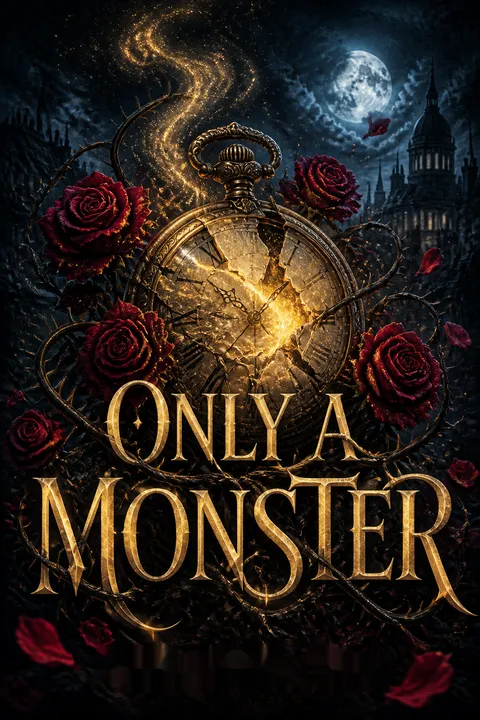


Plot Summary
Prologue
At six, Joan Chang wants to be a hero. Her grandmother, Dorothy Hunt, instead reveals that the Hunts are monsters who hide among humans. Gran demonstrates their family gift by making a gold coin vanish from Joan’s palm, then teaches her the family’s first rule: never tell anyone what they are.
Joan knows Gran as a kind, dependable caretaker, so the word monster sounds like a private joke. She does not yet understand that the family’s rules about theft and loyalty reach far beyond shoplifting and secrets.
The prologue gives Joan’s moral conflict a childhood shape before she knows what the conflict is. She resists the equation of monster with villain because her evidence is personal: Gran comforts her, protects animals, and loves her. Yet the coin trick quietly makes concealment an inheritance, while the warning against disclosure turns family belonging into a demand for silence. Joan’s wish to become a hero is therefore not a decorative childhood memory. It establishes the standard she will later use to judge both her family and herself, even when the facts make that standard painful.
The Missing Day
On the morning of her long-awaited date with Nick, a fellow museum volunteer, Joan helps her elderly neighbor Mr. Solt out of a café after he wanders in confused and barefoot. When he loses his balance, she catches him and touches the back of his neck. The sunlight vanishes. Joan finds herself alone on the same street at night, with no memory of the hours between.
Gran is waiting at home with cocoa and the answer Joan fears: the Hunts are monsters, and Joan has accidentally taken time from Mr. Solt to travel forward. He will die earlier because of what she did. The explanation makes her missed date, her broken phone, and the thirteen-hour gap part of one terrible discovery.
The first supernatural event is also Joan’s first involuntary moral injury. She has not chosen to prey on Mr. Solt, yet accidental harm cannot be made unreal by good intentions. Gran’s calm explanation contrasts with Joan’s shock and reveals a family culture that treats stolen life as ordinary. The scene thus separates inherited identity from ethical choice: Joan may possess the Hunt power, but she has not accepted the Hunts’ moral accounting. Her fear is not simply that monsters exist. It is that she may have harmed someone while believing she was helping him.
A Kiss Before the Hunt
The next day, Joan learns that Ruth and the rest of her Hunt family knew what she was and had never told her. Feeling betrayed, she leaves Gran’s house and goes to Holland House, where Nick apologizes for the abandoned date and makes room for her grief without demanding an explanation. They talk, kiss, and begin to imagine a relationship.
Then black cars bring the Oliver family to the museum. Their leader, Edmund, recognizes Joan as a Hunt and discovers that Nick has witnessed their arrival. The Olivers seize both teenagers and drag them into the Gilt Room. Joan understands that her private crisis has become dangerous for Nick, a human who has seen monsters.
Joan’s approach to Nick is an attempt to recover ordinary intimacy after her family’s revelation. Their kiss matters because it occurs before she knows the full truth about him, making affection feel like a refuge from inherited secrecy. The Oliver arrival destroys that refuge with brutal speed. The museum, a place where history is carefully staged and interpreted, becomes a scene in which Joan’s hidden history is made visible. The shift also exposes the cost of secrets: keeping Nick uninformed does not protect him once he is caught in the monster world.
The Hero Strikes
Edmund orders his brother Lucien to kill Joan and Nick. Joan steals Lucien’s knife and tries to hold the Olivers back, but Lucien wounds her with a sword. Nick suddenly breaks free, takes the weapon, and kills Lucien and the men restraining him. He then kills Edmund before the older man can shoot Joan.
Nick explains that he was trained to kill monsters and has already signaled allies to hunt every monster in London. He spares Joan only because she tried to protect him, warning that he will kill her if she steals time again. As screams rise elsewhere in Holland House, Joan realizes that the boy she kissed is leading a massacre against her family and every other monster he can find.
Nick’s rescue overturns Joan’s understanding of vulnerability. He appeared to be a human trapped among monsters, but his training makes him the room’s most lethal person. Joan’s attempt to defend him is sincere, and his gratitude is real, yet neither feeling can reconcile their incompatible moral worlds. His rule against stolen time sounds principled, but his decision to kill an entire population makes principle indistinguishable from absolutism. Joan is left with a harder question than whether Nick is good or evil: what happens when someone’s pursuit of justice leaves no room for judgment, mercy, or individual difference?
Blood in Sabine’s Room
Joan runs through the house and finds Ruth pressing a blanket against Gran’s wounds. Gran tells the cousins to escape, then privately warns Joan that the human hero must be stopped and that she will soon develop a power she must reveal to no one. Gran gives her a gold necklace before dying.
Ruth and Joan try to flee through a window, but Nick’s allies enter the room and stab Ruth; Joan sees her disappear and assumes she is dead. Joan escapes through the garden maze and rescues Aaron Oliver, Edmund’s son, from a pursuing fighter. Though Aaron once left Joan behind, they now have to flee together, carrying the knowledge that both their families have been slaughtered.
The family catastrophe turns Joan’s earlier anger into grief before she can repair the breach with Ruth. Gran’s final warning gives Joan a responsibility she cannot yet interpret, while the necklace makes that responsibility physical. The apparent loss of Ruth deepens the isolation. Saving Aaron complicates the old family feud: Joan chooses to protect a person whose relatives tried to kill her, not because she trusts him, but because she refuses to let inherited hostility determine every action. In the immediate aftermath, care becomes a choice made under pressure rather than a comfortable family habit.
Twenty Years Back
At Buckingham Palace, Aaron teaches Joan how monsters steal small amounts of life from many people and combine that time for a journey. Joan hates the theft but takes days from tourists because she and Aaron need to flee Nick’s hunters. Their attempted jump carries them to London in 1993, farther back than planned.
Joan nearly loses her sense of the present until Aaron grounds her by making her identify sounds and details around them. They find a hidden monster way station, where Joan tries to send warnings to her past self and to an Oliver survivor. The letters are misdirected, and the man dismisses her story. Watching the messages fail, Joan feels the timeline resist her attempts to change what happened.
Joan’s first deliberate theft marks a moral threshold, not a simple escalation of magical skill. She acts to survive and to rescue others, but the tourists pay for a decision they never consented to. Aaron’s practical fluency makes the act seem normal, while Joan’s nausea preserves its human cost. The failed warnings introduce a world in which causality has its own pressure. Joan’s hope that knowledge alone can undo violence collides with a timeline that absorbs small interventions and protects its larger pattern.
Ruth Finds Her
Ruth breaks into Joan and Aaron’s room, alive and carrying a scar from the night Joan believed she had died. For Ruth, nearly two years have passed since the massacre; she has spent them searching for Joan and other survivors. She warns that someone is killing witnesses and falsifying the great families’ histories, which all describe the massacre in the same misleading terms.
Joan and Aaron connect the attack to the old bedtime stories of a human hero who destroys monsters. At the Liu family gallery, Ying confirms that some Lius remember fragments of another timeline. He recognizes Gran’s necklace as a key to the Monster Court and says a legendary device there may have remade history.
Ruth’s return makes time travel emotionally unequal: Joan’s grief is raw, while Ruth has lived with it long enough for it to become a scar. Their reunion restores trust without erasing the hurt Joan caused by fleeing. The altered family records widen the danger from a violent attack to an institutional conspiracy. History, usually a source of security for Aaron and a fascination for Joan, can be edited by those with power. The necklace offers a possible remedy, but its meaning remains uncertain, so hope arrives attached to a new risk.
Gran Before the Blood
Joan bargains with Ying for more information, trading on the importance of Gran’s necklace. Ying explains the myth of a device called the transformatio, said to have let the King replace an earlier timeline, and identifies the Royal Archive as the place to search. Joan then finds Dorothy Hunt in 1993, decades before the woman who raised her.
Young Dorothy believes Joan’s account of the coming massacre and identifies the Royal Archive as the King’s storehouse, but when Joan mentions her emerging power, Gran’s expression changes. She signals the bartender to summon someone, and Joan flees before learning why. The encounter gives Joan a destination and a warning: even family can become dangerous when it sees her as something valuable.
Meeting Gran in the past gives Joan the painful intimacy of recognition without reciprocal love. This Dorothy can believe the warning and still look at Joan as an asset, reminding her that kinship does not automatically guarantee tenderness or safety. The exchange also shifts Joan’s goal from vague rescue to a concrete search for the transformatio. Yet every apparent answer generates a further uncertainty: the King’s device may be myth, and Joan’s hidden power may be more politically valuable than her own survival.
The Prison Behind the Door
With Tom Hathaway, a disgraced former Court Guard, the trio infiltrates the Monster Court during a rare gala. They disguise their identities with borrowed family seals and pass through a gate into a palace suspended outside ordinary time.
Aaron distracts Edmund, alive in this earlier era, while the others enter a hidden route toward the Royal Archive. They find not a treasury but a prison cell protected by a barrier containing a prehistoric winter. Ruth stretches a rolled rug through the barrier with the Hunt power, creating a passage.
At the sealed archive door, Joan’s unknown power surges through her hand and turns its metal lock back into brittle ore. Inside, the room is empty except for signs of a prisoner and a small object beneath the desk.
The Court’s spectacle disguises its coercion: frozen time, guarded thresholds, and a prehistoric moat make royal authority feel less like government than control over reality itself. Ruth’s improvisation turns a supposedly modest family gift into collective leverage, while Joan’s power appears first as an act of unmaking rather than a chosen weapon. The empty cell is the section’s crucial reversal. The team reaches the archive only to discover that the archive is a captive person, and their confidence in the King’s official history begins to fracture.
The Hero Was Made
As the team escapes the Court, Joan encounters Nick in the frozen palace. They hold each other at knife point, but neither strikes, and Nick lets her go. After the group crosses a hidden gate and escapes a Court search, Tom reveals that the object Joan found is a message from Jamie Liu, the prisoner he loves.
The recording shows Nick as a boy repeatedly tortured while monsters kill his family, reset events, and force him toward hatred. A woman directs the process, turning his moral goodness into the rage needed for a legendary hero. Jamie’s message says the plan contains a mistake and the hero can be stopped. The discovery changes Nick from a born enemy into a person deliberately fashioned for violence.
The revelation does not excuse Nick’s later choices; it makes their origins legible without reducing him to a puppet. His capacity for compassion was not absent but targeted, and the repeated torture sought to weaponize precisely what was good in him. Tom’s own pursuit of Jamie parallels Joan’s wish to recover her family, but the message forces him to see that rescue is not the only urgent task. The hero myth is exposed as manufactured history, a political project disguised as destiny.
A Future Borrowed
Joan, Aaron, Ruth, and Tom visit Jamie in 1993, before the Court has taken him. The young artist knows only the hero legends, including a Liu version in which the hero loved a monster girl and the timeline keeps trying to reunite them. The story clarifies Joan’s uncanny pull toward Nick but offers no way to undo their choices.
Aaron reveals that his family’s power can identify bloodlines and that he was trained to kill someone like Joan; he also warns that a changed timeline could erase their bond. He gives her his mother’s travel token, carrying stored time, so she can reach Nick without another mass theft. Joan leaves alone, intending to stop the hero even if she cannot recover her family.
Jamie’s romance story gives Joan’s attraction to Nick a cosmic explanation, but explanation is not absolution. Their pull may predate this timeline, yet their present actions remain their own. Aaron’s confession makes intimacy costly too: he has protected someone his family taught him to identify as an enemy, while knowing that a successful change could make that trust disappear. Joan’s departure rejects the fantasy that love or fate can restore what was lost. She acts instead because the next massacre must be prevented.
The Cell and the Choice
Joan reaches a version of Holland House where Nick has turned the museum into a trap for monsters. Astrid, once her fellow volunteer, drugs her and delivers her to a cell. Nick questions Joan, while Astrid uses a truth-inducing mixture to force answers. Joan explains that Nick was made into the hero through repeated murders of his family, but he rejects the account and leaves her locked up.
With no human nearby to supply travel time, Joan realizes that her mixed heritage may let her take time from herself. The attempt hurts, but it carries her out of the cell and into an abandoned Holland House. She has escaped, though she does not know how much of her own life she has spent.
The cell turns Joan’s history of confinement into an immediate bodily danger, while the truth drug makes honesty feel like another form of captivity. Her account of Nick’s past is sincere, but he cannot accept it from the person whose family he killed. Joan’s escape uses the same system that has harmed strangers, redirected inward: she pays with her own life rather than another person’s. The act is both resourceful and self-destructive, showing that moral agency does not make a painful choice painless.
The Timeline Breaks
In Holland House’s empty library, Nick finds Joan and admits that he remembers her as if their connection belongs to another life. Joan still loves him, but she refuses to treat the timeline’s pull as proof that either of them is innocent. They agree that they could choose a different future, and kiss. Joan then unleashes her hidden power, not to turn metal into stone but to unmake what has been made.
She destroys the hero Nick was shaped into and undoes the killings that defined this timeline, including the massacre of her family. The power tears through the house and leaves Joan physically depleted. She saves the people she loves by erasing the version of Nick she loved, along with the history that brought them together.
The climax makes restoration inseparable from loss. Joan can reverse the consequences of Nick’s engineered violence only by unmaking the person he became, and she does so after recognizing that their attraction cannot substitute for ethical accountability. The kiss is not a cure; it is a final acknowledgment of genuine feeling before she acts. Her power offers no clean return to the past, only a changed world purchased through personal grief. Joan’s choice answers the opening wish to be a hero with an unsettling alternative: heroism may require refusing the story that promises a happy ending.
Epilogue
In the altered timeline, Joan’s family is alive, but no one remembers the massacre or the months she spent with Aaron, Ruth, and Tom. Joan loses the power she used to change history and is bedridden for weeks, haunted by dreams of Nick. Holland House was bombed during the war and survives only as ruins and a hostel, a visible consequence of the timeline she reshaped.
On her final morning in London, Joan returns to the grounds and meets Jamie Liu, who remembers fragments of the erased history. He recalls that the hero was real and understands what Nick meant to her. Joan tells him they will be ready if the woman who made the hero returns.
The ending refuses to equate restored lives with a restored self. Joan’s family returns to the ordinary habits she mourned, but only she carries the memory of what it cost to bring them back. Holland House’s altered history gives that private cost a public form: the place she loved remains, but not in the shape she knew. Jamie’s partial memory prevents Joan’s experience from becoming wholly unverifiable, while his changed life underlines the uneven distribution of remembrance. Her final promise looks forward without promising repair. She has recovered home, not innocence, and must live with the history only she can remember.
Analysis
Only a Monster builds its fantasy around a question that ordinary hero stories often suppress: who gets to define a monster, and what counts as justice when the accused have genuinely harmed others? Joan’s family steals human life, so Nick’s anger is not based on a false charge. Yet his campaign turns individual wrongdoing into collective guilt, making extermination appear morally clean. The novel refuses that simplification. Joan must acknowledge that her family’s customs are harmful while rejecting the idea that every member deserves death.
Time travel makes this conflict material. Each journey spends a human life, so the characters cannot treat the past as a harmless playground. Joan’s first theft is accidental, later thefts are chosen under pressure, and the final act consumes her own life rather than someone else’s. The mechanism binds ethical responsibility to plot causality: every escape asks who pays for it.
The book also scrutinizes destiny as political storytelling. The hero is not born to his role; powerful people repeatedly manufacture his origin by killing his family and directing his grief. The legend then disguises deliberate violence as inevitability. The Monster Court’s altered records perform a similar act at institutional scale, showing how power can control not only events but the evidence by which events are understood.
Joan’s love for Nick does not resolve these problems. Their attraction may echo a prior timeline, but the novel distinguishes emotional inheritance from moral absolution. Joan can love Nick and still oppose what he has done; she can recognize how he was made and still hold him responsible. Her final choice ends the immediate cycle of violence, but it costs her the relationship that gave the story its tenderness. The altered ending restores family without restoring memory, leaving Joan to carry the knowledge that history can be changed and that repair may leave its own wounds.
Review Summary
Only a Monster received mixed reviews, with praise for its unique premise, compelling side characters, and intriguing magic system involving time travel. Many readers enjoyed the exploration of morality and the monster-hero dynamic. However, some found the writing style and character development lacking, particularly for the protagonist Joan. The romance subplot and pacing were divisive elements. While some readers were captivated by the story, others felt it didn't fully live up to its potential. Overall, it was seen as a promising start to a series with room for improvement.
People Also Read

Characters
Joan Chang-Hunt
The divided-hearted heroineJoan is a thoughtful, principled teenager raised between her human father’s home and her Hunt relatives’ London household. She loves history, museums, and practical kindness, and initially assumes that being good means following the rules she understands. Her curiosity and empathy make her willing to help strangers, but they also leave her vulnerable to secrets kept in the name of family. As she encounters the moral cost of monster customs, Joan’s central struggle becomes how to act responsibly without denying the people she loves or the dangerous parts of herself.
Nick
The earnest museum volunteerNick is a kind, observant volunteer at Holland House whose gentleness draws Joan toward him. He treats people with respect, values helping those in need, and is careful with the museum’s objects as well as with other people’s feelings. His seriousness can feel like safety to Joan, but he also carries a strong sense of moral duty. Nick’s relationship with Joan is shaped by affection and by the sharply different worlds they inhabit, making his convictions as consequential as his warmth.
Aaron Oliver
The guarded Oliver heirAaron is an Oliver teenager, meticulously dressed, sharp-tongued, and skilled at reading both people and historical details. He prefers plans, records, and familiar rules, partly because uncertainty threatens the order he depends on. His pride masks old fear and unresolved family wounds. At first he treats Joan as an inconvenient obligation, but her refusal to accept inherited hatred challenges his assumptions. Aaron is capable of loyalty and tenderness, though he often expresses both through caution, practical help, and carefully controlled disclosures.
Ruth Hunt
Joan’s reckless cousinRuth is Joan’s older cousin, a quick-witted rule-breaker who treats conventions as obstacles to be tested. She teases Joan affectionately and brings energy to the Hunt household, but her irreverence is not carelessness toward the people she loves. Ruth is resourceful with locks, disguises, and the Hunt family gift, and she acts decisively under pressure. Her closeness with Joan is built on long familiarity, playful friction, and a deep willingness to show up when family needs her.
Dorothy Hunt
The formidable grandmotherDorothy, usually called Gran, is a shrewd and capable member of the Hunt family. She combines dry humor with practical care and teaches children that loyalty and secrecy are essential to family survival. Her past is guarded, and she rarely explains more than she believes a listener needs to know. Joan experiences her as both a loving grandmother and a keeper of difficult truths. Dorothy’s influence is strongest when Joan must decide what family loyalty means beyond obedience.
Tom Hathaway
The hulking former guardTom is a muscular Hathaway with a reputation for drinking, trading in phones, and moving through the monster world’s informal economy. He appears blunt and opportunistic, but his attachment to his small bulldog, Frankie, reveals a gentler attentiveness. Tom knows the Court’s systems from experience and carries loyalties that are not obvious to strangers. His practical knowledge makes him useful, while his guarded manner makes it difficult to know what he is protecting or pursuing.
Jamie Liu
The artist and scholarJamie is a Liu artist fascinated by stories of the human hero. As a young man, he paints vivid scenes and approaches his research with the enthusiasm of a scholar discovering a subject. His family’s gift for remembering gives him a distinctive relationship to history, but he is not merely an archivist: he is warm, creative, and deeply connected to Tom. His interest in myths places him near the boundary between the stories monsters tell and the events they conceal.
Ying Liu
The careful family archivistYing is a Liu family member who works in the family gallery and carries himself with measured authority. His exceptional memory makes him a repository of identities and histories, yet he is selective about what he shares. Ying treats information as something that creates obligations, not a free commodity. His quiet hospitality and interest in Joan’s heirloom suggest that beneath his caution lies a capacity for compassion, especially when a visitor’s questions arise from genuine loss.
Edmund Oliver
The ruthless Oliver patriarchEdmund is the imposing head of the Oliver family, a man whose cultivated manners conceal a taste for domination. He regards family status and ancestry as measures of worth, and he responds to perceived weakness with contempt. His authority depends on making others accept cruelty as entertainment or tradition. Edmund’s polished confidence gives him an intimidating presence, but his values reveal how easily inherited power can turn into permission to harm.
Lucien Oliver
Edmund’s armed enforcerLucien is Edmund’s brother, a gloomy and practiced swordsman who carries out the family patriarch’s commands. He appears more dutiful than inventive, allowing authority to substitute for personal judgment. His skill makes him dangerous in a confrontation, while his dependence on Edmund reveals the family hierarchy that governs his choices.
Pei-Wen Chang
Joan’s human fatherPei-Wen is Joan’s loving father, a Malaysian immigrant who gives her a steady, ordinary home in Milton Keynes. He teaches care for others and offers Joan a source of emotional security outside the Hunt family. His warmth is expressed through practical comforts, family traditions, and close attention to her wellbeing. Because he is human and unaware of the monster world, Joan is protective of him and careful about what she reveals.
Uncle Gus
The family caretakerGus is Joan’s uncle, a careful cook and devoted family member who worries over everyone’s health. His fussy concern is affectionate rather than controlling, and he uses food and small practical gestures to make the Hunt household feel secure. He represents the ordinary domestic warmth Joan associates with summers at Gran’s.
Aunt Ada
The immaculate auntAda is Joan’s aunt, an intelligent and kind teacher with an eclectic sense of style. She makes knowledge feel welcoming rather than intimidating and keeps her composure even in the lively Hunt household. Her confidence and care help define the family’s affectionate, eccentric atmosphere.
Bertie Hunt
The gentle cousinBertie is Joan’s cousin and Ruth’s brother, known for eccentric clothes, a generous nature, and an instinct to include everyone. He enjoys cooking and family banter without needing to dominate either. His gentleness balances Ruth’s provocation and gives Joan another familiar source of warmth in the Hunt household.
Astrid
The disciplined volunteerAstrid is a fellow Holland House volunteer, a tall, poised woman with a dancer’s posture and a background in fencing. She is capable, direct, and comfortable taking charge, especially when children or visitors need instruction. Her professional confidence makes her a memorable presence among the museum staff.
Mr. Solt
Joan’s confused neighborMr. Solt is an elderly neighbor living with dementia after losing his wife. He sometimes becomes disoriented and searches for places from his past, leaving his daughter Ellie to care for him. Joan recognizes his vulnerability and tries to guide him gently, making him the first person whose needs draw her into the story’s supernatural danger.
Conrad
The King’s feared enforcerConrad is a powerful member of the Monster Court, known by the title King’s Reach. He enforces the Court’s authority across widely separated periods and inspires fear even among established monster families. His presence suggests a political system that can act beyond ordinary borders, and his reputation shapes how Aaron and Ruth assess the danger of challenging the Court.
Plot Devices
Stolen human time
The cost of each journeyMonsters travel by taking a chosen amount of life from humans, usually through touch at the back of the neck. A day taken permits a day of travel, and the stolen time comes from the human’s lifespan. Taking more time than a person has remaining kills them immediately. The rule gives time travel a concrete ethical cost: Joan’s first journey is accidental, but later she must decide whether survival and rescue justify shortening strangers’ lives. The mechanism also makes each journey a moral choice rather than a neutral change of location.
The timeline’s resistance
History pushes backSmall disturbances caused by time travelers are usually absorbed as the timeline corrects itself, while significant events resist efforts to alter them. Joan experiences this resistance when her warnings fail and her letters never reach their intended recipients. The concept initially seems to make history nearly immutable, but the Liu family’s memories of another timeline and Joan’s emerging power complicate that belief. It turns the plot’s central question from whether characters can travel through time to whether they can change the conditions that govern it.
Gran’s gold necklace
The key to the CourtGran gives Joan a gold necklace with an unfamiliar creature as its pendant. Ying Liu recognizes it as a key associated with the Monster Court, and its darkened chain later connects it to Joan’s unknown ability. The necklace carries several kinds of meaning at once: an heirloom from Gran, a possible route into the King’s domain, and evidence that Joan’s power has already altered matter. Its value is not simply what it opens, but how it binds family memory to the larger mystery of the timeline.
Joan’s unmaking power
Undoing what was madeJoan’s concealed ability first appears when she transforms the archive lock into brittle ore. She later realizes that the power does not merely change one material into another; it can unmake what has been created. The ability gives her access to a form of change unavailable to ordinary time travelers, but it is physically costly and has no clean, reversible use. In the climax, Joan directs it at Nick and the history he embodies, allowing her to undo the massacre while sacrificing the life and relationship she had known.
The family powers
A hidden culture of giftsLondon’s monster families each inherit a distinctive ability, from the Hunts’ capacity to hide and retrieve objects across time to the Lius’ perfect memory and the Patels’ power to mire others in a period. These gifts structure family identity, political influence, and social obligations. Joan’s incomplete knowledge of them repeatedly leaves her exposed, while her companions’ abilities create practical routes through barriers and conflicts. The powers are more than magical tools: they determine who belongs, who is trusted, and who can exercise authority in the monster world.
Monsters Series
Download PDF
Download EPUB
.epub digital book format is ideal for reading ebooks on phones, tablets, and e-readers.








