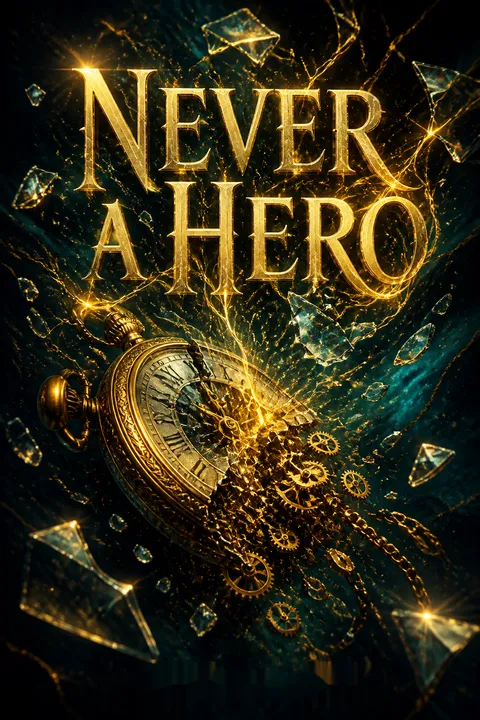


Plot Summary
Nick Comes Back Changed
Months after undoing the timeline that made Nick a monster slayer, Joan keeps her distance from the ordinary boy who no longer remembers her. At school, she watches him lead football practice, then meets him by chance when he returns her lost phone. His easy smile and the younger siblings who rush to greet him sharpen her grief: this Nick has the family life the other Nick was denied.
Joan goes home determined not to seek him out again. Instead, her father tells her that her grandmother has invited them to a family dinner on the anniversary of Joan’s mother’s death. Joan agrees, hoping her father’s presence will keep the Hunts’ hidden world out of the conversation.
Joan’s encounter makes the timeline’s repair feel intimate rather than abstract. Nick is not restored as the person she remembers; he is restored to an ordinary life that includes siblings, laughter, and the capacity to forget her. That ordinary happiness is both a mercy and a fresh wound. Her father’s dinner invitation presses on a second fracture: Joan has withdrawn from the Hunts because their monstrous nature appalls her, yet they are also her mother’s family. She tries to choose distance from both forms of grief, but the invitation brings them back into contact.
The Bakery Goes Silent
During a quiet shift at the cake shop, Joan’s friend Margie jokes with her while Nick buys treats for his large family. A strange man arrives and reveals that Margie has been killed by a touch that drained her life. More monsters materialise, and their leader orders them to take Joan and kill Nick. Nick fights his way back when the attackers seize her, but an Argent uses his power to freeze Nick in place.
The raiders burn a golden Court cuff into Joan’s wrist and try to drag her through time. Joan fights the forced yearning by focusing on the present and pleading for Nick to escape. Her determination helps Nick break free; he knocks the leader down, but their escape carries them into an unknown time.
The attack turns the hidden cost of the monster world into a personal loss before Joan can retreat into theory. Margie’s death is sudden and practical, treated by the attacker as a negligible subtraction, which makes the violence more chilling than spectacle. Nick’s involuntary stillness also complicates Joan’s hope that the new timeline has made him safe. He is vulnerable to powers he cannot name, while Joan’s resistance gives him time to act. Her attachment is no longer only a private ache; it becomes the force that keeps both of them alive.
Six Years Missing
Outside the bakery, Joan and Nick find the street altered: the shops have changed, the season has shifted, and a plaque names both of them as missing. Nick runs to his house, but the family home has been sold and emptied. Joan cannot tell him that his siblings may simply have grown up without him.
A Court mark on her wrist confirms the attackers are still tracking her, and false police sirens draw them toward the house. Hiding behind a hedge, the pair overhear Corvin Argent and his men searching for them. Joan also sees Aaron Oliver among the hunters. He calls her a contemptible fugitive, and the revelation that he is working with the Court wounds her even as she and Nick slip away.
The six-year gap converts a rescue into a disappearance with consequences for people who never agreed to be part of it. Nick’s empty house gives time travel a human measure: not a changed skyline, but a family that has had to continue without him. Joan’s silence protects him from a larger truth, yet it also isolates her as the only person who understands what has happened. Aaron’s presence adds emotional disorientation. His hostility does not match the trust Joan once placed in him, demonstrating how a changed history can preserve a face while erasing a relationship.
The Route to London
With roads and stations under Court surveillance, Joan and Nick cut through a hidden bike path toward Bedford, then take a different train line to London. Joan admits that a secret society of people with powers exists, and eventually confirms that Corvin dragged them into the future.
Nick works out that six years have passed and begs to contact his family. Joan refuses because the hunters could use them to reach him. At the station, a future banknote nearly exposes their time jump, but Nick replaces it before the clerk can investigate.
On the train, Joan breaks down over Margie’s death, and Nick comforts her. When she wakes from a nightmare, he tells her the length of their disappearance and asks whether they can return to prevent the attack.
This journey shifts the relationship from accidental proximity to negotiated trust. Joan gives Nick enough information to understand the danger, but withholds both the full truth of monster life and the history that makes him dangerous. His questions are not merely strategic; they arise from the loss of a home and family he cannot reach. The banknote incident shows how easily the past can expose itself through ordinary objects. Meanwhile, Joan’s grief for Margie breaks through her careful emotional control, and Nick’s comfort offers a brief, painful echo of the intimacy she has lost.
A Window to Londinium
Joan follows family signs from Queenhithe Dock to the Wyvern Inn, concealed behind an ordinary office lobby. A Griffith guard tests her with his truth-inducing power, but Nick resists enough to gain entry without exposing that he is human. Inside, Portelli windows show Roman London, while the market displays goods and travel tokens from many eras.
Joan hears that bounty hunters are searching for a fugitive with a forbidden power. At a gambling room window, she instinctively restores a patch of enchanted glass to ordinary glass, revealing that her own power has returned. Her grandmother arrives, but it is Dorothy at a younger age, who once betrayed Joan to the Court. Before Joan can decide what to do, Court Guards raid the inn.
The inn makes the monster world seductive and ethically compromised at once. Its windows turn history into scenery, while its market treats travel as a purchasable convenience. Joan’s restored patch of glass quietly connects her power to the building’s enchantment, making her ability feel less like a weapon than an unsettling form of authorship. Yet safety fails as soon as the Court arrives. The younger Dorothy is a particularly sharp temporal trap: kinship alone cannot guarantee care, because the relationship Joan depends on has not yet been lived.
The Boat Takes Them
Innkeeper Edith and a cherry seller help Joan and Nick escape the raid through a concealed passage. In the alley, Joan reunites with Jamie Liu, who has fragments of memories from the erased timeline and recoils at seeing Nick. Joan insists that Nick saved her and is now being hunted too. Jamie reluctantly takes them aboard a Hathaway barge with Tom, who promises them shelter.
On the journey, Nick notices Joan’s fear and asks why she calls herself a monster. Joan can barely answer, but Nick reasons that the name may come from human fear of their powers. The boat reaches a shared Liu and Hathaway safe house, where Joan finds her cousin Ruth and learns that her father is alive but has lived six years without her.
The boat is refuge, but not a neutral one. Jamie and Tom must decide whether to shelter someone their remembered history identifies as a killer, while Joan must trust allies who have reasons to fear her choices. Nick’s question about the word monster cuts past labels toward the moral facts of the world, though he does not yet know those facts. Ruth’s news of Joan’s father restores a human tether, but it also makes the lost years concrete: her father has grieved, built a life, and been kept safe by relatives while Joan remained absent.
The Missing People
At the safe house, Liu leader Astrid tells Joan that people who lived in the previous timeline are missing from this one. Joan recognises the implication in the vanished history teacher and other familiar faces: changing Nick’s life also erased the humans he would have protected.
Astrid says she remembers a future catastrophe that Nick might have prevented, then leaves rather than help fight it. Joan’s guilt grows when she discovers that her grandmother disappeared while investigating something connected to the danger.
Before they can follow that lead, the Lius and Hathaways confront Nick’s presence. Liam explains that he remembers Nick killing his relatives, then has Owen Argent compel Nick to be harmless toward monsters and silent about them.
Astrid expands Joan’s private moral injury into a historical one. Restoring her family did not simply exchange one set of survivors for another; it removed a protector and altered lives Joan never considered. The revelation refuses a clean arithmetic of good outcomes. Liam’s fear is equally grounded: for him, Nick’s reputation is not folklore but remembered bodily violence. The group’s response, however, reproduces the coercion that helped create the old conflict. Joan recognises the violation but cannot prevent it, leaving her caught between empathy for the victims and fear of what will happen if Nick is controlled.
The Sealed Café
Following records of Dorothy’s visits, Joan, Ruth, Jamie, Tom, and Nick investigate a closed café in Covent Garden. An Ali seal divides the room, and Joan realises Dorothy used the Hunt power to make a passage through it. Ruth pushes a picture frame across the barrier and opens a portal. Beyond it, the group finds a tear in the timeline and glimpses a London where Court Guards kill humans openly and bodies fill a van.
Joan’s touch triggers a violent reaction, the tear vanishes, and the sealed room returns to normal. Court Guards enter moments later. Nick crosses the barrier to shield the others, but the Argent compulsion prevents him from resisting when they seize him. Aaron arrives and cuffs Nick, taking him away in time.
The café turns an abstract warning into evidence that can be seen, smelled, and feared. Its ordinary storefront contains a history the present refuses to acknowledge, and Dorothy’s mark shows that she had already found a way inside. Ruth’s power creates a literal threshold, but crossing it exposes everyone to a reality that makes the monster Court’s violence public. Nick’s capture is especially painful because his instinct to protect the group is intact while his ability to choose has been suppressed. The episode makes both the future and the alliance feel fragile.
A Rescue in 1891
After Ruth exhausts herself reopening the café seal, Joan explains that she remembers a previous timeline in which Nick became a monster slayer and killed the Hunts, Olivers, Lius, and other families.
The group escapes before more guards arrive and follows the trail to Aaron, who has taken Nick to Holland House in 1891. Tom’s rescue team breaks into the guard house using smoke, freeing Joan and Nick and capturing Aaron. Nick has seen the old timeline through the tear and now knows Joan caused his former life to be undone.
He agrees to help stop Eleanor, but makes clear that their alliance may end when the danger passes. At the Hathaway base, a Nightingale confronts Aaron about his mother’s execution, giving Joan reason to question the story everyone tells about him.
Joan’s account gives Ruth the context she lacked, but it also turns memory into a burden distributed across the group. Nick’s knowledge changes the terms of their alliance: he is no longer simply a displaced boy who trusts Joan, but someone facing evidence that she altered his life. His promise to cooperate is bounded, which makes it credible rather than comforting. Aaron’s capture reverses the pursuit, while the Nightingale’s accusation introduces another kind of uncertainty: a public reputation may conceal either guilt or a sacrifice no one has understood.
Aaron Believes Joan
The group questions Aaron about Eleanor, but his loyalty to the Court and resistance to the Griffith power yield little. Joan asks to speak with him alone. She recounts their former alliance and describes the secret of Aaron’s powerful Oliver ability, including the Court’s childhood test and the brooch he once gave her.
Those details convince him that she is telling the truth about their lost history. Joan also realises Aaron did not inform on his mother, Marguerite Nightingale.
He tried to protect her, and his father allowed the Court to punish her while preserving the family’s reputation. Aaron has stayed silent out of loyalty to the Olivers. He accepts Joan’s account and agrees that Eleanor may be working against the King, giving the group an informed ally inside the Court’s world.
The scene turns trust from a feeling into a test of specific knowledge. Joan cannot ask Aaron to believe in an invisible past on sentiment alone, so she offers details only the former Aaron could have shared. His acceptance is a choice to treat evidence as stronger than his current hostility. The revelation about Marguerite reframes silence: Aaron’s loyalty has protected the family system that condemned his mother and then let him carry the blame. Joan recognises that loyalty can be both a virtue and a mechanism of self-erasure.
Joan’s Lost Family
At the Liu house, Ying confirms Astrid’s warning and explains that timeline fluctuations are multiplying as the current history strains to repair itself. Joan asks about her forbidden power and learns that it belongs to the Graves, a thirteenth monster family erased by the King.
Ying remembers having a Grave wife and children, though the King’s punishment has erased even their names from his memory. He says the Court ordered four Ali seals, including ones at the Covent Garden café, Holland House, a Sheffield address, and St Magnus Church in 1923.
Nick recognises the Sheffield address as his childhood home. The group infers that Eleanor may be targeting St Magnus, gathers period clothing and supplies, and prepares to travel thirty-two years forward.
The Grave revelation changes Joan’s question from what am I to what has been done to my family. Her power is not an inexplicable defect but the remnant of a lineage the King tried to remove from history. Ying’s inability to remember his own wife and children gives that erasure a quieter cost than death: love survives as a wound without a name. The four seals become an investigative map, but the Sheffield address hints that Nick’s history has also been manipulated. Their next journey is therefore aimed at stopping catastrophe and understanding the forces that shaped both of them.
Eleanor’s Family War
The group reaches St Magnus in 1923 and is ambushed by Eleanor and armed allies. Eleanor anticipated their route from Dorothy Hunt’s planning habits and used the church’s seal as a lure.
She reveals that she and Joan are sisters, descendants of the Graves, and that the King erased their family after the Graves pursued peace between humans and monsters. Eleanor says she intends to restore them, but only by creating a world where monsters rule and no one can threaten her family again.
Joan understands that the dystopian London was Eleanor’s intended future, not an accidental side effect. Eleanor’s allies restrain the group with an Ali barrier. Joan’s message to the Court summons the King, whose arrival silences the battle and freezes everyone in place.
Eleanor’s confession makes the antagonist legible without making her harmless. Her plan grows from the same grief that once drove Joan to restore the Hunts, but she has converted protection into domination. The lost Graves are real, yet Eleanor’s chosen remedy would make other families live under permanent threat. Their sisterhood complicates Joan’s instinct to condemn her, while the King’s arrival exposes the unequal power behind the original erasure. The scene makes family both a source of solidarity and a justification that can be stretched until it excuses anything.
The King’s Last Gift
The King shows Eleanor an image of Old London Bridge and the surviving Graves in the original timeline, then closes it, leaving her face-to-face with what was erased. Eleanor uses a Rose-marked knife to make Nick, the person she freed from the timeline’s control, kill the King. Nick throws the blade into the King’s chest.
The King dies, and his power streams into Eleanor, who tears open the sky and begins remaking history. Joan shields her companions with her Grave power, but the changing timeline flickers Jamie in and out of existence. Joan cannot hold the shield against Eleanor’s strength. Her power fails, and she loses consciousness as the new history takes shape around them.
Eleanor’s success is built from a paradox: she uses a manufactured hero to kill the ruler who erased her family, then claims the authority that made such erasure possible. Nick’s decision breaks Joan’s expectation that his goodness will always dictate a peaceful choice. The image of the original Graves briefly restores what the King destroyed, but it also sharpens Eleanor’s desire to make restoration permanent at any cost. Joan’s shield is an act of care, not victory. It protects some people while revealing the limits of an individual’s power against a history being rewritten.
Epilogue
Joan wakes in a London ruled by monsters, where Old London Bridge and the Graves’ mansion stand again beneath a hostile sky. Jamie is alive, but Tom has vanished beyond the shield Joan managed to raise. A patrol boat bearing the Court’s altered lion sigil moves down the Thames while frightened people watch from the banks.
Nick keeps the rose-etched knife that killed the King, and he intends to find Eleanor. Joan knows her father and friends may be somewhere in this changed world. She and the others retreat into the shadows, resolved to find Tom and undo the reality Eleanor has made.
The ending denies the easy reward of a restored family or repaired romance. Joan’s shield saved several allies, but it excluded Tom, turning protection into an imperfect boundary with an immediate human cost. The altered London fulfills the danger the group tried to prevent, so their victory over the King becomes the means by which Eleanor gains control. The patrol boat echoes the earlier visions, confirming that the new order is not symbolic but operational. Joan’s promise to repair the world therefore begins from responsibility, not triumph, and from the knowledge that saving people can never be reduced to saving only those within reach.
Analysis
Never a Hero makes moral allegiance unstable by refusing to let family, species, and virtue line up neatly. Joan’s family are monsters who take human life, yet they are also the people who raised and loved her. Nick is a human who once killed monsters, but that history was engineered through repeated violence. Eleanor seeks to restore a family erased by the King, but her proposed refuge is a world built on human subjugation. Each person has an intelligible wound; none of those wounds makes every response just. The novel’s time travel system gives this conflict material weight. Travel consumes human life, so historical freedom is purchased from people who do not know they are paying. A journey is never merely adventurous, and a pouch of tokens represents lives shortened for someone else’s curiosity or safety. Nick’s refusal to take more life is therefore not a simple heroic gesture. It is a moral standard that exposes the compromises Joan has made, including her willingness to spend life when she believed the outcome was necessary.
Memory is equally political. Joan remembers a timeline no one else can share, while the Lius preserve fragments of histories that the King has erased. The Graves’ removal from collective memory suggests that power governs not only bodies but the conditions under which grief can be recognised. Eleanor’s pain is real, but Joan’s lack of memory makes their kinship feel remote, even as the body registers a faint inheritance. The novel treats remembering as both evidence and obligation, not as a guarantee of wisdom.
The ending leaves restoration unfinished. Nick chooses to kill the King, Eleanor gains the power to remake history, and Joan’s shield saves some of her companions but not Tom. The altered world turns every earlier question into an immediate problem: how can Joan oppose a tyrant without repeating the logic that made tyranny possible? Her next task is not to return to innocence. It is to act with the knowledge that protection can exclude, love can distort judgment, and no clean choice can erase the cost of the choices already made.
Review Summary
Never a Hero received mixed reviews, with an overall positive reception. Many readers praised the exciting plot twists, world-building, and character development. However, some felt the pacing was slow and repetitive, particularly in the first half. The love triangle between Joan, Nick, and Aaron sparked passionate debates among fans, with many expressing a preference for Aaron. Readers appreciated the exploration of time travel and moral dilemmas but criticized the excessive focus on Nick. Despite some disappointments, most fans eagerly anticipate the final book in the trilogy.
People Also Read



Characters
Joan Chang-Hunt
The divided time travellerJoan is a thoughtful, stubborn teenager raised by her human father and connected to the monster Hunts through her mother. She is drawn to history and feels the pull of time travel, even while struggling with its cost. Her instinct is to protect the people she loves, but guilt and grief make her wary of her own choices. She often withholds information to keep others safe, then must face the damage that secrecy causes. Joan’s central conflict is not simply which side to join, but how to honour both her human and monster relationships without pretending their interests never collide.
Nick Ward
The unremembering protectorNick is a popular football captain with a large family and an instinctive tendency to step between danger and other people. He meets Joan without knowing their shared history, yet he trusts his observations and asks direct questions when events stop making sense. His courage is practical rather than theatrical: he notices exits, reads a room, and returns for someone who has been left behind. He is also capable of tenderness, especially when Joan is grieving. Nick’s ordinary life gives him a distinct identity beyond the legend others attach to him, even as the past’s shadow shapes how they respond.
Aaron Oliver
The immaculate courtierAaron is a polished, quick-witted member of the powerful Oliver family, accustomed to navigating its rules and the Court’s demands. His beauty and composure can make him seem untouchable, but his loyalty is more complicated than his public reputation suggests. He prefers to reveal little about himself and uses sharp humour as a shield. Aaron is alert to social hierarchies and sensitive to approval, particularly from figures who hold authority over him. His choices are shaped by competing obligations to family, law, and his own judgment.
Eleanor
The formidable court officialEleanor is a young, commanding member of the Curia Monstrorum whose authority reaches across the Court’s guards and operations. She is disciplined, strategic, and accustomed to being obeyed. Her manner can turn from cool civility to sharp anger when her control is challenged. She carries a private history that makes her especially invested in the monster families and the power structures that govern them. Eleanor’s certainty is formidable, but it also narrows her ability to recognise when protection has become domination.
Dorothy Hunt
The absent family matriarchDorothy is Joan’s formidable grandmother, a practical Hunt who values discretion, preparation, and family loyalty. She teaches younger relatives the skills that keep them alive in a world of shifting alliances. Dorothy can be difficult to reach and even harder to read, partly because she guards information as carefully as she guards her family. Joan trusts her competence, but their relationship also carries unspoken history, especially around Joan’s mother and the secrets of the Hunt family.
Ruth Hunt
Joan’s resourceful cousinRuth is Joan’s cousin and lifelong companion, quick with a joke and quicker with a practical solution. She is skilled at improvisation, lock-picking, and reading the social rules of the monster families. Ruth’s confidence can look like irreverence, but it is rooted in loyalty and a clear sense of who belongs to her. She is willing to question Joan when concern turns into secrecy, and she brings a grounded, familial warmth to moments that would otherwise become overwhelming.
Jamie Liu
The careful historianJamie is a Liu with an unusually strong memory for events and a deep knowledge of monster history. Polite and observant, he prefers preparation to confrontation, yet he will take serious risks to protect people he loves. His memories can include fragments that others have lost, making scholarship both a gift and a burden. Jamie’s relationship with Tom gives him a source of steadiness, while his careful manner helps the group turn scattered clues into a workable plan.
Tom Hathaway
The protective boatmanTom is a physically imposing Hathaway whose boats and family network provide shelter across London’s waterways. Beneath his blunt manner is a tender attentiveness, especially toward Jamie and the animals in his care. Tom thinks in terms of immediate safety and is willing to make hard decisions when he believes someone he loves is at risk. His protective instincts can put him at odds with Joan’s principles, but they come from care rather than appetite for power.
Astrid Liu
The troubled seerAstrid is a senior Liu and a poised, formidable presence within her family. She combines a fencer’s discipline with an unsettling knowledge of events beyond ordinary memory. Astrid speaks with the weariness of someone who has carried frightening information alone for too long. Her warnings challenge Joan to consider consequences larger than personal grief, even as her fatalism makes it difficult to know whether she expects others to act or has already given up.
Ying Liu
The grieving scholarYing is Jamie’s father and a respected Liu scholar who treats knowledge as both inheritance and responsibility. He speaks with careful precision and rarely offers certainty where the records do not support it. Beneath his formal composure lies grief for people history has taken from him, including members of his own family. Ying’s patience helps Joan understand that remembering everything is not the same as being able to restore what has been lost.
Margie
Joan’s bakery friendMargie works beside Joan at the cake shop and brings an organised, playful energy to their friendship. She notices Joan’s attraction to Nick and is happy to nudge her toward a conversation. Margie’s ordinary plans, jokes, and care for her younger sister make her a vivid part of Joan’s human life.
Joan’s father
Her human anchorJoan’s father is a warm, attentive parent who tries to reach her through everyday acts of care, including baking and checking in after school. He knows his daughter is carrying something difficult, though she cannot tell him the truth at first. His affection for Joan and her late mother gives her a home outside the monster world and a reason to keep ordinary people safe.
Liam Liu
The fearful survivorLiam is a young Liu who carries vivid memories of violence against his family. He responds to Nick with fear grounded in personal experience, not merely inherited stories. Liam’s demand for protection exposes how differently safety looks to those who remember being attacked and those who meet Nick as an ordinary teenager.
Owen Argent
The young mind-benderOwen is a young Argent who can compel people through direct commands. He is curious about the limits of his family’s power and sometimes treats those limits as an experiment. His presence forces Joan to confront the difference between using power for convenience and respecting another person’s will.
Corvin Argent
The relentless guardCorvin is a Court Guard from the Argent family, trained to use his power of command in the service of an official mission. He is blunt, impatient, and dismissive of the lives caught in his path. His confidence in procedure makes him dangerous, particularly when he treats people as targets rather than individuals.
Edith Nowak
The discreet innkeeperEdith works at the Wyvern Inn and understands how to help a guest without drawing attention. Her courteous manner conceals a willingness to take risks for people in danger.
Edmund Oliver
The severe family patriarchEdmund is Aaron’s father and head of the Oliver family. He values authority, obedience, and the family’s reputation, and he is skilled at finding the words that will make others feel small. His treatment of Aaron reveals how affection and status can become entangled in a powerful household.
Sebastien Nightingale
The bitter family accuserSebastien is a Nightingale who bears deep anger toward Aaron and sees family betrayal as an unforgivable wound. His public accusations carry the force of someone defending a memory others have ignored.
George Griffith
The truth-seeking interrogatorGeorge is a Griffith whose family power can draw truth from others. He approaches interrogation as a tool for resolving uncertainty, though his confidence in that method can overlook the cost to the person being questioned.
Maureen Chang-Hunt
Joan’s absent motherMaureen is Joan’s mother, who died when Joan was an infant. Her ties to both sides of Joan’s family shape the questions Joan inherits, while the silence around her past leaves her daughter with an incomplete sense of where she belongs.
Marguerite Nightingale
Aaron’s guarded motherMarguerite is Aaron’s mother, a Nightingale whose choices cast a long shadow over the way her son is regarded. She is remembered as someone capable of protecting people beyond her immediate family.
Plot Devices
Time travel and human life
Travel has a human costMonsters move through time by directing an intense desire toward another era, but the journey consumes human life. They can take that life in small amounts from many people or carry it in tokens and Court cuffs. The system makes every journey ethically charged, even when the traveller appears to be buying an ordinary charm or activating a device. Joan’s struggle with her own desire to travel gives the mechanism an intimate dimension, while Nick’s refusal to spend another person’s life forces the group to confront the victims hidden behind a convenient resource.
The twelve family powers
Power follows family linesEach monster family has a distinctive ability, from the Olivers’ sight and the Argents’ command to the Alis’ seals and the Lius’ memory. Family sigils identify those abilities, but the powers also shape political alliances, social trust, and the rules of monster life. Joan’s unusual ability to revert things falls outside the familiar pattern, so the Court treats her as a threat before she understands what she is. The family system turns identity into both inheritance and surveillance: knowing someone’s power can reveal where they belong, what they can do, and why others fear them.
Court cuffs and controllers
Anchors bind a fugitiveA Court cuff is a gold, lace-like mark embedded in the wearer’s skin. It contains stolen human time and anchors its wearer to a controller, who can draw them through time and, with the proper device, influence their movements. Joan and Nick are both marked during the pursuit, making travel and escape dependent on the people holding their controllers. The cuff is presented as official equipment, but its practical effect is captivity: it converts a person into something another person can move. Its removal requires both a controller and a painful separation from the skin.
Ali seals and timeline tears
Hidden places expose historyAli seals lock away locations and moments so that outsiders cannot access them. A looped frame combined with the Hunt power can create a temporary passage through one. Behind the seals, Joan’s group finds ragged openings into the void beyond the timeline, where glimpses of other histories appear. The openings connect to places touched by Joan’s strange power, while the Court’s sealing of these sites suggests an effort to conceal damage. The device makes space itself a record, revealing suppressed events while also exposing anyone who crosses its threshold to unstable, nausea-inducing forces.
The timeline’s resistance
History repairs its own changesThe timeline corrects small disruptions caused by travellers, shifting appointments or events until the altered history settles back into place. The Lius can remember both the original and corrected versions, allowing them to track changes other families miss. Over time, however, fluctuations begin to move beyond ordinary corrections, and the timeline appears to strain under the pressure. Joan’s ability to undo things and Eleanor’s attempt to rewrite history challenge the system at a much larger scale. The idea turns fate into a process that can resist, compensate, and perhaps be overwhelmed.
Monsters Series
Download PDF
Download EPUB
.epub digital book format is ideal for reading ebooks on phones, tablets, and e-readers.








