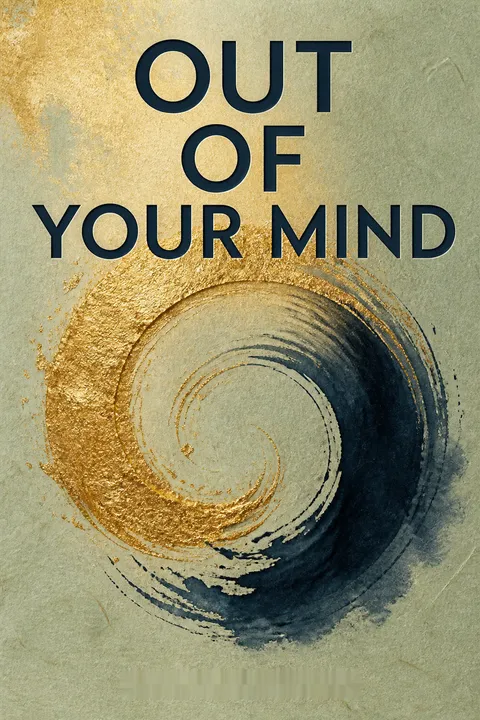


Key Takeaways
See yourself as the universe expressing itself, not an outsider inside it.
Two limiting stories. Watts argues that Western common sense inherits two inadequate pictures of reality. The “ceramic model” imagines a maker shaping passive matter from outside. The “fully automatic model” removes the maker but leaves a blind machine, making human life seem like an accidental exception to indifferent nature. Both cast people as separate from the world they inhabit.
A different starting point. Watts suggests that people emerge from the universe as naturally as fruit from a tree. A person is not a finished object dropped into the world, but one of the processes the world is doing. This is a philosophical proposal, not a scientific finding. Its practical force is to challenge the feeling of being an alien trapped in a body and environment.
What's striking is how this reframes belonging as a starting condition rather than an achievement. Contemporary systems thinking offers a useful parallel: organisms depend on exchanges with their surroundings, and their boundaries are functional, not absolute walls. Yet the stronger claim that a person is literally the universe knowing itself goes beyond what biology or physics can establish. The idea works best as a perspective that loosens alienation, not as a proven account of cosmic purpose. It can encourage care for the living world without requiring certainty about what the universe ultimately is.
Treat life as a drama whose opposites make one another possible.
The hide-and-seek model. Against the maker and machine pictures, Watts offers a dramatic model: reality behaves less like an artifact and more like a performance. In Hindu thought, the ultimate self takes on countless roles and forgets its identity, as actors become absorbed in a play. The point is not to prove that a deity consciously authored each life, but to invite a less hostile way of experiencing existence.
Opposites belong together. Light needs darkness for contrast; a magnet cannot have only one pole; joy and loss shape one another. Watts calls these relations polarities, not wars in which one side must eliminate the other. Social identities work similarly: teacher and student, self and other, each acquire meaning through their counterpart. Life can matter deeply without being treated as a cosmic trial.
The dramatic model makes a strong psychological move: it lets people participate in serious experiences without assuming that every setback proves the universe is against them. It also exposes how identities depend on contrast and relationship. The theatrical analogy, however, can be misread as saying that real suffering is merely entertainment or that victims chose their circumstances. That conclusion does not follow from the metaphor. Its most constructive use is as an invitation to loosen rigid self-images and recognize that meaning often arises through interaction, not through isolated control.
Define a person by the relationships that make their actions possible.
No life in isolation. Watts asks readers to describe a person doing something, such as walking or speaking, and notice how much the description depends on the surroundings. Walking requires a surface; speaking requires someone who can hear. A living body also depends on continuous exchanges with air, food, and other organisms.
Patterns, not sealed objects. He compares a person to a whirlpool: its recognizable shape persists, but the water composing it keeps moving. The example suggests that identity is a relatively stable pattern within change, not a self-contained lump. The same reasoning applies to communities and ecosystems. Remove one part of a web of relations, and other parts change too. The self and its environment are distinct enough to discuss, but neither can be fully understood alone.
This relational account aligns with ecological thinking, where an organism's capacities depend on its habitat, and with social theories that treat identity as partly shaped through recognition and roles. It also changes the ethical picture: environmental damage is not simply harm done to something external, because human health and activity depend on ecological systems. A useful caution is that interdependence does not erase differences in agency or responsibility. People may be connected while still having unequal power, distinct needs, and obligations to repair harms they cause.
Widen attention beyond the things your culture taught you to count.
Attention leaves things out. Human perception selects a narrow slice of what is available. We notice particular objects, events, and threats, then mistake that selection for the whole world. Watts compares perception to choosing notes from a much larger range of possible sounds. The question is not only what is visible, but what the mind has excluded.
Foreground needs a background. A melody depends on pauses as well as notes; a woven design depends on threads hidden behind its visible face. In the same way, order and disorder, presence and absence, and individual forms and their surroundings are interdependent. Watts argues that attending only to sharply separated objects makes life feel fragmented. Learning to notice context does not require abandoning ordinary distinctions. It means remembering that distinctions are useful selections, not the full texture of reality.
The attention argument has a practical edge: what a person notices shapes what seems important, threatening, or possible. It resembles the distinction between signal and context in perception, where a foreground becomes meaningful against a background. Broadening attention can reveal connections that narrow focus misses, from social causes behind an individual problem to ecological costs behind a convenient product. Still, selective attention is not simply a cultural mistake; it is also necessary for action. The aim is flexibility: focus when needed, then widen the frame before treating a partial view as the entire truth.
Stop appointing an inner manager to control a body already happening.
The ego as an image. Watts uses “ego” for the mental picture of a separate, controlling self, not for the whole living person. That picture is incomplete: it includes a name and personal story but overlooks breathing, digestion, circulation, and countless exchanges with the environment. He links the felt sense of ego to sankocha, a habitual bodily contraction associated with trying to control spontaneous processes.
Control has fuzzy borders. Breathing can be directed, yet it continues without deliberate supervision. The same question applies to moving a hand: a person decides to move it, but cannot fully explain how the decision occurs. Watts suggests that the split between voluntary and involuntary action is less solid than it feels. His exercise is to notice thoughts and sensations without trying to force them away.
This insight resonates with embodied accounts of mind: conscious intention is only one part of how a body regulates itself. It can soften the exhausting fantasy that every feeling must be managed by a separate executive inside the head. That does not mean planning, self-regulation, or accountability are unreal. The distinction is between using those capacities and imagining that a hidden controller stands outside the organism. The framing is especially useful when self-monitoring becomes counterproductive, though it should not be used to dismiss mental illness or the value of appropriate care.
Use spiritual striving to expose the seeker who thinks it is missing.
A search can reinforce itself. Watts presents Zen practice as a way to reveal the assumptions hidden inside the search for awakening. A koan, or a question that ordinary reasoning cannot settle, may make a student see that the separate self they are trying to fix cannot be located as a stable object. In one story, a monk asks Bodhidharma to quiet his troubled mind. The teacher asks him to produce the mind; when the monk cannot find it, the demand itself has changed the problem.
Trickery with a purpose. A Zen teacher may intensify a student's effort until its futility becomes clear. Watts calls this a trickster's method: the teacher uses the student's wish to achieve freedom to expose the wish to control life from outside. The aim is not to condemn practice, but to question whether it is being used to postpone direct experience.
The method is compelling because it treats a person's reasoning as something to investigate, not merely something to defeat with a counterargument. It has an affinity with therapeutic approaches that examine the function of a repeated behavior: what does the effort protect, and what keeps it going? There is also a real boundary here. Intense teacher-student dynamics can become coercive when authority is unchecked, and Watts's account does not offer safeguards. The insight is most useful when applied as self-inquiry, with room for doubt about teachers who claim special power over another person's awakening.
Let change include the valleys; a life without endings loses its rhythm.
A whole wave, not just its peak. Buddhist teaching, as Watts presents it, begins from impermanence: bodies, relationships, institutions, and experiences change. He compares change to a rhythm with high and low phases. People often celebrate beginnings and gains while treating decline and death as intrusions, although neither peak nor valley can exist alone.
Mortality changes attention. Watts asks readers to consider death not as an experience of endless darkness, but as the end of the particular life and memories they know. He also describes people facing imminent danger who, after accepting that escape was impossible, reported a sudden clarity. Such stories do not establish what happens after death. They support his claim that confronting mortality can loosen the demand to preserve every moment and sharpen appreciation of what is happening now.
Mortality can clarify priorities because it makes postponement visible: some conversations, commitments, and pleasures cannot be stored indefinitely. Contemporary end-of-life practice also emphasizes honest discussion, comfort, and honoring a patient's wishes, which fits Watts's objection to treating dying as a subject everyone must avoid. But his language sometimes risks making death sound reliably liberating. It is not. Fear, grief, and pain deserve care, and no one should be pressured to welcome death. The valuable distinction is between accepting mortality and romanticizing it.
Treat Buddhist teachings as probes, not beliefs to cling to.
The teaching is a method. Watts presents Buddhism as a dialogue aimed at loosening suffering, not a doctrine that demands assent. He summarizes the Four Noble Truths through suffering, craving, liberation, and a path of practice. “Craving,” or trishna, means the grasping that turns change into a source of distress. The Middle Way avoids both severe self-denial and indulgence, while Buddhist ethical precepts are presented as practical supports for clarity rather than orders from a cosmic lawgiver.
Even the method can become a trap. A person trying to eliminate desire may become caught in the desire to eliminate desire. Watts uses this loop to show why the teachings must be tested in experience rather than adopted as slogans. Meditation and discipline can be useful, but they do not guarantee liberation or make one person spiritually superior to another.
This pragmatic reading separates ethical practice from obedience: restraints can be valuable because of the effects they have on attention, relationships, and judgment, even without a divine command. It also resists a common problem in self-improvement, where the tool becomes another measure of personal worth. The limitation is that Watts compresses a diverse Buddhist tradition into a particular interpretation, especially when he describes its purpose as undermining belief. Readers can use his approach without assuming that every Buddhist school shares his emphasis or that ethical commitments are merely instrumental.
Empty concepts of their authority, then return to ordinary life awake.
Emptiness is not blankness. Watts explains shunyata, often translated as emptiness, as the absence of a permanent, self-sufficient essence that can be grasped in a concept. A mirror can receive many colors without possessing one of them; likewise, experience takes many forms without requiring a separate, fixed witness behind them. Emptiness does not mean that nothing exists or that ordinary life is worthless.
Do not cling to the void. The philosopher Nagarjuna's approach, as Watts presents it, questions claims such as “reality is this” and “reality is not this” rather than installing a final answer. Even emptiness must not become a new absolute belief. The result is not withdrawal from daily experience, but less attachment to fixed explanations of self and world. The everyday scene remains, while its separateness seems less final.
This is a sophisticated form of conceptual humility. Categories help people navigate experience, but treating them as ultimate can conceal the relations and changes they simplify. The mirror image captures how openness can make perception possible without implying that the mind is literally a cosmic container. That distinction matters because metaphors about universal consciousness can easily be mistaken for established neuroscience. Emptiness is most useful here as a discipline of loosening certainty, not as a new metaphysical substance called Nothingness.
Analysis
Watts's central move is not to replace one authoritative cosmology with another, but to make inherited assumptions feel newly optional. The ceramic model and the automatic model appear opposed, yet both imagine a person as separate from the reality that produces and sustains life. His dramatic alternative recasts that separation as a role within a larger process. The effect is existential before it is evidential: readers are invited to experience less estrangement, not handed a testable theory of cosmic authorship.
The lectures build this invitation through recurring reversals. The self becomes a pattern rather than a sealed object; control becomes a process rather than a manager; spiritual effort can preserve the very sense of deficiency it hopes to cure; and emptiness becomes capacity rather than blankness. Repetition is part of the method. Images of waves, rhythms, masks, and interdependence make abstract nonduality feel intuitive, though they can also blur distinctions between metaphor, religious doctrine, and science.
That blur deserves care. Ecological dependence supports the claim that human life is relational, but it does not establish that each person is literally the whole universe. Nor does seeing life as play make suffering unreal or make every outcome acceptable. Watts is most persuasive when he loosens the grip of the isolated, self-policing ego and least persuasive when his metaphysical confidence sounds like proof. His insights can be retained without accepting every cosmic claim: identity is less self-contained than it feels, attention is selective, and trying to control every experience can intensify distress. The book's practical invitation is to participate fully while holding one's explanations lightly.
Review Summary
Out of Your Mind by Alan Watts is highly regarded for its thought-provoking exploration of Eastern philosophy and consciousness. Readers praise Watts' ability to explain complex concepts with humor and clarity, offering a fresh perspective on life and reality. Many find the book transformative, challenging conventional thinking and promoting a more liberated worldview. While some criticize repetitiveness or disagree with certain ideas, most reviewers appreciate Watts' insights and entertaining style. The audiobook format is particularly recommended for its engaging delivery.
People Also Read


Glossary
ceramic model
World made by an external creatorWatts's name for a picture of reality in which a creator shapes passive matter from outside, much as a craftsperson makes an object. It separates maker from made and encourages people to imagine themselves as artifacts placed into the world. Watts argues that this model is a cultural image, not an established account of how reality works.
fully automatic model
Universe as blind mechanismWatts's term for the view that the universe runs through impersonal laws without a creator directing it. He argues that this model can make human beings seem like accidental products of indifferent forces, alienated from nature. His target is not scientific inquiry itself, but the assumption that a mechanical description exhausts what reality means.
dramatic model
Reality as cosmic performanceWatts's alternative to viewing the universe as either a manufactured object or a blind machine. It imagines existence as a drama in which reality takes on distinct roles and becomes absorbed in them. The model draws on Hindu ideas of divine play and presents apparent opposites, such as self and other, as mutually defining parts of one process.
klesha
A mental hang-upA Sanskrit term Watts interprets as a stuck or disturbed state of mind, often rendered as attachment. It does not mean simply enjoying something or feeling fear or sorrow. It refers to the rigid grasping, hesitation, or inner conflict that arises when a person becomes fixed on distinctions and tries to control experience as though the self were separate from it.
sankocha
Habitual bodily contractionA Sanskrit term Watts uses for the chronic tightening associated with trying to make the self control spontaneous bodily and mental processes. He connects this physical contraction with the felt reality of ego. In his account, the tightness is not proof of a separate inner controller; it is a learned pattern of tension bound up with self-monitoring.
maya
World of measured appearancesA Sanskrit term often translated as illusion, which Watts also associates with magic, art, measurement, and the creation of distinctions. Maya does not mean that everyday experience is simply nonexistent. It points to the way perception and language organize reality into apparently separate forms, which can be useful while still being mistaken for permanent, independent things.
anatman
No permanent separate selfA Buddhist teaching, often translated as no-self, that denies a fixed, independent essence behind experience. In Watts's explanation, it challenges the idea of an ego that stands apart from the changing processes of body, mind, and world. It does not deny that people function as individuals in ordinary life; it questions whether that conventional identity is a permanent entity.
trishna
Craving that sustains sufferingA Sanskrit term related to thirst, used in Buddhist teaching for craving, grasping, or clinging. Watts describes it as the stuck effort to secure lasting satisfaction from a changing world. In his presentation of the Four Noble Truths, trishna helps explain dukkha, the frustration and suffering intensified by insisting that impermanent experiences must provide permanent security.
shunyata
Emptiness of fixed essenceA Buddhist term commonly translated as emptiness. In Watts's account, it means that things cannot be pinned down as independently existing, permanent essences. It is not a claim that nothing exists or that life is meaningless. The teaching challenges people to avoid clinging both to ordinary concepts of reality and to emptiness itself as a final answer.
upaya
Skillful teaching methodA Buddhist term for a method adapted to help a student see through a misunderstanding. Watts describes teachers using questions, exercises, or challenges that engage the student's assumptions rather than merely offering a doctrine. The method can expose how spiritual ambition preserves the very sense of separation it hopes to overcome, though its use depends on responsible teaching.
FAQ
What's "Out of Your Mind" about?
- Exploration of Consciousness: "Out of Your Mind" by Alan Watts delves into the nature of consciousness and the human experience, exploring how we perceive reality and our place in the universe.
- Philosophical Insights: The book offers insights into Eastern philosophies, particularly Buddhism and Hinduism, and how they contrast with Western thought.
- Cosmic Game of Hide-and-Seek: Watts uses the metaphor of a cosmic game of hide-and-seek to explain the interplay between the self and the universe, suggesting that life is a playful exploration of identity and existence.
- Interdependence and Nonduality: The text emphasizes the interconnectedness of all things and the concept of nonduality, challenging the notion of a separate self.
Why should I read "Out of Your Mind"?
- Unique Perspective: Alan Watts provides a unique perspective on Eastern philosophies, making complex ideas accessible to Western audiences.
- Self-Discovery: The book encourages readers to explore their own consciousness and question their perceptions of reality, leading to personal growth and self-discovery.
- Philosophical Depth: It offers deep philosophical insights that can change how you view life, death, and the nature of existence.
- Engaging Style: Watts' engaging and often humorous style makes profound philosophical concepts enjoyable and thought-provoking.
What are the key takeaways of "Out of Your Mind"?
- Illusion of the Ego: Watts argues that the ego is an illusion, a construct that separates us from the true nature of the self and the universe.
- Interconnectedness: The book emphasizes the interconnectedness of all life, suggesting that separation is an illusion and that we are all part of a larger whole.
- Playfulness of Existence: Life is portrayed as a playful, cosmic game where the self explores its own nature through various experiences and identities.
- Embrace of Change: Watts encourages embracing change and impermanence as natural aspects of life, leading to liberation from suffering.
How does Alan Watts explain the concept of nonduality in "Out of Your Mind"?
- Beyond Duality: Nonduality is the idea that distinctions such as self and other, or subject and object, are illusions; everything is interconnected and part of a single reality.
- Unity of Opposites: Watts explains that opposites, like light and dark or life and death, are interdependent and define each other, highlighting the unity underlying apparent dualities.
- Experiential Understanding: Nonduality is not just a concept to be understood intellectually but an experience to be realized through meditation and self-inquiry.
- Liberation from Illusion: Recognizing nonduality leads to liberation from the illusion of separateness and the suffering it causes.
What is the "cosmic game of hide-and-seek" in "Out of Your Mind"?
- Metaphor for Existence: Watts uses the metaphor of a cosmic game of hide-and-seek to describe the playful nature of existence, where the self explores its own identity by pretending to be separate.
- Self-Discovery: The game represents the process of self-discovery, where the self hides from itself to experience the joy of finding itself again.
- Illusion of Separation: The game illustrates the illusion of separation, suggesting that the self is both the seeker and the sought, ultimately one with the universe.
- Playful Exploration: Life is seen as a playful exploration of identity and existence, encouraging a lighthearted approach to the mysteries of life.
How does "Out of Your Mind" address the concept of the ego?
- Ego as Illusion: Watts argues that the ego is an illusion, a mental construct that creates a false sense of separation from the rest of the universe.
- Source of Suffering: The belief in a separate ego is a source of suffering, as it leads to attachment, fear, and a sense of isolation.
- Transcending the Ego: The book suggests that transcending the ego involves recognizing its illusory nature and experiencing the interconnectedness of all things.
- Integration with the Whole: By seeing through the illusion of the ego, one can integrate with the larger whole and experience a sense of unity and peace.
What is the role of meditation in "Out of Your Mind"?
- Tool for Awareness: Meditation is presented as a tool for increasing awareness and experiencing the present moment without attachment to thoughts or emotions.
- Path to Realization: It is a path to realizing the interconnectedness of all things and the illusory nature of the ego.
- Non-attachment: Meditation helps cultivate non-attachment, allowing individuals to observe their thoughts and feelings without identifying with them.
- Experiencing Nonduality: Through meditation, one can experience nonduality and the unity of self and universe, leading to liberation from suffering.
How does Alan Watts describe the concept of emptiness in "Out of Your Mind"?
- Emptiness as Potential: Emptiness is not a void but a state of potential, where all possibilities exist and from which all forms arise.
- Beyond Concepts: Emptiness transcends concepts and categories, representing the true nature of reality beyond dualistic thinking.
- Interdependence: Emptiness highlights the interdependence of all things, as nothing exists independently or permanently.
- Liberation through Emptiness: Understanding emptiness leads to liberation from attachment and the realization of the interconnectedness of all life.
What are the best quotes from "Out of Your Mind" and what do they mean?
- "You are an aperture through which the universe is looking at and exploring itself." This quote emphasizes the idea that each individual is a unique expression of the universe, exploring its own nature through human experience.
- "The only way to make sense out of change is to plunge into it, move with it, and join the dance." Watts encourages embracing change as a natural part of life, suggesting that resistance leads to suffering.
- "You are the big bang, the original force of the universe, coming on as whoever you are." This quote highlights the idea that each person is a manifestation of the universe's creative energy, playing a unique role in the cosmic game.
- "Trying to define yourself is like trying to bite your own teeth." Watts points out the futility of trying to define the self, as the true self is beyond concepts and definitions.
How does "Out of Your Mind" compare Eastern and Western philosophies?
- Different Views of Self: Eastern philosophies, as presented by Watts, emphasize the interconnectedness and nonduality of the self, while Western thought often focuses on individualism and separation.
- Approach to Suffering: Eastern traditions view suffering as arising from attachment and the illusion of separateness, whereas Western approaches may focus on external solutions and control.
- Concept of Reality: Eastern philosophies often see reality as a dynamic, interconnected whole, while Western thought may emphasize categorization and analysis.
- Integration of Ideas: Watts suggests that integrating Eastern and Western philosophies can lead to a more holistic understanding of consciousness and existence.
What is the significance of the "web of life" in "Out of Your Mind"?
- Interconnectedness: The "web of life" symbolizes the interconnectedness of all beings and phenomena, illustrating that nothing exists in isolation.
- Mutual Dependence: Everything in the web is mutually dependent, meaning that the existence of one thing is contingent upon the existence of others.
- Illusion of Separation: The web challenges the illusion of separation, suggesting that individual identity is an interconnected part of a larger whole.
- Harmony and Balance: Understanding the web of life encourages living in harmony with others and the environment, recognizing the balance and interdependence of all things.
How does "Out of Your Mind" address the concept of liberation?
- Liberation from Illusion: Liberation involves freeing oneself from the illusion of a separate ego and recognizing the interconnectedness of all things.
- Embracing Change: It requires embracing change and impermanence, understanding that clinging to stability leads to suffering.
- Realization of Self: Liberation is the realization of the true self, which is not separate but one with the universe.
- Living in the Present: It involves living fully in the present moment, free from attachment to past or future, and experiencing life as a continuous flow.
About the Author
Other books by Alan W. Watts





Download PDF
Download EPUB
.epub digital book format is ideal for reading ebooks on phones, tablets, and e-readers.








