


Plot Summary
Prologue
After leaving Castle Reigenbach, Vanja wanders the Haarzlands, ashamed that she has no honest trade and too afraid to meet Emeric in the state she is in. Drunk and desperate, she spills her rubies from a bridge. At dawn, she invents a vision of a scarlet maiden whose lost stones must be recovered, persuading the villagers of Hagendorn to search the freezing stream for her.
A falling ember is doused by snow, a cow bears twins, and the villagers take both accidents as proof of the maiden’s blessing. Vanja stays for a meal, telling herself that the comfort her lie gives the village cannot hurt anyone.
The opening makes Vanja’s fraud an act of self-preservation before it becomes a source of authority. Her lie is practical: it saves her rubies and secures food, warmth, and welcome. But the villagers’ readiness to treat coincidence as confirmation shows how belief answers a need the community cannot meet through ordinary leadership. Vanja’s private shame and their public hope become mutually reinforcing. The danger is not simply that she deceives them, but that she mistakes the emotional usefulness of a story for evidence that it is harmless.
A Prophet Made By Accident
Two months after Vanja’s improvised miracle, Hagendorn has built her a hut, raised a statue, and gathered pilgrims around her Scarlet Maiden faith. She plans to stage one last festival miracle and then disappear. Instead, Prefect Aspirant Emeric Conrad arrives to investigate reports of a new Low God.
Vanja recognizes the former lover she left behind, but before they can speak privately, crimson light rises from the stream. The Scarlet Maiden appears above the bridge, names Vanja her prophet, and claims Emeric as her chosen servant for a midsummer feast. When the goddess vanishes, every religious idol in town weeps blood, and a fresh red handprint marks Emeric’s chest.
Vanja’s staged authority becomes dangerous precisely when it is validated by an event she did not arrange. The apparition converts her private fiction into public fact, while its claim on Emeric ties her deception to a concrete threat. Their reunion is therefore not a romantic return to an earlier plan, but a collision between intimacy and institutional duty. The bleeding idols deepen the trap: the villagers gain a visible sign that their faith is warranted, while Vanja loses the simple option of confessing that she invented the story.
Emeric's Finding Begins
When the crowd presses close, Emeric uses newly developing prefect magic to push the worshippers back without injuring them. His supervisor, retired Prefect Elske Kirkling, then accuses Vanja of profane fraud and orders him to arrest her. Emeric refuses, citing both procedural limits and the evidence that the Scarlet Maiden is real enough to act.
Kirkling calls her demand a test, then assigns Emeric a Finding: determine whether the being is a Low God and whether Vanja deceived Hagendorn. At the Ros brothers’ house, Jakob notices blood on Emeric’s chest where the handprint lies. A hedgewitch’s disagreement with Kirkling over ancient local gods sends the group toward the Broken Peak to investigate the apparition’s origin.
Emeric’s first consequential choice is to insist that procedure matters even when his personal attachment makes his judgment suspect. He neither declares Vanja innocent nor lets Kirkling use authority without legal standing. That distinction establishes the novel’s central tension between justice and institutional power. Kirkling’s test also turns their relationship into evidence: Emeric must prove impartiality while protecting someone he loves from a process already shaped by suspicion. His new mark makes the investigation bodily, not merely professional.
The Shrine Names A Sacrifice
At Felsengruft, the group finds murals showing an unclaimed person leaping from a bridge into the Kronenkessel, the pool guarded by a gigantic hellhound. The Scarlet Maiden appears when Vanja calls for her and drives a red thorn through Emeric’s throat; his mark keeps him alive. She explains that her servant must defeat or feed the beast before midsummer, and that a seven-brother blood offering could replace the chosen sacrifice.
Her claim depends on Emeric being unclaimed by a spouse. Vanja and Emeric privately acknowledge their desire for one another but refuse to let the deadline dictate their first intimacy. They agree to seek the seven brothers’ blood while deciding for themselves what their relationship becomes.
The shrine transforms a vague divine demand into an inherited ritual with visible consequences, but the Scarlet Maiden’s rules also intrude into the couple’s private life. Her definition of a claim makes sexual readiness part of a public threat, turning intimacy into a deadline they must resist rather than obey. Vanja and Emeric preserve agency by distinguishing desire from obligation. Their decision to pursue the blood alternative is both practical and ethical, since it offers a way to protect Emeric without treating his body or their relationship as payment.
The Library's False Relic
The investigation takes Vanja, Emeric, Helga, and Kirkling to Dänwik, where the Library of the Divine has been closed after a hostile poltergeist began attacking visitors. Field prefect Emeric and researcher Vikram Mistry enter to search for records, leaving Vanja on lookout. She notices fresh marks on the lock of a reliquary and opens it.
The goblet inside looks crystalline but proves to be glass. The spirit attacks, hurling furniture and smashing Vanja through the case; Emeric restrains it long enough for her to escape with the goblet. Vikram confirms it is a fake. Someone has stolen Saint Willehalm’s real relic, and the violent guardian is desperate to recover it.
Vanja’s instinct to inspect the reliquary is treated first as a possible return to theft, even though it uncovers the investigation’s only concrete lead. The injury makes that misreading costly, and Emeric’s assumption exposes how easily a person’s history can become the lens through which every action is interpreted. The counterfeit also gives the mystery a material form: an object presented as sacred is false, while the supposedly dangerous spirit may have a legitimate grievance. In Dänwik, appearance and truth are already working against one another.
A Saint Wants His Goblet
Recovering from her wounds, Vanja learns that the library’s guardian appeared to her in a dream as Saint Willehalm, whose ashes and binding are connected to the goblet. He asks for the original back. Vanja suspects Prince Ludwig has it and infiltrates the royal hunting lodge disguised as a servant.
While Emeric distracts the prince with questions about the relic, she switches the real goblet for a souvenir copy and escapes on the prince’s carriage. She returns the original to the library, restoring Saint Willehalm and the building’s order. He finds no record of the Scarlet Maiden, but does uncover extensive histories of the Red Maid of the River. A woman named Eida then approaches Vanja, claiming to be her sister.
Vanja’s theft is no longer a reflexive means of survival alone. Saint Willehalm asks her to use the skill that respectable institutions cannot readily deploy, and the act repairs a public harm rather than enriching her. Still, her secrecy from Emeric complicates that moral distinction and feeds their distrust. The library’s restored records widen the case from a local miracle to a much older legend. Eida’s sudden claim of kinship applies the same pressure in emotional form: Vanja is asked to accept a truth about herself before she is ready to test it.
A Sister At The Inn
Eida’s memories of a little sister unsettle Vanja, but their family’s home in Kerzenthal seems incompatible with Vanja’s memory of being abandoned in Sovabin. She rejects the claim and insists she will seek her family on her own terms. Before the group leaves for Rammelbeck, the Scarlet Maiden sends Vanja a vision: the hellhound will attack unless its sacrifice is made within six weeks, not at midsummer.
The shortened deadline makes the journey urgent. Vanja also learns that Emeric’s future as a prefect may involve a year without a partner, a tradition he has not discussed with her. Their unresolved fears follow them onto the road, alongside the blood offering and the mystery of the missing Ros brothers.
Vanja’s response to Eida is not simple denial. She protects herself from the possibility of hope by measuring the woman’s story against the one she already believes about her abandonment. The shortened deadline intensifies that defensive posture, leaving little room to investigate either family or love without pressure. Meanwhile, Emeric’s silence about prefect tradition gives Vanja’s fear of being left a plausible shape. The section shows how external urgency can magnify old assumptions: she reads incomplete information as proof that connection will end in loss.
The Ros Family's Missing Child
In Rammelbeck, Vanja and Helga search for the brothers whose blood may avert the sacrifice. Dockworker Erwin is missing after taking a bribe to sabotage navigation instructions for the Grace Unending. Vanja tracks him to Madame Treasury’s brothel and later helps expose the business holding him. Erwin’s drunken recollection that the family had thirteen children gives Vanja the first strong reason to believe Eida.
She seeks out Ozkar, an estranged brother and warlock, who confirms she is Marthe Ros’s daughter. He tells her their mother died in the winter when Vanja disappeared. To secure Ozkar’s blood, Vanja gives him one of Emeric’s gifted ribbons, then leaves his workshop devastated by the loss and the news.
The family revelation arrives through a brother who offers facts without comfort. Ozkar’s bluntness gives Vanja the confirmation she has long wanted, but not the explanation or tenderness she imagined receiving. His demand for the ribbon turns emotional value into a literal resource, exposing Vanja’s learned habit of paying for access to care. She gives up an object that represents Emeric’s affection because she believes saving him requires sacrifice. The cost is not merely sentimental: she again treats her own attachments as expendable whenever someone else’s survival seems to depend on her.
The Mother In The Memories
After the Scarlet Maiden possesses Emeric and uses his body to bruise Vanja, the pair seek help at the Imperial Abbey. High Augur Abbess Sibylle gives them Augur’s Tears, allowing Vanja to recover memories the Scarlet Maiden had obscured. She remembers living with Death and Fortune before her mother took her into the winter woods and left her at a crossroads.
The visions also show Hagendorn’s congregation punishing dissenters under Leni, who has replaced Vanja as its leader. Meanwhile, Emeric sees that the Scarlet Maiden is not yet an organically formed Low God; her apparent blessings have been cultivated through belief. Henrik Ros is missing with Brunne the Huntress, making both the family mission and the threat more urgent.
The recovered memories alter Vanja’s understanding of herself without immediately resolving the wound at their center. She learns she was loved by divine godmothers, yet that knowledge must coexist with her mother’s act of abandonment. The Augury also reveals belief as an active force rather than a passive conviction: the congregation’s faith has helped an entity gain influence, while Leni converts that influence into coercion. Vanja’s private history and Hagendorn’s political crisis now share a structure, as both involve someone else shaping the story she is allowed to believe.
A Brothel's Penny Trap
In Rammelbeck, Vanja uncovers the financial machinery behind Madame Treasury’s exploitation of her workers. The madame pays them in tokens that are costly to exchange, uses unreadable contracts to withhold wages, and launders money through sham appraisals linked to Prince Ludwig’s holdings.
Vanja steals the real ledger, then works with singer Joniza Ardîm to lure Madame into a sale meeting observed by prefects. Once Madame is convicted of currency and import fraud, Vanja uses her falsely low tax declaration to buy the business for one white penny under forfeiture law.
She arranges for Jenneke of the Green Sleeve to manage it, protect the workers, and provide short-term housing. The same investigation also helps restore Joniza’s family trading plans.
Vanja’s intervention draws on skills formed under exploitation, but it redirects them toward people who lack the money and literacy to fight through ordinary channels. She does not reject law wholesale; she identifies a legal mechanism that the powerful have weaponized and turns it back on its owner. The outcome is deliberately practical: wages, shelter, transparent currency, and local management. Joniza’s participation also reframes trust as reciprocal obligation rather than a debt ledger. Vanja is beginning to make trouble that repairs conditions instead of merely helping her escape them.
The Hunt's Unfinished Race
To retrieve Henrik, Vanja rides with her shapeshifting friend Ragne into Brunne’s Wild Hunt and challenges the Huntress to a race to Broken Peak. Ragne gains ground by growing enormous falcon wings, but the Scarlet Maiden’s thorns block their final approach, allowing Brunne to touch the summit first.
Brunne judges the race compromised and grants Vanja three favors while postponing her own claim: Vanja must ride with the Hunt for two weeks within three months. Brunne also explains the Red Maid’s history. A princess lost her beloved to the hellhound, and her grief became the river; her impossible demand for the bridal crown kept other suitors dying in the same pool. Vanja returns with Henrik and a vital history of the gorge.
Vanja accepts a wager she cannot fully control, trusting Ragne’s ability rather than relying on Fortune to guarantee an outcome. The race’s apparent loss becomes useful because Brunne values honor more than a technical victory and recognizes the Scarlet Maiden as an intrusion on her territory. Brunne’s history shifts the meaning of the old ritual: what looks like a god demanding bodies began as a grieving woman’s impossible defense against a forced future. That parallel makes the story’s repeated bargains legible as attempts to control pain by narrowing everyone’s choices.
A Home Found In Rain
Vanja reaches Kerzenthal for her brother Sånnik’s wedding and recognizes fragments of the home she left at four. Her siblings greet her as someone they have remembered, not as an intruder who must earn a place. At the ceremony, she wears a family wreath and begins to imagine a future among them.
The welcome breaks when Udo and Jakob arrive soaked and report that Leni’s followers have seized Hagendorn’s lambs, killed Auntie Gerke, and sealed the town. The Scarlet Maiden’s mark spreads across Vanja’s clothes and Emeric’s chest. The Ros family responds by preparing a wagon and supplies, while Vanja and Emeric leave at once to stop the cult and the sacrifice.
Kerzenthal gives Vanja a form of belonging she has never trusted: her family’s recognition precedes any proof of usefulness. The wedding makes acceptance public through shared ritual, not merely private reassurance. That joy is immediately interrupted by news of violence, forcing Vanja to carry love and responsibility together rather than treating them as alternatives. The family’s response matters as much as the danger: they help her act instead of asking her to stay and prove she deserves them. Home becomes a source of agency, not a refuge from consequence.
The Briar Road Home
Prince Ludwig blocks the western road with soldiers, claiming that the prefects have no authority to intervene in Hagendorn. Kirkling helps Vanja and Emeric escape by staging a poltergeist scare with Lady Ambroszia, while Ragne carries them over the blockade. The Scarlet Maiden seizes Emeric midflight, and the pair fall through a magical barrier.
The Briar Hag catches them in a forest sanctuary and explains that the Scarlet Maiden is driving the other Low Gods away. She transports them toward Hagendorn in a living root cart, accepting Vanja’s labor as payment. While combing the Hag’s tangled hair, Vanja sees the connected histories of Brunne, the Red Maid, and herself, and learns the Red Maid’s true name: Ilsza.
The roadblock exposes how political authority can shelter a supernatural crisis when the people exercising it prefer control to resolution. Kirkling’s decision to help is concrete but does not erase her earlier hostility; in the emergency, she acts because the threat exceeds their personal conflict. The Briar Hag’s price is labor, not submission, and the act of combing becomes a way for Vanja to perceive history as interwoven rather than isolated. Naming Ilsza matters because it offers a path beyond inherited titles and rituals, toward a person whose story can change.
Leni's Scarlet Kingdom
The Briar Hag carries Vanja and Emeric into Hagendorn, where Leni has built a coercive congregation and publicly punishes villagers who disobey. When the Scarlet Maiden appears, she demands an immediate choice between Emeric and the blood offering. Vanja admits before the crowd that she invented the original miracle and insists the Scarlet Maiden is no god.
She tries to summon Brunne, but the goddess cannot reach them through the Scarlet Maiden’s domain. The Briar Hag opens a path through the crowd, giving Vanja and Emeric a chance to flee toward Felsengruft. Emeric’s tracking spell locates the force sustaining the apparition beneath Broken Peak, but the Scarlet Maiden’s magic keeps shifting the landscape to obstruct them.
Vanja’s public confession is an attempt to weaken the authority she helped create, but honesty alone cannot undo a belief system that has become useful to its followers and dangerous to its dissenters. Leni’s punishments show how quickly a community’s desire for reassurance can become a hierarchy of worthy and unworthy people. The Scarlet Maiden’s forced choice repeats the emotional structure of the old crown legend, narrowing love into a test with no fair answer. Vanja’s failure to summon Brunne confirms that her allies are not omnipotent; she must act within limits rather than wait for rescue.
The Lantern At The Gorge
The Scarlet Maiden traps Vanja and Emeric at the sacrificial bridge above the Kronenkessel. Vanja dives for Brunne’s crown, but the hellhound nearly drags her under, and Emeric pulls her from the water. Seeing that the impossible claim will never be satisfied, Vanja stops trying to prove their love and seeks the real Red Maid.
She reaches Felsengruft, offers her family’s rose wreath, and calls the grieving spirit Ilsza, who rises as a river goddess. At the bridge, Vanja recognizes the Scarlet Maiden as her dead mother, Marthe, bound to the lantern she lost in the woods. With Emeric’s help, Vanja uses the thirteen siblings’ blood ties to bind Marthe to the lantern; Fortune sends it into the hellhound’s jaws, ending her hold.
The climax turns on recognizing that the apparent romantic test is designed to remain unwinnable. Vanja’s leap for the crown repeats the sacrifice pattern until she understands that the living cannot solve grief by fulfilling its impossible demand. Calling Ilsza by name offers the spirit release from the role that has trapped her, while Marthe’s lantern reveals the personal source of the false goddess’s power. Vanja does not defeat her mother by winning approval or extracting remorse. She severs the inherited bonds that Marthe has exploited, then lets the past become unreachable.
Love And A Leaving
Vanja wakes in a recovering Hagendorn with Emeric beside her and the red mark gone. She helps the villagers rebuild, then shares the May-Saint Feast with her restored family and chooses intimacy with Emeric without a supernatural deadline. He tells her he loves her as she falls asleep.
Later, she overhears Kirkling planning to argue that Emeric must prosecute her as an accessory to the false god’s creation, despite evidence of Marthe’s coercion. Fearing that his career and their future will remain weapons against each other, Vanja leaves before he wakes, taking her belongings and leaving a red penny on his pillow. At the road, she asks Brunne to collect the favor she owes and disappears with the Hunt.
The resolution gives Vanja genuine intimacy only after the external deadline has ended, making her choice distinct from the ritual’s coercion. Yet her old belief that love requires self-erasure returns when Kirkling threatens Emeric’s career. Vanja’s departure is an act of protection in her mind, but it also repeats the abandonment she has spent the story resisting. The red penny recalls the opening bridge, now used not to secure her survival but to mark a deliberate separation. The ending leaves her growth unresolved: she can recognize her worth, yet still struggles to trust that love can survive her presence.
Epilogue
The book’s final framing returns to the beginning of Vanja’s life and then follows her departure into the night with Brunne’s Hunt. As a newborn, Vanja’s mother blamed her for the danger of another birth and planted the idea that the child brought ruin.
In the present, Vanja rides away from Emeric and her family, still believing distance may protect them. The final scene cuts to Irmgard, the cruel countess who once scarred Vanja, entering Ozkar’s workshop and asking to buy the ribbon Vanja surrendered. The object links Vanja’s first family wound to the danger still waiting beyond her flight.
The coda reframes the novel’s repeated lies as inherited narratives, not just Vanja’s chosen deceptions. Her mother’s accusation began before Vanja could act, while Irmgard later turned it into a lesson Vanja internalized through violence. The surviving ribbon makes that past tangible and suggests that Vanja’s sacrifice has not ended its circulation. By ending with her flight and Irmgard’s purchase, the book refuses to confuse defeating Marthe with escaping every consequence of childhood abuse. Vanja has gained a family and a love, but she has not yet learned to remain when fear tells her to disappear.
Analysis
Painted Devils treats deception as a survival skill that can become a public danger when other people invest their needs in it. Vanja’s first lie gives a cold, leaderless village a story of protection. Its consequences do not make her simply guilty or innocent: she did not intend to summon a supernatural force, but her performance creates the conditions in which power can grow. That distinction becomes central to Emeric’s investigation and to the book’s interest in how intent, harm, and legal responsibility differ.
The novel’s supernatural conflicts mirror its human institutions. The Scarlet Maiden demands sacrifices and manufactures tests of worth, while Madame Treasury uses contracts and tokens to exploit workers. Both systems present coercion as an agreed exchange. Vanja counters them by reading the fine print, exposing the hidden mechanism, and redirecting resources toward people left without recourse. Her skills are morally ambiguous, but the book asks what those skills can accomplish when formal authority fails.
Family and romance test the same wound from opposite directions. Vanja expects love to require usefulness, payment, or self-removal. Her siblings’ welcome and Emeric’s careful respect challenge that expectation, but they do not erase it. At the gorge, she refuses the Scarlet Maiden’s false measure of intimacy and releases the Red Maid from a story that has trapped her in grief. Yet after the crisis, Vanja again leaves to protect Emeric from consequences she believes she should bear alone. The ending therefore distinguishes recognizing love from trusting it. Vanja has begun to see herself as wanted, but she has not yet learned that staying can be an act of care rather than a threat.
Review Summary
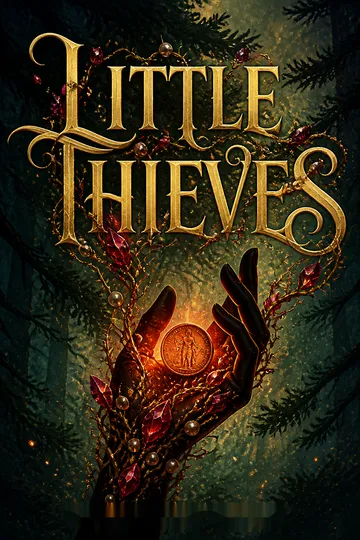
Painted Devils, the sequel to Little Thieves, follows Vanja as she accidentally starts a cult around a fabricated deity called the Scarlet Maiden, who manifests and demands Vanja's boyfriend Emeric as a virgin sacrifice. Reviews are mixed: many praise Owen's humor, the healthy depiction of teenage romance and consent, character growth, and emotional depth. However, critics note the plot feels secondary to relationship drama, the middle drags, writing becomes confusing with too many characters, and the cliffhanger ending frustrates readers by seemingly erasing character development. Most agree it's a solid middle book but doesn't match the first's standalone perfection.
People Also Read




Characters
Vanja Ros
The thorned tricksterVanja is a resourceful former maid whose talent for disguise, theft, and reading a room has kept her alive, but whose survival skills often make her expect care to come with a price. She is funny, suspicious, and quick to turn a crisis into a practical scheme. Beneath her bravado is a lasting fear that she is unwanted or harmful to those who love her. Her relationships with Emeric, her friends, and the people she helps challenge that belief, while her instinct to run shows how difficult it is for her to accept belonging without first earning it.
Emeric Conrad
The careful young prefectEmeric is an exceptionally young investigator whose devotion to the prefects is rooted in his desire to make powerful people answer for their actions. He relies on rules, records, and precise reasoning, but his ethics are more humane than rigid. With Vanja, his carefulness becomes a way of asking for consent and making room for her choices. He is shy about intimacy, earnest about justice, and more emotionally vulnerable than his orderly exterior suggests. His professional ambition and his love for Vanja are not simple opposites, though others repeatedly try to force him to treat them that way.
Elske Kirkling
The severe proctorKirkling is a retired prefect assigned to judge Emeric’s readiness for full authority. She is disciplined, suspicious of impropriety, and convinced that a prefect’s duty requires distance from personal loyalties. Her grief and loyalty to her former partner shape how she views Emeric, though she rarely admits how much feeling lies beneath her procedural severity. Kirkling measures people by the standards she believes will protect the institution. Her hostility toward Vanja grows partly from seeing her as a threat to Emeric’s impartiality and future.
The Scarlet Maiden
The red apparitionThe Scarlet Maiden appears above Hagendorn’s river in a red gown, marked face, and crown of burning roses. She claims to be an ancient Low God awakened by the village’s prayers and speaks with the authority of someone accustomed to being obeyed. Her blessings attract pilgrims, while her demands turn faith into a matter of ritual and sacrifice. She is beautiful in a way that unsettles rather than comforts, and her presence forces Vanja and Emeric to question how belief, authority, and fear can reinforce one another.
Helga Ros
The blunt hedgewitchHelga is a practical hedgewitch and midwife who knows the older magic of the Haarzlands better than the prefects’ records do. She is sharp-tongued, skeptical, and protective of her brothers, even when she pretends not to care. Her bluntness can embarrass Vanja, but it also gives her useful guidance about sex, safety, and the family she has lost. Helga distrusts easy explanations and insists that people take responsibility for their choices. She becomes a bridge between Vanja and a family connection Vanja does not yet know how to accept.
Udo Ros
The patient shepherdUdo is a gentle sheep farmer who offers Vanja shelter after finding her in the creek. He is slow to anger but firm when someone threatens the people under his care. His willingness to trust her, even after noticing the truth behind her first miracle, gives Vanja an early experience of help that is not immediately withdrawn.
Jakob Ros
The exacting weaverwitchJakob is Udo’s brother, a reserved weaverwitch whose practical craft and local knowledge help the group prepare for the journey. He is more patient than his dry manner suggests, and he gives Vanja room to tell the truth without demanding that she become a different person first.
Eida Ros
The searching sisterEida arrives with memories of a missing younger sister and approaches Vanja with an intensity Vanja cannot yet bear. She is hopeful, anxious, and unsure how to make thirteen years of separation fit into one conversation. Her presence forces Vanja to confront the possibility that her imagined family might be real.
Ozkar Ros
The boundary-breaking inventorOzkar is an estranged Ros sibling, a brilliant artificer and warlock who prizes independence and distrusts obligations framed as family duty. His workshop is full of objects that carry personal meaning, which he can use as sources of magical power. He is blunt enough to wound Vanja even while giving her information she desperately needs. Ozkar’s refusal to soften his truths reflects a life built around leaving before others can make demands of him.
Erwin Ros
The reckless dockworkerErwin is a dockworker with a weakness for drink, impulsive choices, and an easygoing manner that can conceal real loyalty. A bribe draws him into a scheme that endangers the port, and his disappearance brings Vanja into conflict with Madame Treasury. He is unreliable in the everyday sense, but he is not indifferent to the people who depend on him.
Henrik Ros
The abbey poetHenrik is a poet and friar who has chosen a life and identity that feel true to him. He is warm, excitable, and eager to reconnect with Vanja, though their shared childhood is mostly a memory for him. His comfort with self-definition makes him a quiet example of how leaving home can be an act of becoming rather than rejection.
Joniza Ardîm
Vanja's loyal old friendJoniza is a gifted singer, sharp negotiator, and Vanja’s longtime friend from the years they spent serving at Castle Reigenbach. She has a strong sense of family responsibility and little patience for Vanja’s habit of vanishing without explanation. Her humor can turn into steel when the people she loves are affected. She helps Vanja expose Madame Treasury’s schemes while also expecting Vanja to make good on the damage she causes.
Ragne
The shapeshifting allyRagne is Vanja’s fierce, affectionate friend, a shapeshifter who can take the forms of animals and fly in the guise of a falcon. She speaks plainly, values loyalty, and approaches relationships with less shame than Vanja does. Her physical courage is essential when the group must move quickly, but her deepest importance is personal: she remains a source of companionship Vanja can trust without having to perform.
Brunne the Huntress
The racing hunt goddessBrunne is a giant Huntress whose Wild Hunt crosses the night sky. She admires speed, courage, and a fair challenge, and her confidence can make her seem as playful as she is formidable. Her history with the lost bridal crown connects her to the tragedies of the gorge. She responds to boldness, but she respects bargains and expects those who make them to honor their side.
Saint Willehalm
The library's guardianSaint Willehalm is the founder and supernatural guardian of the Library of the Divine. His presence is tied to the library’s records and to the relic that preserves his connection to the mortal world. He values the institution he created but is willing to seek help from someone outside the prefects when conventional authority cannot solve his problem.
Lady Ambroszia
The roaming porcelain spiritLady Ambroszia is a former court companion whose spirit travels in a porcelain doll. She is worldly, vain, and remarkably helpful, with a sharp eye for social motives and historical records. Her connection to the library allows her to assist Emeric and Vanja beyond its walls, while her dry humor punctures tense moments.
The Briar Hag
The forest's stern queenThe Briar Hag rules the Mossfolk and has deep command of the forest around Hagendorn. She is suspicious of outsiders and cares less about their explanations than whether they will repair the harm done to her domain. Her demands are practical, her patience limited, and her protection can be generous when someone is willing to work for it.
Leni
The village's fervent believerLeni is a Hagendorn villager whose daughter survives a dangerous encounter in the woods. Her gratitude and need for certainty make her an ardent follower of the Scarlet Maiden. She takes Vanja’s place as the congregation’s organizer, believing that strict obedience will protect the community. Leni’s sincerity does not prevent her from exercising power harshly.
Vikram Mistry
The inventive research prefectVikram is a research prefect and Emeric’s longtime friend from the training academy. An artificer with an improviser’s mind, he develops devices and magical aids that make difficult investigations possible. He is warm, teasing, and perceptive about Emeric’s feelings, but he also takes the dangers of the Order seriously.
Mathilde Richter
The sharp-eyed investigatorMathilde is a prefect and Vikram’s partner. She is quick to connect details others overlook, especially when a business arrangement or suspicious coincidence is involved. Her relationship with Vikram gives Vanja a model of two people balancing professional duty with trust and private affection.
Abbess Sibylle von Eisz
The truth-seeking augurAbbess Sibylle leads the Konstanzian Imperial Abbey and receives visions through the Low God Truth. She is formal, perceptive, and accustomed to carrying information that arrives in difficult fragments. Her authority is tempered by a willingness to ask Vanja and Emeric to interpret a threat together.
Madame Treasury
The token-trading madameMadame Treasury runs a brothel and related businesses through a system of tokens, exploitative contracts, and carefully hidden finances. She is polished, manipulative, and confident that officials will protect her interests. Her contempt for vulnerable workers is matched by her belief that money can make every rule negotiable.
Gertrud Kintzler
Madame Treasury's legal nameGertrud Kintzler is the businesswoman behind Madame Treasury’s public persona. She uses legal forms and financial systems to disguise how her enterprises operate, presenting herself as untouchable in a city where officials often benefit from looking away.
Jenneke
The Green Sleeve's managerJenneke manages the Green Sleeve, a competing establishment whose workers are treated more fairly than Madame Treasury’s. She is practical, alert to the risks of the district, and willing to help employees who have been cheated.
Marthe Ros
Vanja's birth motherMarthe is Vanja’s birth mother and a figure whose choices shape Vanja’s understanding of family and self-worth. The family remembers her as charismatic when pleased and difficult when frustrated. Her actions leave Vanja with a lasting conviction that she brings trouble wherever she goes, a belief that influences how Vanja approaches love, belonging, and responsibility.
Plot Devices
Belief and Low Gods
Faith gives powerIn this world, Low Gods take shape through regional belief, and their identities can change with the stories people tell about them. Vanja’s invented Scarlet Maiden begins as a tale that gives Hagendorn hope, but the congregation’s faith creates a channel for supernatural power. The device links the village’s need for authority to the growing threat: belief can protect, distort, and be exploited. It also makes Vanja’s public confession insufficient by itself, since a story can acquire force beyond the intentions of the person who first tells it.
The Prefect's Finding
Justice under examinationA Finding is the case an aspirant must resolve to complete a stage of prefect training. Emeric must determine whether the Scarlet Maiden is a real Low God and whether Vanja committed profane fraud, while Kirkling judges his impartiality. The procedure gives the investigation stakes beyond the supernatural danger: failure could end Emeric’s career, and biased use of authority could harm Vanja. The Finding therefore tests not only evidence but what justice requires when legal rules are administered by people with grief, loyalties, and blind spots.
Material Anchors
Magic tied to objectsSupernatural beings can affect the mortal world more powerfully through material anchors, objects or places that bind them to physical reality. The library’s goblet sustains Saint Willehalm, while the old lantern becomes crucial to the forces surrounding Vanja’s past. Witch-ash, contract marks, and relics extend this principle across the novel. The device turns magical conflict into a search for tangible evidence and gives Vanja’s practical eye an investigative role: noticing what has been handled, hidden, or used as a conduit can matter as much as knowing a spell.
The Blood Cambric
Kinship becomes a spellThe Scarlet Maiden offers a square of cambric and a bone awl for collecting blood from seven brothers. The drops remain fresh and gradually connect across the cloth, making an invisible network of kinship visible. At first the cloth appears to be a sacrifice payment, but it also provides the means to understand and redirect the magic binding Vanja’s family. The device makes family neither a sentimental abstraction nor a guaranteed source of safety. It is a real connection with power, and what that power does depends on who controls the ritual.
Augur's Tears
Truth restores memoryThe Tears of the Low God Truth let a person see fragments of reality with unusual clarity, though an untrained mind may struggle to interpret what appears. Abbess Sibylle uses them to investigate the Scarlet Maiden, while Vanja focuses on what she has lost. The resulting visions recover childhood memories obscured by the antagonist and connect Vanja’s personal past to the larger crisis in Hagendorn. The Tears do not hand the characters a complete answer; they supply images and relationships that must be interpreted, preserving the novel’s emphasis on evidence assembled from partial truths.
Little Thieves Series

About the Author
Other books by Margaret Owen


Download PDF
Download EPUB
.epub digital book format is ideal for reading ebooks on phones, tablets, and e-readers.








