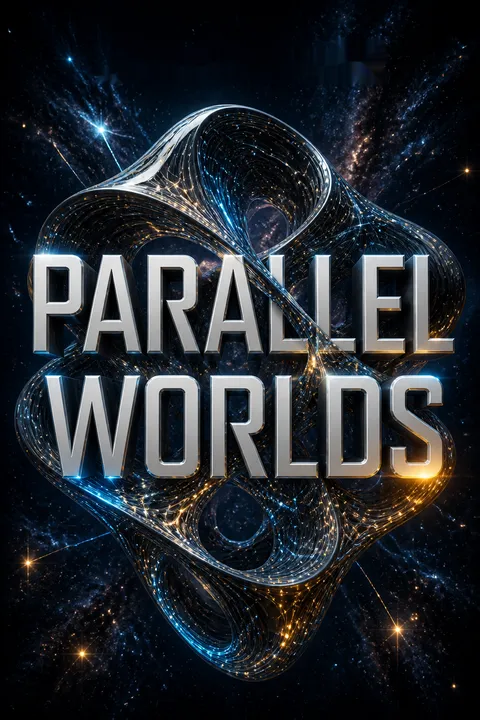


Key Takeaways
Treat the cosmic microwave background as a fossil record, not a picture of today.
A universe preserved in light. The cosmic microwave background is faint microwave radiation left from the early universe. It began traveling freely when the cosmos was about 380,000 years old, after it cooled enough for atoms to form. Because light takes time to travel, detecting this radiation is a way to study the universe’s past, not its present appearance.
From speculation to measurement. NASA’s WMAP satellite mapped tiny temperature variations in this radiation and estimated the universe’s age at 13.7 billion years, with about 1 percent accuracy. Those slight variations are important: they are the early irregularities that grew into galaxies and clusters. The book presents this measurement as a turning point, when cosmology gained unusually precise evidence about the universe’s beginnings.
A fossil record is useful because it preserves traces of conditions that no experiment can recreate directly. Cosmologists infer an ancient process from measurable remnants, much as geologists reconstruct earlier environments from layers of rock. The key is that an image does not interpret itself: models connect the observed pattern to a history. That makes precision powerful, but not identical to certainty. Better instruments narrow the range of plausible explanations; they do not remove the need to test the assumptions that turn radiation into a story about creation.
Most of the cosmos is dark energy and dark matter, not familiar stuff.
A minority made of atoms. In the early-2000s measurements described here, ordinary visible matter accounts for about 4 percent of the universe’s matter and energy. Dark matter, invisible but gravitationally influential, contributes about 23 percent. It helps hold galaxies together and can be detected indirectly because its gravity bends light. The book notes that dark matter in the Milky Way outweighs its stars by roughly a factor of ten.
The larger unknown. Dark energy, the name given to the energy associated with empty space, accounts for about 73 percent in these measurements. Its observed effect is to accelerate cosmic expansion. Yet physicists do not know what it is, and the book reports that theoretical estimates of its value differ from observation by an extraordinary factor of 10 to the power of 120. The universe’s dominant ingredients remain unidentified.
The cosmic inventory is a useful lesson in the difference between detecting an effect and identifying its cause. Astronomers can infer unseen matter from its gravitational influence without knowing what particles compose it. Dark energy is more challenging: its name describes a role in a model, not a settled mechanism. This distinction prevents an easy but misleading conclusion that the unknown has already been explained. The percentages also depend on the cosmological framework used to interpret the observations, so precision in the totals should not be confused with certainty about the underlying substances.
Inflation explains cosmic smoothness, but its multiverse remains an inference.
A rapid early expansion. Inflation is the proposal that space expanded enormously during the universe’s first moments. In the account presented here, the expansion grew by a factor of about 10 to the power of 50. This helps explain why space appears nearly flat and why regions far apart have such similar temperatures. Tiny quantum fluctuations, stretched by expansion, could later become the structures from which galaxies formed.
From one universe to many. Chaotic inflation is the proposal that inflation can continue in distant regions, producing separate bubble universes. The multiverse is the hypothetical collection of such universes. If the mechanism that produced our universe can recur, new universes may bud from older ones. The book emphasizes, however, that inflation’s engine and its ending are not fully understood, and other universes have not been directly observed.
Inflation is compelling in this account because one mechanism addresses several otherwise separate puzzles. That explanatory economy is a real strength: a theory becomes more valuable when a common cause accounts for multiple observations. But the multiverse is a further step, not simply another measurement of the same kind. A model may imply consequences beyond what its evidence can currently test. Keeping those layers distinct allows readers to appreciate inflation’s explanatory reach without treating an unobserved ensemble of universes as an established fact.
Judge cosmologies by what they predict, then test them against the sky.
Evidence defeated a rival. The book traces the Big Bang’s case through several independent clues. Edwin Hubble found that distant galaxies are receding, supporting an expanding universe. George Gamow and colleagues predicted a faint afterglow and calculated the abundance of light elements expected from a hot early cosmos. In 1965, Arno Penzias and Robert Wilson detected the microwave background while investigating persistent radio noise.
A theory must risk being wrong. Fred Hoyle’s steady-state model proposed an eternally expanding universe that continuously created matter. It struggled to explain the abundance of helium and the fact that quasars appear to have been much more common in the young universe. The microwave background, predicted by the Big Bang account, added another problem for steady state. The lesson is not that a famous theory wins, but that explanations must survive observations they did not choose.
The book’s history shows science working through a competition between explanations, not a contest of personalities. Hoyle’s resistance mattered because a rival theory makes the leading account answer harder questions. The strongest evidence is especially persuasive when different methods converge, as expansion, background radiation, and element abundances do in this narrative. Still, convergence supports a broad account more strongly than every detail within it. Good scientific judgment separates what observations tightly constrain from the mechanisms researchers are still building around them.
Quantum theory permits parallel worlds as an interpretation, not proven destinations.
One equation, competing pictures. Quantum mechanics describes particles using a wave function, a mathematical account of possible outcomes. In the Copenhagen interpretation, measurement produces a definite result. The Schrödinger cat thought experiment makes the puzzle vivid: a sealed cat’s fate depends on a random atomic event, leaving the combined system described as both possibilities before observation. Decoherence describes how interactions with the surroundings separate these possibilities so they no longer interfere.
Everett’s alternative. The many-worlds interpretation says the wave function never collapses. Instead, each possible outcome belongs to a different branch of reality. This offers a way to avoid a special role for observers, but it posits an immense number of unobservable worlds. The book also discusses quantum entanglement: distant particles can have linked measurement outcomes, but that does not let anyone send a chosen message faster than light.
The cat experiment exposes a genuine conceptual gap between the mathematical success of quantum mechanics and ordinary ideas of definite events. Decoherence explains why alternatives stop behaving as though they can interact, but by itself it does not settle what reality ultimately contains. Many worlds offers a clear answer at the cost of multiplying realities. That trade-off resembles a broader scientific choice: accept an extra kind of entity to preserve a simpler rule, or accept a special process to preserve a familiar world. The interpretation remains distinct from experimental proof of accessible parallel worlds.
M-theory unifies physics on paper, but elegance is not experimental proof.
Particles as vibrations. String theory proposes that the basic constituents of matter are tiny vibrating strings, with different vibrations corresponding to different particles. The idea offers a possible way to reconcile quantum physics with Einstein’s gravity. M-theory extends this framework into eleven dimensions and treats strings as part of a larger family of extended objects called branes. In this picture, familiar particles and forces arise from patterns of vibration and geometry.
A powerful unfinished candidate. M-theory brought five previously distinct string theories into a broader mathematical framework, and the book describes it as the leading candidate for a theory of everything. Some dimensions may be compactified, or curled into tiny spaces, while brane models allow other dimensions to be larger. Yet the full equations are unknown, many possible universes fit the mathematics, and the theory has no direct experimental confirmation in the account presented.
The musical analogy makes an abstract proposal memorable: one underlying object can generate a range of apparently different particles through different modes. Its deeper appeal is unification, the hope that several laws emerge from a smaller set of principles. But mathematical consistency is not the same as empirical adequacy. A framework that permits many possible worlds faces a selection problem: it must explain why observations match this world in particular. The book treats experimental tests as essential, a useful restraint against mistaking intellectual beauty for a discovered fact.
Read cosmic fine-tuning through selection effects before calling it design.
Life occupies narrow conditions. The anthropic principle is the idea that observations of the universe are limited by the fact that observers must be able to exist. The book gives examples at both planetary and cosmic scales. Earth’s distance from the Sun permits liquid water; its Moon helps stabilize its tilt; and Jupiter’s gravity can redirect some dangerous debris. The strengths of nuclear forces and the universe’s expansion also appear to fall within ranges compatible with complex structures.
Two readings of the same fit. Some interpret these conditions as evidence of a purposeful design. Others suggest that a multiverse contains many universes with different physical constants, so observers arise only in the rare environments that permit life. The book discusses both possibilities and notes a difficulty: the anthropic principle alone does not explain how the constants acquired their values, nor does it necessarily generate a testable prediction.
Selection effects clarify why a life-permitting universe is not automatically evidence that the universe was arranged for life. Observers can only report from conditions compatible with observers, which makes their sample inherently biased. That does not disprove design, and it does not establish a multiverse; it identifies a limit on what the observation can show by itself. The most productive question is what each explanation predicts beyond the fact of our existence. Without such a difference, competing accounts may remain philosophical interpretations rather than discriminating scientific theories.
If dark energy persists, expect cosmic history to end in cold.
Expansion changes the forecast. Earlier models often focused on whether gravity would eventually reverse the Big Bang and produce a Big Crunch. The observations described in the book instead favor accelerating expansion, driven by dark energy. If that acceleration continues, distant galaxies will pass beyond the visible horizon, leaving observers in the far future with a much emptier sky. Stars eventually exhaust their fuel, and the universe approaches a cold, dark state called the Big Freeze.
Entropy sets the limit. Entropy is a measure of disorder, and the second law of thermodynamics says that total entropy increases. The book sketches a long decline: first the era of shining stars, then dead stellar remnants, then black holes that slowly evaporate, and finally a dark era with little usable energy. Whether intelligence could persist by slowing its thoughts is debated, but the accelerating universe makes indefinite survival especially doubtful.
The Big Freeze is not merely a dramatic ending; it follows from connecting cosmic expansion to the thermodynamic problem of finding usable energy. Life and computation require differences that can drive processes. As those differences disappear, elaborate adaptations face a physical ceiling. The account also usefully separates the fate of the universe from the fate of life on Earth, which is threatened on much shorter timescales. Its forecast remains conditional on dark energy behaving as assumed, so the conclusion is a serious projection, not an immutable prophecy.
Treat inter-universe escape as distant physics, not a present survival plan.
A doorway is not a route. General relativity admits mathematical structures such as wormholes, hypothetical shortcuts connecting distant regions or universes. But a passage through a black hole may be lethal or unstable. The traversable wormholes discussed in the book require negative energy, a form of energy that can help keep a tunnel open. The Casimir effect offers a tiny, measured example of negative energy, not the vast controllable supply such a gateway would require.
A civilization-scale speculation. Kaku imagines that a far-future civilization might probe black holes, create a baby universe, or send a compact store of information through a tiny opening and rebuild itself elsewhere. He frames these as possibilities permitted by some physical equations, not technologies in hand. The Kardashev classification ranks civilizations by energy use: planetary, stellar, and galactic. Even the most advanced imagined society would face unresolved questions about stability, radiation, and survival.
This scenario is valuable less as a blueprint than as a stress test for physical theory. Asking whether a civilization could escape forces the discussion to confront energy requirements, stability, information transfer, and the limits of general relativity. Each is a separate hurdle, and clearing one would not clear the others. The narrative’s speculative reach should therefore be kept visible. A mathematically permitted route is not an engineering design, and an engineering design is not evidence that any civilization could execute it.
Give cosmic life meaning through work, love, talent, and service.
Physics does not hand down purpose. The book’s closing argument is that even a successful theory of everything cannot tell people what they should value. Kaku’s answer is practical: meaningful lives can be built through responsible work, love and attachment, developing one’s abilities, and leaving the world better than it was found. These are human purposes, not conclusions derived from equations.
The planetary test comes first. The book describes humanity as an emerging planetary civilization, still far from controlling the full energy available on Earth. Its discussion of nuclear danger, pollution, and global coordination makes that transition both promising and precarious. The cosmic perspective is not an excuse to dismiss near-term choices. A species capable of studying the fate of galaxies must also decide whether it can manage the risks created by its own tools.
The ending refuses two tempting shortcuts: claiming that physics proves a cosmic purpose, or concluding that a vast universe makes human purposes trivial. It treats meaning as something made through commitments and relationships, which places ethical responsibility at the scale where people can act. The planetary framing adds a collective dimension: private virtue cannot substitute for institutions capable of handling shared risks. Cosmic humility is most useful when it sharpens attention to Earth, rather than turning distant futures into a distraction from present obligations.
Analysis
Parallel Worlds is a story of changing scales. It begins with the ancient question of creation, follows the shift from myth to measurement, and moves from one expanding universe toward a possible multiverse. Its central drama is not simply that reality may be stranger than intuition permits. It is that each expansion of knowledge changes what counts as evidence, what remains conjecture, and how humanity understands its place.
The strongest sections build conclusions from converging observations. Galactic expansion, the microwave background, and elemental abundances support the Big Bang through different routes. WMAP then turns a once speculative field into one constrained by detailed measurements. The book is equally effective when showing how scientific disagreement can be productive: the steady-state model sharpened questions that the Big Bang account had to answer.
Its more speculative arc requires a different standard of reading. Inflation has observational consequences, but eternal inflation, quantum many worlds, M-theory, and escape through wormholes sit at progressively greater distances from direct confirmation. Their conceptual links are important, but they are not interchangeable levels of certainty. The book’s vivid analogies make these ideas approachable, while sometimes giving mathematical possibilities the narrative force of physical prospects. Readers should preserve the distinction between a theory that explains measured data and a scenario that current equations do not rule out.
The book was written around the early-2000s cosmological snapshot. Its stated dates for future instruments and predicted technological milestones are historical expectations, not current schedules. More durable is its intellectual method: follow evidence, expose hidden assumptions, and keep the status of each claim clear. The final shift from cosmic fate to human responsibility is also deliberate. Cosmology can describe the conditions and limits of existence, but it cannot select humanity’s values. The universe supplies the scale; human beings supply the commitments.
Review Summary
Parallel Worlds receives mixed reviews, with many praising Kaku's ability to explain complex scientific concepts in an engaging manner. Readers appreciate his enthusiasm and use of pop culture references. Some criticize the book for straying into speculative territory and philosophical musings. The historical overview of physics and explanations of current theories are generally well-received. However, a few readers find the content outdated or lacking in depth. Overall, it's recommended for those interested in cosmology and theoretical physics, though some caution it may not satisfy more scientifically-inclined readers.
People Also Read






Glossary
Inflation
Early rapid expansionA theory that the universe expanded enormously in its first moments. This rapid expansion helps explain why the observable universe appears nearly flat and remarkably uniform, and how tiny early fluctuations could grow into galaxies. Inflation is supported by observations discussed in the book, but the precise mechanism that began and ended it remains unresolved there.
chaotic inflation
Continuing universe productionA version of inflation associated with physicist Andrei Linde. It proposes that inflation can continue in some regions even after it stops in others. Regions that inflate sufficiently may form separate bubble universes, potentially producing an ongoing multiverse. The idea extends inflation’s implications, but those other universes are not directly observed in the account.
dark energy
Energy of empty spaceThe name for the unknown component associated with empty space whose observed effect is to accelerate cosmic expansion. The book reports that dark energy accounts for roughly 73 percent of the universe’s matter and energy in early-2000s measurements. Its physical origin and nature remain unknown, despite its central role in forecasts of the universe’s future.
dark matter
Invisible gravitational matterMatter that does not emit visible light but has gravitational effects. Its presence is inferred from phenomena such as the unexpectedly rapid rotation of galaxies and the bending of light. In the measurements discussed in the book, dark matter accounts for about 23 percent of the universe’s matter and energy, but its constituent particles have not been identified.
multiverse
Collection of universesA hypothetical larger reality containing multiple universes. In the book, the idea arises in several ways: inflation may produce bubble universes, quantum theory may allow branching realities, and string theory may permit many internally consistent versions of physical laws. These proposals are related but distinct, and the existence of other universes is not established by direct observation.
anthropic principle
Observer-conditioned universeThe principle that what observers can measure is limited by the conditions required for observers to exist. In its weak form, it notes that life-permitting conditions are necessary for anyone to ask questions about the universe. Stronger interpretations suggest design or a multiverse of different universes, but the principle alone does not decide between those explanations.
decoherence
Separation of quantum possibilitiesThe loss of coherent interaction between different parts of a quantum wave function when a system interacts with its environment. In the book’s cat example, contact with surrounding particles separates the alternatives in which the cat is alive or dead. Decoherence helps explain why quantum alternatives cease to interfere, though it does not by itself specify which outcome is uniquely real.
M-theory
Eleven-dimensional unifying frameworkA proposed framework that relates five superstring theories and includes extended objects called branes in eleven-dimensional space-time. It is presented as a candidate for unifying quantum physics with gravity. The book stresses that its complete equations are unknown, many mathematical solutions exist, and it lacks direct experimental confirmation.
negative energy
Energy below zeroA quantity below the usual zero-energy reference that can have gravitationally repulsive effects in some theoretical settings. The book discusses it as a possible way to keep a wormhole open. The Casimir effect produces a tiny, measurable negative-energy effect between closely spaced plates, but nothing in the account approaches the large, controllable supply required for inter-universe travel.
type I, II, III civilizations
Energy-use civilization scaleA classification associated with Nikolai Kardashev that ranks civilizations by the scale of energy they can harness. Type I uses energy available across a planet, type II harnesses the output of a star, and type III uses energy across a galaxy. The book places contemporary humanity below type I and uses the scale to imagine far-future technological capacities.
FAQ
What's Parallel Worlds about?
- Exploration of Cosmology: Parallel Worlds by Michio Kaku explores the universe's origins, structure, and potential futures, tracing the evolution of cosmological thought from ancient myths to modern scientific theories.
- Focus on Theoretical Physics: The book delves into theoretical physics, discussing concepts like higher dimensions, time travel, and the multiverse, challenging our understanding of the universe.
- Interplay of Science and Philosophy: Kaku intertwines scientific discoveries with philosophical questions about existence, consciousness, and humanity's place in the universe.
Why should I read Parallel Worlds?
- Accessible Science: Michio Kaku presents complex scientific ideas in an engaging and accessible manner, making it suitable for both science enthusiasts and general readers.
- Cutting-Edge Theories: The book provides insights into the latest developments in physics and cosmology, including the quest for a unified theory and the implications of these theories for our understanding of the universe.
- Thought-Provoking Concepts: Readers will encounter thought-provoking concepts such as the nature of time, the possibility of time travel, and the existence of multiple universes.
What are the key takeaways of Parallel Worlds?
- Evolution of Cosmology: The book outlines the historical progression of cosmological thought, emphasizing how each revolution in thought has reshaped our understanding of the universe.
- Multiverse and Higher Dimensions: Kaku explains the multiverse theory and the concept of higher dimensions, suggesting that our universe may be just one of many within a larger, more complex structure.
- Future of Humanity: Kaku speculates on the potential for humanity to survive beyond our universe, possibly through advanced technology that allows for travel to parallel worlds.
What are the best quotes from Parallel Worlds and what do they mean?
- "Nothing cannot come from nothing.": This quote reflects the inquiry into the origins of the universe, suggesting that the universe must have a cause or a beginning.
- "The universe is the ultimate free lunch.": Kaku uses this phrase to illustrate the idea that the universe can emerge from a state of nothingness, challenging traditional notions of creation.
- "Inside every black hole that collapses may lie the seeds of a new expanding universe.": This quote hints at the possibility that black holes could serve as gateways to new universes.
What is the inflationary universe theory discussed in Parallel Worlds?
- Rapid Expansion: The inflationary universe theory posits that the universe underwent a rapid expansion immediately after the big bang, explaining the uniformity observed in the cosmic microwave background radiation.
- Solving Cosmological Problems: Inflation addresses issues like the flatness and horizon problems by stretching the universe, accounting for its observed uniformity and density.
- Quantum Fluctuations: The theory suggests that tiny quantum fluctuations in the early universe were magnified during inflation, leading to the formation of galaxies and large-scale structures.
How does Parallel Worlds explain the concept of the multiverse?
- Multiple Universes: The multiverse concept proposes that our universe is just one of many, each with its own distinct physical laws and constants, arising from quantum mechanics and inflationary theory.
- Spontaneous Creation: Kaku explains that universes can spontaneously bud off from one another, suggesting that new universes are continually being created.
- Implications for Existence: The existence of a multiverse raises profound questions about reality, existence, and the nature of life, challenging our understanding of the universe.
How does Parallel Worlds relate quantum mechanics to parallel universes?
- Quantum Superposition: Kaku explains that quantum mechanics allows particles to exist in multiple states simultaneously, leading to the idea of parallel universes.
- Many-Worlds Interpretation: This concept is rooted in the many-worlds interpretation of quantum mechanics, suggesting that every possible outcome of a quantum event occurs in its own universe.
- Experimental Evidence: While speculative, ongoing experiments in quantum mechanics may provide insights into the nature of parallel universes.
What role do black holes play in Parallel Worlds?
- Cosmic Phenomena: Kaku describes black holes as regions of space where gravity is so strong that nothing can escape, challenging our understanding of physics.
- Wormholes and Time Travel: The book discusses the theoretical possibility of wormholes, which could connect different points in space and time, potentially serving as gateways to other universes.
- Formation of New Universes: Kaku speculates that collapsing black holes could give rise to new expanding universes, connecting them to themes of creation and cosmic evolution.
What is the significance of dark matter and dark energy in Parallel Worlds?
- Understanding the Universe: Dark matter and dark energy make up the majority of the universe's mass-energy content, yet remain largely mysterious, inferred from gravitational effects and cosmic expansion.
- Challenges for Physicists: Their nature presents significant challenges for physicists, as they seek to understand their properties and implications.
- Impact on Cosmology: Dark matter and dark energy play crucial roles in shaping the structure and evolution of the universe, emphasized in cosmological models.
How does Parallel Worlds address the fate of the universe?
- Big Freeze Scenario: Kaku discusses the possibility of a "big freeze," where the universe continues to expand indefinitely, leading to a cold, dark, and lifeless cosmos.
- Advanced Civilizations: The book speculates on how advanced civilizations might escape the dying universe by finding ways to travel to other, more hospitable universes.
- Philosophical Reflections: Kaku encourages readers to reflect on the implications of these scenarios for humanity's future, raising questions about existence and purpose.
How does Kaku address the future of humanity in Parallel Worlds?
- Survival Beyond Earth: Kaku speculates on the potential for humanity to escape a dying universe through advanced technology and exploration of parallel worlds.
- Technological Advancements: The book highlights the role of technology in shaping our future, including new methods for space travel and exploration.
- Philosophical Implications: Kaku encourages readers to consider the ethical and philosophical implications of humanity's future, advocating for a proactive approach to ensuring a positive legacy.
What are the challenges of proving string theory as discussed in Parallel Worlds?
- Experimental Validation: Kaku outlines the difficulties in experimentally validating string theory due to its complex mathematical framework and the high energies required for testing.
- Theoretical Hurdles: The book discusses the need for a unified framework that incorporates gravity and quantum mechanics, highlighting ongoing research.
- Future Prospects: Kaku remains optimistic about string theory's potential to provide a comprehensive understanding of the universe, emphasizing continued exploration and experimentation.
About the Author
Other books by Michio Kaku

Download PDF
Download EPUB
.epub digital book format is ideal for reading ebooks on phones, tablets, and e-readers.








