

Plot Summary
Blue Mountains on Woolworth
Fourteen-year-old Peak Marcello1 is two-thirds up the Woolworth Building in sleet, painting his blue mountain symbol near the roof. He has planned the illegal climb carefully, but not the weather or the mayor’s reception inside. His cheek and ear freeze to the wall; when he tears free, skin comes with them.
A police helicopter spots him just short of the top, and officers haul him over the railing and arrest him. Peak1 is furious that his secret stunt has become public, but the reporters and police are only the beginning of the damage. In the emergency room, a doctor stitches his face, while the police identify him as the climber behind several earlier skyscraper tags.
Peak treats secrecy as part of the art: the unseen route matters as much as the painted mark. Being caught therefore injures more than his face. It exposes a private compulsion to public judgment, where the image of a fearless climber collides with a frightened boy who has miscalculated. His insistence on finishing the ascent even after the weather turns establishes both his skill and his dangerous impatience.
JDC’s Deadly Echo
At the Juvenile Detention Center, Peak1 learns that newspapers have uncovered his family and reported his earlier climbs. His mother,3 Teri,3 finally visits with worse news: a boy inspired by Peak’s1 coverage tried to climb the Flatiron Building and fell to his death. The boy carried blue paint and had never climbed before, so the city now sees Peak1 as a danger to others, not merely a trespasser.
Teri3 fears prosecutors will keep him locked up until he turns eighteen. Peak1 breaks down as the consequences of his stunt become real, while his teacher Vincent13 gives him notebooks and an assignment to write a story. His mother3 brings a suit for court, and Peak1 must wait to learn whether the judge will send him away.
The copycat’s death turns Peak’s private risk into an involuntary influence on someone else. The distinction between inspiration and responsibility is difficult for a young person to hold: Peak did not cause the boy’s fall, yet the news makes his choices feel morally heavier. Vincent’s writing assignment offers a different response to danger. Instead of climbing out of the crisis, Peak can examine how his actions connect to other lives.
A Father’s Emergency Exit
At arraignment, Peak1 discovers that his biological father,2 Joshua Wood,2 has come from Nepal to help. Peak1 has not seen him in seven years. His lawyer persuades the judge to let Joshua2 take custody, and the court substitutes probation until Peak1 is eighteen for detention, with a refundable $150,000 fine and a gag order.
The arrangement sends Peak1 out of New York immediately, before the case can dominate the news further. At the airport, Teri,3 her husband4 Rolf,4 and Peak’s1 six-year-old twin half-sisters,8 Patrice8 and Paula,8 say goodbye. The twins8 cry over the school walks and birthdays they will miss; Rolf4 tells Peak1 he wants him home. Peak1 leaves with his family’s money for emergencies and no clear idea how long he will be gone.
Joshua’s rescue is both an act of fatherhood and a hurried legal transaction. Peak gains freedom without gaining trust: the man who can solve the crisis is also the parent who has been absent for most of his life. The goodbye makes that ambiguity tangible. Rolf’s quiet care and the twins’ grief show that family is not simply a biological fact, but a pattern of showing up.
The Mountain in the Family
While waiting for Joshua,2 Peak1 traces his family’s history in his mind. His parents, Teri3 and Joshua,2 were celebrated rock climbers until Teri3 fell thirty feet and suffered injuries that ended her climbing career.
Joshua2 stayed through her recovery, then returned to the mountains and gradually disappeared from Peak’s1 childhood. Teri3 later married Rolf,4 an old friend who brought them from Wyoming to New York, where Peak’s1 twin sisters8 were born and he felt out of place at a school for prodigies.
Climbing camps became his refuge, then skyscrapers replaced the unavailable rock walls. Joshua2 finally arrives with a cart full of mountaineering gear. After a long flight and an exhausting medical examination in Bangkok, Peak1 learns the real destination is Everest.
Peak’s family history explains why climbing carries several meanings at once: inheritance from Joshua, loss through Teri’s accident, and escape from a city life that leaves him feeling untalented. The airport pause gives him room to recognize that his skyscraper stunts did not emerge from nowhere. Yet family history does not excuse his recklessness; it shows how a passion passed down without steady guidance can become a substitute for belonging.
Zopa Takes the Lead
Joshua2 explains that Peak’s1 age could make him the youngest person to reach Everest’s summit, provided his physical proves he can handle the altitude. In Kathmandu, Joshua2 leaves him with Zopa,6 a retired Sherpa and Buddhist monk, to acclimatize before joining the expedition. Zopa6 introduces Peak1 to Sun-jo,5 a Nepali teenager whose Sherpa father died rescuing climbers on K2.
Sun-jo5 needs work to keep his younger sisters in school. Zopa6 trades Peak’s1 new equipment for battered gear that fits, then leads Peak,1 Sun-jo,5 and two Sherpa brothers12 north through Nepal and into Tibet. They climb and hike along the way. Chinese border guards search their truck, and Peak1 sees Tibetan prisoners breaking a boulder into road gravel.
Zopa’s indirect leadership sets the expedition’s moral terms. Peak arrives thinking equipment and ambition will carry him; Zopa instead makes him walk, share effort, and notice the people who do the carrying. Sun-jo’s family obligation also gives climbing a different meaning from Peak’s private challenge. The sight of prisoners working under armed guards makes the mountain journey inseparable from the political danger surrounding Tibet.
Everest Becomes a Business
At Base Camp, Peak1 reunites with Joshua,2 who runs a commercial expedition company, Peak Experience. A sick client has to leave, and Chinese officer Captain Shek11 warns that the camp is being watched.
Reporter Holly Angelo7 arrives with a film crew, a chef, and a massage therapist, hoping to cover Peak’s1 attempt and climb higher herself. Joshua2 admits that publicity could save his struggling business, though he insists safety comes first. Before Peak1 can settle in, a blizzard buries Base Camp and traps Joshua’s2 team at Advance Base Camp.
Two climbers develop altitude sickness, including Francis, who must be carried downhill inside a pressurized Gamow bag. Peak,1 Sun-jo,5 and the crew climb into the storm to help Joshua2 and physician Leah Krieger9 bring Francis safely back.
Base Camp reveals that Everest is not only a wilderness but also a workplace, media stage, and marketplace. Joshua’s commercial needs complicate his rescue of Peak, while the climbers’ bodies resist being reduced to advertising. The Gamow bag makes that contradiction physical: survival depends on specialized equipment, teamwork, and descending, not on heroic will alone. Peak’s first real test is helping bring someone down rather than proving he can go up.
Letters at Base Camp
After recovering from the storm, Peak1 and Sun-jo5 make their first acclimatization climb toward Advance Base Camp. Peak’s1 sore throat worsens until he can barely speak, and a doctor prescribes antibiotics.
The route forces him to confront how little strength he has at altitude, while he watches Sun-jo5 perform more smoothly for the documentary cameras. Back at Base Camp, Peak1 sleeps for fifteen hours, then receives letters from Teri,3 Rolf,4 and the twins.8 Their arrival makes him realize that the childhood letters he sent Joshua2 probably reached him after all.
Peak1 finishes Vincent’s13 first notebook as a long letter to his family, telling the twins8 he misses them and writing Rolf4 a grateful reply. When Joshua2 returns, Peak1 chooses not to tell him about the notebook.
The letters reverse Peak’s understanding of his father’s silence. What he had treated as possible postal failure becomes an acknowledged absence, sharpening his anger. Writing to his family is therefore more than completing schoolwork: Peak deliberately refuses to pass the silence forward. His documentary awkwardness also matters. He can observe and record others more easily than he can turn himself into a public story.
Sun-jo’s Hidden Claim
At a private meeting, Holly7 reveals that Sun-jo5 is Zopa’s6 grandson and is fourteen, born six days before Peak’s1 fifteenth birthday. His father brought him from Tibet into Nepal as a child, and forged papers now conceal his identity from Captain Shek.11 Zopa6 hopes a successful climb will bring enough attention and sponsorship to return Sun-jo5 and his sisters to school.
Joshua2 agrees to let him try, despite the risk to the company’s permits and the possibility of arrest. Peak1 feels betrayed because Sun-jo5 had not told him the plan, but accepts that Sun-jo5 can share the attempt. The team divides into three groups, with Zopa6 leading a covert party that includes both boys, Holly,7 and the Sherpa brothers.12
The revelation turns a rivalry into a question of unequal stakes. Peak wants the summit partly as a personal proof; Sun-jo needs the opportunity to change his family’s prospects and represents a people whose political status is denied. Zopa’s secrecy protects that possibility, but it also damages trust between the boys. Peak’s agreement to share the chance is an early movement away from treating achievement as something that can belong to only one climber.
Shek Closes In
On the next ascent, Captain Shek11 catches Peak1 alone and presses him to reveal where Sun-jo5 has gone. Peak1 refuses, knowing that the boy could be imprisoned if discovered. Zopa6 pushes the team onward through thawing ice and loose rock, then rejects an unstable camp and makes them sleep higher up. The climb over the Col to Camp Four nearly empties Peak’s1 strength; Sun-jo5 arrives sick and Holly7 struggles behind him.
Zopa6 praises Peak’s1 effort but warns that the summit route will demand more. Above them, climbers push toward the summit before they are properly acclimatized. A storm traps them, and reports of altitude sickness and frostbite make the danger immediate. Peak1 and his companions descend, leaving Zopa6 to help those still stranded.
Captain Shek’s questions turn every ordinary movement into surveillance, while the ice route turns impatience into bodily risk. Peak’s refusal to expose Sun-jo is significant because it is no longer a private act of loyalty; it may cost him access to the mountain. The climbers’ premature summit push offers a warning against confusing a brief weather opening with readiness. On Everest, timing is not merely strategic. It is a condition of survival.
The Cost of Coming Down
After more climbers return injured, two men with severe altitude sickness die, and Captain Shek11 arrests Zopa6 while searching for Sun-jo.5 A helicopter evacuates some of the wounded, but Peak1 stays to help the others descend. On the trail, Joshua2 joins him and reveals that Sun-jo’s5 father, Ki-tar, once crossed a blizzard to rescue him on K2, then died beside him.
Peak1 confronts Joshua2 about receiving his childhood letters and about turning their reunion into a publicity plan. He also speaks with Teri,3 who warns that the mountain can kill him and tells him to turn back if his judgment falters. Joshua2 frees Zopa6 after Sherpas and porters gather in protest; Sun-jo5 slips back into their camp.
The deaths strip away the flattering language of summit attempts. Peak sees that mistakes have families waiting at home, and Teri gives him a measure of care that Joshua has not yet learned to offer. Ki-tar’s rescue complicates Peak’s anger: Joshua’s debt to Sun-jo’s family is real, but it does not erase the hurt he caused his own son. The mountain forces these obligations into the open without neatly resolving them.
The False Exile
Joshua’s2 clients object to Peak1 receiving a summit attempt, arguing that they paid for their own climb. Rather than tell Peak1 the plan, Joshua2 announces that he is sending him back to Kathmandu with Zopa.6 Peak1 protests, believing his father2 has chosen business over him, but finds his gear already packed.
Only after the truck passes a checkpoint does Zopa6 reveal Joshua’s2 note: the departure is staged to satisfy the clients and persuade Captain Shek11 that Peak1 and Sun-jo5 have left. Zopa6 has arranged a different route to the summit. Sun-jo5 joins them, and Gulu, the porter who once carried him as a baby, has helped conceal him. Peak’s1 anger remains, but the boys now travel together toward the climb they thought had been taken away.
The staged rejection works because it exploits Peak’s deepest suspicion: that Joshua values publicity and profit more than their relationship. Even when the deception has a practical purpose, it repeats the pattern of making decisions around Peak rather than with him. The trick also shows the costs of survival under surveillance. To protect Sun-jo, the group must perform a false story convincingly, and Peak has to decide whether trust can be rebuilt after being used as part of the performance.
The Shortcut’s Price
Zopa’s6 shortcut is far harsher than the standard route, so the small team carries food, oxygen, and climbing gear across broken ice and steep walls. During one ascent, Sun-jo’s5 ice ax breaks and he slips, hanging from a narrow projection. Zopa6 is too far below to reach him in time. Peak1 traverses to a hauling rope, tests it under his weight, then rappels down and clips Sun-jo5 to his harness just as the boy’s remaining ax comes loose.
The rescue changes their strained friendship into genuine trust. Yogi12 and Yash12 later reprimand themselves for using an ax they had thrown against the ice. As Chinese soldiers search the official camps, the group avoids them, but Zopa6 falls ill and insists the boys continue toward Everest.
Peak’s rescue is the point where loyalty becomes physical rather than declarative. He acts before he can calculate whether the rope will hold, accepting the same uncertainty he has often mistaken for courage. Sun-jo’s safety now matters more to Peak than protecting his own advantage. Zopa’s illness shifts leadership to the boys, making their new trust consequential: they must carry forward a plan they did not create and cannot safely abandon.
Inside the Death Zone
With Zopa6 too sick to continue, he sends the boys and the Sherpa brothers12 toward the summit by way of Nepal, where Zopa’s6 friends will help them descend. The team climbs secretly to Camp Four, waits out a storm, then pushes through Camps Five and Six. Above 26,000 feet, every minute strains the body; oxygen helps Peak1 and Sun-jo5 stay alive but cannot make the climb easy.
They pass frozen climbers, and the sight makes Peak1 think of the people who may be waiting for them at home. The route’s broken ropes and exposed ridges demand careful movement, while Yogi12 and Yash12 set the pace and manage their oxygen. At Camp Six, the boys rest briefly before beginning the summit push in the dark.
The death zone makes the body a strict limit, not an instrument that can be persuaded indefinitely by ambition. Oxygen sustains the climbers without restoring ordinary strength, and the corpses convert abstract risk into interrupted lives. Peak’s thoughts return to his family precisely when the climb encourages him to narrow his attention to the next step. The tension between focus and attachment, rather than courage versus fear, prepares the final choice.
Peak Gives Away the Summit
The summit route takes the team up the Yellow Band, across the three rocky steps, and around fresh avalanche debris. Peak1 nearly falls on the second step but climbs on, reaching within about thirty feet of the summit pole. Sun-jo5 arrives exhausted, and his oxygen is already turned up to its limit. Peak1 realizes it is May 30, the day before Sun-jo’s5 fifteenth birthday.
Sun-jo5 has a chance to gain the sponsorship and schooling his family needs; Peak1 cannot name a reason for taking the last steps except his own record. He turns back toward Tibet rather than cross into Nepal with Sun-jo5 and the Sherpas.12 Before they separate, he gives Sun-jo5 his yellow prayer flag, marked with a blue mountain, to place at the summit.
Peak’s decision is not a rejection of achievement so much as a refusal to let a record define what the climb is for. He recognizes that the same summit carries radically different consequences for each boy. Giving up the final steps costs him the public distinction he once chased, but it allows Sun-jo to take the opportunity that could alter his sisters’ lives. The prayer flag carries Peak’s mark upward without requiring him to claim the summit.
A Birthday Below
Peak1 and Yogi12 descend the Tibetan side, where Chinese soldiers question him but cannot prove he reached the summit. Zopa6 has already left Camp Four and later appears on the road, recovering and somehow waiting where Peak’s1 truck passes.
Peak1 gives him the camera memory card containing footage of Sun-jo’s5 ascent. In Kathmandu, Peak1 takes a truck toward the airport and flies home to New York, arriving in time for the twins’8 birthday party. He reunites with Teri,3 Rolf,4 Patrice,8 and Paula,8 and learns that Holly’s7 report will reveal Sun-jo’s5 summit while protecting Peak’s1 return from renewed publicity.
Vincent13 accepts that Peak’s1 two notebooks form a complete story. Peak1 ends it with his family nearby, understanding that the summit’s view mattered less than the people waiting below.
The return resolves the book’s opening problem in an unexpected way. Peak does not come home as the youngest summiter; he comes home having chosen the people his ambition once made him neglect. The preserved footage gives Sun-jo public recognition without turning Peak into the story’s hero. His final writing fulfills Vincent’s assignment and his own promise to stay connected, transforming a record of climbing into a record of responsibility.
Analysis
Peak1 begins by treating climbing as a private contest between himself and a wall. His skyscraper tags depend on mystery, and the first great threat to him is not the frozen face or the police helicopter but exposure. The arrest makes his private risk public, and the copycat’s death forces him to confront an uncomfortable distinction: he did not cause the boy’s fall, but his actions helped make the attempt imaginable. The story then places him inside a world where risk is organized by age, money, nationality, and access.
Everest strips away the fantasy that determination alone earns a summit. Peak’s1 lungs, the weather, illness, and other climbers’ deaths impose limits that no amount of confidence can negotiate. The commercial expedition complicates this physical reality: Joshua’s2 business has an interest in Peak’s1 age and publicity, while the clients believe their money should buy priority. Sun-jo’s5 hidden identity adds a political dimension, making the same mountain a route through which he might claim opportunity and a place where he could be arrested. Zopa’s6 choices connect personal rescue to collective histories that Peak1 initially cannot see.
The father-son conflict develops through mismatched definitions of care. Joshua2 acts decisively when Peak1 is in trouble, yet repeatedly withholds information and treats the boy as part of a plan. Teri3 understands the attraction of climbing but knows that responsibility changes what a person can risk. Rolf’s4 steady affection offers another model of fatherhood, grounded in presence rather than achievement. Peak’s1 eventual choice near the summit brings these strands together. He does not prove his worth by taking the highest point; he recognizes that Sun-jo’s5 need is greater and gives up the record he once wanted. The ending does not dismiss ambition. It asks what ambition is for, and whether a meaningful achievement can include letting someone else reach the top.
Review Summary
Peak is a gripping adventure novel about a 14-year-old boy attempting to climb Mount Everest. Readers praise the vivid descriptions of mountain climbing and the character development. Many found it educational about Everest and climbing techniques. The book explores themes of family, friendship, and personal growth. While some felt the pacing was slow at times, most found it engaging and suspenseful. It's recommended for young adults interested in adventure stories, though some adults enjoyed it as well. The ending received mixed reactions but was generally seen as fitting.
People Also Read




Characters
Peak Marcello
Restless young climberPeak is a fourteen-year-old climber with a sharp eye for routes, a restless appetite for risk, and a dry, observant sense of humor. At school he feels less gifted than the other students, while climbing gives him a field where preparation and nerve count for something. His secret skyscraper ascents reveal both genuine skill and an inability to wait. Peak is also deeply attached to his mother3, stepfather4, and twin half-sisters8, even when he acts as though independence matters more. His writing assignment gives him a way to examine the gap between the thrill of a stunt and its consequences for other people.
Joshua Wood
Absent mountaineer fatherJoshua is Peak’s1 biological father and a world-famous climber whose life is organized around mountains, expeditions, and commercial ventures. He is energetic, resourceful, and capable of decisive leadership in a crisis, but he has allowed his passion to excuse years of emotional distance from his son1. Joshua understands risk as a technical problem to be managed, which can make him underestimate the hurt caused by secrecy and absence. His expedition company adds financial pressure to his relationship with Peak1. He is not indifferent to his son1, but care comes awkwardly from a man accustomed to solving problems by moving quickly.
Teri Marcello
Protective climbing motherTeri is Peak’s1 mother, a former elite climber whose serious fall ended her career. She is practical, physically tough, and fiercely protective, but she understands the attraction of climbing because she once shared it with Joshua2. Teri’s injury taught her that parenthood changes what a climber is willing to risk; she carries that insight into her warnings to Peak1. She also manages work, family, and the legal crisis while trying not to make her fear the only voice her son1 hears.
Rolf Young
Steady chosen fatherRolf is Teri’s3 husband, a lawyer who knew her before she became a climber and who has helped build a stable home for Peak1 and the twins8. He is socially graceful and generous, though Peak1 initially resents him for taking the place of his biological father. Rolf’s care appears in practical gestures and quiet expressions of affection rather than grand declarations. His relationship with Peak1 shows how commitment can become parental even without a biological bond.
Sun-jo
Tibetan-Nepalese climberSun-jo is a teenage climber with a calm manner, strong technical instincts, and a profound sense of responsibility toward his mother and younger sisters. His father was a Sherpa who died rescuing climbers, leaving Sun-jo to seek work so his sisters can continue their education. Sun-jo is observant and capable, but the pressure of family need sits behind his composure. His connection to Tibet also exposes him to political dangers Peak1 has never faced. He and Peak1 begin as climbing companions whose friendship is tested by secrecy, competition, and shared danger.
Zopa
Canny monk guideZopa is a retired Sherpa, Buddhist monk, and veteran of many Everest expeditions. He speaks sparingly, reads people and weather with unusual care, and rarely explains every reason behind his choices. His evasiveness frustrates Peak1, but it also reflects a guide’s habit of managing several risks at once. Zopa is committed to the Sherpa community and to helping young people find lives beyond dangerous work on the mountain. His loyalty is expressed through planning, practical help, and a willingness to accept responsibility.
Holly Angelo
Ambitious reporterHolly is a New York journalist who arrives at Everest determined to secure a major story and, at first, to make the climb part of her own achievement. Her theatrical manner and lavish support team hide a less comfortable truth: she is badly underprepared for the mountain. As the expedition progresses, she begins to pay attention to people beyond her career and to help the younger climbers. Holly’s relationship with Peak1 shifts from self-serving curiosity toward genuine concern, though she remains a reporter who understands the value of a compelling story.
Patrice and Paula
Adoring twin sistersPatrice and Paula are Peak’s1 six-year-old twin half-sisters, children of Teri3 and Rolf4. They are bright, funny, devoted to Peak1, and often finish each other’s thoughts in their own imaginative way. Their questions about his departure make clear how central he is to their daily lives. The twins give Peak1 a bond that is uncomplicated by the history between his parents, and their letters and drawings keep that connection present while he is far from home.
Leah Krieger
Expedition physicianDr. Leah Krieger is the expedition doctor, a precise and unsentimental clinician responsible for assessing climbers at altitude. Her blunt judgments can make clients resent her, but she refuses to confuse their ambitions with medical fitness. She treats Peak’s1 infection, evaluates sick climbers, and helps manage emergencies. On a mountain where denial can become fatal, her authority rests on evidence rather than charm.
Thaddeus Bowen
Expedition business partnerThaddeus is Joshua’s2 business partner in Peak Experience and the person most directly concerned with the company’s finances, clients, and legal exposure. He is pragmatic and wary of decisions that could jeopardize future permits or business. His priorities sometimes clash with Zopa’s6 concern for political dignity and with Peak’s1 personal hopes. Thaddeus represents the commercial machinery that makes a modern Everest expedition possible, while also showing how easily human goals become entangled with investment.
Captain Shek
Chinese border officerCaptain Shek is the Chinese officer monitoring climbers on the Tibetan side of Everest. He questions Peak1, searches camps, and pursues the unidentified Nepali boy5 he suspects is on the mountain. His authority makes the expedition’s hidden plans politically dangerous, especially for people with disputed or forged papers. Shek is not simply an obstacle to the climb; he embodies the risk that a sporting achievement could bring arrest, deportation, or punishment.
Yogi and Yash
Sherpa climbing brothersYogi and Yash are experienced Sherpa brothers who guide and support the covert summit team. They carry equipment, establish camps, manage ropes, and keep the younger climbers moving through terrain that would overwhelm them alone. Their competence is quiet and physical, built from detailed knowledge of the mountain rather than spectacle. They also hold the team to the practical limits of weather, oxygen, and time.
Vincent
Patient writing mentorVincent is Peak’s1 English teacher and writing mentor at the Greene Street School. He gives Peak1 notebooks and asks him to shape experience into a complete story. His lessons about research and narrative help Peak1 turn observation into reflection.
Plot Devices
The Moleskine assignment
Turns experience into storyVincent’s13 requirement that Peak1 write a story, rather than a diary, frames the account and gives Peak1 a reason to observe events carefully. The notebooks travel with him from detention to Everest, gathering family history, climbing incidents, and moments he might otherwise avoid thinking about. The assignment also creates a structural echo: Peak1 begins with the dramatic skyscraper climb and must eventually decide what the story’s real ending should be. His writing becomes a way to answer silence with attention.
Acclimatization and weather
Makes time a survival conditionThe expedition’s climb-high, sleep-low routine gives the ascent its practical structure. Peak1 and Sun-jo5 must let their bodies adjust to thinning air, while storms and narrow weather windows determine when the teams can move. Altitude sickness, dehydration, frostbite, and oxygen limits repeatedly overturn confidence. The device prevents the summit from being a simple test of strength: the climbers must judge when to advance, when to wait, and when to descend. Mistimed ambition has lethal consequences in the story.
The summit permits
Make ambition political and commercialJoshua’s2 climbing permits determine who can legally join the summit teams, while Peak Experience’s finances and clients shape how those opportunities are distributed. The permit system also exposes the difference between the climbers’ public ambitions and the expedition’s private calculations. Sun-jo’s5 concealed identity makes access especially precarious, since discovery by Captain Shek11 could endanger him and threaten the company’s future access to Tibet. The permits make an apparently personal climb dependent on institutions, money, and political permission.
Peak’s blue mountain
A mark changes its meaningPeak’s1 small blue mountain stencil begins as a private signature left on difficult-to-reach skyscrapers. It represents his desire to make a mark while remaining unknown. Later, his blue mountain appears on a yellow prayer flag that Sun-jo5 carries toward the summit. The symbol no longer serves only Peak’s1 appetite for a record; it becomes something he can give away. Its meaning shifts from secrecy and personal achievement toward connection, memory, and the possibility of allowing someone else to be seen.
The Gamow bag
Turns descent into rescueThe Gamow bag is a sealed pressure chamber used to stabilize a climber suffering from severe altitude sickness. Francis is placed inside and the bag is pumped full of air, giving his body a temporary reprieve while the team lowers him toward Base Camp. Its presence makes the mountain’s medical reality concrete: sometimes the only rescue is a difficult descent, carried out slowly by others. The bag also connects Peak’s1 technical interest in equipment to a larger lesson about survival depending on collective effort.
FAQ
Synopsis & Basic Details
What is Peak about?
- A Teen Climber's Second Chance: Fourteen-year-old Peak Marcello is arrested for illegally scaling skyscrapers in New York City, facing serious consequences until his estranged father, a famous mountaineer, intervenes with an unusual offer: a chance to climb Mount Everest.
- A Journey of More Than Altitude: The story follows Peak's physical ascent up the treacherous North Face of Everest, but it quickly becomes a journey of self-discovery, navigating complex family dynamics, unexpected friendships, and the harsh realities of the commercial climbing world and geopolitical tensions in Tibet.
- Race Against Time and Expectations: Peak races against his upcoming fifteenth birthday to become the youngest person to summit Everest, while also grappling with his father's motivations, the hidden agenda of a young Sherpa climber, and the true meaning of success and connection.
Why should I read Peak?
- Thrilling High-Stakes Adventure: The narrative plunges you into the visceral experience of climbing Everest, vividly portraying the physical dangers, psychological toll, and breathtaking environment at extreme altitudes.
- Complex Character Exploration: Beyond the action, the book offers a nuanced look at strained family relationships, the ethics of ambition, and the surprising ways people change under pressure, particularly through Peak's evolving perspective on his father, friends, and himself.
- Layers of Meaning and Symbolism: The mountain serves as a powerful metaphor for life's challenges, and the story weaves in themes of cultural identity, sacrifice, and the search for what truly matters, providing depth beyond a simple adventure tale.
What is the background of Peak?
- Set Against Real-World Everest Climbing: The story is grounded in the realities of modern Everest expeditions, including the commercialization of climbs, the vital role of Sherpas, the dangers of altitude sickness and weather, and the specific geography of the North Face route from Tibet.
- Context of Tibetan Political Situation: The narrative incorporates the political tensions between Tibet and China, highlighting the presence of Chinese soldiers, the restrictions faced by Tibetans, and the risks associated with forged documents and surveillance on the mountain.
- Exploration of Climbing Culture: The book delves into the distinct subculture of mountaineering, contrasting the "rock rat" purists of the past with the commercial "rock weasels" of the present, and touching on the media frenzy and sponsorships surrounding high-profile climbs.
What are the most memorable quotes in Peak?
- "The only thing you'll find on the summit of Mount Everest is a divine view. The things that really matter lie far below.": This quote, Peak's final reflection, encapsulates the novel's central theme that true fulfillment and meaning are found not in singular achievements or fame, but in relationships and human connection.
- "You can never tell who the mountain will allow and who it will not.": Repeated by Zopa and echoed by Holly, this phrase underscores the unpredictable and humbling power of Everest, suggesting that success or failure is often beyond a climber's control, hinting at a spiritual or elemental force at play.
- "To climb at Josh's level you have to be completely selfish, Peak... When you were born I couldn't do that anymore.": Peak's mother's explanation for quitting climbing reveals the intense, singular focus required for elite mountaineering and highlights the profound shift in priorities that parenthood brought her, contrasting with Josh's continued ambition.
What writing style, narrative choices, and literary techniques does Roland Smith use?
- First-Person, Conversational Voice: The story is told from Peak's perspective in an informal, often parenthetical style ("Peak, that is a run-on sentence and chaotically parenthetical. (That's how he talks.)"), creating an immediate, relatable, and sometimes humorous connection with the reader, mimicking a personal journal.
- Moleskine as a Framing Device: The narrative is presented as Peak's year-end writing assignment for his literary mentor, Vincent, using the Moleskine notebook as a structural element that justifies the first-person account and allows for reflection and retrospective storytelling.
- Integration of Technical Detail and Metaphor: Smith seamlessly weaves in technical climbing terms and descriptions of the mountain environment, grounding the story in realism, while simultaneously using the physical challenges and locations as powerful metaphors for Peak's internal struggles and growth.
Hidden Details & Subtle Connections
What are some minor details that add significant meaning?
- The Missing Eraser: Peak's initial frustration at starting his Moleskine assignment in Tibet with an automatic pencil that lacks an eraser ("it's not likely that I'm going to find an eraser around here") subtly symbolizes the irreversible nature of his actions (the skyscraper climb, the consequences) and the difficulty of correcting mistakes or changing the past on this journey.
- The Judge's GSS Connection: The judge mentioning he attended the Greene Street School ("It just so happens that I went to GSS when I was a kid") is a seemingly small detail that humanizes the stern authority figure and provides a crucial, unexpected link that helps facilitate Peak's release, highlighting the subtle power of shared background and connections.
- Holly Angelo's Pink Tent: Holly's insistence on having a large, pink tent at Base Camp, described as "garish-colored," initially marks her as an out-of-place, attention-seeking figure focused on superficiality, contrasting sharply with the practical, often drab gear of experienced climbers and subtly foreshadowing her eventual shedding of this persona as the mountain humbles her.
What are some subtle foreshadowing and callbacks?
- The Other Fallen Climber: The death of the boy who fell from the Flatiron Building while imitating Peak's stunt ("The boy had all your news articles pinned up in his bedroom... He had never been climbing in his entire life") serves as a stark, early foreshadowing of the deadly risks of climbing, particularly for the inexperienced, and underscores the unintended, serious consequences of Peak's actions, setting a somber tone for the Everest attempt.
- Zopa's "Cageyness": Josh's initial description of Zopa as "Cagey" and having mysterious motivations ("You never know what Zopa's real motivation is... you and I will probably never know what all of them are") subtly foreshadows Zopa's later, elaborate plan involving Sun-jo and the shortcut route, preparing the reader for the monk's hidden depths and strategic thinking beyond simple favors or donations.
- The Yellow Prayer Flag: Peak's creation of a yellow prayer flag with a blue mountain drawing ("I took one of the yellow flags and carefully drew a mountain on it with a blue Sharpie") is a callback to his skyscraper tags and symbolizes his personal ambition and connection to climbing, which he later sacrifices by giving the flag to Sun-jo to place on the summit pole, transforming the symbol from personal achievement to selfless gift.
What are some unexpected character connections?
- Zopa and Peak's Birth: Zopa reveals he was with Josh on Annapurna the day Peak was born and heard the news via satellite phone ("Zopa got me to the summit of Annapurna the day you were born. He was there when Teri called and gave me the news"), establishing a deep, long-standing connection between the monk and Peak's family that predates Peak's memory and explains Zopa's initial interest and willingness to help.
- Sun-jo's Father and Josh's Rescue: Josh reveals that Sun-jo's father, Ki-tar Sherpa, saved his life on K2 two years prior, dying shortly after the rescue ("the man who saved my life died not four feet away from me"), creating a profound, life-or-death bond between the two families and providing the core motivation for Josh and Zopa's plan to get Sun-jo to the summit as a form of repayment and honor.
- Holly Angelo and Peak's Mother: Holly claims a long-standing friendship with Peak's mother ("Your mom and I go way back. We've been friends for years"), a detail Peak initially doubts but which is later confirmed by his mother ("I kind of like her, and the twins are wild about her"), suggesting a shared history within the climbing/journalism world and explaining Holly's eventual, surprising shift from purely professional interest to genuine care for Peak.
Who are the most significant supporting characters?
- Rolf Young: Peak's stepfather, Rolf, initially appears somewhat awkward and distant ("awkwardly as usual"), but his unwavering support, legal efforts ("Rolf has cashed in every favor"), and heartfelt note ("I miss you. I want you home.") reveal him as a stable, loving parental figure who provides the emotional security Peak lacks from his biological father.
- The Twins (Patrice and Paula): Peak's younger twin half-sisters, Patrice and Paula, represent the innocent, loving family life Peak leaves behind and ultimately longs for ("Paula and Patrice were probably the best birthday presents I could have ever gotten"), serving as a constant reminder of the "things that really matter" far below the summit and influencing Peak's final, selfless decision.
- Dr. Leah Krieger: The expedition doctor, Dr. Krieger, is initially perceived as cold or harsh ("coldest fish I've ever met," "Straight from Nazi Germany"), but her professional competence, dedication to climber health ("Leah's going crazy treating everyone"), and role in assessing Peak's physical readiness highlight the critical medical realities of high-altitude climbing and provide a necessary counterpoint to the climbers' often reckless ambition.
Psychological, Emotional, & Relational Analysis
What are some unspoken motivations of the characters?
- Peak's Search for Validation: Beyond the thrill of climbing, Peak's skyscraper stunts and initial drive to summit Everest are implicitly fueled by a deep-seated need for attention and validation, particularly from his absent and famous father ("He was paying more attention to me than he had my whole life"), a motivation he only fully confronts and transcends by the end of the story.
- Josh's Attempt at Redemption: While presented as a business strategy ("I thought I could take care of your problem and mine at the same time"), Josh's decision to bring Peak to Everest is also an unspoken attempt to reconnect with his son and perhaps atone for years of absence, complicated by his inability to express affection or prioritize relationships over his climbing world ("He can't help himself, you know").
- Zopa's Calculated Compassion: Zopa's actions are driven by a complex mix of spiritual belief, loyalty to his son's memory, and a pragmatic desire to secure Sun-jo's future ("I'm here so Sun-jo does not have to become a Sherpa"), but his "cagey" nature and willingness to manipulate circumstances (like the "blink" plan) suggest a deeper, perhaps unspoken, belief in guiding fate or testing character through challenging, even deceptive, means.
What psychological complexities do the characters exhibit?
- Altitude-Induced Paranoia and Clarity: The thin air at high altitudes significantly impacts the characters' mental states, leading to paranoia ("Paranoia feeds on thin air..."), irrational behavior (climbers arguing over food, Captain Shek's obsession), but also moments of surprising clarity and emotional honesty, suggesting that the extreme environment strips away pretense and forces confrontation with core feelings and motivations.
- The Burden of Expectation: Both Peak and Sun-jo carry immense psychological weight due to the expectations placed upon them – Peak by his father's ambition and the media frenzy, Sun-jo by his family's financial needs and Zopa's plan – leading to moments of intense pressure, self-doubt ("I don't think I can make it"), and the struggle to define their own goals amidst external pressures.
- Transformation Through Adversity: Several characters undergo significant psychological shifts as a result of the mountain's challenges; Holly evolves from a self-absorbed journalist to a caring individual ("I've learned a couple things about myself up here... This mountain is a lot bigger than I am. It's humbling."), and Peak moves from seeking external validation to finding internal peace and prioritizing relationships.
What are the major emotional turning points?
- Peak's Breakdown in JDC: Peak's emotional dam breaks in the Juvenile Detention Center after hearing about the boy who died imitating him and the potential three-year sentence ("It all hit me at once... I broke down"), marking the first time the consequences of his actions fully register and revealing his underlying vulnerability beneath the daredevil exterior.
- Witnessing Death on the Mountain: Encountering the frozen corpses above Camp Four ("After five more corpses I stopped looking") is a profound emotional turning point for Peak, forcing him to confront the stark reality and finality of death on Everest, shattering any lingering illusions of invincibility and making his mother's warnings resonate deeply.
- The K2 Story and Mom's Call: Hearing the story of Sun-jo's father saving Josh on K2 ("the man who saved my life died not four feet away from me") immediately followed by his mother's emotional call emphasizing the human cost of climbing and the importance of family ("Four people died on the mountain. Human beings, Peak...") collectively serve as a critical emotional catalyst, shifting Peak's perspective away from personal glory towards empathy and connection.
How do relationship dynamics evolve?
- Peak and Josh: From Estrangement to Complex Understanding: The relationship begins with years of absence and Peak's resentment ("I didn't like Rolf all that much... It's just that he wasn't my real father"), moves through a phase of cautious reconnection driven by mutual need (Josh needing publicity, Peak needing bail), hits conflict over Josh's perceived manipulation ("It was never about me... It's always been about you"), and finally reaches a point of complex, imperfect understanding and acceptance ("Joshua Wood is what he is. I couldn't change him or the fact he was my father. All I could do is try not to become him.").
- Peak and Sun-jo: From Rivalry to Brotherhood: Initially positioned as rivals for the "youngest summiteer" title, Peak and Sun-jo's relationship transforms through shared hardship and mutual support on the mountain ("Their shared experiences on the mountain forge a bond"), culminating in Peak's selfless act of sacrificing his summit bid for Sun-jo, solidifying a bond of deep friendship and respect ("I looked at Sun-jo like I was crazy... Apparently I had forgiven him.").
- Peak and Rolf: Growing Appreciation: Peak's initial resentment towards his stepfather ("I guess I resented him for horning in on the simple life we had made in the wilderness") gradually evolves into appreciation for Rolf's quiet, consistent love and support, highlighted by Rolf's note ("I miss you. I want you home.") and Peak's realization of Rolf's genuine care, contrasting with Josh's more conditional attention.
Interpretation & Debate
Which parts of the story remain ambiguous or open-ended?
- Zopa's Full Motivations: While Zopa states his primary goal is to secure Sun-jo's future ("I'm here so Sun-jo does not have to become a Sherpa"), his "cagey" nature, seemingly prophetic weather predictions ("The maps are wrong"), and ability to appear and disappear mysteriously ("Zopa does things like that") leave open the interpretation that his actions are guided by deeper spiritual beliefs, fate, or a more complex, unspoken agenda beyond simple pragmatism.
- Captain Shek's True Knowledge: It remains unclear exactly how much Captain Shek knows about Zopa and Sun-jo's plan ("I think he knows more about what we're trying to do than he's saying") or if his pursuit is driven solely by suspicion over the truck incident versus a more informed understanding of their intentions, leaving his role as either a persistent bureaucrat or a truly insightful antagonist somewhat ambiguous.
- The Future of Peak's Climbing: While Peak states he is "going home" and has "had enough of 8,000-meter peaks," his inherent passion for climbing, inherited from his parents, and Josh's offer to try again on the Nepal side ("I'll take you next year or the year after") leave open the possibility that Peak might return to high-altitude mountaineering in the future, albeit with a changed perspective.
What are some debatable, controversial scenes or moments in Peak?
- Josh's Use of Peak for Publicity: Josh openly admits that Peak's Everest attempt is partly a business strategy ("getting a fourteen-year-old up there has a lot more sex appeal... Without publicity we're circling the drain"), sparking debate about the ethics of a parent using their child for financial gain and publicity, even if the child also desires the experience.
- The "Blink" Scene and Deception: The elaborate deception orchestrated by Josh and Zopa to make it appear Peak is leaving the mountain ("Sorry about the dramatics, but we had to make it look good") is highly debatable. While intended to allow Peak and Sun-jo a summit chance, it involves lying to clients, the media, and Peak himself, raising questions about whether the ends justify the means and the level of trust Peak should place in his father and Zopa.
- Peak's Decision to Yield the Summit: Peak's choice to stop ten feet from the summit and let Sun-jo go ahead ("I think this is as far as I'm going... You have a reason to be here, Sun-jo... I don't have a reason") is the story's climax but can be debated. Is it a truly selfless act of friendship and honor, or is it partly influenced by exhaustion, fear, or a subconscious desire to reject his father's ambition and the tainted nature of the climb?
Peak Ending Explained: How It Ends & What It Means
- The Climax: Sacrifice at the Summit: Peak stops just feet from the Everest summit, allowing Sun-jo to reach the top first on his birthday, fulfilling Zopa's plan to secure Sun-jo's future through the resulting publicity and endorsements. Peak gives Sun-jo his yellow prayer flag to tie to the summit pole, symbolizing the transfer of his personal ambition and a selfless act of friendship and honor for Sun-jo's father.
- The Descent and Return Home: Peak descends the North Face with Yogi, navigating encounters with Chinese soldiers who are still searching for Sun-jo but are ultimately outwitted by the earlier deception. Peak rejects Josh's offer of future climbs, prioritizing his return home for his twin sisters' birthday, signifying a shift in his values away from external achievement towards family connection.
- The Denouement: Finding Meaning Below the Peak: Back in New York, Peak reunites with his family, including Rolf, Mom, and the twins, realizing that the true "summit" and the things that matter most were not on the mountain but in the love and relationships waiting for him at home. He finishes his Moleskine assignment, reflecting on his journey and the profound lesson that the view from the top, while divine, is less significant than the human connections found far below.
Peak Series
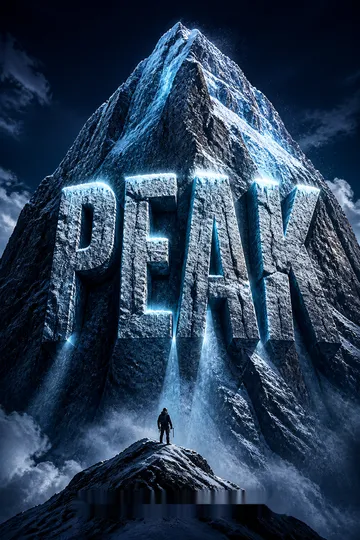

Download PDF
Download EPUB
.epub digital book format is ideal for reading ebooks on phones, tablets, and e-readers.








