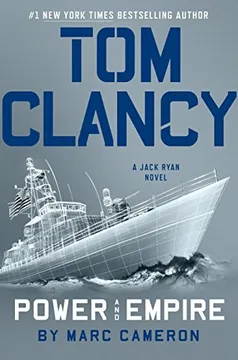


Plot Summary
Prologue
At Dalian’s port, dockworker Gao Tian secretly places two containers deep in the cargo ship Orion, following instructions from a stranger known as Tan. General Xu Jinlong,15 who arranged the stowage, orders Tan to kill Gao so the deal cannot be traced.
Xu15 also directs his trusted officer Long Yun to eliminate Tan afterward. The containers vanish among thousands of ordinary shipments, and the ship sails for America. The prologue establishes a covert operation inside China’s security apparatus, where even a small act of concealment demands another act of violence.
Gao’s damaged hand and modest hopes make him an easy target for a bargain he cannot fully understand. Xu treats that vulnerability as an operational resource, then treats Gao’s life as a loose end. The sequence frames secrecy not as a polished spycraft trick but as a chain of people made disposable by those with power. The containers carry the same ambiguity: they look ordinary because the system around them is designed to move immense quantities of goods without anyone looking closely.
Orion Burns at Sea
Fifteen days after leaving China, Orion is crossing the Strait of Juan de Fuca in fierce weather when explosions rip through her aft decks. Containers tumble into the water, the engine room catches fire, and the ship begins to sink. Seventeen-year-old steward Goos reaches the radio and raises the alarm, bringing Coast Guard pilot Andrew Slaznik22 and rescue swimmer Lance Kitchen into the gale.
They pull survivors from the burning sea while a second crew works from a rescue boat. The Coast Guard saves most of the crew, but several sailors die or remain missing. In Washington, President Jack Ryan1 learns that a Chinese ship has sunk in American waters as tensions with Beijing are already rising.
The disaster turns an obscure cargo operation into a public crisis before anyone knows whether it was accident or attack. Goos’s improvised mayday and the rescuers’ difficult choices make competence, rather than grand strategy, the first defense against catastrophe. At the same time, the survivors’ dependence on American crews creates political meaning that neither side can control. The ship is both a workplace and a moving symbol of trade, so its destruction threatens to make every unexplained failure look intentional.
Blanca Carries the Evidence
In Dallas, Jack Ryan Jr.2 and Campus colleagues track Taiwanese journalist Eddie Feng11 because his reporting contains details about a Beijing subway bombing that were never released publicly.
During surveillance, Jack2 and former Delta commander Midas Jankowski9 interrupt cartel men assaulting a young woman outside a strip club. The team gets her to a hospital, but another trafficked girl, Blanca Limón,10 is left in the hands of her captors. Earlier, Blanca’s friend10 Magdalena Rojas5 stole a thumb drive from Feng11 and passed it to Blanca10 before being taken away.
A Texas trooper stops the car carrying Blanca,10 kills the armed driver, and hears her identify Feng.11 FBI agent Kelsey Callahan4 soon arrests him, turning the girls’ theft into a lead on a larger criminal network.
The investigation begins with intelligence work, but its moral center shifts when the surveillance team sees the violence surrounding Feng’s contacts. Blanca’s theft is not a planned act of espionage. It is a desperate attempt to make an object of uncertain value useful against the people controlling her life. The contrast matters: professionals gather information to understand power, while a child risks punishment because she hopes information might buy safety. Her choice forces the official investigation to recognize a victim rather than merely a source.
Rogue Becomes the Bait
As Ryan1’s advisers debate the sinking of Orion and China’s increasingly aggressive response to American naval patrols, another crisis unfolds near Indonesia. Intelligence operative Vincent Chen12 pays Abu Sayyaf commander Dazid Ishmael to arrange an attack on a U.S. vessel.
Jemaah Islamiyah fighters seize a Texas couple’s sailboat, Lucky Strike, kill the husband and another passenger, and use the surviving women’s distress call to lure the USS Rogue within range. Rogue’s drone reveals the trap.
Its boarding team rescues one woman, but a sailor is killed in the exchange, and the attackers’ explosives destroy their own boat. Separately, a U.S. soldier dies during an attack on a Chinese oil site in Chad. The incidents begin to look like pieces of one coordinated provocation.
The attack weaponizes the rescue ethic: the sailors’ duty to answer a distress call becomes the opening the attackers need. Yet the crew’s caution, especially their use of the drone and their suspicion of the staged scene, prevents the trap from achieving its larger purpose. The operation also shows how civilian deaths can be arranged to invite military retaliation. By linking distant violence to China’s economic interests, the plot makes the question of responsibility more important than the apparent identity of the attacker.
The Campus Finds the Chain
Callahan4 brings Dominic Caruso8 into her investigation after Feng11’s coded files point toward a figure called Coronet.12 Feng11 helps the FBI locate a trafficker’s house, where John Clark3 and Midas9 find three girls chained to filthy beds.
Callahan4’s team arrives, rescues them, and arrests the men inside. The FBI later discovers that Feng’s thumb drive contains coded payments and references to Coronet.12 When a corrupt jail officer tries to kill Feng11 with fentanyl and a makeshift noose, another officer intervenes and he survives, badly injured.
Campus’s computer expert Gavin Biery identifies Coronet12 as Vincent Chen,12 a skilled operator with several identities and a flight booked to Argentina. The case now joins child trafficking to an international intelligence operation.
Callahan’s work and Campus’s work overlap without becoming interchangeable. She measures success in children removed from immediate danger; the covert team measures it in information that can expose a wider operation. Feng sits uneasily between those priorities, having gathered evidence while failing to protect the girls he encountered. The attempted jail killing clarifies that his data threatens people with reach inside institutions, not only street criminals. The rescue therefore provides immediate relief while the evidence expands the danger beyond Texas.
Clark Enters the Red Room
Clark3 follows Feng11’s lead to Ernie Pacheco,17 known as Matarife,17 a trafficker who films and sells the abuse of girls. Behind Pacheco’s17 ranch, Clark3 finds a fresh grave containing a murdered girl and kills the man bringing another body to bury. He disables the armed woman guarding the pool, then enters the house and frees two teenagers chained to concrete buckets.
A soundproofed room contains cameras, restraints, and equipment for recording violence. The discovery confirms that the girls are being auctioned and filmed, not merely forced into prostitution. Clark3 learns that Matarife17 has sent Magdalena5 onward to a higher-ranking criminal, but the name and location are still out of reach.
Clark’s investigation is driven by a private history of failing to save a young woman, which makes each new victim feel personal rather than statistical. That identification gives him urgency, but it also threatens to make violence the only answer he trusts. The red room transforms hidden exploitation into a deliberately produced spectacle: victims are restrained, recorded, and converted into commodities for distant viewers. Clark’s rescue interrupts that system for two girls, yet the grave outside shows that intervention has come too late for others.
Callahan Becomes the Target
Cartel assassin Moco Goya is sent to kill Callahan,4 but he and his accomplice enter the wrong house and murder Aaron Bennet instead. Callahan4 recognizes that Bennet’s address differs from hers by only one word and realizes she was the intended victim. Caruso8 takes her to dinner while checking for a tail; Goya and his partner find them anyway.
Caruso8 warns the waitress and moves to intercept the gunmen, while Callahan4 uses a pepper grinder to knock one attacker down. A retired woman at a nearby table shoots the other. The failed hit leaves the cartel exposed and confirms that Callahan4’s investigation has become dangerous enough to provoke an assassination attempt.
The wrong-address killing is both grotesque and revealing: the assassins are violent enough to act decisively but careless enough to target the wrong home. Callahan’s danger arises from her public role as investigator, while Caruso understands that visibility makes her vulnerable even when she is not directly involved in covert operations. The restaurant patrons’ intervention complicates the fantasy of controlled violence. A plan built on intimidation collapses amid ordinary people who make fast, imperfect choices to protect one another.
Aires Criollos Explodes
In Buenos Aires, Campus follows Chen12 as Chinese Foreign Minister Li Zhengsheng14 arrives for a dinner with agricultural ministers. Two women, Amanda Salazar and Beatriz Campos, secretly place a bomb behind a restaurant vent.
Chen’s12 connection to the gathering remains unclear, and the team hesitates to alert officials because mistrust between Washington and Beijing could compromise the warning. During dinner, Li14 arms the device and moves behind the bar, while Amanda is meant to complete the detonation sequence.
The bomb explodes, killing Argentina’s agriculture minister and other guests, and injuring Li.14 His rapid evacuation makes him appear to have survived an assassination attempt. Campus pursues the fleeing women and discovers that a Japanese intelligence officer, Yukiko Monzaki,6 is also tracking them.
The bombing is designed to make its meaning appear obvious before investigators can examine it. Li’s survival gives him a ready-made public identity as a victim, while the dead ministers make the attack look like an indiscriminate assault on diplomacy. Campus’s hesitation reflects a real intelligence dilemma: a warning can save lives, but a badly received warning can reveal sources or be dismissed as manipulation. The scene turns public optics into an operational weapon, with phones and news footage poised to shape the explanation before the evidence is understood.
Yuki Opens the Underworld
Ryan Jr.2 follows a woman connected to Chen12 through Buenos Aires streets and into a disused underground passage. When a machete-wielding man pursues them, the woman helps Ryan2 escape and identifies herself as Yukiko Monzaki,6 a Japanese intelligence officer. She explains that Chen’s12 contacts include Kim Soo, a Korean operative with ties to Chongryon, a North Korean political organization in Japan.
Yukiko6 had been watching Amanda Salazar and planted a listening device near the home of a criminal boss in Villa 31. Campus listens as Chen’s12 people discuss returning to Japan, though their plans remain fragmentary. Yukiko6 leaves for Japan to report what she knows, while Chavez7 decides the Campus team must follow Chen12 there.
The sewer forces Ryan to pursue an uncertain lead through a literal underworld, where the city’s hidden infrastructure becomes a route between political districts and criminal territory. Yukiko’s intervention prevents the pursuit from becoming a simple contest between pursuer and prey; both agents must revise their assumptions about the other. Her intelligence is useful precisely because it is incomplete. The listening device yields fragments, not a master explanation, so the team must act while uncertainty remains rather than wait for a perfect picture.
Parrot Meets John Clark
Back in Texas, Clark3 tracks Dorian Palmetto,18 the apparently respectable man who lured Magdalena5 from Costa Rica and sold her. At a motel, Clark3 kills Parrot, the pimp who has been abusing girls, and secures the frightened runaway Jo. He forces Palmetto18 to explain the trafficking chain: cartel boss Emilio Zambrano19 bought Magdalena5 at auction, while Chen’s12 sister Lily is Zambrano’s19 partner and a conduit for triad money and muscle.
Palmetto’s18 information gives Clark3 a route to Zambrano.19 Meanwhile, Clark3 locates Matarife,17 captures him, and forces him to disclose a second ranch where Zambrano19 may be holding Magdalena.5 Clark3 kills Pacheco17 in an industrial incinerator, then heads for the final lead.
Clark’s methods expose a brutal logic: traffickers treat girls as transferable property, so he follows the transactions backward from buyer to broker to recruiter. His interrogation of Palmetto reveals that apparent personal relationships, including Lily’s partnership with Zambrano, are also business infrastructure. Clark’s rescue of Jo offers a small counterweight to the cruelty around him, though his approach leaves no clean distinction between justice and revenge. The information he extracts is useful, but the moral cost of obtaining it remains part of the story.
Magdalena Leaves the Pool
Clark3 watches Zambrano’s19 lakeside ranch and sees Magdalena5 and another captive forced to serve Lily Chen and the cartel boss.19 When Zambrano19 and Lily push the taller girl into the deep pool with a chair chained to her ankle, Magdalena5 dives in to save her. Clark3 abandons his plan and attacks. He kills several armed guards and wounds Zambrano,19 but Lily shoves Magdalena5 into the water with a chained chair.
Clark3 dives after her despite a bullet wound in his leg. Caruso8 and Callahan4 arrive in time to help pull Magdalena5 and Clark3 to safety. Lily is arrested, and the surviving girls are freed. Callahan4 also arrests Clark,3 though she recognizes that he has saved lives her lawful investigation had not yet reached.
The pool scene compresses the novel’s competing moral systems into one physical choice. Lily uses a child’s terror as entertainment and control; Magdalena risks herself to save another captive; Clark risks his life to reach her; and Callahan’s team arrives with legal authority but not enough time to prevent every harm. The rescue depends on cooperation among people who distrust one another. Callahan’s arrest of Clark preserves the distinction between rescue and lawful accountability, even as the distinction feels painfully inadequate beside the immediate violence.
Meriwether Drifts Toward China
As Ryan1 prepares to travel to the G20, the research vessel Meriwether loses power in Typhoon Catelyn and drifts toward Chinese waters. Its crew is safe, but sensitive intelligence equipment aboard the ship could fall into Chinese hands. Ryan1 contacts President Zhao13 directly and secures a temporary promise that China will not intercept the vessel in contested waters.
The promise is fragile: Zhao’s13 admiral sends a destroyer toward the ship, while the storm leaves only a short window for rescue. A Taiwanese Coast Guard cutter reaches Meriwether, takes the crew aboard, and allows the damaged vessel to be scuttled before the Chinese destroyer can seize it.
Meriwether’s emergency tests whether diplomacy can still restrain military institutions when leaders do not fully control their subordinates. Ryan’s call to Zhao is a gamble based on personal judgment, not certainty about the Chinese chain of command. The Taiwanese rescue adds a third actor to what might otherwise become a direct U.S.-China confrontation. The ship’s destruction is a tactical loss, but it denies the opposing side both the crew and the intelligence technology, making survival and secrecy more important than possession.
Three Hang-Ups in Tokyo
Campus follows Chen12 and Kim Soo into Tokyo’s Kabukicho district, where a street fight leaves Chen12 badly wounded and Kim Soo dead. Ryan’s2 team recovers Chen’s12 briefcase, but Chen12 dies before he can explain his operation. Gavin Biery later finds that Chen12 received payments around several attacks, including the bombing in Argentina, the attack in Chad, and the plot against the Rogue.
Financial records also connect Foreign Minister Li,14 General Xu,15 and Lily Chen through a diamond mine. At the G20 hotel, Ryan Jr.2 recognizes two men from Li’s14 security team among new additions to Zhao’s13 protection detail. He sends his father1 a coded warning using their family emergency signal.
Chen’s death removes the most direct witness just as his records begin to connect the scattered attacks. The evidence is substantial but dangerously easy to interpret as proof that Zhao is responsible. The transfer of Li’s guards into Zhao’s detail transforms abstract suspicion into an immediate physical threat. Ryan Jr.’s family signal bridges the covert and presidential plots: the son cannot enter the protected meeting, but he can give his father enough warning to question the people standing closest to him.
Zhao Survives the Room
During a private meeting at the G20, Ryan1 receives his son’s2 warning that new members of Zhao’s13 detail may be dangerous. He quietly alerts Secret Service agent Gary Montgomery,20 then tells Zhao13 that evidence points toward a coup or assassination plot.
Colonel Huang16 confirms that Long Yun, newly assigned to Zhao’s13 protection, previously served Li.14 Rather than rush into the room, Huang16 returns to the anteroom and shoots Long Yun before the man can attack. Japanese police secure the scene, and Montgomery20 evacuates Ryan.1
Zhao13 survives and admits he had suspected Li14 but did not expect him to move so quickly. Li’s14 attempt to frame Zhao13 and provoke American retaliation collapses, though its full political consequences remain beyond the immediate crisis.
The plot’s central deception depends on making the evidence against Zhao persuasive enough that Ryan might retaliate before asking who benefits. Ryan’s insistence on speaking directly to Zhao interrupts that sequence, while Huang’s loyalty to the person he protects becomes decisive. His choice is not blind obedience: he assesses the threat and acts against an officer from his own institution. The meeting shows how trust in a thriller is neither sentiment nor certainty. It is a temporary judgment made under pressure, with consequences measured in lives.
The Girl Visits Feng
After the operation, Magdalena5 visits Feng11 in the hospital and apologizes for stealing his thumb drive. Feng11 tells her that the theft helped get her rescued, and she embraces him. Callahan4 explains that Magdalena5 will need counseling, medical care, and foster placement rather than a return to the mother who sent her into prostitution.
She also intends to pursue the adults who trafficked her. Magdalena5 asks to thank Clark,3 but he has been removed from the hospital before she can see him. Caruso8 confirms that Clark3 knows the girls are grateful. In Japan, Ryan Jr.2 stays behind with Yukiko6 instead of flying home with Campus, choosing to begin learning Japanese and continue the connection they have formed.
The hospital visit offers recognition without pretending that rescue erases injury. Magdalena can thank Feng for a choice he did not fully understand, while his concern for her becomes a small act of accountability after his earlier failure to intervene. Callahan’s plan names the slow work that follows an extraction: treatment, safety, and a new home. Ryan’s decision to remain in Japan shifts the closing note from global threat to personal possibility. Neither gesture repairs everything, but both make room for a future not dictated solely by the crisis.
Analysis
Power and Empire builds its political thriller from two forms of vulnerability that the official world prefers to keep separate. In Texas, children are trafficked through ordinary roads, cheap motels, and respectable-looking homes. In international politics, sailors, diplomats, and presidents become vulnerable through the movement of ships, money, and information. The parallel is not that these harms are equivalent, but that both systems depend on people being reduced to useful pieces: a girl can be sold, a sailor can become a casualty, and a public image can be engineered to justify retaliation.
The story’s central mechanism is misdirection. The attacks appear to point toward Zhao,13 and the ease with which analysts can find suspicious payments initially makes the accusation more persuasive. Ryan1’s restraint matters because he refuses to turn apparent evidence into immediate punishment. His decision to speak directly with Zhao13 creates a narrow interval in which Huang16 can identify the danger inside the protective detail. Political judgment here is not certainty. It is the discipline to delay irreversible action long enough to test who benefits from it.
The book also distinguishes rescue from justice. Callahan4’s lawful task force saves girls and builds cases, while Clark3 intervenes through violence when he believes the system is too slow. Neither approach is presented as sufficient by itself. Clark3’s actions free captives, but they expose the cost of treating personal vengeance as a reliable substitute for law. Callahan4’s procedures protect the possibility of prosecution, but paperwork and jurisdiction cannot reach every victim in time. Their uneasy cooperation acknowledges that institutional restraint and urgent intervention can both be morally necessary and morally compromised.
Finally, the novel locates courage in practical acts rather than heroic certainty: Goos finding the radio, Blanca10 preserving the drive, Yukiko6 sharing intelligence, Huang16 protecting Zhao,13 and Ryan1 choosing conversation over escalation. These actions do not abolish the systems around them. They create small interruptions in those systems, enough to save particular lives and prevent one engineered crisis from becoming a war.
Review Summary
Reviews for Power and Empire are generally positive, with an overall rating of 4.13/5. Many readers praise Marc Cameron's ability to capture Tom Clancy's writing style, highlighting the blend of Chinese political intrigue, human trafficking subplots, and strong character development. John Clark's scenes are frequently cited as highlights. However, some critics find the multiple plot lines disjointed and the ending rushed or unsatisfying. The inclusion of child sex-trafficking content makes for uncomfortable reading for some, while others appreciate its thematic depth.
People Also Read


Characters
Jack Ryan
President under pressureThe President of the United States approaches crises as an analyst who has been forced to make decisions before every fact is available. He values direct conversation and resists letting political optics substitute for evidence, yet he knows that his judgments can put other people in danger. His long history with intelligence work gives him a rare ability to understand covert operations without mistaking them for certainty. Family remains a private counterweight to the office: he worries about his children and relies on a few trusted friends to tell him when his instincts may be carrying him too far.
Jack Ryan Jr.
Campus field analystRyan Jr. is a capable Campus operative whose strongest weapon is often analysis rather than language or force. He notices patterns others miss, then has to decide whether the pattern is strong enough to justify action. His work puts him between his father’s1 public office and the private risks of covert intelligence, a position that complicates both loyalty and independence. He is brave, occasionally impulsive, and aware that action can create new dangers even when it solves the immediate problem. His relationships with his teammates and with Yukiko6 show a more personal side than his disciplined field habits usually reveal.
John Clark
Campus veteran operatorClark is a legendary operative, a husband and grandfather, and a man who measures himself against the people he has failed to save. He remains observant and formidable, but age has made him conscious of pain, stamina, and the narrowing margin for error. His protective instincts are sincere, especially when children are in danger, though his sense of justice can slide toward vengeance. Clark’s relationship with violence is therefore not simple appetite or duty. He uses it because he believes it can stop worse harm, while privately worrying that the work has become part of who he is.
Kelsey Callahan
Children’s task-force chiefCallahan leads a multi-agency FBI task force investigating crimes against children. Her fierce drive comes from a protective nature shaped by her father and intensified by years of confronting exploitation. She is effective because she refuses to treat victims as numbers, but that same refusal makes it difficult to step back from work that steadily exhausts her. Callahan is skeptical of intelligence operatives who conceal their methods, yet she can recognize when their goals overlap with hers. Her bluntness is both armor and instrument: it pushes colleagues to act, while leaving little room for her to admit how much the work costs.
Magdalena Rojas
Young trafficking survivorMagdalena is a thirteen-year-old Costa Rican girl forced into prostitution after her father’s death and her mother’s decision to sell her labor. She has learned to read danger in adults, conceal her fear, and preserve small choices wherever she can. Her intelligence frightens the men who control her, but it also allows her to notice when a stranger may be different from her captors. Magdalena’s apparent toughness is not freedom from vulnerability. It is a survival skill built around the hope that one careful decision might open a way out for herself or another girl.
Yukiko Monzaki
Japanese intelligence officerYukiko, whom Ryan Jr.2 comes to call Yuki, is a Japanese intelligence officer trained to observe, conceal her purpose, and work without assuming that allies are safe. Her sense of duty is rooted in a formative lesson from her father about whether to intervene when a weaker person is threatened. She is guarded but not cold, and her willingness to cooperate depends on practical trust rather than easy sentiment. Yuki’s competence includes patience, disguise, and decisive action. Her humor and warmth emerge in private, suggesting that discipline is something she chooses, not an absence of feeling.
Domingo Chavez
Campus operations leaderChavez is a seasoned Campus operator and Clark’s3 son-in-law. His experience, language skills, and command judgment hold the team together, though his humor keeps the work from becoming impersonal. He knows when to give colleagues room to act and when to impose discipline, especially when a pursuit threatens the safety of the whole group.
Dominic Caruso
FBI Campus liaisonCaruso is a Campus operative with FBI credentials, assigned to work alongside Callahan4. He can move between official procedure and covert operations, though the two worlds often demand competing loyalties. His ease with people helps him build trust, and his concern for Callahan4 grows alongside respect for her mission.
Midas Jankowski
Retired Delta commanderJankowski is a retired Delta Force commander and a steady Campus field operator. His physical confidence is matched by patience and practical judgment, particularly when younger teammates act quickly. He is loyal without being solemn, using dry humor to keep strain from hardening into panic.
Blanca Limón
Magdalena’s fellow captiveBlanca is a thirteen-year-old girl trafficked alongside Magdalena5. She is frightened of punishment but still capable of trust, and she takes responsibility for the thumb drive Magdalena5 gives her. Her actions help turn a private attempt at escape into evidence that adults can use, though she has little reason to trust police before Trooper Roy Calderon treats her as a child in need of protection.
Eddie Feng
Taiwanese reporter and sourceFeng is a Taiwanese online journalist whose sensational public persona masks a more serious investigation into Chinese political operations. He gathers information by entering criminal spaces, but his willingness to remain among traffickers exposes the gap between documenting abuse and stopping it. Nervous, vain, and often self-protective, he is not an ideal intelligence source. His concern for the girls he meets suggests that his motives are more complicated than careerism alone.
Vincent Chen
Covert operative called CoronetChen is a highly trained intelligence operative who uses multiple identities and works across criminal and political networks. He prizes excitement, money, and personal autonomy more than loyalty to any ideology. His charm and meticulous tradecraft make him difficult to classify: he can serve a state operation while behaving like an independent entrepreneur. Chen’s reliance on paid associates and intimate contacts gives him reach, but also creates vulnerabilities that a patient investigator can exploit.
Zhao Chengzhi
China’s paramount leaderZhao is China’s president and Communist Party general secretary, a disciplined political leader who favors consolidating power through reform and anti-corruption campaigns. He understands the danger of nationalist pressure but refuses to treat every American action as a reason for escalation. His style is restrained, and he expects loyalty from senior officials while remaining alert to the possibility that the people closest to him may have their own ambitions.
Li Zhengsheng
China’s foreign ministerLi is a polished senior official, attentive to status, image, and the political value of personal relationships. He presents himself as a trusted adviser to Zhao13 while cultivating wealthy and powerful associates. His private life and public role overlap in ways that make his loyalties difficult to read. Li understands how a carefully staged public event can influence perceptions, and he is comfortable using appearances to advance his position.
Xu Jinlong
Security bureau generalXu is a powerful Central Security Bureau general with military experience and a preference for secrecy. He sees loyalty as a tool to be managed and people as potential risks to an operation. His suspicion is sharp, but his confidence in his own control can make him underestimate the consequences of the systems he manipulates.
Huang Ju
Zhao’s protective officerColonel Huang commands the close-protection detail for President Zhao13. He is observant, disciplined, and more interested in protecting the man than serving the abstractions of office. His suspicion of political maneuvering is balanced by an intensely personal sense of responsibility. Huang trusts training, but he is capable of acting independently when a threat becomes immediate.
Ernie Pacheco
Trafficker called MatarifePacheco, known as Matarife, runs a trafficking operation built around coercion, filmed abuse, and the sale of girls to powerful customers. He cultivates a theatrical reputation that makes him seem more formidable than he is. His wealth and brutality depend on intermediaries who recruit, transport, and discipline victims. Beneath the nickname is a practical criminal who protects his identity and avoids direct exposure whenever possible.
Dorian Palmetto
Recruiter with a polished facePalmetto presents himself as a charming businessman and uses that appearance to recruit vulnerable girls from South America. He is married and has children, details that sharpen the contrast between his domestic image and his criminal work. His ability to make exploitation sound like opportunity depends on reading what a family or a young girl most wants to believe.
Emilio Zambrano
Texas cartel bossZambrano is a cartel leader whose operation treats people as assets to be purchased, controlled, and traded. He works with Lily Chen and benefits from the triad’s money and muscle. His authority is enforced through violence, but his security depends on a network of guards and brokers rather than personal invulnerability. He regards the girls in his possession as property, a belief that defines his cruelty.
Gary Montgomery
Presidential protection chiefMontgomery leads the Secret Service detail protecting President Ryan1. He understands that personal warmth can complicate professional distance, yet he respects Ryan’s1 intelligence and is willing to offer his judgment when asked. His first responsibility remains physical protection, which often means resisting the president’s wish to move freely or take risks.
Ann Miller
Pattern-reading analystMiller is a CIA mathematician with an unusually strong visual memory and a talent for recognizing connections in financial data. She is modest about her abilities and more comfortable with notebooks and colored pencils than White House formality. Her work is valuable because she can organize fragments into a pattern, while still recognizing that a pattern is not proof of who created it.
Andrew Slaznik
Coast Guard rescue pilotSlaznik is a Coast Guard helicopter pilot who chose rescue work because he wanted to save people, not simply fly. Competitive and technically skilled, he remains focused on fuel, weather, and crew safety while working under pressure. His confidence supports the younger rescue swimmer on a mission that becomes far more dangerous than its original mayday suggests.
Plot Devices
The Dalian containers
Cargo hides a covert actGao Tian is paid to stow two numbered containers together in a carefully chosen position aboard Orion. Their ordinary appearance lets them disappear among thousands of shipments, while the secret placement becomes one of the story’s first signs that the ship’s disaster may have been arranged. The containers connect commercial logistics to intelligence operations: a vast, efficient system can conceal a small intervention precisely because no one can inspect every box. The device also establishes the danger to the people who make that concealment possible.
Blanca’s thumb drive
A child becomes an informantMagdalena5 steals a USB drive from Eddie Feng11 and entrusts it to Blanca10 before she is taken away. The drive contains coded records that link Feng11 to Coronet12, criminal payments, and the wider political operation. It moves through the investigation as evidence, a source of danger, and a fragile promise that the girls may still affect their own fate. Its importance does not come from the girls understanding its contents, but from their decision to keep it out of the hands of the people exploiting them.
The listening network
Fragments expose hidden connectionsCampus uses phone tracking, surveillance teams, a planted microphone, Chen’s12 devices, and Yukiko’s6 listening bug to follow people who rarely explain their plans directly. Each tool yields limited information: a location, a voice, a coded payment, or a conversation overheard through a wall. The operators have to combine those fragments with human observation and judgment. The network is powerful, but never omniscient, and the gaps in its coverage drive risky decisions such as Ryan’s2 pursuit through Buenos Aires tunnels and the team’s rush to Japan.
The staged attacks
Violence manufactures blameAttacks in Chad, near the USS Rogue, in Argentina, and around Chinese shipping create a trail that appears to implicate President Zhao13 and encourage President Ryan1 to retaliate. The operation uses paid militants, vulnerable civilians, public images, and carefully timed casualties to make separate events seem like one coherent accusation. Dr. Miller’s21 financial analysis helps reveal that the money trail is unusually easy to find, suggesting that the evidence itself may have been planted to shape a political response.
The family emergency signal
A private code crosses securityRyan’s1 children have a personal signal for urgent contact: three calls or messages in quick succession. Ryan Jr.2 uses it when he sees unfamiliar members of Li’s14 detail placed near Zhao13 during the G20. The code bypasses normal channels without explaining the full threat, relying on shared family history and the president’s1 knowledge of how seriously his son2 treats the rule. It gives Ryan1 enough reason to pause a sensitive meeting and investigate before the protection detail can carry out its plan.
Download PDF
Download EPUB
.epub digital book format is ideal for reading ebooks on phones, tablets, and e-readers.








