

Key Takeaways
Resilience is woven between a wounded person and the world around them
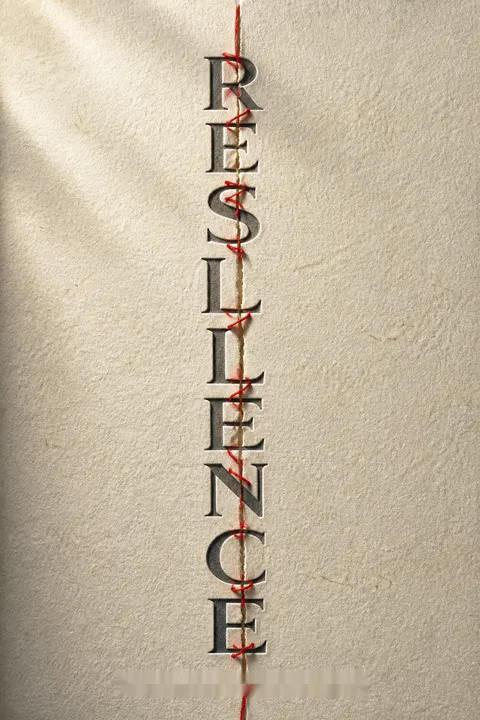
More than bouncing back. Cyrulnik defines resilience as the ability to live and develop despite adversity that could lead to serious harm. It is not a hidden reserve of toughness, nor a return to an untouched past. It forms through an interaction between a person's development, relationships, and social surroundings. He compares it to knitting: one strand may break, but the others can help make a new pattern.
Repair needs conditions. A child may find inner ways to endure, such as humour, daydreaming, or trying to understand what happened. Yet these defenses cannot replace supportive people and institutions. Resilience describes a changing process, not proof that a person was unharmed or will be fine in every circumstance.
The model usefully shifts the question from “What trait makes this person strong?” to “What relationships and conditions make recovery possible?” That is an ecological view of human development: capacities are shaped in settings, not exercised in a vacuum. It also guards against turning resilience into a demand placed on people who have been harmed. If recovery depends partly on the environment, then celebrating an individual's strength without changing a dangerous environment risks praising endurance while leaving the danger intact.
Build reliable relationships into recovery, not merely emergency rescue
Connection changes the odds. Cyrulnik describes a follow-up of eleven children identified as seriously at risk. By age forty-five, five had become well-rounded adults. The three who had not were not the children exposed to the most violence, but those who had been most isolated and least supported. In a separate study of children placed with foster families, 56 percent were thriving at age twenty-five, while others faced varying degrees of difficulty.
Safety is relational. A child may need a dependable adult, a welcoming group, or a meaningful role, not just protection from immediate danger. In accounts of children surviving war, having a stable bond, a task, or familiar social rituals helped them endure. Care is therefore not a single rescue event. It is the continuing presence that lets a child reconnect with life.
The emphasis on dependable bonds aligns with a basic insight of developmental psychology: regulation is often learned through relationships before it becomes an individual skill. A consistent adult can lend calm, interpretation, and a sense of belonging when a child cannot generate these alone. The evidence in the book is illustrative rather than a guarantee that support prevents harm. Still, it gives institutions a practical test: does care continue long enough for trust and agency to grow, or does it end once the immediate crisis is over?
Let survival contain pride and guilt without calling either the whole truth
Victory can hurt, too. Cyrulnik uses the term oxymoron for the coexistence of opposing feelings in someone who has been deeply wounded. A survivor may feel relief or pride at having lived, while also feeling guilt that others died. These feelings do not cancel each other out. They can both belong to the person's inner life.
Survival is not serenity. The book describes children who interpreted their continued existence as proof that they had somehow defeated death, yet felt ashamed or responsible for being the ones left alive. Their courage could help them endure, but it could also make ordinary setbacks feel like tests of whether they deserved to live. Resilience means finding a way to live after injury, not becoming invulnerable or happy on command.
This framing resists the tidy moral roles often assigned to trauma: victim, hero, or healed survivor. Mixed emotions are not evidence of dishonesty or ingratitude; they may be the most accurate account available. The idea also cautions against demanding a triumphant ending from someone who has endured loss. A useful response makes room for pride, grief, anger, and guilt without treating any single feeling as the person's permanent identity.
Ask what a trauma means in context, not only how severe it looks
The same event lands differently. A child's age, earlier experiences, relationships, and surroundings all affect how an event is understood. Cyrulnik tells of Michel, who had spent months in near-total isolation before being arrested and taken to the Drancy camp. The camp brought noise, faces, and contact with other children. In retrospect, he described that human contact as a kind of return to life. This did not make the camp safe or erase its danger. It shows how the child's earlier deprivation shaped his response.
Meaning develops over time. A young child may not understand the political or personal significance of an event. Later, new knowledge and other people's reactions can change its meaning. A trauma cannot be assessed only by its outward severity; understanding its effects requires attention to the person's history and changing interpretation.
Contextual thinking can prevent professionals and families from confusing their own expectations with a survivor's experience. It also explains why a single event can produce divergent responses without making one person more worthy or less credible. The caution is important: unusual reactions should not be used to minimize objective danger or excuse perpetrators. Context helps explain how harm is experienced; it does not turn a violent act into something harmless.
Help people shape memories into stories without dictating the ending
Memory is reconstructed. Cyrulnik distinguishes lived events from the stories people later build from them. A child may remember a small detail, while an adult organizes the past around its later significance. This reconstruction is not necessarily a lie. It is a way to connect emotionally charged memories and make a life feel coherent. The term narrative identity refers to the sense of self formed through the stories a person tells about their life.
Expression offers a handle. Drawings, play, writing, or conversation can help someone represent an overwhelming experience in a form they can approach. After fleeing war, young children from Vukovar drew what they had witnessed. Their pictures gave them a way to communicate before they could explain the events in words. The aim is not to impose a happy ending, but to let the person shape and revise their account.
Story-making can restore agency because the person becomes more than the passive subject of an event. It can also make scattered memories available for reflection and communication. But a story is not a forensic recording, and the book's emphasis on reconstruction supports caution about treating memory as perfectly fixed. Helpers should offer ways to express experience without suggesting what must have happened or what the experience must mean.
Offer a steady witness, but never make confession the price of care
Disclosure has risks. Speaking about a secret can relieve isolation, but the outcome depends partly on who listens and how they respond. Cyrulnik describes a woman who revealed abuse and then lost family and friends. Another woman found it possible to share her past with a partner who could listen without turning the disclosure into gossip or judgment. Telling is not automatically healing, and silence is not automatically denial.
Let readiness and support matter. A person who discloses may feel exposed, especially if listeners reduce their identity to the trauma or demand more details. The book argues that a supportive setting matters both before and after disclosure. Practical care should remain available whether someone is ready to speak, chooses to speak privately, or would rather express themselves through another form.
This is a valuable distinction between making room for disclosure and pressuring someone to disclose. The latter can strip away control, even when the questioner has good intentions. Trauma-informed support treats consent, timing, and privacy as part of care rather than as obstacles to it. A further test is whether the listener can stay present without taking ownership of the story, rushing to interpret it, or using the disclosure to satisfy curiosity.
Study who thrives outside clinics, not only who returns for treatment
Care records miss some survivors. Cyrulnik calls one research problem professional bias: clinicians and social services see people who need help, but may not see those who recover enough to leave those systems. The visible cases can then make a damaging outcome seem inevitable. The book cites a study of 123 infants separated from their mothers: 19 developed a serious form of depression and 23 had reversible difficulties. The other 81 received far less attention in the familiar account of the research.
Follow people over time. Longitudinal studies can show how development changes, rather than treating an early snapshot as destiny. The examples in the book include children who had difficult childhoods but later built stable lives. Such findings do not show that abuse is harmless. They show why research must track both injury and recovery, and must not assume that a person's early condition defines their future.
The sampling problem is consequential: a system designed to respond to difficulty naturally accumulates evidence about difficulty. Without follow-up beyond treatment settings, it can mistake the population it sees for the full population. This is a general challenge in health research, not a reason to discount clinical suffering. Better evidence requires both careful records of harm and deliberate efforts to find people whose paths do not confirm the most familiar prognosis.
A mentor's small act can redraw a child's imagined future
A little attention can matter. Maurice spent his early childhood with parents who fought and drank. In institutional care, a gardener patiently answered his ordinary questions and told him about flowers. The adult may have seen these exchanges as small moments; Maurice remembered them as the first time someone had spoken kindly to him. He later became an academic and credited the gardener as a turning point.
The social gaze guides development. Children build ideas about who they are partly from the reactions around them. A teacher's encouragement can make school feel possible; contempt can teach a child that ambition is foolish. Cyrulnik calls the influences that help orient development developmental lines. They may come from a mentor, a relative, a neighbor, or an institution that expects more than mere survival.
The gardener's importance lies less in specialized expertise than in attention that is reliable and respectful. That suggests mentorship need not be grand to be consequential. Small interactions can supply a child with a different mirror, one that reflects curiosity rather than failure. The concept also places responsibility on institutions: a child's trajectory should not depend on stumbling across one exceptional adult. Systems can create more chances for sustained, ordinary relationships to take root.
Give displaced families belonging without demanding they erase their roots
Welcome shapes adaptation. Cyrulnik contrasts Vietnamese families settled in southern France, where language, housing, financial, and employment support was organized, with refugees dispersed in Britain without a similar welcome structure. The book reports worse difficulties in the smaller British group, though the comparison cannot isolate every cause. It also warns against two extremes: isolating newcomers from the wider society, or demanding that they abandon their former identity to be accepted.
Make room for two worlds. The book presents bicultural life as a difficult but more humane possibility. Familiar language and customs can provide a secure base from which people learn the host culture. Children may also find school a place to belong and succeed, sometimes restoring pride to parents whose status has been shaken by migration.
This account connects psychological recovery to the design of public institutions. Language access, social welcome, and practical assistance are not merely administrative niceties; they help people regain orientation and agency. The comparison should be read as suggestive, not as proof that one national policy alone determines outcomes. More broadly, integration works best when belonging does not require amnesia. People can learn new practices while retaining ties that make their histories intelligible.
Make room for creativity without pretending suffering is its tuition
Imagination can provide shelter. Cyrulnik describes Stanislas, a child orphaned by wartime bombing, who spent years in a harsh institution. Nightly daydreams of a hidden, beautiful world gave him a source of comfort when his surroundings offered little warmth. Elsewhere, drawing, writing, and performance help people give form to experiences that are difficult to state directly.
Pain does not guarantee art. The book notes that many writers experienced loss or abuse, but it also reports that writers in one study showed more mental-health difficulties than a comparison group. That association does not mean trauma creates talent, or that creativity makes trauma worthwhile. Artistic work may become one route for some people to transform experience. It is neither a required response nor a substitute for protection and support.
Treating creativity as a possible resource preserves its power without romanticizing injury. The distinction matters because stories of artists who turned hardship into work can make suffering look like a necessary entrance fee. It is not. Imagination may help people gain distance, communicate, or build meaning, but recovery can also take quiet, non-artistic forms. The right question is whether an activity gives a person choice and expression, not whether pain produces something impressive.
Let survivors shape public memory before myths script their testimony
Public stories can silence. After the Second World War, accounts from deportees did not fit the hopeful story France wanted to tell about national recovery. Cyrulnik notes that Primo Levi's account sold about 700 copies when first published in 1946, then nearly 100,000 in 1987, when the cultural climate had changed. The events had not changed; public readiness to hear them had.
Remember without recruiting. Communities need shared accounts of the past, but those accounts can turn witnesses into symbols of a preferred political story. Cyrulnik argues for understanding history rather than using it to justify revenge or deny wrongdoing. Listening means allowing testimony to complicate public myths, while recognizing that no single survivor can speak for everyone who experienced a disaster.
Collective memory is never just a storehouse of facts; it shapes who belongs, whose pain counts, and what actions seem justified. The changing reception of Levi's work shows that testimony needs a public capable of hearing it. Yet a new official story can become another form of control if it demands that every witness perform the same role. A more responsible memory culture keeps testimony plural, contextual, and open to challenge.
Analysis
Cyrulnik's central contribution is a change of scale. Instead of treating trauma as a fixed mark inside an individual, he traces a process that moves among bodily experience, relationships, memory, and public culture. This makes resilience less like a personal virtue and more like an evolving achievement, supported or obstructed by the people and institutions around someone. His recurring examples make that claim vivid: an adult's patient attention, a school that becomes a refuge, or a community that refuses a survivor's account can all alter what an experience means.
The book is strongest when it challenges deterministic stories. Its follow-up studies and accounts of recovery expose how easily clinicians can mistake the cases they encounter for the destinies of everyone who was harmed. It also resists the sentimental version of resilience. Recovery can involve guilt, emotional defenses, unstable relationships, and lasting costs. A person can function, create, or love while still carrying injury.
The same ambition creates a methodological tension. The book draws on diverse clinical cases, historical examples, and cohort studies, but those forms of evidence answer different questions. A compelling story can demonstrate possibility, not frequency; an observed association cannot establish that one factor caused recovery. Several statistics and comparisons reflect research available at the time of publication, so they should not be treated as current population estimates without checking newer evidence.
There is also a practical ethical lesson. Resilience should guide attention toward supports, not become a new standard survivors are expected to meet. If people can recover, that is a reason to provide bonds, safety, voice, and social inclusion, not to minimize the original harm. The book's most durable insight is therefore relational: the future is not guaranteed by the past, but neither is it made by individual will alone. It is negotiated through development, connection, and the stories a culture permits people to tell.
Review Summary
Resilience receives mixed reviews, averaging 3.80/5 stars. Readers find the subject matter on childhood trauma and recovery interesting and thought-provoking, but many criticize the book's structure and writing style. Common complaints include lack of organization, overly poetic prose, superficial case studies, and disjointed narratives that make it hard to follow. Some appreciate the insightful content despite presentation issues, while others find it redundant or disappointing. The translation quality is also noted as occasionally clumsy. Overall, readers value the concepts but wish for clearer structure and deeper analysis.
People Also Read









Glossary
resilience
adaptation after adversityThe process by which a person continues to develop and build a life after serious adversity. In Cyrulnik's account, resilience is neither invulnerability nor a return to the exact condition that existed before harm. It emerges through changing interactions between personal development, emotional relationships, and the wider social environment.
oxymoron
coexisting opposing feelingsCyrulnik uses this rhetorical term for the divided inner experience of a person who has been badly wounded but continues to hope or act. Suffering can coexist with happiness, and survivor pride with guilt. The term describes more than ordinary mixed feelings: it points to contrasting parts of a self organized around injury and continued life.
narrative identity
selfhood shaped by life storiesA person's sense of who they are as formed through stories that connect events in their life. These stories are reconstructed from memory and shaped by present circumstances, relationships, and the audience. They can give coherence to experience, but they are not neutral transcripts of the past.
professional bias
seeing mainly those needing helpCyrulnik's label for the tendency of professionals to encounter people whose difficulties bring them into clinics or social services, while missing those who manage to recover outside those systems. If observations focus only on visible cases, they can make harmful outcomes seem more universal or inevitable than they are.
developmental lines
influences guiding a child's growthThe relational and social influences that help orient a child's development. Cyrulnik includes mentors such as teachers, older siblings, neighbors, or other adults, as well as the expectations built into institutions. These influences can offer a child new possibilities, particularly when early relationships or surroundings have been harmful.
para-speech
meaning carried beyond wordsThe gestures, pauses, changes in tone, silences, and meaningful objects through which a person may communicate what cannot be said directly. Cyrulnik uses the term to describe how secrets can shape behavior and relationships even when no one openly names them.
longitudinal catamnestic method
long-term follow-up of a groupA research approach that follows a known group of people who experienced a similar form of adversity, recording their development over time. In the book, this method is presented as a way to observe both persistent difficulties and recovery, rather than relying only on brief clinical encounters or retrospective impressions.
Download PDF
Download EPUB
.epub digital book format is ideal for reading ebooks on phones, tablets, and e-readers.








