Plot Summary
Prologue: Storms Gather
In the White Tower, Amyrlin Elaida plots her dominance, convinced she can control the Dragon Reborn, Rand al'Thor, and restore the Tower's supremacy. She is beset by internal dissent, the threat of the Black Ajah, and the looming civil war among Aes Sedai. Meanwhile, the Forsaken and their agents move in the shadows, manipulating events for their own ends. The world's weather is twisted, crops fail, and the Pattern itself seems to fray. The prologue sets the stage for a book where every faction—Aes Sedai, Forsaken, Aiel, and the Seanchan—prepares for confrontation, and the storm of the Last Battle draws ever closer.
Dumai's Wells Aftermath
After his brutal captivity by the Aes Sedai, Rand is freed at Dumai's Wells by Perrin, Asha'man, and Aiel. The battle leaves deep scars: Aes Sedai are taken prisoner, the Asha'man's power is revealed, and the world is shocked by the violence. Rand's authority is cemented, but he is haunted by guilt and trauma. The Aes Sedai prisoners are handed to the Wise Ones, and Rand's circle of trust narrows. The aftermath is tense, with alliances shifting and the threat of further Aes Sedai retaliation looming. Rand's wounds—physical and psychological—set the tone for his increasingly isolated and desperate leadership.
The Dragon's Wounds
Rand, battered and traumatized, returns to Cairhien. He struggles with the wounds in his side—one from Fain's dagger, one from Ishamael's staff—both unhealable and symbolic of his inner torment. He must also deal with the fractious Aes Sedai, the Wise Ones, and the Asha'man, all vying for influence. Rand's paranoia grows as he senses betrayal everywhere, and he begins to push away even his closest friends. Meanwhile, he plans his next move: to take Illian from Sammael, one of the Forsaken, and claim a crown for himself.
Ebou Dar Intrigues
In the sweltering city of Ebou Dar, Nynaeve and Elayne, with Mat Cauthon and his Band of the Red Hand, search for the Bowl of the Winds, a ter'angreal that can fix the world's weather. They navigate a maze of local politics, the dangerous Rahad district, and the mysterious Kin—women who can channel but are not Aes Sedai. Mat's luck brings both opportunity and peril, as he is entangled with Queen Tylin and stalked by the gholam, a deadly creature from the Age of Legends. The city is a powder keg, with the Seanchan threat looming just offshore.
The Bowl of the Winds
Nynaeve and Elayne, aided by the Kin and the Sea Folk Windfinders, finally locate the Bowl of the Winds. Their alliance is uneasy, with each group mistrustful of the others. The Black Ajah, led by Falion and Ispan, strikes at the same time, and a deadly confrontation ensues. Mat and his men fight to protect the women, but the gholam's intervention brings chaos and death. The Bowl is secured, but at great cost, and the group prepares to flee Ebou Dar before the Seanchan invasion engulfs the city.
The Kin Revealed
The Kin, long believed to be a small group of failed or runaway Aes Sedai, are revealed to be a vast network of women who can channel, numbering in the thousands. Their existence shakes the Aes Sedai's sense of superiority and control. Nynaeve and Elayne persuade the Kin to join their cause, promising them acceptance and a place in the White Tower. The alliance with the Sea Folk is sealed, but not without hard bargaining and mutual suspicion. The Bowl of the Winds becomes the focal point for hope and fear, as the women prepare to use it to restore the world's weather.
The Black Ajah Strikes
The Black Ajah, working for the Forsaken, attacks Nynaeve and Elayne's group, seeking the Bowl and to eliminate their enemies. The confrontation is brutal, with casualties on both sides. Mat's foxhead medallion proves crucial in surviving the gholam's attacks. The Black Ajah's defeat is incomplete, as some escape, but the immediate threat is blunted. The episode underscores the ever-present danger of the Shadow's agents and the vulnerability of even the most powerful channelers.
Mat's Luck and Loss
Mat Cauthon, ever the reluctant hero, is drawn deeper into the Pattern. His luck saves his friends repeatedly, but he pays a price: his relationship with Tylin becomes a source of humiliation, and he is nearly killed by the gholam. As the Seanchan invade Ebou Dar, Mat is separated from the others, left behind in the chaos. His fate is uncertain, and his loss is keenly felt by his friends. Mat's arc in this book is one of sacrifice, resilience, and the inexorable pull of ta'veren destiny.
The Seanchan Return
The Seanchan, with their damane and exotic armies, launch a surprise assault on Ebou Dar. The city is thrown into panic as the invaders unleash devastating power. The main characters scramble to escape, using the Bowl of the Winds to unleash a massive storm that disrupts the Seanchan advance and restores the world's weather. The cost is high: Mat is left behind, and the group is scattered. The Seanchan's return signals a new era of conflict and the rise of a formidable new power in the Westlands.
Rand's Crown of Swords
In Illian, Rand confronts Sammael in the haunted city of Shadar Logoth. The battle is fierce and surreal, with Mashadar and the Forsaken's traps threatening to destroy both. With the help of a mysterious stranger (Moridin), Rand defeats Sammael, though not without tragedy—Liah, an Aiel Maiden, is killed by Mashadar. Rand claims the Laurel Crown of Illian, now renamed the Crown of Swords, and is hailed as king. His victory is hollow, marked by loss and the ever-growing burden of leadership.
The Price of Power
Rand's triumph is tempered by the wounds he carries—physical, emotional, and spiritual. He becomes increasingly isolated, pushing away friends and allies, haunted by the deaths he has caused and the darkness within himself. The Asha'man grow in power, the Aes Sedai are divided, and the world edges closer to Tarmon Gai'don. Rand's struggle is not just against the Shadow, but against his own unraveling humanity.
The Web Tightens
The Forsaken, the Black Ajah, and the Seanchan all advance their schemes. Elaida's White Tower is riven by internal strife and the threat of the Black Ajah. The rebel Aes Sedai march on Tar Valon, while the Black Tower grows ever more dangerous. The Pattern tightens around the main characters, drawing them inexorably toward the Last Battle. Every victory comes with a cost, and every alliance is fraught with peril.
The Storm Breaks
As the book closes, the world is in turmoil. The weather is restored, but the Seanchan have conquered Ebou Dar. Rand sits on the throne of Illian, but his enemies multiply. Mat is missing, Nynaeve and Elayne are fugitives, and the Aes Sedai are more divided than ever. The Shadow's influence grows, and the storm of Tarmon Gai'don looms. The Wheel turns, and the heroes are left battered, changed, and facing an uncertain future.
Characters
Rand al'Thor
Rand, the Dragon Reborn, is the central figure around whom the world's fate turns. Traumatized by his captivity and the violence at Dumai's Wells, he becomes increasingly paranoid and withdrawn, trusting few and pushing away even his closest friends. His wounds—both physical and psychological—symbolize the toll of his destiny. Rand's relationships with Min, Elayne, and Aviendha are sources of both comfort and pain. He is haunted by the deaths he causes, the madness of saidin, and the manipulations of the Forsaken. His victory over Sammael and ascension to the Crown of Swords mark a new phase in his journey, but at great personal cost. Rand's arc is one of sacrifice, isolation, and the relentless pressure of prophecy.
Nynaeve al'Meara
Nynaeve's journey in Ebou Dar is one of growth and humility. She is forced to confront her own limitations, both in the Power and in her relationships. Her alliance with the Kin and the Sea Folk is hard-won, requiring her to negotiate, compromise, and accept help. Nynaeve's healing of her own block is a pivotal moment, symbolizing her acceptance of vulnerability and her maturation as an Aes Sedai. Her marriage to Lan is a rare moment of joy, but she remains driven by duty and the need to save the world from the Shadow.
Elayne Trakand
Elayne's arc is defined by her quest for the Bowl of the Winds and her efforts to unite disparate groups—Aes Sedai, Kin, Sea Folk—into a working alliance. She struggles with the weight of her royal heritage and the expectations placed upon her. Elayne's relationship with Nynaeve is both supportive and contentious, reflecting her own insecurities and desire for recognition. Her growing mastery of the Power and her role in the use of the Bowl mark her as a leader, but she is also haunted by the dangers she faces and the sacrifices required.
Mat Cauthon
Mat's story is one of luck, loss, and the inexorable pull of destiny. His wit and irreverence mask a deep sense of responsibility and sacrifice. Mat's relationship with Tylin is a source of both comedy and humiliation, highlighting the gender dynamics and cultural clashes of Ebou Dar. His heroism in protecting his friends and his near-fatal encounter with the gholam underscore his importance to the Pattern. Mat's separation from the group during the Seanchan invasion leaves his fate uncertain and his friends bereft.
Min Farshaw
Min's ability to see auras and viewings makes her a valuable advisor to Rand, but also a source of anxiety. She is fiercely loyal, providing emotional support and grounding for Rand as he spirals into isolation. Min's relationship with Rand is marked by honesty, humor, and a willingness to challenge him. She is a stabilizing force, helping Rand navigate the psychological toll of his destiny.
Lan Mandragoran
Lan's arc is one of loyalty, sacrifice, and unexpected joy. His marriage to Nynaeve is a rare moment of happiness, but he remains a man haunted by duty and loss. Lan's stoicism and martial prowess make him a formidable ally, but his emotional vulnerability is revealed in his relationship with Nynaeve. He is a symbol of the old world, struggling to find a place in the new.
Perrin Aybara
Perrin's role in this book is more peripheral, but his rescue of Rand at Dumai's Wells and his struggle with the aftermath highlight his loyalty and sense of responsibility. Perrin is torn between his love for Faile and his duty to Rand, embodying the tension between personal desire and the demands of destiny. His arc is one of quiet strength and enduring friendship.
Elaida do Avriny a'Roihan
Elaida's reign as Amyrlin is marked by paranoia, internal dissent, and the threat of the Black Ajah. Her attempts to control Rand and the Tower's divisions only deepen the chaos. Elaida's psychological complexity is revealed in her moments of doubt, her reliance on Alviarin, and her inability to adapt to the changing world. She is both a victim and a perpetrator of the Tower's decline.
Cadsuane Melaidhrin
Cadsuane's arrival signals a new phase in the struggle for the Light. Wise, formidable, and unorthodox, she challenges Rand and the Asha'man, pushing them to confront their own limitations. Cadsuane's psychological insight and refusal to be intimidated make her a catalyst for growth and conflict. She is both mentor and adversary, embodying the complexities of power and wisdom.
The Forsaken (Sammael, Graendal, Moridin, etc.)
The Forsaken, each with their own ambitions and neuroses, manipulate events from the shadows. Sammael's paranoia and pride lead to his downfall, while Graendal and Moridin (Ishamael reborn) represent the ever-present danger of the Shadow's influence. Their psychological profiles are marked by megalomania, fear, and the desire for immortality. The Forsaken are both external and internal threats, embodying the darkness within and without.
Plot Devices
Ta'veren and the Pattern
The concept of ta'veren—individuals around whom the Pattern weaves itself—drives much of the narrative. Rand, Mat, and Perrin are pulled into events beyond their control, their choices shaping the world's destiny. The Pattern's manipulation of chance, coincidence, and human will is a constant source of tension and unpredictability. The device allows for both grand, world-shaking events and intimate, personal moments of fate.
The Bowl of the Winds
The search for the Bowl of the Winds is the central plot engine for the Ebou Dar storyline. It brings together disparate groups—Aes Sedai, Kin, Sea Folk—and forces them to confront their prejudices and work together. The Bowl is both a literal tool to fix the world's weather and a metaphor for the possibility of change and renewal.
The Gholam and the Black Ajah
The gholam, a nearly unstoppable assassin, and the Black Ajah, Aes Sedai who serve the Dark One, are plot devices that heighten the sense of danger and vulnerability. Their attacks force the heroes to adapt, trust one another, and make hard choices. The presence of these threats underscores the pervasiveness of the Shadow and the fragility of victory.
The Seanchan Invasion
The return of the Seanchan, with their damane and exotic armies, is a plot device that upends the status quo. Their conquest of Ebou Dar scatters the main characters, introduces new cultural and political dynamics, and raises the stakes for the entire series. The Seanchan represent both the dangers of the unknown and the inevitability of change.
Rand's Wounds and Psychological Trauma
Rand's unhealable wounds and growing isolation are plot devices that explore the psychological cost of leadership and prophecy. His pain, paranoia, and guilt drive his actions, alienate his friends, and set the stage for future conflict. The wounds are both literal and symbolic, representing the price of power and the burden of destiny.
Foreshadowing and Prophecy
The book is rich in foreshadowing, with prophecies, dreams, and Min's viewings hinting at future events. The Pattern's tightening, the storm imagery, and the repeated references to Tarmon Gai'don create a sense of impending doom and inevitability. The narrative structure weaves together multiple plotlines, each contributing to the sense of a world on the brink.
Analysis
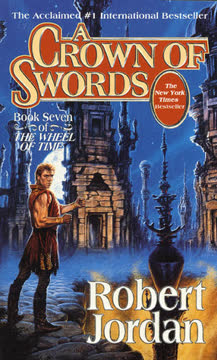
A Crown of Swords is a pivotal installment in The Wheel of Time, marking the transition from the chaos of previous books to the gathering storm of the Last Battle. The novel explores the psychological toll of prophecy, power, and trauma, particularly through Rand's increasingly isolated and wounded character. The quest for the Bowl of the Winds serves as both a literal and metaphorical journey, forcing characters to confront their own limitations, prejudices, and the necessity of cooperation. The introduction of the Kin and the Sea Folk expands the world's complexity, challenging the Aes Sedai's monopoly on power and knowledge. The Seanchan invasion is a masterstroke of narrative disruption, scattering the main cast and introducing new threats. The book's structure, with its interwoven plotlines and shifting perspectives, mirrors the Pattern itself—complex, unpredictable, and inexorably tightening. Jordan's use of prophecy, foreshadowing, and psychological depth elevates the story beyond mere fantasy, offering a meditation on leadership, sacrifice, and the cost of destiny. The lessons are clear: power is a double-edged sword, unity is hard-won, and every victory comes with a price. As the storm breaks, the heroes are left battered, changed, and facing an uncertain future—setting the stage for the series' final act.
Last updated:
Review Summary
A Crown of Swords, the seventh Wheel of Time book, divides readers. Many cite it as the beginning of the series' "slog," criticizing slow pacing, minimal plot advancement, and repetitive descriptions. Common complaints include problematic female characterizations, excessive detail about clothing and mannerisms, and controversial scenes involving Mat and Queen Tylin that readers interpret as sexual assault. However, some readers still enjoyed the worldbuilding, character development (particularly Mat's), and political intrigue. The ending is considered anticlimactic, though a few reviewers found the book refreshingly action-filled compared to expectations.