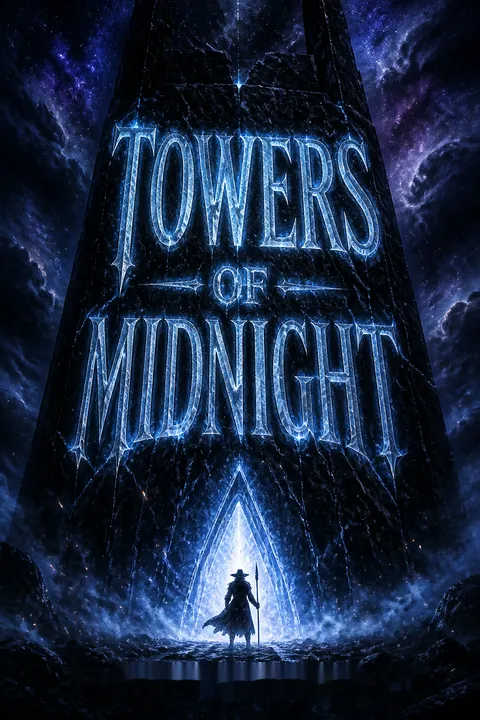


Plot Summary
Prologue
The world is fraying at its edges. Lan rides north alone toward the Blight until Bulen, the son of a Malkieri, refuses to let him go without supplies; one rider becomes two. Perrin dreams of the Whitecloaks he killed and fears the wolf within him. Graendal escapes Rand’s balefire strike on Natrin’s Barrow, though Aran’gar and her stronghold are lost.
Galad leads seven thousand Children of the Light through a swamp, then is trapped by Asunawa and beaten into captivity. Padan Fain turns Trollocs into corrupted followers as he sets out to hunt Rand. At Heeth Tower, commander Malenarin gives his son Keemlin a sword before a vast Trolloc force arrives. The Last Battle is no longer approaching. It has begun.
The prologue puts private choices against a world-scale collapse. Lan’s lonely ride becomes a shared burden when Bulen claims his Malkieri inheritance; Galad’s public leadership ends in captivity; Malenarin’s gesture toward his son makes duty intimate just as the siege arrives. Perrin’s dream and Fain’s corruption show how the struggle also reaches inward, altering identity and perception. Graendal survives by anticipating Rand, but her escape costs her an ally and a fortress. These scenes establish the book’s central pressure: no one can remain untouched by the coming war, and every attempt to preserve a self, a people, or a place demands a choice.
Apples Bloom Against Blight
At an orchard near Dragonmount, Almen Bunt watches thousands of shriveled apples fall and fears the nearby villages will starve. The crops, stores and animals have been failing across the land, while a strange sickness has already killed his brother-in-law. Then a red-haired stranger arrives, missing one hand and carrying a presence Almen recognizes from old rumors.
After the stranger passes, the orchard blooms and fills with ripe fruit, and the surrounding grass turns green. Almen urges nearby people to gather the harvest before it spoils. He understands that Rand al’Thor has returned, but Rand keeps walking, toward a difficult conversation he has delayed. The miracle feeds the village; it does not quiet the world’s growing fear.
The orchard makes a public crisis visible through one farmer’s immediate problem: whether his neighbors will eat. Rand’s intervention restores food, but he does not stay to be celebrated or explain himself. His departure matters as much as the miracle. He can alter the land, yet still has unfinished personal work and a history of choices to confront. Almen’s practical response, gathering the fruit, contrasts with the temptation to treat the harvest as a sign that everything is repaired. The scene offers hope in usable form, while keeping the larger catastrophe intact.
Perrin Burns His Banner
After rescuing Faile from Malden, Perrin is still leading a vast mixture of Two Rivers farmers, former gai’shain, soldiers and refugees toward home. He keeps taking in hungry men rather than risk leaving them to pillage, while Faile argues that his growing following is no coincidence: the Pattern is gathering people around him.
Perrin rejects that interpretation and insists he is only a blacksmith, not a lord. He orders the wolfhead banners burned, hoping to stop the Two Rivers men from treating him as their ruler. His order wounds them rather than freeing them. When scouts report a Whitecloak force holding his supply train and companions, Perrin must face a past he has tried to leave behind.
Perrin’s attempt to refuse authority has real consequences: it unsettles people who have begun to depend on the banner and on the man beneath it. His self-image is not simply modesty; it protects him from the moral weight of decisions made for others. Faile sees the contradiction more clearly. The more he tries to step away, the more his followers’ dependence makes that choice consequential. The Whitecloaks turn his private doubt into an immediate test, forcing him to decide whether responsibility can be refused merely because he never sought it.
The Dragon Visits Egwene
Rand walks into the White Tower and meets Egwene in the Hall, where she has finally reunited the divided Ajahs and taken the Amyrlin Seat. He is calmer than she expects, but he announces that he intends to break the remaining seals on the Dark One’s prison and asks her support. Egwene refuses, fearing that breaking them will free the Shadow.
Rand leaves without surrendering his freedom, promising a meeting at the Field of Merrilor. His new composure unsettles Egwene more than his old anger: he remembers Lews Therin’s life and has stopped treating emotion as a weakness to be cut away. She begins gathering allies, while a disturbing dream suggests a Forsaken still hides in the Tower.
The meeting is a contest between two kinds of responsibility. Egwene sees institutional unity as a safeguard against catastrophe; Rand sees delay itself as a danger that strengthens the Dark One. Neither can simply command the other. Their shared history deepens the conflict because Egwene must address both the friend she knew and the world-changing figure he has become. Rand’s composure is not certainty that he is right. It is a willingness to act while carrying uncertainty and guilt, qualities Egwene must distinguish from madness.
Mat's Letter Draws Blood
Mat carries an unopened letter from Verin, bound by an oath to obey its instructions if he reads it. He hopes to wait out the obligation and return to ordinary games of dice, but reports of a man found drained of blood make his dice rattle in his mind. Mat recognizes the pattern as the work of the gholam, a creature that has hunted him before.
That night it enters his tent, kills his serving man Lopin and two guards, then attacks Mat. Teslyn uses Air to hurl furniture at it, buying him time, but the creature escapes after killing two more soldiers. Olver, whom Mat feared had been taken, is safe with Noal. Mat decides he will stop running and hunt the gholam.
Mat’s bravado is tested by losses that cannot be dismissed as bad luck. The gholam turns his evasive, comic approach to danger into a moral problem: every time he protects himself without warning others, someone else may pay. His choice to hunt the creature is partly vengeance for Tylin and the fallen members of the Band, partly a refusal to leave Olver exposed. Verin’s unopened letter adds a second form of entrapment. Mat’s oath narrows his choices even before he knows what the letter demands.
Galad Demands a Trial
Galad leads the Children of the Light toward Andor after escaping Asunawa’s control, determined to bring the order into the Last Battle. His scouts capture Basel Gill and the camp followers Perrin sent ahead, along with their carts and supplies. Byar identifies Perrin as the man he blames for the deaths of Children in the Two Rivers and for his father’s death at Falme.
Galad orders a meeting, then sees Perrin’s golden eyes and accepts the accusations as evidence of something unnatural. Perrin asks for his people back and offers parley; Galad instead demands battle. Their forces are larger than the Whitecloaks’, but Galad believes justice requires him to confront Perrin rather than let him pass.
Galad’s strict moral code gives him clarity, but the clarity is vulnerable to false testimony and inherited grievance. Byar’s certainty becomes a substitute for evidence, while Galad’s desire to do right makes him susceptible to a clean, decisive explanation. Perrin, meanwhile, sees the Whitecloaks as a recurring threat from his past, not an abstract political force. Their conflict begins with both men believing that justice is on their side. The eventual trial is possible only because Galad can question his own certainty before bloodshed makes that uncertainty irrelevant.
Faile Reclaims Perrin
Perrin and Faile remain awkward with each other after her captivity and his desperate campaign to rescue her. He blames himself for the choices he made in Malden and fears that the wolf inside him makes him dangerous as a leader. For their first Saldaean marriage celebration, Faile arranges a private meal outdoors, borrowing a Two Rivers custom from Tam.
The evening gives Perrin room to describe his fear of losing himself in battle and his guilt over Aram. Faile answers by telling him what she endured and planned in captivity. Their candor restores their intimacy. Separately, Faile confronts Berelain over rumors of an affair and forces her to help publicly undo the damage to Perrin’s honor.
The marriage feast is not a pause from the plot; it changes Perrin’s capacity to meet it. He stops treating Faile as a reason to hide his worst fears and lets her witness them. Faile, in turn, does not reduce him to either husband or lord. Their exchange allows her to recognize that his ferocity is not proof of moral corruption, while he begins to see that leadership need not erase his humanity. The political repair with Berelain echoes this private repair: rumor has power because people’s relationships are also part of a ruler’s legitimacy.
Dragons Change Andor's Bargain
Elayne plans to take the Sun Throne of Cairhien, both to unite two kingdoms and to strengthen Andor before the Last Battle. Mat finally gains an audience with her and presents Aludra’s plans for cannons that fire iron shot. He asks for bellfounders, metal and powder, offering the Band’s service in return.
Elayne sees the weapons’ value immediately and bargains for control of most of them, while Mat insists his soldiers remain free to leave and fight where Rand needs them. He lends her his foxhead medallion for study, accepting a temporary risk from the gholam. Elayne agrees to fund a prototype and keep Aludra’s work secret. Mat’s practical invention gives Andor a new military advantage.
The negotiation exposes a tension between Mat’s loyalty to his men and Elayne’s duty to build a state capable of surviving the coming war. Neither accepts the other’s terms outright, so their agreement depends on a precise division of control. Mat refuses a commission that would bind the Band; Elayne refuses to let a weapon with national consequences remain merely his private property. The dragons also mark a change in warfare: skill and bravery will not be enough when a few machines can break a wall. Mat’s instinct for tactics becomes a material force.
The Tower's Hidden Serpent
Four Aes Sedai have been murdered inside the reunited White Tower, each killed with a knife and none protected by a Warder. Gawyn searches the rooms with Sleete and notices signs of forced doors that do not fit Egwene’s explanation of Black Ajah channelers. He suspects a mundane assassin, while Egwene withholds what her dreams have shown her: Mesaana, one of the Forsaken, is hiding among the sisters.
She fears public knowledge will reopen the Tower’s divisions. Gawyn urges Egwene to make sisters take Warders, but she refuses to compel them and orders him away from her door. She intends to lure Mesaana into a prepared trap, even if that makes Egwene herself the bait.
The murders force the Tower to confront the limits of its own institutions. The Three Oaths, Ajah identity and familiar security procedures offer no reliable protection when the enemy can hide inside them. Gawyn’s military suspicion is useful, but his need to protect Egwene is tangled with his wish to be chosen by her. Egwene’s secrecy is strategically defensible and personally costly: she cannot tell even those closest to her everything. Their conflict is not a simple failure of trust. It is a collision between private intimacy and the public burden of leadership.
Nynaeve Chooses Lan
Nynaeve discovers that she can remove the taint’s lingering madness from Asha’man Naeff, freeing him from visions of Myrddraal that only he could see. At the White Tower, she then undergoes the dangerous test for full Aes Sedai status. The test repeatedly places her before people in danger, while rules she cannot remember tell her to keep walking and finish each weave.
She breaks those rules to save others, uses balefire against Darkhounds threatening Lan, and nearly fails because the Sitters judge her too impetuous. Egwene argues that Nynaeve’s actions show the kind of Aes Sedai the world needs. Nynaeve passes, then persuades Myrelle to transfer Lan’s Warder bond to her.
Nynaeve’s test exposes a gap between institutional composure and the purpose the institution claims to serve. She refuses to value obedience over the lives placed before her, even when that refusal threatens the title she wants. Her choice is not a rejection of Aes Sedai service; it is a demand that service remain attached to actual people. The bond with Lan sharpens the point. Nynaeve’s deepest commitments are not made less serious by her passion. They are the source from which her courage and Healing flow.
Rand Returns to His Father
After three days alone, Rand returns to Tear changed by his confrontation on Dragonmount. He admits his failings to Tam, his father, and embraces him before the gathered Aes Sedai, Aiel and nobles. He also confronts Weiramon and Anaiyella, recognizing that they are Darkfriends but releasing them because he will not turn a day of reunion into a day of death.
Nynaeve tries to heal the madness in Rand’s mind, finds it intertwined with an unfamiliar radiance, and cannot remove it. Later, Rand walks through starving Bandar Eban, apologizes to its people, restores spoiled grain on the Sea Folk ships, and appoints a local steward to distribute food and rebuild order.
Rand’s change is visible not in a new power but in a changed relationship to responsibility. He no longer treats numbness as strength or guilt as a reason to hide from the people his choices affect. His return to Tam makes emotional repair possible; his work in Bandar Eban converts remorse into action. The food is important because it is concrete, not symbolic: people can eat it. Yet the encounter also marks a limit. Rand cannot personally undo every consequence, so he begins empowering others to govern and organize in his absence.
The Golden Crane Gathers
Lan tries to keep his journey toward the Blight anonymous, but Bulen joins him after revealing the hadori inherited from his Malkieri father. Lan grants him permission to wear it and fight at his side. More Borderlanders follow, including former soldiers Andere, Nazar and Rakim. Lan resists raising the Golden Crane, yet Malkieri merchants and Shienaran warriors arrive with wagons, horses, weapons and food.
The growing force makes secrecy impossible, so Lan presents them as a supply caravan and demands an oath that they will not reveal who he is. The group expands into dozens, then more. When Nynaeve’s bond reaches him, Lan understands that she has taken his bond and continues north with a people gathering around him.
Lan’s discipline has always depended on solitude: if he rides alone, his death can remain his own choice. The followers keep turning that choice into a collective one. Bulen’s hadori makes the cost of refusing visible, because Lan would be denying a son the right to honor his father. The Golden Crane is more than a banner; it converts private grief over Malkier into a public obligation. Lan’s struggle is no longer whether he will face the Blight, but whether he can accept that others have chosen to face it with him.
Slayer's Violet Cage
Perrin follows wolves into the World of Dreams and finds a vast violet dome preventing them from escaping. Slayer, the hunter who can reshape the dream, attacks the pack with arrows and altered terrain. Perrin rescues the wounded Sparks, but Oak Dancer is killed and Hopper is gravely wounded. Slayer’s dome also explains why gateways fail near Perrin’s camp: a dreamspike is suppressing travel in the waking world.
Perrin carries the spike away, but Slayer pursues him through shifting scenes and nearly kills him. Hopper urges him to flee, then dies after helping Perrin understand the balance between being a wolf and remaining himself. Perrin wakes carrying grief and a new determination to master the dream.
The wolf dream is both a landscape and a test of self-definition. Perrin’s old fear is that using his wolf nature will erase his human identity; Slayer exploits that fear by making the dream itself unstable. Hopper’s teaching does not promise safety. It asks Perrin to distinguish his own nature from the explanations he has used to excuse or condemn it. Hopper’s death makes that lesson costly. Perrin must now carry the knowledge without the guide who helped him reach it.
Morgase Judges the Wolf
At the trial he requested, Perrin admits that he killed two Whitecloaks but says they attacked his wolf companions first. Byar repeats his accusation that Perrin is Shadowspawn and killed Geofram Bornhald, while Perrin insists Geofram died fighting the Seanchan.
Morgase, now revealed as Elayne’s mother, judges that Perrin unlawfully killed the Children but rules the clash under Andoran law as a fight between armed groups, not murder. She leaves the sentence to Galad. Galad requires a blood price and Perrin’s service in the Last Battle, rather than executing him immediately. Perrin accepts the judgment, promising to submit to Galad after the war if both survive.
The trial separates guilt from identity. Perrin does not pretend he never killed; he contests what the killing meant and refuses the label that would turn one act into his whole nature. Morgase’s ruling is neither acquittal nor condemnation without nuance. By involving Galad in sentencing, she makes the Whitecloaks responsible for choosing justice rather than demanding revenge. Perrin’s deferred submission preserves a legal claim while acknowledging that the Last Battle may erase every ordinary court. His promise is a form of discipline, not surrender.
Mah'alleinir Takes Shape
After the trial, Perrin returns to the forge because thought alone cannot settle what he must do. With Neald holding the steel at heat through the One Power, Perrin shapes a massive hammer, stamps a leaping wolf into its head and names it Mah’alleinir.
The work leaves him exhausted, but it also clarifies his choice: he cannot force his followers to go home or pretend that someone else will lead them. He tells the assembled army he will accept their oaths and lead them. The Wolf Guard and the wolfhead banner become a public commitment rather than a title Perrin keeps trying to refuse. He prepares to meet the danger gathering around them.
The hammer resolves Perrin’s conflict through craft rather than revelation. A hammer can build or destroy; its meaning depends on the hand and purpose behind it. Perrin’s new weapon embodies the same duality he has been trying to locate in himself. The crowd’s response matters because authority is no longer something he can dismiss as a mistake imposed on him. He accepts it as a relationship with obligations. The forge turns private insight into a usable object, while the returning banner makes that insight visible to the people who depend on him.
The Trollocs Spring Their Trap
Perrin and his army reach the Whitecloak camp expecting a confrontation over the trial, but Trollocs rise from the old riverbed and attack both forces. Perrin recognizes that they have been herded toward the ambush, likely by the dreamspike and a hidden Portal Stone. He orders his channelers and archers to strike, then leads a cavalry charge down the slope to relieve Galad’s trapped men.
Mah’alleinir burns the Trollocs it hits, while Galad and Bornhald rally the surviving Whitecloaks into a counterattack. Their forces do not settle their old dispute, but they fight side by side long enough to survive the first assault. Perrin’s intervention turns enemies into necessary allies against the Shadow.
The battle makes the trial’s moral question immediate. Perrin can let a condemned rival die and preserve his own force, or spend lives to save people who may still judge him guilty. He chooses the latter, not because the Whitecloaks have earned his trust, but because their lives matter in the war ahead. Galad must also revise his categories: the man he suspected of serving the Shadow is risking himself to save the Children. Their alliance is provisional, but the evidence for it is action rather than argument.
Bloodknives Reach Egwene
Elayne disguises herself as a Forsaken to question the imprisoned Black sister Chesmal, hoping to learn how a planned invasion of Andor will begin. Chesmal reveals that Darkfriends intend to assassinate Mat, but notices that Elayne is not one of the Chosen. A group of Black sisters and Sylvase’s secretary burst in; Elayne shields them with Mat’s foxhead medallion and fights them off.
Dain Mellar then stabs her and steals one of her imperfect medallion copies, while Chesmal Heals Elayne so Mellar can keep her alive for his own purposes. Elayne uses the real medallion to shield Chesmal, burns her, and escapes Mellar’s attack. In Tar Valon, Gawyn identifies the assassins as Seanchan Bloodknives.
Elayne’s gamble wins information but exposes the cost of acting alone. She disguises herself to enter a dangerous negotiation, then discovers that the enemy is already inside her political world and knows Mat’s movements. The foxhead medallion gives her protection, but its imperfect copy becomes a liability when Mellar steals it. The attack also reveals how overlapping loyalties make security fragile: a secretary, captured Black sisters and palace guards all become possible openings. Elayne survives through judgment under pressure, but she cannot mistake survival for control.
Mat Faces the Gholam
With the foxhead medallion returned, Mat stops hiding from the gholam and deliberately draws it into a fight in Caemlyn. His Band clears the streets while Talmanes leads the creature toward a prepared building. Mat uses the original medallion and Elayne’s imperfect copies to burn the gholam whenever they touch it, driving it through a firelit corridor.
The creature throws Mat’s ashandarei into the burning building, but the flames give him the opening to attack. With help from the Kin, Mat lures the gholam onto a Skimming platform and kicks it into an endless void. Its fate remains uncertain. Mat then prepares to enter the Tower of Ghenjei with Thom and Noal to rescue Moiraine.
Mat finally turns the pursuit around, but victory remains conditional. The medallion does not make him invulnerable; it only creates brief openings that require timing, allies and a plan. He risks his soldiers to draw the gholam into the chosen ground, then accepts their help instead of pretending luck alone can protect him. The creature’s fall into the void is not confirmed death, which keeps the threat unresolved. More importantly, Mat does not mistake one success for freedom from obligation. Moiraine remains the next danger he has chosen to face.
Mesaana Falls in Dreams
The Black Ajah’s attack on Egwene’s meeting turns into a battle across the World of Dreams, where Egwene and Nynaeve fight alongside Siuan, Leane and the Wise Ones. Mesaana captures Egwene with an a’dam, but Egwene refuses to let the collar define her and defeats Mesaana in a contest of will. The Forsaken’s mind is left shattered.
Meanwhile, Gawyn fights three Seanchan Bloodknives in Egwene’s bedroom, killing them after extinguishing the lamps so their shadow-warping ter’angreal cannot hide them. Wounded, he admits his devotion, and Egwene bonds him. She later uses a secret meeting of Sitters to force a reform: the Hall can no longer meet without all its members and the Amyrlin being informed.
Egwene’s victory is not simply greater power overcoming lesser power. Mesaana’s advantage depends on making Egwene accept the role of a captive, and Egwene resists by grounding herself in the authority she represents. The personal and political resolutions mirror each other: she accepts Gawyn’s protection without surrendering command, and she makes the Hall’s authority more accountable rather than trying to crush it. The reforms answer a history of secret maneuvering with enforced visibility. Egwene’s leadership becomes stronger by changing the rules that made leadership vulnerable.
Maradon Burns, Then Brightens
Rodel Ituralde’s exhausted force holds Maradon against an immense Trolloc army until the Shadowspawn blast a hole through the city wall. Ituralde’s traps buy time, but his soldiers are being overwhelmed when Rand arrives. Rather than retreat, Rand unleashes the One Power on a scale that destroys tens of thousands of Trollocs and clears the city’s approaches.
He then discovers that Alsalam, the missing king of Arad Doman, survived under White Tower protection. In Bandar Eban, Rand has already restored food, organized soldiers and appointed a steward; now he turns to the Borderlands and the armies gathering for the Last Battle. A closing prophecy warns that victory will not end the danger: the Lord of the Evening is still coming.
Rand’s intervention at Maradon is both a rescue and a warning. His power can save a city in minutes, but the spectacle also shows how much the world may begin to depend on one person. Rand understands this danger better than before; he refuses to treat every battlefield as a problem he can personally solve. Ituralde’s survival, purchased through patience and tactical invention, matters as much as Rand’s force. The closing prophecy keeps triumph from becoming closure. The Shadow has been resisted, not removed, and the coming confrontation will demand more than overwhelming strength.
Analysis
Towers of Midnight is about the cost of becoming responsible before one feels ready. Perrin’s central struggle is not whether he is secretly a leader, but whether he can accept the consequences of leading without surrendering the parts of himself he fears. His hammer makes that conflict physical: a tool that can build or kill, shaped by the same hands that once feared becoming a beast. Faile’s political intelligence and emotional loyalty help him distinguish responsibility from self-erasure.
The book also tests institutions. Egwene inherits a White Tower divided by secrecy and must make it stronger without repeating its habits of control. Her eventual alliance with the Wise Ones and Windfinders imagines authority as exchange rather than possession. Elayne faces a related problem in Cairhien: unity cannot be won simply by claiming a throne. It requires making former rivals believe they have a place within the new order.
Rand’s change is measured by his willingness to feel the damage he has caused. His power remains immense, but the restored harvest, the food in Bandar Eban and the defense of Maradon matter because they answer human needs rather than prove his strength. Mat’s inventions and Galad’s trial likewise bring abstract threats down to practical questions: who commands, who pays, and what obligations survive the war.
The novel does not resolve the coming conflict. Instead, it assembles a precarious coalition and shows its members choosing one another despite suspicion, old injuries and incompatible customs. Its deepest warning is that unity cannot mean sameness. It has to be made from people who retain their own judgment, and who still accept responsibility when that judgment costs them.
Review Summary
Towers of Midnight receives high praise from fans for its fast-paced action, character development, and plot resolution. Readers appreciate Brandon Sanderson's continuation of Robert Jordan's work, noting improved pacing and engaging storylines. Many highlight standout moments for characters like Perrin, Mat, and Rand. Some criticize certain character portrayals and pacing issues in the first half. Overall, reviewers express excitement for the series' conclusion and satisfaction with how plot threads are coming together, despite occasional frustrations with specific elements.
People Also Read

Characters
Perrin Aybara
The reluctant wolf lordA blacksmith from the Two Rivers whose bond with wolves gives him heightened senses and access to the World of Dreams. Perrin distrusts titles and dislikes decisions that expose other people to danger, yet his steadiness attracts refugees, soldiers and former captives. He measures himself against a simple craft ethic: understand a thing before trying to shape it. His deepest fear is that the wolf within him will erase the human self he wants to preserve, especially his life with Faile. The book presses him to distinguish humility from evasion and to accept that leadership can be a duty he chooses, not merely a burden others have imposed.
Rand al'Thor
The Dragon RebornA shepherd turned world-shaping leader, Rand carries the memories of Lews Therin Telamon and the knowledge that his final task may release the Dark One before he can seal him away. Earlier, he tried to make himself emotionally invulnerable; here he begins to accept grief, anger and responsibility as parts of being human. His relationships with Tam, Min and Nynaeve remind him that power cannot substitute for connection. He must direct nations toward the Last Battle while resisting the temptation to solve every crisis by force. His changed composure is less a claim to certainty than an effort to act without denying what his choices cost.
Egwene al'Vere
The young AmyrlinRaised from the Two Rivers, Egwene has reunited a divided White Tower and must make its authority useful in a world where its old assumptions no longer hold. She is strategic, disciplined and willing to endure pain for a purpose, but she can become so committed to institutional responsibility that she withholds trust from the people closest to her. Her dealings with Rand, Nynaeve and Gawyn force her to separate authority from isolation. She is not content merely to occupy the Amyrlin Seat; she wants the Tower to become capable of serving a wider alliance without losing its capacity to lead.
Matrim Cauthon
The lucky commanderA quick-witted soldier and gambler whose luck, inherited memories and reluctance to accept responsibility repeatedly place him at the center of events. Mat distrusts Aes Sedai manipulation and noble ceremony, but he is observant about soldiers, logistics and the small choices that keep people alive. His humor protects him from fear, though it can also disguise how deeply he feels the losses of his men. He wants to remain free of grand titles and other people’s plans, yet the Band of the Red Hand depends on his judgment. His talent is not simply luck; it is knowing when to improvise and when to commit.
Faile ni Bashere t'Aybara
Perrin's steadfast partnerA Saldaean noblewoman trained in politics, estate management and the expectations placed on a ruler’s daughter. Faile once fled those expectations in search of adventure, but her experiences among the Shaido and in Perrin’s camp reveal how much her upbringing prepared her to lead. She reads social currents sharply and understands that a rumor can damage a ruler as effectively as a blade. Her relationship with Perrin is passionate and often combative, but beneath the clashes is a deliberate willingness to adapt to one another. She wants him to accept responsibility without letting duty consume the person she loves.
Elayne Trakand
The Andoran queenAes Sedai and Queen of Andor, Elayne must secure a throne that is still politically fragile while preparing for the Last Battle. She combines courage with a planner’s appetite for leverage, whether she is negotiating with Mat, courting the Kin or considering Cairhien. Pregnancy complicates her ability to channel and makes others more protective of her than she wishes. Elayne is capable of acknowledging risk, but she sometimes interprets confidence as proof that a risk can be managed. Her central challenge is to build a wider political structure without reducing people to pieces on a board.
Nynaeve al'Meara
The fierce healerFormer Wisdom of Emond’s Field, Nynaeve brings fierce protectiveness and practical Healing to the Aes Sedai world. Her temper is not merely a flaw; it often rises when authority becomes detached from the people it claims to serve. She is exceptionally strong in the One Power and inventive in Healing, but she resists the idea that dignity requires emotional distance. Her relationships with Egwene, Rand and Lan test whether she can respect institutional authority without surrendering her own judgment. She wants to help, and the story repeatedly asks whether the Tower can value that impulse rather than discipline it away.
Lan Mandragoran
The last Malkieri kingA veteran Borderlander and Nynaeve’s husband, Lan has spent much of his life treating his own death as an obligation to his lost homeland. He rides toward the Blight with the grim restraint of a man who believes solitude is the cleanest form of duty. The Malkieri who gather around him challenge that belief. His defining tension is between accepting help and fearing that others will die for a cause he has already decided is hopeless. Lan’s discipline makes him formidable, but his emotional reserve can make sacrifice seem simpler than survival.
Galad Damodred
The Whitecloak commanderMorgase’s son and Elayne’s half-brother, Galad is a disciplined swordsman who believes that doing the right thing should be clear, even when its cost is not. He rises to lead the Children of the Light after challenging their corrupt commander, yet inherits an organization shaped by suspicion and coercion. His sense of justice makes him brave and unusually willing to sacrifice himself for his followers, but it also leaves him vulnerable to testimony that confirms his moral framework. His dealings with Perrin test whether his commitment is to the letter of the Children’s authority or to the larger principles he believes they serve.
Gawyn Trakand
The searching First PrinceElayne’s brother and Morgase’s son, Gawyn is an accomplished swordsman whose strong instincts often drive him to act before he has considered the consequences. He is torn between his identity as a prince, his place among the Younglings, and his love for Egwene. His impulse to protect can become a way of asserting importance, even when the person he wants to protect has asked him to stand back. Gawyn’s struggle is to find a self beyond devotion to one person, then decide whether that self can serve her without trying to control her.
Min Farshaw
Rand's truth-tellerA young woman whose viewings reveal fragments of people’s futures, Min offers Rand a form of intimacy that is both personal and practical. She sees him not only as the Dragon Reborn but as the man whose choices leave emotional consequences. Her loyalty is grounded in affection, but she is not merely a comfort to him; she challenges his self-condemnation and helps him remember why he fights. Min is observant, direct and wary of being reduced to her visions. Her relationship with Rand requires her to believe in him without pretending that his power makes him harmless.
Graendal
The calculating ForsakenA Forsaken who prefers manipulation, luxury and carefully arranged leverage to open confrontation. Graendal turns expectation into camouflage: because others expect her to seek comfort, she uses discomfort when it serves her. She reads emotional weakness as a tool and thinks in terms of incentives, contingencies and human appetites. Her alliance with Moridin is wary, since she seeks favor without surrendering her own ambitions. Graendal is dangerous less because she is the strongest channeler than because she treats people as instruments and assumes every catastrophe can be made to benefit her.
Rodel Ituralde
The besieged Great CaptainA Domani Great Captain entrusted with holding a Borderland city against overwhelming Shadowspawn. Ituralde is a tactical thinker who uses terrain, rumor, discipline and enemy expectations as carefully as weapons. He is willing to retreat when necessary, but he will not mistake survival for the only duty that matters. His men’s exhaustion and the destruction of Maradon test his ability to keep command under impossible conditions. He is skeptical of claims and titles, preferring to judge people by what they do when a plan begins to fail.
Morgase Trakand
The former queenElayne’s mother and a former Queen of Andor, Morgase has survived political manipulation, captivity and the loss of her throne. She knows how authority can be built through patience, but also how easily power can disguise coercion. Her time living as a servant has made her attentive to work and dignity she once overlooked. Morgase is wary of returning to the center of politics, fearing that her presence might weaken Elayne’s independence. Yet she remains a practiced judge whose experience can be useful when leaders need to see beyond their own grievances.
Thom Merrilin
The courtly gleemanA veteran gleeman, former courtier and skilled knife-thrower, Thom is one of Mat’s closest companions. He disguises calculation beneath wit and performance, and his knowledge of history often supplies the context younger characters lack. His affection for Moiraine is deep, though he rarely displays it plainly. Thom’s songs and stories are not just entertainment; they are ways of carrying memory across generations.
Noal Charin
The weathered adventurerAn old, gnarled traveler who accompanies Mat and Thom, Noal appears clumsy in ordinary conversation but remains capable and determined when danger comes. He knows more about the wider world than he readily explains and is drawn to journeys that others would consider foolish. His loyalty is chosen rather than demanded. He sees the value in a story, but understands that surviving one may require sacrifices no ballad can make pleasant.
Berelain sur Paendrag Paeron
The shrewd First of MayeneThe First of Mayene is politically agile, beautiful and accustomed to protecting a small state from larger powers. She understands how rumor and attraction can be used as instruments of rule. Her confidence sometimes leads her to overestimate how well she understands other people, especially when they do not approach relationships as political contests. Berelain is capable of revising her position when circumstances demand it, though she prefers to make that change on her own terms.
Tam al'Thor
Rand's steady fatherA farmer and former soldier, Tam offers practical judgment without the trappings of rank. He raised Rand in the Two Rivers and remains one of the few people who can reach the man beneath the Dragon’s burdens. Tam’s quiet steadiness is not passivity; he has a soldier’s understanding of duty and a father’s willingness to speak plainly. His presence reminds the people around him that competence can be humble, and that love need not be expressed through command.
Mazrim Taim
The Black Tower's M'HaelThe powerful leader of the Black Tower, Taim directs the training of men who can channel and demands obedience from those beneath him. His ambition and charisma make him effective, but his methods create a culture of fear and rivalry. Taim is skilled at presenting control as strength and at turning uncertainty into loyalty to himself. His position places him at the center of a growing conflict within the Black Tower.
Jain Farstrider
The hidden old adventurerA famed traveler whose published accounts inspired generations, Jain is connected to Mat and Thom through the name Noal Charin. Stories of his journeys have survived more clearly than the man himself. He represents the gap between a public legend and the private cost of a long life spent moving through danger. The people around him must decide what his reputation conceals and whether his past is finished shaping his choices.
Padan Fain
The hatred-fueled hunterOnce a peddler, Fain has been twisted by the forces of Shadar Logoth and the Shadow into a figure driven almost entirely by hatred of Rand. He welcomes his own madness because it gives him a single purpose and seems to free him from ordinary fear. His power is unsettling because it does not follow the usual patterns of Shadowspawn control. Fain’s obsession makes him a threat to Rand, but it also makes him a danger to the Shadow’s own creatures.
Plot Devices
The Pattern and Ta'veren
Gathers lives around choiceThe Pattern bends circumstances around Rand, Perrin and Mat, drawing people, crises and unlikely opportunities toward them. In this novel, Perrin’s army grows despite his attempts to send followers home, while Rand’s return changes the condition of crops and weather. The Pattern does not remove agency; it intensifies the consequences of choices. Characters still decide whether to obey, resist, forgive or fight, but their decisions occur at a scale that makes private intentions politically consequential. This device gives the book its sense of inevitability without making its characters mere puppets.
The World of Dreams
Turns inner conflict into terrainTel'aran'rhiod is a shared dream realm where thought can reshape surroundings, danger can become physically real, and a person’s fear may take the form of a nightmare. Perrin learns to move through it without losing his identity to the wolf within him. Slayer uses it to hunt wolves and interfere with Perrin’s ability to escape. A dreamspike anchors a violet barrier that also prevents gateways in the waking world. The realm therefore joins psychology to military strategy: mastery requires imagination and self-knowledge, while one mistake can cost a life in both worlds.
The Foxhead Medallion
Deflects the One PowerMat’s silver foxhead medallion turns aside weaves that touch it, making him unusually difficult to control or harm through channeling. Elayne studies it and creates imperfect copies that interfere with some weaves but also prevent their wearer from channeling. Those copies later become crucial against the gholam, whose body can be burned by contact with the medallion. The device is both protection and bargaining chip: Mat lends the original to Elayne to help secure resources for the dragons, then needs it back when the predator closes in.
Aludra's Dragons
Changes the shape of battleAludra’s bronze cannons fire iron spheres over great distances with enough force to shatter formations and damage stone walls. Mat secures the craftsmen, metal and powder needed for a prototype by bargaining with Elayne, who recognizes that the weapons could alter the balance between ordinary troops and channelers. Their construction requires secrecy and extensive resources. The dragons represent a practical answer to the Shadow’s numerical advantage, but they also create a new political problem: whoever controls the weapons may gain power over every nation that depends on them.
Callandor and the Seals
Frames the final decisionRand plans to break the remaining seals on the Dark One’s prison before confronting him, arguing that delay lets the Shadow strengthen while the defenders grow exhausted. Egwene fears that breaking them will risk freeing the Dark One, and dreams of a bound sphere whose supports Rand cuts away. Callandor is another unresolved piece of the problem: Min discovers prophetic wording that suggests the sword may have a dangerous flaw beyond its need for two women in the circle. The seals and Callandor turn the coming battle into a question of method as well as courage.
FAQ
Synopsis & Basic Details
What is Towers of Midnight about?
- World on the brink: Towers of Midnight focuses on the escalating conflicts as the world prepares for the Last Battle against the Dark One.
- Character-driven narratives: The story follows multiple perspectives, including Rand, Egwene, Perrin, Mat, and others, as they navigate personal and global crises.
- Strategic maneuvering: The book highlights political intrigue, military preparations, and the characters' internal struggles as they grapple with their roles in the coming conflict.
Why should I read Towers of Midnight?
- Pivotal plot developments: This book features significant plot advancements, including major character decisions and the setup for the final confrontation.
- Emotional depth and complexity: The characters face intense emotional and psychological challenges, making their journeys compelling and relatable.
- Rich world-building and lore: Towers of Midnight continues the series' tradition of detailed world-building, adding layers to the existing lore and mythology.
What is the background of Towers of Midnight?
- Fantasy epic setting: The story is set in a world with a rich history, diverse cultures, and a complex magic system, influenced by European and Asian mythologies.
- Political and social unrest: The world is fractured by political tensions, social inequalities, and the looming threat of the Dark One, creating a volatile environment.
- Prophecy and destiny: The narrative is driven by ancient prophecies and the concept of ta'veren, individuals who influence the Pattern of the world, shaping the characters' destinies.
What are the most memorable quotes in Towers of Midnight?
- Rand's burden of power: "I will not let the world be broken again. Not while I live." This quote encapsulates Rand's determination and the immense responsibility he carries.
- Egwene's defiance: "I am the Amyrlin Seat. I will not be swayed by fear or threats." This quote highlights Egwene's strength and unwavering commitment to her duty.
- Perrin's internal struggle: "I am a wolf, and I am a man. I must be both." This quote reflects Perrin's ongoing battle with his dual nature and his acceptance of his destiny.
What writing style, narrative choices, and literary techniques does Robert Jordan use?
- Multiple POV narrative: Jordan employs a multi-perspective narrative, allowing readers to experience the story through the eyes of various characters, enhancing the scope and complexity.
- Detailed world-building: The writing is characterized by extensive descriptions of the world, its cultures, and its history, creating a rich and immersive reading experience.
- Foreshadowing and symbolism: Jordan uses subtle foreshadowing and recurring symbols to create layers of meaning and build suspense, rewarding careful readers.
Hidden Details & Subtle Connections
What are some minor details that add significant meaning?
- Almen Bunt's apples: The miraculous apple bloom in the first chapter, caused by Rand's presence, symbolizes hope and the potential for renewal amidst despair.
- Gawyn's night patrols: Gawyn's constant patrols around the White Tower, initially seen as protective, foreshadow the dangers lurking within and his own internal conflict.
- Nakomi's cryptic words: Aviendha's encounter with Nakomi, who questions the Aiel's future, hints at the profound changes and challenges the Aiel will face after the Last Battle.
What are some subtle foreshadowing and callbacks?
- Rand's dream of Lanfear: Rand's dream of Lanfear's torment foreshadows the Dark One's cruelty and the high stakes of the final confrontation, while also calling back to their complex history.
- Perrin's wolf dreams: Perrin's training in Tel'aran'rhiod and his encounters with Slayer foreshadow his crucial role in the wolf dream during the Last Battle.
- Mat's luck and sacrifice: Mat's luck, often portrayed as a humorous trait, is juxtaposed with his sacrifice of his eye, highlighting his growth and willingness to pay a personal cost.
What are some unexpected character connections?
- Androl and the Red Ajah: Androl's alliance with the Red Ajah, traditionally known for their animosity towards male channelers, highlights the desperate need for unity against Taim.
- Morgase and Elayne's reconciliation: Morgase's return and her renunciation of the throne, while initially seeming like a threat, ultimately strengthens Elayne's position and their bond.
- Perrin and Galad's alliance: The alliance between Perrin and Galad, despite their past conflicts, demonstrates the necessity of putting aside personal differences for the greater good.
Who are the most significant supporting characters?
- Thom Merrilin: Thom's role in Mat's rescue of Moiraine and his continued support highlight his importance as a mentor and a symbol of loyalty.
- Hopper: Hopper's guidance in Tel'aran'rhiod is crucial for Perrin's development, representing the connection between the human and wolf worlds.
- Nakomi: Nakomi's brief but impactful appearance challenges Aviendha's understanding of the Aiel's future, acting as a catalyst for change.
Psychological, Emotional, & Relational Analysis
What are some unspoken motivations of the characters?
- Rand's fear of failure: Rand's decision to break the seals is driven by a deep-seated fear of failing to defeat the Dark One and the potential consequences for the world.
- Egwene's desire for control: Egwene's opposition to Rand's plan stems from her desire to maintain control and prevent chaos, reflecting her leadership style.
- Perrin's longing for normalcy: Perrin's internal struggle is fueled by his longing for a normal life, contrasting with his destiny as a ta'veren and a leader.
What psychological complexities do the characters exhibit?
- Rand's internal conflict: Rand grapples with the burden of his past lives and the immense power he wields, leading to internal turmoil and moments of instability.
- Perrin's dual nature: Perrin's struggle to reconcile his human and wolf identities creates a complex psychological landscape, marked by internal conflict and self-discovery.
- Mat's avoidance of responsibility: Mat's attempts to avoid responsibility and his reluctant heroism reveal a complex character who is both cunning and deeply loyal.
What are the major emotional turning points?
- Mat's sacrifice: Mat's sacrifice of his eye to save Moiraine is a major emotional turning point, highlighting his growth and willingness to put others before himself.
- Gawyn's acceptance: Gawyn's acceptance of his role as Egwene's Warder marks a significant emotional shift, resolving his internal conflict and solidifying their bond.
- Morgase's renunciation: Morgase's renunciation of her claim to the throne is an emotional turning point, demonstrating her growth and her desire to support her daughter.
How do relationship dynamics evolve?
- Egwene and Gawyn's bond: The bond between Egwene and Gawyn evolves from a complex relationship to one of mutual support and understanding, highlighting themes of love and duty.
- Elayne and Morgase's reconciliation: The relationship between Elayne and Morgase transforms from one of potential conflict to one of mutual respect and support, strengthening their family bond.
- Perrin and the Whitecloaks: Perrin's relationship with the Whitecloaks evolves from one of conflict to one of uneasy alliance, demonstrating the need for unity in the face of a common enemy.
Interpretation & Debate
Which parts of the story remain ambiguous or open-ended?
- Nakomi's true nature: The identity and purpose of Nakomi remain ambiguous, leaving readers to speculate about her role in the larger narrative and her connection to the Pattern.
- The long-term effects of breaking the seals: The long-term consequences of Rand's decision to break the seals on the Dark One's prison are not fully explored, leaving room for interpretation and debate.
- The Aiel's future: The future of the Aiel after the Last Battle remains uncertain, with Aviendha's reflections raising questions about their place in the new world.
What are some debatable, controversial scenes or moments in Towers of Midnight?
- Rand's decision to break the seals: Rand's plan to break the seals is a controversial decision, with some readers questioning its necessity and the potential consequences.
- Egwene's opposition to Rand: Egwene's opposition to Rand's plan is a point of debate, with some readers viewing her as a necessary check on his power, while others see her as hindering his progress.
- The Aes Sedai test: The brutality of the Aes Sedai test and its impact on Nynaeve's character is a controversial topic, raising questions about the nature of power and tradition.
Towers of Midnight Ending Explained: How It Ends & What It Means
- Setting the stage for the Last Battle: Towers of Midnight ends with the major players converging at the Field of Merrilor, setting the stage for the final confrontation with the Dark One.
- Character growth and preparation: The ending highlights the characters' growth and their readiness to face the challenges ahead, emphasizing their individual journeys and their collective strength.
- Uncertainty and hope: While the ending provides a sense of anticipation, it also leaves the future uncertain, emphasizing the high stakes and the potential for both triumph and tragedy in the Last Battle.
The Wheel of Time Series
About the Author
Download PDF
Download EPUB
.epub digital book format is ideal for reading ebooks on phones, tablets, and e-readers.








