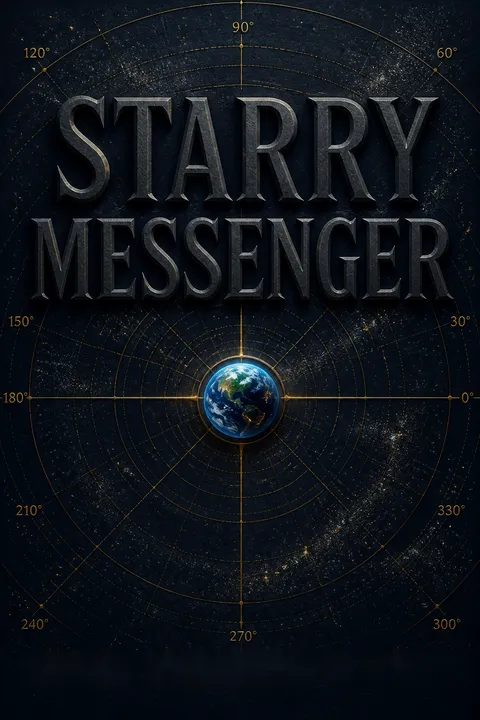


Key Takeaways
Use the cosmic perspective to shrink tribal arguments and enlarge human responsibility
Change the vantage point. Tyson’s cosmic perspective means considering human affairs against the scale, age, and physical laws of the universe. From that height, borders and political factions look smaller, while humanity’s shared dependence on one planet becomes harder to ignore. The perspective is not a command to feel nothing. It is a way to question whether familiar loyalties deserve so much of our attention.
Trust methods, not certainty. The scientific method, in Tyson’s formulation, means taking care not to mistake a false claim for a true one, or vice versa. Galileo’s telescope overturned assumptions that unaided senses had seemed to confirm. Today, scientific claims earn confidence through repeated testing, scrutiny, and results that other researchers can reproduce. A single paper is a beginning, not a final verdict.
The argument makes perspective an ethical practice, not merely an astronomical one: scale can expose how parochial a conflict looks when viewed against shared planetary vulnerability. Its strongest safeguard is the insistence on revisability. Yet perspective alone does not settle competing values, and scientific institutions can carry social biases of their own. The useful combination is humility about human importance with rigor about evidence. Neither cosmic imagery nor scientific credentials should end discussion; both should make people more willing to ask what they may be missing.
Separate evidence-based truths from convictions that persuade only their believers
Three kinds of truth. Tyson distinguishes objective truths, personal truths, and political truths. Objective truths are supported by repeatable evidence and do not depend on anyone’s belief, such as Earth orbiting the Sun. Personal truths express deeply held convictions, often religious or moral, that may matter profoundly to an individual without being provable to everyone. Political truths gain force through repetition and propaganda, sometimes turning group identity into claims of superiority.
Beauty can deepen knowledge. Knowing the physics behind a sunset does not have to diminish its beauty; learning how sunlight travels and enters the eye can add another layer of wonder. But the same natural world contains extinction, disease, and catastrophe. Tyson’s point is that nature is not automatically benevolent, and honest knowledge can make both its splendor and its dangers clearer.
This distinction helps explain why arguments stall: participants may be treating a testable claim, a value judgment, and a repeated political slogan as if they were the same kind of statement. Naming the category can lower the temperature without dismissing anyone’s experience. The caution is that the boundaries are not always clean. Public policy often combines empirical predictions with moral commitments, so evidence can show what a policy does without deciding what society ought to value. Clearer categories improve debate, but do not replace it.
Explore beyond immediate needs because discovery compounds in ways linear thinking misses
Leave the cave. Tyson challenges the demand that society solve every problem on Earth before exploring space. His cave-dweller analogy makes the trade-off vivid: ancestors who refused to venture outside until the cave was perfect would have missed resources, tools, and new perspectives. Exploration and social investment need not be rivals.
Expect the curve to bend. Exponential growth means a quantity increases by repeated multiplication, not by equal increments. A penny doubled daily for a month grows to more than $10 million on the final day, with the accumulated total exceeding $21 million. Tyson also measured the research journals on a Princeton library shelf and found astrophysics publications had roughly doubled every fifteen years. This helps explain why predictions based on recent trends often miss the next transformation.
The case for exploration is strongest when it treats discovery as infrastructure for the unknown, rather than promising immediate practical returns. The history of technology in the book supports that logic: foundational science can enable applications in fields its discoverers never anticipated. Still, exponential growth is not a universal forecast. It depends on what is being measured and can meet economic, physical, or institutional limits. The practical lesson is not that progress must accelerate forever, but that linear intuition is a poor guide to systems built from compounding knowledge.
Look back at Earth before treating borders as the most important fact
The overview effect. Astronauts often describe a shift in outlook after seeing Earth from space. At orbital distance, national boundaries, languages, and political divisions cannot be seen. The planet appears as one inhabited world, not a map of rival territories. Astronaut Mike Massimino described the view as resembling Heaven; the same sight can make the scarcity and inequality visible on Earth feel especially stark.
Earthrise as a civic image. Apollo 8’s 1968 journey gave people a view of Earth from lunar orbit, amid war and political turmoil. Tyson argues that this new image helped intensify public care for the planet, alongside environmental action in the early 1970s, including Earth Day and new protections for air, water, and wildlife. He presents the timing as suggestive, not as proof that space images alone caused the movement.
A planetary image can make an abstract system emotionally legible. The view from space turns climate, pollution, and shared habitat into features of one bounded home, a framing that can support cooperation across political borders. The historical link between Apollo imagery and environmental action should remain a proposed influence, not a settled causal explanation. Social movements also grow from organizing, scientific warnings, and visible local harms. Images can focus attention, but durable change requires institutions and collective work.
Test political stereotypes against evidence before letting a party do your thinking
Labels blur the person. Tyson recounts joining a politically mixed White House commission and discovering that conversation improved when he moved away from his familiar ideological corner. Seeing individual conservatives and liberals, rather than political caricatures, made him question labels as shortcuts that pretend to explain people he had never met.
Check claims against data. The book challenges claims that one party owns family virtue, patriotism, or scientific literacy, using examples involving divorce, state finances, climate change, and vaccine resistance. It also argues that science denial occurs across political camps, though not every form has equal consequences. The aim is not to declare all positions equivalent. It is to distinguish measurable claims from partisan repetition, then debate policy openly once the underlying evidence is understood.
Political identity can act like a filter: facts that flatter a group feel persuasive, while inconvenient evidence is dismissed as hostile. The invitation to inspect data is valuable, especially when it interrupts confident stereotypes. But isolated state comparisons do not automatically establish causes, and statistics selected to puncture one faction can become ammunition for another. Better inquiry asks how a measure was defined, what context is missing, and whether the same standard is applied to every side. Evidence should complicate identity, not merely give it better talking points.
Translate probabilities into everyday consequences before deciding which risks feel acceptable
Intuition misreads chance. People often see patterns in random events, trust a vivid personal story over broad statistics, or believe a roulette number is due because it has not appeared recently. At a 1986 meeting in Las Vegas, thousands of physicists reportedly avoided the casino’s games rather than try to outsmart the odds. The episode illustrates how understanding probability can change behavior.
Compare like with like. A relative risk increase can sound alarming without its baseline. Tyson’s example starts with a 4.3 percent lifetime risk of colorectal cancer and estimates that a 15 percent increase would raise it to about 4.9 percent, not 19.3 percent. He also contrasts familiar risks with emotionally vivid ones, arguing that good decisions require both sound statistics and honest acknowledgment of feelings.
Risk communication improves when it gives absolute as well as relative changes, because people need to know how large a danger is before and after an exposure. The book’s comparisons make abstract odds memorable, but a thought experiment is not a substitute for a careful estimate of real-world risk. Probabilities also describe groups more reliably than they predict an individual’s fate. The most useful habit is to ask for the denominator, baseline, time period, and uncertainty before letting either a headline or a frightening anecdote decide.
Treat human differences as gradients before turning them into rigid categories
Nature resists neat boxes. The colors of visible light form a continuous spectrum, even though people commonly divide it into a handful of named colors. Tyson uses that contrast to question rigid assumptions about gender and identity. He also describes noticing that many visible cues used to classify people by gender, such as clothing, hair, and makeup, are social conventions rather than definitive biological tests.
Race categories are constructed. Human skin pigmentation varies along a spectrum and, among long-established populations, relates to exposure to ultraviolet light. Yet social systems often compress that variation into a few labels. The book traces how those labels have been used to justify hierarchy, from slavery and apartheid to racist claims presented as science. Classification can help identify discrimination, but it can also be turned into a tool for enforcing it.
The spectrum analogy makes a useful point: categories are often practical boundaries imposed on continuous variation, not lines nature drew for us. It can weaken the false idea that human groups are biologically sealed from one another. At the same time, lived identities are not simply measurement errors to be dissolved. Social categories shape access, safety, and belonging, so abandoning labels entirely can conceal unequal treatment. The challenge is to use categories carefully: precise enough to reveal injustice, flexible enough not to mistake a label for a whole person.
Build justice around verifiable evidence, while admitting that evidence cannot choose every value
Courts can mistake confidence for accuracy. Tyson contrasts modern jury trials with older ordeals that treated survival as proof of innocence. Contemporary systems are fairer in principle, but eyewitness testimony and forensic claims can still mislead. The Innocence Project’s records cited in the book report that DNA evidence had freed 375 wrongfully convicted people in the United States since 1989, while witness misidentification appeared in 69 percent of exonerated cases.
A proposal, not a finished blueprint. Tyson’s imagined Rationalia is a society where public policy must be supported by the weight of evidence, while private freedom includes room for irrational beliefs. Such a rule could discipline political claims. It cannot, by itself, resolve every moral dispute: evidence can estimate the effects of a policy, but people still have to decide which outcomes matter most.
The distinction between evidence and persuasion is especially important in law, where confident testimony can feel more conclusive than it is. Better procedures can reduce error, but no process eliminates judgment, and expert evidence itself requires scrutiny. Rationalia is compelling as a demand that policy claims face reality, not as a literal cure for politics. Evidence can clarify consequences; it cannot supply a complete moral code. Democratic legitimacy depends on both factual accountability and public debate over values.
Fund foundational science because its most useful inventions may arrive from elsewhere
Benefits cross disciplinary borders. Medical imaging offers Tyson’s clearest example. Magnetic resonance imaging rests on physics, including discoveries made by researchers whose work was not initially aimed at medicine. The same broader pattern appears in hospital technologies such as X-rays and ultrasound: practical tools often depend on principles developed outside the profession that eventually uses them.
Human bodies are not perfect templates. The book challenges the idea that one standard body defines normal ability. Helen Keller, who was deaf and blind, wrote and graduated from college; Stephen Hawking continued major scientific work while living with ALS. Athletes such as archer Matt Stutzman, born without arms, demonstrate abilities that do not depend on conventional anatomy. Tyson also asks readers to notice animal intelligence and the limits of human self-ranking.
This is a strong argument against funding research only when its near-term application is obvious. Basic inquiry expands the menu of possibilities that engineers and clinicians can later use. The discussion of disability likewise shifts attention from a person’s body alone to the fit between a body and its environment. Still, celebrating exceptional achievement should not obscure the barriers disabled people face or imply that impairment is always an advantage. Scientific progress and accessibility both require investment, not just admiration.
Let mortality sharpen your priorities without pretending nature protects us
Life is temporary and extraordinary. Tyson argues that death gives urgency to affection and achievement: a bouquet matters partly because it fades, and a dog’s short life makes its attention feel unusually immediate. He also notes that modern humans live far longer than people did in 1900, while asking what future generations may consider a short lifespan.
Nature is not a guardian. Asteroids, disease, disasters, and extinction have repeatedly reshaped life on Earth. More than 99 percent of species that ever lived are now extinct, and human activity is accelerating losses among present-day species. Against that background, civilization matters because people can protect one another through medicine, shelter, cooperation, and efforts to avoid war. The book closes by urging readers to use a brief life to improve the world they inherit.
The closing argument avoids treating mortality as either a mere tragedy or a tidy source of meaning. Limits can focus attention, but people do not need to justify grief by turning it into productivity. The more actionable claim is that nature offers no dependable rescue, so care is a human responsibility. That view supports both modesty and agency: individuals are small against cosmic time, yet collective choices shape the conditions in which other people live. Responsibility need not promise control over everything to matter.
Analysis
Starry Messenger is a popular-science argument about civic judgment, not simply a tour of astronomy. Tyson repeatedly moves between cosmic scale and terrestrial detail: a star’s life, a court case, a political slogan, a food choice. The structural wager is that learning how the universe is studied can improve how people argue about society. Its central discipline is calibration: confidence should track evidence, categories should not be mistaken for nature, and personal conviction should not masquerade as public fact.
The book’s most durable contribution is this transfer of scientific habits into ordinary reasoning. It makes replication, baselines, uncertainty, and self-suspicion memorable through vivid examples. It also treats science as a human institution with correction mechanisms, rather than a collection of facts handed down by authorities. That distinction is essential when public trust is fragile.
The method has limits. Scientific findings can constrain claims about consequences, but they cannot independently decide what is fair, sacred, beautiful, or worth sacrificing for. Several political examples use striking statistics to puncture partisan certainty, yet the selection and framing of data also require scrutiny. A compelling comparison can illustrate a point without proving its cause. The book is strongest when it invites readers to inspect evidence and weakest when rhetorical force risks making a complex issue appear settled by one clever analogy.
Its humane conclusion is not that reason should replace feeling. Rather, feeling should encounter accurate information before it becomes policy or judgment. Cosmic perspective does not make people unimportant; it makes their shared vulnerability more visible. The resulting ethic is both skeptical and constructive: resist claims that demand belief without evidence, remain open to revising beliefs, and treat civilization as a joint project in a universe that offers no guarantee of rescue.
Review Summary
Starry Messenger receives mixed reviews, with an overall positive reception. Many readers appreciate Tyson's approach to applying scientific thinking to societal issues, finding it thought-provoking and insightful. The book's accessible writing style and Tyson's ability to break down complex topics are praised. However, some critics find the content simplistic or disagree with certain arguments. The book covers various topics, including race, gender, and politics, offering a cosmic perspective on human civilization. While some readers find it enlightening, others feel it lacks depth or contradicts itself.
People Also Read





Glossary
cosmic perspective
universal scale for human affairsA way of judging human life and society in light of the universe’s vast scale, age, and physical laws. In Tyson’s argument, it loosens the hold of local and partisan loyalties, highlights humanity’s shared home, and encourages humility and responsibility rather than indifference.
overview effect
astronauts’ shift in perspectiveA reported change in outlook experienced by some astronauts when they see Earth from space. Political borders and many human divisions disappear from view, while the planet’s isolation and shared character become vivid. Tyson uses the experience as an example of how physical distance can alter social perspective.
objective truths
claims supported by repeatable evidenceClaims about the world that do not depend on personal belief or an authority’s approval. In the book, they are established through consistent results from repeated observation and experiment, with scientific confidence strengthened when independent researchers can reproduce findings.
personal truths
deeply held individual convictionsBeliefs a person regards as true, often because of faith, experience, or moral commitment, without necessarily having evidence that can convince people who do not share them. Tyson treats such convictions as a normal part of human life, while distinguishing them from claims that can be tested objectively.
political truths
beliefs reinforced through repetitionClaims that gain the force of truth through repeated political or media messaging, often by appealing to group identity and superiority. Tyson connects them to propaganda and warns that repetition can make a belief seem unassailable even when evidence for it is weak or absent.
exponential growth
growth by repeated multiplicationA pattern in which a quantity increases by a consistent multiplying factor over equal intervals, rather than by a fixed amount. Because each increase builds on the last, growth can accelerate beyond linear intuition. Tyson uses doubled pennies, expanding algae, and the growth of scientific publishing to illustrate the effect.
Rationalia
evidence-based policy imagined as a countryTyson’s proposed virtual country, organized around the principle that public policy should be supported by the weight of evidence. It would not require citizens to abandon religion or private irrational beliefs. Its central distinction is between personal freedom to believe and the obligation to justify rules imposed on everyone.
pedigree collapse
family lines converge across generationsA genealogical pattern in which the number of distinct ancestors represented in a family tree becomes smaller than a simple doubling model predicts. This happens because people in earlier generations share ancestors. Tyson uses the idea to emphasize how interconnected human ancestry is.
speciesism
bias based on animal speciesA term for treating animals differently according to their species, often because of their similarity to humans, perceived intelligence, appearance, or capacity to attract sympathy. Tyson uses it to examine why people may mourn dolphins while paying little attention to tuna, or protect some animals while killing others.
LD50
dose lethal to half a test groupA measure of acute toxicity: the dose of a substance per unit of body weight that kills half of a tested population under specified conditions. A lower LD50 indicates greater acute lethality. Tyson uses comparisons among common substances to illustrate why dose and context matter when discussing risk.
NOAEL
highest dose with no observed harmThe no-observed-adverse-effect level is the highest tested exposure at which a study detects no harmful effect under its conditions. It is often more relevant than a lethal-dose measure when considering long-term exposure to substances in food or the environment. The result depends on the study design and population.
FAQ
What's Starry Messenger: Cosmic Perspectives on Civilization about?
- Cosmic Perspectives: The book explores how viewing Earth and humanity from a cosmic perspective can reshape our understanding of civilization, akin to the "overview effect" experienced by astronauts.
- Interdisciplinary Approach: Neil deGrasse Tyson combines science, philosophy, and social commentary to address contemporary issues like politics, religion, and social justice.
- Scientific Methodology: Tyson emphasizes the importance of the scientific method in discerning truth from opinion, advocating for rational discourse in society.
Why should I read Starry Messenger?
- Unique Perspective: The book offers a cosmic lens to view global issues, encouraging critical thinking about personal beliefs and biases.
- Engaging Writing: Tyson's accessible writing style makes complex scientific concepts understandable and enjoyable for a general audience.
- Call to Action: It serves as a wake-up call to cultivate global consciousness and take action against societal issues, inspiring positive contributions to civilization.
What are the key takeaways of Starry Messenger?
- Cosmic Perspective: Adopting a cosmic perspective fosters empathy and understanding, highlighting our shared humanity and diminishing petty conflicts.
- Truth vs. Opinion: Tyson stresses the importance of distinguishing between objective truths and personal beliefs, advocating for reliance on scientific evidence.
- Interconnectedness of Life: The book underscores the interconnectedness of all life on Earth, urging readers to recognize their role within the larger ecosystem.
What are the best quotes from Starry Messenger and what do they mean?
- Global Consciousness: “You develop an instant global consciousness…” suggests that viewing Earth from space can lead to a greater awareness of global issues.
- Power of Science: “Science distinguishes itself from all other branches…” highlights science's unique ability to uncover objective truths, advocating for its use in societal discussions.
- Transcending Divisions: “The universe is above everyone’s head.” encourages readers to look beyond differences and recognize their shared existence on a small planet.
How does Starry Messenger address the concept of truth?
- Objective Truth: Tyson discusses the distinction between objective truths and personal beliefs, arguing that societal conflicts often arise from failing to recognize this difference.
- Scientific Method: The book emphasizes the scientific method's role in discerning truth, highlighting the need for evidence-based discussions.
- Cultural Narratives: Tyson explores how cultural narratives can distort perceptions of truth, urging readers to seek factual information.
What role does science play in Starry Messenger?
- Foundation of Understanding: Science is presented as the foundation for understanding the universe and our place within it, helping reconcile societal conflicts.
- Rational Discourse: The book advocates for scientific reasoning in public discourse, suggesting it leads to more informed conversations.
- Empowerment: Tyson believes scientific knowledge empowers individuals to make better decisions and understand the world more deeply.
How does Tyson relate cosmic perspectives to societal issues in Starry Messenger?
- Reframing Conflicts: Cosmic perspectives are used to reframe societal issues, suggesting that viewing problems from a broader context can lead to more effective solutions.
- Accountability and Wisdom: A cosmic perspective fosters accountability and wisdom, encouraging actions that benefit humanity as a whole.
- Alien Observers: Tyson uses the idea of alien observers to highlight inconsistencies in human behavior, encouraging reflection on actions and beliefs.
What is the "overview effect" mentioned in Starry Messenger?
- Definition: The overview effect refers to the cognitive shift in awareness experienced by astronauts when viewing Earth from space, leading to a profound sense of connection to humanity.
- Impact: This effect can help individuals transcend cultural and political divisions, fostering a sense of global unity.
- Encouragement: Tyson argues that cultivating an overview effect in everyday life can lead to a more compassionate and informed citizenry.
How does Starry Messenger explore the relationship between science and society?
- Unifying Force: Science is posited as a unifying force, transcending cultural and political divides and fostering collaboration.
- Scientific Literacy: The book addresses challenges posed by misinformation, urging readers to prioritize scientific literacy for a functioning democracy.
- Role of Scientists: Tyson discusses scientists' responsibility to engage with the public, helping bridge gaps in understanding.
How does Starry Messenger address race and identity?
- Critique of Categories: Tyson critiques simplistic racial categorization, promoting a more nuanced understanding of human diversity.
- Continuum of Identity: He suggests that identity, including gender and race, exists on a continuum rather than in discrete categories.
- Historical Context: The book discusses the historical implications of racial categorization and its impact on societal structures.
How does Tyson propose we improve societal discourse in Starry Messenger?
- Rational Thinking: He encourages adopting a rational mindset, promoting rational discourse over divisive rhetoric.
- Challenge Hypocrisy: Tyson calls for confronting personal hypocrisies and striving for consistency between beliefs and actions.
- Open Dialogue: The book advocates for open and respectful dialogue on contentious issues, promoting understanding over division.
What is the significance of the title Starry Messenger?
- Cosmic Connection: The title reflects Tyson's exploration of cosmic perspectives and their relevance to human civilization.
- Historical Reference: It alludes to Galileo's work, paralleling Tyson's challenges to societal norms.
- Invitation to Explore: The title invites readers to consider the vastness of the universe, inspiring curiosity and wonder.
About the Author
Other books by Neil deGrasse Tyson




Download PDF
Download EPUB
.epub digital book format is ideal for reading ebooks on phones, tablets, and e-readers.








