


Plot Summary
Prologue
Jack Berman and his girlfriend, Krista Morales, linger at a remote desert airstrip after their friends drive away. Krista tells Jack that her mother crossed the border through this same place as a child, a journey that made Krista’s own life possible.
Then two dark trucks unload a crowd of migrants, and armed men descend on them. Krista keeps photographing the raid while Jack tries to pull her to safety. A guard with night-vision goggles spots the couple and raises his shotgun. Their private night in the desert has become the first trap in a much larger kidnapping operation.
The airstrip links two generations of migration, but the meaning of that history changes sharply when the smugglers’ route becomes a site of organized predation. Krista sees the arrivals through the lens of her mother’s survival and records what she believes is evidence; Jack sees danger and tries to get them out. Their different instincts create the first fracture between witnessing and self-preservation. The scene also establishes the novel’s central irony: a place that once offered passage toward a future now makes strangers, and then the young couple, vulnerable to people who treat human beings as inventory.
The Missing Morales
Six days after Krista disappears, her mother, Nita Morales, summons private investigator Elvis Cole to her Los Angeles business. Nita insists her twenty-one-year-old daughter has simply run off with her boyfriend, Jack Berman, but a recorded call unsettles Cole: Krista speaks in a false accent, and a man calmly demands money to bring her home.
Nita has already wired five hundred dollars, yet dismisses the demand as a scheme between young lovers. She refuses to involve police because she fears a scandal could damage Krista’s promising future. Cole accepts the case, takes the photograph and travel details Nita collected, and recognizes that her confidence may be a way to hold panic at bay.
Nita’s first defense is interpretation. By recasting a ransom call as adolescent manipulation, she preserves the daughter she knows and avoids confronting the possibility that Krista has entered a world beyond her control. Cole’s job begins in this gap between what a parent can bear to believe and what the evidence implies. The promotional T-shirt Nita gives him adds an unexpected note of intimacy: her trust is partly built on a photograph of his Pinocchio clock, an image of striving that connects her family’s hopes with the detective’s less polished public persona.
A Wallet in the Cactus
Krista’s roommate, Mary Sue Osborne, confirms that Krista had been preparing an editorial on immigration, not planning a wedding or a permanent escape. At Jack’s Palm Springs house, Cole finds Krista’s weekend clothes and birth-control pills left behind, along with messages from a friend who has not seen the couple since Friday.
Their companion Danny Trehorn drives Cole to the wrecked airplane where the group last camped. There Cole finds new pistol and shotgun casings, a heavy truck’s tracks, and Jack’s wallet, cash, and cards hidden in a bush. Krista’s license lies nearby beside a hurried note that Mary Sue later interprets as an instruction to ask about a coyote named Sanchez.
The abandoned belongings undermine the easy story of a couple choosing to disappear. Krista has left behind items tied to ordinary plans, while Jack’s cash remains with his wallet, making robbery an unlikely explanation. Cole’s method is to treat small inconsistencies as evidence rather than decoration: the fresh shells, heavy tracks, and deliberately hidden identification transform a remote date-night location into a crime scene. Krista’s immigration research gives the cryptic note a plausible direction, but it also shifts the case from private family trouble toward an underground economy Nita has spent years trying to leave behind.
The Coyote Is Dead
Cole asks his partner, Joe Pike, to read the desert tracks. Pike finds evidence that a large truck stopped at the airstrip, a crowd gathered around it, and smaller vehicles arrived at speed; blood on the ground shows that someone was shot and carried away. Immigration attorney Thomas Locano explains that cartel-affiliated bandits called bajadores steal migrant groups from rival smugglers and extort their families.
Before Cole can question Rudy Sanchez, the towing-company owner named in the note, he learns Sanchez was found shot in the Salton Sea. A nine-millimeter weapon and shotgun were used, matching the kinds of shells Pike found at the airstrip. The couple may have vanished during a hijacking.
The investigation’s scale changes when Pike’s physical reading of the ground meets Locano’s account of the border economy. The scattered traces are no longer anonymous violence; they fit a system in which rival criminal groups steal people as readily as cargo. Sanchez’s death closes off the most direct route to answers while strengthening the connection between his work and the attack. Pike and Cole function as complementary ways of knowing: one reads pressure marks and blood, the other assembles testimony and motive. Their confidence rests not on certainty, but on whether independent clues converge.
The Tow Yard Crossfire
Cole and Pike visit Sanchez and Sons, where Rudy Sanchez Junior and his brothers deny knowing Krista. Their fear becomes visible when three Korean men arrive and demand repayment for two hundred thousand dollars’ worth of people Sanchez had agreed to transport. Cole and Pike disarm the intruders before the police enter, then Cole persuades Rudy Junior to speak privately.
Rudy says his father’s human-smuggling work had been taken over by the Sinaloa cartel, and a rival called the Syrian hijacked the group and killed Sanchez. The brothers had been threatened by both sides but were not involved in their father’s business. Rudy confirms that the old airstrip was one of his father’s transfer points and agrees to help Cole reach the cartel.
The tow yard makes the conflict legible as a network of competing obligations rather than a simple contest between police and criminals. Sanchez’s sons inherit danger without inheriting knowledge: their father’s secret work has made them responsible, in other people’s eyes, for people they never controlled. Cole’s intervention earns access, but it also places him inside a feud where every group has a reason to distrust him. The Korean gangsters’ demand for their people, rather than their money, gives the missing migrants individual value within the plot and complicates any assumption that all criminal actors are motivated by the same thing.
A Name for the Syrian
Locano introduces Cole to Alfredo Munoz, a fourteen-year-old former gang member whose brother was killed by the same border predator. Fredo explains that a Sinaloa contact named Wander sells information to bajadores, including the Syrian, whose real name is Ghazi al-Diri. Cole and Pike also enlist Jon Stone, a former Delta operator fluent in Korean and Arabic.
Stone identifies the Korean crew as the Double Dragon gang, led by Young Min Park and his nephew Sang Ki Park. Cole offers Sang Ki a way to recover the kidnapped workers without paying the Syrian, then persuades Sinaloa broker Winston Ramos to authenticate him as a buyer. That night, Nita receives another ransom call and hears Krista scream.
Fredo’s account turns a vague enemy into a reachable person, but it comes through a child already damaged by the same system. His wish to leave gang life gives the information an emotional cost: helping Cole is a way to act against the violence that has shaped him. Cole’s alliance with Sang Ki and Ramos is strategic, not trusting. Each man needs something the others can offer, and Cole has to make a false identity credible enough to survive scrutiny. Nita’s second call strips away her remaining denial. The investigation is now a race against a captor who has shown that money and pain are connected.
The House Without Windows
Inside the first detention house, the captives are crowded into boarded rooms and given little food, while guards force them to call relatives for ransom. Krista pretends to be an undocumented Mexican with a poor mother, concealing her identity and Jack’s connections.
The guard Samuel Rojas records each captive’s details, while the more dangerous Vasco Medina uses torture to intensify the calls. Krista studies the house during cooking shifts and finds a ceiling hatch and a garage-door switch.
Jack tests the hatch and discovers a concealed fishing knife beneath a washing machine. When Medina attacks Krista, Jack charges him and is beaten so badly that he loses consciousness. Krista convinces Ghazi’s men that Jack’s family has money, buying him time.
Confinement forces the couple to turn ordinary skills into survival instruments. Krista’s fluency and quick observation let her construct a protective identity, while Jack’s physical courage repeatedly outruns his judgment. Their escape plans depend on minute details, such as a guard’s nap or an unlocked door, because the captors control not only movement but also privacy and time. The knife hidden under the washer is a small material counterweight to that control. Jack’s beating reveals the cost of trying to protect someone without power, while Krista’s improvisation shows that intelligence here is not abstract brilliance but the ability to read danger and change a story before it hardens into fact.
Harlan Green Goes In
Cole presents himself to Wander as Harlan Green, a labor broker seeking undocumented workers, and submits to a body scan, a shoe search, and a hooded ride through the desert. Ghazi al-Diri receives him in a fortified house and shows him two rooms of captives, including Krista and an injured Jack.
Cole hides his recognition, warning Krista through a glance to maintain her false accent, then claims he needs thirty workers and offers to buy the group. Before he can secure a second meeting, one of Ghazi’s men recognizes him as an associate of Sinaloa rivals. Ghazi has Cole bound and moved to another house, where a captive woman begs him for help. Cole cannot free her and is taken away again.
Cole’s disguise depends on performing the same dehumanizing logic he intends to defeat. He must appraise people as labor and negotiate a price while refusing, inwardly, to accept that framing. Seeing Krista and Jack gives the mission a face, but the recognition also sharpens his helplessness: a rescue attempt could expose them all. His cover fails not because he lacks nerve, but because the criminal network has its own channels of verification. The scene tests a detective’s defining tool, his ability to ask questions, against a system built to punish curiosity and silence witnesses.
The Date Farm Moves
Pike and Stone track the men who take Cole and discover a desert dumping ground with nine bodies, including migrants murdered after their families stop paying. Pike breaks into the Indio house Cole visited, but finds it emptied; the Syrian has moved his operation. Meanwhile, the captives are transferred to an abandoned date farm, where Ghazi gathers several groups in a larger, more heavily guarded compound.
Cole finds Krista and Jack there. Jack’s concussion is serious, but Cole persuades Ghazi to provide ice and water rather than abandon him. Krista tells Cole that more than a hundred people are being held across two rooms. The scale of the operation becomes clear, as does the urgency of finding a way inside.
The body dump reveals that the captives’ danger is not a threat used only to frighten families; it is the predictable endpoint of the ransom system. Pike’s tracking therefore has moral as well as tactical force: each location he identifies is evidence of people who were made disposable. The date farm expands the case from a hidden household crime into a mass operation, while Cole’s brief access to Krista and Jack gives him a concrete reason to endure captivity. He can negotiate only by appearing useful to Ghazi, so even basic medical care becomes a temporary bargain inside an institution designed to erase responsibility.
The Houses Have an Owner
Stone follows a vehicle carrying bodies and confirms the Syrian’s operation has killed many migrants. After an armed confrontation with police and federal agents, he is arrested, but ATF official Nancie Stendahl reveals that Jack is her nephew and joins the search.
Pike investigates the emptied houses and traces them to Desert Gold Realty, run by Megan Orlato, wife of a dead crew member and sister of Ghazi. He abducts Megan and makes clear that her identity and the rentals connect her to the operation. She gives him the date farm’s location. Stone is released and passes the information to Pike, while Nancie quietly tracks his vehicle, determined to reach Jack herself.
The investigation advances by converting what looks like logistical residue into kinship. The boarded houses are not merely anonymous safe sites; their access depends on a real estate business and a family relationship. Pike’s discovery exposes how respectable paperwork can shelter criminal activity without requiring every property owner to know its use. Nancie adds another form of institutional power, but her personal connection to Jack prevents her from becoming a neutral official. The competing methods create tension: Pike acts outside the law to reach a captive, while Nancie mobilizes the state and follows him. Both are motivated by care, but they define legitimate action differently.
A Sister for the Workers
Pike gives Megan to Sang Ki Park, who uses her phone to force Ghazi into a prisoner exchange for the Korean captives. Ghazi sends Rojas with eight armed men and the group, while remaining behind at the farm. He orders Medina to obtain another truck and dispose of the other prisoners, including Jack and Cole, before the site is abandoned.
Kwan Min Park, Sang Ki’s cousin, is among those sent away; as he approaches the truck, Medina strikes him with a hammer and crushes his skull. At the farm, guards begin moving captives into one crowded room. Cole realizes the shifting guards and gunfire nearby may be his only opening, and Krista uses Jack’s hidden knife to cut Cole’s restraints.
The exchange is built on reciprocal leverage, but the people being exchanged have almost no control over their own fate. Sang Ki uses Ghazi’s sister because Ghazi values family; Ghazi uses the captives as assets while preparing to erase those who cannot be traded. Kwan’s killing exposes the exchange as a staged transaction rather than a path to safety. The operation’s moral structure is brutally uneven: a person’s survival depends on whether someone powerful claims them. Yet Krista’s knife and Cole’s readiness turn a moment of forced movement into a possible opening, shifting agency back, however briefly, to the prisoners themselves.
The Farm Breaks Open
Pike slips into the date farm after the armed escort leaves, while Stone stays outside and watches the road. A gunshot signals his arrival. When Medina tries to take Krista, Cole attacks; Krista stabs Royce, and Cole takes a guard’s pistol and shoots Royce and the Praying Mantis. Pike reaches them and kills Medina, then helps Cole carry the injured Jack toward the garage.
At the exchange site, Sang Ki discovers Kwan’s murdered body, shoots Megan, and his hidden soldiers kill Rojas and the escort. Outside the farm, Ghazi confronts the rescuers with a shotgun, but Stone’s automatic fire knocks it away and leaves him pinned. Nancie’s helicopter finds the compound, and she takes custody of Ghazi.
The climax refuses a clean rescue fantasy. Pike’s entry creates the opening, but Cole, Krista, and Jack must still act inside it; Krista’s knife and Cole’s return to violence make them participants rather than cargo waiting to be retrieved. At the exchange, Sang Ki’s vengeance destroys the possibility of a peaceful bargain and costs Megan her life, while Kwan’s murder shows what the rescue cannot undo. Stone and Nancie arrive through different channels, one through force and the other through federal authority. The operation succeeds, but success means stopping the next act of violence, not repairing every loss already inflicted.
Home, Then the Long Road
Cole and Pike take Jack to a Coachella hospital, where doctors expect him to recover, and Cole calls Nita with the news that Krista is safe. Krista wants to remain beside Jack until his aunt arrives, but Cole brings her home so she can reach her mother. On the drive, he makes clear that the captors, not Krista, are responsible for what happened.
Nita and a crowd of employees greet them in matching detective-agency shirts, and she holds her daughter through a shaking reunion. Back in Los Angeles, Pike returns the Jiminy Cricket Nita lent Cole. Cole finds his car washed, then joins Pike in cleaning the Jeep, a quiet act of care after the desert has marked them both.
The ending restores relationships without pretending that rescue restores innocence or erases trauma. Krista’s brief, restrained answers on the drive show the limits of what she can immediately give her mother, while Nita’s embrace expresses relief before it can resolve their earlier disagreements. Jack remains in medical care, so the family’s danger has ended but recovery is still underway. The returned cricket completes a small chain of trust that began when Nita hired Cole. Washing the Jeep is not a triumphal cleansing; the paint retains its damage. The ritual offers companionship and patience where no quick repair is possible.
Analysis
Taken makes the mechanics of looking central to its suspense. Krista photographs the desert raid, Cole reads the objects she leaves behind, and Pike interprets tire marks, blood, and boarded windows. Each kind of evidence corrects a comforting or convenient story: Nita’s belief that her daughter chose to disappear, the cartel’s claim that the Sanchez sons are responsible, and the captors’ pretense that ransom is a negotiable service. The novel’s investigators succeed because they compare forms of knowledge rather than trusting one authority or one clue.
Its language of commerce is deliberately invasive. The captors call people workers or pollos, the cartel counts lost cargo, and the Korean gang measures a transport contract in money and personnel. Cole’s Harlan Green disguise forces him to adopt that vocabulary, but his reaction to the captive woman who asks for help shows the difference between using a role and accepting its values. The book does not suggest that a clever disguise alone can defeat systemic violence; it shows how easily the system absorbs deception and turns it back on the deceiver.
Family is both a source of vulnerability and a means of resistance. Nita’s undocumented history shapes her fear of authorities, Jack’s connection to Nancie gives him a hidden risk, and Sang Ki’s kinship with Kwan intensifies a conflict already driven by business. Yet family love does not guarantee safety or repair. The rescue saves Krista and Jack, while Kwan’s death and the murdered migrants remain beyond reversal. The final acts of returning the cricket and washing the damaged Jeep offer a modest answer to that limit: care cannot undo violence, but it can keep people from facing its aftermath alone.
Review Summary
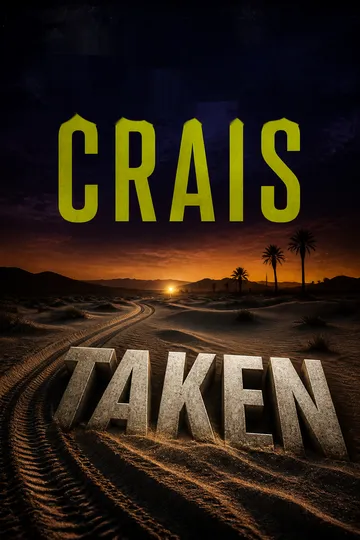
Taken is a fast-paced thriller in the Elvis Cole series, featuring kidnapping and human trafficking. While some readers found the non-linear timeline confusing, many praised the action, suspense, and character development. The book explores the dynamics between Cole, Pike, and Stone as they investigate a complex case. Critics noted the brutal subject matter and occasional excessive language but generally appreciated Crais's storytelling. Though not considered the best in the series, it remains a solid entry that keeps readers engaged throughout.
People Also Read








Characters
Elvis Cole
The relentless investigatorA Los Angeles private investigator known for humor, intuition, and a stubborn belief that people should not be abandoned. Cole initially treats Krista’s disappearance as a likely family misunderstanding, but follows the evidence when Nita’s recorded call and the desert clues contradict that easy explanation. His warmth helps him gain access to people who distrust authority, while his self-mockery keeps fear from dominating the room. He is not detached from the people he investigates: once he sees the captives, the case becomes personal without making him careless about the others’ lives. His instinct is to act, but the novel repeatedly tests whether action can help when the enemy controls the setting.
Joe Pike
Cole’s silent partnerCole’s business partner and oldest friend, Pike is a former Marine and police officer whose strengths are patience, observation, and disciplined force. He reads terrain as evidence, notices the marks others overlook, and rarely wastes words or movement. His reserve can look impersonal, but his loyalty is practical and profound: he comes when Cole needs him, tracks danger without seeking credit, and prepares for rescue with the same care he gives ordinary tasks. Pike’s emotional life is less visible than Cole’s, not absent. His attention to the small Jiminy Cricket and his care for Cole’s neglected car reveal how affection can be expressed through maintenance, vigilance, and readiness.
Krista Morales
The observant survivorNita’s academically gifted daughter, Krista is finishing college and preparing for a congressional job in Washington. She is ambitious, curious, and attentive to political questions, especially immigration, partly because her mother’s childhood journey has made the subject personal. In danger, she turns observation into practical knowledge: she listens to guards, tracks their habits, conceals her identity, and searches for an escape route. Her love for Jack is real, but she is not simply defined by the relationship; she makes decisions and takes risks on her own. Krista’s composure is a survival strategy, not proof that fear does not affect her.
Jack Berman
Krista’s devoted boyfriendKrista’s boyfriend, Jack is a USC dropout without the clear ambitions that shape her plans, yet his lack of polish does not mean a lack of care. He is deeply attached to Krista and tries to protect her, sometimes by putting himself in danger before thinking through the consequences. His courage is physical and immediate; his uncertainty becomes more apparent when escape requires patience and careful timing. Jack’s relationship with Krista is shaped by mutual trust, but also by the pressures of captivity, where protection cannot be reduced to strength. He is connected to Nancie Stendahl through his family, a fact he and Krista try to keep from their captors.
Nita Morales
A mother guarding hopeKrista’s mother, a business owner who built Hector Sports and Promotions with her late husband, is proud of the opportunities her daughter has earned. Nita is forceful, practical, and inclined to manage fear by deciding what a situation means before others can define it for her. Her own undocumented childhood makes her protective of Krista’s future and wary of police attention. She initially dismisses the ransom calls as foolishness, partly because accepting the truth would mean facing an unbearable threat. Her relationship with Cole grows from transactional confidence into emotional trust, while her love for Krista remains a powerful mixture of pride, worry, and a desire to keep her daughter safe.
Ghazi al-Diri
The border predatorKnown to cartel operatives as the Syrian, Ghazi al-Diri is a calculating broker who turns migrant routes into a business of kidnapping and ransom. He values information, compartmentalized crews, and secure locations, and treats people as assets whose worth depends on what families or rivals will pay. His courteous manner with prospective buyers is part of his control, not evidence of compassion. Family ties matter to him, but loyalty to his sister exists alongside a willingness to abandon captives when they become inconvenient. Ghazi’s operation depends on bureaucracy and deception as much as weapons: rented houses, false identities, and shifting crews help him keep violence at a distance.
Jon Stone
The mercenary allyA former Delta operator and military contractor, Stone is an exuberant, physically capable specialist who can move between languages, cultures, and tactical roles. His jokes and swagger conceal precise judgment; he reads surveillance, plans contingencies, and understands how quickly a rescue can turn into a firefight. Stone is a trusted ally of Pike and Cole, though his methods are less constrained by civilian expectations. He respects commitment and decisive action, and is willing to accept personal risk to support his friends. His directness creates friction with Nancie Stendahl, whose official responsibilities limit the choices he is prepared to make.
Nancie Stendahl
Jack’s determined auntAn Assistant Deputy Director at the ATF, Nancie is Jack’s aunt and legal guardian through the family trust. She is disciplined, experienced, and accustomed to coordinating agencies, yet her nephew’s disappearance makes professional distance impossible. Nancie knows how to mobilize investigators, surveillance, and tactical teams, and she uses those tools with urgency. Her challenge is not whether she cares, but how to act when institutional procedure may move more slowly than a private rescue. She and Stone share the same goal but disagree about acceptable means. Nancie’s authority gives the story a second route toward accountability, distinct from Cole and Pike’s personal hunt.
Thomas Locano
The immigration attorneyLocano is an immigration lawyer who has represented Nita and understands how cartel control has transformed smuggling routes. He is cautious about sharing information, partly because he knows undocumented people can be harmed by careless attention, but he helps Cole when the danger becomes clear. His explanations give the detective a framework for understanding bajadores, ransom operations, and the treatment of migrants as cargo. Locano’s support also reassures Nita that her status does not erase her right to seek help.
Mary Sue Osborne
Krista’s newsroom friendKrista’s longtime roommate and managing editor of the student newspaper, Mary Sue knows her friend’s habits and plans better than Nita does. She helps Cole search Krista’s room, breaks into the computer by guessing a simple password, and interprets the shorthand note that points toward Sanchez. Her mix of humor and loyalty makes her useful without turning her into a conventional investigator. She understands Krista’s ambitions and recognizes that an unexplained silence is not normal.
Alfredo Munoz
The young informantKnown as Fredo, he is a fourteen-year-old former Eastside Kings member trying to leave gang life after violence takes his brother. He works as a baker’s apprentice and attends school, a fragile routine that contrasts with his knowledge of cartel networks. Fredo tells Cole about Ghazi and the information broker Wander, but wants the chance to do something that might help him live differently. His age makes his fluency in violence especially unsettling.
Wander Gomez
The informant brokerA Salvadoran-American information seller, Wander gathers tips about migrant groups and passes them to bajadores for money. His damaged eye and shifting demeanor make him difficult to read, but he is methodical about screening Cole before taking him toward Ghazi. Wander occupies the dangerous middle ground between communities seeking passage and the criminals who prey on them. He treats information as a commodity and expects everyone else to do the same.
Sang Ki Park
The Korean gang lieutenantA senior member of the Double Dragon gang, Sang Ki Park is responsible for recovering workers the gang paid to transport. He is controlled and pragmatic, willing to consider Cole’s plan because it offers a route to his people without a direct payment to Ghazi. His family connection to Kwan Min makes the missing group more than a business loss. Park’s calm is shaped by hierarchy and obligation, and he measures every offer against what it can restore to his gang.
Kwan Min Park
The defiant captiveA Korean captive with a hard, disciplined manner, Kwan has traveled with the group targeted by the Double Dragons. He keeps apart from many of the other prisoners and resists the guards even after they beat him. His brief connection with Jack grows from Jack’s earlier attempt to intervene when Kwan was attacked. Kwan’s pride and loyalty make him difficult to intimidate, while his guardedness reflects a life in which trust is rarely offered cheaply.
Samuel Rojas
The captor’s record keeperRojas records captives’ names, family contacts, and supposed ability to pay. He presents himself as calm and reasonable, especially during the first ransom calls, which helps make the operation appear almost administrative. That composure is part of the machinery of coercion: Rojas gathers the information that lets the crew pressure families and decide who is worth keeping. He works under Ghazi and must balance the demands of the operation with the unstable behavior of men like Medina.
Vasco Medina
The brutal enforcerMedina is Ghazi’s physically imposing enforcer, feared by captives for his unpredictability and violence. His broken teeth make his grin difficult to forget, and his authority comes from his willingness to turn threats into immediate pain. Unlike Rojas, he does not maintain a reassuring performance for the prisoners. He uses humiliation and assault to make ransom calls effective, embodying the direct violence that the operation’s paperwork tries to disguise.
Nita’s Jiminy Cricket
The promise keptA worn plastic figure Nita received from her uncle as a child, the cricket connects her family’s migration story with her faith in a better future. She lends it to Cole as a reminder of their shared understanding, and it becomes a small physical token of the promise to find Krista.
Danny Trehorn
The last friend to see themJack’s longtime friend and a Palm Springs golf caddie, Danny drives the group to the desert airstrip and later helps Cole revisit the site. He is worried about Jack but does not immediately understand how serious the disappearance is. His account gives Cole the location and timing needed to begin reconstructing the abduction.
Rudy Sanchez Junior
The frightened sonThe son of the murdered towing-company owner, Rudy Junior is caught between the police, cartel representatives, and Korean gangsters demanding the people his father promised to transport. He insists that he and his brothers were kept outside their father’s business, and Cole believes him. His fear makes him reluctant to speak, but he eventually supplies the background Cole needs.
Carol Starkey
Cole’s police contactAn LAPD homicide detective and Cole’s friend, Starkey helps him obtain vehicle records and check Sanchez’s criminal history. Her assistance gives Cole access to information he cannot reach quickly on his own, though her own investigation and reporting obligations create real professional risk.
Plot Devices
Jiminy Cricket
A pocket-sized promiseNita gives Cole the small figure her uncle gave her when she was a child. Its connection to her family’s migration story explains why she trusts Cole after noticing the Pinocchio clock in his office photograph. The cricket also becomes a trace of Cole’s presence in the first detention house, helping Pike confirm that Cole was held there. When it returns to Cole at the end, it closes the promise Nita entrusted to him without suggesting that the ordeal has been erased.
The Sanchez Note
A clue toward the borderKrista’s shorthand note, found with her and Jack’s identification at the desert crash site, appears at first to be an unclear scrawl. Mary Sue recognizes it as an instruction to ask about a coyote named Sanchez. The note directs Cole toward Rudy Sanchez and his towing business, where a conflict among rival trafficking groups exposes the larger operation. The clue is useful because it is both personal and incomplete: Cole must interpret it through Krista’s research and verify it against other evidence.
The Ransom Calls
A voice under coercionThe calls to Nita initially seem like a small, possibly staged demand, but the false accent and the calm male voice reveal that someone is controlling what Krista can say. Later calls escalate the pressure by making Nita hear her daughter in pain. The calls both extract money and provide Cole with a behavioral clue: Krista’s voice is not natural, and her performance suggests captivity rather than consent. Their low sums mislead Nita because she imagines a private scam instead of a systematic business.
Harlan Green
A buyer’s false identityCole adopts the identity of Harlan Green, a labor broker seeking workers, to persuade Ghazi that he belongs in the trafficking market rather than law enforcement. The disguise gives Cole a reason to approach the captives and a possible route to their location. It also forces him to speak in the language of buying and selling people, testing his ability to maintain the role without surrendering his moral judgment. Ghazi’s network checks the story, and a contact’s recognition ultimately exposes Cole.
The Rental Houses
A hidden prison networkGhazi’s crews use ordinary houses with boarded windows as temporary detention sites, moving groups when security is threatened. The properties appear unrelated until Pike traces them to Desert Gold Realty and sees that the real estate manager is connected to Ghazi. The use of out-of-state owners and short-term listings disguises the houses’ purpose while allowing the operation to shift locations. Once Pike identifies the network, the realty files become both a map of possible hideouts and a route to the larger date-farm compound.
Elvis Cole and Joe Pike Series




About the Author

Download PDF
Download EPUB
.epub digital book format is ideal for reading ebooks on phones, tablets, and e-readers.








