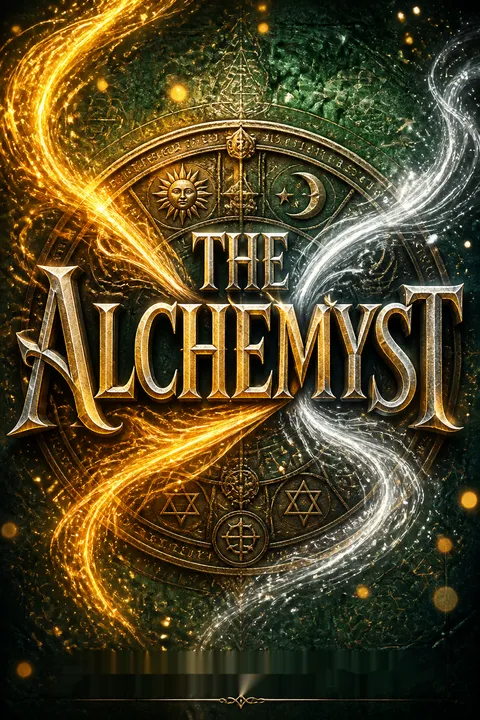


Plot Summary
Prologue
Nicholas Flamel, an alchemist born in 1330, records that his wife Perenelle has been kidnapped and the ancient Codex stolen. The book contains the knowledge that has kept them alive for centuries.
Without it, their immortality will fail within a month, leaving the Dark Elders free to reclaim a world they once ruled. Flamel knows the danger is no longer distant: it has reached San Francisco, the city he calls home, and he intends to fight for his wife and for humanity.
The opening makes immortality feel less like a gift than a deadline. Flamel has lived for centuries, but his longevity depends on a vulnerable material object and a practice that must be renewed. By placing his wife’s captivity beside the possible return of the Dark Elders, the prologue binds intimate love to planetary danger. His determination matters because it is not the confidence of an invincible hero. It is the resolve of a man who knows exactly what he may lose and has chosen to act anyway.
The Bookshop Burns
Fifteen-year-old twins Sophie and Josh Newman are working across the street from each other when a strange, gray-skinned visitor enters Josh’s bookshop. Sophie senses danger; Josh emerges from the cellar in time to see his employer, Nick Fleming, duel the visitor with green and yellow magic. The stranger is Dr. John Dee, an ancient magician commanding clay Golems.
During the attack, Josh tears two pages from a metal-bound book called the Codex. Dee seizes the book and kidnaps Nick’s wife, Perenelle. Sophie strikes Dee with a broom while Josh tries to hold on to the pages, but neither can stop him from escaping. The twins have seen magic, and their small act of resistance has made them targets.
The twins do not enter the conflict through a quest or a chosen calling. They are at work, watching one another across an ordinary San Francisco street, when violence tears the familiar setting open. Josh’s torn pages and Sophie’s improvised defense are modest acts, but they alter the balance of power: Dee gets the book, yet not the complete text. The scene also gives the twins distinct first responses to danger. Josh acts physically, Sophie protects her brother, and both discover that courage can begin before understanding. Their jobs make the extraordinary feel intrusive rather than remote.
A Name Older Than Paris
In the wrecked shop, Nick admits that he is Nicholas Flamel, the six-hundred-year-old alchemist, and that Perenelle is his immortal wife. The missing pages matter because Dee cannot use the Codex’s Final Summoning without them.
Flamel explains that the book also holds the recipe that has preserved his and Perenelle’s lives; without it, they will age and die. Dee serves the Dark Elders, beings older than humanity who intend to return and rule the world.
Josh and Sophie refuse to abandon Flamel, despite his warning that Dee may threaten everyone they know. They leave notes for their employers and family, then flee with him. Josh searches online and finds historical evidence for Flamel, Perenelle, and Dee, making the impossible harder to dismiss.
The revelation changes the meaning of the twins’ workplace relationship: Nick was not merely an eccentric employer but a guardian whose private war has now reached them. Yet their decision to stay is not simple heroism. They know little, trust imperfectly, and cannot separate loyalty to Perenelle from the risk of exposing their own family. Josh’s internet search provides a modern form of verification, but historical records cannot explain what he witnessed. The chapter’s tension lies in that gap: facts confirm identities while failing to make magic feel safe or comprehensible.
The Dojo's Hidden Teeth
Dee tracks the fugitives with rats and crows, driving Flamel and the twins through Chinatown to a concealed martial arts school. Its young red-haired resident, Scathach, is a two-thousand-year-old warrior of the Elder Race. Dee’s creatures find the dojo anyway. Hidden darts and floor blades destroy two Golems, while Scathach removes the spell-paper from a third and returns it to mud.
As rats surge toward the room, Flamel channels energy into the floorboards and makes trees grow through them, blocking the attackers. The twins learn that magic consumes strength, and that a creature’s apparent body may conceal the charm sustaining it. Scathach agrees to protect and train them, while Flamel carries the torn pages onward.
The dojo turns survival into a problem of attention. Flamel’s instruction to observe before moving is embodied in the hidden defenses, and the twins learn that looking carefully can matter as much as fighting. Scathach complicates their assumptions about age and authority: she looks like a teenager, yet her knowledge and combat skill stretch across centuries. Flamel’s sudden growth of trees also reveals the cost of magical force. Power is not an unlimited spectacle. It drains the body, so escape depends on judgment, teamwork, and choosing when not to fight.
The Bridge Goes Black
Flamel drives the group across the Golden Gate Bridge in a borrowed SUV as the Morrigan sends thousands of crows after them. The birds batter the vehicle until they obscure the windshield and puncture the roof.
Flamel cannot command the wind, so he uses Sophie’s phone to request help from Hekate, an Elder goddess. A warm, scented gale sweeps the flock away. Following a hidden path through the woods, the group reaches Hekate’s territory by crossing an illusion that conceals the entrance.
The goddess’s realm is a prehistoric Shadowrealm, a parallel world sustained by magic. There the twins encounter wereboars and Hekate herself, then enter her immense living tree, the Yggdrasill. Their escape from Dee has led them into another power’s domain.
The bridge is a threshold in both practical and imaginative terms. The crows turn familiar infrastructure into a trap, while the rescue depends on Flamel asking for help rather than overpowering the threat himself. That distinction matters: even an immortal has limits, and alliances carry the travelers farther than individual strength. Hekate’s hidden entrance then makes landscape itself uncertain. The twins have not simply left the city; they have crossed into a world where ordinary expectations about nature, history, and safety no longer hold.
Gold Meets Silver
Hekate examines Sophie and Josh and reveals their exceptionally rare auras: silver around Sophie, gold around Josh. Flamel believes these match a Codex prophecy about twins who may save or destroy the world, and asks Hekate to awaken their latent magic.
Inside the Yggdrasill, the goddess appears at different ages as the day passes. Her older evening self resents Josh’s innocent assumption that she has a daughter, and Scathach has to calm the near-fatal confrontation.
The twins, frightened and increasingly treated as pieces in a prophecy, try to escape at night. Their dead car battery traps them outside, where winged prehistoric creatures surround them and speak. Scathach brings them back, warning that the world beyond the tree is dangerous.
The prophecy gives the twins significance before it gives them agency. Their auras are treated as evidence by Flamel and Hekate, while the children themselves are left to absorb the possibility that they may be used to save or destroy the world. Josh’s misstep with Hekate exposes how dangerous ignorance can be in a culture where a casual remark carries supernatural consequences. Their attempted escape is therefore not merely adolescent stubbornness. It is a bid to recover control over their own lives, made in a realm that has already begun to define them.
Perenelle's Broken Cage
Dee binds Perenelle with a spell and carries her away in his limousine. When mud from a failing Golem erases part of the binding, she uses magic to disable the car and escape. The Morrigan intercepts her before she can get free, and Dee takes her to a holding cell at his San Francisco headquarters. There Perenelle contacts the ghost of a former security guard, freeing him in exchange for a message to Flamel.
Meanwhile, Dee summons the Morrigan and persuades her to recruit Bastet, an Egyptian Elder goddess, for an assault on Hekate’s realm. Perenelle learns of the plan through her sharpened hearing and warns Flamel by sending the ghost onward. Her captivity does not silence her, but Dee’s new alliance raises the danger facing everyone.
Perenelle’s subplot counters the idea that captivity means passivity. She observes the restraints, waits for an opening, and turns a ghost’s attachment to his former workplace into a channel of communication. Her power is relational as well as magical: she helps the dead man move on, and he helps her reach Flamel. Dee, meanwhile, responds to setbacks by expanding the scale of violence, recruiting Bastet rather than reconsidering his plan. The contrast makes the conflict ethical as well as strategic. Perenelle uses power to release another being; Dee uses allies as instruments.
The Tree Turns to Ice
At dawn, Hekate begins awakening the twins, starting with Sophie. Her senses open so violently that she rises from the ground, while Josh learns the process may leave them comatose. As the Morrigan and Bastet’s forces attack the Yggdrasill, Perenelle sends Sophie her energy and guides her through their connection.
Sophie lashes out with silver auric power, changing the birdmen and cat-people back into animals and forcing Bastet away from Flamel. Dee then drives the elemental sword Excalibur into the World Tree. The blade freezes the Yggdrasill and kills Hekate as the Shadowrealm collapses. Flamel, Scathach, and Josh carry the unconscious Sophie through the battle and steal Dee’s Hummer to escape.
This climax makes Sophie’s awakening both empowerment and invasion. Her senses flood in faster than she can interpret them, and her first decisive use of power arrives through Perenelle’s help rather than mastery. The silver energy saves Flamel and disrupts the attackers, but the victory is incomplete: Dee’s sword destroys the living structure that sustains Hekate’s realm. The contrast between Sophie’s protective use of power and Dee’s destructive one is concrete, not abstract. Each ability is judged by what it does to other lives and to the world that supports them.
The Witch's Air Lesson
The survivors drive south to Ojai, following Perenelle’s instruction to seek the Witch of Endor. Scathach reveals that the Witch, who calls herself Dora, is her grandmother and the legendary blind seer.
Dora reads the twins’ possible futures through mirrors and says only one thread shows them surviving. She cannot awaken Josh, but she agrees to teach Sophie protective magic. Using a web of concentrated air, Dora passes Sophie a lifetime of knowledge about elemental Air, including the power to move clouds, summon wind, and shape storms.
The transfer leaves Sophie with more sensation and memory than she can comfortably contain. Josh is told to wait outside while Dora trains his sister, widening the distance he already fears has opened between them.
Dora’s lesson is an act of inheritance with a cost. She gives Sophie not a single technique but accumulated experience, placing knowledge inside a teenager who has had no time to prepare for it. The transfer echoes the book’s broader concern with how power is transmitted: through objects, bodies, memory, and relationships. Josh’s exclusion is especially painful because the twins have relied on shared experience as their central source of security. Their difference is no longer just a matter of temperament. It is becoming a division in what each can know and do.
Ojai's Walking Graveyard
While Sophie trains, Dee finds Josh alone in Libbey Park. Using hypnotic images in the fountain, he portrays Flamel as a thief and the Dark Elders as potential saviors, then draws the location of Dora’s shop from Josh’s thoughts. Dee raises an army of old bones and mummified bodies, and fog floods Ojai.
Sophie uses the Witch’s Air magic to send miniature tornadoes through the dead, but the attackers keep closing in. Josh wakes from Dee’s influence, drives the Hummer through the undead, and reaches his sister. Dora leads the group to her mirror, a leygate powered by intersecting lines of energy. Flamel, Scathach, and Sophie cross to Paris; Sophie returns for Josh, and he chooses his sister over Dee’s promises.
Josh’s near-moment with Dee is not a simple betrayal. Dee offers him a story that addresses his real grievance: Sophie has changed, Flamel has withheld information, and Josh has been left outside the process. The manipulation works because it feeds on hurt that already exists. Josh’s return is therefore an emotional choice as much as a tactical rescue. Sophie’s decision to come back for him confirms the bond Dee tried to exploit. The leygate makes that loyalty the condition of escape: the twins reach safety only by refusing a future that divides them.
A Mirror to Paris
Dee reaches Dora’s shop as the others pass through the leygate. The Witch shatters the mirror, destroying the route and triggering an explosion that gives authorities a mundane explanation for the night’s supernatural violence. Reports blame a film production for the walking dead and a gas accident for the ruined shop.
Perenelle, meanwhile, is held in a cell beneath Alcatraz, guarded by a sphinx that can absorb magical energy. A ghost tells her that Flamel and the twins are safe and have gone to Paris. The news steadies her: she cannot yet escape, but the group has survived and the journey is only beginning. The story closes with the twins and Flamel in a new city, while Perenelle remains a prisoner.
The ending offers escape without resolution. The mirror closes the immediate route, and the press converts the impossible into familiar explanations, showing how public reality can absorb even a magical attack. Yet the private consequences remain: Perenelle is still imprisoned, Flamel is aging without the Codex, and the twins have only begun to understand their powers. The final movement to Paris is less a homecoming than a continuation under altered conditions. The book ends by balancing relief with exposure. The characters have survived the day, but survival has not restored their former lives.
Analysis
The Alchemyst makes knowledge a force with physical and moral consequences. The Codex is not valuable only because it contains powerful techniques; it determines who can remain immortal, who can summon the Elders, and who gets to decide what humanity’s future should be. Flamel’s secrecy protects people but also produces mistrust, while Dee’s persuasive account of a restored world shows how domination can present itself as repair.
The twins’ bond is the story’s emotional counterweight to prophecy. Others interpret their auras as signs of destiny, but their most consequential choices arise from loyalty: Sophie protects Josh, Josh returns to her, and neither accepts a future in which the other is expendable. Their connection is not effortless. Josh envies Sophie’s awakening and fears becoming irrelevant; Sophie’s new senses separate her from ordinary experience. The narrative treats sibling closeness as a practice that must withstand asymmetry, not as a magical guarantee.
The book also links power to attention and cost. Flamel teaches the twins to observe before acting; Scathach shows that knowledge of a creature’s weakness can matter more than force; Sophie discovers that heightened perception can become painful overload. Magic consumes energy, and the destruction of Hekate’s living tree demonstrates that power can injure an entire world. These limits keep the fantasy from becoming a simple celebration of strength.
Finally, the novel treats myth as a buried record rather than an escape from history. Archaeology, online searches, and historical figures sit beside gods and monsters, making the modern world feel incomplete rather than false. The final move to Paris resolves neither Dee’s pursuit nor Perenelle’s captivity. It instead establishes the book’s governing tension: the twins have entered a history larger than themselves, but their choices still matter within it.
Review Summary
The Alchemyst receives mixed reviews. Some praise its creative blend of mythology, history, and magic, finding it an exciting adventure for young readers. Others criticize flat characters, repetitive writing, and an overcomplicated plot. Many compare it to Percy Jackson and Harry Potter series. Readers appreciate the incorporation of historical figures and mythological beings but feel the execution could be improved. The cliffhanger ending and fast-paced action are noted positively, while some find the protagonists annoying and the worldbuilding inconsistent.
People Also Read

Characters
Sophie Newman
Silver-aura twinSophie is fifteen, Josh’s twin, and the more observant of the two. Her summer job in a coffee shop has sharpened her attention to smells, a sensitivity that becomes important when she encounters magic. She often takes the older-sibling role, watching out for Josh even though she is only seconds older. Sophie is cautious but not passive: when danger reaches her brother, she acts before she has a plan. Her concern for other people remains strong even as extraordinary abilities begin to overwhelm her senses. The contrast between her instinct to protect and her limited control over her new powers gives her a grounded emotional center.
Josh Newman
Gold-aura twinJosh is Sophie’s twin, a football player and computer enthusiast who approaches unfamiliar problems by testing them. His impulse to act often gets ahead of his judgment, but it also makes him quick to defend the people he loves. He values being useful and dislikes being treated as a child, especially when adults withhold information. As Sophie’s experiences diverge from his, his loyalty is tested by jealousy, fear, and the temptation to regain a sense of power. His bond with Sophie is his deepest source of confidence, but he is not simply her shadow: he has his own courage, practical ingenuity, and need to choose his place in the struggle.
Nicholas Flamel
Immortal alchemistNicholas Flamel is an ancient French alchemist living under the ordinary name Nick Fleming. He and his wife have survived for centuries through knowledge contained in the Codex. Flamel is patient, resourceful, and deeply committed to preserving life, but he is also secretive, strategic, and accustomed to deciding what others need to know. His scientific habits shape his magic: he studies patterns, formulas, and the forces hidden inside living things. He cares for the twins and seeks their protection, yet his urgency can make him underestimate how frightening his plans are to them. His central tension is between a guardian’s duty and the cost of using other people in a crisis.
Perenelle Flamel
Sorceress in captivityPerenelle is Nicholas’s wife, a powerful sorceress whose gifts include healing, perception, and communication with the dead. She is elegant, practical, and more adept at the magical arts than her husband, though she has not always been free to use them. Centuries of experience have taught her to conceal her abilities until the moment they can matter. Perenelle’s warmth does not make her naïve; she understands the cruelty of the Elders and the risks facing the twins. Her relationship with Nicholas is built on long companionship and mutual respect, while her attention to vulnerable spirits reveals a compassion that survives even under threat.
John Dee
The Elders' human agentJohn Dee is a historical magician and former apprentice to Flamel, now an exceptionally powerful ally of the Dark Elders. He is ambitious, disciplined, and skilled at joining old magic to modern tools such as phones, surveillance, and corporate resources. Dee sees himself as a practical agent of change and can present his plans as benevolent, which makes his persuasiveness more dangerous than simple menace. He resents Flamel’s refusal to share the Codex and treats human lives as expendable when they obstruct his aims. Beneath his confidence is a careful survivor who understands that the beings he serves may never regard him as an equal.
Scathach
Ancient warrior mentorScathach, usually called Scatty, is a warrior of the Elder Race who looks like a young woman despite her immense age. She has trained legendary fighters and approaches danger with brisk confidence, dry humor, and a soldier’s precision. Her skill does not erase her vulnerabilities: old grudges persist, and she is uneasy around certain creatures. Scatty is protective of the twins but refuses to flatter or coddle them; she expects them to observe, learn, and accept consequences. Her long history gives her a perspective that can make present-day fears seem small, yet her loyalty to Flamel and concern for the teenagers keep her connected to the immediate human cost of the conflict.
Hekate
Goddess of magicHekate is an ancient Elder associated with magic, spells, and the living Shadowrealm called the Yggdrasill. Her appearance changes with the time of day, and each aspect carries a different temperament and perspective. She is formidable, proud, and wary of being drawn into other people’s wars. Her changing forms make her more than a shifting disguise: they complicate memory, promise, and continuity, even within a single person. Hekate’s power can awaken dormant abilities, but she understands that such power can overwhelm its recipient. Her caution reflects both genuine responsibility and the isolation of a being who has survived by choosing her own counsel.
Dora Witcherly
The blind seerKnown as the Witch of Endor, Dora is Scathach’s grandmother and an ancient teacher of elemental Air magic. Though blind, she sees possible futures through reflective surfaces and has spent ages studying how events might unfold. Dora is blunt, proud, and affectionate on her own terms; her impatience with Scathach masks the intimacy of a family bond that has endured for centuries. She is wary of prophecy as a final answer, yet accepts responsibility when the future threatens the world she helped shape. Her teaching is generous but unsentimental: she gives Sophie knowledge while insisting that the gift carries a burden.
The Morrigan
Crow goddess of warThe Morrigan is an ancient Irish Elder associated with crows, battle, and death. She works alongside Dee but is no human subordinate; her own interests and power shape the alliance. Her command of birds gives her a far-reaching means of surveillance and attack, while her reputation makes even experienced adversaries wary. The Morrigan is strategic and severe, but her ties to the other Elders complicate her role in Dee’s plans. She embodies a worldview in which conflict is not an unfortunate interruption but a force through which power is renewed.
Bastet
Cat-headed ElderBastet is an Egyptian Elder goddess with a feline head and formidable magical power. She joins the Morrigan’s effort against Hekate and commands cats that become dangerous human-animal fighters in the Shadowrealm. Bastet is proud, direct, and accustomed to being feared, but she is also alert to threats that others might dismiss. Her attention to names and magical identity reflects the depth of her ancient status. She approaches conflict as a sovereign power rather than as Dee’s follower, making her alliance with him useful but never entirely secure.
Sara Newman
The twins' motherSara Newman is Sophie and Josh’s mother, an archaeologist often away from home on research. She loves her children but is absorbed in work that takes her across the country and overseas. Her distance is not indifference, though the twins sometimes experience it that way. Her professional life gives the children an early familiarity with ancient history, a foundation that becomes unexpectedly relevant when mythological beings enter their lives.
Richard Newman
The twins' fatherRichard Newman is an archaeologist whose fieldwork and teaching keep him frequently away from Sophie and Josh. He is devoted to discoveries grounded in evidence and tends to inhabit the past more comfortably than contemporary family life. The twins know they are loved, even when they feel he does not fully understand them. His archaeological work gives them a vocabulary for fossils, ancient societies, and disputed evidence.
Jefferson Miller
Ghostly messengerJefferson Miller is a former security guard whose ghost remains attached to the building where he worked. Practical and proud of his record, he is more interested in helping than in frightening the living. Perenelle recognizes his situation and offers to free him, turning his lingering presence into a meaningful act of assistance.
Senuhet
Bastet's human servantSenuhet serves Bastet and helps Dee reach the Cat Goddess. He is reserved, disciplined, and accustomed to carrying out an Elder’s instructions without explanation. His presence shows how powerful beings rely on human intermediaries to move through a modern world that resists their magic.
Aunt Agnes
The twins' guardianAunt Agnes is the elderly relative with whom Sophie and Josh are staying while their parents work in Utah. She fusses over their schedules and expects them home on time, but the twins are fond of her. Her ordinary care represents the family life they are trying to protect from Dee’s reach.
Bernice
Coffee shop ownerBernice owns the Coffee Cup, where Sophie works for the summer. She is absent during the attack, leaving Sophie to manage the shop alone. Her café provides one of the twins’ last ordinary routines before magic overturns their familiar lives.
Elle
Sophie's distant friendElle is Sophie’s friend, reached by phone at the start of the story. Her joking guesses about the strange visitors offer a brief reminder of the ordinary teenage world Sophie is about to leave behind.
Plot Devices
The Codex
Knowledge under lockThe Codex is an ancient book containing alchemical formulas, spells, and knowledge about the Elder Race. It has kept Nicholas and Perenelle Flamel immortal, while its Final Summoning could help Dee bring the Dark Elders back into the world. Josh accidentally tears two pages from it during the attack, preventing Dee from possessing the complete text. The book gives the conflict a material center: its power depends on who controls its knowledge and what they intend to do with it. Its torn pages also turn the twins from witnesses into indispensable participants.
Silver and Gold Auras
Twins marked by prophecyIn this world, each living being has an aura that carries magical energy. Sophie’s is pure silver and Josh’s pure gold, colors so rare that Hekate and Scathach connect them to an ancient prophecy about twins. Auras can be sensed, directed, and used to work magic, but drawing on them costs physical strength. The twins’ colors make them visible to powerful enemies and invite others to interpret their lives through prophecy. The device therefore joins practical magic to psychological pressure: the auras indicate potential without deciding what the twins will choose to become.
The Shadowrealm
A world beside oursThe Shadowrealm is a parallel magical territory that overlaps with the human world but follows different conditions. Hekate’s realm is sustained by the Yggdrasill, a living World Tree that houses her home and supports her power. Electronics lose energy there, and prehistoric creatures and Elder clans move through its landscape. The setting forces the twins to abandon the assumptions that usually protect them, while the tree’s destruction gives the battle a visible consequence. It also makes clear that the Elders’ power is tied to places and living systems, not merely to individual spells.
Leygate Mirrors
A reflective escape routeLey lines are currents of energy crossing the earth; where several meet, a leygate can connect distant places. Dora’s mirror in Ojai opens such a passage to Paris. The gate offers a way around roads, surveillance, and Dee’s pursuit, but it depends on the mirror and on Sophie’s awakened aura. Josh nearly remains behind when Dee exploits his doubts, so the escape requires more than finding the portal: the twins must choose each other and cross together. The device turns reflection into both transportation and a test of trust.
The Five Magics
Power through the elementsThe magical arts are organized around elemental forces, including Air, Water, Earth, and Fire, alongside the rarer magic of Time. Flamel studies their formulas, while Sophie receives Dora’s accumulated knowledge of Air magic, learning that wind can defend, transform, and destroy. Each use consumes energy, so magical ability does not remove bodily limits. The elemental system gives the story a structure for future training, while the early demonstrations show that mastery requires more than raw power. Sophie’s storm-making potential is especially dangerous because she has inherited knowledge faster than she can learn control.
FAQ
0. Synopsis & Basic Details
What is The Alchemyst about?
- Ancient Immortals' Struggle: The story follows teenage twins, Sophie and Josh Newman, who are thrust into a hidden world of magic and ancient beings when their summer jobs in San Francisco lead them to Nicholas Flamel, an immortal alchemyst, and his centuries-old rival, Dr. John Dee.
- Quest for the Codex: Dee steals the Book of Abraham the Mage, known as the Codex, which holds the secrets to immortality and immense power, including the ability to reshape the world. The twins inadvertently become entangled when they secure two vital missing pages.
- Awakening Latent Powers: Flamel, with the help of ancient Elders like Scathach and Hekate, seeks to awaken the twins' dormant magical abilities, believing they are central to an ancient prophecy that foretells either the salvation or destruction of the world.
Why should I read The Alchemyst?
- Rich Mythological Tapestry: The novel seamlessly blends historical figures like Nicholas Flamel and Dr. John Dee with diverse mythologies, introducing readers to a world where gods, monsters, and legendary warriors exist alongside modern society.
- Fast-Paced Urban Fantasy: Michael Scott delivers a thrilling, action-packed narrative set in familiar urban landscapes, quickly drawing readers into a high-stakes adventure where magic and danger lurk just beneath the surface of everyday life.
- Exploration of Identity & Destiny: Beyond the magic, the story delves into the twins' struggle with their newfound powers and the weight of a prophecy, offering a compelling look at how ordinary individuals confront extraordinary destinies and the choices that define them.
What is the background of The Alchemyst?
- Historical Figures as Characters: The core of the story is built upon real historical figures: Nicholas Flamel, a renowned 14th-century French alchemyst, and Dr. John Dee, a 16th-century English alchemist, mathematician, and advisor to Queen Elizabeth I, whose lives are reimagined with immortal powers and a centuries-long rivalry.
- Global Mythological Integration: The narrative draws heavily from various world mythologies, incorporating Celtic figures like Scathach and the Morrigan, Egyptian deities such as Bastet and the Sphinx, and Greek goddesses like Hekate, weaving them into a cohesive "Elder Race" that predates humanity.
- Ancient Science vs. Magic: The book explores the blurred lines between ancient science (alchemy) and magic, suggesting that many mythological events (like the Great Fire of London or the Irish Famine) were, in fact, magical occurrences, and that advanced ancient civilizations possessed knowledge that modern science is only now rediscovering.
What are the most memorable quotes in The Alchemyst?
- "Every use of power has a cost.": This quote from Nicholas Flamel (Chapter 5) is pivotal, highlighting the central theme that magic is not without consequence, foreshadowing the physical and emotional toll it takes on both the immortals and the newly Awakened twins. It underscores the responsibility that comes with extraordinary abilities, a key element in The Alchemyst analysis.
- "Trust no one. Except each other.": Scathach's stark advice to the twins (Chapter 15) encapsulates their unique bond and isolation in a world where allegiances are fluid and even mentors like Flamel withhold information. This emphasizes the Sophie and Josh Newman relationship as the ultimate anchor in their perilous journey.
- "The two that are one, the one that is all.": This cryptic prophecy from the Codex (Chapter 18) directly refers to the twins, establishing their central role in the unfolding conflict and the ambiguity of their ultimate purpose. It fuels the interpretive debates around The Alchemyst prophecy meaning and the twins' potential for both creation and destruction.
What writing style, narrative choices, and literary techniques does Michael Scott use?
- Third-Person Omniscient & Shifting Perspectives: Scott employs a dynamic third-person omniscient point of view, frequently shifting between characters like Sophie, Josh, Flamel, and Dee. This allows readers to access diverse internal thoughts and motivations, building suspense and offering multiple interpretations of events and characters, crucial for character motivations analysis.
- Sensory-Rich Descriptions & Pacing: The narrative is characterized by vivid, sensory descriptions, particularly after Sophie's Awakening, which immerses the reader in her heightened experience of the world. Scott maintains a relentless, action-driven pace, using short chapters and cliffhanger endings to propel the plot forward, making it a compelling urban fantasy novel.
- Intertextual Allusions & Mythological Blending: Scott masterfully integrates real-world history, mythology, and pop culture references (e.g., Dee's "007" code, allusions to Frankenstein, Lord of the Rings, and Shakespeare). This technique enriches the world-building, grounding the fantastical elements in recognizable contexts while subverting expectations, adding layers to The Alchemyst symbolism and themes.
1. Hidden Details & Subtle Connections
What are some minor details that add significant meaning?
- Sophie's Initial Tingling: In Chapter 1, Sophie feels a "tingle" and a "puff of cold air" when Dee looks at her, a subtle hint of her latent sensitivity to magic and a foreshadowing of her powerful silver aura, often missed in initial readings but crucial for Sophie Newman powers explained.
- Flamel's Static Electricity: When Sophie touches Flamel in Chapter 5, she feels a "spark—like static electricity." Flamel explains it as his "charged aura" reacting with hers, subtly indicating Sophie's own powerful, yet unawakened, aura and her inherent connection to magical energy, a key detail for The Alchemyst analysis.
- Hekate's Changing Nail Polish: Hekate's fingernails are painted different colors (Chapter 13), a detail mirrored by the crone form of Hekate (Chapter 17) and the Witch of Endor (Chapter 35). This seemingly trivial detail subtly links the three "faces" of Hekate and hints at the Witch's deep connection to the Elder, suggesting a shared lineage or magical affinity.
What are some subtle foreshadowing and callbacks?
- Dee's "007" Code: In Chapter 20, Dee's historical role as Queen Elizabeth I's spy, signing his reports "007," is revealed. This is a clever callback to the famous literary spy, adding a layer of historical irony and hinting at Dee's cunning and manipulative nature, often overlooked in John Dee character analysis.
- The Great Fire & Irish Famine: Flamel attributes historical disasters like the Great Fire of London (1666) and the Irish F Famine (1840s) to Dee's magical actions
The Secrets of the Immortal Nicholas Flamel Series
Download PDF
Download EPUB
.epub digital book format is ideal for reading ebooks on phones, tablets, and e-readers.








