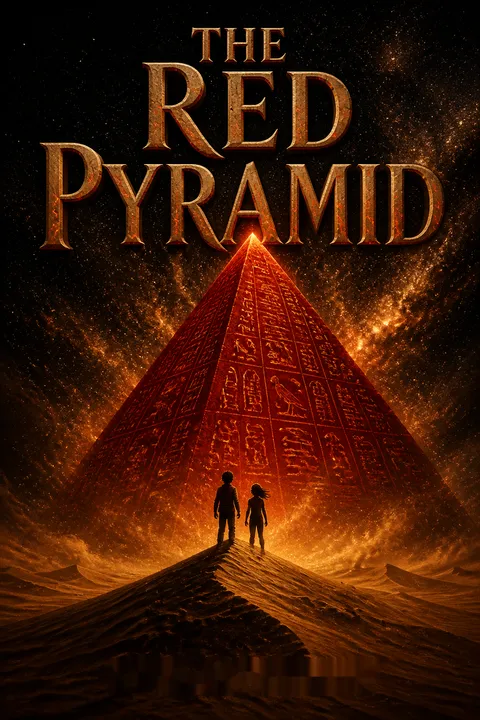


Plot Summary
Prologue
Carter Kane begins a recording with a warning: the listener is meant to find a hidden package in a school locker, use its power briefly, then pass it on before it becomes dangerous.
He and his sister Sadie are speaking from the aftermath of events that have not fully ended. Carter traces the disaster back to Christmas Eve in London, when their father, Julius Kane, took them to the British Museum and tried to change the past.
The recording frame turns the reader into a future participant rather than a distant observer. Carter’s warning makes knowledge itself feel like a dangerous inheritance: the package offers power, but possession carries a cost. His insistence that the story is unfinished also keeps the ending deliberately open. This is not simply a report of a family crisis. It is an invitation to continue the Kanes’ work, with the audience placed where the siblings once stood, facing an unfamiliar legacy and deciding whether to accept it.
Christmas Eve at the Needle
Fourteen-year-old Carter travels with his Egyptologist father, Julius, to London for one of the two yearly visits with Sadie, his twelve-year-old sister, who lives with their grandparents. The siblings are distant, and their father arrives tense, arguing with his brother Amos outside the Fausts’ home about a secret organization called the House of Life.
On the way to the British Museum, Julius stops at Cleopatra’s Needle and finally admits that it is where he last saw the children’s mother, Ruby, alive. Before he can explain her death, Carter and Sadie glimpse two strange robed figures watching them. Julius hurries them into the museum, promising that his work there will somehow set their family right.
The opening makes family separation concrete before it makes magic visible. Carter and Sadie have been raised apart not through any choice of their own, but through a custody dispute and the adults’ silence about Ruby’s death. Julius’s stop at the Needle briefly interrupts his habitual secrecy, yet his grief immediately becomes another withheld explanation. The siblings’ shared demand for the truth is an early moment of alliance, but they are still children who must follow their father into a danger they cannot interpret. The museum visit begins as a strained family outing and becomes the consequence of years of unresolved loss.
The Stone Breaks Open
Inside the closed museum, Julius persuades the curator to expose the Rosetta Stone, then sends Carter and Sadie to lock the curator in his office. He draws glowing hieroglyphs on the artifact with an ivory wand and calls for Osiris. The stone explodes, wrecking the gallery and releasing five imprisoned Egyptian gods.
A fiery figure appears, defeats Julius’s magic, and seals him inside a golden sarcophagus that sinks through the floor. Carter and Sadie try to intervene, but their amulets flare and drive the attacker back long enough for the robed strangers to arrive. One stranger is a young magician named Zia Rashid, who wants to kill the children; her superior orders her to wait.
Julius’s choice is both a rescue attempt and a repetition of the family’s central mistake: he acts on grief while keeping his children uninformed. The Rosetta Stone matters because it is not just an artifact that can be broken; it is a storehouse of accumulated Egyptian magic, and Julius misjudges what he will release. His failure leaves Carter and Sadie with power they did not seek and a father they cannot reach. The children’s amulets protect them, but protection is not understanding. The scene marks the point at which their ordinary family crisis becomes a conflict involving gods, magicians, and the consequences of inherited power.
Amos Takes Them East
After the explosion, police separate the siblings and treat Julius as a criminal who may have died in the blast. At the Fausts’ flat, the inspector suddenly orders Carter and Sadie deported, a change Amos later admits he caused to keep them out of custody.
He reveals that he is Julius’s brother and takes them to New York aboard a woven Egyptian boat that crosses the spirit world, the Duat, in minutes. His Brooklyn headquarters is a hidden mansion built above a warehouse, one of the global districts of the House of Life. There the children discover that Egyptian magic is real, that Amos is a magician, and that the Kane family has a long connection to it.
Amos offers the children rescue without yet offering full trust. His arrival gives them a living adult who knows the rules, but his concealment and abrupt decisions echo Julius’s pattern of protection through secrecy. The journey to Brooklyn also makes the Duat a practical part of the story, not merely an afterlife: it shortens impossible distances and becomes a route through which danger can travel. The hidden mansion embodies the House of Life’s divided existence, operating inside modern New York while trying to remain unseen. Carter and Sadie have been removed from one home and delivered into a world that will demand they define what home means.
Monsters Breach Brooklyn
At breakfast, Amos explains that Julius sought Osiris partly because he hoped to undo Ruby’s death, and that the fiery enemy is Set, god of chaos. Carter’s out-of-body vision confirms Set is building a destructive temple in Phoenix and hunting the children. After Amos leaves to investigate, Sadie breaks into his forbidden library, activates a wax servant named Doughboy, and finds the Kane name in a record of pharaonic bloodlines.
Two serpent-necked monsters then attack the mansion. The protective wards fail, Khufu the baboon is thrown from the terrace, and Sadie’s cat Muffin transforms into a knife-wielding woman who destroys the creatures. She identifies herself as Bast and orders the siblings to flee.
The attack converts family ancestry from an abstract explanation into an immediate target. The Kane children are not merely related to old magic; their names appear in its records, and Set’s forces are already trying to capture them before they understand their abilities. Sadie’s impulsive library search produces useful knowledge, but it also shows that curiosity and power can be difficult to separate. Bast’s arrival complicates the children’s idea of loyalty: the familiar cat has been guarding them for years without their knowledge. Their fragile new home is destroyed almost as soon as it becomes inviting, so survival again depends on leaving.
Zia’s Cairo Escape
Bast drives Carter and Sadie toward Central Park, where Sadie is supposed to open a gate through an obelisk. Before she can manage it, the metal carriers sent by Set catch up, followed by Serqet, a scorpion goddess. Bast battles the goddess while the siblings run into the Metropolitan Museum.
There they collide with Zia, the same House of Life magician who confronted them in London. Zia uses the Temple of Dendur to open a sand-filled portal, then binds Serqet with magical ribbons long enough to escape with the children. The gate carries them to Cairo Airport, where Zia reveals that the ancient First Nome lies beneath the modern city.
Zia’s intervention is useful but not reassuring. She protects the children from Set’s forces because the House has not yet decided whether they are guilty or dangerous, not because she trusts them. Her exacting discipline contrasts with Sadie’s improvisation and Carter’s hesitation, while the battle shows that trained magicians can restrain a god without necessarily defeating it. The portal makes escape conditional on timing and specialized places, so movement itself becomes a tactical problem. By taking the siblings to the First Nome, Zia delivers them to the institution that may teach them, judge them, or destroy them.
The First Nome’s Verdict
Carter crosses a deadly bridge to enter the First Nome, where a spirit mistakes him for a king. Chief Lector Iskandar allows Zia to test the siblings, while Desjardins calls them contaminated and demands their execution. That night Sadie enters the Hall of Ages and experiences Set’s ancient betrayal of Osiris, who was trapped in a coffin while Isis escaped with their unborn son.
Iskandar explains that gods inhabit human hosts and that Ruby was a gifted diviner. He dies soon afterward, leaving Desjardins poised to take power. During training, Carter summons a falcon warrior and Sadie’s magic ignites Zia’s hair. Zia gives them minutes to escape through the Luxor obelisk before Desjardins can arrest them.
The First Nome exposes the cost of knowledge inside an institution built to control it. Iskandar recognizes that the children may matter, but his authority is fragile and his willingness to hear them cannot protect them for long. Sadie’s vision links the family’s present crisis to a recurring divine conflict, while the lesson about hosts explains why magic is both partnership and danger. The siblings’ abilities emerge through action rather than instruction, making formal training seem inadequate to their pace. Iskandar’s death removes the one senior magician who could hold open a middle ground between the Kanes and the House.
A Spellbook in Paris
As the siblings flee Luxor, Carter sees a vision of Amos trapped by Set, then witnesses Zia secretly sending a blue sphere from a hidden shrine. He learns that her childhood village was destroyed by a released monster and that Iskandar became her only family. In Paris, Bast reunites with them after they escape the House’s pursuit through the Louvre.
She explains that Carter and Sadie have become hosts for Horus and Isis, respectively, after the Rosetta Stone shattered. To defeat Set, they need a spell from Thoth’s book, Set’s secret name, and a feather of truth. The book is held in Desjardins’s mansion, so the siblings transform into birds and break in.
The siblings’ new power arrives with an intimate loss of control: gods now share their minds, and the children must decide how much influence to accept. Carter’s visit to Zia’s shrine gives him a reason to see her as more than an armed representative of the House, while the flight from Paris forces cooperation between the siblings and Bast. The spell’s ingredients establish the moral shape of the coming climax. A secret name is power over another being, while the feather makes truth a literal condition of survival. The book offers no easy weapon; it demands knowledge, honesty, and judgment under pressure.
Leroy Meets the Locker
The Louvre portal sends the group to the top of the Washington Monument, where Sadie’s spirit meets Nut, the sky goddess. Nut warns that Set’s forces are approaching and gives Sadie plane tickets to Memphis, where Thoth can help. Before they can leave, the Set animal climbs the monument. Carter turns into a falcon and flies with Sadie, who becomes a kite and struggles to return to human form.
At Reagan National Airport, Carter stays behind when the monster attacks travelers. He retrieves his sword from an invisible storage space in the Duat and, after fighting the creature, imagines an opening large enough to swallow it. He names the monster Leroy and traps it in the hidden space.
Carter’s airport stand is a small but decisive shift from dutiful fear to chosen responsibility. He does not wait for Bast or Horus to tell him what to do; he sees endangered strangers and acts. The invisible locker turns the Duat from a road into a tool, and Carter’s improvised solution anticipates how he will later use magic creatively rather than simply repeat lessons. Sadie’s difficulty leaving bird form reveals a parallel danger: the gods’ power can alter not only what the siblings can do but how they experience themselves. The flight to Memphis continues only because Carter accepts personal risk.
Elvis’s Hidden Ankh
In Memphis, Carter and Sadie find Khufu playing basketball with other baboons and follow him to Thoth, who has settled into a university office filled with books, ibises, and experiments. Thoth refuses to explain his spellbook until the siblings retrieve an item from Graceland. Two apparent magicians attack them inside Elvis Presley’s home.
Sadie uses darkness, animated jumpsuits, and a binding spell to stop them, while Carter is transformed into a lizard. When she restores him, they discover the attackers were shabti, not living magicians. At Elvis’s grave they find an ankh and an image of a cat fighting a serpent. Thoth explains that Set’s banishment spell also requires the feather of truth.
Thoth’s test measures ethical control rather than raw strength. Sadie can defeat the attackers, but she does so without killing them, and she chooses to restore the damaged house afterward. Carter’s transformation is humiliating, yet it exposes his vulnerability without making him useless to the team. The clue at Elvis’s grave links Bast to the ancient struggle against chaos and hints that Set’s rebellion may serve a still greater threat. Thoth does not reward the siblings for being powerful; he asks whether they can act without repeating the destructive patterns of the gods they carry.
Truth on the River
Thoth sends the siblings down the Mississippi aboard the Egyptian Queen, a magical paddle steamer commanded by an axe-headed demon. In the Duat, Sadie distracts the lionlike demon Shezmu until Carter finds his full name in the Book of the Dead.
At the Gates of the West, Iskandar appears as a spirit and admits that he helped forbid divine magic after Egypt fell, though Ruby later warned him that the gods and House would need each other again. Anubis refuses the feather at first, fearing its truth would destroy anyone who lied while carrying it. Sadie answers his questions honestly, including whether she would sacrifice her father to save the world, and earns the feather.
The journey makes truth more than a moral ideal: it becomes a physical burden that can destroy its bearer. Sadie’s honesty is especially costly because the question forces her to imagine losing Julius, whom she has scarcely known as a parent. Iskandar’s return gives institutional history a personal voice; he acknowledges that a policy once meant to preserve the House may now obstruct survival. The broken scales and the empty throne suggest that order is already failing before Set’s planned catastrophe. Sadie leaves with the feather, but its possession turns every later choice into a test of what she truly believes.
Bast’s Last Stand
After escaping the Land of the Dead, the siblings travel west in an RV with Bast and Khufu. At the Rio Grande, Sadie tries to contact Nephthys, Set’s estranged wife, while Carter investigates a family of migrants who vanished into the water. A giant crocodile attacks him, and Sobek, the crocodile god, rises to fight for Set.
Carter uses Horus’s power to escape Sobek’s grip, but the god overwhelms both him and Bast. With Sadie injured and more crocodiles closing in, Bast plunges into the river and defeats Sobek at the cost of her own strength. Amos arrives with Philip, the white crocodile, and carries the survivors to White Sands.
Bast’s struggle exposes the emotional price of a promise made by an adult to protect children. She has repeatedly tried to stay ahead of danger, but Sobek forces her into the kind of sacrifice she hoped to avoid. Carter’s choice to enter the river for the missing family shows that his growing courage extends beyond his own circle, even when it puts him in immediate peril. Sadie’s attempt to summon Nephthys produces a fragmentary message rather than rescue. The siblings survive, but the cost is another loss, and their remaining companions must decide whether to keep moving despite grief.
Geb’s Desert Counsel
At White Sands, Sadie’s spirit grows enormous and meets Geb, the earth god, who receives a message from his long-separated wife, Nut. Geb cannot save Julius or attack Set directly, but he directs Sadie to the Place of Crosses, which she recognizes as Las Cruces. Amos plans to avoid the town, yet Carter insists on stopping there because Zia arranged a meeting.
At Mesilla, Zia warns them that Desjardins is pursuing them and urges them to trust the House. Sadie suspects the Chief Lector may be compromised, while Amos argues that he will not listen. Their argument ends when Desjardins and two magicians surround the plaza, forcing the group to fight or flee.
The encounter with Geb joins private love to public catastrophe. His reunion with Nut does not solve the crisis, but it gives Sadie a direction and demonstrates that small acts of care can matter even when gods cannot intervene directly. Las Cruces becomes a meeting point where family loyalty and political trust collide. Sadie protects Amos because she cannot bear another loss, while Zia’s warnings challenge that instinct. The danger is not only whether the group can defeat Set; it is whether grief will make them trust the wrong person or reject help they need.
Salsa Against Sekhmet
Amos drives off Desjardins’s attack with a sandstorm, and Zia uses her remaining strength to send a pursuing pillar of fire after the Chief Lector. Desjardins summons Sekhmet, the fierce lioness goddess, to kill the Kanes. The group escapes in Amos’s flying boat, but Sekhmet’s flaming arrows set it ablaze.
Zia recalls how ancient Egyptians stopped the goddess by disguising red beer as blood. Carter lands the burning boat at a salsa factory, where he and Sadie lure Sekhmet into drinking from the red sauce tanks. She eats until the heat overwhelms her and transforms into a sleeping cow. Zia joins their journey, and Carter animates Amos’s coat to drive a truck toward Phoenix.
The battle depends on translating myth into practical improvisation. Carter remembers the old story, Zia identifies the relevant transformation, and Sadie buys time with magic; no single character can solve the encounter alone. The salsa is comic, but its function is serious: knowledge can redirect destructive force without matching it blow for blow. Zia’s choice to help costs her standing with the House, while Carter’s invitation to travel with them offers companionship without demanding that she abandon her fear. The group reaches Phoenix not as a repaired family, but as a coalition that has begun to trust its differences.
The Red Pyramid Opens
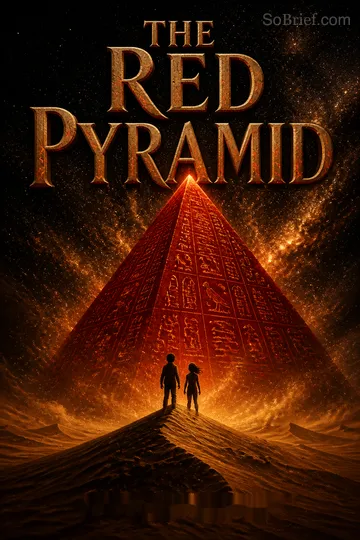
Near Camelback Mountain, the group turns into storm clouds to approach Set’s hidden cavern. They find demons raising the golden pyramid capstone above a vast army. Carter and Sadie fly to the barge carrying it while Zia arrives as a vulture. They drive the demons from their boat, and Amos destroys the second barge, dropping the capstone and crushing many of Set’s followers.
The siblings enter the pyramid and seal its doors against the pursuing demons. Inside, Amos collapses, and Set’s red spirit rises from his body. Set admits that he controlled Amos after the British Museum, sabotaged the Brooklyn mansion, and used the uncle’s escape to draw the children toward his lair.
The revelation that Amos has been controlled by Set reframes the strange behavior that had made the siblings doubt him. His resistance is real, but it has been compromised, so love and suspicion were both justified. The pyramid is a machine built to amplify chaos, not merely a villain’s fortress, and the capstone represents the final step in that process. The siblings’ assault briefly succeeds through teamwork, yet they have entered the enemy’s strongest territory. Set’s confession strips away the comfort of a simple rescue mission: the person they came to trust has been used as a weapon against them.
Horus and Carter Unite
Set restrains Carter and threatens Zia, who appears to him as Nephthys, while Sadie shields her and the unconscious Amos. Carter realizes that resisting Horus is keeping them both weak. He stops fighting the god’s presence, and their minds join without either taking control of the other. The golden falcon warrior forms around Carter, who breaks free and attacks Set.
Their duel spills onto the pyramid, where demons and House magicians battle below. Set knocks Carter down and installs the capstone just before sunrise, completing the structure. Carter cannot stop the storm alone. Sadie rises from the shaft and announces that she will move the battle out of the desert.
Carter’s breakthrough is not submission but cooperation. The distinction matters because the House fears that gods erase human agency, while Horus has been urging Carter to let him take over. Their shared power becomes effective only when Carter can trust the god without disappearing into him. The moment arrives under pressure from Set’s attempt to exploit the same divided loyalties that once broke the gods apart. Sadie’s arrival shifts the struggle from individual combat to joint action. The completed pyramid appears to give Set victory, but it also creates the fixed structure Sadie can use against him.
Washington Takes the Pyramid
Sadie channels Isis’s power to open a portal during the forbidden Demon Days, pulling Set’s pyramid from Phoenix to Washington, D.C., beside the Monument. Carter keeps Set occupied while Sadie reads Thoth’s spell using the feather of truth and Set’s secret name, Evil Day. As the pyramid collapses, Sadie sees the chaos gathering above them as Apophis, the serpent of destruction, trying to use Set’s storm to break free.
She abandons the spell’s final line, throws the feather into the sky, and makes the serpent visible long enough for Carter to kill Set’s lieutenant, Face of Horror, who was carrying Apophis’s essence. Sadie binds Set, then releases him only after he agrees to return to the Duat and fight Apophis when summoned.
The climax turns on Sadie’s refusal to confuse justice with annihilation. The spell gives her power over Set, but she sees that a larger enemy has been feeding on the very destruction she was prepared to unleash. Breaking the spell at its last line risks losing the only sure chance to defeat Set, yet it prevents the Kanes from serving Apophis’s plan. Carter’s intervention against Face of Horror protects Sadie while she makes that choice. Set remains dangerous, but the siblings treat him as a force that must be constrained and redirected, not simply erased.
The Shabti Falls Apart
After the pyramid vanishes, Sadie finds Amos alive but badly weakened and Zia near death. Zia’s body dries into clay, revealing that she was a shabti, a magical substitute animated by the real Zia’s memories and spirit. Iskandar had hidden the real girl after she became a host for Nephthys.
The children leave the real Zia’s whereabouts unresolved, while Amos needs care after Set’s control. Sadie and Carter refuse to return to the House under Desjardins’s authority, then separate themselves from Isis and Horus rather than let divine power overwhelm them. Desjardins withdraws with the surviving magicians, still opposed to restoring the old path of divine magic.
The revelation about Zia complicates intimacy: Carter’s feelings attached to a person who was partly constructed from another girl’s memories, yet the substitute’s choices and suffering were real. It leaves him with grief and hope at once, because the person he wants to find may still live but has never met him. The siblings’ decision to separate from their gods is equally significant. They refuse both the House’s total prohibition and the gods’ claim to permanent access. Their power must become a chosen practice, not an identity imposed by ancestry.
Brooklyn Becomes Home
Weeks later, Carter and Sadie meet Julius and Ruby in the Hall of Judgment. Julius explains that hosting Osiris placed him among the dead so the god could return to his throne, and Ruby’s spirit appears beside him. The siblings accept that their parents cannot return to ordinary life. Horus claims the throne among the gathered gods, while Carter refuses to become his permanent host.
Back in Brooklyn, Amos leaves to seek healing, and Bast returns to protect the children. Sadie chooses the mansion over her old London home. Carter and Sadie then hide an amulet in a magically protected school locker, hoping descendants of the pharaohs will find it and join their effort to rebuild the House of Life.
The resolution answers the opening desire to make the family whole, but not by restoring its former arrangement. Julius and Ruby are present, loving, and unreachable as ordinary parents; grief is acknowledged rather than reversed. Carter declines the throne, while Sadie chooses a new home and a shared purpose with her brother. Their work now depends on recruitment, teaching, and restraint, not a single victory over Set. The locker echoes the book’s opening warning and hands responsibility outward. The story ends with the siblings choosing to pass power on carefully, even though they cannot know who will receive it.
Analysis
The Red Pyramid treats inheritance as an active force rather than a passive family history. Carter and Sadie do not simply discover that their ancestors practiced magic; they inherit unresolved decisions, institutional prohibitions, and grief that adults have tried to manage through secrecy. Julius’s attempt to summon Osiris begins in love for Ruby, but his refusal to explain his plan leaves his children exposed to its consequences. The siblings’ growth depends on replacing protective silence with shared judgment.
The conflict between the House of Life and the gods is not framed as a clean contest between rationality and superstition. The House’s ban on divine magic arose from real catastrophe, while its enforcement has become rigid enough to prevent necessary cooperation. The gods, meanwhile, possess immense force but repeat old rivalries through new hosts. Human creativity is the difference: Carter and Sadie survive by adapting inherited spells, improvising with a salsa factory, and refusing to reenact the old battle exactly as it occurred.
The book’s most important moral question concerns power that enters through family bonds. Horus and Isis offer knowledge and strength, but the children must decide whether partnership can remain partnership. Carter’s union with Horus works when neither dominates the other. Sadie’s refusal to complete Set’s banishment spell shows the same principle at a larger scale: she recognizes that destroying one threat could feed Apophis, the greater embodiment of chaos. Her choice is not forgiveness of Set. It is an attempt to limit harm without mistaking vengeance for order.
The ending offers repair without restoration. Julius and Ruby remain dead, Zia remains missing, and Amos is wounded by what happened to him. Yet the siblings gain a home, choose a future together, and hide an amulet where other descendants may find it. The locker turns the novel’s resolution into a method: pass power onward, but pair it with warning, training, and responsibility.
Review Summary
The Red Pyramid receives mixed reviews, with many praising its fun, fast-paced storytelling and Egyptian mythology. Readers enjoy the sibling protagonists, Carter and Sadie, and their banter. Some find it less engaging than Riordan's Percy Jackson series, citing issues with pacing and character development. The audiobook narration receives praise. Critics note similarities to other young adult fantasy series but appreciate Riordan's unique take on Egyptian gods. Overall, fans of Riordan's work and mythology-based stories find it entertaining, despite some flaws.
People Also Read


Characters
Carter Kane
The careful older brotherCarter is fourteen and has spent most of his life traveling with his Egyptologist father, learning to pack lightly, observe carefully, and meet adult expectations. His polished clothes and deep knowledge of Egyptian history reflect a boy trained to be composed before he feels ready. He loves Julius intensely and often treats responsibility as a way to earn his father’s approval. With Sadie, he begins as a distant sibling who does not know how to speak about their different childhoods. His practical curiosity, protectiveness, and growing willingness to improvise help him turn fear into action, while his central struggle is learning that courage does not require surrendering his judgment to someone stronger.
Sadie Kane
The defiant younger sisterSadie is twelve, sharp-tongued, impulsive, and protective of the small life she has built in London. Her dyed hair, combat boots, and refusal to please adults help her control how others see her, especially when family history makes her feel conspicuously different. She resents Julius for being absent, but keeps his amulet and a photograph of Ruby close. Sadie is quick to act and unusually sensitive to what others conceal, though that intuition can make her stubborn when she has already chosen whom to trust. Her relationship with Carter shifts from sibling rivalry toward genuine partnership as she recognizes the cost of his lonely upbringing and learns to make difficult decisions without disguising grief as bravado.
Julius Kane
The grieving EgyptologistJulius is Carter and Sadie’s father, a celebrated Egyptologist whose public scholarship conceals a life shaped by magic and conflict with the House of Life. He is imposing, resourceful, and devoted to his children, yet his instinct to protect them by withholding information has left them isolated from each other and from their own history. Ruby’s death remains the wound around which his choices gather. Julius’s research into ancient spells is not detached academic work; it is driven by love, guilt, and a wish to repair what cannot be repaired by ordinary means. His children inherit both his curiosity and the consequences of his conviction that he must act before they are ready.
Amos Kane
The guarded uncleAmos is Julius’s brother and a senior magician who manages the Twenty-first Nome from a hidden Brooklyn mansion. Stylish, composed, and perceptive, he knows how to move through both the modern world and the concealed structures of Egyptian magic. His loyalty to Julius is strong enough to defy the House’s restrictions, but his reserve makes it difficult for Carter and Sadie to know how much they can trust him. Amos tends to treat danger as a problem to be contained and children as people who must be moved to safety, even when he cannot explain why. His affection emerges through practical protection, not easy confession.
Zia Rashid
The disciplined young magicianZia is a talented apprentice of the House of Life, trained to fight gods and obey an institution that prizes discipline over personal attachment. Her precise magic and guarded manner make her intimidating to Carter and Sadie, but her loyalty to Iskandar reveals a capacity for tenderness beneath her control. Zia carries the trauma of a childhood disaster that erased her village and left her without ordinary memories of her family. She has learned to survive through competence and solitude, which makes friendship feel as risky as disobedience. Her encounters with Carter and Sadie force her to consider whether duty means following rules or protecting people when the rules fail them.
Bast
The watchful cat companionBast enters the Kanes’ lives through Sadie’s cat Muffin, whose quiet routines make her seem like an ordinary household presence. She is playful, fast, and fiercely protective, though her instinct to evade danger can conflict with the children’s need for direct answers. Bast has a long relationship with Julius and a promise that binds her to the siblings. Her loyalty is complicated by shame over an old duty and by her fear of what happens if she abandons it. She offers warmth and practical aid, but she does not reveal everything at once, forcing Carter and Sadie to decide whether trust can survive imperfect honesty.
Set
The red god of chaosSet is the ancient Egyptian god whose return turns the Kanes’ family crisis into a continental threat. He is theatrical, cruel, and strategically playful, preferring traps and manipulation to a straightforward contest. His power grows through a red pyramid built to channel disorder, and his attacks exploit the fears and loyalties of the people around him. Set is not simply an embodiment of destruction: his history includes a former role defending the created world from a still greater enemy. That contradiction makes him dangerous in a particular way, because any appeal to his better nature must coexist with clear limits on his behavior.
Horus
The falcon god of kingshipHorus is an Egyptian god associated with kingship, combat, and the struggle to avenge Osiris. He speaks to Carter from within the boy’s mind and urges him toward decisive action, but he also brings the assumptions of an ancient ruler into a modern child’s life. Horus prizes order, honor, and command, often interpreting hesitation as weakness. His relationship with Carter tests whether shared power can exist without one will swallowing the other. He is a formidable source of knowledge and strength, yet his history warns that divine certainty can make allies turn against each other.
Isis
The resourceful goddessIsis is an Egyptian goddess of magic, protection, and political ambition, whose spirit becomes closely linked with Sadie. She is intelligent and fiercely devoted to her family, capable of bending rules when she believes a loved one or a larger cause is at stake. Her past contains choices that helped reshape the order of the gods, including actions whose consequences continue long after their original purpose. Isis offers Sadie immense magical knowledge, but her desire to act can press against the younger girl’s need to remain herself. Their connection asks whether power can be inherited without inheriting every old pattern.
Thoth
The restless god of knowledgeThoth is the Egyptian god of knowledge and writing, now inhabiting a cluttered academic life in Memphis, Tennessee. He is curious, distractible, and more interested in new ideas than in presenting himself as solemnly wise. His tests require Carter and Sadie to demonstrate judgment before he shares dangerous information. Thoth understands the repeated conflict between the gods and the House, but his long memory makes him prone to complaint and self-justification. He is helpful without being easy, and his lessons insist that knowledge must be matched by restraint.
Iskandar
The aging Chief LectorIskandar is the ancient Chief Lector of the House of Life, a frail-looking man whose authority comes from centuries of experience and an unusual openness to doubt. He helped establish the House’s prohibition on summoning gods after witnessing the fall of Egypt, believing separation would preserve what remained. Ruby’s warnings later challenged that decision. Iskandar cares deeply for Zia and recognizes that the Kanes may represent a change the House cannot safely ignore. His patience offers the children a rare adult who can admit that a once-reasonable policy may have become dangerous.
Desjardins
The uncompromising magicianDesjardins is a powerful French magician who serves the House of Life and regards the Kanes’ use of divine magic as a threat to civilization. Proud of his lineage and protective of the institution’s authority, he is suspicious of Julius’s family and impatient with arguments that challenge the established rules. He can be severe enough to demand the children’s deaths, yet he is also capable of defending ordinary people when danger strikes. That tension makes him more than a simple enemy: his fear has a rational history, even when his certainty prevents him from seeing the new crisis clearly.
Nut
The distant sky goddessNut is the Egyptian sky goddess, separated from her husband Geb by an ancient punishment. She appears to Sadie in a strange home above the clouds and speaks as a mother who still loves all her children, including the dangerous ones. Nut understands that divine conflict is tangled with family bonds, and she is reluctant to reduce Set to a simple enemy. Her counsel helps Sadie look beyond the immediate battle, while her request that Sadie carry a message to Geb gives their journey a small act of human tenderness.
Geb
The patient earth godGeb is the Egyptian god of the earth, whose body appears in Sadie’s vision as immense dunes of sand. His separation from Nut has lasted for millennia, but he still responds to her message with affection. Geb cannot directly attack his son Set or rescue Julius, and his limits make his advice feel honest rather than convenient. He offers Sadie a direction instead of a solution, reminding her that family love can persist even when it cannot control another person’s choices.
Anubis
The keeper of the deadAnubis oversees funerals, the paths of the dead, and the judgment of souls. He is guarded and formal, but Sadie’s bluntness draws him into a more personal conversation than he expects. His concern for the broken scales and the souls left without judgment reflects his sense of duty to a system that no longer functions as it should. Anubis resists handing over the feather of truth because he understands its danger, then asks Sadie to hear his mother if she finds her. Their exchanges reveal a lonely figure who wants connection but is constrained by his office.
Nephthys
The elusive river goddessNephthys is an Egyptian river goddess, sister to Isis and wife to Set. She remains distant from the Kanes for much of their journey, communicating only in fragments through water and through those connected to her. Her divided family loyalties make her a potentially important counterweight to Set, though the siblings cannot assume that affection will translate into cooperation. Her presence links the children’s search for Set’s secret name to a personal history of marriage, betrayal, and divided allegiance.
Khufu
The unruly baboon allyKhufu is Amos’s baboon attendant, a passionate basketball fan whose appetite favors foods ending in the letter o. He communicates through expressive grunts and gestures, and his comic habits conceal quick instincts and reliable loyalty. Khufu befriends Carter through their shared interest in basketball, even when Carter proves inept on the court. He helps the siblings navigate magical dangers and offers a rare source of uncomplicated companionship amid adult secrets and divine politics.
Muffin
Sadie’s leopard-spotted catMuffin is the strange, small cat Julius gave Sadie when the siblings were young. Sadie keeps her close as a reminder of her father, despite the cat’s independent temperament. Muffin’s silver pendant and unusual composure make her more than a pet, though Sadie initially sees her as one of the few familiar pieces of home.
Doughboy
The complaining shabtiDoughboy is a legless wax shabti made to answer a magician’s commands. He is resentful of service, proud of his supposed expertise, and eager to escape any container the Kanes put him in. His grumbling provides practical knowledge about magical objects, usually after he has complained about being asked.
Philip of Macedonia
Amos’s white crocodilePhilip is a large albino crocodile kept in the pool at Amos’s mansion. He enjoys bacon, tolerates the children, and becomes an unexpectedly useful defender. His name and gentle domestic setting make his strength easy to underestimate.
Sobek
The crocodile godSobek is a powerful crocodile god who rules a stretch of the Duat and sides with Set when he believes strength matters more than old loyalties. His massive body and command of water make him a direct physical threat. His choice shows how quickly divine allegiance can shift when the established order appears leaderless.
Serqet
The scorpion goddessSerqet is a scorpion goddess who commands a vast swarm and pursues Carter and Sadie on Set’s behalf. Her insectlike presence turns an ordinary museum into a battlefield. She tests Zia’s skill and establishes that the House’s strongest magicians may still struggle to contain released gods.
Ruby Kane
The prophetic motherRuby is Carter and Sadie’s late mother, an anthropologist whose scientific work and magical gift for divination shaped the choices Julius and the House of Life made. She believed that an approaching danger would require cooperation between gods and magicians. Her children remember her differently, because Carter lived with her longer while Sadie has only a few clear memories and a photograph. Ruby’s influence reaches the present through what she foresaw and the sacrifices she accepted.
Plot Devices
The Rosetta Stone
The overloaded magical keyThe Rosetta Stone serves as a focal point for Egyptian magic because centuries of cultural memory have concentrated power in surviving artifacts. Julius uses it to summon Osiris, but the stone contains five gods rather than the single one he intends to call. Its destruction releases them and begins the crisis. Later, the artifact’s apparent ruin is quietly repaired, allowing the modern world to dismiss the explosion as an accident. The stone therefore joins archaeology, memory, and magical risk: the past is not inert, and interpreting it can change the present.
The Duat
A road beneath realityThe Duat is the spirit world beneath ordinary geography, a shifting realm through which boats and portals can cross enormous distances. It also carries dreams, souls, gods, and the dead. Carter and Sadie use it to travel, store objects, and experience visions, but entering it without protection can leave the soul vulnerable or lost. Its changing landscapes make magic feel inseparable from place and perception. A river in the mortal world may have a shadow in the Duat, and a modern monument can become a doorway into ancient power.
The Pharaonic Amulets
Protection and divine accessJulius gives Carter and Sadie Egyptian amulets when they are young. Carter wears the Eye of Horus and Sadie the Knot of Isis. At first the charms appear to be family keepsakes, but their symbols connect the children to protection, magical abilities, and the gods whose powers they can channel. The amulets help shield them from hostile forces, yet they also make their divine connections harder to ignore. They embody the story’s central uncertainty: inheritance can keep a child safe while also drawing that child into a danger chosen by adults.
The Book of Overcoming Set
A spell with moral conditionsThoth’s ancient spellbook contains a means of weakening and banishing Set, but it cannot work through knowledge alone. Sadie must speak it in Set’s presence, use his secret name, and hold the feather of truth. The name gives her power over him, while the feather demands that she act in accordance with what she honestly believes. The spell becomes a test of judgment rather than a simple weapon. Sadie’s final choice to interrupt it when she recognizes Apophis’s larger design changes the outcome of the confrontation.
Hosts and Shabti
Bodies as magical vesselsGods can act in the mortal world through human hosts, powerful objects, or other forms, while shabti are magical figures animated to serve as helpers or substitutes. These devices complicate identity throughout the story. The Kanes must learn to share power with divine presences without surrendering their own judgment, and Zia’s apparent presence raises questions about whose memories and choices make a person real. Hosts and shabti make magic intimate: power does not merely surround a character, it can inhabit, imitate, or reshape the body.
FAQ
Synopsis & Basic Details
What is The Red Pyramid about?
- Magical siblings' quest: The Red Pyramid follows siblings Carter and Sadie Kane as they discover their magical heritage and become hosts for Egyptian gods, embarking on a quest to stop the chaos god Set.
- Family and destiny: The story explores themes of family, identity, and destiny as the siblings navigate their newfound powers and responsibilities, while also dealing with the loss of their father.
- Ancient Egyptian magic: The narrative is steeped in ancient Egyptian mythology and magic, with the siblings encountering gods, magicians, and mythical creatures as they try to save the world.
Why should I read The Red Pyramid?
- Unique mythology blend: The book offers a fresh take on mythology by blending Egyptian gods and magic with a modern setting, creating a unique and engaging world.
- Compelling sibling dynamic: The complex and evolving relationship between Carter and Sadie provides emotional depth and relatable character development, making their journey compelling.
- Action-packed adventure: The story is filled with fast-paced action, magical battles, and suspenseful moments, keeping readers hooked from beginning to end.
What is the background of The Red Pyramid?
- Ancient Egyptian mythology: The story is deeply rooted in ancient Egyptian mythology, drawing on gods, goddesses, and magical concepts from that culture.
- Modern world setting: The narrative is set in the modern world, with locations like London, Paris, and Washington D.C., creating a juxtaposition between the ancient and the contemporary.
- Magical organizations: The existence of the House of Life, a secret society of magicians, adds a layer of political intrigue and conflict to the story.
What are the most memorable quotes in The Red Pyramid?
- "We're not just magicians, Sadie. We're hosts.": This quote highlights the unique burden and power the siblings carry, emphasizing their connection to the gods and their destiny.
- "The gods are not always what they seem.": This quote foreshadows the complex nature of the gods and their motivations, adding a layer of mystery and intrigue to the narrative.
- "Family is the most powerful magic of all.": This quote encapsulates the central theme of the book, emphasizing the importance of family bonds in overcoming adversity and achieving their goals.
What writing style, narrative choices, and literary techniques does Rick Riordan use?
- First-person dual narration: Riordan employs a dual first-person perspective, alternating between Carter and Sadie's viewpoints, providing different perspectives on the same events and enhancing character development.
- Humorous and engaging tone: The writing style is characterized by humor, wit, and sarcasm, making the story accessible and entertaining for a younger audience while also appealing to adults.
- Fast-paced and action-oriented: Riordan uses a fast-paced narrative style with frequent action sequences and cliffhangers, keeping the reader engaged and invested in the story.
Hidden Details & Subtle Connections
What are some minor details that add significant meaning?
- Carter's love for order: Carter's meticulous nature and love for order, initially presented as a personality quirk, foreshadow his role as the host of Horus, the god of order and kingship.
- Sadie's rebellious streak: Sadie's rebellious attitude and skepticism towards magic hint at her connection to Isis, a goddess known for her independence and powerful magic.
- The significance of names: The names of characters, like "Set" meaning "to set apart" or "Nut" meaning "sky," subtly reflect their roles and personalities within the narrative.
What are some subtle foreshadowing and callbacks?
- Julius's obsession with Osiris: Julius's intense focus on Osiris foreshadows his eventual fate and the sacrifice he makes, hinting at the importance of the god in the story.
- Bast's cryptic warnings: Bast's seemingly casual warnings about the dangers ahead foreshadow the challenges the siblings will face, adding a layer of suspense to the narrative.
- The recurring image of the red pyramid: The recurring image of the red pyramid, initially just a symbol of Set, becomes a physical manifestation of the chaos he represents, foreshadowing the final confrontation.
What are some unexpected character connections?
- Desjardins and Set's alliance: The connection between Desjardins, a high-ranking member of the House of Life, and Set, the god of chaos, reveals a hidden layer of political intrigue and betrayal.
- Anubis and Sadie's bond: The subtle connection between Anubis and Sadie, hinted at through their interactions, suggests a deeper relationship that goes beyond their initial meeting.
- Amos's hidden agenda: Amos's mysterious disappearance and his connection to the House of Life raise questions about his true motives and loyalty, adding complexity to his character.
Who are the most significant supporting characters?
- Bast's guidance and protection: Bast's role as a protector and guide is crucial to the siblings' survival, providing them with support and wisdom throughout their journey.
- Zia's internal conflict: Zia's internal conflict between her loyalty to the House of Life and her growing affection for the Kanes highlights the complexities of the magical world.
- Iskandar's wisdom and sacrifice: Iskandar's wisdom and his eventual sacrifice underscore the importance of leadership and the difficult choices that must be made in the face of danger.
Psychological, Emotional, & Relational Analysis
What are some unspoken motivations of the characters?
- Julius's desire for redemption: Julius's actions are driven by a desire to atone for past mistakes and protect his children, even if it means sacrificing himself.
- Amos's ambition for power: Amos's motivations are shrouded in mystery, but his actions suggest a desire for power and control within the magical world.
- Desjardins's fear of chaos: Desjardins's actions are motivated by a deep-seated fear of chaos and a belief that the gods are a threat to the balance of Ma'at.
What psychological complexities do the characters exhibit?
- Carter's struggle with responsibility: Carter grapples with the burden of leadership and the responsibility of hosting Horus, revealing his insecurities and doubts.
- Sadie's need for independence: Sadie's rebellious nature and desire for independence stem from her feelings of abandonment and her need to define her own identity.
- Zia's divided loyalties: Zia's internal conflict between her duty to the House of Life and her growing affection for the Kanes highlights the psychological toll of divided loyalties.
What are the major emotional turning points?
- Julius's disappearance: Julius's disappearance at the British Museum is a major emotional turning point, forcing the siblings to confront their past and embark on a dangerous quest.
- The siblings' acceptance of their roles: The siblings' acceptance of their roles as hosts for Horus and Isis marks a significant emotional turning point, as they embrace their destiny.
- The sacrifice of Julius: The sacrifice of Julius is a heartbreaking emotional turning point, forcing the siblings to confront the painful reality of loss and the importance of their mission.
How do relationship dynamics evolve?
- Carter and Sadie's sibling bond: The sibling relationship between Carter and Sadie evolves from strained and distant to one of mutual respect and reliance, highlighting the power of family bonds.
- The Kanes and Bast's dynamic: The relationship between the Kanes and Bast evolves from a guardian-ward dynamic to one of mutual trust and affection, showcasing the importance of chosen family.
- The Kanes and Zia's connection: The relationship between the Kanes and Zia evolves from one of suspicion and conflict to one of friendship and loyalty, highlighting the potential for growth and understanding.
Interpretation & Debate
Which parts of the story remain ambiguous or open-ended?
- Amos's true intentions: Amos's true intentions and his role in the larger conflict remain ambiguous, leaving room for speculation and future developments.
- The nature of the gods: The nature of the gods and their motivations are not fully explained, leaving room for interpretation and debate about their roles in the mortal world.
- The future of the House of Life: The future of the House of Life and its relationship with the gods and the Kanes remains uncertain, setting the stage for future conflicts and alliances.
What are some debatable, controversial scenes or moments in The Red Pyramid?
- The necessity of Julius's sacrifice: The necessity of Julius's sacrifice is a debatable point, raising questions about the morality of sacrificing one life to save many.
- The House of Life's methods: The House of Life's methods and their treatment of the Kanes are controversial, raising questions about the ethics of their actions and their role in the magical world.
- The gods' interference in mortal affairs: The gods' interference in mortal affairs is a controversial topic, raising questions about the balance of power and the consequences of divine intervention.
The Red Pyramid Ending Explained: How It Ends & What It Means
- Set's temporary defeat: Set's temporary defeat at the end of the book does not signify a complete victory, but rather a pause in the conflict, highlighting the ongoing struggle between order and chaos.
- The Kanes' new responsibilities: The Kanes' new responsibilities as leaders and protectors of the magical world signify a shift in power dynamics and the beginning of a new era of cooperation between gods and mortals.
- The looming threat of Apophis: The looming threat of Apophis, the serpent of chaos, foreshadows future challenges and the ongoing battle against the forces of destruction, leaving the ending open for future adventures.
The Kane Chronicles Series

About the Author
Other books by Rick Riordan


Download PDF
Download EPUB
.epub digital book format is ideal for reading ebooks on phones, tablets, and e-readers.








