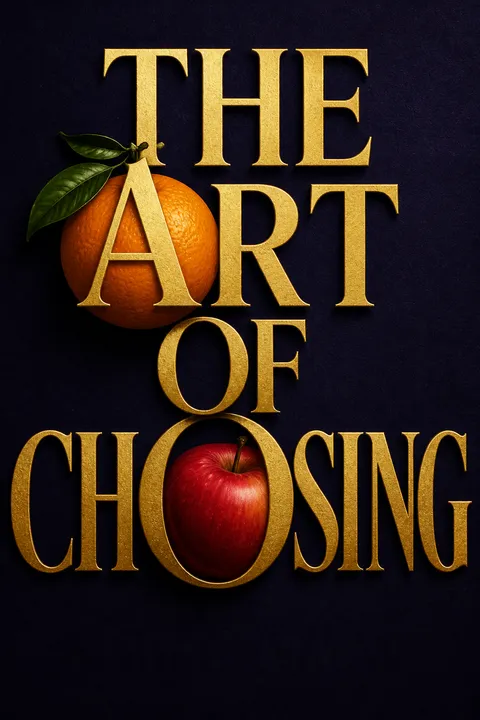


Key Takeaways
Use choice to reclaim agency, not to pretend you control outcomes
Agency can outlast certainty. Sailor Steven Callahan survived 76 days adrift by treating each day as a chance to act: gather rainwater, find food, and keep going. Mountaineer Joe Simpson, badly injured and alone, crawled toward safety rather than wait passively. Their stories show how a sense of agency can sustain action when outcomes are unknowable, not that determination guarantees survival.
Perceived control matters. In psychologist Martin Seligman’s experiments, dogs exposed to shocks they could not stop often failed to escape later, even when escape became possible. Earlier experiences of control helped rats persist longer in water. The animals’ circumstances mattered, but so did what they had learned to expect from them.
What's striking is the distinction between having control and perceiving that action remains possible. That distinction helps explain why agency can matter under severe constraint. Yet survival stories select for survivors: the reader rarely hears from people who persisted just as bravely and died. These examples are most useful as accounts of how people interpret hardship, not as evidence that the right mindset can overcome any obstacle. Agency can support effort; it cannot guarantee rescue or make structural barriers imaginary.
Small, repeated choices can make an imposed life feel more livable
Control affects the body. In the long-running Whitehall studies of more than 10,000 British civil servants, workers in the lowest employment grade were three times as likely to die from coronary heart disease as those at the top. Differences in health habits explained only part of the gap. Limited control at work was also linked to higher blood pressure, more illness, and worse mental health.
Tiny choices still count. In a nursing-home study, residents who chose their own plant and movie night became more alert and socially engaged than residents given the same things without responsibility for them. The groups received similar staff attention. The finding suggests that even modest, recurring decisions can strengthen a person’s sense of participation in daily life.
This connects autonomy to workplace design and caregiving: control is not only a private feeling, but something institutions distribute through schedules, responsibilities, and routines. Small choices can make an environment feel less custodial. The caution is that perceived control should not be used to excuse low pay, unsafe work, or poor care. A more empowering story cannot substitute for material improvements. The strongest approach combines meaningful participation with real authority and adequate resources.
Read choice through culture before judging who should decide
Choice has cultural scripts. In Japan, Iyengar asked for sugar in green tea and was told the restaurant did not have any, even though sugar arrived with her coffee. The staff were protecting a norm of proper tea drinking; she expected a paying customer’s preference to guide the order. The same request carried different meanings in different cultural settings.
The chooser is not always “I.” Individualist cultures often teach people to prioritize personal preferences, while collectivist cultures more often emphasize duties and group harmony. In studies of children, Anglo American students did best when choosing puzzles themselves, while Asian American students did best when they believed their mothers had chosen. These are broad tendencies, not rules for every person.
The central contribution is to separate agency from one particular cultural form of agency. A person can experience a family member’s decision as supportive rather than controlling when that relationship is part of the self. This matters in schools, workplaces, and health care, where policies built around personal independence can inadvertently feel alienating. Cultural categories are still averages, however. They should prompt questions about a person’s expectations, not become shortcuts for predicting an individual’s preferences.
Treat identity as a social process, not a buried original self
Choices send social signals. People want to be distinctive without becoming incomprehensible or isolated. In a study of shared beer orders, diners who ordered after hearing other people’s choices often switched away from the beer they had wanted, apparently to avoid seeming like copycats. Their drinks varied more, but they were less satisfied than diners who chose privately.
The self keeps changing. Students at Bennington College often adopted political views that differed from their families, then built friendships and relationships around those views. Their new identities reflected both personal thinking and the college community. In a separate exercise, more than 90 percent of business students found differences between how they saw themselves and how colleagues saw them. Identity is shaped by choices, relationships, and feedback.
This account avoids two tempting simplifications: that identity is a fixed inner object waiting to be uncovered, or that people are merely products of social pressure. Choices both express a self and help create one. Feedback can expose a gap between intention and impact, but social approval is not a perfect measure of authenticity. A useful test is whether a choice fits durable commitments, rather than whether it is unusual or receives immediate applause.
Train instinct with feedback, then let reason challenge its shortcuts
Two systems compete. The automatic system reacts quickly to immediate rewards and sensory cues. The reflective system is slower, requiring effort to compare options and consider future consequences. In Walter Mischel’s marshmallow experiments, children who waited often used practical distractions: they looked away, played, or imagined the treat as something less tempting. Changing attention made self-control easier than simply staring down desire.
Expertise improves instinct. Iyengar calls rapid judgment grounded in practice and correction “informed intuition.” A trained observer can recognize patterns quickly because experience has taught what matters. But repetition alone is not enough: useful expertise requires feedback and review. For ordinary decisions, that means noticing what worked, where a judgment went wrong, and whether the same mistake is recurring.
The systems model is valuable because it treats self-control as design and learning, not as a test of moral strength. It also explains why experts can act quickly without relying on mystical gut feeling. Still, expertise is domain-specific, and confidence is not proof of accuracy. A skilled doctor may be excellent at diagnosis yet vulnerable to a badly framed choice. Reflection is most useful when it tests intuition against evidence rather than merely inventing reasons to defend a first impression.
Inspect the cues that make a preference feel purely yours
Context can alter experience. In a brain-imaging study, participants tasted the same Coke but rated it more favorably when a Coke image appeared before the sip. The familiar brand activated memories and associations alongside taste. This is an example of priming: a cue activates related ideas or feelings, sometimes without conscious awareness.
Small cues can matter. People may give weight to a vivid story over statistics, judge a choice differently depending on whether outcomes are described as survival or death, or react to the setting in which they vote. In one study, voters at schools were more likely to support a measure funding education. The point is not that every preference is fake, but that surroundings and presentation can quietly shape judgment.
This insight has practical consequences for advertising, interface design, and democratic procedure. A choice can be formally voluntary while its context steers attention toward one answer. Awareness helps, but it cannot remove every influence, and opposing a cue just because it is present is not necessarily wiser. The better questions are whether the cue is relevant, whether the information is balanced, and whether the same presentation would seem fair if it favored another outcome.
Cut redundant options before abundance turns choosing into paralysis
More can block action. At a supermarket tasting booth, shoppers saw either 24 jams or six. The larger display attracted more people, but 30 percent of those who saw six jams bought one, compared with only 3 percent of those who saw 24. The large assortment invited comparison; the smaller one made a decision easier.
Complex choices carry consequences. In an analysis of retirement plans, participation fell as the number of fund options rose. Those who did invest often shifted away from stocks, even when they were young and investing for the long term. Categories, recommendations, and expert guidance can reduce search costs. There is no universal ideal number: the best amount depends on how different the options are and how much the chooser already knows.
Choice architecture is not simply a matter of trimming menus. A broad selection can help when people seek genuinely different products or value discovery; it can hinder when alternatives are hard to distinguish and the decision is consequential. The useful design principle is to make differences legible and reduce needless comparison, while preserving access to less common options. A smaller menu is helpful when it clarifies, not when it quietly limits what people are allowed to want.
Precommit now when you know tomorrow’s temptation will bargain
Make a choice in advance. In Homer’s Odyssey, Odysseus wanted to hear the Sirens but knew their song would overpower his judgment. He ordered his crew to bind him to the mast before they reached the island. The story illustrates precommitment: deciding while clear-headed to limit a future action that may be tempting but harmful.
Design for your future self. The Save More Tomorrow retirement program let employees commit to raising contributions when they received pay increases, rather than taking an immediate cut in take-home pay. Participants saved an average of 13 percent after five years, compared with 9 percent among employees who made an initial increase. Setting up defaults, accountability, or small penalties can similarly help, provided the person chooses the arrangement voluntarily.
Precommitment reveals that autonomy is not identical to keeping every future option open. A present self can protect a longer-term intention from a predictable moment of weakness. This resembles a well-designed commitment device: it narrows later action while preserving the person’s earlier consent. The key ethical distinction is who sets the constraint and whether it can be reviewed. A self-chosen boundary can support agency; an imposed one can provoke resistance or become coercive.
Share tragic decisions with informed experts instead of carrying them alone
Responsibility can intensify grief. Parents in the United States who had to decide whether to withdraw life support from critically ill infants often described guilt and persistent doubt. In France, doctors generally made that decision after discussing it with parents. The French parents were still grieving, but interviews found less self-blame and fewer agonizing counterfactuals.
Information helps, but so can guidance. In Iyengar’s study using a hypothetical infant named Julie, informed participants whose doctors made the decision reported less negative emotion than participants who made it themselves. When doctors clearly said which option they considered medically preferable, the emotional difference between choosers and nonchoosers disappeared. The lesson is not to exclude patients, but to avoid confusing informed participation with being abandoned to decide alone.
This section makes a crucial distinction between receiving a voice and bearing sole responsibility. Shared decision-making can preserve dignity while allowing clinicians to contribute expertise and a clear recommendation. The balance changes with a patient’s values, capacity, and circumstances, so there is no universal case for either paternalism or maximal choice. Good guidance makes the reasoning transparent, checks that the recommendation fits the person’s priorities, and does not disguise an institutional preference as the patient’s own.
A menu is not freedom when cost bars the options
Freedom has two dimensions. Erich Fromm distinguishes freedom from interference, or “freedom from,” and the practical ability to reach desired outcomes, or “freedom to.” After the Berlin Wall fell, East Berliners gained many new consumer options, but some lost secure jobs and could not afford what was newly available. More items on sale did not automatically mean more usable freedom.
Options have unequal costs. Rachel, a composite character in the book, wanted a legal career and also faced an unexpected pregnancy. Her husband’s work and parenthood were less likely to be seen as conflicting; she expected her own commitment to be questioned. Her formal options existed, but their social and professional costs were unequal. Choice is powerful, the book argues, when real opportunities accompany the language of personal agency.
This is the book’s sharpest political correction to the celebration of choice: opportunity is not evenly usable. A long menu may conceal unequal income, time, safety, or social permission. The capability perspective in public policy makes a similar distinction between possessing a legal option and having the resources to exercise it. That distinction does not settle how societies should distribute resources, but it prevents “everyone could choose” from being mistaken for evidence that everyone had a fair chance.
Analysis
The Art of Choosing is best read not as a defense of choice, but as an inquiry into when choice creates agency and when it becomes burden. Its strongest organizing distinction is between choice as a valued principle and choosing as a practical task. The first supports dignity and self-direction. The second consumes attention, invites error, and can attach painful responsibility to outcomes no one fully controls. Keeping those meanings separate makes the book’s apparent contradictions coherent: choice can improve motivation, yet overwhelm; a restriction can feel oppressive, yet protect a person’s aims; expert guidance can help, yet become paternalism.
The cross-cultural material broadens the argument beyond consumer psychology. It shows that personal independence is not the only route to agency. A family decision may be experienced as shared authorship in one setting and as an unacceptable intrusion in another. This is a valuable challenge to policies that treat individual selection as universally empowering. At the same time, cultural averages cannot determine what any particular person wants, and broad contrasts between individualist and collectivist societies risk flattening differences within them.
The evidence is most persuasive when it identifies mechanisms, such as attention limits, framing, perceived control, and decision responsibility. It is less conclusive when laboratory or historical examples are stretched into broad claims about health, survival, or social welfare. A belief in control can support coping, but it cannot guarantee recovery; emphasizing mindset without structural context can blame people for constraints they did not create. Likewise, more options are not inherently harmful, and fewer are not inherently humane.
The practical synthesis is therefore conditional: protect meaningful control, reduce needless complexity, make expert advice available, and leave room for individual values. Institutions should distinguish a real opportunity from a nominal option, and should ask whether a chooser has the information, resources, and support to act. The art lies not in maximizing the number of decisions, but in matching decision authority and complexity to the person, the stakes, and the situation.
Review Summary
The Art of Choosing explores decision-making from various perspectives, blending research, personal anecdotes, and cultural insights. Readers appreciate Iyengar's engaging writing style and thought-provoking experiments, particularly the famous "jam study." While some found later chapters less engaging, many praised the book's depth and relevance. Critics noted occasional bias and repetition of common behavioral economics concepts. Overall, reviewers found the book informative and enlightening, offering valuable insights into the complexities of choice in modern life.
People Also Read







Glossary
Learned helplessness
Expecting actions cannot helpA response in which past experiences of uncontrollable adversity lead someone to expect that later efforts will also fail. In Seligman’s experiments, some dogs that could not stop shocks later failed to escape when an exit became available. The concept highlights how perceived control can shape action even after circumstances change.
Individualism and collectivism
Different cultural prioritiesBroad cultural orientations that shape how people understand identity and decision-making. Individualism emphasizes personal preferences and goals; collectivism gives greater weight to duties, relationships, and group harmony. Iyengar uses these terms to explain differing responses to choice, while stressing that individuals vary within any culture.
Automatic system
Fast, unconscious processingA mode of mental processing that responds quickly and with little deliberate effort to sensory information, learned associations, and immediate rewards. It can produce useful intuitions, but it can also react to tempting cues or irrelevant context before a person recognizes what is influencing the response.
Reflective system
Effortful, deliberate reasoningA mode of processing that uses conscious attention, logic, and consideration of future consequences. It supports complex comparisons and impulse control, but it is slower and mentally demanding. It can also rationalize a preferred answer rather than evaluate options impartially.
Informed intuition
Expertise expressed as instinctA rapid judgment grounded in substantial domain-specific experience and critical feedback. Repeated practice helps a person recognize relevant patterns without consciously analyzing every detail. The term does not mean that every gut feeling is reliable; intuition is strongest in situations similar to those in which the expertise was developed.
Priming
Cues activate related associationsThe influence of an earlier stimulus on later thoughts, feelings, or behavior through associations in memory. A cue may operate without conscious awareness. In the book’s examples, brand images change reported taste, and environmental cues can affect judgments. Priming tends to shift responses subtly rather than dictate major decisions.
Psychological reactance
Resistance to threatened freedomA motivational response to the perceived removal or restriction of an available behavior. People may want an option more when someone forbids it, even if it was not especially attractive before. The reaction depends on perceived restriction, not only on the objective facts, and can complicate policies meant to protect people.
Freedom from
Freedom from outside interferenceThe absence of external restrictions that prevent a person from pursuing goals. In the book’s discussion of political and economic systems, this form of freedom emphasizes individual opportunity and limited interference. It does not ensure that a person has the resources needed to achieve those goals.
Freedom to
Practical ability to actThe capacity to attain outcomes or meet basic needs, not merely the formal permission to pursue them. Iyengar uses the term to distinguish usable opportunity from freedom understood only as noninterference. A society may expand practical access through shared provision, while also imposing limits on individual discretion.
The jam study
Assortment size changes buyingIyengar and Lepper’s supermarket experiment compared a display of 24 jams with one of six. More shoppers stopped at the larger display, but a much smaller proportion bought a jar. The study became a memorable example of how extensive assortments can attract attention while making decisions harder to complete.
FAQ
What's The Art of Choosing about?
- Exploration of choice dynamics: The book examines how choices shape our lives, focusing on psychological, cultural, and biological influences on decision-making.
- Cultural perspectives: It contrasts how individualistic and collectivist societies perceive and value choice, offering insights into diverse decision-making processes.
- Choice overload: Iyengar discusses how having too many options can lead to anxiety and dissatisfaction, impacting our happiness.
Why should I read The Art of Choosing?
- Understanding decision-making: The book enhances your understanding of how choices are made and the psychological mechanisms behind them, aiding in more informed decisions.
- Cultural insights: Iyengar provides valuable insights into how cultural backgrounds shape perceptions of choice, fostering empathy and understanding in a globalized world.
- Practical applications: It offers practical advice on navigating choices effectively, applicable to personal relationships and career decisions.
What are the key takeaways of The Art of Choosing?
- Choice is powerful: The book emphasizes that choice is fundamental to human life, influencing identities and experiences, and understanding this power aids in navigating life.
- Cultural influences matter: Iyengar highlights how cultural contexts shape our understanding and practice of choice, leading to more thoughtful decision-making.
- Balance between freedom and control: It discusses the tension between autonomy and guidance in making choices, suggesting that balance leads to greater satisfaction.
What are the best quotes from The Art of Choosing and what do they mean?
- “What is freedom? Freedom is the right to choose: the right to create for oneself the alternatives of choice.” This underscores freedom as intrinsically linked to choice, highlighting its importance in defining identities.
- “We tell ourselves stories in order to live.” This reflects how narratives shape our understanding of ourselves and our choices, empowering us to navigate life's complexities.
- “I choose to discover who I am.” This emphasizes the active role in shaping identities through choices, encouraging self-discovery.
How does Sheena Iyengar’s personal story influence The Art of Choosing?
- Cultural background: Iyengar shares her experiences as a blind Sikh woman in America, illustrating how her cultural identity shaped her understanding of choice.
- Resilience and choice: Her journey of coping with blindness and loss highlights the importance of choice in overcoming adversity, resonating throughout the book.
- Connection to readers: By sharing her story, Iyengar creates a relatable context, inviting readers to reflect on their own experiences with choice.
How does The Art of Choosing define choice overload?
- Too many options can paralyze: Iyengar explains that an overwhelming number of choices can lead to decision paralysis and frustration.
- Diminished satisfaction: Having too many options can result in lower satisfaction, as individuals may constantly wonder if they made the best choice.
- Jam study example: Iyengar references her famous jam study, where fewer options led to higher purchase rates, demonstrating choice overload's negative effects.
What role does temptation play in decision-making according to The Art of Choosing?
- Automatic vs. reflective systems: Iyengar discusses the conflict between automatic impulses and reflective reasoning when faced with temptation, which can lead to poor decisions.
- Self-control strategies: The book highlights techniques for resisting temptation, such as distraction and reframing choices, aiding in deliberate decision-making.
- Long-term vs. short-term rewards: Iyengar emphasizes considering long-term consequences over immediate temptations, encouraging prioritization of overall well-being.
How does The Art of Choosing address the concept of control?
- Perception of control: Iyengar emphasizes that our sense of control over choices significantly affects well-being, with feeling in control leading to greater satisfaction.
- Cultural differences: The book explores how different cultures perceive control and choice, with some prioritizing collective decision-making over individual autonomy.
- Strategies for empowerment: It offers practical strategies for enhancing control, such as setting clear goals and recognizing external influences.
How does The Art of Choosing relate to happiness and fulfillment?
- Connection between choice and happiness: Iyengar argues that the ability to make choices is closely linked to happiness and fulfillment, enhancing overall well-being.
- Expectations vs. reality: The book discusses the gap between expected happiness from choices and actual outcomes, encouraging focus on the choosing process.
- Cultivating gratitude: Iyengar emphasizes gratitude in choice, suggesting that appreciating available choices leads to greater satisfaction and a positive outlook.
How does The Art of Choosing explain the relationship between choice and happiness?
- Choice enhances well-being: Iyengar argues that having the ability to make choices is linked to greater happiness and life satisfaction, fostering control and autonomy.
- Diminishing returns: Beyond a certain point, more choices can lead to decreased happiness, as individuals may feel overwhelmed or regretful.
- Balancing choice and contentment: The key takeaway is finding a balance that avoids choice overload while maintaining the benefits of autonomy.
What methods does The Art of Choosing suggest for improving decision-making?
- Limit options: Iyengar recommends narrowing choices to a manageable number to reduce anxiety and increase satisfaction with decisions.
- Seek expert advice: The book encourages consulting experts or relying on recommendations to navigate complex choices, especially in unfamiliar domains.
- Categorize choices: Organizing options into categories simplifies decision-making, making it easier to compare and evaluate alternatives.
How does The Art of Choosing address cultural differences in decision-making?
- Individualism vs. collectivism: Iyengar contrasts cultures prioritizing individual choice with those emphasizing group consensus, showing how these values shape decision-making.
- Impact on satisfaction: The book suggests that individuals from collectivist cultures may experience greater satisfaction when aligning decisions with group norms.
- Examples from studies: Iyengar provides empirical evidence illustrating how cultural context influences decision-making approaches and outcomes.
Download PDF
Download EPUB
.epub digital book format is ideal for reading ebooks on phones, tablets, and e-readers.








